NYC Water Damage Pages Call (212) 555-0147
Home  /  NYC Hub  /  Flood Damage Restoration NYC

Flood Damage Restoration NYC, From Flooded Rooms to Home Again

A flood is the one water problem where the water comes from outside, carries whatever the street carried, and pulls the city, the building code and a federal insurance program into your living room. This page walks the whole recovery, safety, documentation, extraction, removal, drying, the claim, and the flood resistant rebuild, the way it actually runs in New York homes.

Illustration of a flooded New York basement room with standing water, a submersible pump, an air mover and a dehumidifier at work, and boxes lifted onto a table above the water line

A basement flood in progress: water still standing, pump running, belongings lifted clear.

Talk to a flood crew about your basement flood

Describe where the water came from, how deep it got and which rooms it reached, and get a written scope before work starts. Call (212) 555-0147. For claim process questions, the New York State Department of Financial Services consumer line is (800) 342-3736, and the disaster hotline is (800) 339-1759.

When the Water Comes From Outside, Everything Changes

Most water problems in a New York home start inside it: a pipe lets go, a water heater gives up, a washing machine hose splits. A flood is different in kind, not just in size. The water arrives from outside the building, from the sky, the street, the river or the sewer, and it brings the outside in with it: silt, oil, chemicals, and whatever the drains were carrying. That one fact changes how the water is handled, how much has to come out, which insurance policy answers, and which city office needs a report before the pumps even start. That difference in kind is the founding fact of flood damage restoration NYC.

Flood damage restoration NYC crews work in the gap between a weather event and a homecoming. The rain has stopped or the tide has gone back out, and what remains is a building that drank water it was never built to hold: drywall wicking moisture upward, floors swelling at the seams, a basement smelling of the street. From that moment, three clocks run at once. Mold can begin growing within 24 to 48 hours on wet material. A flood insurance Proof of Loss is due within 60 days. And a home that sits closed and wet loses value by the week, as damage that was repairable hardens into damage that is permanent.

This page is the fiftieth page on this site, and it was written to be the one a flooded New Yorker can work through with a notebook in hand. It explains what a flood crew actually does, in order, what comes out and what can be saved, how flood zones and the city's design flood elevation shape the rebuild, how 311 and the Department of Environmental Protection fit into a sewer backup, what Hurricane Ida taught this city about basement apartments, and how the flood insurance clocks run, including the September 30, 2026 line after which no new federal flood contracts can be written. It answers the cost question the way every honest company in this search answers it, without inventing figures, and it says plainly which facts come from the EPA, the CDC, FEMA, FloodHelpNY and New York law, and which come from homeowners who have lived through a flooded basement themselves. Everything after this section is flood damage restoration NYC taken one layer at a time.

What Flood Restoration Is, in One Clear Definition

Flood damage restoration NYC is the service that restores a flooded home or business across all five boroughs after floodwater leaves, removing materials, drying rooms, cleaning and sanitizing what the flood touched, and rebuilding what cannot be saved, so the place is safe and dry again.

Read that definition slowly and you have the shape of the whole service. It starts after floodwater leaves, which is what separates restoration from rescue and from the emergency pumping that happens while water is still rising. It removes materials, because floodwater ruins porous things beyond cleaning. It dries rooms and sanitizes what the flood touched, because floodwater is contaminated water and a dry room that was never sanitized is not a finished room. And it rebuilds what cannot be saved, which is the part that separates flood damage restoration NYC from cleanup alone: cleanup ends at a clean, dry shell, and restoration ends at a home.

The definition also carries the geography. Across all five boroughs means the service runs in the coastal ground floors of Staten Island and the Rockaways, the basement apartments of Queens and the Bronx, the brownstone cellars of Brooklyn and the low streets of Manhattan alike, and the floods differ by borough: storm surge at the edges, rainfall flooding in the middle, sewer backups wherever the old combined drains are asked to carry more than they were built for. One service name, several kinds of flood, and a page that keeps them separate because the claim route, the city route and the right rebuild differ with each kind. Holding those kinds apart is the first discipline of flood damage restoration NYC.

What the national pages do not give you is the New York layer, and the New York layer is most of the job. FloodHelpNY and flood zones on the risk side. The Department of Environmental Protection and 311 when the water is the city's sewage arriving backwards. Appendix G of the Building Code and the design flood elevation when the rebuild starts. The NFIP Claims Handbook, Regulation 64 and Insurance Law Section 2618 running the money clocks. None of the six competitors researched for this page covers any of that layer, which is strange, because it is the layer a flooded New Yorker actually has to navigate. This page was built to carry it. That layer, carried end to end, is what flood damage restoration NYC means on this site.

First, Safety: Floodwater Is Not Bath Water

Every other page on this site starts its safety section with electricity. This one starts wider, because floodwater is the most dangerous water a home can hold. The Centers for Disease Control and Prevention lists what it can carry: downed power lines and electrical charge, human and livestock waste, hazardous waste, toxic chemicals, coal ash, germs, sharp debris, and animals, including rodents and snakes. New York City Emergency Management adds oil and gasoline and raw sewage to the same list, and warns that floodwater may be electrically charged from underground or downed lines. The illnesses that follow contact include wound infections, skin rash, gastrointestinal illness and tetanus. Flood damage restoration NYC starts from that hazard list, not from how clear the water looks.

The city's rule for moving water deserves its own sentence, because New Yorkers keep testing it: six inches of moving water can knock a person down. Do not walk into floodwater to save belongings, and do not drive into it at all. Move to a higher floor during heavy rain, and if you live in a basement apartment, treat that move as the plan, not as a last resort. The Hurricane Ida section later on this page explains, in numbers, why the city gives that advice. The Ida section is required reading in flood damage restoration NYC, not background colour.

If you must enter a flooded space, the CDC guidance is boots, gloves and goggles, and soap and clean water on skin afterward. Shut off power only if you can reach the breaker dry and standing on dry ground; if water is above the outlets or the panel is wet, stay out and let an electrician make that call. Throw out fresh food and opened medicines that touched floodwater. And when the cleanup itself starts, the same protective gear is standard for the crew, because flood damage restoration NYC treats every flood as contaminated water work from the first minute, not as a judgment call made at the door.

The Six Steps of a Flood Restoration, in Order

Every flood job that goes well runs in the same order, whether the water came over a Staten Island bulkhead or up through a Queens drain. The order is not tradition; each step creates the conditions the next one needs. Photographs before pumping, because the claim file cannot be rebuilt later. Extraction before removal, because you cannot see what the water ruined until the water is gone. Removal before drying, because wet insulation inside a closed wall will defeat any fan. Sanitizing alongside drying, because floodwater leaves contamination behind even where materials survive. And rebuilding last, measured against flood rules, because a rebuilt wall over a damp frame or below the flood line without protection is the next flood's damage, scheduled early. The order exists because flood damage restoration NYC is a chain, and a chain is judged by its weakest link.

  1. Stay safe and call for help. Stay out of the water, protect people and pets first, shut off power only if it is safe, call 911 for emergencies and 311 for a sewer backup, then call the crew and describe where the water came from.
  2. Document everything before cleanup. Photograph every room, the water line on the walls and the damaged belongings, and keep damaged items and material samples until the adjuster has seen them.
  3. Remove floodwater fast. Pumps and extraction take the standing water out, handled as contaminated water, while the 24 to 48 hour mold clock is already running.
  4. Remove ruined materials. Soaked drywall, insulation, carpet, pad and swollen board come out, bagged at the door, with a written removal list for the claim file.
  5. Clean, sanitize and dry. Hard surfaces are scrubbed and sanitized, salvageable contents are cleaned, and the structure is dried with daily moisture readings until the numbers say stop.
  6. Rebuild flood resistant. The home goes back together measured against the design flood elevation, with flood vents, elevated utilities and materials chosen to survive the next wetting.

The six sections that follow take one step each. Read them in order if your flood just happened; the page is built so a worried person at 2 a.m. can work down it like a checklist while waiting for the crew.

Step One: Stay Safe, Then Make the Right Calls

The first step is mostly about what not to do. Do not wade into a flooded basement to rescue boxes. Do not touch a breaker panel standing in water. Do not run a generator indoors or anywhere but outside, well away from the building; the Environmental Protection Agency puts the distance at least 20 feet, because generator exhaust kills quietly after storms. Get people and pets up and out of the water's reach, and if anyone is in danger, or you smell gas, or the water is rising around someone who cannot move, that is a 911 call before it is anything else. Step one of flood damage restoration NYC is a safety step, and it stays one however urgent the water looks.

The second call depends on what kind of flood you have. If sewage is backing up into the home, call 311 and report it to the Department of Environmental Protection immediately; the city asks for that report right away, and the report starts the process that decides whether the fault is in the city main or your building line. If the flood is rain or tide, there is no city crew coming to pump your basement, and the call that matters is to the restoration crew. When you call, the useful facts are where the water came from, how deep it got, which rooms it reached, whether the power is on, and whether anyone in the home has breathing trouble. Those five answers shape the first visit more than any description of the furniture. Those answers are the intake form of flood damage restoration NYC, whether or not anyone calls it that.

Flood damage restoration NYC is emergency work, and this page treats it that way: crews answer around the clock because floods keep storm hours, not office hours. But the honest version of fast is worth stating. A crew that arrives quickly and then works in the wrong order has not saved you anything. The order in step one is safety, city report if sewage is involved, documentation, then water. Hold that order even when every instinct says pump first, because the steps skipped at the start are the ones that cannot be recovered later.

Step Two: Photograph Everything Before Anything Moves

Illustration of a homeowner photographing flood damage and a visible water line on the wall before cleanup, with damaged items set aside in a row for the adjuster
Documentation comes before pumping: the water line, the rooms, and the damaged items, recorded while they still show the flood.

FloodSmart, the federal flood insurance site, gives policyholders two instructions that belong at the top of every flood job: photograph the damage before cleanup, and keep damaged items until the adjuster has seen them. Work room by room. Take wide shots that show the whole space, then close shots of the water line on the walls, the swollen baseboards, the ruined flooring, the contents sitting in silt. Photograph serial numbers on appliances and electronics. If a rug or a floor is coming out, keep a sample of it, and keep samples of curtains and flooring even when the rest is bagged, because samples prove what quality of material the claim is replacing. This is the evidence habit at the centre of flood damage restoration NYC.

Keep shooting during the job, not only before it. Open walls, drying equipment in place, daily moisture readings, the removal list as it grows: a claim file with dated pictures at every stage is hard to argue with, and an adjuster who visits after drying has finished will judge your flood largely by the file you hand over. Keep the claim number on every document in the folder. This paperwork step is unglamorous and it is where flood claims are won or lost, because flood insurance pays for documented water, in the end, exactly like every other kind. Documentation is not paperwork after the job in flood damage restoration NYC; it is the job, running in parallel.

One habit separates good files from sad ones: photograph the height of the water, not just the fact of it. The line on the wall, the silt mark on the furniture legs, the watermark inside a cabinet. Depth decides how much drywall comes out, whether the electrical system needs inspection, and how the substantially damaged arithmetic later in this page gets argued. A tape measure held against the water line in one photograph is worth a paragraph of description in a claim letter. Depth, recorded early, is a number flood damage restoration NYC will use at every later stage.

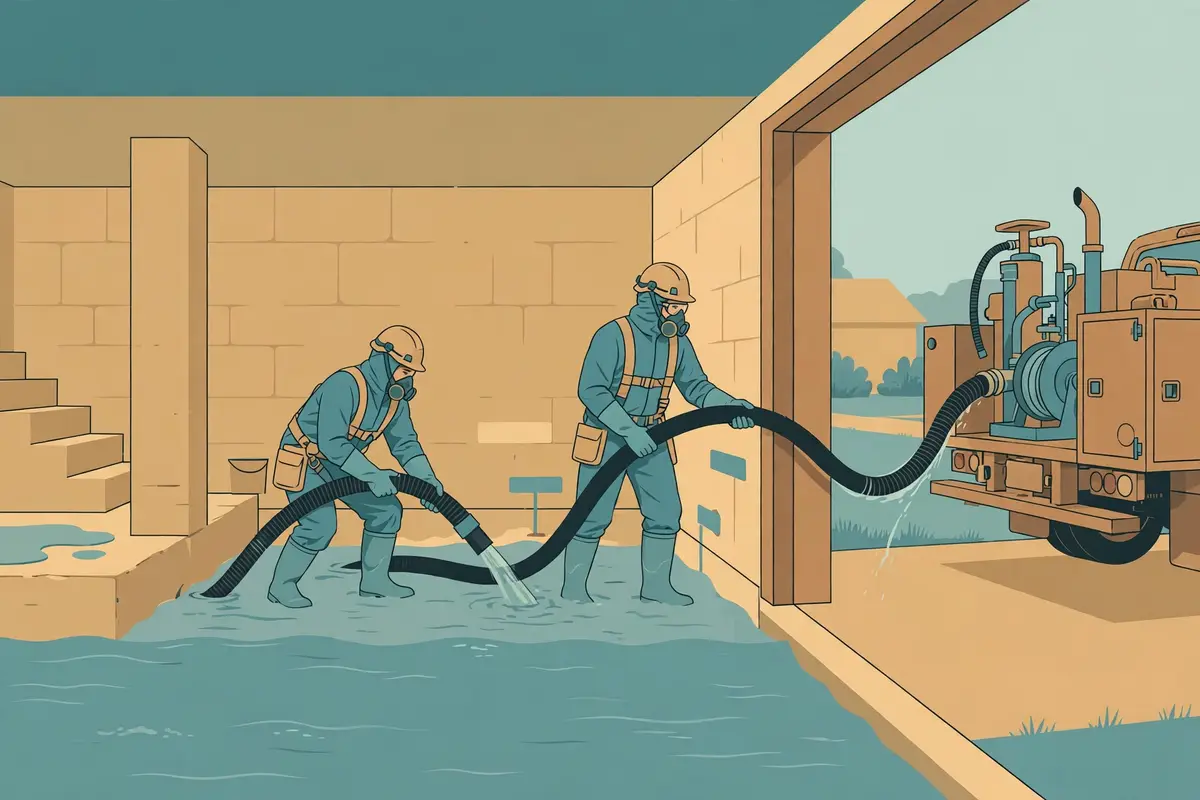
Step Three: Getting the Floodwater Out

Illustration of restoration workers in boots and protective gear pumping floodwater out of a residential basement with a large extraction hose
Extraction: pumps and hoses take the standing water out, deepest areas first, with the water handled as contaminated from the start.

Extraction after a flood is pumping with a hazmat mindset. Submersible pumps drop into the deepest water, truck mounted or portable extractors pull the rest, and the crew works the level down until squeegees and wet vacuums can finish the film that pumps cannot reach. Where the water goes matters too: floodwater is not discharged just anywhere, and a crew working a sewer backup coordinates with the building and the city side of the problem rather than pumping sewage into a street drain and calling it done. Where the water goes is part of flood damage restoration NYC, not an afterthought to it.

The pace of this step is set by two clocks. The first is wicking: drywall and wood pull standing water upward and inward for as long as they touch it, so every hour of standing water raises the line of what has to come out. The second is the mold window, 24 to 48 hours, which started when the water arrived, not when the crew did. Extraction is therefore the step where flood damage restoration NYC earns its emergency billing. A basement pumped the same night is a smaller, cleaner job than the same basement pumped on day three, in ways that show up later as shorter drying, less demolition and a simpler claim.

Extraction is also where the category of the water stops being a technicality. A burst pipe inside a home can be clean water. Floodwater never is. It is handled as the most serious category in the trade, the one that assumes contamination, which is why the crew arrives in boots, gloves and protective clothing, why porous materials are presumed guilty until inspected, and why the sanitizing step later on this page is not optional garnish. If a company talks about your street flood the way it would talk about a dishwasher leak, it has misread the job before it started. The category decision is the first technical act of flood damage restoration NYC.

Step Four: Taking Out What the Flood Ruined

The Environmental Protection Agency's flood cleanup guidance sorts a flooded home by one question: can this be cleaned and dried, or can it not? Non-absorbent items can usually be cleaned, dried and kept. Absorbent items generally cannot, and are thrown away. That single rule drives the removal step. Carpet and pad that sat in floodwater come out. Soaked insulation comes out. Drywall that drank floodwater comes out, cut above the water line in a clean flood cut so the framing can dry in the open. Swollen particle board cabinets, pressed wood furniture and upholstered pieces that sat in dirty water join them. Solid wood, metal, glass and hard plastic usually survive to the cleaning table. The sorting line is drawn by material, and flood damage restoration NYC draws it the same way in every borough.

Removal is skilled work disguised as demolition. The crew bags debris at the doorway instead of carrying loose loads through the home, protects the path out, and works from the most contaminated areas with the discipline of people who know what is in the silt. Every item removed goes on a written list with a photograph where it matters, because the removal list is a claim document and a rebuild plan at once: it tells the insurer what was lost and tells the rebuild crew what has to go back. In New York there is a disposal layer too. Furniture and household goods leave as bulk through the sanitation routes the cleanup page of this site covers in detail, while torn out drywall, flooring and insulation are construction debris and leave with a licensed private carter, arranged as part of the job. Disposal is a planned stage of flood damage restoration NYC, with the paperwork kept for the claim.

Homeowners who have done this themselves describe the same surprise the professionals plan for: the demolition reaches higher than the water did. In a homeowner discussion that restorers still pass around, the top advice for a flooded basement was to remove everything up to four feet: drywall, flooring, trim and insulation, because water wicks, splashes and hides well above the visible line, and the cost of opening too little is mold inside a closed wall. A good crew measures rather than guesses, with meters on the wall above the water line, but the direction of the surprise is always the same. Plan for the cut to be higher than the flood was. Height surprises are normal in flood damage restoration NYC; unmeasured surprises are not.

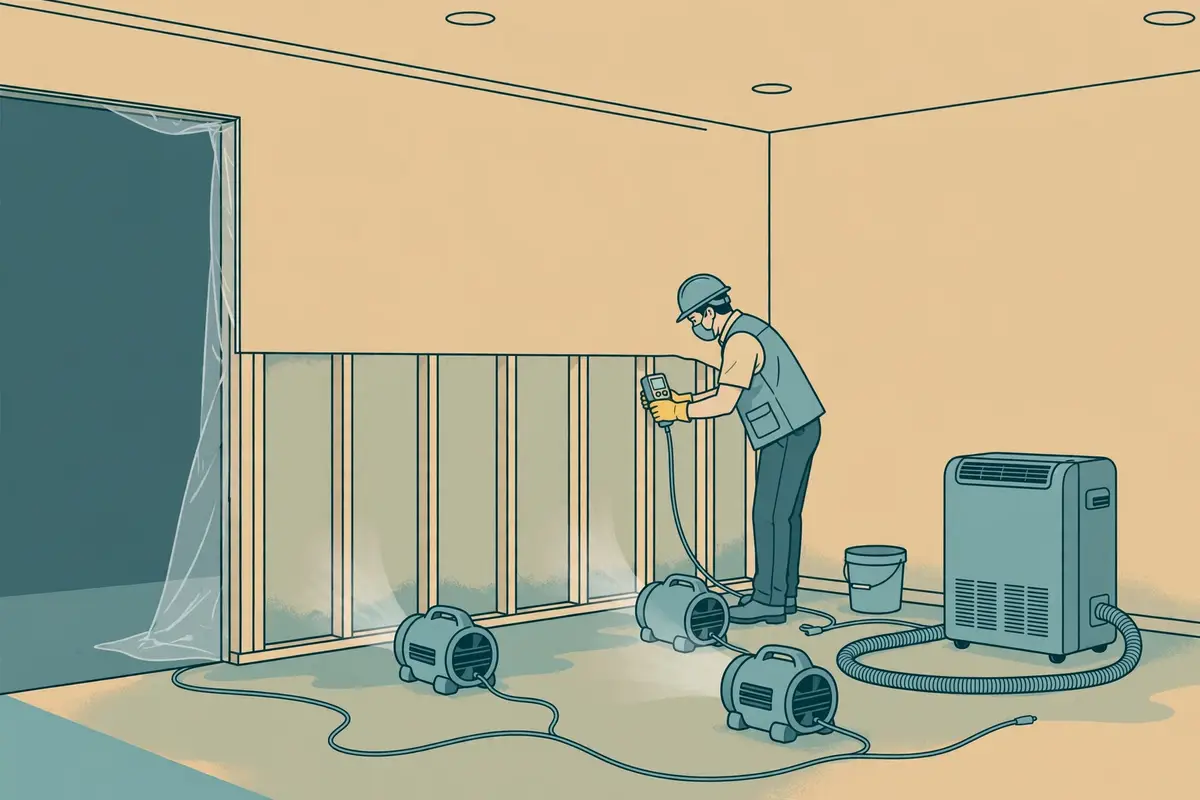
Step Five: Clean, Sanitize, and Dry Until the Numbers Say Stop

Illustration of a room being dried after a flood, with a clean flood cut in the drywall, exposed studs, air movers, a dehumidifier and a worker taking a moisture reading
Drying after removal: flood cut open, machines running, and a moisture meter deciding when the room is done.

Cleaning after a flood runs in the EPA's order: scrub first, then sanitize. Disinfecting belongs on surfaces that have already been cleaned, because disinfectant sprayed on silt is perfume on mud. Hard floors, tile, metal, sealed counters and salvageable contents are washed down, and where the water was dirty, which after a flood means everywhere, sanitizing follows. Two safety rules from the same guidance are absolute and worth printing on the inside of a cabinet door: never mix bleach with ammonia, and never mix bleach with other cleaners. The city's own flood guidance gives a working mix for hard surfaces, half a cup of bleach per gallon of water, used on surfaces that have been scrubbed first, with the room ventilated and children and pets elsewhere. Cleaning in flood damage restoration NYC is chemistry with rules, and the rules are not optional.

Then the drying, which is the longest and least photogenic part of flood damage restoration NYC, and the part that decides whether the home smells like a home in six months. Air movers push air across wet framing and floors while dehumidifiers pull the moisture out of the air, and the crew returns to take readings and write them down. The EPA's own words for the timeline are several days to weeks, and its rebuild test is a number: do not rebuild until wood moisture is 15 percent or less, checked with a meter. A simple check anyone can repeat is the plastic sheet test, a sheet taped to a surface for 16 hours that should come away dry. Surfaces feel dry days before cavities are, and closing a wall on a hopeful feeling is how a flood job buys a mold job.

Contents get their own table in this step. The salvageable sort happens item by item: what can be washed, what can be laundered, what can be cleaned by a contents specialist, and what has to be photographed and let go. Flood touched clothing usually launders and keeps. Papers, photographs and books are the heartbreak category; some can be dried or frozen and treated by specialists, and the crew should say so before anything irreplaceable goes in a bag. Ask for the contents plan in the scope, in writing, because a flooded home's losses are counted in belongings more than in drywall. The contents plan is where flood damage restoration NYC becomes personal, and it deserves its own page in the scope.

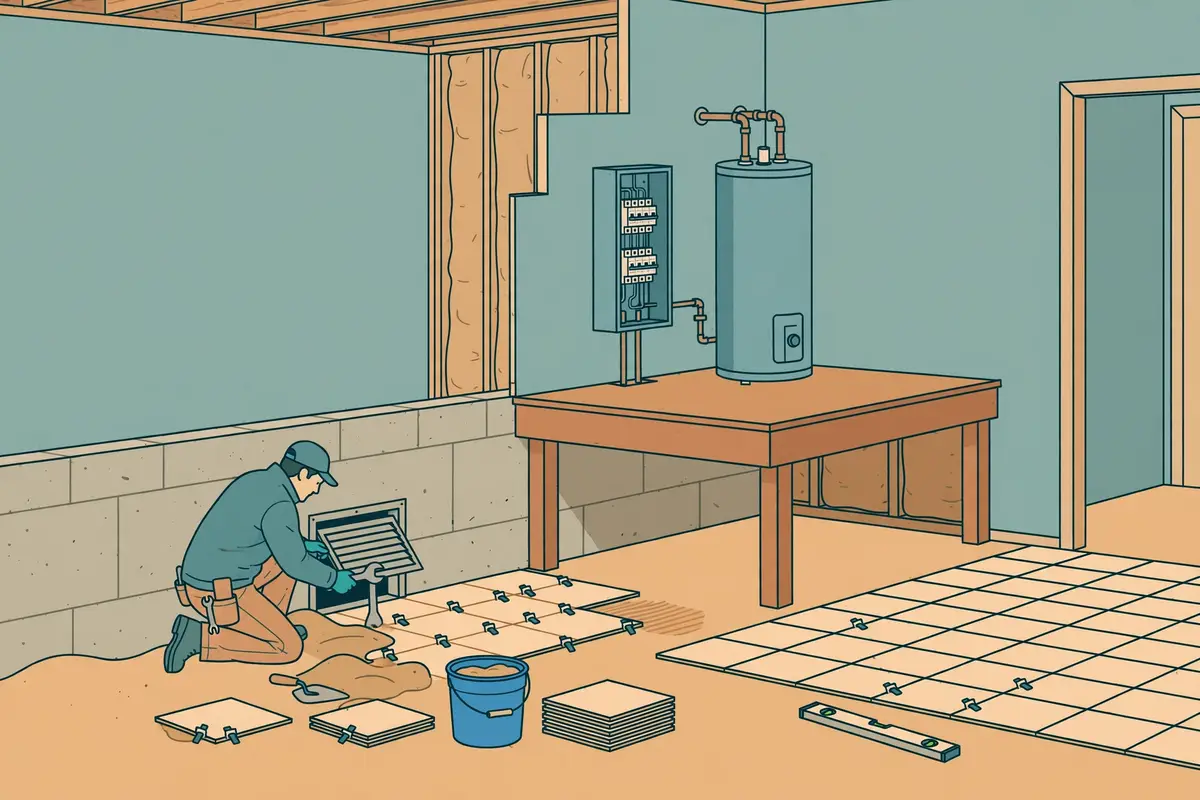
Step Six: Rebuild Like the Water Is Coming Back

Illustration of a flood resistant rebuild, with a flood vent being installed low in a foundation wall, an elevated electrical panel and water heater raised on a platform, and new tile flooring
The rebuild: flood vents, utilities lifted above the flood line, and materials chosen to survive the next wetting.

A plain rebuild puts the room back the way it was, which means putting it back the way it flooded. A flood resistant rebuild, the step that closes flood damage restoration NYC, puts the room back measured against the water. The measuring stick in this city is the Design Flood Elevation, usually the Base Flood Elevation plus 2 feet of freeboard, and the rebuild is planned around that line. Below it, materials are chosen to survive wetting and dry clean: tile and treated materials instead of carpet and standard drywall where the plan allows. Above it or lifted toward it, the machinery of the home goes: the electrical panel, the furnace or boiler, the water heater, the washer and dryer, raised on platforms or relocated up a floor where the building allows.

Two pieces of hardware belong to this step and get their own explanations elsewhere on this page. Flood vents, openings that let water flow in and out of an enclosed foundation area, keep water pressure from building against the walls and damaging the structure itself. A backwater valve, a one way gate in the sewer line, keeps the city's sewage out of your basement when the drains surcharge. Neither is glamorous. Both are the difference between a home that floods as a contents problem and a home that floods as a structural or sewage problem, and after a serious flood both are cheap compared to doing this whole page twice. Prevention priced at the rebuild is the bargain inside flood damage restoration NYC.

When a flood crosses the substantially damaged line, restoration cost at 50 percent or more of the building's market value without the land, this step stops being optional craft and becomes code: flood resistant rules attach to the permit, and the DFE governs the work whether the owner asks about it or not. The insurance section of this page walks that arithmetic. The practical point for every rebuild, above or below the line, is to make the crew state the flood line on your walls and show you where the vents, the valve and the lifted utilities sit against it. A rebuild that cannot point to its own flood line is just a repaint.

CAT 3: Why Floodwater Gets the Most Serious Label in the Trade

The restoration trade sorts water into categories, and the category decides how much comes out, what gear the crew wears and how hard the sanitizing runs. Clean water from a supply line sits at one end. Floodwater sits at the other, in the category reserved for water assumed to carry sewage, chemicals and germs, and it sits there automatically, without testing, because of where it has been: across streets, through drains, over soil and out of surcharged sewers. Homeowners researching their own flooded basements meet this label in the advice of estimators with industry credentials, and the practical translation is consistent: with this category of water, porous materials are treated as unrestorable, and the flood cut, the removal list and the sanitizing are not upsells but the standard of care. That standard is what flood damage restoration NYC is hired for, beyond the pumps.

The category also explains the paperwork difference between a flood and a leak. A sewer backup gets a 311 report to the Department of Environmental Protection, because the city may own part of the problem. A street flood gets photographed against a rain event the whole city recorded. And the claim goes to a flood policy, not a homeowners policy, because homeowners cover does not include flooding. One water, three systems, and the category is the thread that ties them together.

There is a basement specific wrinkle worth knowing. Not all basement water is floodwater. Groundwater seeping through a floor, a failed sump pump and a burst pipe are building water, handled hard but not always at the top category, while water that arrived from outside or up through the drains is. A crew that scopes your basement should tell you which water you had and why, in writing, because the answer moves the claim between policies and decides how much of the room is presumed lost. If the explanation never comes, ask for it. It is the first technical fact of your job and you are entitled to it plainly. Ask for the category in writing; it is a first day document in flood damage restoration NYC.

Basement Flooded: What to Do, Hour by Hour

The most searched question in this market, by a wide margin in the keyword gap research behind this page, is some version of basement flooded, what to do. So here is the honest sequence, the same one the steps above expand. In the first hour: get people and pets out of the water, shut off power only if you can do it dry and safely, call 911 if anyone is at risk, and call 311 if sewage is coming up through the drains. Photograph the water where it stands, with something in frame that shows depth. Call the flood crew. Resist the urge to start carrying boxes up the stairs through contaminated water; belongings can be assessed dry eyed tomorrow, and a fall on a wet basement stair is how a property loss becomes a hospital visit. The first hour of flood damage restoration NYC is mostly restraint, and restraint saves more than speed does.

In the first day: the crew extracts, the source is identified and stopped where it can be, and the removal of ruined material begins. Your jobs run in parallel: open the claim, start the folder, keep the damaged items where the adjuster can see them, and decide where the household sleeps if the furnace, panel or only bathroom is in the flooded zone. If the water came from the street during a storm that hit the whole block, talk to the neighbours; a shared timeline and shared photographs help every claim on the street, and the building wide problems, a surcharged drain, a failed shared pump, get fixed faster when the building reports them together.

Across the first week: drying runs with daily readings, the removal list and drying log grow in the folder, the adjuster visits, and the scope for the rebuild gets written against the flood line. The two mistakes to avoid in this week are closing anything up early and throwing away evidence. Everything else is patience and paperwork. A basement that is pumped, opened, documented and drying inside the first day is a basement that usually skips the mold chapter entirely, and skipping that chapter is worth more than any single piece of equipment on the truck. That is the arithmetic of the first day in flood damage restoration NYC.

Sump Pumps, Backwater Valves, and the Plumbing Layer

Ask flooded homeowners what failed and one device comes up again and again: the sump pump. It sits in a pit at the basement's lowest point and pumps groundwater out before it spreads. When it quits during a storm, which is when it is needed most and when the power most often fails with it, the basement takes water quietly until someone goes downstairs. Homeowner accounts describe the discovery in inches: five inches across a finished basement office, found in the morning. A pump is a control, not a cure, and it needs a backup, battery or water powered, for the outage that arrives with the weather. After the flood, tell the crew whether the pump ran, failed or was simply overwhelmed; that answer helps separate a plumbing problem from a flood event, and claims care about the difference. The pump's story is evidence, and flood damage restoration NYC collects it like evidence.

The backwater valve answers the ugliest basement flood, the sewer backup. Fitted in the home's sewer line, it lets waste water out and slams shut when the city sewer surcharges and tries to flow back in. FloodHelpNY runs a backwater valve program that is free for eligible applicants, which is worth checking before paying privately, and its homeowner guidance is the city's plain route for sewage trouble: call 311. Neither device stops the other doors water uses. Street water still enters at stairwells and windows, groundwater still rises through a floor with no pit, and a storm surge does not consult your plumbing at all. The diagnosis comes first: which door did your water use, and which hardware answers that door.

That diagnosis is part of what you are hiring in flood damage restoration NYC, and it should arrive in writing with the scope. A crew that pumps, dries and rebuilds without naming the entry point has restored the room and left the flood scheduled to repeat. The flood resistant rebuild in step six is where the diagnosis turns into hardware: the valve in the line, the vents in the foundation wall, the utilities lifted, the pump with its backup. Ask for that list by name before the rebuild starts, priced as its own lines, so you can see the prevention you are buying separately from the repair.

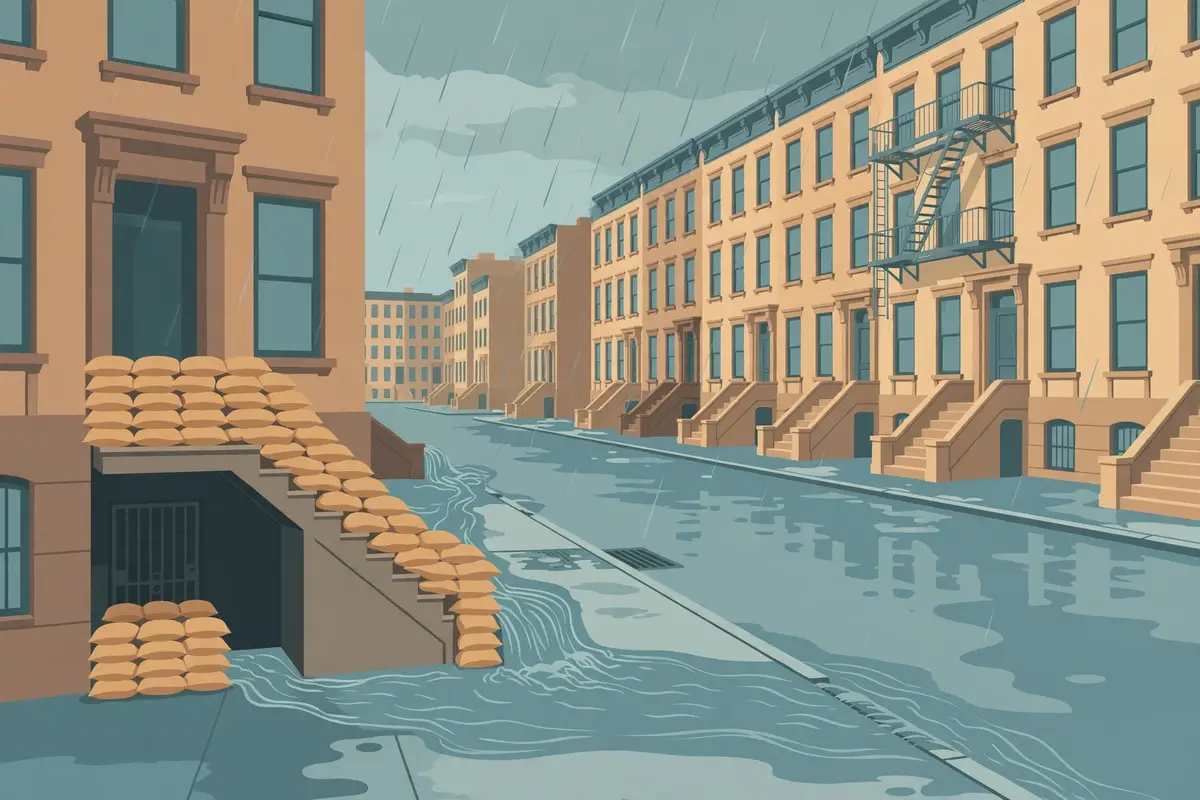
Flood Zones, FloodHelpNY, and Knowing Your Risk Before the Rain

Illustration of a New York brownstone street in heavy rain, with water pooling at the curb, running toward basement stairwells, and sandbags stacked at a basement entrance
Rainfall flooding on a residential block: the water reaches basements through stairwells, windows and drains long before it reaches the front door.

Every flood conversation in this city eventually reaches a map. The federal flood maps divide land into zones by risk, and the high risk zones, the ones labeled with letters such as AE and AO, are where flood insurance is required for federally backed mortgages and where the building code's flood rules bite hardest. But the maps are a starting point, not a prophecy. Much of the flooding that wrecks New York basements now arrives as intense rain on streets nowhere near a river, in homes whose owners were told, correctly, that they sat outside the high risk zone, and incorrectly, that this meant they sat outside the risk. The map gap is one reason flood damage restoration NYC now talks about rain as much as rivers.

FloodHelpNY exists to close that gap between the map and the weather. It is run by the Center for New York Homeownership, a nonprofit, with support from the Governor's Office of Storm Recovery, federal disaster recovery funding and the Mayor's Office of Climate and Environmental Justice. On the site, a homeowner can look up the flood risk of an address, learn what the zones mean, work through what to do to protect the home, and find routes to lower flood insurance costs, including programs for eligible low and middle income households, such as help with a backwater valve. It is free, it sells nothing, and for flood damage restoration NYC it is the reference this page sends readers to for the risk side of the story, because a restoration page that only talks about the last flood has done half its job.

Two facts from FloodHelpNY deserve to travel with every reader. The first is the insurance fact, stated plainly there: homeowners insurance does not cover flooding. The second is the elevation fact: the city's Design Flood Elevation usually sits at the Base Flood Elevation plus 2 feet. Between those two facts sits the whole economics of a New York flood: the cover you probably do not have, and the height your rebuild will be measured against. Learn both in fair weather. The page you are reading exists for the other kind.

DFE, Freeboard and Flood Vents: the Appendix G Layer

When a flood job reaches the rebuild, three terms from the Building Code's flood appendix start deciding real things in your home, and they are worth knowing before a contractor uses them at you. The Base Flood Elevation, BFE, is the height the flood maps assign to the expected flood at your building. The Design Flood Elevation, DFE, is the line the rules actually build to, and in New York City it usually sits at the BFE plus 2 feet. That extra 2 feet is the freeboard, a safety margin built into the number itself. The code's flood appendix, Appendix G, sets the DFE at BFE plus 2 feet for most classes of building, and reserves a higher test, the 500 year flood elevation, for the most critical facilities. Three terms, one ruler: the flood appendix is the measuring stick of flood damage restoration NYC at rebuild time.

The DFE decides where things go. Utilities are elevated against it, under tables in the same appendix that spell out how high equipment must sit. Flood vents are placed by it, in the walls of enclosed areas below it. Materials below it are chosen by it. And after a flood that crosses the substantially damaged threshold, the DFE becomes the permit line for the whole rebuild, which is why the insurance section of this page and this section belong to the same conversation. A homeowner does not need to memorize Appendix G. A homeowner needs a crew that works from it without being asked, and can show, on the wall with a tape and a pencil, where your building's flood line falls.

Flood vents deserve their plain English moment, because they sound backwards the first time: they are openings designed to let floodwater into an enclosed foundation area, and out again, on purpose. The reason is pressure. Water piled against one side of a wall, with dry air on the other, pushes hard enough to crack or topple foundation walls. Water allowed to flow through and equalize mostly threatens what is stored in the space, not the bones of the building. FloodHelpNY explains vents in exactly those terms, as protection against structural damage from water pressure. In the rebuild, vents are sized and placed by rule, not by eye, and they are one of the cheapest structural protections a flood prone building can own. Vents are a small line item with structural consequences, which is why flood damage restoration NYC specifies them by rule.

Hurricane Ida and the Basement Apartment Lesson

In September 2021, the rain from Hurricane Ida fell on New York City faster than the city could carry it away, and the water found the lowest homes first. Fourteen people died in the city, thirteen of them directly because of the storm. Eleven of the dead drowned in basement apartments. Eight of those eleven were in illegal basement apartments, units with too few ways out, where the water rose through the stairwell and the windows at night and the only exit was up through the flood itself. Those numbers, drawn from the public health record of the storm, are the reason this page refuses to treat basement flooding as a property topic with a safety footnote. In this city, it is a safety topic with a property footnote. Ida rewrote the safety chapter of flood damage restoration NYC permanently.

The city's emergency guidance now speaks to basement residents in so many words: during heavy rain, move to a higher floor. Know your flood risk before the storm, keep a go bag where you can grab it, and do not wait to see how deep it gets, because the lesson of Ida is that below grade, the water's speed is the danger, arriving in minutes through doors and windows that were dry an hour before. Landlords and supers carry part of this duty: a basement unit's occupants should know the building's flood history and the plan for a heavy rain night, and a building that cannot describe that plan has homework that outranks every repair on this page.

For flood damage restoration NYC, Ida also changed the work after the water. Basement apartment recovery is its own service line on this page's list, because bringing a below grade home back means more than drying it: it means egress checked, electrical inspected, the entry points the water used identified and hardened where the law allows, and an honest conversation about what the unit needs before anyone sleeps in it again. A crew that dries a basement flat and hands back the keys without that conversation has finished the easy half of the job.

311, the DEP, and Rainfall Ready NYC: the City Routes

New York runs its water problems through 311, and knowing which report to file is part of flood literacy. Raw sewage backing up into a home gets reported to 311 immediately, and the Department of Environmental Protection takes it from there, checking whether the blockage or surcharge sits in the city main or in the building's own line, a distinction that decides whose repair bill it is and supports your claim either way. Sewage problems generally are the route FloodHelpNY gives homeowners too: when in doubt, call 311 and let the city sort the plumbing map. Keep the confirmation number. A dated city record of when the water arrived and what kind it was is independent evidence, and insurers read it differently from a homeowner's memory. The confirmation number is a claim document, and flood damage restoration NYC files it like one.

Rain driven street flooding runs on a parallel track. Rainfall Ready NYC is the DEP's action plan for the stormwater flooding that intense rain now brings to streets far from any river: water ponding faster than drains can clear, running at basement stairwells and window wells. The city's 311 knowledge base carries the program's stormwater flooding maps, which show where street flooding is expected to run worst, and checking your block on those maps is a fair weather errand worth ten minutes. If your street is on them, the sandbags, the pump backup and the crew's number belong in the home before the forecast, not on a shopping list written during it. That readiness is the fair weather half of flood damage restoration NYC.

What the city routes do not do is pump your basement or dry your walls; that work is yours and your crew's. What they do is create the official record, fix the public half of a public problem, and, in the case of a sewer backup, put the city's own inspection between you and an argument about where the water came from. File the report even when you are sure the fault is private. The record costs a phone call, and on claim day it is worth a folder of photographs. File first, argue later is a working rule of flood damage restoration NYC.

Talk to a flood crew about your flooded rooms

Tell us where the water came in, how deep it stood and what it touched, and get the scope, the removal list and the drying plan in writing. Call (212) 555-0147. If sewage is backing up right now, call 311 first and report it to the DEP, then call us with the confirmation number in hand.

Insurance: the Homeowners Policy Stops at the Water Line

Start with the sentence that surprises flooded homeowners every storm season: a standard homeowners policy does not cover flooding. FloodHelpNY states it without decoration, and the whole structure of flood recovery in this country is built around it. Flood cover is a separate policy, bought through the National Flood Insurance Program or from a private flood insurer, with its own rules, its own adjusters and its own clocks. The confusion is understandable, because a homeowners policy does cover other water: a burst pipe, a failed water heater, sudden and accidental water from inside the building. The line the policies draw is where the water came from. Inside water, usually covered. Outside water rising as a flood, not covered, unless flood cover was bought on its own.

That line is why the first diagnostic question in flood damage restoration NYC is always where the water came from, and why the answer gets written down. A basement wet from a failed sump pump, a basement wet from a surcharged sewer and a basement wet from a flooded street can look identical at the door and belong to three different claims, three different policies and three different arguments. Sewer backup cover, in particular, is usually an add on that many homeowners do not know whether they bought. Read your policy in the first day, or have your agent read it to you, and get the coverage answer in writing before the scope of work is priced against the wrong pocket.

The federal program behind most flood policies is large and old: it has paid out tens of billions since 1978 across millions of claims, and its rulebook, the NFIP Claims Handbook, is the document the next sections quote from directly. The program's habits are the habits to learn: a waiting period before a new policy protects you, a sworn Proof of Loss on a deadline, a definition of substantial damage that changes rebuilds, and a mold exclusion that rewards fast drying. None of it is intuitive, and all of it is knowable in advance, which is what the rest of this insurance section is for. The insurance literacy in the next sections is part of flood damage restoration NYC, not a detour from it.

The NFIP Clocks: 30 Days, 60 Days, and 4 to 8 Weeks

Flood insurance runs on three numbers, and a flooded homeowner should know all three by the end of the first phone call. The first is 30: the waiting period. Flood policies typically take 30 days to go into effect, a rule FloodSmart and FloodHelpNY state identically, which is why flood cover is bought in fair weather and why a policy purchased as a storm approaches cannot help with that storm. If you are reading this page dry, that number is your errand. Buy the cover, note the date it takes effect, and keep the policy where the claim folder will live.

The second number is 60: the days you have to file a Proof of Loss, the sworn statement of your claim, after a flood. The figure comes from page 23 of the NFIP Claims Handbook, checked in the handbook itself for this page, not repeated from a summary. Sixty days sounds generous until the drying, the demolition and the adjuster visits fill them, which is why the folder starts on day one: photographs before cleanup, damaged items kept for the adjuster, samples saved, receipts and logs added as the job creates them. Extensions are sometimes announced after very large declared disasters, but no household budget should be planned around an extension that has not been announced. Sixty days is the deadline flood damage restoration NYC builds its paperwork calendar around.

The third number is a range: 4 to 8 weeks, FloodSmart's figure for how long a flood claim can take to be finalized and paid, with rare cases running longer. That clock runs beside the work, not inside it, and it explains a common frustration: a home can be dry and rebuilt while the claim is still being reviewed. Run the paperwork in parallel with the pumps, keep the claim number on every document, and if the process stalls past the clocks New York law sets, the next section's rules and the Department of Financial Services consumer line at (800) 342-3736 are the route. The disaster hotline at (800) 339-1759 covers declared disaster questions.

Substantially Damaged: the 50 Percent Line

One definition in the flood rulebook changes the legal shape of a rebuild, and it is pure arithmetic. A building is substantially damaged when the cost of restoring it to its condition before the damage equals or exceeds 50 percent of its market value before the flood, not counting the land. The definition sits on page 24 of the NFIP Claims Handbook, and this page quotes it carefully because owners consistently mishear it in two directions: the value in the test is the structure alone, not the whole property with its land, and the cost in the test is the full restoration, not the insurance payout. Both halves of the fraction matter, and flood damage restoration NYC documents the cost half as it works.

Cross the line and the job changes category. Flood resistant building rules attach to the rebuild: the design flood elevation governs, flood vents and elevated utilities move from good practice to permit conditions, and the city reviews the work on that basis. Stay below it and the work is a repair, documented and inspected but without the added flood design layer. Either way, the arithmetic is an argument about numbers, which is why the claim file matters so much: the restoration cost side of the fraction is built from the same scope, removal list and estimates that the crew writes, and the market value side is a figure you may want independently supported rather than accepted from the first letter that arrives.

The practical advice is to ask the question early. A crew experienced in flood damage restoration NYC will flag a job that is anywhere near the line during scoping, because a rebuild planned as a simple repair and reclassified mid job loses weeks. If your flood took a ground floor to the studs, assume the question is live until someone shows you the arithmetic that settles it.

Mold After a Flood, and What the Flood Policy Does Not Cover

FloodSmart's sentence on this is short enough to memorize: mold damage is not covered under standard NFIP policies. The applied rule has one nuance, and it is the nuance that organizes the first two days of every flood job. The exclusion turns on mold the owner could have avoided. Mold that grows because a flooded home sat wet, closed and unpumped is the owner's loss, stacked on top of the flood loss. Mold prevention, in other words, is not a housekeeping preference; it is the boundary between the covered claim and the uncovered one, and it is drawn at 24 to 48 hours, the window the CDC gives for cleaning and drying or removing wet items before mold establishes. The 24 to 48 hour window is the metronome of flood damage restoration NYC.

This is the honest reason flood crews talk about speed in the language of money rather than drama. Extraction on day one, removal of what cannot dry, and air movement verified by readings are what keep the second, uncovered job from growing on the back of the first. It is also why the drying log matters to the claim: the log is evidence that the home was dried as fast as the work allowed, if the mold question is ever argued. Photograph the flood damage itself with special care, because the water damage is the claim, and the file has to show what the flood did on day one separately from anything damp did later. Separation of the two losses, flood and mold, is a documentation skill inside flood damage restoration NYC.

Two boundaries keep this section honest. A homeowners policy is a different contract with its own mold terms and limits, so the flood exclusion is not the last word for every household; read yours or ask your agent. And when mold work itself passes ten square feet in New York, the state's mold licensing law, Article 32, enters, with licensed assessors and remediators and a rule that the same licensee cannot do both on the same property. The mold pages of this site carry that law in full. The flood page's job is simpler: dry fast, document the drying, and do not let an uncovered problem grow out of a covered one.

After September 30, 2026: the New Contract Line

One date in the flood program changed recently, and because older pages across the internet still carry older dates, this page states it from the statute. The law authorizing the National Flood Insurance Program, 42 U.S.C. Section 4026, as amended on February 3, 2026, now reads that no new contract for flood insurance under the program shall be entered into after September 30, 2026. That date, September 30, 2026, is in the past as this page is published in November 2026, which means the sentence has to be read as it stands: the federal authority to write new flood contracts has lapsed. That lapsed authority is now a fixed fact that flood damage restoration NYC plans around.

Two clarifications keep the fact from being misread, and both matter to real households. First, the line governs new contracts. A policy already in force when the date passed stays in force to the end of its own term; nobody's existing cover evaporated on October 1. Second, what Congress does next, renewal of the authority, changes to the program, or nothing, is not something this page can know, and any page that tells you the program's future with confidence is guessing at legislation. What can be said is what follows for a New York homeowner today: an existing flood policy is a document to guard and renew on time, and a household without one should ask an agent what private flood cover exists rather than assume the federal door stands open.

This site corrects its own record on the same point. Earlier pages in this series were written while a different date circulated in summaries of the program's authorization, and a correction pack for those pages has been prepared from the same statute text used here. The rule this page follows is the one it recommends to readers: when a date decides money, read it in the primary source, and when the primary source changes, change the page.

Regulation 64 and the Disaster Rule: New York's Claim Clocks

Separate from the federal flood clocks, New York law sets the clocks for how insurers handle claims in this state, and two rules do most of the work. The everyday rule is Regulation 64, 11 NYCRR Section 216.6, the state's fair claim settlement regulation. Once proof of loss is in, the insurer has 15 business days to accept or reject the claim. Once an amount is agreed, payment is due within 5 business days. And an investigation can be extended by up to 15 additional business days under the same section. Fifteen, five and fifteen: those are the numbers that govern most New York claims, and they are why the date you sent your proof of loss is a date to keep proof of. Dates are leverage, and flood damage restoration NYC treats the claim calendar as part of the job.

The disaster rule is narrower and widely misquoted, so here it is with its address attached. Insurance Law Section 2618(d) says an insurer shall pay any amount finally agreed in settlement of a claim not later than four business days from receipt of the agreement. Section 2618 applies to disasters, a declared emergency involving a natural disaster or terrorism, and it carries its own accept and reject clocks with its own extensions. It is not part of Regulation 64, and pages that credit the four day rule to Regulation 64 are wrong. In a declared disaster flood, both systems may be in play; in an ordinary one building flood, Regulation 64 is the clock that applies. A related pair of numbers completes the picture: a claim can be sued on within 24 months under Insurance Law Section 3404, and a public adjuster's fee in New York is capped at 12.5 percent under the state's adjuster rules, a figure worth knowing before signing with anyone who offers to handle your claim for a percentage.

None of these clocks enforce themselves. They run from documents received, which is why the claim folder, the dated photographs and the proof of sending are the homeowner's side of the machinery. When a clock is missed, the Department of Financial Services consumer line at (800) 342-3736 is the next call, and it lands differently when the caller can recite dates. Flood damage restoration NYC crews who work claims weekly build their paperwork to these clocks without being asked. If yours has never heard of Regulation 64, that tells you something about how often they finish the paperwork half of this trade.

Is It Permanent? Reading Flood Damage Without Panic

Permanent is the word flooded homeowners reach for at 3 a.m., and it helps to know that no EPA or CDC page defines permanent water damage. There is no official test with a pass mark. What exists is a set of signs the trade and the federal guidance rely on, and one hard legal benchmark. The signs: warping and swelling that does not settle as materials dry, staining that survives cleaning, drywall and wood gone soft or crumbly to the touch, a musty odor that persists after full drying, and mold established in materials that cannot be cleaned. The EPA's material rule sits underneath all of them: what is absorbent and cannot be cleaned and dried is lost, and what is non-absorbent and can be scrubbed usually is not. The material rule is the triage of flood damage restoration NYC, applied item by item.

The benchmark is the substantially damaged line from the insurance section: restoration cost at 50 percent or more of the building's market value without the land. Below that line, almost everything about a flood is a repair question with a price and a schedule. Above it, the job becomes a regulated rebuild. Between the signs and the benchmark sits the instrument that settles arguments, measurement. Moisture mapping with meters and thermal imaging finds the water still hiding in wall cavities, under floors and inside cabinet voids, and hidden water is the raw material of permanent damage. Most flood damage that ends up permanent got that way by being left wet and unmeasured, not by being severe on day one. That is the hopeful reading of this whole page: permanence is usually a delay, not a depth. That reading is the hopeful core of flood damage restoration NYC: measure early, dry fast, and permanence rarely gets its chance.

Restoration or Cleanup: Where This Page Sits on the Site

This site keeps flood cleanup and flood restoration on separate pages because they are separate purchases, and confusing them costs money in both directions. Cleanup is the middle of the job: extraction, removal of ruined material, cleaning, sanitizing and drying, ending at a clean, dry shell. Restoration is the whole arc, from the emergency call through cleanup and on into the rebuild, and after a serious flood, a rebuild done to flood resistant standards. The flood cleanup page of this site covers the cleanup stage after flood events in depth. This page covers the full restoration after a flood event, including the flood insurance route, the city routes and the code layer, because a flood is the one water problem where all of those enter the job at once.

The neighbours of this page mark its borders. The emergency page covers the first hour of any water disaster. The water removal page covers extraction alone. The process page walks the general restoration method step by step. The water damage cleanup page covers cleanup after water is out, for every kind of water, while this page is the flood event specialist: outside water, contamination, zones, NFIP, Ida's lesson and Appendix G. If your water came from a pipe, those pages are your home. If it came from the sky, the street or the sewer, you are in the right place, and the distinction will matter to your claim. Choosing the right page is the reader's version of the first diagnosis in flood damage restoration NYC.

When the Flood Is Your Neighbour's Problem First

Not every apartment flood starts in the sky. In a New York building, water obeys the same gravity for everyone, and a flood in the unit above, a failed terrace drain, a roof ponding over your ceiling, becomes your restoration whether or not it was ever your water. The honest legal starting point is that there is no universal rule for who pays, and this page will not invent one. What decides it is where the water came from, what the lease and the building's documents say, and which policies are in force: the neighbour's, the landlord's, the building's and yours. Insurers settle that argument between themselves, with your file in front of them.

Your side of the work is fixed even while liability is argued. Document everything yourself, with dated photographs, because the file written for you is the one you control. Report the problem to the owner or landlord first; in a rental that is the city's stated route, and if the building side is not fixed, report it to 311 and the Department of Housing Preservation and Development takes it from there, with inspections and violations where they are earned. Your own belongings are usually your side of the line, which is what renters insurance exists for. And dry the rooms on the claim's schedule, not the argument's: the 24 to 48 hour mold clock does not wait for liability to be assigned, and flood damage restoration NYC crews document whose water it was as carefully as how deep it stood, precisely because the two files, the drying file and the liability file, are built from the same photographs.

Room by Room: Where Floods Do Their Work

The basement and cellar

The basement is where New York floods live. It takes street water at the stairwell, groundwater through the floor, sewage at the drains and surge at the bulkhead, sometimes in the same storm. It also holds the home's machinery, furnace, water heater, electrical panel, laundry, and its storage, which is why a basement flood is a systems event and not only a wet floor. Restoration here runs the full six steps with the safety rules at their strictest, and ends with the plumbing layer answered: pump, valve, vents, lifted utilities. A basement dried without that layer is a basement waiting for its next page of history. The basement is where flood damage restoration NYC is won or lost, in both directions.

The ground floor and garden level

Ground floors flood from the street up and the garden level floods from everywhere. These are living spaces, kitchens and bedrooms, so the contents stakes are highest here and the removal decisions hurt most. The work follows the material rule room by room: tile and sealed surfaces cleaned and kept, soaked soft furnishings and particle board photographed and released. Where the ground floor sits below the design flood elevation, the rebuild conversation about materials and vents is not optional decoration; it is the difference between the next flood being a mop and a claim, or a second run of this entire page.

Kitchens and bathrooms

Cabinets are the flood's favourite hiding place. Pressed board boxes swell and split and are usually lost; solid wood and plywood sometimes survive to be cleaned. Water runs under toe kicks and sits in the void beneath, wetting the floor sandwich from below, which is why a kitchen can smell flooded weeks after the floor reads dry. Bathrooms fare better on surfaces, tile and porcelain are the EPA's clean and keep category made visible, and worse underneath, where a soaked subfloor under tile hides until it softens. Both rooms get opened, read with meters and argued about with adjusters more than any other rooms in the home. Kitchens and bathrooms are the contested rooms of flood damage restoration NYC, meter by meter.

Upper floors

Upper floors flood secondhand: through the roof in a storm, from a terrace or a neighbour, or not at all. Their role in a flood job is often as the dry reference, the place where the crew takes the comparison moisture readings that define what dry means for the materials below, and as the household's refuge while the lower floors are a work site. When an upper floor is wet after a storm, the entry point is above it, and the restoration question becomes a building envelope question, roof, flashing, parapet and drains, before it is a drying question.

Building by Building: the New York Layer

A brownstone cellar, a prewar co-op's ground floor, a garden apartment in a Queens two family and a Staten Island raised ranch can take the same foot of water and produce four different jobs. The brownstone brings rubble foundations, a cellar that was never meant to be living space and party walls shared with neighbours whose cellars flood in sympathy. The co-op brings governance: a super and a managing agent to notify, building rules about contractor insurance and work hours, and an alteration layer if the rebuild grows past repair. The two family brings a landlord upstairs and a tenant below, with the HPD route in the background and two households' belongings in the same water. The detached house brings its own lot: grading, leaders, a driveway that acts as a funnel, and no one to call but the crew and the city.

What unites them is the sequence and the paperwork. What divides them is access, approvals and the entry point diagnosis. Flood damage restoration NYC is local work in the literal sense: the crew that knows which blocks pond in a cloudburst, which buildings share a house drain, and which managing agents want the certificate of insurance before the pump crosses the lobby will finish days ahead of a crew learning the building during the emergency. Ask any company you interview which floods it worked in your neighbourhood and what the water did there. The answer is a map of whether they know your ground or only their own brochure.

Commercial Flood Restoration: Shops, Restaurants and Ground Floor Business

A flooded business runs the same six steps on a harder clock, because every closed day is revenue gone and because the public walks through the result. Ground floor retail, restaurants and offices take street flooding at the storefront and sewer backups at the floor drains, and they add inventory, equipment and health rules to the contents problem. A restaurant's flood is also a health department story: flood touched food is discarded, full stop, and surfaces are cleaned and sanitized to food service standards before reopening is discussed. Stockrooms concentrate the loss; a foot of water in a storage basement can exceed the damage in the shop above it. Inventory turns a commercial flood into an accounting event, and flood damage restoration NYC documents it that way.

The claim side differs too. Commercial policies carry their own terms, business interruption among them, and the disaster rule in Insurance Law Section 2618 runs on commercial clocks of its own, with longer accept and reject windows than the non-commercial ones. Documentation discipline is the same and the stakes are larger: photographs before anything moves, a removal list an accountant could follow, and drying logs that show the business mitigated its loss promptly, which interruption claims are judged on. The commercial page of this site covers business water damage in full; this page's commercial note is narrower. If your business floods from the street or the sewer, the flood rules on this page, contamination, city reports, flood policy, flood resistant rebuild, govern the job, whatever the sign over the door says.

Talk to a flood crew before the adjuster visits

The adjuster will judge your flood largely by the file: photographs, removal list, drying log, readings. Get the file built right from day one. Call (212) 555-0147 and describe the flood while the evidence is still standing in the rooms.

Two Real Flood Jobs on Video, Labeled Honestly

This site links working films of real jobs instead of embedding players, and it labels what each film is and is not. The first is a genuine New York flood film: SOS Mitigation's before and after walkthrough of three flooded basements in this city, the kind of ground truth that shows what extraction and drying actually look like in NYC basements rather than in a studio. The second is a short before and after case study from Crew Restoration and Construction, running a minute and a half, showing hidden water damage taken through to a full restoration; its location is not stated by the channel and this page does not claim one for it. Watch both with the six steps in mind and you will see the order this page teaches: document, extract, remove, dry, rebuild. The films show flood damage restoration NYC as it looks from the doorway: unglamorous, sequential, and physical.

SOS Mitigation, three flooded basements in New York City, before and after: youtube.com/watch?v=AV3Ld3UnKmA

Crew Restoration and Construction, from hidden water damage to full restoration, location not stated: youtube.com/watch?v=Rlas6UV78jI

A note on why the labels are so careful: flood videos online are routinely filmed in one state and marketed in another, and a page that asks for your trust on insurance deadlines should not spend it on a film's geography. Where a location could not be verified, this page says so, the same standard it applies to prices, dates and laws.

What the Research Behind This Page Found

This page was researched the way the rest of this site is researched: keyword data pulled fresh, competitor pages read in full, primary sources opened rather than summarized, and the gaps between all three turned into the page's table of contents. The keyword picture, reported from both tools side by side because they disagree and averaging them would invent a third number that neither measured: SEMrush puts the search flood damage restoration nyc at a volume of 50 with a keyword difficulty of 11 percent, rated very easy, and a commercial intent. Moz puts the same search at a volume of 43, a difficulty of 35, rated low, with a transactional intent and no AI Overview on the results page. The variants were confirmed exactly as the site's keyword sheet listed them: flood restoration nyc at 50 and 12 percent, flood damage restoration new york at 50 and 9 percent, and flood restoration new york at 40 and 26 percent.

The keyword gap analysis, run between the two largest national names in this market and filtered to flood terms, is where several sections of this page came from. The most searched questions the leaders are missing are the ones homeowners actually ask: basement flooded what to do, at 720 searches and 4 percent difficulty; does homeowners insurance cover flood damage, at 590 and 23 percent; flood water cleanup at 590 and 28 percent; flooding basement what to do at 480 and 27 percent; and sump pump for flooded basement at 480 and 24 percent. Every one of those questions is answered on this page in its own section or answer, because a page built from research should be traceable back to it. The gap list is a table of contents written by searchers, and flood damage restoration NYC on this page follows it.

The competitor reading was blunter. Six flood and restoration competitors serving this city were read page by page: the big national hub, two national franchises' local pages, a Manhattan specialist with the strongest local angle in the market, and the thinnest flood only site in the results. Between them they offer a handful of short FAQs, response time promises and process prose. Not one of them covers the NFIP, the Proof of Loss deadline or the 30 day wait. Not one covers NYC flood zones or FloodHelpNY. Not one covers the 311 and DEP routes, the Ida basement deaths, or Appendix G and the design flood elevation. The schema comparison told the same story in code: across ten measured competitor pages, FAQ schema appeared on three, how to schema on one, an offer catalog on one, and the thinnest flood site carried no structured data at all, while the single ratings block in the set belonged to a directory's aggregate, not a contractor's own work. This page's answer to that field is depth where the field is thin: thirty questions answered in full, six steps, fifteen services, and the New York layer carried end to end.

Three Checklists Worth Printing

The first hour

The claim folder

The rebuild

Mistakes That Make Flood Damage Worse

The first mistake is entering the water. It is contaminated, it may be charged, and six inches of it moving can take a person off their feet; belongings are never the right trade. The second is pumping before photographing, which trades a claim's evidence for an hour of speed the job did not need. The third is the opposite delay: waiting days to start, out of shock or indecision, while the mold window closes and the wicking climbs. Flood damage restoration NYC is a race, but it is a race run in order, and both mistakes, skipping the order and skipping the start, lose it.

The fourth mistake is closing too early: paint and new drywall over framing that still reads wet, because the surface felt dry and everyone wanted the room back. The fifth is throwing away evidence, bagging the damaged items before the adjuster visit and keeping no samples. The sixth is mixing cleaners, bleach with ammonia above all, in a closed wet room. The seventh is rebuilding the room exactly as it flooded, same materials at the same heights with the same unguarded drains, which is not a restoration but a rehearsal. Every one of these is avoidable with the contents of this page, and every crew interview should include asking how the company prevents the fourth, because it is the one that hides longest. Every mistake on this list is one flood damage restoration NYC is organised to prevent.

A Realistic Timeline, Stage by Stage

Day one is safety, documentation, extraction and the start of removal, with the claim opened and the city reports filed. Days two and three finish the removal and settle into drying: machines placed, sanitizing done, readings taken daily and logged. The rest of the first week and beyond is drying time, which the EPA honestly bounds at several days to weeks depending on how much water the structure drank; a tiled ground floor with open walls and a finished basement with insulation are different jobs wearing the same name. The adjuster visit lands inside this stretch, while the file is being built. The two clocks, drying and claim, run side by side through flood damage restoration NYC.

The rebuild follows the dry numbers, not the calendar: demolition of what must be replaced, the flood resistant work where it applies, vents, valve, lifted utilities, then finishes. Behind the work, the claim runs its own 4 to 8 weeks toward final payment, and the Proof of Loss deadline at 60 days sits across the whole schedule like a fence. A realistic promise from a crew is therefore a sequence with checkpoints, readings, the adjuster date, the filing date, not a single finish date announced at the door. Ask for the sequence in writing and measure the company by whether the checkpoints arrive.

Questions to Ask Before You Hire a Flood Crew

One answer to listen for carefully is the credential answer. The EPA names the bodies that credential this trade, NEHA, AIHA, IICRC and ACAC among them, and it runs no certification program of its own and keeps no contractor list. A company that claims EPA certification is telling you, in its first answer, how it handles the truth. The companies worth hiring answer these questions the way this page does: with numbers, documents and dates that can be checked.

The Seasons of Flooding in New York

New York floods on a calendar, though no season is safe. Late summer and autumn bring the tropical systems and their remnants, the Idas, which drop rain faster than the drains were ever designed to carry and push surge into the coastal neighbourhoods at the same hour. Spring brings nor'easters and snowmelt, slower water with longer standing time. Summer brings the cloudburst: a single cell that parks over three neighbourhoods and delivers a season of rain in an hour, flooding basements in streets that have never seen a river. Winter is quietest for rain and cruelest for the aftermath, when a flooded basement's drying fights cold air and a broken heating plant is part of the same event. Seasonal timing is preparation, and preparation is the cheapest stage of flood damage restoration NYC.

The practical use of the calendar is preparation timing. Flood insurance bought in spring is in force by hurricane season, because of the 30 day wait. Pumps are tested and backups fitted before the months that need them. Sandbags, the crew's number and the claim folder system live ready before the forecast, not during it. And after any flood, the debrief belongs in the folder too: which door the water used, what the depth was, what the fix is. A household that floods twice the same way has been given information the first time. Flood damage restoration NYC, done properly, ends with the home and the household both harder to flood than they were.

Words This Trade Uses, in Plain English

Flood cut. The straight cut that removes drywall above the water line so wet material comes out and framing can dry in the open.

Wicking. Water climbing upward into dry material by capillary action, the reason damage reaches above the water line.

Moisture mapping. Finding and recording where water has travelled, with meters and thermal imaging, including the water you cannot see.

Freeboard. The safety margin added above the expected flood height; in this city, the 2 feet between the BFE and the DFE.

Surcharging. A sewer running so full in a storm that it flows backward into buildings, the flood a backwater valve exists to stop.

Proof of Loss. The sworn written statement of a flood claim, due within 60 days of the flood.

Substantially damaged. The legal line where restoration cost reaches 50 percent of the building's market value without the land, and flood resistant rebuild rules attach.

CAT 3. The trade's most serious water category, water assumed contaminated; floodwater is handled as CAT 3 by default.

How This Page Was Researched and Checked

The facts on this page were checked against primary sources on November 24, 2026. The flood cleanup method, the material rules and the drying standard come from the Environmental Protection Agency's flood cleanup guidance. The floodwater dangers and the 24 to 48 hour drying window come from the Centers for Disease Control and Prevention. The claim clocks, the Proof of Loss deadline and the substantially damaged definition come from the NFIP Claims Handbook and FloodSmart. The September 30, 2026 date comes from the statute itself, 42 U.S.C. Section 4026, read in its current amended text. Flood zones, the design flood elevation, flood vents and the backwater valve program come from FloodHelpNY. The Ida figures come from the public health record of the storm. New York's claim clocks come from Regulation 64 and Insurance Law Sections 2618 and 3404, read in the text, including the correction that the four business day disaster pay rule belongs to Section 2618 and not to Regulation 64. Corrections like that one are part of the method behind flood damage restoration NYC on this site.

The market research was run the same day: keyword volumes and difficulty from SEMrush and Moz, reported side by side and never averaged, a keyword gap analysis between the two largest national competitors, a page by page reading of six competitors serving this city, and a structured data comparison across ten measured competitor pages. The homeowner questions come from real discussions among flooded homeowners, including the basement flood thread whose lessons appear in the removal and basement sections, and from the questions the search data itself shows New Yorkers asking. Where a fact could not be verified, this page says so rather than smoothing it over: a video's unstated location, a cost figure no honest source will fix in advance, a liability rule that does not exist in universal form. That standard, primary where possible and labeled where not, is the same standard the rest of this site is built to.

Talk to a flood crew about your written scope

Whether the water is standing now or the rooms are already dry and smelling of the street, the next step is a scope in writing and a drying plan with numbers. Call (212) 555-0147. For claim process questions, the DFS consumer line is (800) 342-3736, and the disaster hotline is (800) 339-1759.

Storm Surge, River Water and Rain: Three Different Floods

New York floods three ways, and flood damage restoration NYC starts by telling them apart, because the water's route decides the claim, the cleanup category and the rebuild. Storm surge is the sea arriving: wind driven ocean water pushing into the coastal neighbourhoods, the Rockaways, Coney Island, the Staten Island shore, the low edges of Brooklyn and Queens, carrying salt, sand and everything floating in the harbour. River and creek flooding is fresh water rising out of its banks after long rain, slower to arrive and slower to leave. Rainfall flooding, the Ida kind, is the sky outrunning the drains anywhere in the city at all, including streets miles from open water whose owners never thought of themselves as flood candidates.

The differences are practical, not academic. Surge leaves salt behind, and salt keeps pulling moisture and corroding metal long after the room reads dry, so a surge job washes surfaces as part of drying and inspects wiring and appliances with extra suspicion. River water carries soil and whatever the banks held. Rain flooding through streets and drains arrives pre mixed with the city's runoff and, where sewers surcharge, with sewage, which is why rainfall floods are handled at the contaminated end of the trade's categories even when the water looks clear. In every case flood damage restoration NYC treats the water as guilty until the source is proven innocent, and the source, stated in writing in the scope, is what the claim is built on.

The three floods also fail buildings differently. Surge tests the structure, pushing on walls and undermining slabs, which is where flood vents and the design flood elevation earn their keep. Rain flooding tests the openings, stairwells, window wells, areaways and drains, the doors this page keeps returning to. River flooding tests endurance, standing longest against foundations and giving wicking and mold the most time. A crew scoping your home should be able to say which flood you had from the evidence in the rooms: the silt line, the salt crust, the debris pattern, the drain stains. That reading is the first skilled act in flood damage restoration NYC, and it happens before a single pump starts.

Households can use the same reading. If your block flooded while the river stayed in its banks, your flood is a drainage story and Rainfall Ready NYC's maps are your reference. If the water came with the tide and left sand in the hallway, yours is a surge story and the flood zone maps and FloodHelpNY are your reference. If it rose from your own drains, yours is a sewer story and the 311 report is your reference. Naming the flood correctly is not trivia. It is how the right policy, the right city office and the right rebuild all get chosen, and it is the question every section of this page quietly answers. Naming the flood is the zeroth step of flood damage restoration NYC, before step one.

How a Flood Job Is Scoped, in Writing, Before Work Starts

A written scope of work is the document that turns a flood from a disaster into a managed job, and in flood damage restoration NYC you should have it before the demolition starts, not after. A proper scope names the rooms, the source and category of the water, the materials coming out, the materials being dried in place, the equipment planned and for how long, the contents plan, and the documentation you will receive: photographs, the removal list, the drying log. It also names what the job is not. The flood resistant rebuild, mold work past the licensing line and repairs beyond the flood damage are separate stages with separate paperwork, and a scope that blurs them into one open ended promise is a scope written to grow.

Scoping a flood is a meter's job, not an eyeball's. The crew maps moisture room by room, checks wall bottoms above the visible water line, looks inside cabinet voids and under floor coverings, and writes a reading next to each decision. That map is why two homes on the same flooded block get different scopes: one took water in the floor finish only, the other has water in the walls, the insulation and the floor sandwich. In flood damage restoration NYC, a company that prices from the doorway without a meter is not being efficient. It is guessing, with your walls and your claim as the stake, and the correction always arrives later as a change order.

Keep the scope in the claim folder and compare it against the final invoice line by line. Work added mid job should arrive as a written change with a reason attached, usually a reading that refused to fall or a cavity that opened wet. Changes happen in honest flood work, because buildings hide things, especially below grade. What separates a change from a surprise is whether you heard about it before the work, with the number that justified it written down. That discipline, scope, measure, document, is the paperwork skeleton of flood damage restoration NYC, and it is the same skeleton the adjuster will read when your claim is judged.

Working With Your Adjuster Without Losing a Week

Adjusters do not pay for water; they pay for documented water. The file that moves a flood claim is the one this page keeps returning to: photographs before anything moved, the written scope, the removal list, daily drying logs, samples of materials, receipts, and any city paperwork, a DEP report number after a sewer backup, a 311 confirmation after street flooding. Send it as one organized bundle with the claim number on every page, and keep your own copy untouched, because files get lost on the other side more often than anyone admits. In flood damage restoration NYC, the crew that builds that file as it works is doing half the claim's job before the adjuster is even assigned.

Expect the adjuster visit to land while drying is under way or just after, and expect photographs and samples to do the talking for rooms that are already clean and dry by then. That is normal, and it is why the before pictures matter so much. If the adjuster's scope comes back smaller than the crew's, ask for the difference in writing, line by line. Flood claims turn on documents, and a difference stated in writing can be answered in writing, with a reading, a photograph or a handbook page. Keep the Proof of Loss deadline, 60 days, on the kitchen calendar where everyone can see it, and treat the adjuster's questions as requests for pages from the folder, not as accusations. That posture, documents over drama, is how flood damage restoration NYC keeps claims moving.

If the process stalls, New York gives you clocks and a phone number. Regulation 64 runs the accept, reject and pay deadlines described in the insurance section, and the Department of Financial Services consumer line at (800) 342-3736 exists for the moment an insurer misses them. Call it with dates in hand: the date of loss, the date the claim opened, the date proof of loss went in. A caller who can recite dates gets a different conversation from a caller with a grievance. That is not cynicism; it is how the machinery is built, and flood damage restoration NYC crews who work claims weekly build their paperwork to feed it.

Finding a Flood Restoration Company Near the Water

Search behaviour after a flood is frantic and local, and the near me search deserves a calm answer. Proximity matters in flood damage restoration NYC for a real reason: the first visit sets the documentation, the extraction start and the drying clock, and a crew crossing the city through storm traffic arrives later than a crew based in your borough. But near is a tiebreaker, not a qualification. The company two neighbourhoods away that answers the questions in this page's hiring section, in writing, with meters and a drying log, will serve your home better than the company on your block that quotes from the doorway and certifies itself with a badge the EPA never issued.

Read local reviews the way you would read the claim file: for documents, not adjectives. The useful reviews name the flood, the street conditions, what was removed, how the readings went and whether the paperwork matched the invoice. The useless ones praise speed in the abstract. After a neighbourhood scale flood, expect every good crew to be busy at once; a company that can start documentation and extraction today and schedule demolition honestly beats a company that promises everything tomorrow and delivers a subcontractor you have never met. Ask who will actually be in your home, and get that answer in the scope. Names in the scope are accountability, and flood damage restoration NYC runs on it.

One more local test separates the field. Ask what the company did in your neighbourhood in the last big rain. Flood damage restoration NYC is accumulated local knowledge: which blocks pond, which buildings share drains, which ground floors took water in Ida and which stayed dry. A crew that knows your ground will say things you can check against your neighbours' experience. A crew that does not will talk about equipment. Equipment is rentable. The map of your street in a storm is not.

Children, Pets, and People Who Breathe Carefully

A flooded home is a workplace until the crew says otherwise, and the household's most vulnerable members set the rules for who stays in it. Children stay out of floodwater and out of rooms being demolished or sanitized, full stop: the CDC's list of what floodwater carries is not a list to test against a child's skin, and the dust from a flood cut is not air for small lungs. Pets belong out of the work zone for the same reasons and one more: an animal tracking through a contaminated basement distributes the flood to every clean room it visits afterward. In flood damage restoration NYC, the crew will tell you which rooms are closed; treat those doors as locked even when they are not.

People with asthma, allergies or weakened immune systems should be out of the building during removal and the first sanitizing, and back only when the rooms are clean, dry and aired. The drying equipment itself is loud and runs around the clock, which is a smaller burden than it sounds until the third night; households with infants or night workers should ask the crew about the equipment plan early, because where the family sleeps during drying is a logistics question with real answers, not an afterthought. If anyone develops a wound infection, a rash or stomach illness after contact with floodwater, that is a medical conversation, and the CDC names those exact illnesses as floodwater's known consequences. Health caution is not fine print in flood damage restoration NYC; it is a work rule.

The kitchen rules are absolute and come from the city's own guidance: fresh food and opened medicines that contacted floodwater are thrown out, without tasting, testing or negotiating. Sealed cans can be washed and kept; the EPA's keep and clean logic covers hard, non-absorbent packaging, and anything absorbent that drank floodwater goes. When in doubt, the photograph comes first and the bin second. No meal is worth the illness list, and no flood damage restoration NYC crew will argue with a household that throws away too much food on day one.

Field Notes: Floods Borough by Borough

Staten Island floods from the sea inward. Its exposed shorelines take surge directly, and its inland low ground ponds behind it, so a single storm can produce both kinds of flood on the same street. The restoration pattern there is surge discipline: salt aware washing, corrosion suspicion, and rebuilds measured carefully against the flood maps, because the island's zones are not abstractions. Flood damage restoration NYC on Staten Island is as close as this city gets to coastal work, and the flood resistant rebuild section of this page was written with its ground floors in mind.

Queens floods from the sky and the drains. The borough holds both the coastal exposure of the Rockaways and Jamaica Bay and the vast inland neighbourhoods where Ida's rain overwhelmed the sewers and took the basement apartments. The Queens pattern is rainfall and sewer water in below grade homes, which is why the backwater valve, the 311 report and the basement safety rules run through this page. A Queens flood job is usually a documentation job as much as a drying job, with landlords, tenants and the city all holding pieces of the file. Queens is where flood damage restoration NYC most often becomes a three party job: household, building and city.

Brooklyn floods at its edges and in its cellars. The waterfront districts take surge and high water; inland, the brownstone cellar, never built as living space, takes street water through areaways and coal chutes and holds it against rubble foundations. The Brooklyn pattern is old building physics: masonry that drinks slowly and dries slower, party walls that share moisture with the neighbour, and cellar machinery, boilers and panels, sitting exactly where the water arrives. Drying times run long in brownstones, and honest crews say so at the scope, not at the invoice. Brownstone drying times are local knowledge, and flood damage restoration NYC prices them honestly or not at all.

The Bronx floods along its rivers and under its cloudbursts. The Harlem and Bronx river corridors carry mapped risk, and the borough's housing stock, from elevator buildings to two families, repeats the Queens basement pattern in storm after storm; the most recent confirmed city water event before this page was written was a Bronx water main break, a reminder that the borough's water arrives from inside the pipes too. Manhattan floods at its seams: the low edges that remember being shoreline, the deep basements of large buildings where a single surcharged drain becomes a hundred tenants' problem, managed through supers, engineers and building wide claims. In every borough the sequence is the same six steps. What changes is the water's door, the building's bones and the paperwork's path, and flood damage restoration NYC is the trade of knowing all three for the ground you are standing on.

Questions From the Phone Lines

The water is still rising. What do I do? Get people up and out of its path, call 911 if anyone is at risk, and do not enter it to save things. Crews extract after the water turns; while it is rising, the job is safety, and flood damage restoration NYC begins the moment the water leaves, with the photographs that show how high it stood.

My landlord says the flood is my problem. Is it? The building side, the structure, the systems, the water's entry point, belongs to the owner in a rental, and the city's route is owner first, then 311 and HPD. Your belongings are usually your side. Either way, document everything yourself and start the drying conversation immediately, because mold does not wait for the argument to finish.

Can I stay in the home during drying? Often yes, if the flooded zone can be closed off and the home's systems are safe: power inspected, heating working, a usable bathroom. Ground floor and basement floods that take the panel, the furnace or the only bathroom usually mean nights elsewhere. Ask the crew to answer it room by room at the scope, not in general.

The company I called wants to start demolition today without a written scope. Should I let them? Extraction and safety work, yes, those are urgent. Demolition without a scope, a category decision and photographs first is how claims lose evidence and invoices lose their ceiling. In flood damage restoration NYC, the paperwork takes an hour and protects five figures of argument. Let them pump, photograph everything together, and get the scope signed before the first wall opens.

After the Crew Leaves: Living With the Drying

There is a stretch in the middle of every flood job that belongs to the household, not the crew: the days when the machines run, the rooms are half open, and normal life has to happen around the noise. Air movers and dehumidifiers are loud in the way a window air conditioner is loud, constant and impossible to fully ignore, and they run around the clock because stopping them stops the drying clock that flood damage restoration NYC is racing. Plan for it honestly. Move the household's sleeping to the quietest dry room, warn the neighbours below and beside, because the hum travels through joists, and keep children and pets out of the drying zone, where cords, open walls and treated surfaces are not a playground.

The crew returns on a rhythm during this stretch, usually daily, to take readings, move equipment from dry areas to wet ones and write the log. Those visits are short and they are the job's steering wheel. A reading that falls on schedule means the plan is working; a reading that stalls means a cavity is opened or a machine is added, and the change arrives in writing with the number attached. Ask to see the log whenever you like. It is your document, it will sit in the claim folder, and watching your own wall's number fall day by day is the most reassuring graph in flood damage restoration NYC.

The end of drying has a specific feel: the smell goes first, then the readings reach the dry standard, then the machines leave and the house is suddenly very quiet. Do not let the quiet rush the rebuild. The moisture test, wood at 15 percent or less, is the gate, and the plastic sheet check, a sheet taped to a surface for 16 hours that should come away dry, is the version any homeowner can run the night before the walls close. Flood damage restoration NYC ends its middle act on a number, not on a mood, and the households that respect that number are the ones who do not meet their crew again in a month, in a mold conversation nobody wanted.

Questions Flooded Homeowners Ask, Answered Straight

These thirty answers are the questions this market actually asks, drawn from the people also ask boxes, the keyword gap and the flooded homeowners comparing notes, in the order a flooded household tends to meet them. Each answer stands on its own, and the facts in them are the facts checked in the body of this page.

How to tell if water damage is permanent?

There is no official test for permanent damage, so read the signs the trade and the federal guidance rely on. The Environmental Protection Agency flood cleanup guidance draws the practical line by material: non-absorbent items can usually be cleaned and dried and kept, while absorbent items that soaked up floodwater generally have to be thrown away, and what cannot be cleaned or dried is, in practice, permanent loss. The warning signs in a room are warping and swelling that does not settle as things dry, drywall that has gone soft or crumbly, a musty odor that survives full drying, and visible mold. FloodSmart adds the timing point: mold can start within 24 to 48 hours, so acting early is what keeps damage temporary. Moisture mapping and thermal imaging confirm where hidden water is still sitting, and hidden water left alone is what turns a repairable flood into permanent damage.

How long does it take to repair flood damage?

There is no single timeline, because a flood job is several clocks running at once. The Environmental Protection Agency says drying alone usually takes several days to weeks, and rebuilding cannot start until the structure is dry, with wood moisture at 15 percent or less. On top of drying sit the removal of ruined materials, the cleaning and sanitizing, and then the rebuild itself, which depends on how much was removed and what has to be ordered and fitted. A separate clock runs beside the work: a flood insurance claim can take 4 to 8 weeks to be finalized and paid, and that paperwork clock does not speed up or slow down the drying. Competitors in this search say the same thing in shorter words: the time depends on the extent of the damage and the source of the water. Any crew that gives you a finish date before the first moisture reading is guessing. In flood damage restoration NYC, that measurement step, not a guess at the door, is what separates a drying plan from a hope.

How much does it cost to repair flood damage?

This page does not publish prices, and neither do the flood companies that rank for this search, so anyone quoting a firm figure before seeing your home is guessing. What the bill depends on is plain: how much water came in and how far it spread, which materials it touched, whether the floodwater was contaminated or carried sewage, whether mold work is needed, how much structure has to be rebuilt, the size of the area, the equipment and monitoring the drying takes, and which finishes come out and go back. Whether a policy covers the work, and which policy, changes the picture again. The fair way to get a number for your home is an on site inspection with a moisture assessment, followed by an itemized written estimate, with the insurer confirming coverage first. Call and describe the flood, and the crew can tell you what the first visit covers.

How long does it take to fix water damage in an apartment?

An apartment runs on the same physics as a house, with two extra layers: the building and the neighbours. The size of the wet area decides the base timeline, and water that arrived from above, through a ceiling, is a different job from water that rose from below. Drywall, flooring and ceilings may need to be opened and dried, and mold remediation, if growth has started, adds its own stage. The Environmental Protection Agency drying window, several days to weeks, is only phase one; repairs and insurance approval follow after it. Homeowners comparing notes online describe the pattern honestly: one condo owner had the ceiling opened and fans placed after an upstairs leak, and months later the drying was still not finished. In a New York apartment, add the super, the managing agent and the unit above or below to the schedule, because access and approvals are part of the timeline, not paperwork after it.

Does homeowners insurance cover flood damage?

No, and this is the single most expensive misunderstanding in flood work. A standard homeowners policy does not cover flooding. FloodHelpNY, the nonprofit run by the Center for New York Homeownership, states it plainly: homeowners insurance does not cover flooding, and flood cover is a separate policy, bought through the National Flood Insurance Program or a private flood insurer. That surprises people because homeowners policies do cover many other kinds of water, such as a burst pipe, and the two get confused at the worst moment. The gap keyword research behind this page shows the confusion is widespread: does homeowners insurance cover flood damage is one of the most searched missing questions in this market, searched hundreds of times a month. If your home sits anywhere near water, or downhill from it, the time to learn which policy you hold is before the storm, not standing in the water after it. It is also why flood damage restoration NYC is priced from readings and an itemized scope, never from a photograph of a puddle.

What is FloodHelpNY and how does it help?

FloodHelpNY is a free public resource run by the Center for New York Homeownership, a nonprofit, with support from the Governor's Office of Storm Recovery, federal disaster recovery funds and the Mayor's Office of Climate and Environmental Justice. Its job is to help New York homeowners understand their flood risk and act on it before water arrives. On the site you can look up the flood risk of an address, learn which flood zone a home sits in, understand what to do to protect the home, and find ways to lower flood insurance costs. It also connects eligible low and middle income homeowners to risk reduction programs, such as the backwater valve program. It is not a restoration company and it does not sell insurance. For flood damage restoration NYC homeowners, it is the honest starting point for the risk side of the story, the side that decides how bad the next flood gets.

What is the 30-day waiting period for flood insurance?

It is the gap between buying a flood policy and the policy starting to protect you. FloodSmart, the federal flood insurance site, and FloodHelpNY both state the rule the same way: flood insurance policies typically take 30 days to go into effect. A policy bought today does not cover a flood that arrives next week. There are narrow exceptions, such as a policy bought in connection with a home purchase closing, but the planning rule is the 30 days. This is why flood insurance is a fair weather purchase. Every autumn, New Yorkers watch a storm track toward the coast and try to buy cover the same week, and every autumn the waiting period means the cover cannot help with that storm. If this page is reaching you before a flood, the 30 day clock is the most useful number on it. If it is reaching you after one, the claim clocks in the insurance section are the numbers that matter now. Flood damage restoration NYC crews see the other end of that same 30 days: the claim that exists because someone bought cover in fair weather.

What is a Proof of Loss and when is it due?

A Proof of Loss is the sworn written statement of your flood claim: what was damaged, what it was worth, and what you are asking the flood insurer to pay. For a National Flood Insurance Program claim it is due within 60 days of the flood. That figure comes from the NFIP Claims Handbook itself, page 23, checked directly for this page rather than repeated from a summary. The statement is only as strong as the file behind it, which is why the guidance from FloodSmart is to photograph all the damage before cleanup and keep damaged items until the adjuster has seen them. Photographs, the removal list, drying logs and receipts are what turn the form from an assertion into evidence. Extensions are sometimes announced after very large declared disasters, but the safe plan is to work to the 60 day line from the date of the flood and start the folder on day one.

What does substantially damaged mean after a flood?

It is a legal line with big consequences for how a home may be rebuilt. The NFIP Claims Handbook, page 24, defines it by arithmetic: a building is substantially damaged when the cost of restoring it to its condition before the damage equals or exceeds 50 percent of its market value before the flood, not counting the land. Cross that line and the rebuild stops being a simple repair. Flood resistant building rules attach to the job, the same world of design flood elevations, freeboard and flood vents covered elsewhere on this page, and permits are handled on that basis. Stay below the line and the work is a repair, still documented, still inspected, but without the added flood design layer. The market value in the test is the value of the structure alone, which is why the figure sometimes surprises owners who were thinking of the value of the whole property, land included.

Does NFIP cover mold damage?

Not under a standard policy. FloodSmart states it plainly: mold damage is not covered under standard National Flood Insurance Program policies. There is a nuance in how the exclusion is applied, and it matters. The exclusion turns on mold the owner could have avoided: mold that grows because a flooded home sat wet and unopened is the owner's problem, while the flood damage itself remains the claim. That single rule shapes the whole order of work after a flood. Drying within the first 24 to 48 hours is not just good building practice, it is what keeps the uncovered loss from growing on top of the covered one. Photograph the flood damage thoroughly before cleanup, dry fast and keep the drying records, because the file has to show the difference between what the water did on day one and what damp did later. A homeowners policy is a separate contract with its own mold terms, so check yours or ask your agent. Flood damage restoration NYC lives downstream of that definition, because crossing the line changes what may legally be rebuilt and how.

How long does an NFIP claim take?

FloodSmart gives the planning figure: a flood insurance claim can take 4 to 8 weeks to be finalized and paid, and rare cases take longer. That clock sits beside the work, not inside it. Drying runs on moisture readings, rebuilding runs on materials and permits, and the claim runs on the adjuster visit, your Proof of Loss, which is due within 60 days, and the insurer's review. The practical lesson is to run the paperwork in parallel with the pumps, not after them. Start the claim the day of the flood, photograph everything before cleanup, keep damaged items until the adjuster has seen them, and keep the claim number on every document you send. If a claim stalls past the clocks New York law sets, the Department of Financial Services consumer line at (800) 342-3736 can tell you what the insurer owes you in process, and the disaster hotline at (800) 339-1759 covers declared disaster questions.

Can I still get flood insurance after September 30, 2026?

Not as a new National Flood Insurance Program contract. The federal statute that authorizes the program, 42 U.S.C. Section 4026, as amended on February 3, 2026, now reads that no new contract for flood insurance under the program shall be entered into after September 30, 2026. That date is about new contracts, not about policies already written. A policy already in force stays in force to the end of its own term, and this page states the point carefully because the two are often confused. What Congress does next with the program is a question this page cannot answer, and any site that promises you a future rule is guessing. The practical reading for a New York homeowner is simple: an existing flood policy is a document to keep current and renew on time, and anyone without one should ask an agent what private flood cover exists, rather than assume the federal door is open.

What should I do first when my basement floods?

Safety first, paperwork second, water third. Stay out of the floodwater: it can be contaminated and it can be electrically charged, and six inches of moving water can knock a person down. Shut off power only if you can reach the breaker dry and safely; if water is above outlets or you are unsure, stay out and call for help. Call 911 if anyone is in danger. If sewage is backing up, call 311 and report it to the Department of Environmental Protection right away. Then, from dry ground, photograph everything: the water line on the walls, the rooms, the belongings, before anything is moved or pumped, because those pictures are the backbone of the claim. Then call a flood damage restoration NYC crew to start extraction. The order matters. Photographs taken after the water is gone cannot be retaken, and a basement entered carelessly can turn a property loss into an injury.

What do I do when my basement floods?

Work the same sequence the professionals work, in order. Stop the source if you safely can: a failed sump pump, a burst line and street water rising through the drains are three different floods with three different fixes. Document everything before cleanup, with wide shots and close shots of every room and the water line on the walls. Get the water out fast, with pumps and extraction, treating the water as contaminated. Take out what soaked it up and cannot be cleaned: wet drywall, insulation, carpet and pad in the flood zone. Then clean, sanitize and dry, and start that drying inside 24 to 48 hours, because that is the window before mold gets going. Keep damaged items until the adjuster has seen them, and keep every record in one folder. A homeowner thread that restorers still point to describes the same shape from the other side of the bill: fans and dehumidifiers running 48 hours and more, and demolition that removed material well above the water line.

What is a sump pump and does it help after a flood?

A sump pump sits in a pit at the lowest point of a basement and pumps groundwater out before it can spread across the floor. It is a prevention and control device, not a cleanup device. While a basement is flooding, a working pump limits how deep the water gets and how long it stays, which is why a failed sump pump is one of the most common basement flood stories there is: homeowners comparing notes describe waking to five inches of water in a finished basement office because the pump quit during the storm. After the flood, the pump's job is mostly done, and extraction equipment takes over. The lessons are two. First, a pump needs a backup: a battery or water powered second pump for the outage that so often arrives with the storm. Second, when a crew scopes your basement, tell them whether the pump ran, failed or was overwhelmed, because that answer helps separate a plumbing claim from a flood claim.

How do I stop basement flooding?

There is no single fix, because basements flood by different doors: groundwater rising through the floor, street water entering at the stairwell or windows, sewer water backing up through drains, and surface water running downhill toward the foundation. Each door has its own hardware. A sump pump with a backup handles groundwater. A backwater valve stops sewage flowing back into the home. Flood vents relieve water pressure on foundation walls in a true flood. Grading and drainage move surface water away from the building, and elevating utilities keeps the furnace and electrical gear above the water that does get in. FloodHelpNY walks homeowners through this menu and connects eligible households to programs that help pay for parts of it. The honest first step is a diagnosis: which door did your water use? A crew that scopes a flooded basement should answer that question in writing, because stopping the next flood starts with naming the last one correctly. Flood damage restoration NYC scopes the prevention with the same care as the repair, because a basement that floods twice the same way was told something the first time.

What is a backwater valve?

A backwater valve is a one way gate fitted in a home's sewer line. Waste water can flow out to the city sewer, but when the city sewer surcharges during a storm and tries to flow backward, the gate closes and the sewage stays out of your basement. FloodHelpNY describes the device and runs a backwater valve program that is free for eligible applicants, which is worth checking before paying privately. The valve answers one specific flood: the sewer backup, where the water rising in your basement is the city's water arriving through your own drains. It does nothing against groundwater or street water entering over the sill. If sewage has already backed up into your home, call 311 and report it to the Department of Environmental Protection immediately, treat everything the water touched as contaminated, and photograph before cleanup. A valve is a small piece of plumbing that prevents the single most unpleasant flood a basement can have.

When do I call 311 after flooding?

Call 311 the moment the problem involves the city's systems. The clearest case is raw sewage backing up into your home: the Department of Environmental Protection asks that it be reported immediately, and your 311 report creates the record that helps decide whether the fault sits in the city main or in your building line. Call 311 also for sewage problems generally, which is the route FloodHelpNY gives homeowners as well. Street and stormwater flooding after heavy rain, water ponding and running toward buildings because drains cannot keep up, runs through a related city route, the Rainfall Ready NYC program, which the next answer covers. Keep the confirmation number from every report with your claim file. A dated 311 record is independent evidence of when the water arrived and what kind it was, and insurers and landlords both take a city timestamp more seriously than a memory.

What is Rainfall Ready NYC?

Rainfall Ready NYC is the Department of Environmental Protection's action plan for the kind of flooding that now defines New York water damage: intense rain falling faster than the drains can carry it, ponding in streets and running into basements. The plan is about preparing the city and its residents for heavy rain events, and the city's 311 knowledge base carries its stormwater flooding maps, which show where street flooding is expected to be worst. For a homeowner, the useful moves are to check whether your block sits in a stormwater flooding area, know which door rain water uses to reach your basement, and have the sandbags, pump and crew number ready before the forecast turns. Rainfall driven flooding is different from a coastal storm surge, and both are different from a sewer backup, and the claim route and the fix differ with the kind. This page treats the three as separate floods throughout, because the city does.

What happened to basement apartments during Hurricane Ida?

Ida is the reason this page treats basement flooding as a life safety subject, not only a property subject. When the storm's rain overwhelmed the city in September 2021, 14 people died in New York City, 13 of them directly because of the storm. Eleven of the dead drowned in basement apartments, and 8 of those 11 were in illegal basement apartments. The water arrived at night, fast, through the same doors this page describes: stairwells, windows and drains, in homes where the only way out was up a flooded stair. New York City Emergency Management now tells basement apartment residents plainly: during heavy rain, move to a higher floor. If you live in a basement unit, that sentence is the most important one on this page. Know your flood risk, watch the rain forecasts, keep a go bag ready, and never try to ride out rising water below grade or save belongings while it is rising.

What is the Design Flood Elevation, or DFE?

The Design Flood Elevation is the height, in feet above a fixed datum, that flood resistant building rules use as their reference line for a given building. In New York City it usually sits two feet above the Base Flood Elevation, the height flood maps assign to the expected flood. FloodHelpNY gives the working version: the city's DFE is usually the BFE plus 2 feet of freeboard, and the city Building Code's flood appendix, Appendix G, builds its tables on the same arithmetic for most building classes. The DFE decides practical things in a rebuild: how high utilities must be elevated, where flood vents go, and which materials may be used below the line. After a flood that crosses the substantially damaged threshold, the DFE stops being an abstraction and becomes the ruler your rebuild is measured against. A crew rebuilding a flooded ground floor should be able to tell you your building's DFE and show you where it falls on your walls. Flood damage restoration NYC measures every serious rebuild against that line, whether the permit requires it or not.

What are flood vents?

Flood vents are specially designed openings in a foundation or enclosure wall that let floodwater flow in and out of a building instead of piling up against one side of it. FloodHelpNY explains the purpose in one line: the openings let water pass so that pressure does not build up and damage the structure. Still water pressing on a wall from outside, with dry air inside, can push a foundation wall in; water allowed to equalize on both sides mostly threatens contents, not the building's bones. Vents belong to the flood resistant rebuild layer of this work, alongside elevating utilities and choosing materials that can survive wetting. They are sized and placed under the Building Code's flood rules, not by guesswork, and they matter most for enclosed areas below the design flood elevation, such as crawl spaces and ground floor enclosures. In a post flood rebuild, ask where the vents go and why, and expect an answer tied to your flood zone.

Is floodwater dangerous?

Yes, and the safe habit is to treat all of it as contaminated until proven otherwise. The Centers for Disease Control and Prevention lists what floodwater can carry: downed power lines and electrical charge, human and livestock waste, hazardous waste and chemicals, coal ash, germs, sharp debris, and animals such as rodents and snakes. City emergency guidance adds oil and gasoline and raw sewage to the same list. The illnesses that follow contact include wound infections, skin rash, gastrointestinal illness and tetanus. Stay out of floodwater where you can. If you must enter it, wear rubber boots, gloves and goggles, and wash with soap and clean water afterward. Never walk or drive into moving floodwater: six inches of it can knock a person down. Children and pets stay out entirely. This is also why flood damage restoration NYC crews treat floodwater as the most serious water category and wear protective gear as standard, not as an extra.

How soon must wet items be dried after a flood?

Within 24 to 48 hours. The Centers for Disease Control and Prevention gives that window for cleaning and drying, or removing, wet items after a flood, because it is the window before mold gets established on wet material. The Environmental Protection Agency flood cleanup guidance runs on the same clock. Everything in a flood job is sequenced around those two days: extraction first, then removal of what cannot dry, then air movement and dehumidification verified with moisture readings. The window is also why the order of calls matters on day one. Photograph first, because the claim needs it, but photograph fast, because the drying clock is already running while you do. A home that is pumped, opened and drying inside the first day usually avoids the mold chapter entirely. A home that sits closed and wet for a week has added a second job, mold work, on top of the flood job, and flood insurance does not cover the mold. Flood damage restoration NYC is sequenced around those two days from the first phone call.

What should I throw away after a flood?

Sort by material, the way the Environmental Protection Agency flood cleanup guidance does. Absorbent items that soaked up floodwater and cannot be cleaned and dried completely generally get thrown away: carpet and pad, soaked insulation, wet drywall, swollen particle board and upholstered furniture that sat in dirty water are the usual list. Non-absorbent items can usually be cleaned and dried and kept: metal, glass, hard plastic, china and solid wood that can be scrubbed. City emergency guidance adds the kitchen rule: throw out fresh food and opened medicines that contacted floodwater, without tasting or testing. Two habits protect you while you sort. Photograph everything before it goes, and keep damaged items, or at least samples, until the adjuster has seen them, because a thrown away item with no photograph is an argument waiting to happen. When in doubt about an absorbent item that sat in sewage water, let it go.

How long does drying take after a flood?

Usually several days to weeks. That is the Environmental Protection Agency's own wording for flood drying, and it holds up in practice. The spread inside that range is decided by how much water the structure drank: a tiled ground floor with open walls dries at one speed, and a finished basement with insulation, paneling and contents dries at another. Drying is finished by measurement, not by feel. The EPA guidance gives the rebuild test: do not rebuild until wood moisture is 15 percent or less, checked with a moisture meter. A crew should take readings daily, write them in a drying log, and compare wet materials against a dry sample of the same material elsewhere in the home. Surfaces feel dry days before wall cavities and floor sandwiches are dry, and closing a wall on a damp reading is how a flood job turns into a mold job a month later. Ask for the log, not a promise. Flood damage restoration NYC crews will not rebuild over a reading, however impatient everyone is to have the room back.

What is the difference between flood damage restoration and flood cleanup?

Cleanup is one stage inside restoration. Flood cleanup is the work of getting the water out, removing what the flood ruined, cleaning and sanitizing what it touched, and drying the building. Flood damage restoration is the whole arc, from the emergency call through cleanup and on into the rebuild: putting back drywall, floors and finishes, and, after a serious flood, rebuilding flood resistant, with vents, elevated utilities and the right materials below the flood line. This site keeps the two on separate pages on purpose. The flood cleanup page covers the cleanup stage after flood events in depth. This page covers the full restoration after a flood event, including the insurance route and the rebuild, because a flood is the one water problem where the claim, the city and the building code all enter the job. Knowing which stage you are buying stops you paying twice for the same work or skipping the stage that protects the next flood.

Who pays when a neighbour's flood damages my apartment?

There is no universal rule, and any page that gives you one is oversimplifying. What decides the answer is where the water came from, what your lease and the building's documents say, and which policies are in force: the neighbour's, the landlord's and your own. The practical route in a New York rental is fixed even when liability is not. Document everything yourself, with photographs and dates, and report the problem to the owner or landlord first. If the owner does not fix the building side, report it to 311 and the Department of Housing Preservation and Development takes it from there. Your own belongings are usually your side of the line, which is what renters insurance exists for. Keep every message, every 311 number and every photograph in one folder, and let the insurers argue about liability with a complete file in front of them. A restoration crew can dry and rebuild the rooms; it cannot assign blame, and a good one will not pretend to. Flood damage restoration NYC documenters build that file as the work happens, not from memory at the end.

What does a flood restoration crew do first?

It finds the water, including the water you cannot see. The first visit is an assessment: where the flood came in, how far it spread, which materials drank it, and what category the water is. Crews use moisture meters and thermal imaging for moisture mapping, because floodwater wicks up drywall, hides under flooring and pools in wall cavities that look untouched from the room. That map decides the scope: what gets extracted, what gets removed, what gets dried in place, and what the insurance file will say. Companies in this market describe the same first move in their own words, assessment and detection of hidden water before equipment is placed. Only after the map exists does extraction begin, followed by removal, cleaning and drying with daily readings. If a company quotes a full price from the doorway without a meter in hand, it is guessing with your walls as the stake, and the guess will be corrected later at your expense. That first visit is where flood damage restoration NYC either earns its fee or spends yours.

How do I choose a flood restoration company in NYC?

Judge the paperwork before the promises. A company worth hiring is licensed and insured for work in the city, trains its technicians to the trade's standards, gives an itemized written estimate after an on site inspection with moisture readings, documents the job with photographs and drying logs, and works with insurers every week. On credentials, be precise: the Environmental Protection Agency names the bodies that credential this trade, including NEHA, AIHA, IICRC and ACAC, and the EPA itself runs no certification program and keeps no list of approved contractors, so treat any badge claiming EPA certification as a warning sign. Ask for references from flood jobs, not pipe leaks, because flood work adds contamination, city reporting and flood insurance paperwork to the job. Ask who handles the 311 and DEP side if sewage was involved, and ask what the crew does in the first 24 to 48 hours, because that window decides the mold question. The answers, in writing, are the company.
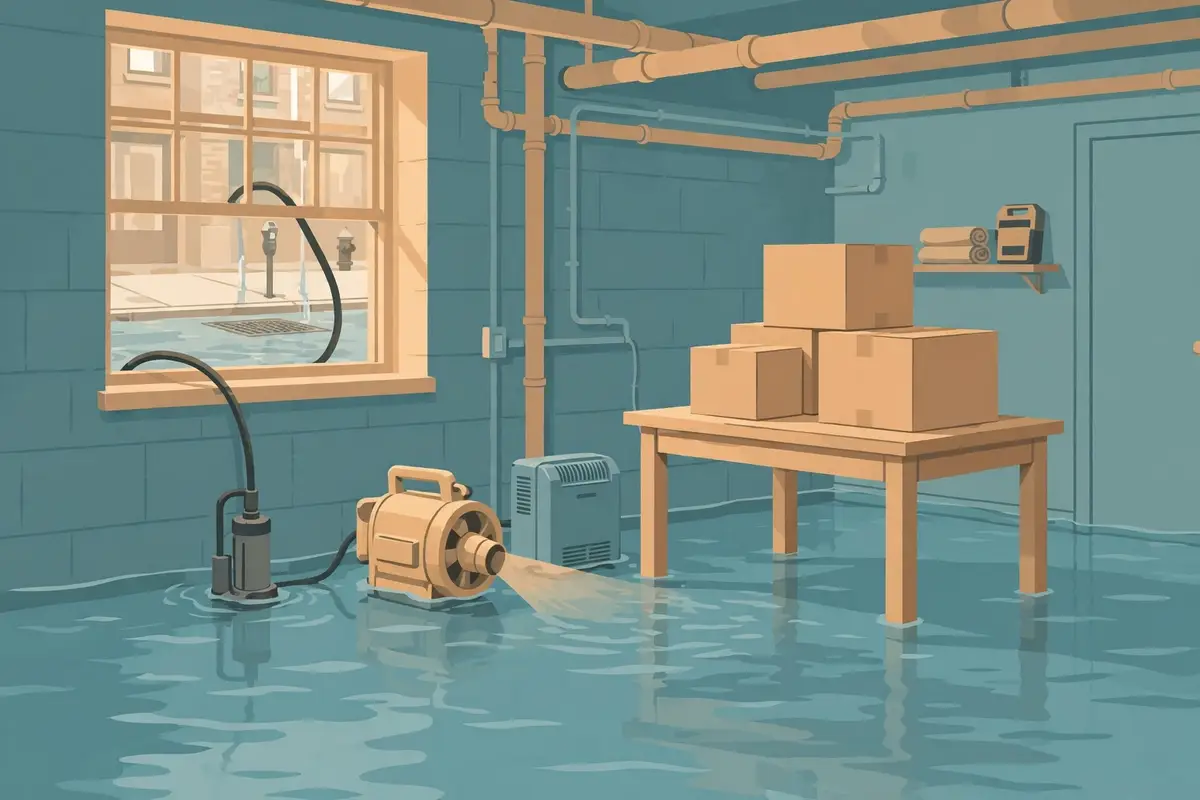
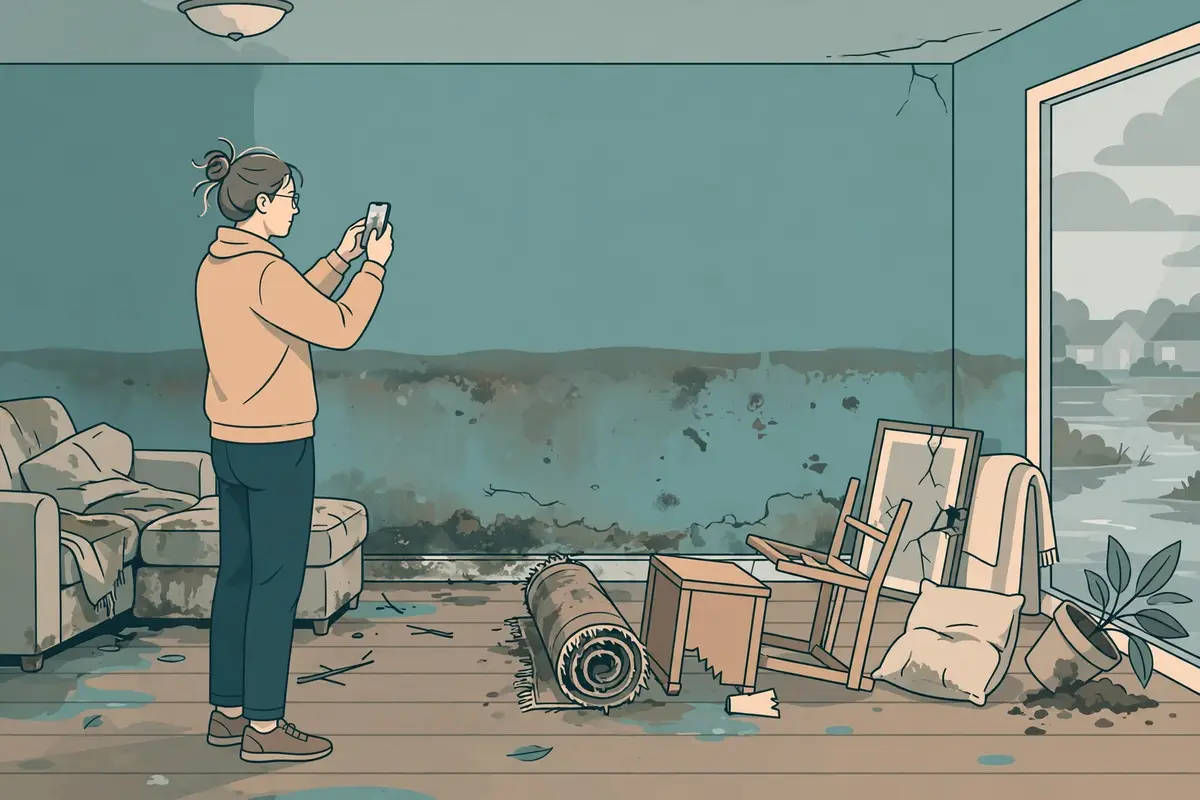
All Fifty-Six Pages, in One Place

Every page on this site, in the order it was built. The other forty-nine each take one question, one place or one stage of the work. This page, the fiftieth, takes the flood event itself.

Site Home

Home page for restoration help across New York

Brooklyn

Borough page for Brooklyn homes hit by leaks and floods

Queens

Borough page for Queens homes, from Astoria to Far Rockaway

The Bronx

Borough page for Bronx homes and buildings

Staten Island

Borough page for Staten Island homes

Long Island

Regional page for Nassau and Suffolk homes

Manhattan

Borough page for Manhattan apartments and buildings

Insurance Claims in New York

How claims work in New York, step by step

Water Behind Walls in NYC

Finding and fixing hidden water inside walls

Fire Damage in NYC

Help after fire, smoke and the water that put it out

Flood Cleanup in NYC

Cleanup after flood events, street water and storms

Remediation in NYC

The remediation stage explained for city homes

Fire Cleanup in NYC

Cleaning up after a fire, room by room

Rochester

City page for Rochester homes

Albany

City page for Albany homes

Buffalo

City page for Buffalo homes

Syracuse

City page for Syracuse homes

Yonkers

City page for Yonkers homes

New Rochelle

City page for New Rochelle homes

Mount Vernon

City page for Mount Vernon homes

Schenectady

City page for Schenectady homes

Utica

City page for Utica homes

White Plains

City page for White Plains homes

Troy

City page for Troy homes

Niagara Falls

City page for Niagara Falls homes

Binghamton

City page for Binghamton homes

Westchester County

County page for Westchester homes

Hudson Valley

Regional page for Hudson Valley homes

Capital Region

Regional page for Capital Region homes

Western New York

Regional page for the western end of the state

Finger Lakes

Regional page for Finger Lakes homes

Central New York

Regional page for Central New York homes

Southern Tier

Regional page for Southern Tier homes

NYC Hub

The city hub page tying the borough pages together

How Fast Mold Grows

The timeline of mold growth after water gets in

Mold Removal in NYC

Removing mold from city homes, safely and legally

The Full Process

The whole restoration process, step by step

What Restoration Means

A plain definition of the whole trade

Mold Remediation in New York

Licensed mold work under New York rules

Water Removal in NYC

Extraction only: pumps, vacuums and standing water

Water Damage in the City

The broad city page for water problems at home

Nyack Cleanup Page

Cleanup help for Nyack homes in Rockland County

Choosing a Company

How to pick a restoration company you can trust

Commercial Properties in NYC

Water problems in shops, offices and buildings

Basements in NYC

Basement water problems, from seepage to floods

Repairs in New York

The repair stage that follows cleanup and drying

Poughkeepsie

City page for Poughkeepsie homes

Emergencies in NYC

The emergency page: speed, safety and the first hour

Water Damage Cleanup NYC

The cleanup stage after water is out, room by room

Flood Damage Cleanup Washington Heights

Cleanup after floods for Washington Heights homes

Does Insurance Cover Water Damage Restoration

Whether insurance covers water damage restoration, explained plainly, by cause and New York rule.

Water Damage Mold Remediation

Mold that grew after a leak or flood, remediated the New York way, by licensed assessor and remediator.

Water Damage Restoration Companies New York

Compare the companies serving New York: national franchises, regional firms and local independents, and how to verify licences and certification before you hire.

Water Damage From Upstairs Neighbor

Water damage from an upstairs neighbor in New York City: who pays, what to do in the first hour, and how to document, report and claim.

How Long Does Water Damage Restoration Take

How long water damage restoration takes, stage by stage, from extraction and drying to the final repairs.