Water Damage Restoration in New Rochelle: Sound Storms, River Floods and Flooded Basements in the City of Huguenots

The short version, with sources
Seven Facts About Water Damage in the Queen City of the Sound
Seven facts decide most water damage restoration new rochelle jobs, and each one below is stated with the source it comes from, so it can be checked and quoted exactly as it stands.
Last updated: November 2026
- An automated station in New Rochelle measured 7.79 inches of rain during Hurricane Ida on 1 September 2021, according to the National Weather Service (NWS) final storm totals.
- Flooding closed North Avenue between City Hall and Iona University on 29 September 2023, and CBS New York reported Dorchester Gardens residents still out of their homes about four weeks later.
- Roads along the New Rochelle waterfront were impassable under 3 to 4 feet of standing water on 27 October 2018, according to the National Weather Service (NWS).
- The Federal Emergency Management Agency (FEMA) counted 599 flood insurance policies, 719 claims and 286 repetitive loss properties in New Rochelle in its July 2021 figures.
- Mold can begin growing within 24 to 48 hours on material that stays wet, according to the U.S. Environmental Protection Agency (EPA), which is why extraction starts the day the water is found.
- The 2022 Citywide Drainage Study divided New Rochelle into six basins, and the city identified 170 flood mitigation projects under a 10 year capital plan in fall 2023, according to the City of New Rochelle.
- Professional drying follows ANSI/IICRC S500, the standard published by the Institute of Inspection, Cleaning and Restoration Certification (IICRC), and a job ends when meter readings reach the dry standard, not when a surface feels dry.
How this page works
Readings Before Promises: The Paper Trail Behind Every New Rochelle Job
Any crew can promise fast. What separates a real water damage restoration new rochelle job from a fan and a hope is paperwork: readings, logs, photographs and standards that a second crew, an adjuster or a court could check later.
Drying to a named standard
Work follows ANSI/IICRC S500 for water damage and, where mold is involved, the mold standard and New York Labor Law Article 32 licensing. Equipment leaves when readings reach the dry standard.
Standard named on the job sheetMoisture mapping before machines
Every job starts with a moisture map: pin and pinless meter readings, thermal imaging where it helps, and the wet boundary marked before extraction, so nothing wet is left hiding behind a dry looking wall.
Readings logged dailyPaperwork built for the claim
Photographs before and during work, a written log with times, drying charts and an itemised scope, built for the claim file from the first visit, not reconstructed from memory weeks later.
Built for the claimPlaceholders, stated plainly
The business name, phone, address, licence details and reviews for this service are placeholders until the real details are supplied. Nothing on this page invents a rating, a review count or a licence number.
Nothing inventedThat honesty matters in New Rochelle more than most places. The loudest local website in this trade is a lead generation template with no real city depth, and the strongest local page belongs to a firm based in the next town. A homeowner comparing water damage restoration new rochelle companies deserves better signals than that: a named standard, a moisture map, a drying log and a written scope. Those four things are checkable on day one, before any money moves, and they are what this page is built to promise and to show.
The water on the east side
Nine Miles of Shoreline: How Long Island Sound Gets Into New Rochelle Homes
New Rochelle holds about 9.3 miles of waterfront once the islands and inlets are counted, and every water damage restoration new rochelle crew learns the same lesson early: the Sound does not need a hurricane to get inside a house.
The mechanism is simple and it repeats. Wind pushes Sound water toward the Westchester shore. A rising tide lifts it higher. Rain arrives on top of both, and the storm drains that should carry the rain away are held shut by the tide, so the water ponds on the lowest shore roads and starts looking for doors, window wells and garage slabs. Davenport Neck, Premium Point, Echo Bay and the Glen Island shore sit closest to that line, and their ground floor rooms are the first rooms in the city to take water.
The record shows how ordinary the event can be. On 27 October 2018, with no famous storm name attached, roads along the water became impassable under 3 to 4 feet of standing water, according to the National Weather Service (NWS). On 23 December 2022, two days before Christmas, seawater flowed far inland at Glen Island Park, Neptune Park was submerged and boats floated above Town Dock. Neither day was a once in a generation storm. Both days put salt water into shore homes, and salt water is Category 3 work: contaminated, corrosive to wiring and metal, and hard on plaster and hardwood long after it dries.
Shore water also behaves differently once it is inside. It carries silt and whatever the harbour held, it leaves a tide line of debris at the high mark, and it keeps wicking salt into masonry that later shows as white staining and crumbling mortar. A water damage restoration new rochelle crew that treats a Sound flood like a burst pipe, extract, dry, leave, will miss the cleaning and disinfection the category demands and the salt the walls are holding.

The parks tell the same story as the houses. Glen Island Park sits low in the harbour and was built to be a pleasure ground, not a fortress, which is why seawater flowed far inland there in December 2022 and why the park floods honestly and early, almost as a gauge for the neighbourhoods behind it. Neptune Park went under the same day, and boats floated above Town Dock. When the parks are wet, the streets behind them are next, and shore residents who learn to read the parks, the tide and the wind together get their warning hours before the water reaches a door. Echo Bay Yacht Club and the marinas live by the same reading: the Sound announces itself to people who watch it.
The city knows this ground is exposed. Its Coastal Erosion Hazard Areas law, City Code Chapter 127, regulates building along the shore, and the Shoreline basin in the 2022 drainage study covers the waterfront neighbourhoods as their own flood problem. If your home stands within a few streets of the water, the working assumption on this page is blunt: the question is not whether the Sound visits, but whether the house is ready, with raised storage, working drains, flood cover in force and a crew number saved before the forecast turns. That readiness is the homeowner half of the job.
Sound water in the house?
Salt water is Category 3 work: safety first, then extraction, cleaning and measured drying. Call any hour.
The benchmark storm
Hurricane Ida in New Rochelle: 7.79 Inches in a Single Night
On 1 September 2021 the remnants of Hurricane Ida crossed the region, and water damage restoration new rochelle work changed for years: Ida is the storm every basement in this city is now measured against.
An automated station in New Rochelle measured 7.79 inches of rain that night, and a citizen weather station recorded 7.12 inches, according to the National Weather Service (NWS) final storm totals. Rain at that rate does not drain; it accumulates. Streets became channels, catch basins drowned under their own water, and basements took water in every one of the six basins the city would later draw on its drainage map, from the Hutchinson corridor to the Shoreline. It remains the benchmark night for this trade in this city.
The city reported substantial damage to pavement, sewers, storm drains, a dam and footbridges, a list worth reading slowly, because it describes public ground failing at the same moment private basements were filling. When the storm drains and sewers are damaged by the same water they were meant to carry, the homeowner lesson is uncomfortable and useful: no city system is sized for 7.79 inches in a night, and the houses that came through best were the ones with their own defences, a working sump, raised storage and nothing irreplaceable at floor level.
One figure from that night needs care. Five people died in Westchester County during Ida. That is a county total, reported for the county as a whole, and this page does not attach it to New Rochelle, because it does not belong to this city. Accuracy about that night is part of honest water damage restoration new rochelle work. What belongs to New Rochelle is the rain gauge, the damaged drains and the thousands of wet basements, and those are quite enough to explain why Ida is still the first word in any serious conversation about flooding here.
The practical legacy is a checklist. Homes that flooded in Ida and flooded again in September 2023 are now the repetitive loss pattern FEMA counts, 286 properties in the July 2021 figures, a number Ida itself will have grown. Two floods inside 10 years is also the trigger in the city substantial damage rule covered later on this page, which means a second Ida class night is not just a cleanup for some owners; it is a rebuilding standard. Drying fast and documenting everything is how a water damage restoration new rochelle job protects both the house and the claim after a storm like this.
The storm before the records
The Long Island Express of 1938: The Storm That Drew the Shore Map
Long before gauges and drainage studies, the hurricane of September 1938 taught this city where its water line runs, and water damage restoration new rochelle on the shore still works to the map that storm drew.
On 21 and 22 September 1938 the storm remembered as the Long Island Express came ashore at speed, with little of the warning a modern forecast provides. More than 100 homes flooded in New Rochelle. Ten thousand trees were uprooted across Westchester County. The storm surge ran 10 to 12 feet along the coast, a figure worth setting beside the modern shore record: the 3 to 4 feet of standing water that closed roads in October 2018 was a bad day; 1938 was several times that, arriving in a city of wooden houses, coal cellars and no flood insurance programme of any kind.
The shore neighbourhoods carry that history in their building stock. Houses on Davenport Neck, Premium Point and the Echo Bay ground were repaired, rebuilt and in many cases rebuilt again on the same lots, because the lots are beautiful and the water, most years, is a view. The result is a shore housing stock with flood memory built into it: older foundations that have been wet before, ground floors that have been gutted and refinished more than once, and a local understanding, older than any code, that the Sound side of the house is a working surface, not a show surface.
The modern rules grew out of storms like this one. The city Coastal Erosion Hazard Areas law, Chapter 127, regulates what gets built and rebuilt along the shore. The Chapter 111 substantial damage rule, covered in its own section on this page, decides when a twice flooded home must be rebuilt to current floodplain standards rather than simply repaired. Both rules are the 1938 lesson written into law: the water has a map, the map does not change, and building on it is done on the water terms or not at all.
The storm also explains the shape of the modern shore. Glen Island, then as now the city park in the harbour, took the sea directly, and the low parkland and dock areas around Echo Bay were remade by the water. The generation that rebuilt after 1938 built with the memory fresh, and some of that memory is still visible in raised first floors, sacrificial ground level spaces and garages that were clearly designed to be wet and cleaned rather than dry and furnished. Reading an older shore house means reading those decisions: a ground floor that was built as a buffer is a feature, and converting it into finished living space without rethinking the water is how a resilient old house becomes a fragile new claim.
For a homeowner the practical inheritance is simpler. A shore house with a flood history is not a bad house; it is a house whose plan should be written down. What is stored at ground level, where the shutoffs and panel sit, whether flood cover is in force, and which crew number is saved in the phone: those four answers, settled on a calm day, are the difference between the 1938 experience and the modern one. The storm has not changed its behaviour in eighty seven years. The preparation has no excuse not to change.
The inland lesson
North Avenue, 29 September 2023: When the Middle of the City Flooded
The September 2023 storm proved that water damage restoration new rochelle is not only a shoreline trade: the worst address that month was North Avenue, the spine of the city, nowhere near the Sound.
On 29 September 2023 a slow storm dropped heavy rain on ground that could not absorb it, and flooding closed North Avenue between City Hall at 515 North Avenue and Iona University. When the street outside City Hall goes under, the drainage system is not leaking at one point; it is overwhelmed along its whole length. It was a drainage flood, and water damage restoration new rochelle that month was an inland trade. Water found the low commercial ground floors, the basements under the avenue buildings and the residential streets that feed into it, including Palmer Avenue.
Palmer Avenue is where the human figure sits. CBS New York reported that residents of Dorchester Gardens, a two building co-op on Palmer Avenue, were still out of their homes about four weeks after that storm. Four weeks is the number to hold onto. The water itself was gone in a day. What took a month was everything after: drying a multi unit building to one standard, repairing systems, clearing units one by one and moving paperwork through boards, managers and insurers. A flooded co-op is a project, not a cleanup, and the gap between those two words is measured in weeks of residents living somewhere else. That month is the standing example in water damage restoration new rochelle of why co-op drying is a project, not a cleanup.
For single family streets the same storm wrote a smaller version of the lesson. Rain that cannot enter the storm drains stands in the street, then in the driveway, then at the basement door. Homes that had cleared their catch basin grates and area drains before the storm, unglamorous work the city asks for every autumn, mostly watched it pass. Homes that had not, called a water damage restoration new rochelle crew at midnight. Prevention is covered properly later on this page; September 2023 is why it is there.
The water on the north side
The Hutchinson, the Sheldrake and the Brooks: River Water in the North End
Ask a water damage restoration new rochelle crew about the north end and the answer is rivers, not sea: the Hutchinson River, the Sheldrake River and a set of small brooks move more flood water through this city than the Sound does.
The Hutchinson River runs the eastern edge of the north end, collecting a watershed that starts miles upstream. Heavy rain anywhere in that watershed arrives in New Rochelle within hours, the channel is narrow and partly tidal at its lower end, and when a high tide slows the outflow the river backs up into the low ground along its banks. Three reservoirs sit on the system, Reservoir 3 behind a dam built in 1908 holding 128 million gallons over 30 acres, and Reservoir 2 from 1892, but they were built to store drinking water, not to hold back a storm, and they do not.
The Sheldrake River crosses the Wykagyl side, and Pinebrook, Burling Brook and Stephenson Brook thread through residential streets that most drivers cross without noticing. Brooks are polite water until they are not: a blocked culvert, a debris dam at a footbridge or a bank full of saturated soil turns a brook into a street flood on one block while the next block stays dry. That block by block pattern is why river flooding here confuses owners. The neighbour can be untouched while your basement is under a foot of brown water.
River water is Category 3, always. It carries soil, road runoff, fertiliser and whatever the banks held, and it leaves silt in every low corner it visited. The work is extraction, silt and debris removal, disinfection of the structure that stays, removal of the porous material that soaked it up, and then measured drying. It is slower, dirtier work than a pipe burst, and any water damage restoration new rochelle crew that quotes it like a pipe burst has not read the water.
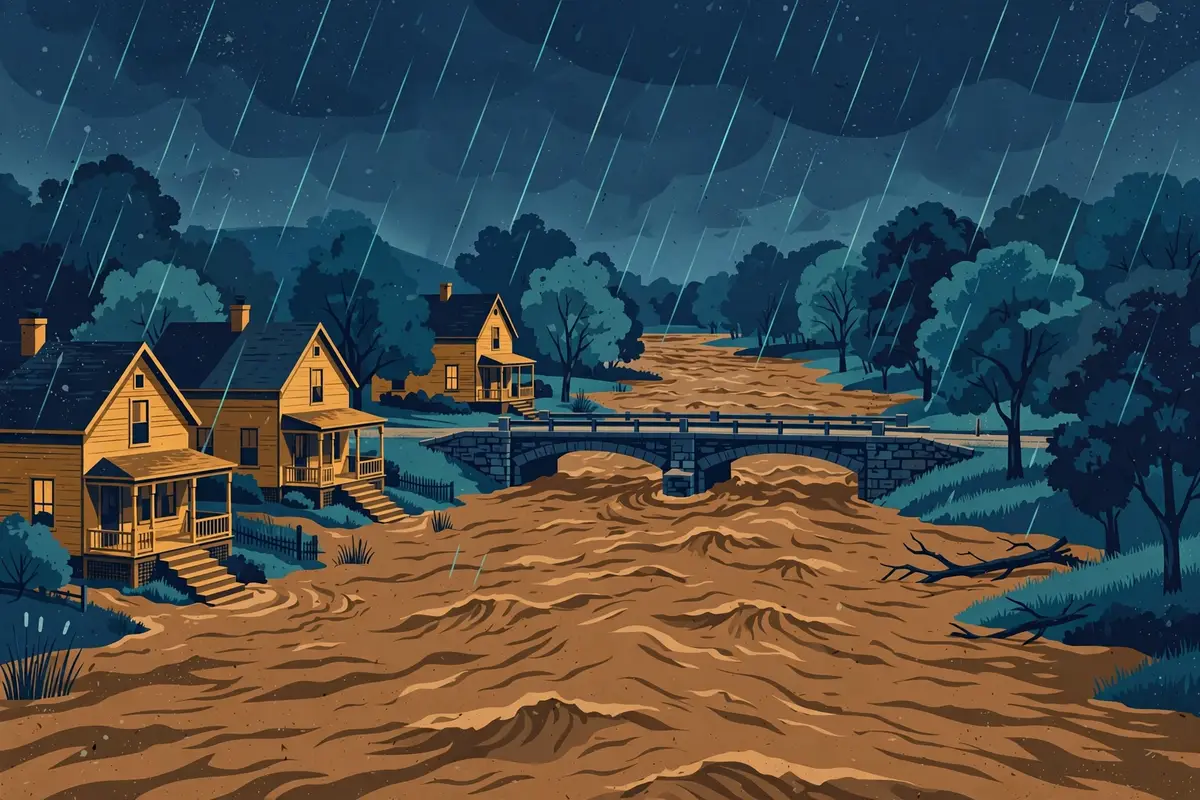
The 2022 Citywide Drainage Study gave these watersheds their own names on the city map: Hutchinson, Sheldrake River, Pinebrook, Burling Brook and Stephenson Brook basins, five of the six basins in the study. The sixth is the Shoreline. A homeowner who knows which basin their house sits in knows which water to plan for, and the basin map is the single most useful flood document the city has published for residents in years. Reading your basin is the first skill in water damage restoration new rochelle on the north end.
The city, mapped by water
Six Basins, One City: The 2022 Drainage Study and the 170 Projects
In 2022 the City of New Rochelle published the document that now organises water damage restoration new rochelle thinking: a citywide drainage study that divides the city into six basins, each flooding for its own reasons.
| Basin | The water it carries | The ground it covers |
|---|---|---|
| Hutchinson | The Hutchinson River and its reservoirs, draining a watershed that starts miles upstream | The eastern north end and the 10583 edge |
| Sheldrake River | The Sheldrake River running south through the Wykagyl side | Wykagyl and the northern residential streets |
| Pinebrook | Pinebrook and its low ground, draining toward the Sound side | The central and southern residential blocks |
| Burling Brook | Burling Brook, a small watercourse with a short temper in heavy rain | Its corridor through the western streets |
| Stephenson Brook | Stephenson Brook and the drainage that feeds it | The south western low ground |
| Shoreline | Long Island Sound itself: tide, surge and the drains the tide holds shut | Davenport Neck, Premium Point, Echo Bay, Glen Island and the shore roads |
Finding your own basin is a ten minute job with a long memory. The study maps are public, the brooks and the river are visible on any street map, and the test of standing in your street and asking where the water goes when the drains are full answers most of the question. Owners who do that walk once tend to store differently, park differently on storm nights and read forecasts differently, because a basin is not an abstraction once you have watched your own street behave like one. The Bureau of Sewers and Drains maintains the shared system, 192 miles of pipe and more than 5,500 catch basins, but the basin you live in is the part of the system with your name on it.
A basin map sounds like engineering trivia until a storm sorts the city by it. On the night of Ida the basins filled together because the rain fell everywhere at once, but the ordinary floods of this city are basin floods: a brook corridor in September, the Shoreline on a nor'easter tide, the Hutchinson after a wet week upstream. Knowing your basin tells you which forecast matters to your house, which entry point to defend, and which neighbour stories are actually about your ground.
The study did not stop at maps. In fall 2023 the city identified 170 flood mitigation projects worth more than 350 million dollars, set under a 10 year capital plan. That is serious civic intent, and it is also a timeline measured in years and decades, not in storm seasons. The homeowner reading is therefore double: the city is working on the shared system, and the house still needs its own defences now, because the capital plan will not be finished before the next September storm. A water damage restoration new rochelle plan for a house in a named basin, sump, drains, raised storage, flood cover, is how a family holds its own line while the 170 projects make their way from paper to pavement.
Below grade, citywide
Flooded Basements in New Rochelle: Four Ways the Water Gets In
Nearly every water damage restoration new rochelle call that is not a pipe burst ends in a basement, and nearly every basement flood in this city arrives by one of four doors.
Door one is the street. Storm water that cannot enter overwhelmed drains ponds against the house and comes through window wells, basement doors and the seam where the driveway meets the foundation. It arrives fast, it is dirty, and it stops when the rain stops, which makes it the flood owners most often underestimate: the water leaves, the silt and the soaked wall bottoms stay. Street entry is the most common opening scene in water damage restoration new rochelle.
Door two is the ground itself. After long wet spells the soil saturates, hydrostatic pressure builds against the foundation, and groundwater pushes through floor joints, cracks and mortar. It can rise for days after the rain ends, it is clear looking but not clean, and stone foundations, common in the older stock here, wick it upward into the wall long after the floor looks dry. This is the flood that defeats a single weekend of fans, because the source keeps feeding until the ground dries. Groundwater is the slowest adversary in water damage restoration new rochelle, and the one most often dried too briefly.
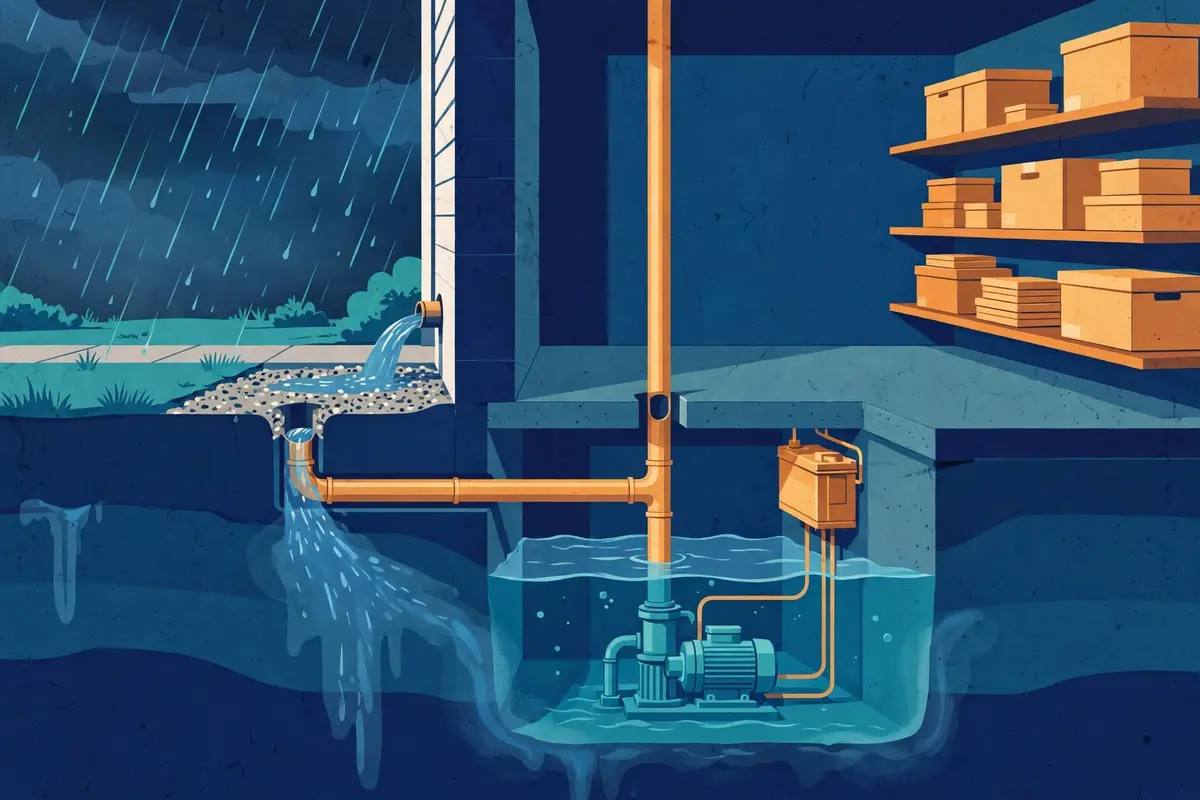
Door three is the sump that stopped. A sump pump is a small machine asked to do heroic work at the worst moment: at the peak of the storm, often during a power cut, with the pit filling faster than it ever does in practice drills. Pumps fail, floats jam, discharge lines freeze, and breakers trip. The basement that floods at 2 in the morning during a nor'easter is very often a sump story, which is why this page gives the pump its own section further down. Sump failure is the preventable classic of water damage restoration new rochelle.
Door four is the house itself. Sewer laterals back up when the street main surcharges, and the lowest opening in the house, usually the floor drain, becomes the entry. Add failed water heaters, burst pipes, washing machine hoses and boiler leaks, and the inside sources rival the outside ones. The Bureau of Sewers and Drains, at 40 Pelham Road, maintains 192 miles of city sewer pipe and more than 5,500 catch basins, but the lateral from your house to the main is yours, and so is everything that comes back up it.
Basement taking water now?
Keep power away from wet areas, photograph before you move anything, and call for same day extraction.
The hour that decides the job
The First Hour in a New Rochelle Home: Six Steps While the Water Is Still Moving
The first hour decides whether a water damage restoration new rochelle job is a drying job or a demolition job, and most of that hour belongs to the homeowner, before any crew arrives.
Call and shut off the water
Call (914) 555-0147 (placeholder) and, for any plumbing source, close the main shutoff valve. In most New Rochelle homes the main sits in the basement near the front wall. If the source is one fixture, close its own valve and open a faucet on that line to drain the pressure.
Safety check
Keep clear of water that has reached outlets, panels, furnaces or appliances, and switch off power to the affected area only if you can do so without standing in water. If water smells of sewage, treat the room as contaminated and keep children and pets out.
Inspection and moisture mapping
Walk the home once and note where the water is, where it came from and how far it has travelled, including the rooms below and beside the source. Photograph everything before moving anything, because this first map is what the crew builds on and what the insurer will ask for.
Water extraction
Remove standing water with a wet vacuum on clean water, mops and buckets, and move documents, electronics and valuables to dry ground. Do not use a household vacuum on water, and do not walk through shore or river water without boots and gloves.
Structural drying setup
Open windows only if the outside air is drier than the inside air; on a humid Sound night it often is not. Keep the heating or cooling running if the system is dry and safe, and leave the placement of air movers and dehumidifiers to the crew, who set them from the moisture map.
Insurance documentation
Start the claim the same day: policy number ready, the time you found the water written down, photographs saved, and nothing thrown away until the adjuster releases it. The drying log the crew keeps becomes part of this file.
None of these steps needs equipment you do not own. They need order: source stopped, people safe, evidence saved, water moving out, claim opened. A homeowner who does those five things in the first hour hands the crew a smaller, cheaper, faster job, and hands the insurer a file that is hard to argue with.
The label that runs the job
Clean, Gray and Black: The Three Categories of Water in a New Rochelle Loss
Every water damage restoration new rochelle job is measured in effort by one word, category, and the category comes from the Institute of Inspection, Cleaning and Restoration Certification (IICRC) S500 standard, not from how the water looks.
Category 1, clean water, comes from a sanitary source: a burst supply line, a sink or tub overflow, a failed appliance fill valve. It is the only water that can usually be dried in place, and even it does not stay Category 1. Left standing against drywall, wood and dust for a day or two, clean water degrades, picks up contaminants and is reclassified, which is one more reason the first day matters. Clean water is where most water damage restoration new rochelle jobs hope to stay.
Category 2, gray water, carries enough contamination to make people uncomfortable or sick: washing machine discharge, dishwasher water, toilet overflow with urine but no feces, sump water that has sat. Gray water work means cleaning and disinfection of what stays, judgement calls on carpet, and protective equipment as routine rather than drama. Gray water is the middle discipline of water damage restoration new rochelle.
Category 3, black water, is grossly contaminated and it is the default label for most of this city outdoor water: sewage backups, Hutchinson River and brook flooding, and Long Island Sound storm water all land here, along with any water that has sat long enough to grow microbes. Category 3 changes the scope completely. Porous material that soaked it up, carpet, padding, the bottom of drywall, soft furnishings, usually comes out rather than being cleaned in place, containment goes up before extraction, and air movers never run over contaminated surfaces.
The argument homeowners sometimes have with a crew is really an argument with the standard. A basement that smells fine can still be Category 3 if the water came up a floor drain, and a crew that dries it like a pipe burst is not saving you money; it is leaving the contamination in the walls and the claim file wrong. Category is decided on the first visit, written on the job sheet, and it drives every later decision on the page, from walls to carpets to how long you stay out of the room. Category is the vocabulary of the trade.
The 1955 city
Plaster, Lath and Stone: Drying the Older Homes of New Rochelle
The median New Rochelle home was built in 1955 and 76 percent of the housing stock went up before 1980, so water damage restoration new rochelle is, most days, the craft of drying houses built before drywall was the default.
Plaster and lath is the first difference. A plaster wall holds far more water than a gypsum wall, releases it far more slowly, and hides it better: the surface can feel dry while the lath and the cavity behind are still wet. Drying it is a patience game played with meters, small inspection openings and directed air, and it punishes crews who work to a calendar instead of readings. Cut too eagerly and a sound plaster wall becomes a demolition claim; dry too briefly and the cavity grows mold behind a wall that looked finished. Plaster is the first material a water damage restoration new rochelle meter meets in this city.
Stone and brick foundations are the second difference. They wick groundwater upward and inward for days after a storm, they dry from both faces, and their mortar joints are the path water takes into finished basement rooms. A stone foundation job is not finished when the floor is dry; it is finished when the wall readings fall and stay fallen through a full day of the ground still being wet outside. Stone is the foundation story of water damage restoration new rochelle.
The third difference is the plumbing itself. Galvanized and cast iron lines, old radiator systems in the Queen Anne, Tudor Revival and Colonial Revival houses of Beechmont, Paine Heights and Residence Park, and clay sewer laterals with tree roots in them: the older stock fails in clusters and in character. One burst galvanized line means its neighbours are the same age and get checked. A radiator valve that weeps all winter into a plaster ceiling is a New Rochelle classic, slow, quiet and expensive by the time the stain shows. Drying plans for these houses are written house by house, from readings, and any crew working from a new build template will get the schedule wrong in both directions. Old stock is not the exception here; it is the stock.
Cold side losses
Frozen Pipes and Radiator Failures: New Rochelle Water Damage in Winter
Winter is the second flood season here, and water damage restoration new rochelle crews spend it on burst pipes in the older stock, frozen lines on outside walls and heating systems that fail wet.
The burst pipe pattern is mechanical. Water freezes in a line running through an unheated crawl space, a garage wall or the outside wall of a kitchen, the ice expands, and the pipe splits along its length. The split often does not leak until the thaw, which is why so many winter calls come on the first mild morning after a cold snap, with water already running through a ceiling. Older New Rochelle homes add their own risks: long pipe runs to added bathrooms, lines in the uninsulated walls of pre war houses, and vacation empty homes in the shore neighbourhoods where nobody hears the water for days. Winter losses are the clean water half of water damage restoration new rochelle.
Heating systems are the second winter source. Radiator valves and unions weep, boiler relief valves discharge, and a failed circulator on the coldest night can freeze the very pipes the system exists to warm. The damage pattern is different from a storm: clean water, often large volume, frequently discovered late, and almost always an insurance claim rather than a flood policy claim, which changes the paperwork from the first hour.
Prevention here is unglamorous and effective: insulation on lines in cold walls, heat kept on in empty houses, outdoor faucets drained in autumn, cabinet doors opened on the coldest nights so room air reaches the pipes, and knowing exactly where your main shutoff is before you need it at 3 in the morning with water coming through the light fittings.

Shared walls, shared water
Co-ops, Condos and the Apartment Above: Multi Unit Water Damage in New Rochelle
Thirty eight percent of New Rochelle homes sit in buildings of 20 or more units, and water damage restoration new rochelle in those buildings is a different trade: the water is the same, the paperwork is not.
Water in a multi unit building travels the stack. A flex pipe under an upstairs bathroom sink, a washing machine hose in a fourth floor unit or a failed valve on a riser sends water down through every unit below until somebody finds the shutoff. The building questions come first and they are legal as much as technical: the proprietary lease or bylaws decide which pipes belong to the building and which belong to the unit, who dries the wall cavity that two units share, and whose insurer leads. Boards that have those documents open on day one settle claims in weeks. The stack is the geography of multi unit water damage restoration new rochelle. Boards that argue from memory settle them in seasons.
The city has a case study, and it is not on this page as decoration. A flex pipe burst under an upstairs bathroom sink in a New Rochelle home, the owners called for help 10 days after the loss, visible mold was already growing when the crew arrived, and a public adjuster became part of the job. The granite countertops were salvaged. The lessons are the delay and the mold: ten days turned a plumbing loss into a mold project, and the case is told in full further down this page. The project is not dated in its source, and this page does not invent a date for it.
The garden apartments and smaller co-ops carry a quieter version of the same problem. Shared basements hold the boilers, the laundry rooms and the storage cages of several buildings at once, so one surcharged drain or one failed sump is a multi building event with a single point of failure. Boards of small buildings often have no engineer and no manager on site, which makes the first phone calls slower and the documentation thinner. The fix is decided in advance: a named person who can authorise emergency drying at 2 AM, a plumber and a restoration number on file, and a rule that the basement is dried as one job for the whole complex, not argued unit by unit while the water sits.
Downtown adds its own version: high rise condos and the towers around New Roc City, where a leak can run through commercial space, parking levels and elevator shafts before it is found, and where building management, not a homeowner, is the first call. In every multi unit case the rules of this page hold: dry the whole stack to one standard, document for several insurers at once, and never let a unit by unit argument leave a wet wall cavity between two dry units.
One city, three buildings
Three Housing Stocks, Three Drying Plans: Towers, Two Families and Wykagyl Colonials
New Rochelle holds more than 26,000 households in three very different kinds of building, and water damage restoration new rochelle writes a different drying plan for each of them.
The towers and large buildings hold 38 percent of the city homes, in buildings of 20 or more units: the downtown blocks, the co-ops of Palmer Avenue and the shore, the garden apartments. Their water travels in stacks and shafts, their decisions run through boards and managers, and their drying is a building project with units inside it. The plan is systems first, one standard for the whole stack, and communication treated as a workstream, because Dorchester Gardens showed what four weeks of displacement does to a community that is not told plainly what is happening.
The two family and smaller multi unit stock of the South End, downtown edges and the older mixed streets is the city middle: more than 11,500 single family units stand in the city overall, and around them thousands of smaller buildings where an owner lives upstairs and a tenant downstairs, or two families share one foundation. Their water is personal and shared at once: one basement, two households, a landlord duty and a renter file running in parallel. The plan is fast notice, one drying job for the shared structure, and documentation kept for both households from the first photograph.
The large older single family houses of Wykagyl, Beechmont, Paine Heights, Huguenot Heights and Residence Park are the third stock: plaster and lath, stone foundations, radiator heat, clay laterals, finished basements under big roofs. Their water is slow and structural, groundwater through stone, roof water through plaster, and their drying is the measured, patient work described in the older homes section of this page. Three stocks, three plans, one rule that never changes: the building in front of the crew writes the job, and a crew working from a single template will get at least two of the three wrong.
Where the risk sits
New Rochelle by ZIP Code: Five Postal Areas and the Water Each One Knows
Five ZIP codes cover the homes of this city, and a water damage restoration new rochelle crew reads them the way a sailor reads a chart: each one carries its own water, its own building stock and its own first problem.
| ZIP | Ground it covers | Building stock | The water it knows best |
|---|---|---|---|
| 10801 | Downtown, the South End and the shore, with 42,754 residents, the largest ZIP in the city | Downtown towers, older apartments, shore homes and mixed commercial ground floors | Sound storm water, drainage overload, upstairs leaks in multi unit buildings |
| 10804 | Wykagyl and the North End, 16,108 residents | Larger older single family houses, many pre war, on bigger lots | Sheldrake River and brook flooding, sump failures, radiator and pipe losses |
| 10805 | The southern shore side, Echo Bay, Davenport Neck and Premium Point ground, 20,903 residents | Shore houses, co-ops and older homes near the water | Long Island Sound surge and street flooding, salt water in ground floors |
| 10583 | The north end edge shared with Scarsdale | Detached older houses with finished basements | Hutchinson River corridor water, groundwater through stone foundations |
| 10802 | The PO Box ZIP for the city | A mailing ZIP rather than a neighbourhood; the buildings behind the boxes follow the 10801 pattern | Downtown drainage and multi unit losses |
ZIP populations are the counts carried in the research behind this page, gathered 20 November 2026.
Neighbourhood by neighbourhood
Six New Rochelle Areas, Up Close
Pick an area to see its stock, its water and its first moves. The same six areas are written out in the tab script at the foot of this page, so the panel works the same on a phone as on a desk.
The full scope
Fifteen Services, One New Rochelle Standard: The Work, Job by Job
Fifteen services make up the offer catalog in this page schema, and each one below is a real line of work a New Rochelle job can need, described the way it happens in a house, not the way it reads in a brochure.
Water Extraction
Standing water comes out first, with truck mounted and portable extractors, weighted tools for carpet and hard surface wands for tile and wood. Every hour water stands, it wicks higher into walls and deeper into floors, so extraction is the service that buys all the others time on any water damage restoration new rochelle job.
Structural Drying
Air movers, dehumidifiers and directed heat, placed from the moisture map and adjusted daily. Drying is verified with meter readings against the dry standard for each material, and equipment leaves when the numbers say so, which is the only honest finish line in water damage restoration new rochelle work.
Flood Cleanup
Storm, Sound and river water jobs: silt and debris out, contaminated material removed, structure washed and disinfected, then dried. Shore and Hutchinson corridor water damage restoration new rochelle jobs start here, with safety and category decisions made before extraction begins.
Sewage Cleanup
Floor drain surcharge and sewer backup work under Category 3 rules: containment, protective equipment, removal of soaked porous material, cleaning and disinfection of what stays, and no fans blowing over contaminated surfaces. That discipline is standard on water damage restoration new rochelle sewage work.
Burst Pipe Repair
The split line is isolated and made safe, the rest of the system is checked for the freeze damage that travels in pairs, and the water the pipe released is extracted and dried as one job, so the plumbing fix and the drying never work against each other. It is one of the most common winter calls in water damage restoration new rochelle.
Mold Remediation
Mold work under New York Labor Law Article 32: a licensed assessor writes the plan, a licensed remediator contains the area, removes the growth and the material feeding it, and the job closes with the assessor verification the law requires. Mold is the second job hiding inside half the water damage restoration new rochelle losses in this city.
Contents Cleaning
Furniture, documents, clothing and belongings cleaned, dried and deodorised where the water category allows it, and honestly condemned where it does not. Granite and hard contents survive losses that take the soft ones, as the case study on this page shows. Sorting contents early is quiet, unglamorous work that saves real belongings.
Dehumidification
Refrigerant and desiccant dehumidifiers sized to the space and the material load, draining continuously and logged daily. In a shore city where salt air keeps humidity high, dehumidification is the service that decides whether drying takes four days or nine on a water damage restoration new rochelle job.
Moisture Detection
Pin and pinless meters, thermal imaging and inspection openings used to find the water nobody can see: inside wall cavities, under hardwood, behind tile. Test before you tear is the rule, and detection is what makes the rule possible. Detection is the first hour of every serious water damage restoration new rochelle inspection.
Basement Drying
The special case water damage restoration new rochelle keeps ordering all year: groundwater, sump failures and street flooding dried as a system, floor, walls, foundation and contents together, with the entry point fixed or the drying is only a pause before the next storm.
Storm Damage Repair
Wind and water together: roof openings tarped and made safe, broken glazing secured, and the water that entered through storm damage extracted and dried before the repair scope is written, to the same standard as any other water damage restoration new rochelle loss.
Roof Leak Repair
The slow leak traced to its entry point, which is rarely where the ceiling stain sits, the wet insulation and plaster above the ceiling dried or removed, and the roof fault documented for the claim and the roofer in the right order. A roof leak found late is a mold claim in waiting, which is why it is metered like any other water damage restoration new rochelle job.
Odor Removal
The smell a flood leaves is chemistry, not bad luck: microbial growth, soaked materials and sewer residue each have their own source, and odor work removes the source, then treats the air, never the other way round. Odor is the complaint that brings back more callbacks than any other.
Reconstruction
The rebuild after drying: drywall and plaster, floors, trim, paint and the rooms put back to the standard the readings certified. Reconstruction starts only on a dry structure, signed off in writing, or it seals the problem in. It is the visible half of water damage restoration new rochelle; the readings underneath it are the other half.
Insurance Claim Documentation
Photographs, moisture maps, drying logs, itemised scopes and the failed parts saved and labelled, assembled into the file an adjuster can approve without a second visit. On a water damage restoration new rochelle claim, documentation is a service, not an afterthought.
How dry is dry
Measured Drying in New Rochelle: Moisture Maps, Daily Readings and the Dry Standard
Drying is the part of water damage restoration new rochelle that separates a profession from a fan rental, and it runs on one discipline: measure, move air, remove moisture, measure again.
It starts with the moisture map. On the first visit the crew meters the wet rooms and the dry ones, marks the boundary where readings fall to normal, and sketches the map that every later decision follows. The map is also the claim document: it proves where the water went on day one, which is the fact insurers and owners most often dispute later from memory. The map is the founding document of every water damage restoration new rochelle drying job.
Equipment follows the map. Air movers push air across wet surfaces so moisture lifts into the room air; dehumidifiers pull that moisture out and drain it away; directed heat helps cold materials, stone foundations and plaster in winter, give up their water. Placement is adjusted daily, because a drying room changes as it dries, and equipment that was right on day one can be useless or wasteful by day three. Placement is a daily decision in water damage restoration new rochelle, not a first day one.
The finish line is the dry standard: the moisture level of the same material in an unaffected part of the same home. Wet points are read daily at the same marked spots until they reach that standard and hold it. Only then does equipment leave and reconstruction begin. A surface that feels dry, a room that smells better, a calendar that says five days: none of those is a finish line. Readings are.

Floors, carpets and belongings
Hardwood, Carpet and Contents: What a New Rochelle Flood Lets You Keep
Once the structure is safe, every water damage restoration new rochelle conversation turns to the same question, asked room by room: what can be saved, and what honestly cannot.
Hardwood is the material that rewards the fastest start. Wet planks cup as the edges swell, and same day extraction with floor drying mats, which pull moisture up through the boards, often lets cupped floors settle flat again as they dry. The readings are taken in the wood itself, and the floor is not sanded until it is fully dry, because a floor sanded while still wet crowns as it finishes drying and the damage becomes permanent. Floors that sat in Category 3 water for days are a different verdict, and a crew that promises every floor can be saved is selling, not drying. Hardwood is where water damage restoration new rochelle earns or loses its reputation for honesty.
Carpet and padding split their verdict. Clean water carpet reached quickly can be cleaned, extracted with weighted tools and dried, in place or lifted and reset. The padding beneath it is the weak layer: it holds water like a sponge, dries slowly and is usually replaced even when the carpet above it is saved. Gray water carpet is a judgement call after inspection. Sewage, river or Sound water carpet and padding come out, always, because no cleaning protocol makes a soaked pad safe again. The pad is the honest verdict in most water damage restoration new rochelle carpet calls.
Contents follow the same honesty. Hard, non porous belongings, stone, metal, sealed wood, glass, usually clean and survive; the New Rochelle case study further down this page kept granite countertops through a mold job. Upholstery, mattresses, soft toys and paper that soaked in contaminated water usually do not. The crew job is to sort fast, photograph everything for the claim before anything is discarded, and pack out what is being saved to a dry place while the house dries, which has its own section below. Contents sorting is the quiet craft inside water damage restoration new rochelle.
The second job hiding in the first
Mold After Water Damage in New Rochelle: The 48 Hour Clock and Article 32
Mold is why water damage restoration new rochelle runs on a clock: mold can begin within 24 to 48 hours on wet material, according to the EPA, and this city gives it a humid, salt aired head start.
The New Rochelle restoration video that Moz ranks on page one for this search makes the local point plainly: salt air keeps humidity higher here than in inland towns, and a flooded basement in this city often comes with mold already behind a wall. That is not a sales line; it is the physics of a shore city. Humidity is the local multiplier in water damage restoration new rochelle mold work. Indoor air that starts damp dries material slowly, wall cavities that were wet before the visible flood stay wet after it, and the first sign is often a smell in a room that looks dry.
New York law structures the response. Labor Law Article 32, in force statewide since 1 January 2016, requires a licensed mold assessor to inspect and write the remediation plan for growth above a small threshold area, and a separately licensed mold remediator to carry the plan out. The assessor and the remediator cannot be the same company on the same project. The structure sounds bureaucratic until you see what it prevents: the firm that profits from remediation does not get to grade the size of the problem or sign off its own work. Article 32 is the legal frame around mold work in this state.
The practical order on a job is therefore fixed. Dry the water first and fast, because drying is mold prevention. Where growth is already visible or readings and openings show a hidden colony, stop and bring the assessor in before remediation begins. Homeowners sometimes ask a crew to simply spray and paint over a patch; on anything beyond a tiny surface area that is not a shortcut, it is an unlicensed job that a later assessor, buyer or insurer will find. The 10 day delay in the case study on this page is what the clock does when nobody is watching it.
The claim, clock by clock
New York Insurance Clocks: Regulation 64, Section 2618 and the Two Year Suit Limit
A water damage restoration new rochelle claim runs on New York clocks that start the day the water does, and the homeowner who knows them gets paid on a different schedule from the one who does not.
Reporting comes first. Most policies require prompt notice of a loss, and late notice is the most avoidable way to damage a strong claim. Report the same day, keep the claim number with the drying log, and put the first photographs in the file before the first piece of furniture moves. Prompt notice is the first clause of every water damage restoration new rochelle claim.
Regulation 64 is the investigation clock. Under the New York Department of Financial Services Regulation 64, once your insurer receives your proof of loss, it must begin investigating the claim within 15 business days. Proof of loss is the sworn statement and evidence you submit, which is why the documentation habits on this page, photographs, logs, saved failed parts, itemised belongings, are not clerical fuss; they are what starts the clock. Regulation 64 is the clock both sides of the claim watch.
Insurance Law Section 2618 is the payment clock. Once you and the insurer have agreed on the amount of a settlement, the insurer must pay within 4 business days. The figure matters because an older draft and plenty of internet summaries say 3; the law as it stands says 4 business days, and this page uses the law as it stands.
Insurance Law Section 3420(d) covers the denial letter. On a liability claim, an insurer that denies coverage must give written notice of the disclaimer as soon as reasonably possible. The section is about liability coverage and timely disclaimer; it does not carry a 15 day figure, and summaries that attach one to it are mixing it up with other clocks.
Insurance Law Section 3404 is the long clock and the one that hurts when missed. The standard fire policy gives you 24 months from the date of the loss to bring a lawsuit if the claim cannot be settled. Claims feel alive for years while repairs and arguments continue, but the court clock runs from the day the water came in, not from the day the claim stalled. A claim still unresolved as its second anniversary approaches needs legal advice, not another call to the claims line. Section 3404 is the deadline written on the wall of every water damage restoration new rochelle claim file.
Claim questions on a live job?
Bring the policy, the claim number and the drying log. The documentation is assembled from the first visit.
Flood cover, honestly
Flood Insurance in New Rochelle: 599 Policies, 286 Repetitive Loss Homes and the NFIP
For a city with this much water, the striking number in water damage restoration new rochelle is how few homes carry flood cover: 599 policies in force in the Federal Emergency Management Agency (FEMA) figures from July 2021.
Set that against the same FEMA count: 719 claims paid over the years and 9,599,635 dollars in total loss payments, with 286 repetitive loss properties, homes that have flooded and claimed more than once. A city of more than 26,000 households, with a shoreline, two rivers and a documented habit of flooding in every basin, is carrying flood risk mostly uninsured, and the gap is filled after each storm by savings, loans and arguments with homeowners policies that were never written to cover rising water. The coverage gap is the financial backdrop of water damage restoration new rochelle.
The National Flood Insurance Program (NFIP), run by FEMA and sold through ordinary insurers, is the standard route to flood cover, with private flood policies as the alternative. Two NFIP limits matter most in this city. Basement cover is restricted: the building policy responds to the structure and its systems far more than to finished basement rooms and their contents, which surprises owners of finished shore basements after every storm. And a new policy usually carries a 30 day waiting period, so flood cover is bought in calm weather or not at all. New Rochelle does not take part in the Community Rating System, so there is no community discount softening premiums here.
Then there is the rule that turns flood history into a rebuilding standard. New Rochelle City Code Chapter 111 treats a home as substantially damaged when flood damage occurs on two occasions within 10 years with repairs averaging 25 percent or more of market value, or when a single restoration reaches 50 percent or more. A substantially damaged home must be brought up to current floodplain standards when it is rebuilt. For the 286 repetitive loss homes, the next flood is therefore not only a cleanup decision; it can be an elevation and compliance project, and it should be planned, with the Bureau of Buildings at City Hall, 515 North Avenue, before the water arrives rather than after.
The rule for repeat floods
The Second Flood Problem: Chapter 111 and the Homes That Flood Twice
For most homes a flood is an event; for 286 New Rochelle properties it is a pattern, and water damage restoration new rochelle for those homes runs under a city rule that changes what rebuilding means.
The Federal Emergency Management Agency (FEMA) calls them repetitive loss properties: homes that have flooded and claimed more than once, 286 of them in the July 2021 count for this city. Ida will have added to the list, and every future basin flood adds more. A repetitive loss home is not just unlucky. It is a house standing where the water reliably goes, which means its future contains more water, and its planning should be done on that assumption rather than on hope.
New Rochelle City Code Chapter 111 turns that pattern into a legal threshold. A home is substantially damaged when flood damage happens on two occasions within 10 years and the repairs average 25 percent or more of the market value of the home, or when any single restoration reaches 50 percent or more of market value. Cross that line and the next rebuild is no longer a repair with a permit attached. The structure must be brought up to current floodplain standards, which can mean elevating the building or its systems, flood resistant materials below the flood level, and a permit conversation with the Bureau of Buildings at City Hall, 515 North Avenue, phone (914) 654-2035, before work begins rather than after.
The planning lesson lands before the second flood, not after it. An owner who knows the rule keeps the first flood documentation immaculate, because the first flood repair figures become half of the Chapter 111 arithmetic later. The same owner asks the harder question early: if this house floods again, what does compliance look like, and is there mitigation, elevation of systems, regrading, a backwater valve, drainage work, that changes the arithmetic or the water path itself. The 170 project capital plan may eventually move some of these homes out of the pattern. Until it does, a repetitive loss home with a written plan is in a different position from one waiting to be surprised a second time, and the drying documentation from the first flood is where that plan starts.
Short answers
New Rochelle Quick Answers: Six Questions From a Wet Basement Door
Six questions New Rochelle homeowners type into a phone with wet hands, answered in one breath each. The full 30 question set, with longer answers, is in the FAQ section near the foot of this page.
A pipe just burst. What first?
Close the main shutoff, open a faucet on that line to drain the pressure, and keep power away from wet areas. Photograph everything before you move it, move documents and electronics to dry ground, and call (914) 555-0147 (placeholder). Frozen lines often fail in pairs, so the next pipe gets checked.
How fast should I call?
The same day, within the first hours. Water keeps wicking into plaster, drywall and hardwood long after the puddle stops spreading, and mold can begin within 24 to 48 hours, according to the EPA. A call made tonight is a drying job. A call made next week is often a mold job as well.
How long will drying take?
Most New Rochelle homes dry in 3 to 5 days after extraction. Plaster walls, hardwood floors, stone foundations and finished basements hold water longer and can push a job past a week. Daily moisture readings set the end date, and equipment leaves only when readings reach the dry standard for each material.
The Sound is flooding my street. What now?
Treat it as contaminated water and stay out of it. Move cars to high ground if it is safe, keep power off to flooded rooms, and do not walk through standing water near outlets or the panel. Photograph from dry ground, then call (914) 555-0147 (placeholder): shore jobs start with safety, extraction and disinfection.
Will insurance cover this?
Sudden and accidental water, a burst pipe or a failed water heater, is usually covered by a homeowners policy. Rising water from the Sound, the rivers or the street is flood, and flood needs its own policy. Slow leaks that ran unnoticed for weeks are the hardest claims, so document fast and report the loss promptly.
Is that smell mold already?
It can be. Mold can begin within 24 to 48 hours on wet material, according to the EPA, and in New Rochelle the smell means water is hiding in a wall cavity or under a floor. Meters find it in minutes. If the patch is large, New York law requires a licensed assessor before remediation.
One page of numbers
New Rochelle Key Facts: The Numbers Every Homeowner Asks For
Every water damage restoration new rochelle job runs on the same short list of numbers: how much rain falls, how fast mold starts, how long drying takes, and the New York claim clocks that start the day the water does. Here they are in one place.
| Fact | The number | Where it comes from |
|---|---|---|
| People living in New Rochelle | About 80,000, the seventh largest city in New York state | City and census counts gathered for this page |
| Rain in one night, Hurricane Ida | 7.79 inches measured in the city on 1 September 2021 | National Weather Service (NWS) final storm totals |
| Waterfront | About 9.3 miles counting islands and inlets | City of New Rochelle |
| Standing water on shore roads | 3 to 4 feet on 27 October 2018 | National Weather Service (NWS) |
| Flood policies in force | 599 policies, with 719 claims paid over the years | FEMA figures, July 2021 |
| Repetitive loss properties | 286 homes that have claimed more than once | FEMA figures, July 2021 |
| Drainage study | Six basins mapped in 2022; 170 mitigation projects identified in fall 2023 | City of New Rochelle Citywide Drainage Study |
| Mold can begin | 24 to 48 hours on material that stays wet | U.S. Environmental Protection Agency (EPA) |
| Typical structural drying | 3 to 5 days after extraction, longer for plaster and stone | ANSI/IICRC S500 drying practice |
| Insurer must start investigating | Within 15 business days of your proof of loss | Department of Financial Services Regulation 64 |
| Insurer must pay an agreed settlement | Within 4 business days | Insurance Law Section 2618 |
| Deadline to sue on a claim | 24 months from the date of the loss | Insurance Law Section 3404 |
| Substantial damage trigger | Two floods in 10 years averaging 25 percent of value, or one at 50 percent | New Rochelle City Code Chapter 111 |
| Homes built before 1980 | 76 percent of the housing stock; median construction year 1955 | Housing counts gathered for this page |
Figures are stated with their sources so they can be checked; the full source list is in the Sources section near the foot of this page.
Asked out loud
Voice Answers: What New Rochelle Homeowners Ask Out Loud
Most water emergencies begin as a question shouted at a phone with wet hands. These are the questions New Rochelle homeowners ask out loud, answered the way a person would say them: short enough to hear, complete enough to act on. Voice questions are how most jobs in this trade actually begin.
Hey, my basement is flooding right now. What do I do?
First, protect yourself: stay out of the water if outlets or appliances are standing in it. If a pipe is the source, turn off the main shutoff. Then call (914) 555-0147 (placeholder) for same day help, photograph everything while you wait, move what you can to dry ground, and do not throw anything away yet.
How fast can a crew actually get to New Rochelle?
Same day is the standard this work runs on, and in this trade same day is not a slogan. Water keeps spreading and mold can begin within 24 to 48 hours, so the first visit is extraction and drying setup, not an estimate appointment. Ask for the arrival window when you call, and hold the company to it.
The apartment above me leaked into my ceiling. Who do I call first?
Call the building first, management or the super, because the shutoff and the source are in their hands, and then call for drying, because your ceiling cavity is wet whether or not the paperwork is sorted. Photograph the stain and the dripping before anything is opened, and put the notice to the building in writing the same day.
The river is up and my sump pump stopped. Is that an emergency?
Yes. A dead sump at the peak of a storm is the classic New Rochelle basement flood, and the water will keep rising until the rain stops or the pump is replaced. Keep power safe, keep out of deep water, and call: a crew can extract, dry and document while the pump work is arranged, and the claim file will want the failed pump kept, not binned.
Can I just rent a fan and dry it myself?
For a small clean water spill on a hard floor, sometimes. For water in walls, under floors, from a sewer or from the Sound, no: rental fans move air without removing moisture, they cannot tell you when the wall cavity is dry, and on contaminated water they spread the problem through the house. The meter readings are the service, not the fan.
Watch a real job first
YouTube Case Studies: Watch Two Real Drying Jobs Before You Hire Anyone
One New Rochelle restoration video ranks on page one for this search, and its description alone teaches the local lessons: salt air humidity, mold already behind a wall, downtown towers failing differently from older inland homes, storm surge near Echo Bay and sump failure in a nor'easter. For method, here are two transcript backed videos from working restoration channels.
Home RenoVision DIY: Water Damage? Do This BEFORE Mold Takes Over
A working renovator walks through the first moves after water damage, in the order they matter, with the mold clock as the reason for the hurry. Watch it for the sequence: stop the source, get the water out, get air moving, and do not let wet material sit while you decide. Watch on YouTube
Certified Restoration: Test Before You Tear
A restoration firm makes the case for testing and metering before demolition, showing how readings decide what actually has to come out. Watch it before any crew quotes you a wall removal: the difference between a tested scope and a guessed one is measured in rooms. Watch on YouTube
A real New Rochelle job
Ten Days Late: The Flex Pipe, the Mold and the Granite That Survived
The most instructive water damage restoration new rochelle story in the research for this page is a real project a restoration firm published about a New Rochelle home, and its lesson is a number: ten days.
A flex pipe burst under an upstairs bathroom sink. Flex pipes and their fittings are among the most common small failures in modern plumbing, and this one ran, or seeped, into the structure of the house. The owners did what many owners do: they dealt with the visible water, and they called for professional help 10 days after the loss. By the time the crew arrived, visible mold was already growing. The ten days are the lesson the whole of water damage restoration new rochelle keeps relearning. A plumbing loss had become a water and mold job, with containment, removal and the New York assessment structure that visible mold brings with it.
A public adjuster became part of the job, which tells its own story about the claim: a loss that sat for ten days is a loss an insurer looks at hard, and the documentation had to carry weight that same day photographs would have carried easily. Documentation is what turns a delayed call into a payable claim, on this case and on water damage restoration new rochelle jobs generally. The bright spot in the case is the granite. The granite countertops were salvaged, a reminder that hard, non porous contents survive losses that destroy soft ones, and that fast sorting of contents, what is saved, what is cleaned, what is honestly gone, is real money on a job.
The firm that published the case did not date it, and this page does not invent a date for it; the lesson does not need one. Ten days is the whole story. The mold clock in the EPA guidance is 24 to 48 hours, so a call on day ten is eight days after the second job inside the first one had already started. Whatever the water is in your house tonight, the cheapest version of the job is the one that starts today.
Hiring, without the fog
Choosing a Crew in New Rochelle: Questions That Separate Real Firms From Templates
Search results for water damage restoration new rochelle mix national templates, directories and lead generation pages with real local firms, so the questions below are the filter: a real crew answers them without blinking.
Ask what standard the drying follows. The answer should name ANSI/IICRC S500 and the dry standard, and the follow up, how do you know when we are done, should end with meter readings, not a number of days. Ask who writes the moisture map. If nobody does, nobody knows where the water went, and the scope is a guess with a logo on it. The standard question is the first filter in water damage restoration new rochelle hiring.
Ask how mold is handled. In New York the answer involves a licensed assessor who is not the remediation firm, under Labor Law Article 32. A company that offers to assess and remediate its own mold job in one visit is offering to break the structure the law built. The mold question separates licensed practice from improvisation in water damage restoration new rochelle. Ask what the documentation looks like. Photographs, daily readings, a drying log and an itemised scope should be described as routine, because on a claim they are the product as much as the dry walls are.
Ask the local questions. Which basin is my house in. What does Chapter 111 mean if this is my second flood. Who is responsible for my sewer lateral. A template page cannot answer those, because it was written for forty cities at once; the research for this page read a competitor case study set in Florida sitting on a Westchester page, and a lead generation site ranking for this city with no New Rochelle depth at all. Local knowledge is not a bonus in this trade. On ground that floods from a sound, two rivers and its own drains, it is the job.
Before the next storm
Before the Next Storm: A New Rochelle Prevention Walkthrough, System by System
The cheapest water damage restoration new rochelle job is the one that never happens, and most prevention in this city is an afternoon of unglamorous checks done on a dry day.
Start at the street. Find your catch basin grate and keep it clear of leaves and silt; the city maintains more than 5,500 of them, but the one in front of your house floods your basement first when it clogs. The street grate is the first appliance of prevention. Clear area drains, window well drains and the trench drain at the basement door, and check that downspouts discharge well away from the foundation, not into the bed beside it.
Then the basement. Test the sump pump by lifting the float, confirm the discharge line is clear, and fit a battery backup, because the peak of the storm and the power cut arrive together often enough to plan for. Raise storage off the floor on shelving, keep the bottom shelf for things that can get wet, and photograph the whole basement as it stands. Those photographs, taken dry, are the baseline every future claim wishes it had. The basement audit is the homeowner drill at the heart of water damage restoration new rochelle prevention.
Then the plumbing. Know your main shutoff and turn it once a year so it still turns. Replace washing machine hoses on schedule rather than on failure, check the flex pipes under every sink, the failure in the case study on this page, and look at the water heater with honest eyes: a heater past its expected life is a flood with a date on it. Plumbing checks are the inside half of water damage restoration new rochelle prevention. Insulate lines on outside walls before the first freeze, and drain the outdoor faucets in autumn.
Shore homes get one extra pass. If the house stands in the Shoreline basin, walk the ground floor with the tide in mind: what sits below the level the street reached in 2018, what can be raised, what can be moved in twenty minutes when a warning comes. Check that the electrical panel and the heating plant sit as high as the house allows, that floor drains are clear, and that anything stored at ground level is either waterproof, replaceable or already photographed for the claim file. Shore preparation is not pessimism; it is the local custom of a city that has been reading this water since 1688.
Finish with paper. Confirm the flood policy is in force if your home sits in the Shoreline or Hutchinson basin, remembering the 30 day waiting period. Walk the house with a phone camera once a year and save the video somewhere that is not the house. And if your home has flooded before, read the Chapter 111 substantial damage rule on this page and talk to the Bureau of Buildings before the next loss makes the decision for you. The city identified 170 mitigation projects in fall 2023 under its 10 year capital plan; the homeowner version of that plan fits on one page, and this section is most of it.
The water year
Month by Month in New Rochelle: Sound Water, River Water and Freeze Water
Water damage restoration new rochelle work follows a calendar written by three waters: the Sound in storm season, the rivers in the wet months, and the pipes in the cold ones.
The calendar converts into two working dates. Late August is the prevention date: the walkthrough done, the sump tested, the catch basin checked, the flood policy confirmed in force, the basement photographed dry. Early December is the pipe date: outdoor faucets drained, lines on outside walls insulated, the shutoff located and turned once, the heat plan set for any days the house will stand empty. Two afternoons a year, matched to the two seasons that do the damage, cover most of what the calendar is trying to say. Everything else in the water year is weather; those two dates are preparation.
The dated storms on this page make the pattern visible. The two worst rain events in the modern record, Ida and the September 2023 storm, both landed in September. The Sound street flooding of 2018 came in late October, and the Glen Island seawater arrived two days before Christmas in 2022, which is the nor'easter pattern: winter storms with a tide attached. A New Rochelle homeowner who does the prevention walkthrough in late August, before the autumn water, and checks the pipes before the first hard freeze in December, has covered the two seasons that do most of the damage in this city.
Workplaces and institutions
Commercial Water Damage in New Rochelle: Downtown Towers, Main Street and the Institutions
Commercial water damage restoration new rochelle work runs from the New Roc City blocks to Montefiore New Rochelle Hospital, and the difference from a house is scale, systems and the number of people a wet building displaces.
Downtown concentrates the risk. Towers and mixed use buildings stack plumbing risers, sprinkler systems, roof plant and parking levels into one structure, so a single failed valve can put water through retail, offices and homes in one event, and the September 2023 flood showed the ground floors of the North Avenue corridor taking street water at the same time. Commercial jobs are won on logistics: containment that lets the rest of the building keep working, drying that runs overnight, and documentation written for property managers, tenants and several insurers at once. Downtown is where water damage restoration new rochelle meets building engineering.
Main Street and Huguenot Street retail write the small business version. Ground floor shops and restaurants take street water through their doors in a drainage flood, and their losses are stock, fittings and closed days as much as wet walls. A restaurant with water in the kitchen is closed by rule until cleaning and inspection say otherwise, and a shop that reopens on a floor that was dried by eye rather than by meter buys itself a mold problem in the stockroom by winter. For small commercial tenants the lease question matters as much as the drying: who carries the structure, who carries the fit out, and whose insurer is called first should be answers known before the storm, not researched during it.
The institutions carry their own stakes. Montefiore New Rochelle Hospital cannot close a wing for a casual drying schedule, Iona University houses students whose rooms are also their homes, and the New Rochelle Public Library and the schools hold contents that do not replace easily. Ward Acres, Leland Castle and the Thomas Paine Historic Site add the heritage version of the problem: historic fabric, plaster, old timber and collections, where drying must be measured and gentle, and where the substantial damage and permit questions arrive with preservation questions attached.
The working rules do not change with the size of the building. Stop the source, map the moisture, categorise the water, dry to readings, document everything. What changes is the choreography around them, and a crew that can explain that choreography in the first meeting, who is notified, what stays open, what the daily report looks like, is the crew a building should already have on file before the riser fails. Choreography is the commercial difference in water damage restoration new rochelle.
Inside the house
Room by Room in a New Rochelle Home: Where the Water Goes and What to Watch
Water reads a house from the top down and the bottom up at once, and a water damage restoration new rochelle inspection walks it in the same order every time.
The basement is the collection point for every outside source and most inside ones: sump, lateral, water heater, laundry and the floor drain all live here, and it is read first and metered most. The kitchen hides its water well: dishwasher and refrigerator lines leak behind cabinets for weeks, and the first visible sign is often a warped floor or a smell, by which time the subfloor has been wet far longer than the stain suggests. Bathrooms fail at seals, valves and flex pipes, the case study failure on this page, and upstairs bathrooms drop their water into the ceiling of the room below, which is where the homeowner usually meets it.
Bedrooms and living rooms take the water from above and from the walls: radiator leaks in the older stock, roof leaks travelling along a joist to appear rooms away from the entry point, and window failures in shore storms. The attic is the quiet one: roof water and frozen lines up there can run for a season into insulation before a ceiling stain confesses, which is why a stain is always metered and never just painted. In every room the inspection rule is the same: the visible wet area is the minimum, the metered wet area is the truth, and the drying plan is written to the truth. The room walk is the inspection grammar of water damage restoration new rochelle.
After the first hour
The Rest of the First Day: Hours 2 to 24 on a New Rochelle Job
The first hour stops a loss growing; the rest of the first day is what turns water damage restoration new rochelle from emergency response into a controlled job with a file, a plan and an end date.
Hours two to six belong to extraction and setup. Standing water comes out, contents are sorted and moved, containment goes up if the category requires it, and the drying system is placed from the moisture map: air movers counted and aimed, dehumidifiers sized to the load, drainage for their condensate arranged so the cure does not add water to the house. The crew photographs the setup as carefully as the damage, because the claim file should show a professional response, not just a wet room. Hours two to six are when water damage restoration new rochelle becomes visible progress.
The middle of the day is paperwork and people. The claim call is made or confirmed, the adjuster visit is scheduled, the scope is written in plain language the owner can sign with understanding, and the questions a family actually has are answered: which rooms are usable, what happens to the dog, when the kitchen works again, what the morning visit will check. In a co-op or condo this is also when the board or management gets its written notice and the building systems that were touched, elevator pit, electrical, boiler, are inspected rather than assumed fine. Paperwork is a trade skill here, not an office extra.
By hour twenty four the job has a rhythm it will keep: a daily visit, readings at the same marked points, equipment adjusted as the numbers fall, and a log that grows by one honest page a day. Owners sometimes experience day one as chaos followed by quiet. The quiet is the system working. What matters is that the readings are falling and somebody can show you the chart that proves it. The daily rhythm is what owners are actually buying in water damage restoration new rochelle.
Which rules actually apply here
Westchester Rules, State Law: What Governs a New Rochelle Job, and What Does Not
New Rochelle is a Westchester County city with its own code, so water damage restoration new rochelle work follows New York State law and city rules, not the rulebook of New York City, however often the two are confused.
The state layer is the one this page uses for claims and mold: Regulation 64 and its 15 business day investigation clock, Insurance Law Section 2618 with its 4 business day payment clock, Section 3420(d) on timely disclaimer of liability coverage, Section 3404 with the 24 month suit limit, and Labor Law Article 32 for mold assessment and remediation licensing, which has applied statewide since 1 January 2016. Those laws are the same in New Rochelle as in Buffalo, and they are quoted on this page exactly as they stand. State law is the shared frame for water damage restoration new rochelle and every other page on this site.
The city layer is New Rochelle's own. City Code Chapter 111 carries the substantial damage rule that decides when a flooded home must be rebuilt to floodplain standards. Chapter 127 is the Coastal Erosion Hazard Areas law for the shore. The Bureau of Buildings, at City Hall, 515 North Avenue, phone (914) 654-2035, handles the permits a substantial repair needs, and the Bureau of Sewers and Drains, at 40 Pelham Road, phone (914) 235-3567, runs the city sewers and catch basins, while the lateral to your house remains yours. The city layer is where water damage restoration new rochelle becomes permitting and drainage. Drinking water distribution is maintained by Veolia, with some homes served by the Scarsdale Water Department on the north end.
What does not govern here is worth stating, because other pages on the internet apply it anyway: New York City agencies and New York City local laws do not run Westchester. A New Rochelle owner dealing with a flood needs the city bureaus above and New York State law, and a crew that quotes city rules from the five boroughs at a Wykagyl kitchen table is reading from the wrong map.
The first visit
The First Visit, Minute by Minute: What a New Rochelle Inspection Actually Looks Like
Homeowners imagine the first water damage restoration new rochelle visit as a man with a fan; it is closer to a survey, and knowing the sequence helps you judge the crew standing in your kitchen.
Minutes one to ten are safety and source. Is the water still coming in, is power safe, is the category obvious from the source, does anyone need to leave a room. A crew that starts by unrolling equipment before answering those questions has the order backwards. The first ten minutes judge the crew in any water damage restoration new rochelle inspection. Minutes ten to forty are the map. Meters come out, the wet boundary is marked room by room including the rooms that only look dry, thermal imaging is used where it earns its keep, and the owner walks it with the technician, seeing the same readings the scope will be built from.
The next stretch is the plan said out loud. What will be extracted today, what dries in place, what may need to open and why, what the category means for the carpets and the wall bottoms, how many days the readings suggest, and what the documentation will contain. Questions are answered in the same plain terms this page uses, and the written scope follows before work beyond the emergency steps begins. The visit ends with the claim started: photographs transferred, the log opened, the next visit time fixed. An inspection that produces no map, no readings and no written scope has not happened yet, whatever the invoice calls it. A written scope is the deliverable of the first water damage restoration new rochelle visit.
The hardest working machine
The Sump Pump: The Small Machine a New Rochelle Basement Bets On
Ask water damage restoration new rochelle crews which single machine appears in the most basement floods and the answer is the sump pump, not because it causes the floods, but because its silence during one storm night causes so many.
A sump system is simple: a pit at the lowest point of the basement collects groundwater, a float rises with the water, the pump starts, and a discharge line carries the water outside. Every element of that chain is a failure point with a local accent. Floats jam against the pit wall. Pumps age out quietly in dry summers and are discovered in September. Discharge lines freeze in a January cold snap, so the pump runs against a plug of ice while the pit overflows. Breakers trip. And the whole system depends on mains power in a city where the worst rain arrives with wind that takes lines down, which is why a battery backup is not an accessory here but the second half of the machine. The sump chain is the mechanical heart of basement water damage restoration new rochelle.
The maintenance is ten minutes twice a year: lift the float and watch it run, clear the pit of silt and debris, confirm the discharge outside is open and directed away from the foundation, and test the backup battery under load. Do it in August, before the autumn water, and again before the spring thaw. One discharge rule matters legally as well as practically: sump water goes to the yard or the storm system, never into the sanitary sewer, which New Rochelle does not allow. A basement whose sump is tested, backed up and honestly sized is a basement that watches most storms from the right side of the water. Ten minutes twice a year is the maintenance contract behind half of all prevention.
A job, day by day
A Drying Diary: Five Days in a Flooded Residence Park Basement
Composite, but faithful: this is how a water damage restoration new rochelle basement job actually unfolds when a sump fails during an autumn storm in one of the older streets near Residence Park.
Day one starts at the pit, still full, pump dead, four inches of groundwater across a finished basement that held a family room, a guest bed and thirty years of stored holidays. Extraction takes the morning. The carpet is clean water only, groundwater through the pit rather than the drain, so it is lifted, the padding condemned, and the plaster walls metered: wet to nine inches, higher at the stone foundation wall. Air movers and two dehumidifiers are placed from the map, the claim call is made with the owner, and the failed pump is photographed, tagged and kept.
Day two is the honest day. Readings at the marked points are down by a third on the framed walls and barely moved on the stone, which is the stone behaving like stone. Baseboards come off the worst run so air can reach the cavity, and the contents sorting finishes: hard furniture cleaned and raised, two boxes of papers lost and logged for the claim, photographs first. Day three the framed walls reach the dry standard and their equipment is redeployed to the stone wall, which is why daily visits matter; a static setup would have left the wettest wall with the least air. The new pump and battery backup are fitted while the room is open, because drying a basement and leaving the failed system in it is half a job.
Day four the stone readings finally fall and hold. Day five the last check confirms every point at standard, equipment leaves, and the reconstruction list is agreed: padding and carpet, baseboards, paint, in that order, on a structure certified dry in the log. Five days, four visits after the first, one chart. That chart, unglamorous as it is, is what the insurer paid against and what the owner shows the next buyer. The diary of a well run job is the template for water damage restoration new rochelle basement work. The diary of most well run jobs reads exactly this boring, and boring is the goal.
Belongings, handled properly
Pack Out Day in New Rochelle: Where Your Belongings Go While the House Dries
On larger losses, water damage restoration new rochelle work includes a pack out: the contents of the wet rooms are inventoried, packed and moved to dry storage so the structure can be dried and rebuilt without working around a family's life.
The pack out runs on the same documentation discipline as everything else on this page. Every box is listed, photographed and labelled by room; fragile and high value items are noted individually; and the owner signs the inventory before the truck door closes. Items are sorted into three honest piles as they are packed: cleanable and kept, stored as they are, and non salvageable, with the third pile photographed piece by piece because it becomes a claim schedule, not a rubbish pile.
What comes back matters as much as what goes out. Contents are cleaned and deodorised before return, never before the structure is certified dry, and they are returned room by room against the same inventory. The inventory is the pack out, and the pack out is claim documentation in water damage restoration new rochelle. Owners sometimes resist a pack out as an extravagance; on a job with reconstruction ahead it is usually the opposite, because belongings left in a drying house get damaged by the work, slow the work down, and end up costing more than the truck. The granite in the case study on this page survived partly because somebody made these sorting decisions early and in writing.
When you do not own the walls
Renters in New Rochelle: Drying, Duties and Paperwork When the Home Is Not Yours
A large share of water damage restoration new rochelle calls come from renters, in the downtown towers, the garden apartments and the two family houses of the South End, and the renter version of the first hour has its own order.
Your first duties are safety and notice. Keep people and pets out of contaminated or electrically unsafe water, stop the source if you safely can, and notify the landlord or management immediately, in writing as well as by phone, because the building owns the structure and the duty to dry it. Photograph everything anyway, your belongings above all, because the landlord claim and your claim are different files: the building policy covers the walls, and your renters policy, if you carry one, covers your furniture, electronics and somewhere to stay if the unit is uninhabitable. Notice in writing is the renter first move in water damage restoration new rochelle.
The drying itself is the building job to arrange, but renters protect themselves by keeping the paper: the notice, the photographs, receipts for anything they had to replace or anywhere they had to stay, and a simple dated log of what was wet and when it dried. Where a unit stays wet because nobody is drying it, that log is what a tenant takes to the city or to legal advice, and it is far stronger than a memory of phone calls. The renter log is the strongest paper in any disputed water damage restoration new rochelle tenancy. Mold that appears after a leak is part of the same record: report it in writing when you see it, and keep the date.
Small machines, big differences
Hardware That Earns Its Shelf Space: Valves, Alarms, Sensors and Backups in New Rochelle Homes
After the big defences, water damage restoration new rochelle prevention comes down to small hardware, most of it cheap, all of it cheaper than one flooded basement.
Water alarms are the simplest device in this section: a battery sensor the size of a coaster that sounds when its contacts get wet, placed at the water heater, under the washing machine, behind the refrigerator and at the sump pit. Half the slow disasters on this page, the weeping valve, the seeping flex pipe, the heater failing at the seam, announce themselves to a small battery alarm days before they announce themselves to a ceiling stain. Alarms are the early warning system of water damage restoration new rochelle. Smart shutoff valves go further, watching flow and closing the main automatically when the pattern says leak; in a shore house that stands empty for weeks, that is the difference between a wet rug and a gutted ground floor.
The sump backup covered in its own section belongs on this list too, as does a backwater valve on the sewer lateral for homes whose floor drains have surcharged before: it lets your water out and refuses the street water entry. Freeze alarms that report a falling indoor temperature protect empty houses in January, and a labelled, exercised main shutoff, the least technological item here, is the one the first hour of every job depends on. None of this hardware replaces drying when water wins. All of it shrinks the number of times water gets to try. Small hardware is the highest value shelf in water damage restoration new rochelle prevention.
Reading the search results honestly
Reading the Other New Rochelle Pages Closely: Templates, a Locator Page and a Lead Generator
The research for this page read every ranking water damage restoration new rochelle competitor in full, and the pattern in the results explains both why this page exists and why it is built the way it is.
The national templates come first. One famous brand page for this city runs a thin introduction, New Roc City, the Thomas Paine site, the nine miles of coastline, and no answers to any local question at all. Another national page is genuinely deep on process, frozen lines, clay laterals and radiator failures, and still carries not one frequently asked question. A third household name lists New Rochelle through an office locator page whose own address is in Mamaroneck. These pages rank on brand weight, and they leave every local question, the Sound, the rivers, Chapter 111, the claim clocks, unanswered for a local page to own. Local completeness is what water damage restoration new rochelle is short of.
The local results are thinner than they look. The page Moz ranks first among local results is a lead generation template with no real New Rochelle depth and a backlink profile built from spam domains. Another local site offers a genuine street address and very little else. The strongest local content belongs to a firm based in Harrison, which wrote the Ida rainfall, the North Avenue closure and the FEMA figures into its page, and even that page carries only four frequently asked questions and no step by step guide. This page answers with thirty questions, a six step first hour, basin by basin local ground and the state claim clocks, because the gap in the results is not effort. It is local completeness.
The schema comparison told the same story in numbers. Across the six competitor pages checked in the live structured data validator, the best frequently asked question count in schema was four, no page carried a HowTo, and no page carried a review rating in its schema at all. This page carries thirty questions mirrored exactly between the visible page and its schema, a six step HowTo with full text, and no rating, because ratings are earned from real customers or not shown. That is the standard the whole site is built to, page after page.
Once the fans leave
After the Fans Leave: The Thirty Days After a New Rochelle Drying Job
A water damage restoration new rochelle job does not end when the equipment leaves; it changes phase, and the thirty days after drying decide whether the job stays finished.
The first week belongs to reconstruction and watching. Rebuild starts only on the certified dry structure, and the rooms are checked as they are closed up: any point that reads high stops the work, because sealing a wet cavity behind new drywall is how a drying job becomes next season mold job. The thirty days after are the second half of water damage restoration new rochelle. Paint, floors and trim go back in the order the diary section describes, and the owner keeps the drying log with the house papers, where it belongs with the deeds and the survey.
The claim finishes in this window too. Final invoices, the completed log and the contents schedule go to the adjuster as one file, and the clocks from the insurance section keep running in the background: an agreed settlement is payable within 4 business days under Section 2618, and the 24 month suit limit under Section 3404 keeps counting from the day of the loss regardless of how friendly the correspondence feels. Owners who treat the claim as finished when the cheque arrives, and file the paperwork where a future buyer or insurer can see a professional job was done, come out of a flood with the house worth what it was before the water, which is the entire point. The claim file is the permanent record of a water damage restoration new rochelle job.
The last task is the quiet one: walk the prevention section of this page with the flood still fresh in memory, and do the August version of it now, whatever month it is. Raise the storage, test the pump, photograph the dry basement. The houses that flood once and never again are usually the houses where somebody did that walk.
How a job is scoped
Scoped on Site, in Writing: How a New Rochelle Job Is Specified Without a Price List
This page carries no prices, deliberately: water damage restoration new rochelle work is scoped on site, in writing, from the moisture map, because a number printed before anyone has metered your walls is a guess dressed as a promise.
What a proper scope contains is fixed even though numbers vary by the job. It names the category of water and what that category means for each material. It lists the rooms and the wet boundary the meters found. It states what will be extracted, what dries in place, what may need to open and under what reading that decision will be made. It describes the documentation you will receive and the standard the drying will be certified against. And it is written before work beyond the emergency steps begins, so the owner signs a plan, not a blank authorisation. A written scope is the contract at the centre of water damage restoration new rochelle.
That discipline protects both sides of the kitchen table. The owner gets a job that can be checked against its own paper at every daily visit, and the insurer gets a file that matches the work to the readings. If a crew will not write the scope, or writes one that could belong to any house in any city, you have learned the most important thing about them before any money moves. Paper first is the house rule on this page. The number to call for a scoped visit is (914) 555-0147 (placeholder), and the first questions to ask are the ones in the choosing a crew section above.
Answers, in full
New Rochelle Water Damage: Thirty Questions, Answered in Full
Thirty questions, drawn from the competitor pages read for this page, from the strongest local firm with four questions of its own to the lead generation template with five generic ones, and from the calls this trade takes every week, answered the way we would answer them standing in your kitchen.
How fast should I call after water damage in New Rochelle?
Call the same day, within the first hours if you can. Standing water keeps wicking into plaster, drywall, hardwood and insulation long after the visible spill stops spreading, and mold can begin within 24 to 48 hours on material that stays wet, according to the U.S. Environmental Protection Agency (EPA). In New Rochelle there is a second reason for speed: Sound and river ground can take water again with the next storm while the first flood is still drying. A fast call turns most jobs into extraction and drying. A slow one adds demolition and mold work. Call (914) 555-0147 (placeholder) any hour.
Does homeowners insurance cover water damage in New Rochelle?
Most homeowners policies cover sudden and accidental water damage, such as a burst pipe, a failed water heater or an overflowing appliance. They usually do not cover water that rises from the ground, which is flood damage and needs its own policy, and they do not cover slow leaks that ran for weeks unnoticed. Gradual damage and poor maintenance are the two exclusions that surprise New Rochelle homeowners most. Read your declarations page, photograph everything before you move it, and report the loss promptly, because late notice is a common and avoidable reason claims get harder than they need to be.
How long does it take to dry a New Rochelle home after a flood?
Most New Rochelle homes dry in 3 to 5 days once extraction is finished. The range depends on the material: drywall and carpet dry fast, while plaster and lath, hardwood floors, stone foundations and finished basements hold water longer and can push a job past a week. Category and depth matter too, because water that reached inside wall cavities dries slower than water that stayed on a surface. Daily moisture readings set the real end date. Equipment leaves when readings reach the dry standard for each material, the moisture level of the same material in an unaffected part of the home, not when the surface feels dry to a hand.
What should I do first when I discover water damage?
Protect people first. Keep clear of water that has reached outlets, panels or appliances, and turn off power to the wet area only if you can reach the panel without standing in water. Stop the source if it is plumbing: close the main shutoff, or the valve at the fixture, and open a faucet on that line to drain pressure. Photograph and film everything before you move it, because that first record is what your claim is built on. Move documents, electronics and valuables to dry ground, keep children and pets out of any room that smells of sewage, and then call (914) 555-0147 (placeholder) so extraction starts the same day.
Is it safe to stay in a flooded home in New Rochelle?
Sometimes, and sometimes not. A shallow clean water spill in one room, with power safely off to that area, is usually manageable while the home dries. Leave, or at least keep everyone out of the wet rooms, when the water is sewage or river water, when it has reached electrical panels, outlets or a furnace, when ceilings sag, or when anyone in the home has breathing difficulties. Sound storm water and Hutchinson River water are treated as contaminated, so flooded ground floor rooms on the shore or the river corridor are work areas, not living areas, until they are cleaned, disinfected and dried.
What causes basement flooding in New Rochelle?
Four causes cover most New Rochelle basements. Storm water overwhelms drains and runs in through window wells, doors and foundation cracks during heavy rain. Groundwater rises under hydrostatic pressure and pushes through floor joints and mortar after long wet spells. Sump pumps fail, lose power or cannot keep up at the peak of a storm. And the house itself leaks: burst pipes, failed water heaters, washing machine hoses and sewer laterals that back up. The 2022 citywide drainage study grouped the city into six basins, from the Hutchinson to the Shoreline, because each basin floods for its own reasons and needs its own fix.
Why does Long Island Sound flood New Rochelle streets?
The Sound floods New Rochelle streets when wind, tide and rain arrive together. A storm pushes water toward the shore on a rising tide, the tide holds the storm drains shut, and rain that should drain to the Sound has nowhere to go, so it ponds on the low shore roads first. On 27 October 2018 the National Weather Service (NWS) recorded roads along the water impassable under 3 to 4 feet of standing water, and on 23 December 2022 seawater flowed far inland at Glen Island Park while Neptune Park went under. Low elevation is the whole story: the shore sits at the level the water wants to reach.
Why does the Hutchinson River flood New Rochelle homes?
The Hutchinson River floods because it collects a whole watershed and delivers it through a narrow, partly tidal channel. Heavy rain upstream runs south, the river rises fast, and high tide at the Sound end slows the outflow, so water backs up into the low ground along its banks in the north end of the city. Its three reservoirs, built in 1892 and 1908, were made for drinking water supply, not flood storage, so they do not hold a storm back. Homes near the river and its brooks flood from the banks outward, which is why the drainage study treats the Hutchinson as its own basin.
What happened in New Rochelle during Hurricane Ida?
On 1 September 2021 the remnants of Hurricane Ida crossed the region and an automated station in New Rochelle measured 7.79 inches of rain, with a citizen weather station recording 7.12 inches, according to the National Weather Service (NWS) final storm totals. The city reported substantial damage to pavement, sewers, storm drains, a dam and footbridges. Streets flooded across the city and basements took water in every basin, and the storm became the modern benchmark for what a single night of rain can do here. The five deaths reported for that night were a Westchester County total, not a New Rochelle figure, and this page does not present them as one.
What happened on North Avenue in September 2023?
On 29 September 2023 another slow storm dropped heavy rain on ground that could not take it, and flooding closed North Avenue between City Hall and Iona University, one of the main spines of the city. CBS New York reported that residents of Dorchester Gardens, a two building co-op on Palmer Avenue, were still out of their homes about four weeks after that storm, which is the part of the story homeowners should remember: the water leaves in a day, but a flooded co-op can keep its residents out for a month while units, systems and paperwork are put back together.
How do I stop a burst pipe in a New Rochelle winter?
Find the main shutoff and close it. In most New Rochelle homes it sits in the basement near the front wall; in older homes the wheel may be stiff, so turn steadily rather than forcing it. Open a faucet on the burst line to drain the pressure, then open the lowest faucet in the house to empty what you can. Keep power away from wet areas, move what you can off the floor, and photograph the split pipe before anything is cut out, because that photograph is claim evidence. Then call (914) 555-0147 (placeholder). Frozen lines often fail in pairs on the thaw, so ask the crew to check the pipes beside the one that split.
What is the difference between clean, gray and black water?
The Institute of Inspection, Cleaning and Restoration Certification (IICRC) S500 standard sorts water into three categories. Category 1 is clean water from a supply line, a sink overflow or rain that has not touched contaminants. Category 2, gray water, carries chemicals or waste that can make people sick, such as washing machine or dishwasher discharge. Category 3, black water, is grossly contaminated: sewage, river water and Sound storm water all land here. The category decides the job. Clean water can often be dried in place, gray water needs cleaning and disinfection, and black water means porous material that soaked it up usually comes out.
Can sewage backup in a New Rochelle basement be cleaned safely?
Yes, with Category 3 discipline. Sewage work means containment around the affected area, protective equipment for everyone in it, removal of soaked porous material such as carpet, padding and the bottom of drywall, then cleaning and disinfection of the structure that stays. Air movers do not run over contaminated surfaces, because that spreads what you are trying to remove. The sewer lateral from your home to the street main is your responsibility as the homeowner, and New Rochelle does not allow sump pumps or French drains to discharge into the sanitary sewer, so a backup is fixed at the lateral and the house, not by rerouting water into the sewer.
When does mold start after water damage in New Rochelle?
Mold can begin within 24 to 48 hours on material that stays wet, according to the U.S. Environmental Protection Agency (EPA), and New Rochelle gives it a head start: salt air keeps indoor humidity higher here than in inland towns, a point made in the New Rochelle restoration video that Moz ranks on page one for this search. The clock runs on hidden water too. A wall cavity or the space under a hardwood floor can be growing mold while the room looks dry, which is why measured drying, not surface drying, is the standard, and why a job that waits a week often becomes a mold job as well as a water job.
Do I need a mold assessment in New York?
In New York, usually yes for anything beyond a small patch. Labor Law Article 32, in force statewide since 1 January 2016, requires a licensed mold assessor to inspect and write the remediation plan for mold growth above a small threshold area, and a separately licensed mold remediator to do the work. The assessor and the remediator cannot be the same company on the same project, which protects you from a firm grading its own homework. Small areas under the threshold can be handled without the full licensing structure, but a flooded basement with visible mold across a wall is assessor territory.
How does the drying process work?
Drying starts with a moisture map: pin and pinless meter readings and, where it helps, thermal imaging, with the wet boundary marked on walls and floors. Extraction removes the standing water first, because no dehumidifier can outrun a puddle. Air movers then push air across wet surfaces to lift moisture into the air, and dehumidifiers pull that moisture out and drain it away, with directed heat added where materials allow. The crew returns daily, takes readings at the same marked points, and adjusts or removes equipment as numbers fall. The job ends at the dry standard, when wet points match the moisture level of the same material in an unaffected part of the home.
Will my walls need to be cut open to dry?
Only when the water is inside them. A wall that took water on its surface often dries in place with baseboards removed and air directed behind them. A wall with wet insulation, or water that wicked high, may need a flood cut, a clean horizontal cut above the water line, so the cavity can dry and be inspected. The decision is made with meters and inspection openings, not by habit: test before you tear is the rule this page works by, and it is the difference between a tested scope and a guessed one. Every cut is photographed and logged for the claim file.
What happens to wet hardwood floors in a New Rochelle home?
Hardwood is one of the materials that rewards speed. Wet planks cup as their edges swell, and if extraction and drying start the same day, cupped boards often flatten again as they dry over the following days. The tools are floor drying mats that pull moisture through the boards, directed air, and daily readings taken in the wood itself. Floors that sat in water for days, or took Category 3 water, may not be saveable, and finish, subfloor and the joists below all get checked before anyone promises. What nobody honest will do is sand a floor flat before it is fully dry, because a floor sanded wet crowns when it finally dries.
Can wet carpet and padding be saved?
It depends on the water and the clock. Carpet that took clean water and is reached within a day or so can often be cleaned, extracted with weighted tools and dried, in place or lifted and reset. The padding underneath is the weak point: it holds water like a sponge, dries slowly, and is usually replaced even when the carpet is saved. Carpet that took gray water is a judgement call made after inspection. Carpet and padding that took sewage, river water or Sound storm water come out, every time, because no cleaning makes a soaked pad safe again.
Who pays when a leak comes from the apartment above?
Usually, the building and the upstairs unit carry the first responsibility, and their insurance responds first. In New Rochelle co-ops and condos, the proprietary lease or bylaws decide where the building duty ends and the unit owner duty begins, and pipes inside a wall are commonly the responsibility of the building, while fixtures inside a unit are the responsibility of the owner. Your own policy may still pay for your damaged belongings and then seek recovery from the responsible party, which is called subrogation. Document everything, notify the board or management in writing the same day, and keep receipts. The drying cannot wait for the argument about who pays, because mold does not wait either.
What should a New Rochelle co-op board know after a leak?
Four things. First, the documents: the proprietary lease and bylaws allocate responsibility for pipes, walls and fixtures, and the board needs them open before the adjusters call. Second, the building systems: a leak that reached the elevator pit, electrical rooms or the boiler needs those systems inspected, not just the units. Third, one drying standard for the whole stack, because a unit dried alone while the wall cavity stays wet is a mold claim next season. Fourth, communication: Dorchester Gardens residents were out for about four weeks after the September 2023 storm, according to CBS New York, and boards that told residents plainly and early had calmer buildings.
How do I document water damage for an insurance claim?
Start before you touch anything: photograph and film every wet room, close up and wide, including the source if you can see it. Keep a simple log with dates and times: when you found the water, when you called, who came, what they did. Save the failed part, a split pipe section or a dead sump pump, because adjusters believe parts more than descriptions. Keep every invoice, receipt and drying log, and photograph serial numbers on damaged appliances and electronics. Write down belongings that were ruined before you throw anything out, and do not throw anything out until the adjuster has had the chance to see it or release it in writing.
What are the New York insurance claim deadlines?
New York runs several clocks at once. Under Department of Financial Services Regulation 64, your insurer must begin investigating within 15 business days of receiving your proof of loss. Under Insurance Law Section 2618, once you and the insurer agree on a settlement amount, the insurer must pay within 4 business days. Insurance Law Section 3420(d) requires an insurer denying coverage on a liability claim to give written notice as soon as reasonably possible. And Insurance Law Section 3404 gives you 24 months from the date of loss to bring a lawsuit on the standard fire policy if a claim cannot be settled. Report the loss promptly as well, because late notice can damage a claim before any of these clocks start.
What is the 24-month suit limit in New York?
It is the deadline in Insurance Law Section 3404, the standard fire policy statute. If you and your insurer cannot settle a claim, you have 24 months from the date of the loss itself, not from the date the claim was denied, to start a lawsuit. Homeowners miss it because the months pass quietly while a claim is being adjusted, repaired and argued over, and a claim that feels active can still run out of court time. Count it from the day the water came in, write the date down, and if a claim is unresolved as the second anniversary approaches, that is the moment for legal advice, not another phone call to the claims line.
Does flood damage need separate insurance in New Rochelle?
Yes. Standard homeowners policies exclude flood, meaning water that rises from the ground, flows over the surface or comes in from the shore, and in New Rochelle that exclusion covers exactly the losses the city is known for: Sound surge, river overflow and street flooding. Flood cover comes from a separate policy, most often through the National Flood Insurance Program (NFIP) or a private flood insurer. There is usually a 30 day waiting period before a new flood policy takes effect, so it cannot be bought with a storm already on the map. If your home sits in the Shoreline or Hutchinson basin, treat flood cover as part of owning the house, not an extra.
What is NFIP and does it cover New Rochelle basements?
The NFIP is the National Flood Insurance Program, the federal program run by the Federal Emergency Management Agency (FEMA) that sells flood policies through ordinary insurers. It covers New Rochelle: FEMA figures from July 2021 count 599 policies in force in the city, 719 claims paid over the years and 9,599,635 dollars in total loss payments, along with 286 repetitive loss properties, homes that have claimed more than once. Two limits matter in basements. NFIP cover for basement contents and finishes is restricted, and building cover applies to the structure and its systems more than to finished basement rooms. New Rochelle does not take part in the Community Rating System, so no community discount reduces premiums here.
What is New Rochelle's substantial damage rule?
It is the floodplain rule in New Rochelle City Code Chapter 111. A home is substantially damaged when flood damage happens on two occasions within 10 years and the repairs average 25 percent or more of the market value of the home, or when any single restoration reaches 50 percent or more of market value. Once a home crosses that line, rebuilding is no longer just repair: the structure has to be brought up to current floodplain standards, which can mean elevating systems or the building itself. It is the rule that turns a second flood into a much bigger project, and it is why repetitive loss homes, 286 of them in the FEMA count from July 2021, need a plan before the next storm, not after.
Which New Rochelle neighbourhoods flood most often?
The shoreline and the river corridors lead the list. Davenport Neck, Premium Point, Echo Bay and the Glen Island shore take Sound water when wind and tide combine. The Hutchinson River corridor in the north end floods from the banks, and the Sheldrake and Stephenson Brook low ground floods from its own brooks. Downtown and the North Avenue corridor flood from drainage overload, as September 2023 showed, and Palmer Avenue homes learned the same lesson that month. Wykagyl and the higher North End ground flood least from outside water, and their losses are mostly plumbing, roof and sump failures instead.
Do New Rochelle's older homes dry differently?
Yes. Three quarters of New Rochelle homes were built before 1980 and the median construction year is 1955, so plaster and lath, stone and brick foundations, and old galvanized and cast iron plumbing are the normal stock here, not the exception. Plaster dries slower than drywall and holds more water. Stone foundations wick groundwater for days after the rain stops and dry from both faces. Old plumbing fails in clusters, so one burst pipe means its neighbours get checked. None of this makes an older home a bad home. It means the drying plan has to be written for the house that is actually standing, with readings, not copied from a new build template.
What areas around New Rochelle do you serve?
The service area in this page schema covers the city first: Downtown, the South End, the North End, Wykagyl, Echo Bay, Glen Island, Davenport Neck, Premium Point, Beechmont, Paine Heights, Huguenot Heights and Residence Park, across ZIP codes 10801, 10804, 10805, 10802 and the 10583 north end. It also covers Westchester County and the Sound shore neighbours Larchmont and Mamaroneck. Farther across the site, sister pages cover Yonkers, the five boroughs, Long Island and the upstate cities, each written for its own ground. If you are near the edge of the map, call (914) 555-0147 (placeholder) and ask: the honest answer about coverage takes ten seconds.
Words and receipts
Glossary and Sources: New Rochelle Water Words in Plain English
Moisture map. The marked sketch and meter readings that show exactly where the water went, drawn on the first visit and updated daily.
Dry standard. The moisture level of the same material in an unaffected part of the home. Drying ends when wet points reach it.
Flood cut. A clean horizontal cut in drywall above the water line, made to remove wet material and dry the cavity.
Category 1, 2 and 3. The S500 classes of water, from clean supply water to grossly contaminated sewage, river and Sound water.
Hydrostatic pressure. The push of saturated soil against a foundation, which drives groundwater through joints and mortar.
Surcharge. What happens when a full sewer pushes back through the lowest opening in the house, usually the floor drain.
Repetitive loss property. A home that has flooded and claimed more than once; FEMA counted 286 in New Rochelle in July 2021.
Substantial damage. The Chapter 111 test: two floods in 10 years averaging 25 percent of value, or one at 50 percent.
Proof of loss. The sworn statement and itemised evidence a policyholder submits to support a claim; it starts the Regulation 64 clock.
Subrogation. When your insurer pays your loss and then seeks recovery from the party responsible, such as the unit above.
Pack out. The inventoried removal of contents to dry storage while the structure is dried and rebuilt.
Backwater valve. A one way valve on the sewer lateral that lets your water out and refuses street water entry during a surcharge.
Tide line. The debris mark a flood leaves at its highest reach, on a wall, a fence or a park bench. It is the first measurement of how deep the water stood.
Lateral. The sewer pipe from your house to the street main. In New Rochelle it belongs to the homeowner.
Sources used on this page
National Weather Service (NWS) final storm totals and event records for Hurricane Ida, 1 September 2021, the shore flooding of 27 October 2018 and the Glen Island Park seawater of 23 December 2022. CBS New York reporting on Dorchester Gardens and the North Avenue closure, September 2023. Federal Emergency Management Agency (FEMA) flood insurance figures for New Rochelle, July 2021. City of New Rochelle: the 2022 Citywide Drainage Study, the fall 2023 mitigation project list, City Code Chapter 111 and Chapter 127, and the Bureau of Buildings and Bureau of Sewers and Drains. New York State: Department of Financial Services Regulation 64, Insurance Law Sections 2618, 3420(d) and 3404, and Labor Law Article 32. U.S. Environmental Protection Agency (EPA) mold guidance. Institute of Inspection, Cleaning and Restoration Certification (IICRC) ANSI/IICRC S500. Keyword and competitor research: SEMrush and Moz via RankyTools, and the competitor pages and structured data comparison gathered 20 November 2026. Hurricane of 1938 figures, more than 100 New Rochelle homes flooded, are the historical record of the Long Island Express as carried in the research behind this page.
The whole site
All Pages: Every Guide and City Page on This Site
New Rochelle is the nineteenth page on this site. Every page below owns its own city or topic, with no shared headings and no shared keywords, so each one can rank for its own search.
Water Damage Restoration New York
The state hub page: the main keyword, the whole service area and the map of every local page.
Water Damage Restoration NYC
All five boroughs, the Hudson and East rivers, one fast response.
Water Damage Restoration Brooklyn
Brownstones, basements and burst pipes across Brooklyn.
Water Damage Restoration Queens
Queens homes, co ops and flood prone low ground.
Water Damage Restoration Bronx
Bronx apartment buildings, houses and winter pipe work.
Water Damage Restoration Staten Island
Staten Island homes, coastal water and basement flooding.
Water Damage Restoration Long Island
Nassau and Suffolk: coastal storms, basements and second homes.
Water Damage Restoration Manhattan
High rise water damage, upstairs leaks and building rules in Manhattan.
Water Damage Restoration Rochester
Rochester and the Finger Lakes edge: lake snow, old stock and frozen pipes.
Water Damage Restoration Albany
Albany and the Capital Region: the Hudson, freeze and thaw, and state claim clocks.
Water Damage Restoration Buffalo
Lake effect snow, frozen pipes and flooded basements across Erie County.
Water Damage Restoration Syracuse
Syracuse and Central New York: snow, old stock and flooded basements.
Water Damage Restoration Yonkers
Yonkers and the Saw Mill River: river floods, hills and pre war stock.
Water Damage Restoration Mount Vernon
Hutchinson River floods, century-old sewers and basement backups in Westchester's most densely packed city.
Water Damage Restoration Schenectady
Mohawk River floods, Stockade ice jams and frozen pipes across the Capital Region.
Water Damage Restoration Utica
Mohawk River floods, Sauquoit Creek overflows and frozen pipes across Oneida County.
Water Damage Restoration White Plains
Bronx River floods, Mamaroneck River overflows and frozen pipes across Westchester County.
Water Damage Restoration Troy
Hudson River floods, Poesten Kill overflows and frozen pipes across Rensselaer County.
Water Damage Restoration Niagara Falls
Niagara River ice jams, Cayuga Creek floods and frozen pipes across Niagara County.
Water Damage Restoration Binghamton
Susquehanna and Chenango River floods, burst pipes and frozen pipes across Broome County.
Water Damage Restoration Westchester County
Mamaroneck River floods, Bronx River and Saw Mill River flash floods, frozen pipes across Westchester County.
Water Damage Restoration Hudson Valley
Hudson River and creek floods, tidal surge, frozen pipes across the Hudson Valley.
Water Damage Restoration Capital Region
Hudson and Mohawk floods, burst pipes, ice jams across the Capital Region.
Water Damage Restoration Western New York
Lake effect snowmelt, ice jams and creek floods across the eight county region.
Water Damage Restoration Finger Lakes
Eleven lakes, Genesee River floods and canal towns across the fourteen county region.
Water Damage Restoration Central New York
Syracuse and Utica, Oneida Lake and the Mohawk River, across two state regions.
Water Damage Restoration Southern Tier
Binghamton and Elmira, Susquehanna and Chemung rivers, across eight counties.
Water Damage Insurance Claim New York
The claim guide: documentation, deadlines and the New York clocks in depth.
Water Damage Behind Walls
Hidden water: finding and drying what the walls are holding.
Fire Damage Restoration
Fire and smoke damage restoration, cleanup and rebuild.
Flood Cleanup
Flood cleanup for homes and buildings after storms and surges.
Water Damage Remediation
Remediation explained: assessment, removal and verification.
Fire Damage Cleanup
Soot, odor and debris cleanup after a fire.
How Long Does Mold Take to Grow After Water Damage?
The 24 to 48 hour mold timeline, warning signs, and what stops it.
Water Damage Restoration Process
The full restoration process, step by step, from first call to dry home.
What Is Water Damage Restoration
What restoration really is, what it includes, and when to call.
Mold Remediation New York
New York's licensed remediation system, from assessment to clearance.
Water Removal NYC
Standing water pumped out fast, then dried safe, for every NYC home.
Water Damage NYC
Water damage in NYC explained plainly, with fast help for every home.
Water Damage Cleanup Nyack NY
Water damage cleanup in Nyack explained plainly, with fast help for every home.
How to Choose a Water Damage Restoration Company in New York
How to choose a water damage restoration company in New York, with every check that protects your home.
How to Choose a Water Damage Restoration Company in New York
Commercial Water Damage Restoration NYC | 24/7 Emergency Help
Commercial water damage in NYC explained plainly, with fast help for every business.
Commercial Water Damage Restoration NYC | 24/7 Emergency Help
Basement Water Damage Restoration NYC
Basement water damage in NYC explained plainly, with fast help for every basement.
Water Damage Repair New York
Water damage repair in New York explained plainly, with fast help for every home.
Water Damage Restoration Poughkeepsie New York
Water damage restoration in Poughkeepsie explained plainly, with fast help for every home.
Emergency Water Damage NYC
Emergency water damage in NYC explained plainly, with fast help when every minute counts.
Water Damage Cleanup in NYC
Water damage cleanup in NYC explained plainly, from torn-out materials to dry rooms again.
Flood Damage Restoration NYC
Flood damage restoration NYC explained plainly, from flood events and NFIP claims to dry rooms and a flood-resistant rebuild.
How Long Does Water Damage Restoration Take
How long water damage restoration takes explained plainly, phase by phase, from the first extraction to a dry, rebuilt home.
Flood Damage Cleanup Washington Heights
Flood damage cleanup in Washington Heights explained plainly, from basement flooding and sewer backups to dry rooms again.
Does Insurance Cover Water Damage Restoration
Whether insurance covers water damage restoration, explained plainly, by cause and New York rule.
Water Damage Mold Remediation
Mold that grew after a leak or flood, remediated the New York way, by licensed assessor and remediator.
Water Damage Restoration Companies New York
Compare the companies serving New York: national franchises, regional firms and local independents, and how to verify licences and certification before you hire.
Water Damage From Upstairs Neighbor
Water damage from an upstairs neighbor in New York City: who pays, what to do in the first hour, and how to document, report and claim.
The phone at 2 AM
The 2 AM Call: What Happens When You Phone in the Middle of the Night
Most water damage restoration new rochelle jobs begin with a phone call made in the worst hour of the night, and it helps to know in advance how that call is supposed to go.
The call is short and it has a shape. Where in New Rochelle are you. Where is the water coming from, if you know. How long has it been running. Is anyone unsafe, is power involved, is the water sewage or shore water. Those answers decide what travels on the truck and what you are told to do in the meantime: which valve to close, which rooms to stay out of, what to photograph and what to move. A homeowner who has read the first hour section of this page has already done half the call before dialling, which is exactly why that section exists.
Night is not a slower version of the service; in this trade it is the main shift. Storms peak at night, pipes burst on the coldest night hours, sump pumps die during the night rain, and the mold clock, 24 to 48 hours according to the EPA, does not pause for office hours. The crew that answers at 2 AM with questions, an arrival window and instructions is showing you its whole system in one call. The service that takes a message and promises a callback in the morning is showing you its system too. Water does not wait for the morning, and in New Rochelle, with a tide table and a river gauge running all night, neither does the damage.
Water in Your New Rochelle Home Right Now?
Call (914) 555-0147 (placeholder) any hour, day or night. Say where in New Rochelle you are, where the water is coming from and how long it has been running, and the crew will tell you what to do while they travel and arrive ready for the right category of water. The first hour is the most valuable hour of the whole job. Spend it well.