Water Damage Restoration in White Plains: Bronx River Floods, Frozen Pipes and Flooded Basements in the County Seat of Westchester
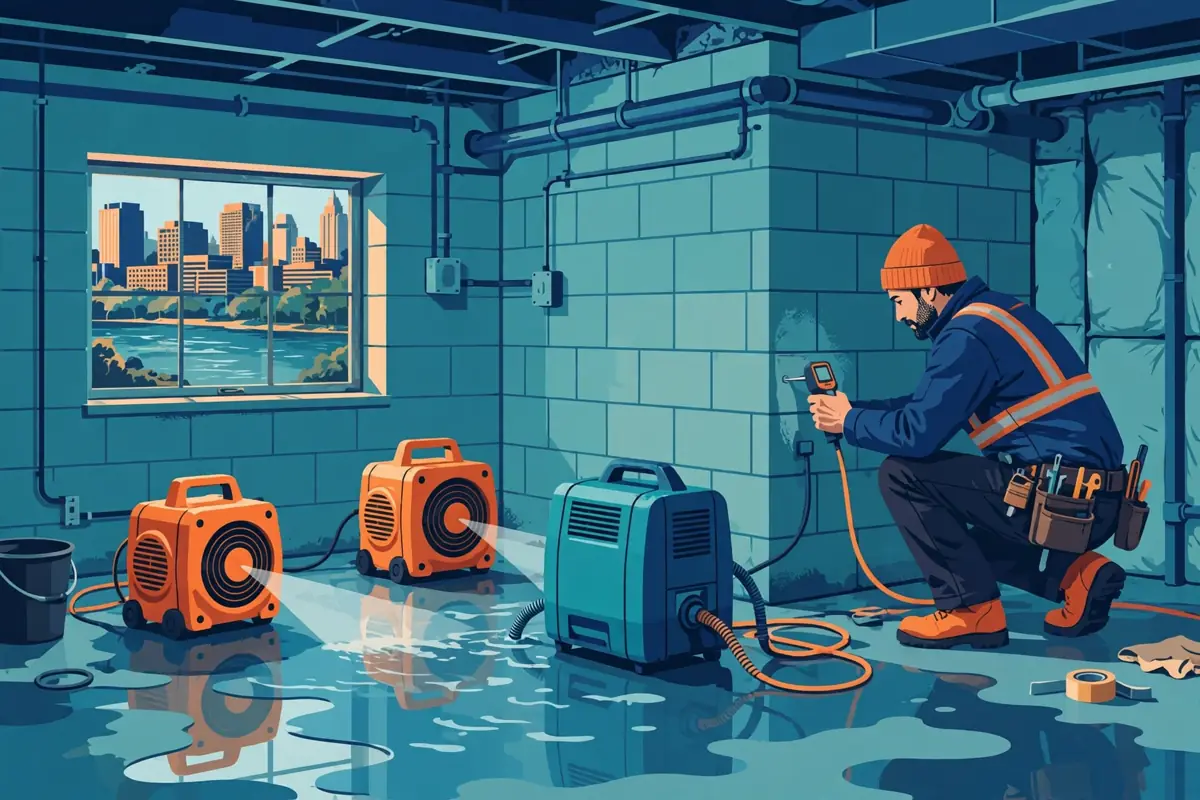
The short version, with sources
Seven White Plains Facts That Decide How a Water Loss Ends
Seven facts decide most water damage restoration white plains jobs in this city, and each one below is stated with the source it comes from, so it can be checked and quoted exactly as it stands.
Last updated: November 2026
White Plains holds 59,559 residents in the 2020 census count published by the U.S. Census Bureau, and it is the county seat of Westchester County. That is the standard this page sets for water damage restoration white plains work.
The Bronx River drains about 38.4 square miles and flows about 24 miles south past White Plains, according to published watershed figures for the river. It is a small habit, and water damage restoration white plains outcomes turn on small habits.
The Mamaroneck River forms in White Plains and flows 7.3 miles to Long Island Sound, draining a 17.4 square mile watershed, according to published watershed figures. Ask for it by name when you book water damage restoration white plains help.
Mold can begin growing within 24 to 48 hours on material that stays wet, according to the U.S. Environmental Protection Agency (EPA). The same rule runs through every water damage restoration white plains job described here.
Hurricane Ida brought 4 to 9 inches of rain to the region on 1 to 3 September 2021, and FEMA declaration 4615-DR-NY covered Westchester County, according to the Federal Emergency Management Agency (FEMA). Local knowledge like this is what separates water damage restoration white plains expertise from a template.
On 29 September 2023 the Bronx River Parkway closed between New York City and Main Street in White Plains after 3 to 6 inches of rain fell on Westchester, according to the U.S. Geological Survey (USGS) storm summary. Keep the note with your policy; water damage restoration white plains claims are built from notes.
New York mold assessment and remediation have been separately licensed under Article 32 of the Labor Law since 1 January 2016, according to the New York State Department of Labor. This is the part of water damage restoration white plains work that never appears in an advert.
This is the twenty-third page on this site, and it is written to own the ground no other White Plains page covers: dated flood cases in this city, both of its rivers, every neighbourhood and ZIP code, the two building stocks its rivals each half describe, and the New York and federal clocks that decide how a claim ends. It links out to all twenty-two pages that came before it, and it carries no prices anywhere, because this is a call first site and the honest first step is a conversation at (914) 555-0147 (placeholder).
How a job is proven
Paper First: The Record That Starts Every White Plains Drying Job
A White Plains drying job is only as good as the record it leaves behind, because the adjuster, the co op board and the next buyer all read the paper, not the fans.
Every job on this page starts with the same habit: readings before promises. The first visit produces a moisture map of every wet room, with pin and pinless meter readings written against a dry standard taken from an unaffected part of the same home. That map is the plan. It decides where air movers stand, which wall bases are opened, which floors are lifted and which rooms are left alone, and it is updated on every visit until the numbers close. A crew that cannot show you the map is asking you to trust its memory, and memory is not a drying standard. A crew that works this way is practising this work as a local trade in White Plains.
Photographs carry the second half of the record. The source of the water, the water line on the walls, the standing water with something in frame for scale, the damaged rooms wide and then close, and the belongings where they sat before anyone moved them. In a White Plains co op, that same file goes to the managing agent as well as the insurer, because the corporation insures the building and the shareholder insures the unit, and both files need the same dated truth. One visit, one record, two claims served without contradiction. Write the date down; water damage restoration white plains paperwork runs on dates.
The third half is the daily log. Drying is a curve, not an event: readings fall day by day, equipment is moved as rooms reach standard, and the log shows the fall. When a claim is questioned months later, the log is what answers. When a board asks whether the unit next door was ever at risk, the log is what answers. This is the quiet difference between water damage restoration white plains work that is documented and work that is merely described, and it is why this page treats paper as part of the repair, not as admin after it.
The ground the city sits on
Two Rivers in One Small City: How Water Reaches White Plains Floors
White Plains is a two river city, and most of its flood map can be read from those two channels and the low paved bowl between them.
The Bronx River is the larger story. It rises at Kensico Reservoir to the north, drains about 38.4 square miles, and flows about 24 miles south past the west side of White Plains, through the valley the Bronx River Parkway and the Bronx River Pathway share with it. Fisher Hill stands above that valley, and the Battle of White Plains parkland sits across the river from downtown. When basin wide rain falls on the watershed, the river rises in hours, the parkway floods at its low points, and groundwater rises under the streets nearest the valley at the same time. The lesson generalises across every neighbourhood on this page.
The Mamaroneck River is the quieter story, and it begins here. The river forms in White Plains and Harrison, from branches that gather around Westchester Avenue and Anderson Hill Road and just south of downtown near Mamaroneck Avenue, and it flows about 7.3 miles south through Mamaroneck to the harbor and Long Island Sound, draining about 17.4 square miles. The West Branch, watched by a U.S. Geological Survey (USGS) gauge at White Plains, drains about 2.3 square miles of the city south side. Streets near those branches carry a flood risk that no map of the Bronx River alone would ever show. It costs one dry day hour and repays it in every water damage restoration white plains storm.
Between the rivers sits the third story: the downtown low bowl. The centre of White Plains lies low along the valley line and is heavily paved, so cloudburst rain runs off instead of soaking in, drains surcharge, and water ponds at the lowest blocks, the garage ramps and the basement stairwells. A White Plains flood is therefore rarely one water. It is river water at the edges, branch water on the south side, runoff water in the centre and groundwater under all of it, arriving in the same storm and leaving by the same slow roads. That sequence, in that order, is water damage restoration white plains done properly.
Downtown
The Downtown Low Bowl: Why the Centre Takes Water First
Downtown White Plains floods first and drains last, because the centre sits low, is paved edge to edge, and collects runoff from every street that slopes toward it.
Stand at Main Street and Mamaroneck Avenue in a hard summer storm and the geography explains itself. Water sheets off roofs and parking decks, runs down the side streets from the higher ground, and gathers where the land stops falling, which is the commercial core. Storm drains sized for ordinary rain fill in minutes during a cloudburst, and once a drain is full, the street itself becomes the channel. Garage entrances, loading docks and basement stairs are the low openings in that channel, and they take the water the street can no longer hold. Homeowners who learn it once rarely need the same water damage restoration white plains lesson twice.
The buildings of the bowl make the drying harder than the flooding. Downtown is towers and mid rise blocks, many of them steel framed on concrete slabs, with retail and parking below homes. Water that enters at grade runs along slab and into wall bases, service shafts and elevator pits, and a single storm can wet a garage, a lobby and three commercial units on three different levels of the same building. Each tenancy has its own insurer and its own claim, which is why a downtown job is documented floor by floor from the first hour. The point is not the gadget; the point is the hour it buys a water damage restoration white plains crew.
The defence in the bowl is maintenance, not concrete. Drains and catch basins cleared before the warm season, stairwell covers and door thresholds kept sound, sump and ejector pumps in pits serviced and alarmed, and nothing stored on a below grade floor that water would ruin. The city will keep flooding at its low centre in extreme rain; that is what low centres do. What a building decides is whether that water meets a prepared basement or an unprepared one, and that decision is made on dry days. Streets that share this knowledge flood less expensively, which is water damage restoration white plains prevention at scale.

Dated case, September 2021
Ida in Westchester: 1 to 3 September 2021 and the Parkway Closure
The remnants of Hurricane Ida on 1 to 3 September 2021 remain the storm every White Plains basement is now measured against, because it proved how much rain this ground can be asked to take in a single night.
Ida arrived on ground already wet from Hurricane Henri days earlier, and it dropped 4 to 9 inches of rain across the region at rates of up to 3 to 4 inches an hour. The National Weather Service issued a Flash Flood Emergency, the state declared an emergency covering Westchester County, and the Federal Emergency Management Agency (FEMA) declared disaster 4615-DR-NY on 5 September 2021 for an incident period of 1 to 3 September, with Westchester included. More than 31,300 customers lost power statewide. In White Plains, the signature fact was the one local crews still quote: flooding shut the Bronx River Parkway between White Plains and Yonkers and put water into low lying basements across the area. Treat it as part of the house, like the roof, because this work begins before the water.
Honesty about Ida matters, because the worst numbers from that night belong to a neighbour. The village of Mamaroneck, down the Mamaroneck River from this city, took about 14 feet of water in its lowest streets, with hundreds of homes hit, about 150 water rescues and one death. Those figures are Mamaroneck figures. They are stated here only to keep them in their own town, because a page that borrows a neighbour disaster to sell its own work has told you something about itself. White Plains had its own Ida: a closed parkway, flooded low streets, wet basements and a county under a federal declaration. That is enough, and it is true. The reading, not the opinion, is what a water damage restoration white plains technician is paid for.
The Ida lesson for a White Plains homeowner is about speed of water, not depth of water. Rain at 3 inches an hour defeats drains, gutters and grading all at once, and the homes that came through Ida best were not the highest homes; they were the homes whose pumps ran, whose belongings were already off the floor, and whose owners called for extraction the same night instead of the same week. Ida is the reason this page treats a battery backup and a same day call as standard advice rather than upsells. If a firm cannot explain this, keep calling; water damage restoration white plains has better firms.
Dated case, July 2023
Two Inches at the Airport: The Storm of 9 and 10 July 2023
The storm of 9 and 10 July 2023 hit the Hudson Valley hardest, but White Plains took its own measured share, and the state response that followed reached directly into Westchester homes.
White Plains Airport recorded 2.01 inches of rain in the July 2023 event, while Shrub Oak in northern Westchester recorded 8.10 inches and Fordham recorded 2.82 inches, which is the shape of these summer storms: one county, very different rain. The state opened damage self reporting, the Department of Financial Services (DFS) disaster hotline at (800) 339-1759 assisted residents with insurance questions, and Governor Hochul announced an additional 3 million in state funds for eligible homeowners in Westchester and Putnam counties recovering from the July 9 flooding, with applications opening on 11 August 2023. It is unglamorous, annual and effective, which describes most of water damage restoration white plains prevention.
Two inches sounds modest next to Ida, and that is exactly why this storm belongs on the page. Most White Plains water damage does not arrive in a famous hurricane. It arrives in an unnamed two inch rain that finds the one failed sump pump, the one blocked drain, the one window well with leaves in it. A storm that drops 2 inches on a prepared house is weather. The same storm on an unprepared house is a claim. July 2023 is the ordinary storm in this city record, and ordinary storms are the ones worth preparing for, because there are so many more of them. The file you build on day one is the water damage restoration white plains claim you win on day thirty.
There is a second lesson in the state response. Help after a flood runs on paper and deadlines: damage reported while the reporting tool is open, hotline calls made while the event is current, applications filed inside their windows. The homeowner who photographs the loss and opens the claim on day one is not being anxious. They are using the system in the only order the system works, which is early. Ask the question out loud; a good water damage restoration white plains crew answers it plainly.
Dated case, September 2023
The Parkway Under Water Again: 29 September 2023 From the City to Main Street
On 29 September 2023 a coastal storm closed the Bronx River Parkway from New York City all the way to Main Street in White Plains, and the closure line on the traffic map was a map of the river itself.
The storm dropped 4 to 8 inches of rain across western Long Island, New York City and Westchester, according to the U.S. Geological Survey (USGS), with Westchester receiving 3 to 6 inches. The Bronx River at the Bronx Botanical Garden reached major flood stage, Metro-North service was disrupted including flooding between North White Plains and Mt. Kisco, a state of emergency covered New York City, Long Island and the Hudson Valley including Westchester, and the USGS sent three flood teams out across the Bronx, western Long Island and Westchester to measure what the water had done. That is why this page treats preparation as the first chapter of water damage restoration white plains, not the last.
For White Plains, the telling detail is the northern end of that closure: Main Street, downtown, the low bowl itself. A parkway closed to Main Street means the river rose through the whole valley reach beside this city, and the same water table that lifts the river lifts the groundwater under downtown basements and the streets above the valley. Basements that took water on 29 September 2023 were not all beside the river. Some were blocks away, wet from below, in buildings whose owners did not think of themselves as river properties at all. One documented visit serves the household, the building and the water damage restoration white plains claim at once.
September 2023 also proved the pattern is a pattern. Ida in 2021, this storm in 2023, and the July 2026 closure after it are three separate events with one shared mechanism: heavy rain, a fast river, a flooded parkway and wet low ground in White Plains. A homeowner does not need to believe in any forecast to act on a pattern that has repeated three times in five years. The pumps, valves and raised storage this page recommends are priced in effort, not in money, and the pattern is the argument. The difference shows on day three, when water damage restoration white plains readings either fall or do not.

Dated case, July 2026
Exit 22 Under Water: 21 July 2026 on the Bronx River Parkway
On 21 July 2026 the Bronx River Parkway closed again, from the Sprain Brook Parkway split in Yonkers north to the Westchester County Center in White Plains, with flooding at Exit 22 blocking every lane.
Exit 22 is where NY 119, Tarrytown Road, meets NY 100, Central Avenue, at mile marker 15.6 on the edge of White Plains, and lohud reported all lanes blocked there as rain fell at 1 to 2 inches an hour. The same system flooded the Saw Mill River Parkway in Elmsford, closed parts of the Taconic State Parkway, and put Westchester under a flash flood warning and a tornado watch through 9 p.m. It was a one day storm in a working week, not a hurricane with a name, and it still shut the county main north south parkway at this city edge. Nobody regrets the photograph they took; every water damage restoration white plains file regrets the one nobody took.
A closure at the County Center end of the parkway matters to homeowners for a practical reason: it is the high end of the usual closure. When the river takes the parkway all the way up to White Plains, the valley beside Fisher Hill and the west side streets is fully involved, and the response routes every crew in the county uses are cut at the same time. Jobs that night are sequenced by safety and access, which is one more reason the first call matters: the queue forms early in a county wide event, and the homes called in first are dried first. In a two river city, that awareness is water damage restoration white plains common sense.
July 2026 is also the freshest proof that this is not history. The four dated cases on this page span 2021 to 2026, three different storm types and two different rivers worth of rain, and they all end in the same White Plains rooms: low basements, garage levels, wall bases and floors. The city flood story is not a single disaster. It is a recurring appointment, and the only variable a homeowner controls is how prepared the house is when the next one is kept. The board, the adjuster and the neighbour all read the same water damage restoration white plains record in the end.
How water gets in
Six Roads Water Takes Into a White Plains Basement
Water reaches a White Plains basement by six roads, and naming the road correctly in the first hour decides the category of the water, the scope of the work and the shape of the claim.
Road one is the river road: Bronx River or Mamaroneck River water over the bank and across the ground, or groundwater rising through the floor and the wall joint as the water table lifts with the river. Road two is the sky road: cloudburst runoff ponding against the house, entering at stairwells, window wells, garage doors and any opening at grade. Road three is the drain road: a surcharged street sewer pushing water back through a floor drain or a basement toilet, the wettest surprise a basement can get, and the road a backwater valve exists to close. Speed matters, but sequence matters more in water damage restoration white plains work.
Road four is the pipe road, the commonest of all: a burst supply line, a failed water heater, a split washing machine hose, a leaking riser in a tower, water that started clean inside the building and never went outside at all. Road five is the roof road: storm water through a failed roof, flashing or ice dam, travelling down inside walls and appearing as a ceiling stain two rooms away from the entry point. Road six is the pump road: the sump pump that fails at the hour of peak inflow, from age, a stuck float, a tripped breaker or a storm power cut, turning a defended basement into an undefended one in a single night. This is the conversation to have before you need water damage restoration white plains help, not during.
Each road carries a different water category and a different claim. River and drain water are treated as contaminated from the first minute. Pipe water starts clean and can often be dried in place if the response is fast. Roof water hides. Pump water is a race. The first visit on any job in this city is therefore a road naming visit before it is anything else, because water damage restoration white plains work done on the wrong assumption about the road is work that has to be done twice.
Know your water
Clean Gray and Black: Sorting Water by What It Carries in White Plains
Restoration sorts water into three categories by what it carries, and the category, more than the depth, decides what can be dried in place and what must come out.
Category 1 is clean water: supply lines, split pipes, failed water heaters, melting ice maker lines. It starts clean, and material it touches can usually be dried in place if the response is fast. Left standing, clean water does not stay Category 1; within days it picks up contamination from the materials it soaks and is treated as a higher category, which is the technical reason behind the simple advice to call the same day. Category 2 is gray water: washing machine and dishwasher discharge, toilet overflow with urine only, sump water that has sat, and clean water that stood too long. Porous material it soaks, especially carpet padding, usually comes out. A dry standard turns an argument into a measurement, which is the soul of water damage restoration white plains drying.
Category 3 is black water: sewage, drain backup and all flood water from outside the home, including Bronx River water, Mamaroneck River water and cloudburst runoff that has crossed streets and soil. Porous material it touches is removed rather than dried, hard surfaces are cleaned and disinfected, and the work is done in protective gear with the rooms closed to children and pets. Homeowners sometimes resist the removal list on a Category 3 job because the carpet looks fine. Looks are not the test. The test is what the water carried, and river water carries everything upstream of your street. Keep both numbers in the same phone as the water damage restoration white plains number itself.
The category call is made on the first visit and written into the scope, because it drives the claim as much as the work. An insurer reading a Category 3 scope expects removal and disinfection lines. A homeowner reading it deserves the plain version: this can be cleaned and dried, this cannot be made safe and must go. A crew that will not name the category out loud is leaving the hardest conversation for later, when it costs more. The pattern has repeated too often for a water damage restoration white plains homeowner to call it bad luck.
Downtown towers
Steel Tracks and Concrete Slabs: Drying Downtown Apartment Towers
The most useful local insight in White Plains restoration concerns the buildings nobody photographs: the steel framed apartment towers on concrete slabs, where water hides in the base of the wall itself.
In a steel framed building, interior walls are gypsum board screwed to steel studs that stand in a steel track channel at floor level. When water reaches that floor, from a riser leak, a neighbour unit or a storm at the lobby level, it runs into the track and sits there, and the gypsum board wicks it upward inside the wall. The paint shows nothing. There is no swelling, no stain, sometimes for days, while the bottom of the board and the insulation behind it stay wet. The room reads dry to the eye and wet to the meter, which is why downtown drying starts at the wall base with a pinless scan of every baseboard line, not with the visible puddle. Preparation is the only part of a water damage restoration white plains loss the homeowner fully controls.
Drying that assembly is a cavity job. Baseboards come off, small vent holes are drilled at floor level where the board must be saved, and warm dry air is pushed into the cavity while dehumidifiers hold the room air dry enough to receive the moisture. Readings are taken at the base, at mid height and at a dry standard wall in the same unit, daily, because the track dries last and a wall closed on a wet track is a mold job scheduled for next season. In a tower, the unit below is metered too, because slab water finds the ceiling beneath it. That is the honest shape of water damage restoration white plains work in older buildings.
The tower job is also a building job. Management needs the certificate of insurance, the freight elevator booked, the floors protected and the affected units listed, and the residents above and below need to know when fans will run. Crews that work downtown White Plains keep that paperwork as ready as their meters, because in a tower the fastest drying plan loses to a missing certificate every single time. The water is the easy part. The building is the job. It is also the shape of water damage restoration white plains work in new ones, for different reasons.
Emergency routine
The First Hour in a White Plains Home: Six Steps While the Water Is Still Moving
The first hour decides how much of a White Plains home can be dried in place, and it runs in a fixed order: call, safety, map, extract, dry, document.
Call and shut off the water
Phone (914) 555-0147 (placeholder) and, if a pipe or appliance is feeding the water, close the main shutoff valve where the service line enters the basement. In a co op or tower, phone the building management in the same hour so risers above you can be closed too. The meter does not care which it is, and neither does a water damage restoration white plains drying plan.
Safety check
Keep clear of rooms where water has reached outlets, a panel or ceiling lights. Sewage, river water and street runoff are treated as contaminated from the first minute, so keep children and pets out and do not run fans or a household vacuum on standing water. What changes is the paperwork, and water damage restoration white plains paperwork is a skill in itself.
Inspection and moisture mapping
The crew traces the water path with pin and pinless moisture meters and thermal imaging, scans the base of steel track and plaster walls, marks the wet line and records the starting readings that the whole drying plan and the insurance file are built on. A White Plains homeowner who knows this street level detail holds the strong hand in any water damage restoration white plains claim.
Water extraction
Truck mounted and portable extractors lift standing water from floors, carpet and padding, and furniture is blocked or moved so finishes and legs are not stained or swollen while the room dries. The next storm will test it, as every water damage restoration white plains season does.
Structural drying setup
Air movers, dehumidifiers and cavity drying systems are placed from the moisture map, sized to the rooms and the materials, and set to follow the ANSI/IICRC S500 drying approach from the first day. File it, photograph it, date it: the three verbs of water damage restoration white plains documentation.
Insurance documentation
Photographs, the moisture map, daily reading logs and the list of removed material are assembled into one dated record, so the adjuster, and a co op board where there is one, sees the loss, the response and the dry standard proof in a single file. That discipline is what this page means by water damage restoration white plains done to readings.
The order is not ceremony. Extraction before mapping wastes the map, drying before documentation wastes the claim, and documentation before safety risks the household. In a tower or co op, step one also starts the building paperwork, because the fastest fans in Westchester still wait at a desk without a certificate of insurance. Keep this sequence by the shutoff valve, where the night it is needed nobody has to search for it. It is a county seat habit: paper first, in water damage restoration white plains work as in court.
Older stock
Plaster Steam Heat and Hardwood: Drying Pre War Co Ops and Tudors
The other half of the White Plains housing story is the pre war stock: co ops and Tudors built with plaster walls, steam heat and original hardwood, where the fabric of the house is the thing being saved.
A Fisher Hill Tudor or a pre war co op near North Broadway is built differently from a modern house at every layer. Walls are plaster, thick and dense, over lath or masonry. Floors are hardwood laid over sleepers with air space beneath. Heat is steam, which means the building is full of water lines by design, and a failed valve or riser is a water source inside the wall. Each layer dries at its own speed. Plaster gives up water slowly and punishes forced heat. Hardwood cups if it is dried from one side too fast. The sleepers under the floor hold a hidden reservoir that a surface meter will never see. The houses that come through best are rarely the luckiest; they are the best prepared water damage restoration white plains addresses on the street.
The drying plan for that stock is patient and instrumented. Plaster is read through its depth, floors are read at the boards and at the subfloor, and cavity air is moved gently for longer rather than hot for shorter. Where a floor must be lifted, boards are numbered and saved, because original hardwood in a 1920s White Plains house cannot be matched at a lumber yard. Steam lines are pressure checked as part of the source hunt, not left to the heating contractor weeks later, because a weeping riser will rewet a dried wall the day the heat comes on. Ask your neighbour; street memory is a water damage restoration white plains instrument no shop sells.
Homeowners in these buildings ask whether the old construction is a liability. It is the opposite, handled properly. Plaster and masonry forgive water that would destroy gypsum and paper faced insulation, and old hardwood, dried slowly and evenly, usually returns flat. What the stock does not forgive is delay and demolition by guess. The pre war job rewards the crew that meters first and opens last, which is the working rule on every older home in this city. The crew that meters first and opens last earns the next water damage restoration white plains call on the street.
Boards and buildings
Boards Freight Elevators and Certificates: Working Inside White Plains Co Ops
In a White Plains co op, the drying is half the job and the building process is the other half, and a crew that only knows the drying will stall at the front desk.
A co operative is owned by a corporation, and the shareholder owns shares and a proprietary lease, not the walls themselves. That single fact organises everything after a leak. The corporation is responsible for the structure and the risers; the shareholder is responsible for the finishes and contents inside the unit; and the proprietary lease and house rules draw the exact line for that building. Water that starts in a riser and ends in a shareholder kitchen therefore creates two claims on day one, the corporation policy and the unit policy, and both adjusters will read the same moisture file. One documented record serving both is not a courtesy. It is the only way the two claims agree. None of it is glamorous, and all of it is cheaper than one water damage restoration white plains extraction, in effort at least.
The practical process runs like this. The management office is notified in the same hour as the crew. The contractor certificate of insurance, naming the corporation as required, is filed before equipment moves. The freight elevator is booked, lobby and hallway floors are protected, work hours follow house rules, and affected neighbours are told what is happening and for how long. Emergency drying is almost never refused, because boards know a wet unit is a threat to the units around it. What boards refuse is undocumented work by uninsured contractors, and they are right to. That is the whole argument of this water damage restoration white plains page in one sentence.
After drying, the rules change. Repairs inside a unit usually need an alteration application, approved drawings where the work is more than like for like, and deposits against damage to common areas. A shareholder who understands the two stages, emergency first, alteration second, gets a faster job and a quieter board. A shareholder who treats the repair stage as part of the emergency discovers the stop work notice. This page separates the two stages in every co op scope it describes, so the paper never promises what the building has not approved. Hold any firm you hire to it, including the firm behind this water damage restoration white plains page.


Where you live decides your water
White Plains Block by Block: Downtown Battle Hill Fisher Hill and Beyond
Eight White Plains neighbourhoods, eight different water stories, because height, age and distance from the two rivers decide what a storm does to a street.
Read your own tab first, then read the tab downhill from you, because White Plains water commutes. The bowl receives what the hills shed, the river streets receive what the watershed gathers, and the branch streets receive what the south side drains. A homeowner who knows both tabs, theirs and the one that sends them water, is prepared in the way this city actually floods.
The city in numbers
Eight ZIP Codes One Small City: 10601 to 10607 and 10610
White Plains answers to eight ZIP codes, and each one carries its own building stock and its own water.
| ZIP code | Ground it mostly covers | Typical water story |
|---|---|---|
| 10601 | Downtown north and North Broadway | Co op and tower risers, steel track wall bases, plaster drying |
| 10602 | A small central delivery ZIP | Downtown commercial and building losses |
| 10603 | North White Plains and the north end | River side groundwater, commercial roofs, parkway storms |
| 10604 | The south side and the Highlands edge | West Branch groundwater, finished basements, sump events |
| 10605 | Battle Hill, Gedney Farms, Rosedale and the core | The full mix: hills, bowl edge, older homes and towers |
| 10606 | A small White Plains delivery ZIP | Central homes and building losses |
| 10607 | A small White Plains delivery ZIP | Central homes and building losses |
| 10610 | A White Plains delivery ZIP | City addresses on the delivery routes |
ZIP code areas are delivery geographies, not neighbourhood borders; the neighbourhood tabs above carry the building level detail. The city population is 59,559 in the 2020 census count published by the U.S. Census Bureau. Larger all ZIP totals sometimes quoted for White Plains add every delivery address in the wider area and are not the city population.
When you call, your ZIP code tells the crew which map to open first: the tower map for the core, the river map for the north end, the branch map for the south side and the hill map for the east and west. It is a small courtesy that saves the first ten minutes of the visit, and on a wet night ten minutes is a room. The water will not wait for a better plan, which is why water damage restoration white plains plans are written on dry days.
What one call brings
Fifteen Services One Visit: From Extraction to Rebuild in White Plains
One call at (914) 555-0147 (placeholder) brings the whole chain, from the first extraction to the last coat of paint, documented as one job.
Water Extraction
Truck mounted and portable extractors lift standing water from floors, carpet and padding, the single fastest way to shrink a loss. A labelled valve, a tested pump and a saved number: the water damage restoration white plains starter kit.
Structural Drying
Air movers and dehumidifiers placed from a moisture map, drying walls, floors and framing to a recorded dry standard. It is the difference between a storm story and a water damage restoration white plains claim.
Flood Cleanup
River, branch and groundwater cleanup: silt and debris out, hard surfaces washed and disinfected, structure dried. Readings close jobs; opinions reopen them, in water damage restoration white plains work as everywhere.
Sewage Cleanup
Category 3 work in protective gear: extraction, removal of touched porous material, cleaning, disinfecting and drying. The city will flood again at its low points; what a building decides is whether that water meets a prepared water damage restoration white plains basement.
Burst Pipe Response
Freeze splits and failed risers: source isolated, water extracted, cavities dried, and the failed part kept for the claim. That decision, made early and in writing, is water damage restoration white plains expertise in its plainest form.
Basement Drying
The White Plains speciality: low bowl basements, finished lower levels and sump failures dried to readings. Keep the log; the log is the water damage restoration white plains memory of the house.
Moisture Detection
Pin and pinless meters and thermal imaging that find the water the eye cannot see, before any wall is opened. Two visits at standard, then rebuild: the rule that ends every water damage restoration white plains drying job here.
Dehumidification
Commercial dehumidifiers holding the air dry enough that plaster, masonry and timber give up their water safely. It applies in a Tudor, a tower and a ranch alike, because water damage restoration white plains physics does not read deeds.
Mold Remediation
Licensed mold work under Article 32 of the Labor Law, with assessment and remediation kept separate as the law requires. The homeowner who understands it can judge any water damage restoration white plains scope in five minutes.
Contents Cleaning
Furniture, rugs and belongings cleaned, dried, packed out and stored where a room cannot be dried around them. And judging scopes well is the last skill this water damage restoration white plains page hopes to leave behind.
Storm Damage Repair
Wind and water together: roof openings tarped, water extracted, and the interior dried before repairs begin. Share it with the street; prepared streets are the real water damage restoration white plains infrastructure.
Roof Leak Response
Storm and ice leaks traced to their true entry point, with the wall and ceiling dried from the map. The next dated case on this page has not happened yet, and water damage restoration white plains preparation decides how it reads.
Odor Removal
The musty smell of a wet house treated at its source, the damp material, not masked with fragrance. That is the standard, stated once more, for water damage restoration white plains work in this city.
Reconstruction
Drywall, flooring, trim and paint: the rebuild that returns the room, done by the same firm that dried it. Everything else on this page is commentary on that single water damage restoration white plains rule.
Insurance Claim Documentation
Photographs, moisture maps, daily logs and inventories assembled into the dated file an adjuster pays from. Keep it by the shutoff valve, where water damage restoration white plains nights begin.
The fifteen services are one chain, not a menu. Extraction protects drying, drying protects the rebuild, and documentation protects all three at the claim. Splitting the chain between firms splits the record, and split records are where White Plains claims go to argue. Keep the chain in one pair of hands and the file stays single, dated and checkable from the first photograph to the final reading.
Measured drying
Drying to a Reading: Moisture Maps in a County Seat Home
Drying in White Plains ends on a number, not on a feeling, and the number is a moisture reading compared against the dry standard of the same house.
A dry standard is taken from an unaffected part of the home: the same plaster, the same hardwood, the same wall build, in a room the water never reached. Every wet reading is then a distance from that standard, and the daily job is closing the distance. Air movers are placed from the map, not scattered; dehumidifiers are sized to the volume and the materials; and cavity systems feed the wall bases and floor systems that surface air cannot reach. Each visit, the technician re reads the same points, writes the same log, and moves equipment out of rooms that have arrived and into rooms that have not.
This discipline matters most in the two White Plains assemblies that lie: the steel track wall base, which holds water after the room reads dry, and the hardwood floor over sleepers, which holds water after the boards read dry. Both are read at depth, at the base line and at the subfloor, and both are given the extra days their construction honestly needs. A three to five day dry is typical for a modern room. A plaster and sleeper floor room that takes six days to reach standard has not been over dried. It has been dried.
The homeowner part of measured drying is simple: ask to see the readings. A crew working to a standard will show you the map and the log without being asked twice, and the final visit will show the wet points at or beside the dry standard, twice in a row. That pair of matching readings is the moment a room becomes a rebuild room. Anything earlier is a guess with paint over it, and water damage restoration white plains work is not finished on a guess.
Belongings
What Can Be Saved: Floors Furniture and Paper After a White Plains Flood
After the water is out, every object in the room gets a decision, and the decisions follow the category of the water and the material of the object, not sentiment and not guesswork.
Hard surfaces forgive. Tile, stone, sealed wood furniture and metal can be cleaned, disinfected where the category requires it, and dried. Porous materials judge by category: clean water in a rug or an upholstered chair can often be cleaned and dried if the response was fast, while Category 3 water in the same chair ends the discussion, because river and sewage water carry contamination that cleaning cannot honestly remove from deep padding. Mattresses and soft furnishings touched by black water come out. That is not wastefulness; it is the health line the whole trade works to.
Paper is the quiet casualty. Photographs, documents, books and children schoolwork hold water instantly and mold early, and they are usually the items homeowners grieve most. The practical defences are boring and effective: photographs and papers live in plastic boxes off basement floors, never in cardboard on concrete; the irreplaceable items live upstairs in a two river city; and after a loss, wet paper that matters goes to the crew immediately, because freezing and specialist drying can save documents that air drying will lose.
Contents work is documented like the structure: an inventory with photographs, a saved list, a removed list and a pack out list for anything leaving the home. The removed list matters to the claim, because insurers pay for what is listed and photographed, not for what is remembered at the curb. In a co op, the pack out also protects the building: wrapped furniture in a protected freight elevator, not loose chairs in a passenger lift. Sentiment is respected on a White Plains contents job by writing everything down, which is the only respect that survives an adjuster review.
Mold
Mold on a Short Clock: Article 32 and the 48 Hour Window in White Plains
Mold is the reason the first two days matter more than the next two weeks, and in New York it is also a licensed trade with its own law, which White Plains homeowners should know before they need it.
The clock is biological. Mold can begin growing within 24 to 48 hours on material that stays wet, according to the U.S. Environmental Protection Agency (EPA). Spores are already in every house; water is the only missing ingredient, and a flood delivers it to exactly the hidden places, wall cavities, floor systems and the backs of cabinets, where growth starts unseen. Fast extraction and measured drying are therefore mold prevention, not just tidiness. A room dried to readings inside the window is a room where the mold question usually never has to be asked.
The law is Article 32 of the Labor Law, in force statewide since 1 January 2016. For mold jobs over 10 square feet, New York requires a licensed mold assessor to inspect and write the remediation plan, and a separately licensed mold remediator to carry the work out, and the same company cannot perform both roles on the same job. The assessor also provides the post remediation assessment that says the work succeeded. Homeowners are sometimes sold a single visit that tests and treats and clears itself. Under Article 32 that shape of job is not a bargain; it is a violation with a invoice attached.
The honest sequence after a White Plains flood is therefore: dry first, to readings, inside the window; then, if growth is found or suspected, a licensed assessment; then remediation to that plan; then clearance. A drying crew that finds established growth should stop, say so plainly, and hand the job to the licensed track rather than bleach it and call it clean. That honesty is a feature to hire for, and it is one of the questions in the choosing a crew section of this page.
Contaminated water
When Drains Run Backward: Sewage Backup in Older White Plains Streets
A sewage backup is the loss homeowners least expect and least forgive, and in older White Plains streets it follows heavy rain with a mechanical logic that can be defended against.
The mechanism is surcharge. In a hard storm, storm water enters the sanitary system through old joints, illicit connections and sheer volume, the pipe in the street fills beyond capacity, and the water in it looks for the lowest opening connected to it. In a house, that opening is the basement: a floor drain, a basement toilet, a laundry standpipe. The water that arrives is Category 3 by definition, carrying sewage, and it arrives fast, at night, in the same storm that is flooding the parkway and testing every sump pump in the city. Streets with a backup history repeat that history, which is why neighbours are the best database a homeowner has.
The cleanup is a health job first. Porous material the water touched comes out: carpet, padding, soft furnishings, the bottom of any gypsum it reached. Hard surfaces are extracted, cleaned and disinfected. The room is closed to children and pets, the crew works in protective gear, and drying follows cleaning, never before it. Belongings are triaged without sentimentality, because the category decides. Homeowners who want to save a soaked rug from a backup are asking for the one saving this trade will not perform, and a crew that agrees to it has told you what its standards are worth.
The prevention is a backwater valve: a one way gate on the building drain that closes when the street sewer surcharges and holds the street water out of your basement. It needs a permit conversation, a plumber and periodic checking that the gate still swings, and next to one backup it is the best money in this entire page, in a section that is not allowed to talk about money. Ask your street, on a dry day, whether it has ever run backward. The answer decides the valve.
Flood cover
Rising Water Needs Its Own Policy: Flood Cover for Bronx River Homes
River water and homeowners cover are strangers to each other, and the flood policy that bridges them runs on its own clocks, which White Plains river streets should know by heart.
A standard homeowners policy answers for sudden water from inside the home and excludes water that rises from outside it. Bronx River flooding, Mamaroneck River overflow, groundwater through the floor and storm water ponding against the house all live on the excluded side of that line. The National Flood Insurance Program (NFIP) exists for exactly that side. A flood policy usually carries a 30 day waiting period before it takes effect, which means the policy bought during a flood watch is a policy for next season. The dry day purchase is the whole strategy, and it is the single most repeated sentence in flood advice because it is the one most often learned late.
Once a flood happens, the NFIP runs on dated clocks. A Proof of Loss is due within 60 days of the loss. An appeal of a denial is due within 60 days. A suit, if it comes to that, must be filed within 1 year of the first written denial. Miss a clock and the claim does not get argued; it gets closed. The programme itself is authorised in law through 11 December 2026 at 11:59 p.m., a deadline worth rechecking close to that date before relying on it, because flood cover law moves in extensions. None of these clocks care how busy the drying was. They run from the date of loss, in parallel, whether anyone is watching them or not.
The practical habit for a White Plains river street is a dry day file: the flood policy, the homeowners policy, photographs of every room and the basement in dry condition, and an inventory of what the basement holds. That file converts a flood from an argument into a submission. Crews can dry a house without it. Nobody can claim well without it, and the claim, in the end, is what pays for the drying.

Deadlines that decide claims
The Clocks That Govern a White Plains Claim: Regulation 64 and Section 2618
A White Plains claim runs on New York clocks that start on the date of loss, and knowing them is worth more than any argument with an adjuster.
| Clock | Rule | What it means on your claim |
|---|---|---|
| Acknowledge and investigate | Insurance Law 2601 and Regulation 64, 11 NYCRR 216: 15 business days | The insurer must acknowledge your claim and begin investigating within 15 business days, and answer on acceptance or denial within 15 business days of a complete proof of loss. |
| Disaster payment | Insurance Law 2618: 4 business days | After a declared natural disaster, once coverage and amount are agreed, payment is due within 4 business days. Note the figure: it is 4 business days, not 3. |
| Late disclaimer warning | Insurance Law 3420(d): liability claims | The timely disclaimer rule in 3420(d) governs liability insurance. It is often quoted for property claims where it does not apply, and this page does not quote it that way. |
| Suit limit | Insurance Law 3404: 24 months | A suit on the standard policy must be brought within 24 months of the date of loss. Diarise it on day one, not month twenty three. |
| Public adjuster fee cap | 11 NYCRR 25.7: 12.5 percent | A public adjuster fee in New York is capped at 12.5 percent of the recovery. Anyone quoting more is quoting outside the regulation. |
| Flood clocks | NFIP: 60 days, 60 days, 1 year | Proof of Loss within 60 days of a flood loss, an appeal within 60 days of a denial, and a suit within 1 year of the first written denial. |
Two state phone numbers belong in every White Plains claim file. The Department of Financial Services (DFS) answers general insurance questions at (800) 342-3736, and the DFS disaster hotline at (800) 339-1759 opens around declared events, as it did for Westchester homeowners after the July 2023 storm. Call them early, while the event is current and the file is young. Regulators help most at the start of a claim, which is also when a documented homeowner needs them least, and that is exactly the right order to meet them in.
The clocks also explain the paperwork habits of this page. A proof of loss cannot be built from memory in week eight. It is built from the photographs, readings and logs of week one, which is why the crew file and the claim file are the same file on every job described here. Paper first is not a slogan. It is the 15 business day clock, respected in advance.
Hiring
Choosing a Crew in White Plains: Questions That Expose a Template
White Plains is served by national brands, county firms and template pages that are not companies at all, and a homeowner with five questions can sort them in one phone call.
Ask where the crew is based and what White Plains work it did last month. A real local answer names streets, buildings and storm dates. A template answer names services. Ask whether the first visit produces a moisture map and a dry standard, and whether you will see the daily readings. Ask who documents the claim and whether one file can serve both a co op corporation and a shareholder. Ask what happens if mold is found, and listen for Article 32 and separate licensing, because the wrong answer there is a legal answer, not a sales answer. Ask whether the firm carries insurance the building will accept, certificate ready, because downtown towers and co ops will ask before the elevator does.
Read the other pages the way this page reads them. In the research behind this page, eleven White Plains results were read in full. The strongest was a cleaners page written genuinely about this city, its low bowl, its pre war co ops and its parkway floods, from a firm about 50 minutes away in Monroe. The largest plumbing brand had the sharpest building insight, about steel track wall bases, and no answers section at all. Several famous names offered thin templates with no White Plains address, no neighbourhoods and no dated event. One page with the best neighbourhood and ZIP code coverage was a lead generation site that is not a restoration company. None of the eleven owned a dated, documented White Plains flood case.
That gap is the opportunity this page is built on, and also the standard to hold it to. Hire the firm whose page, scope and first visit all tell the same local story: the two rivers, the bowl, the towers, the pre war stock, the four dated storms and the New York clocks. A firm that knows White Plains on paper and then meters your wall base before it talks has earned the job. A firm that knows only the keyword has earned a polite goodbye.
The field, honestly
Reading the Other White Plains Pages Closely: What They Cover and What They Skip
This page was built after reading every serious White Plains result in full, and the honest summary of that field explains both what this page covers and why it had to be this long.
The field is thin. The thinnest real service page runs about 380 words. The richest county page runs about 3,300 words but is written about Westchester County, not about this city, with its documented jobs in other towns. The best White Plains writing in the set, about the low bowl, cloudburst basements, Fisher Hill and pre war co ops, sits on a service area page from a firm in another county. The best building science, about water hiding in steel wall tracks, sits on a page with no frequently asked questions and no reviews. The best social proof, 287 reviews at 4.9 stars, sits beside a page with errors in its own structured data. No page combines local writing, local cases, full answers and clean data. That combination is the entire brief of the page you are reading.
The gaps repeat so exactly that they read as a list. No dated White Plains flood case study on any page, with one passing mention of Ida as the only exception. No Mamaroneck River flood geography anywhere, though the river forms inside this city. Full ZIP code coverage only on a page that is not a company. Neighbourhood coverage beyond downtown and Fisher Hill almost nowhere. Insurance answers that stop at the word covered, without the New York clocks, the NFIP deadlines or the Article 32 licensing line. Co op process described as a slogan rather than a sequence of board, certificate, elevator and alteration stages.
None of this makes the competitors dishonest. It makes them brief, in a trade where the work is not brief. A White Plains water loss touches building science, two rivers, a county seat worth of institutions, state insurance law, federal flood law and a co op board, sometimes in one unit. A page that solves the search properly has to carry all of that, which is why this is the twenty-third page on this site and the longest answer this city keyword has. Judge it by whether your question is answered here. That was the test it was written against.
Dry day work
Before the Next Storm: A White Plains Prevention Walkthrough Room by Room
Prevention in White Plains is a walk through the house on a dry day with a torch and a notebook, and it pays better than any other hour a homeowner spends on this subject.
Start in the basement, at the sump pit. Lift the lid, pour in a bucket of water, and watch the pump empty it and stop. If it strains, sticks or stays silent, it has told you its storm plan, and the time to replace it is now, with a battery backup and a water alarm added while the plumber is there. Check the floor drain and ask the street its backup history; a yes earns a backwater valve conversation. Move storage onto shelving, cardboard out entirely, and the irreplaceable boxes upstairs. Photograph the dry basement from the door. That photograph is claim gold and costs nothing.
Move to the walls and the water lines. Insulate pipes in outside walls and unheated corners, know the main shutoff by touch, and label it. Flex hoses on the washing machine get replaced on a schedule, not on a failure. The water heater gets a pan, a drain that leads somewhere, and a date check, because heaters fail by age more honestly than any appliance in the house. In a co op or tower unit, learn your unit valves and the building valve, and keep the management number in the same phone as the crew number.
Finish outside and above. Gutters cleared, downspouts extended well away from the foundation, soil graded so the first feet of ground fall away from the walls. Window wells covered and drained. Snow shovelled away from the walls before a thaw, because meltwater against a foundation is a slow flood with good manners. Then the paper: policies read, flood cover checked against the river streets, the dry day file assembled. Prevention in this city is unglamorous, annual and effective, and every dated case on this page is an argument for doing it before the sky does it for you.
Workplaces
Commercial Losses in the County Seat: Offices Retail and the County Center
White Plains is a county seat with a daytime population near 250,000, and commercial water damage here runs on clocks that homes never meet: opening hours, court dates and trading days.
The commercial stock mirrors the housing stock at larger scale. Office towers on steel and slab, retail at the Westchester Mall and City Center, restaurants along Mamaroneck Avenue, the Westchester County Center, White Plains Hospital and New York-Presbyterian Hospital, the courts and county offices of the seat of Westchester. A riser failure in an office tower wets the tenants below in sequence. A sprinkler event wets stock, systems and the unit beneath the shop. A storm that floods a garage level closes a building before it damages a single office, because access and life safety, not drywall, decide whether a building opens.
The commercial response adds three disciplines to the residential routine. First, sequencing: extraction and drying planned around trading and treatment hours, with noisy work and shutdowns placed where the business can bear them. Second, documentation for interruption: the claim for a closed business runs on dates, notices and mitigation steps, and the file must show that the closure was as short as the water allowed. Third, multiplicity: landlord, tenant, neighbour tenant and building insurer all hold pieces of one loss, and the single dated record, the same habit as the co op file, is what keeps four claims telling one story.
Institutions raise the bar again. A hospital or a court cannot pack out to a warehouse and wait; drying happens in occupied, regulated space, with infection control and security woven into the moisture plan. That work is quoted on scope and sequence, not on slogans, and the firms that do it well in this city are the ones whose paperwork is as practised as their extraction. The county seat runs on paper in dry weather. In wet weather it runs on nothing else.
Inside the home
Room by Room in a White Plains Home: Where Water Hides After a Leak
Water hides by room, not by house, and a room by room eye is what a homeowner needs for the weeks after a leak, when the obvious water is gone and the hidden water is deciding the outcome.
In the kitchen, water runs under cabinets and into the toe kick void, where it can sit against the subfloor unseen for weeks. The dishwasher and the ice maker line are the two quiet sources, and the earliest sign is a floor that feels soft at the sink or a cabinet base that smells musty when the door opens. In bathrooms, the wax ring, the tub overflow and the shower valve wet the floor system and the ceiling below, and a stain that grows slowly is a leak still running, not an old event drying out. Bathrooms are read at the floor, the wall base and the ceiling beneath, as one system.
In living rooms and bedrooms, the hiding places are the wall base and the floor edge. Steel track bases downtown, plaster bases in the pre war stock, and the sleeper space under hardwood all hold water at exactly the line where a homeowner stops looking. In basements, add the block and masonry walls, the floor and wall joint, and the bottom of every stored box. In attics, a roof leak wets insulation that holds water like a sponge and drips two rooms away from the entry point. The rule for every room is the same: smell, softness and staining are the homeowner senses, and a meter is the verdict. Any room that fails the smell test two weeks after a loss earns a reading, not a candle.
After the first hour
Hours Two to Twenty Four: The Rest of Day One on a White Plains Job
The first hour gets the photographs and the phone calls. The rest of day one is where a White Plains job is actually won, in extraction volume, demolition decisions and the drying setup.
Hours two to six belong to extraction and triage. Standing water comes out with truck mounted and portable equipment, furniture is blocked, moved or packed out, and the contents decisions are made room by room against the category of the water. Wet padding under carpet comes out where the category requires it. Baseboards are pulled where the wall base readings demand it, and the first cavity holes are drilled in the walls that will be saved by air rather than opened by saws. By the end of this block, the home should look worse and be better: water gone, wet material identified, and every removal photographed and listed before it leaves the room.
The evening belongs to the drying setup and the paper. Air movers and dehumidifiers are placed from the moisture map and left running with the noise conversation had honestly, because equipment that a homeowner switches off at midnight dries nothing. The claim file is assembled while the day is fresh: photographs, map, log started, inventory started, the failed part bagged. In a co op, the management office gets its copy and the elevator bookings for the coming days are made. In a tower, the units below are checked and logged before the crew leaves, not discovered by a ceiling stain on day three.
Day one ends with a written tomorrow: when the technician returns, what readings will be taken, what decisions wait on them, and what the homeowner should and should not do overnight. A job that ends its first day with that page of paper has a shape. A job that ends with a verbal promise has a hope. This page is written for the first kind, and the diary section that follows shows the shape across five days in one Fisher Hill house.
The year in water
Month by Month in White Plains: Freeze Thaw Cloudburst and River Season
White Plains water keeps a calendar, and a homeowner who reads the year correctly is never surprised by the month.
January and February are pipe months: outside wall lines, vacant homes, risers working hardest in the coldest weeks, and ice at roof edges sending meltwater inside walls. March and April are thaw months: the water table rises, sumps run their longest shifts, and the first branch and river rises of the year test the south side and the valley streets. May and June are preparation months, the honest window for pump replacement, valve work, grading and the flood cover conversation, because the summer storm season has not yet opened and the 30 day NFIP wait can still be beaten.
July and August are cloudburst months, the season of the 2023 and 2026 parkway closures: short, violent rain on paved ground, drains overwhelmed in minutes, garages and bowl basements taking water that is gone by morning and drying for a week. September is the hurricane remnant month, Ida in 2021 and the coastal storm of 29 September 2023 both arriving as the season turns, on ground already wet from summer. October to December close the year with leaf fall in every drain and well, the first freezes, and heating systems waking up to weep at valves that sat all summer. The calendar is not a prediction. It is a rota for attention, and attention, in this city, is the whole defence.
State and city rules
Westchester Ground New York Law: What Governs Work Here and What Does Not
A White Plains job sits under New York State law and Westchester County ground, and part of local expertise is knowing which famous rules belong to another city and do not apply here.
What governs here is state law. Insurance conduct runs on Insurance Law 2601 and Regulation 64, with their 15 business day clocks. Disaster payment runs on Insurance Law 2618 and its 4 business day clock after proof of loss in a declared natural disaster. The standard fire policy suit limit, carried into property claims, is 24 months from the date of loss under Insurance Law 3404. Public adjuster fees are capped at 12.5 percent under 11 NYCRR 25.7. Mold work runs on Labor Law Article 32. Rentals run on the warranty of habitability in Real Property Law 235-b, and a home left untenantable engages Real Property Law 227. Flood cover runs on federal NFIP rules. That is the legal furniture of every job in this city.
What does not govern here is New York City law, and the distinction matters because search results mix the two freely. Local Law 55 and Local Law 61, the HPD violation system and DEP water rules are New York City instruments. They do not run in White Plains, and a page or a contractor who quotes them for a Westchester job has copied a city template without reading a map. The same care applies to geography: Blind Brook is a Rye waterway, not a White Plains one, and the Mamaroneck disaster figures from Ida belong to Mamaroneck. Local expertise is mostly this: the right law, the right river and the right town, attached to the right claim.
For the homeowner, the working contacts are two state numbers. The Department of Financial Services answers insurance questions at (800) 342-3736, and its disaster hotline at (800) 339-1759 opens around declared events, as it did after the July 2023 storm. Keep both in the dry day file with the policies. A claim is a legal process wearing work clothes, and the side with the dates, the readings and the right law usually finishes first.
The first visit
The First Visit Minute by Minute: What an Inspection Looks Like in White Plains
A proper first visit in White Plains follows a sequence a homeowner can hold a crew to, and it produces the map, the category and the scope before any large equipment moves.
The first minutes are safety and source. Power and water risks are checked, the source is found and stopped or isolated, and the road the water took is named: river, sky, drain, pipe, roof or pump. The next minutes are the walk: every room read in a set order, wet points marked, the dry standard taken from an unaffected room, and thermal imaging used to trace what the eye cannot see inside walls and under floors. In a tower, the wall bases are scanned as a matter of routine. In a pre war home, the floor system and the plaster depth are read, not guessed. In a basement, the walls, the joint and the sump are read as one system.
Then comes the conversation, before the extraction, while decisions are still cheap. What will be extracted now. What material the category says must come out, and why. What can be dried in place and what readings will prove it. What the claim file will contain and who else, board, landlord, building, gets a copy. What tonight will sound like, because drying equipment is loud and a warned homeowner sleeps better than a surprised one. A visit that skips this conversation to start machines sooner has saved twenty minutes and bought three days of doubt.
The visit closes with the scope in writing: rooms, categories, removals, equipment, visit schedule and the decisions waiting on readings, signed before work starts. That document is the contract the rest of the job is checked against, line by line, at the end. Homeowners in this city are entitled to it on visit one, and the firms worth hiring in White Plains produce it as a habit rather than a favour.
One machine
The Sump Pump in a White Plains Basement: One Machine One Bet
A White Plains basement with a sump pit has placed a bet on a single small machine, and this section treats that machine with the seriousness the bet deserves.
The failure modes are ordinary, which is why they are dangerous. The float sticks against the pit wall. The switch wears out. The pump ages past its strength and runs without lifting. The breaker trips. And the classic: the storm that fills the pit cuts the power that runs the pump, so the defence and the attack arrive together. Every one of these failures announces itself in advance to a homeowner who tests the pump twice a year with a bucket of water. None of them announce themselves to a homeowner who does not, until the night the pit overflows.
The fix on the night is extraction, because a failed pump during inflow is a flood in progress and the water has to be lifted by the crew while the pump is repaired or replaced. The fix for the future is layered: a sound primary pump, a battery backup pump that runs when the power does not, and a water alarm that phones or shouts when the pit rises past its mark. In river streets and bowl streets alike, that trio is the difference between a storm story and a storm claim, and it is cheaper in effort than one night of extraction, in a page that does not discuss money.
Testing belongs on the calendar with the gutters: spring before the thaw and the storm season, autumn before the freeze. Pour, watch, listen, note the date. A pump that empties the pit briskly and stops cleanly is a defence. A pump that hums, strains or short cycles is a warning delivered early and politely, the only kind this subject offers. White Plains basements flood from the ground up often enough that the small machine in the corner deserves its two appointments a year.
A worked example
A Drying Diary: Five Days in a Fisher Hill Tudor
A diary teaches what a process list cannot, so here is a representative White Plains job, a burst riser in a Fisher Hill Tudor, told day by day with the decisions left in.
Day one began with water through a kitchen ceiling and a shutoff found by touch. Extraction took the standing water, the moisture map found the wet plaster wall, the hardwood floor read wet at the boards and wetter at the subfloor, and the ceiling below the riser was opened at one metered point rather than across its whole span. The claim file was opened the same evening, photographs and map together, and the co op style paperwork was not needed because the house is a house, but the neighbour downhill was told, because Tudor water respects no lot line. Equipment placed: two dehumidifiers, air movers on the floor system, cavity air into the plaster wall.
Days two and three were readings. The kitchen floor fell steadily; the plaster wall fell slowly and then, on day three, stopped falling at one low point, which the thermal camera explained as a pocket behind a steam line. The cavity feed was moved to that point rather than the whole job extended, and the homeowner was shown the stalled reading and the fix in the same visit. Day four brought the floor to standard and the wall within reach of it. Day five met the standard twice, equipment left, and the rebuild conversation started from the log: one ceiling section, one wall section, floor refinishing in one room, nothing else. Five days, two openings, one refinished floor. That is what measured drying buys in an old house: not speed at any cost, but the smallest honest repair.
Belongings in transit
Pack Out Day in White Plains: Where Belongings Go While Rooms Dry
Some rooms cannot be dried around their contents, and pack out day, done properly, is an inventory with a van attached, not a van with a shrug attached.
The decision to pack out is made from the map: rooms where floors must be lifted, walls opened or contamination cleaned cannot hold furniture safely, and belongings left in a drying room slow the drying and absorb the process. What goes is photographed in place, listed, wrapped and labelled by room, so the return is a reversal of the list rather than a reunion with strangers boxes. Storage is dry, insured and recorded, and the homeowner keeps the inventory copy with the claim file, because contents are claimed from paper, not from memory.
In White Plains buildings, pack out is also a logistics exercise. Freight elevators are booked, hallways protected, loading areas scheduled, and the building copy of the inventory filed with management. A pack out that ignores the building stops at the desk. A pack out that respects it moves in a morning. The same care applies at the return: rooms are rebuilt, cleaned and read dry before furniture comes back onto them, because a rug returned to a damp floor is a mold job delivered by van. Sequence is the whole craft: dry, rebuild, clean, return, in that order, every time.
Rentals
Renters in White Plains: Duties Paperwork and the Warranty of Habitability
A renter in a wet White Plains apartment holds more rights and more duties than most leases explain, and both sides of that ledger run better in writing.
The law first. Real Property Law 235-b gives every New York tenant a warranty of habitability that cannot be signed away: the home must be fit to live in, with working plumbing, sound structure and services maintained. A leak from the building systems is therefore the landlord building problem, and a landlord who delays owns the growth of the loss, including the mold question. Real Property Law 227 covers the extreme case, a home surrendered as untenantable after a casualty. Between those poles sits the ordinary case: report fast, allow access, and keep your own belongings claim separate, because the building policy does not cover tenant property. Renters insurance is the tenant half of the file, and it is claimed from photographs and an inventory like any other contents claim.
The duties are the mirror. Report the leak the moment it is found, in writing that can be dated, and report it again if it is not answered. Allow the crew access; drying delayed by a locked door is drying the tenant helped to delay. Photograph your rooms before cleanup and keep the damaged items until the claim has seen them. In a two household White Plains building, upstairs and downstairs tenants share one water event and two claims, and the households that exchange phone numbers on day one finish faster than the households that exchange lawyers. The crew file, one record for the building and both homes, is the peace treaty, and it is available to any renter who asks for it by name.
Small defences
Small Hardware Big Saves: Valves Alarms and Sensors That Protect White Plains Homes
The most effective water hardware in a White Plains home is small, cheap in effort and boring, and it works on the nights when nobody is watching.
Start with valves. A main shutoff that turns freely, is labelled and is known to every adult in the house converts a burst pipe from a flood into a puddle. Unit valves in apartments, angle stops under sinks and behind toilets, and a water heater valve that actually closes all belong to the same family. Valves seize from disuse, so the dry day walk includes turning each one once, gently, and noting the ones that refuse. A plumber replacing a seized valve in October is a story. The same valve discovered seized in January is a claim.
Add detection. A water alarm at the sump pit, behind the washing machine, under the water heater and at the basement floor drain shouts or phones at the first inch, which is the inch that matters. Whole home leak detectors with automatic shutoff exist for houses with a loss history and will close the main when flow runs where no flow should be, at 3 a.m., without waking anyone. Sensors do not dry anything. They buy the first hour, and this entire page is an argument that the first hour is where water losses are decided.
Finish with the passive pieces: backwater valve on a street with a backup history, flood vents considered on river street foundations, check valves and air gaps where code asks for them. None of it is glamorous and all of it is cheaper than one extraction, in effort if this page may not say in money. The hardware list is short because water is simple: stop it, hear it early, keep the street out, and let the house tell you the moment it is wet.
After drying
After the Fans Leave: The Thirty Days After a White Plains Drying Job
The job is not over when the equipment leaves, and the thirty days after drying decide whether a White Plains water loss becomes a closed file or a returning smell.
Week one is rebuild sequencing. Repairs start from the log: only the material the readings condemned is replaced, walls are closed only on rooms that met standard twice, and paint waits until new material and old structure agree on moisture. Rushing a closure is the classic own goal of this trade, because a wall closed damp announces itself a season later as staining and smell, with the paperwork now cold. Week two is the contents return, onto dry, cleaned floors, against the inventory, with the damaged list settled with the adjuster while memories and photographs are still warm.
Weeks three and four are watching. The homeowner senses are the instruments now: a musty smell that was not there before the loss, staining that spreads, a floor that stays cool and damp at one point. Any of the three earns a call and a reading while the file is still open and the crew memory is fresh. Insurers close claims; moisture does not care. The honest firms in this city welcome the thirty day call, because a reading that proves dry is the best advertisement they own, and a reading that finds a pocket is a small fix now instead of a mold file later.
Close the month with the prevention walk from this page, done while the lesson is personal: pump tested, valves turned, hoses dated, storage raised, policies reread. Homeowners who have dried once become the best prepared street in the neighbourhood, and in a city with two rivers and a low bowl, prepared streets are how the next storm becomes weather again instead of a claim.
In writing
Written Before Work Starts: How a White Plains Scope Is Built on Site
A scope is the job written down before the job, and in White Plains it is built on site, from readings, in the presence of the person who will pay for it.
A scope names the rooms, the category of the water in each, the source and the road it took. It lists what will be extracted, what will be removed and why the category requires it, what will be dried in place and what readings will prove it, and what is explicitly not included: the plumber repair, the electrician panel, the roofer flashing, the alteration approval a co op has not yet granted. It carries the visit schedule, the equipment count and the decisions that wait on readings, flagged as decisions rather than promised either way at midnight. Both sides sign it. That signature is not suspicion; it is the mechanism that lets the end of the job be a check against the start of it, line by line.
Scopes fail in predictable ways, and a homeowner can spot all of them. A scope written before the first reading is a guess with a letterhead. A scope with no category cannot justify its removals. A scope that promises a fixed drying time is promising weather indoors. A scope with no exclusions is hiding them in the invoice. The White Plains scope this page describes is dull reading and excellent protection, which is the correct trade. In a county seat that runs on paper, the restoration scope is simply one more place where paper, done properly, is the product.
At 2 a.m.
Phoning at 2 AM: How a Night Call Should Go in White Plains
Most water damage restoration white plains calls happen at the worst hour of the night, and a good night call has a shape that a frightened homeowner can still recognise and judge.
The call opens with safety, not sales. Where is the water, has it reached power, is the source still running, do you know the shutoff. A caller who is talked through closing a valve has already had their loss cut in half before any van moves. Next, the triage questions that plan the visit: what road did the water take, what rooms, what floor, house, co op or tower, and who else is affected, because a night leak in a White Plains building is rarely one household event. Then the honest logistics: who is coming, from how far, what they will do first, and what it will sound like.
What a night call should never contain is a price invented in the dark or a promise the readings have not earned. Drying time, removals and outcomes are scope questions, answered on site with meters. A firm that quotes a whole job from a doorstep description at 2 a.m. is selling, not restoring, and the difference shows on day three. The right night call ends with three things: the source stopped or a plan to stop it, a visit time with a name attached, and a short list of what to do and photograph before the crew arrives. Everything else can wait for daylight and readings, and should.
Words and sources
Glossary and Sources: White Plains Water Words in Plain English
The trade speaks in jargon at exactly the moment a homeowner can least afford it, so the words used on this page are defined here, with the sources behind the page figures kept beside them.
Mitigation means stopping the loss from growing: source stopped, water extracted, unsalvageable material removed, structure dried. Restoration means everything after: rebuilding and finishing the rooms back to use. A dry standard is the moisture level of an unaffected part of the same home, used as the target for the wet parts. Category describes what the water carries, from clean Category 1 to contaminated Category 3. A backwater valve is a one way gate that keeps a surcharged street sewer out of a basement. A pack out is the inventoried removal of contents to storage while rooms are dried and rebuilt. Article 32 is the New York Labor Law article that licenses mold assessors and remediators separately. The NFIP is the National Flood Insurance Program, the federal flood cover described in the flood section.
Sources named on this page include the U.S. Environmental Protection Agency (EPA) for the 24 to 48 hour mold window, the U.S. Geological Survey (USGS) for river gauges and the September 2023 storm summary, the Federal Emergency Management Agency (FEMA) for declaration 4615-DR-NY, the U.S. Census Bureau for the 2020 population of 59,559, the ANSI/IICRC S500 standard for drying practice, the New York State Department of Labor for Article 32, and the New York Department of Financial Services (DFS) for the insurance clocks and hotlines. Figures are stated with their source in the same sentence wherever they appear, so any sentence on this page can be checked standing alone.
AEO: short answers, full weight
White Plains Quick Answers: Six Questions From a Wet Doorway
Six questions asked in the first minutes of a White Plains water loss, answered in the length a doorway conversation allows.
How fast should I call after water damage in White Plains?
Call the same hour you find the water. Mold can begin within 24 to 48 hours on wet material, according to the U.S. Environmental Protection Agency (EPA), and standing water moves deeper into plaster, hardwood and wall bases with every hour it sits in a White Plains home.
Does a standard policy cover Bronx River flooding?
No. A standard homeowners policy usually excludes water that rises from outside the home, including Bronx River and Mamaroneck River flooding. That rising water is answered by a separate flood policy, most often through the National Flood Insurance Program (NFIP), which usually needs 30 days to take effect.
How long does drying take in White Plains?
Most White Plains homes dry in three to five days after extraction, following the ANSI/IICRC S500 approach. Plaster walls, hardwood over sleepers and steel track wall bases release water slowly and can take longer. Drying ends on meter readings against a dry standard, not on a fixed number of days.
What is the first thing to do in a flooded basement?
Keep clear of water that has reached outlets or a panel, close the main shutoff if a pipe is feeding the flood, and photograph the water line before anything is pumped. Then call for extraction and open the insurance claim the same day, while the record is fresh.
Do co op boards need to approve drying work?
Emergency drying normally starts at once, because a wet unit threatens its neighbours. Boards and managing agents do require the paperwork around it: a certificate of insurance, freight elevator time, hallway protection and agreed working hours. Formal alteration approval belongs to the repair stage, after the rooms are dry.
Who licenses mold work in New York?
Mold assessment and mold remediation are licensed separately under Article 32 of the Labor Law, in force statewide since 1 January 2016, for jobs over 10 square feet. The assessor writes the plan and the remediator does the work, and the same firm cannot honestly do both on one job.
The numbers, with sources
White Plains Key Facts: Numbers Homeowners Ask For First
| Fact | Figure | Source |
|---|---|---|
| City population | 59,559 | U.S. Census Bureau, 2020 census |
| Daytime population | About 250,000 | City of White Plains published figures |
| ZIP codes | 10601, 10602, 10603, 10604, 10605, 10606, 10607, 10610 | USPS delivery geography |
| Bronx River length and basin | About 24 miles, 38.4 square miles | Published Bronx River watershed figures |
| Mamaroneck River length and watershed | 7.3 miles, 17.4 square miles | Published Mamaroneck River watershed figures |
| Mold window on wet material | 24 to 48 hours | U.S. Environmental Protection Agency (EPA) |
| Typical drying after extraction | 3 to 5 days | ANSI/IICRC S500 drying practice |
| Ida rainfall, region, 1 to 3 Sept 2021 | 4 to 9 inches | National Weather Service storm reports |
| White Plains Airport rain, 9 to 10 July 2023 | 2.01 inches | Published storm rainfall records |
| Westchester rain, 29 Sept 2023 | 3 to 6 inches | U.S. Geological Survey (USGS) storm summary |
| NFIP waiting period | Usually 30 days | National Flood Insurance Program (NFIP) rules |
| NFIP Proof of Loss deadline | 60 days from loss | NFIP claims rules |
| Insurer clocks, NY | 15 business days | Insurance Law 2601 and Regulation 64 |
| Disaster pay clock, NY | 4 business days | Insurance Law 2618 |
| Suit limit, NY | 24 months from loss | Insurance Law 3404 |
| Public adjuster fee cap, NY | 12.5 percent | 11 NYCRR 25.7 |
| DFS general line | (800) 342-3736 | NY Department of Financial Services |
| DFS disaster hotline | (800) 339-1759 | NY Department of Financial Services |
Every figure above is stated with its source in the same row, and the same sourcing habit runs through the whole page.
Asked out loud
Voice Answers: Questions White Plains Homeowners Ask Out Loud
Five questions people ask a speaker or a phone while standing in water, answered in spoken sentences.
What do I do right now, standing in water in White Plains?
If the water has reached outlets or a panel, stay out of it and shut off power from a dry spot. If a pipe is feeding it, close the main shutoff valve. Photograph the water line, then call (914) 555-0147 (placeholder) and open your insurance claim the same day. Extraction and measured drying started in the first hours are what keep a flood from becoming a mold job.
How long will my White Plains house take to dry?
Most homes take three to five days of drying after the standing water is out. Plaster, old hardwood and the base of steel framed walls take longer because they hold water deep inside. Your crew should show you daily moisture readings and a dry standard from an unaffected room, and the equipment leaves when the readings meet that standard twice in a row.
Will insurance pay for my flooded basement in White Plains?
It depends on where the water came from. Sudden plumbing failures are usually covered by a homeowners policy. River water and groundwater rising from outside usually need a separate flood policy. Sewer backup is often a separate endorsement with its own limit. Photograph everything first, keep the failed part, and report the loss the same day.
Why does downtown White Plains flood so fast?
Downtown sits in a low bowl along the river valley and it is heavily paved, so cloudburst rain runs off roofs and streets instead of soaking in. Drains fill, water ponds at the low blocks and garage entrances, and the Bronx River Parkway in the valley below floods and closes. The same storm that closes the parkway is the one filling downtown basements.
Can I dry a pre war co op myself with rented fans?
Rented fans move air, but they do not measure anything, and pre war plaster and hardwood punish guessing. Without meters you cannot know whether the wall cavity or the floor system is still wet, and closing a damp wall trades a drying job for a mold job. A measured crew dries to readings and documents the result for the board and the insurer.
Watch before you hire
Two Filmed Jobs to Watch Before You Hire in White Plains
Two filmed case studies from working restorers, linked as text only, that teach the two habits this page is built on: respect the mold clock, and test before you tear.
Home RenoVision DIY, "Water Damage? Do This BEFORE Mold Takes Over." A working renovator walks a real water loss in the order this page teaches: find the source, stop it, get the wet material decision right early, and respect the mold clock instead of admiring the damage. Watch the sequence he gives the first hours, because it matches the first hour section of this page step for step, and notice how much of a White Plains job is decisions, not machines. Watch on YouTube
Certified Restoration, "Test Before You Tear." A restoration firm demonstrates the habit that separates measured drying from demolition: test and map the moisture before removing material, so walls are opened where readings demand it and left alone where they do not. For a White Plains homeowner facing a plaster wall, a sleeper floor or a steel track wall base decision, this is the most useful viewing on this page, because it shows what a meter led first visit looks like from the homeowner side of the room. Watch on YouTube
No White Plains specific restoration film with a readable transcript could be verified for this page, so none is claimed. The two films above are general trade case studies, presented honestly as such, and the White Plains cases on this page are the dated storm record in the sections above.
From the job book
Field Notes From White Plains Streets: Small Observations From Real Drying Work
Short notes from the kind of jobs this city produces every month, each one carrying a lesson a homeowner can use before the next call is theirs.
On Mamaroneck Avenue, a night porter found lobby water at 4 a.m. and the wall bases read dry by eye and wet by meter, which is why water damage restoration white plains work downtown always starts with a base line scan.
A Gedney Farms homeowner tested a sump pump with a bucket every April and October for nine years, and the one storm it failed, the alarm bought the crew a two hour head start, which is the whole economics of water damage restoration white plains prevention.
In a North Broadway co op, the certificate of insurance reached the management office before the fans reached the freight elevator, and that order of events is what smooth water damage restoration white plains building work looks like.
A Fisher Hill Tudor floor read dry at the boards and wet at the subfloor for two extra days, and waiting for the second reading is the difference between water damage restoration white plains drying and water damage guessing.
After the September 2023 storm, a Highlands basement took water with no river in sight, up through the floor joint as the West Branch rose, a reminder that water damage restoration white plains geography includes the water under the house.
A Battle Hill window well full of leaves turned a two inch rain into a basement claim, and the fix took eleven minutes with a cover and a cleared drain, the cheapest water damage restoration white plains lesson on this page.
A downtown tower riser leak wet three units in sequence and one moisture file served three insurers without a single contradiction, which is why water damage restoration white plains documentation is written for buildings, not just for rooms.
In Rosedale, a water heater pan with a working drain turned a tank failure into a mop and a phone call instead of a finished basement rebuild, a small pan doing the work of a whole water damage restoration white plains visit.
A Rosedale laundry hose was replaced on a written schedule in its fifth year, and the neighbour hose that was not replaced wrote the other half of that story the following spring, which is why water damage restoration white plains advice keeps returning to hoses.
On a Gedney Farms street, downspouts carried roof water twenty feet from the walls and the basement stayed dry through a storm that wet two houses whose downspouts ended at the foundation, the simplest water damage restoration white plains experiment a street can run.
A North White Plains warehouse kept a posted shutoff map by the night door, and a sprinkler event there ended in one wet aisle instead of a building, because water damage restoration white plains losses are sized in the first ten minutes.
A Highlands sump alarm phoned its owner from a dinner in another state, and the crew met the water at ankle depth instead of knee depth, which is what an alarm buys in water damage restoration white plains terms: hours, not dryness.
In a pre war co op near the centre, plaster was read at three depths before anyone proposed opening the wall, and two of the three depths said the wall could be saved, the measured habit at the heart of water damage restoration white plains work in old buildings.
A downtown garage ramp took cloudburst water in July 2026 while the parkway below was already closed, and the building pumps, serviced in May, held the line at the ramp foot, a dry day decision paying out in water damage restoration white plains weather.
A Carhart colonial with storage on shelving lost nothing but floor finish in a sump event that cost the cardboard on concrete house across the street a room of belongings, because water damage restoration white plains outcomes are often decided by furniture height.
After Ida, a Fisher Hill owner photographed every dry room in the house and filed the set with both policies, and the next claim, two years later, opened with proof instead of argument, the dry day file doing water damage restoration white plains work before any water arrived.
A Battle Hill steam valve wept into a wall all winter and announced itself as a smell in March, and the repair was one wall section because a meter found the pocket early, the quiet end of a water damage restoration white plains story that starts with a nose.
In North White Plains, a crew sequenced a commercial dry around trading hours and the interruption file, built from dated notices, closed without dispute, because water damage restoration white plains commercial work is documented like a court date, not a chore.
A Rosedale backwater valve, fitted after the street backed up once, closed quietly in the next surcharge and the basement never knew, which is the entire sales pitch a water damage restoration white plains valve ever needs.
A Highlands homeowner who watched the West Branch gauge during storms learned the level at which the floor joint wept, and pumped and raised storage ahead of it, turning water damage restoration white plains forecasting into a household habit.
A tower unit dried while its owner worked from a hotel for three nights, and the daily reading log, sent by message each evening, was what made the absence bearable, because water damage restoration white plains trust is mostly a paper habit.
A Gedney Farms roof valley, cleared of leaves each November, is the reason one house on that street has no ceiling stain to show for a decade of storms, a boring sentence that water damage restoration white plains prevention is proud of.
In a downtown mid rise, baseboards came off in one afternoon and went back on in one morning after cavity drying, and the unit kept its original trim, the small victory that measured water damage restoration white plains work in steel track buildings is designed to produce.
A North Broadway shareholder who phoned the board in the same hour as the crew had drying approved before the adjuster had even opened the file, the fastest water damage restoration white plains paperwork on record in this city, and it cost one phone call.
A White Plains Airport rain gauge reading of 2.01 inches in July 2023 sounds like weather, and on unprepared houses it was a claim, which is why water damage restoration white plains preparation is aimed at ordinary storms, not only famous ones.
Streets teach the same lesson at different addresses. The low blocks flood from the ground, the hill blocks flood from their own roofs and pipes, and the river blocks flood on the river schedule, and a crew that works this city carries all three maps in the same head. When the call comes in, the address alone predicts half the job: the likely road the water took, the building build it travelled through, and the paperwork the loss will need. The other half is always a surprise, which is why the meters still come out at every door.
The county seat rhythm shapes response more than visitors expect. Weekday storms meet a city full of commuters, courts and hospital shifts, with garages full and elevators busy. Weekend storms meet empty offices where a leak can run for a day unseen, which is why Monday morning is a known discovery hour for commercial losses in White Plains. A local crew plans around both rhythms: building contacts who can be reached at night, shutoff maps requested before they are needed, and discovery visits that assume the water has had a head start.
Full answers
White Plains Water Damage: Thirty Questions Answered in Full
Thirty questions, answered in full sentences with their sources named, and printed in the page structured data word for word so machines and people read the same answers.
How fast should I call after water damage in White Plains?
Call the same hour you find the water. Mold can begin growing within 24 to 48 hours on material that stays wet, according to the U.S. Environmental Protection Agency (EPA), and every hour of standing water in a White Plains home pushes moisture deeper into plaster, hardwood, steel track wall bases and the framing behind them. A water damage restoration white plains crew called in the first hour can usually extract, set drying equipment and start the insurance record the same day. Waiting until morning rarely saves anything. It usually adds a mold question, a swollen floor and a harder conversation with the adjuster, so treat the first call as part of the repair itself.
Does homeowners insurance cover water damage in White Plains?
A standard homeowners policy in New York usually covers sudden and accidental water damage, such as a burst pipe, a failed water heater or an appliance line that lets go, and it usually excludes flood water that rises from outside the home. Sewer and drain backup cover is commonly a separate endorsement with its own limit. The deciding questions are where the water came from and how fast it was reported. Photograph everything before cleanup, keep the failed part, and open the claim the same day so the record starts while the damage is fresh. A water damage restoration white plains crew that documents the loss from hour one gives the adjuster a file that is hard to argue with.
How long does drying take in a White Plains home?
Most White Plains homes dry in three to five days once extraction is finished, following the drying approach in the ANSI/IICRC S500 standard used across the trade. Plaster and lath walls in pre war co ops, hardwood over sleepers in Fisher Hill Tudors and steel track wall bases in downtown towers can take longer, because those assemblies hold water deep inside and release it slowly. Drying ends on readings, not on a calendar. A technician takes moisture readings every day, compares them with a dry standard from an unaffected part of the same home, and removes equipment only when the numbers meet that standard two visits in a row.
What should I do first when my White Plains basement floods?
Stay out of the water if it has reached outlets, a panel or appliances, and shut off power to the basement if you can do it from a dry spot. If a pipe is feeding the flood, close the main shutoff valve. Move what you can lift to a dry floor, photograph the water line on the walls before anything is pumped, and keep anything the water ruined until the claim has seen it. Then call a water damage restoration white plains crew for extraction and open the insurance claim the same day. Do not run a household vacuum on standing water, and do not tear out wet material before it is documented.
Can mold start after water damage in White Plains?
Yes, and the clock is short. Mold can begin growing within 24 to 48 hours on material that stays wet, according to the U.S. Environmental Protection Agency (EPA). That is why extraction and measured drying start the same day in White Plains, and why a room dried to readings is a different outcome from a room mopped and left to air. Growth that has already started is a separate question from drying. In New York, mold assessment and mold remediation are licensed jobs under Article 32 of the Labor Law, in force since 1 January 2016, and a water damage restoration white plains crew should tell you plainly when a job crosses from drying into licensed mold work.
Who pays when a burst pipe floods my White Plains apartment?
It depends on whose pipe it was and whose property was damaged. The building owner or the co op corporation is normally responsible for the structure and the plumbing inside the walls, and that policy usually answers for the building itself. Your own belongings are normally answered by your renters or unit owner policy, if you carry one. In a co op, the proprietary lease and the house rules decide where the corporation ends and the shareholder begins, so read them on day one. Photograph your rooms before cleanup, report the loss to the board and to your own insurer the same day, and let one documented file serve both claims.
Does flood insurance cover Bronx River flooding in White Plains?
Yes, that is exactly the water a flood policy exists for. A standard homeowners policy usually excludes water that rises from outside the home, including Bronx River flooding, Mamaroneck River overflow and groundwater that comes up through the floor. A separate flood policy, most often through the National Flood Insurance Program (NFIP), answers for that rising water, subject to its own limits and a waiting period of usually 30 days before it takes effect. The time to check your cover is on a dry day, not during a flood watch. A water damage restoration white plains crew will still extract, clean and dry a river loss the same way; the policy question decides who pays, not whether the work is done.
How do crews dry a flooded basement in White Plains?
Drying starts with extraction: pumps and extractors remove standing water, and wet padding or contaminated material comes out where the category of the water requires it. The crew then maps moisture with meters and thermal imaging, including the base of the walls and any finished rooms, because a White Plains basement can hold water in places the floor no longer shows. Air movers and commercial dehumidifiers are placed from that map, and a technician returns daily to take readings against a dry standard from an unaffected part of the home. Equipment leaves only when the readings meet the standard two visits in a row. That measured routine is what water damage restoration white plains drying means in practice.
What causes most water damage in White Plains homes?
Most calls are plumbing, not the rivers. Frozen and burst pipes in the cold months, failed water heaters, washing machine hoses, leaking supply lines and slow leaks behind walls make up the weekly work of this trade in White Plains. The Bronx River and the Mamaroneck River write the city flood history, and cloudbursts over the downtown low bowl add sump pump failures, sewer backups and groundwater through basement floors every warm season. The honest picture is two risks at once: an older housing stock with old pipes inside it, in a small city where two rivers and a paved centre can all send water at the same basement in one storm.
Do I need a permit for water damage repairs in White Plains?
Drying, extraction and cleaning do not need a permit; they are emergency work. Repairs that change structure, electrical systems or plumbing usually do, and the City of White Plains handles permits and inspections for that kind of work. Replacing like with like, such as drywall, flooring and trim after a room is dry, is normally simpler than moving walls or panels. In a co op or condo, building approval and a certificate of insurance for the contractor come before the permit question. A water damage restoration white plains crew that works in this city will tell you which parts of your job are emergency work and which parts belong in a permit conversation.
What happens if I wait a week to call about water damage in White Plains?
A week of waiting converts a drying job into a larger job. Mold can begin within 24 to 48 hours on wet material, according to the U.S. Environmental Protection Agency (EPA), so by day seven a White Plains home can hold growth inside wall cavities that were only wet on day one. Hardwood cups and swells, plaster softens, and clean water that stood too long is treated as a higher contamination category, which means more material comes out instead of drying in place. The claim also gets harder, because insurers ask why the loss was left to grow. Call early; the first hour is the cheapest hour of the whole loss.
Can I stay in my home while it dries in White Plains?
Usually yes, if the water was clean, the electrics are safe and at least part of the home stayed dry. Drying equipment is loud and moves a lot of air, and a flooded kitchen or the only bathroom can make staying impractical even when it is safe. Sewage and river water change the answer: rooms touched by contaminated water stay closed until they are cleaned and disinfected, and households with breathing problems, very young children or anyone with a weakened immune system should ask the crew and their own doctor before sleeping beside a drying job. A water damage restoration white plains crew will tell you plainly which rooms are fine, which are closed and for how long.
How do I stop the next flood in my White Plains home?
Start with the road the last flood took. If it came up through the floor, the answers are a serviced sump pump with a battery backup, a backwater valve and belongings kept off the slab. If it came from a pipe, the answers are insulation, heat left on in cold snaps and shutoffs you can reach in the dark. If it came from the sky over the downtown bowl or off a Fisher Hill slope, gutters, downspouts carried away from the walls and soil graded away from the foundation do most of the work. The prevention walkthrough on this page goes system by system. Prevention in White Plains is a dry day habit, not a storm week project.
What is the first hour plan after a pipe bursts in White Plains?
Close the main shutoff valve where the service line enters the home, usually in the basement near the front wall. Turn off power to any room where water has reached outlets or a panel. Move what you can off the wet floor, photograph everything before you clean, and keep the split section of pipe, because insurers ask to see the failed part. Then call a water damage restoration white plains crew and open the insurance claim the same day. Do not tear out wet drywall yourself before it is documented, and do not run a household vacuum on standing water. The first hour decides how much of the home can be dried in place.
Do White Plains landlords have to fix water damage in a rental?
New York law requires landlords to keep rental homes fit to live in under the warranty of habitability in Real Property Law 235-b, which includes working plumbing, a sound structure and repairs after a leak that is part of the building, and that warranty cannot be waived in a lease. The landlord is normally responsible for the building and its pipes; the tenant is normally responsible for their own belongings, which is why renters insurance exists. What a tenant must do is report the leak fast, in writing, and allow access for the repair. What a landlord must do is act on it, because a slow leak left running becomes a mold question for the whole building.
Why does the Bronx River Parkway flood near White Plains?
The parkway runs in the Bronx River valley, at river level, and the river rises fast. The Bronx River drains about 38.4 square miles, according to published watershed figures, and heavy rain over that paved and wooded basin reaches the channel in hours, not days. When the river tops its banks, the lowest road in the valley floods first, and the parkway between Yonkers and White Plains has closed again and again, in September 2021, on 29 September 2023 and on 21 July 2026, when flooding at Exit 22 blocked all lanes. A closed parkway is the public sign of the same water that is entering low basements on the streets above the valley.
How does a cloudburst flood downtown White Plains?
Downtown White Plains sits in a natural low bowl along the river valley, heavily paved, so a cloudburst has nowhere to soak in. Rain that falls on roofs, streets and parking decks runs off at once, storm drains fill, and water arrives at the low blocks from several directions at the same time, ponding at underpasses, garage entrances and basement stairwells. Hillier streets shed the same rain downhill toward the centre. The defence at building level is plain: drains and stairwell covers kept clear, pumps serviced before the warm season, and nothing stored on a downtown basement floor that water would ruin. Cloudburst water is fast, dirty and gone in hours; the drying takes days.
What areas around White Plains do you serve?
The service area covers White Plains and the towns around it in southern Westchester County: Yonkers, New Rochelle, Mount Vernon, Scarsdale, Harrison, Rye, Rye Brook, Mamaroneck, Port Chester, Hartsdale, Elmsford, Ardsley, Dobbs Ferry, Greenburgh and Tarrytown, across the White Plains ZIP codes 10601, 10602, 10603, 10604, 10605, 10606, 10607 and 10610. Inside the city, crews work Downtown, Battle Hill, Fisher Hill, the Highlands, Gedney Farms, Rosedale, North Broadway and North White Plains. When you call (914) 555-0147 (placeholder), say your neighbourhood or town and the kind of water you are standing in, river, groundwater, backup or pipe, and the visit is planned around that pattern.
How do I shut off the water in my White Plains home?
Find the main shutoff valve before you ever need it. In most White Plains homes it sits in the basement where the service line enters, usually near the front wall, as a wheel valve or a lever on the main line near the meter. Turn a wheel clockwise or a lever a quarter turn until it crosses the pipe. Then open a tap on the lowest floor to drain the pressure. In a downtown apartment or co op, your unit valve may only close your own lines, and the building valve belongs to the building staff, so learn both on a calm day. Knowing this one valve is the cheapest water damage restoration white plains insurance a homeowner can hold.
Can water damage from a neighbour upstairs be claimed in White Plains?
Yes. Water that comes through your ceiling from the flat above is one of the most common losses in White Plains apartment towers and pre war co ops. Your own policy, homeowners, renters or unit owner cover, usually answers first for your belongings and your rooms, and insurers then sort out responsibility with the upstairs household or the building. Photograph the ceiling, the dripping and your damaged property before cleanup, report it the same day, and tell the building management or the board in writing. Keep the stained ceiling material until the claim has seen it. A water damage restoration white plains crew can dry your rooms and document the path of the water for both claims at once.
What is the difference between water mitigation and restoration in White Plains?
Mitigation is stopping the loss from growing: shutting off the source, extracting standing water, removing material that cannot be saved and drying the structure to readings. Restoration is everything that returns the home afterwards: rebuilding walls and floors, replacing what was removed, and finishing rooms back to use. The two halves are often done by the same crew, but they are documented and claimed as one continuous job with two phases. Confusing them matters when a bill or a claim is questioned, because mitigation is emergency work and restoration is repair work. A water damage restoration white plains scope should name both halves plainly, in order, before work starts.
Do White Plains co ops need board approval for drying work?
Emergency drying usually starts first and is approved after, because boards understand that a wet unit damages the units around it. What boards and managing agents do require, before or during the work, is paperwork: a certificate of insurance naming the corporation, contractor details, freight elevator booking for equipment, hallway and lobby protection, and working hours that respect house rules. Repairs and alterations after drying are a different matter and normally need a formal alteration application. The smooth jobs in White Plains co ops are the ones where the shareholder phones the management office in the same hour as the crew, so the paper trail and the drying start together.
How do crews find hidden water in steel track walls in White Plains?
With meters and cameras before any wall is opened. In the steel framed, concrete slab apartment buildings of downtown White Plains, water runs into the steel track at the base of the wall and wicks up the gypsum board with no visible swelling or staining, so the wall can look dry while it is wet inside. Pin meters read moisture inside the board, pinless meters scan the whole base line, and thermal imaging shows the cold pattern where water is travelling. Readings are compared with a dry standard from an unaffected wall in the same unit. That testing first habit is what separates measured water damage restoration white plains work from demolition by guess.
What should I photograph for my insurance claim in White Plains?
Photograph the source, the water and the damage, in that order, before cleanup starts. Take the failed pipe, valve or appliance close up and in its place. Take the water line on the walls and the standing water with something in frame for scale. Take every damaged room wide and then close, including inside cabinets and closets. Photograph belongings where they sit, not after they are piled at the curb, and keep anything the insurer may want to see. Add a dated note of when you found the water and when you called. A water damage restoration white plains crew builds the same record with meters and logs, and the two files together are what an adjuster pays from.
How long before my White Plains home is dry enough to rebuild?
Rebuild starts when readings say the structure is dry, not when the surfaces feel dry. Most White Plains homes reach that point in three to five days of drying after extraction, and plaster, hardwood over sleepers and steel track wall bases can take longer because they release water slowly. The standard is a number: moisture readings at or near the dry standard taken from an unaffected part of the same home, met two visits in a row. Closing a wall before that point traps moisture inside it and trades a drying job for a mold job. A water damage restoration white plains crew will show you the readings and the log, and the rebuild conversation starts from those numbers.
Do frozen pipes burst in White Plains winters?
Yes, though White Plains winters are milder than the snow belt upstate, they are cold enough. The frost season runs roughly October to April, freeze and thaw cycles work on pipes in outside walls, unheated basements, crawl spaces and vacant homes, and the split usually shows itself at the thaw, when water starts running into the wall. Co ops and towers add their own version: a riser or a heating line failure can send water down several floors. Insulation, heat kept on, cabinet doors open on the coldest nights and a drained system in an empty house are the defences. When a pipe does split, the first hour plan on this page is written for exactly that night.
Can sewage backup be cleaned safely in a White Plains home?
Yes, but it is cleaned as a health job first and a drying job second. Sewage and drain backup water is Category 3 water: porous material it touches, such as carpet, padding and soft furnishings, comes out rather than being dried, hard surfaces are cleaned and disinfected, and the work is done in protective gear with the room closed to children and pets. Heavy rain can surcharge drains in older White Plains streets and push water back through the lowest opening in the house, usually a floor drain or a basement toilet. A backwater valve is the prevention. A water damage restoration white plains crew will tell you honestly what can be saved and what cannot.
How do crews dry pre war co ops and Tudors in White Plains?
Slowly, and with the building in mind. Pre war co ops and Fisher Hill Tudors are built of plaster on lath or masonry, steam heat lines in the walls and original hardwood floors, and each of those materials dries at its own speed and punishes haste. Plaster is metered through its full depth, hardwood is dried from above and below where the construction allows, and cavity drying moves warm dry air inside walls instead of opening them by default. Steam lines are checked as a water source in their own right. The aim in a pre war White Plains home is to save the original fabric, because plaster and old hardwood are the house, not a finish applied to it.
What is the Mamaroneck River flood risk in White Plains?
The Mamaroneck River forms in White Plains and Harrison and flows about 7.3 miles south to Mamaroneck Harbor and Long Island Sound, draining a watershed of about 17.4 square miles. Its West Branch begins just south of downtown, near Mamaroneck Avenue and the Hutchinson River Parkway, and drains about 2.3 square miles of the city south and southeast side. That makes the south side streets near the West Branch and the low ground along the main stem a real flood risk in basin wide rain, quieter than the Bronx River but closer to downtown homes. The U.S. Geological Survey (USGS) gauge on the West Branch at White Plains is the number to watch in a storm.
How do I check for mold after a White Plains flood?
Start with your nose and a torch: a musty smell that was not there before the flood, staining that spreads after the room dries, and damp readings in walls that should be dry are the three signs that matter. Do not tear into a wall to look; opening cavities spreads what is inside them. In New York, mold assessment and mold remediation are separate licensed jobs under Article 32 of the Labor Law, and a proper assessment states what is growing, where, and what the remediation plan should be. A water damage restoration white plains crew that dries to readings can tell you whether your flood was dried inside the safe window or whether a licensed assessment is the honest next step.
The whole site
Every Page on This Site: The Other Twenty Two Cities and Guides
White Plains is the twenty-third page on this site, and this page links out to every one of the twenty-two pages that came before it. Every page below owns its own city or topic, with no shared headings and no shared keywords, so each one can rank for its own search. The White Plains card other pages carry for this city reads: Bronx River floods, Mamaroneck River overflows and frozen pipes across Westchester County.
Water Damage Restoration New York
The state hub page: the main keyword, the whole service area and the map of every local page.
Water Damage Restoration Brooklyn
Brownstones, basements and burst pipes across Brooklyn.
Water Damage Restoration Queens
Queens homes, co ops and flood prone low ground.
Water Damage Restoration Bronx
Bronx apartment buildings, houses and winter pipe work.
Water Damage Restoration Staten Island
Staten Island homes, coastal water and basement flooding.
Water Damage Restoration Long Island
Nassau and Suffolk: coastal storms, basements and second homes.
Water Damage Restoration Manhattan
High rise water damage, upstairs leaks and building rules in Manhattan.
Water Damage Restoration NYC
All five boroughs, the Hudson and East rivers, one fast response.
Water Damage Restoration Rochester
Rochester and the Finger Lakes edge: lake snow, old stock and frozen pipes.
Water Damage Restoration Albany
Albany and the Capital Region: the Hudson, freeze and thaw, and state claim clocks.
Water Damage Restoration Buffalo
Lake effect snow, frozen pipes and flooded basements across Erie County.
Water Damage Restoration Syracuse
Syracuse and Central New York: snow, old stock and flooded basements.
Water Damage Restoration Yonkers
Yonkers and the Saw Mill River: river floods, hills and pre war stock.
Water Damage Restoration New Rochelle
New Rochelle and the Sound shore: storm surge, river floods and shore basements.
Water Damage Restoration Mount Vernon
Mount Vernon: two rivers, century old sewers and the densest blocks in Westchester.
Water Damage Restoration Schenectady
Schenectady and the Mohawk: Stockade ice jams, river floods and old stone stock.
Water Damage Restoration Utica
Utica and the Mohawk Valley: river floods, snow, frozen pipes and flooded basements.
Water Damage Restoration Troy
Hudson River floods, Poesten Kill overflows and frozen pipes across Rensselaer County.
Water Damage Restoration Niagara Falls
Niagara River ice jams, Cayuga Creek floods and frozen pipes across Niagara County.
Water Damage Restoration Binghamton
Susquehanna and Chenango River floods, burst pipes and frozen pipes across Broome County.
Water Damage Insurance Claim New York
The claim guide: documentation, deadlines and the New York clocks in depth.
Water Damage Behind Walls
Hidden water: finding and drying what the walls are holding.
Fire Damage Restoration
Fire and smoke damage restoration, cleanup and rebuild.
Flood Cleanup
Flood cleanup for homes and buildings after storms and surges.
Water Damage Remediation
Remediation explained: assessment, removal and verification.
Fire Damage Cleanup
Fire damage cleanup: debris, soot and the water the hoses left behind.
Water Damage Restoration Westchester County
Mamaroneck River floods, Bronx River and Saw Mill River flash floods, frozen pipes across Westchester County.
Water Damage Restoration Hudson Valley
Hudson River and creek floods, tidal surge, frozen pipes across the Hudson Valley.
Water Damage Restoration Capital Region
Hudson and Mohawk floods, burst pipes, ice jams across the Capital Region.
Water Damage Restoration Western New York
Lake effect snowmelt, ice jams and creek floods across the eight county region.
Water Damage Restoration Finger Lakes
Eleven lakes, Genesee River floods and canal towns across the fourteen county region.
Water Damage Restoration Central New York
Syracuse and Utica, Oneida Lake and the Mohawk River, across two state regions.
Water Damage Restoration Southern Tier
Binghamton and Elmira, Susquehanna and Chemung rivers, across eight counties.
How Long Does Mold Take to Grow After Water Damage?
The 24 to 48 hour mold timeline, warning signs, and what stops it.
Water Damage Restoration Process
The full restoration process, step by step, from first call to dry home.
What Is Water Damage Restoration?
What restoration really is, what it includes, and when to call.
Mold Remediation New York
New York's licensed remediation system, from assessment to clearance.
Water Removal NYC
Standing water pumped out fast, then dried safe, for every NYC home.
Water Damage NYC
Water damage in NYC explained plainly, with fast help for every home.
Water Damage Cleanup Nyack NY
Water damage cleanup in Nyack explained plainly, with fast help for every home.
How to Choose a Water Damage Restoration Company in New York
How to choose a water damage restoration company in New York, with every check that protects your home.
How to Choose a Water Damage Restoration Company in New York
Commercial Water Damage Restoration NYC | 24/7 Emergency Help
Commercial water damage in NYC explained plainly, with fast help for every business.
Commercial Water Damage Restoration NYC | 24/7 Emergency Help
Basement Water Damage Restoration NYC
Basement water damage in NYC explained plainly, with fast help for every basement.
Water Damage Repair New York
Water damage repair in New York explained plainly, with fast help for every home.
Water Damage Restoration Poughkeepsie New York
Water damage restoration in Poughkeepsie explained plainly, with fast help for every home.
Emergency Water Damage NYC
Emergency water damage in NYC explained plainly, with fast help when every minute counts.
Water Damage Cleanup in NYC
Water damage cleanup in NYC explained plainly, from torn-out materials to dry rooms again.
Flood Damage Restoration NYC
Flood damage restoration NYC explained plainly, from flood events and NFIP claims to dry rooms and a flood-resistant rebuild.
How Long Does Water Damage Restoration Take
How long water damage restoration takes explained plainly, from the first call and drying days to fully dry rooms and rebuild.
Flood Damage Cleanup Washington Heights
Flood damage cleanup in Washington Heights explained plainly, from first extraction and measured drying to clean, dry rooms again.
Does Insurance Cover Water Damage Restoration
Whether insurance covers water damage restoration, explained plainly, by cause and New York rule.
Water Damage Mold Remediation
Mold that grew after a leak or flood, remediated the New York way, by licensed assessor and remediator.
Water Damage Restoration Companies New York
Compare the companies serving New York: national franchises, regional firms and local independents, and how to verify licences and certification before you hire.
Water Damage From Upstairs Neighbor
Water damage from an upstairs neighbor in New York City: who pays, what to do in the first hour, and how to document, report and claim.
One call, day or night
Water in Your White Plains Home Right Now?
Stop the source if you safely can, photograph what you see, and call. Every hour of standing water is moisture travelling into plaster, steel track wall bases and framing, and the 24 to 48 hour mold clock is already running.
Call (914) 555-0147 (placeholder)
Serving the City of White Plains and Yonkers, New Rochelle, Mount Vernon, Scarsdale, Harrison, Rye, Rye Brook, Mamaroneck, Port Chester, Hartsdale, Elmsford, Ardsley, Dobbs Ferry, Greenburgh and Tarrytown, across ZIP codes 10601 to 10607 and 10610, in the 914 area code. The phone number on this page is a placeholder until the real business line is supplied.