River up? Creek rising? Pipe burst? Niagara Falls crews answer day and night: (716) 555-0147 (placeholder)
Water Damage Restoration New YorkCall (716) 555-0147 (placeholder)

Niagara Falls, New York | Niagara County | Area Code 716

Water Damage Restoration in Niagara Falls: River Ice Jams, Cayuga Creek Floods and Frozen Pipes on the American Side

Water in your Niagara Falls home right now? Shut off the main valve if a pipe is feeding it, keep clear of water near anything electrical, photograph every room, and call (716) 555-0147 (placeholder). Crews cover downtown, the North End, LaSalle, Cayuga Island and DeVeaux around the clock.
24/7 emergency responseIce jam and creek flood cleanupZIPs 14301 to 14305Insurance documentation included
The American Falls at Niagara Falls, New York in winter, with ice along the brink and snow covered trees at Prospect Point
The American Falls in winter, from the Canadian side looking back at Prospect Point. The ice that decorates the falls in January is the same ice that jams the upper river above it.
48,671City population, 2020 Census
5ZIP codes, 14301 to 14305
8,059Cubic metres per second, record June 2019 river flow at Queenston
What it is: Water damage restoration in Niagara Falls is the process of removing floodwater, drying walls, floors and framing, cleaning surfaces, preventing mold and repairing damage in homes and businesses across Niagara County, from LaSalle to Cayuga Island, after Niagara River ice jams, burst pipes or appliance leaks.

This is the twenty-fifth page of this site, and it is written for one city only: Niagara Falls, New York, on the American side of the falls, where the water that floods homes is the same river system that draws the world to the gorge. Ice jams on the upper Niagara, Cayuga Creek in a thaw, frozen pipes in a January cold snap and sump pumps that quit during outages write this city's water calendar, and this page covers each of them in full.

Start here

Key Takeaways for Niagara Falls Homeowners and Property Managers

Seven facts carry most of what this page teaches, and each one is stated with its source in the same sentence so it can be quoted as it stands.

AEO quick answers

Quick Answers for Niagara Falls Water Emergencies

Short answers first, in the form the questions are actually asked at midnight, with the full working detail in the sections that follow.

River water is rising near my street. What happens in the first hour?

Call (716) 555-0147 (placeholder) and describe where the water is coming from and how deep it stands. Keep people clear of water near outlets or panels, close the main shutoff only if you can reach it dry, and take wide photos of every room. Crews roll with pumps and extraction gear matched to river, creek or pipe water.

A pipe burst in the night. What do I do before the crew arrives?

Close the main water shutoff, which most Niagara Falls homes keep near the front basement wall or the meter. Kill power to wet rooms at the panel only if your feet are dry. Move rugs, boxes and furniture legs out of the water, mop what you safely can, and photograph the split pipe and every wet room before anything dries.

How fast does mold start in a wet Niagara Falls basement?

The United States Environmental Protection Agency puts the window at 24 to 48 hours for mold growth on wet materials. Finished basements hold drywall, carpet pad and wood framing that feed it. Extraction on day one and monitored structural drying, verified with moisture meters, are what keep a water loss from turning into a mold job.

Does insurance pay for ice jam flooding from the Niagara River?

A standard homeowners policy does not pay for rising river water, even when an ice jam pushes it in. That loss belongs to flood insurance, usually a National Flood Insurance Program policy with a 30 day wait. A burst pipe from the same cold snap is a different claim, usually covered as sudden accidental discharge.

Creek water or sewer water in the basement: is the cleanup different?

Yes. Cayuga Creek water is category 2, carrying soil and road runoff, so carpet pad usually comes out and surfaces get antimicrobial cleaning. Sewage is category 3: porous materials it touched are removed, the area is contained, and crews work in protective gear. Clean pipe water is category 1, the gentlest loss if caught early.

How long will the drying take at my house?

Most clean water losses reach a verified dry standard in three to five days once extraction is finished. Plaster and lath in DeVeaux, hardwood over old subfloors and finished basements with wet wall cavities run longer. The schedule is set by daily moisture readings against a dry standard from an unaffected room, never by a first day guess.

Key facts

Niagara Falls Water Damage Key Facts, With Sources

The numbers this page relies on, each with the institution that published it, so nothing here rests on a rumour or a rounded memory.

FactFigureSource
City population48,671United States Census Bureau, 2020 Census QuickFacts
ZIP codes14301, 14302, 14303, 14304, 14305United States Postal Service city delivery area
Area code716North American Numbering Plan, western New York
CountyNiagara County, county seat LockportNew York State
Record river flow8,059 cubic metres per second, June 2019 monthly mean at QueenstonInternational Niagara Board of Control, 133rd semi annual report
Ice boom, 2019Removal began April 22, 2019, all spans out by May 7, 2019International Niagara Board of Control
Ice jam watchFebruary 24 and April 27, 2019, Cayuga Island named susceptibleNational Weather Service, Buffalo office
Cayuga Creek high risk areasNiagara Falls Boulevard to Porter Road; Walmore Road north of the airportNew York State Department of Environmental Conservation, Resilient NY
1969 dewateringCofferdam completed June 12, 1969, removed November 25, 1969, 28,000 tons of rockUnited States Army Corps of Engineers, Buffalo District
October 2006 stormLake Storm Aphid, October 12 to 13, 2006, up to 24 inches, region wideNational Weather Service, Buffalo office
December 2022 blizzardNiagara Falls 18.9 inches of snow, 1 fatality in Niagara CountyNational Weather Service, Buffalo office
Flood insurance clocks30 day wait, Proof of Loss 60 days, appeal 60 days, suit within 1 yearFederal Emergency Management Agency, National Flood Insurance Program
NFIP authorizationThrough December 11, 2026United States Congress authorization
State help linesDepartment of Financial Services (800) 342-3736, disaster hotline (800) 339-1759New York State Department of Financial Services

Population note: figures near 63,000 published by ZIP code websites are aggregates of the wider mailing area, not the City of Niagara Falls. The city figure is 48,671.

The deciding facts

Seven Niagara Falls Facts That Decide How a Water Loss Ends

Most water losses in this city are decided by a handful of local facts that have nothing to do with how strong the pump is.

Fact one: the river can rise without rain.

Ice jams raise the Niagara River by blocking it, not by filling it, which is why a clear, bitter February day can flood LaSalle streets. The February 24, 2019 watch from the National Weather Service described winds of 40 to 70 miles per hour pushing Lake Erie ice over the ice boom. A homeowner watching only the rain forecast is watching the wrong sky; in ice season the wind and the boom report matter more.

Fact two: Cayuga Creek risk is mapped, not rumoured.

The New York State Department of Environmental Conservation names the high risk stretches of Cayuga Creek in print: Niagara Falls Boulevard to Porter Road in the Town of Niagara, and Walmore Road north of the airport in Wheatfield and Lewiston. If your home drains toward those stretches, your flood plan is not pessimism. It is reading the state's own homework and believing it.

Fact three: 2019 reset what high water means here.

The International Niagara Board of Control recorded the Niagara River at Queenston flowing at a monthly mean of 8,059 cubic metres per second in June 2019, the highest since records began in 1918 territory, with Lake Erie setting record monthly means from May through August. Margins that held for decades were inches from failing. Sump capacity, grading and backup systems sized for an average spring are sized for a year that may not come back on schedule.

Fact four: the mold clock starts before the water stops.

The Environmental Protection Agency's 24 to 48 hour window for mold growth on wet materials runs from the moment materials get wet, not from the moment the crew arrives or the claim is approved. Every day of debate about who pays is a day the clock spends. Extraction and drying first, arguments second, is not a sales line; it is the order the biology imposes.

Fact five: river water and pipe water live in different insurance worlds.

A burst pipe is a sudden discharge under a homeowners policy; river water over the floor is flood, excluded from that policy and answered only by flood insurance with its 30 day waiting period already served. The same cold snap can produce both losses in the same house in the same week, and they will be adjusted as two claims under two rulebooks. Knowing which water you had is the claim.

Fact six: the 1969 dry falls were a survey, not a warning.

The Army Corps of Engineers stopped the American Falls in 1969 with 28,000 tons of rock to study erosion, and the expert verdict in 1974 was to let nature proceed. The story matters because it proves the river is gauged, managed and reported by serious institutions, and their watches and gauges are the homeowner's early warning system. Read them the way farmers read weather.

Fact seven: your ZIP code is a water profile.

Five ZIP codes, 14301 through 14305, sort the city into gorge side stone foundations, North End sewer generations, boulevard commercial roofs, airport side creek flats and the LaSalle riverfront. The population inside the line is 48,671 by the 2020 Census, whatever the ZIP aggregate sites say. A dispatcher who hears your ZIP already knows your creek, your housing stock and your likeliest loss.

Voice answers

Ask Out Loud in Niagara Falls: Voice Answers for River Ice and Frozen Pipes

The questions people ask their phones and speakers during a water emergency, answered in the same plain sentences a person would use.

Hey Google, who do I call for a flooded basement in Niagara Falls, New York?

Call (716) 555-0147 (placeholder) for water damage restoration niagara falls crews who answer day and night in the 716 area code. Tell them where the water came from, river, creek, sewer or pipe, how deep it is and whether the power is safe, and take photos of every wet room before the extraction starts.

Alexa, how long does it take to dry a flooded basement?

Plan on three to five days of monitored drying for most clean water basement losses, after the standing water is extracted. Finished basements, plaster walls and hardwood run longer. A good crew reads moisture every day, compares it with a dry standard from an unaffected room, and only pulls the equipment when the readings say the structure is dry.

Siri, does flood insurance cover an ice jam on the Niagara River?

Only a flood policy covers rising river water, and a National Flood Insurance Program policy carries a 30 day waiting period before it starts. Homeowners insurance covers the burst pipe that the same cold snap causes, but not the river itself. Homes on Cayuga Island and along the LaSalle shoreline sit in the areas the weather service names first in ice jam watches.

Hey Google, what is the mold deadline after a water leak?

Treat 24 to 48 hours as the working deadline, because the Environmental Protection Agency warns mold can start growing on wet building materials inside that window. Get the water out the same day, start real drying with air movers and dehumidifiers, and have the crew verify dryness with meters instead of trusting how a wall feels to the hand.

Alexa, my sump pump failed. What now?

Stop adding water to drains, check whether the pump lost power or the float is stuck, and keep clear of the water if it has reached outlets. Then call for extraction and drying, and ask about a battery backup pump and a high water alarm before the crew leaves, because most sump failures in Niagara Falls happen during the storms that also cut the power.

The first hour

The First Hour After Water Reaches a Niagara Falls Floor

Water in a Niagara Falls home is a clock problem before it is a cleaning problem, and the first hour sets the size of the whole job.

The call that starts a job here rarely sounds calm, and it does not need to. What the dispatcher needs is plain: your street, whether the water is still rising, where it is coming from if you know, and whether it has reached anything electrical. A home on Cayuga Creek with water at the baseboards is a different first truck than a split pipe over a kitchen in the North End, and the crew loads for the loss you describe. While you wait, close the main shutoff if the source is a pipe and you can reach the valve dry. Photograph every room from the doorway, wide shots first, then the waterline on walls and furniture legs.

Extraction is the first real work, and it is heavier than people expect. Truck mounted and portable extractors pull standing water out of carpet and off hard floors, pumps handle the deep basement water, and squeegees and wands work the last film off concrete and tile. Every gallon removed by machine is a gallon the dehumidifiers never have to chase through the air. In a river or creek event the crew also reads the water itself: clean, gray or black decides what can be dried in place and what has to come out, and that call is made before a single fan is placed.

By the end of the first visit the house should have a moisture map, a drying plan and a paper trail started for the claim. Meters find the wet edges inside walls and under floors, the map records them room by room, and the plan sets air movers and dehumidifiers where the readings say water travelled. That is the working shape of water damage restoration niagara falls crews follow on every call, from a one room pipe break to a street of creek flooded basements, and it is why two houses with the same waterline can end with very different repair bills.

That is the daily shape of water damage restoration niagara falls work, unglamorous, metered and finished only when the readings say so.

Split levels hide water on three levels at once, and water damage restoration niagara falls meters have to visit all of them.

Buffalo Avenue's hotel row learned sprinkler discipline the hard way, a standing water damage restoration niagara falls lesson.

The river

The Niagara River and the Ice Boom: Why Lake Erie Ice Decides Your Winter

The Niagara River is not scenery in this city, it is the western wall of it, and in a hard winter it behaves like a slow moving ice machine pointed at the shoreline streets.

The river carries Lake Erie water to Lake Ontario, dropping over the American Falls and the Horseshoe Falls on its way, with Goat Island splitting the flow between them. What matters for a homeowner is the upper river, the stretch from Lake Erie past Grand Island to the falls, because that is where ice travels and where it can stop. Every winter Lake Erie freezes across its eastern basin, and wind can shove that ice toward the river mouth in slabs. When moving ice meets a narrow or shallow stretch it can raft up, lock together and form a jam, and a jam is a dam that nobody built and nobody controls.

The defence at the river mouth is the Lake Erie and Niagara River ice boom, a chain of floating spans anchored across the head of the river near Buffalo and Fort Erie. The boom holds the lake ice in place through the winter so it melts where it sits instead of pouring down the river all at once, and it is removed each spring once the lake ice weakens. In the heavy ice season of 2019 the boom stayed in past April 1, removal only began on April 22, 2019, and the last spans came out by May 7, 2019. A boom can be overwhelmed. On February 24, 2019, storm force winds pushed lake ice over the boom and down the river, and the National Weather Service in Buffalo issued a flash flood watch for jam flooding from Grand Island to the shallows above the falls.

For streets along the upper river, in LaSalle and on Cayuga Island, an ice jam watch is a working warning, not weather trivia. It means water can rise behind ice with little rain and less warning, in the coldest weeks of the year, when a wet house is also a house fighting to stay warm. The practical moves are unglamorous: know where your shutoffs and panel are, keep the basement floor as clear as you can in winter, store what matters on shelves rather than cardboard, and keep the number for water damage restoration niagara falls help where you can find it at 3 in the morning. River ice does not send a calendar invite.

Crews who carry water damage restoration niagara falls calls learn to ask about the creek, the river and the weather in the same breath.

The 86th Street bridge is a logistics fact in every water damage restoration niagara falls plan written for Cayuga Island.

Visitors never see the mechanical rooms, but water damage restoration niagara falls work downtown starts in them.

Lake Erie ice piled ashore near the Peace Bridge at the head of the Niagara River
Lake Erie ice shoved ashore near the Peace Bridge, at the head of the Niagara River. This is the ice the boom exists to hold back.

2019

2019: The Year the River Ran at Record High Water

In 2019 the lakes and the river did not just run high, they rewrote the record book, and Niagara Falls spent the year living beside water that had nowhere to go.

Lake Erie began March 2019 with a mean level 58 centimetres, 22.8 inches, above its period of record average for the month, and it went on to set record high monthly means for May, June, July and August, figures tracked by the International Niagara Board of Control in its 133rd semi annual report. The June 2019 monthly mean was the highest recorded since 1918. The river matched the lake: the Niagara River flow at Queenston averaged 7,578 cubic metres per second across the period the board reported, which is 1,633 cubic metres per second above the 1900 to 2018 average, and the June monthly mean flow of 8,059 cubic metres per second, 284,600 cubic feet per second, set a new period of record high.

High water alone did not flood most homes that year. The danger came in the shoulder seasons, when record water met moving ice. The February 24, 2019 flash flood watch described tropical storm force winds of 40 to 70 miles per hour shoving Lake Erie ice over the ice boom, with jam flooding possible along the river from Grand Island to the shallows approaching Niagara Falls, and it named the susceptible areas plainly: the Grand Island shoreline, Cayuga Island in Niagara Falls, and the river shoreline between North Tonawanda and Niagara Falls. Seven weeks later, on April 27, 2019, another flash flood watch followed ice moving down the river, with levels up near the north Grand Island Bridge and along the Robert Moses Parkway, and the LaSalle Expressway gauge running just below the level where flooding begins.

The lesson 2019 leaves for this city is about margins. A house that sat two feet above the waterline in an ordinary spring sat inches above it in 2019, and sump pumps that loafed through normal years ran for weeks without rest. When the lake and river run at record levels, every small defence matters more: a working backup pump, a clear discharge line, grading that pushes meltwater away from the foundation, and a basement that is not storing a decade of cardboard at floor level. The river will have other high years. The houses that come through them dry are the ones whose owners treated the margin as the whole game.

Most water damage restoration niagara falls jobs are won or lost in the first visit, when the map is drawn and the water is still telling the truth.

Gill Creek and Hyde Park Lake write small water damage restoration niagara falls stories of their own after hard rains.

Frozen sprinkler heads in unheated stairwells are a January tradition water damage restoration niagara falls crews could do without.

Cayuga Creek

Cayuga Creek: The Small Creek With State Mapped High Risk Stretches

Cayuga Creek is easy to drive past and hard to respect, right up until snowmelt and ice turn it into the fastest rising water in the eastern half of the city.

Cayuga Creek flows generally southwest from its headwaters in the Town of Lewiston, through the Town of Niagara and the eastern side of the city, and into the Niagara River. It is a modest creek in summer, the kind of water a child can step across in August. Its flood record is not modest. The New York State Department of Environmental Conservation, in its Resilient NY work on the creek, names the high risk areas directly: the stretch between Niagara Falls Boulevard and Porter Road in the Town of Niagara, and Walmore Road north of Niagara Falls International Airport in the towns of Wheatfield and Lewiston. If your street drains toward those stretches, the state has already told you what the creek can do.

The DEC work lists the creek's flood drivers, and every one of them is a Niagara County regular. Flooding comes from snowmelt made worse by rainfall and ice jams, from short duration high intensity storms, and from long duration rain events, particularly the ones that build over Lake Erie. That mix explains the creek's nasty habit of rising in late winter, when the ground is frozen, the banks hold ice, and a warm rain lands on a deep snowpack. The water has nowhere to soak in, so all of it runs, and it runs into the same low streets in the same order, thaw after thaw.

One warning belongs in bold in every creek side household: there are two Cayuga Creeks in western New York, and their records are not interchangeable. The famous flood of record on Cayuga Creek, the June 1937 peak near Lancaster and Depew, belongs to the Erie County creek of the same name, not to this one. Crews who work water damage restoration niagara falls calls know the local creek on its own terms: a Niagara County stream with state mapped risk stretches, a snowmelt and ice problem, and a habit of finding the lowest basements in LaSalle and the Town of Niagara first.

A water damage restoration niagara falls call in February is a different job from the same call in August, and the plan should say so.

The ice boom is the unseen partner in every winter water damage restoration niagara falls plan on the upper river.

The Rainbow Bridge joins two cities with one name, and water damage restoration niagara falls searches confuse them daily.

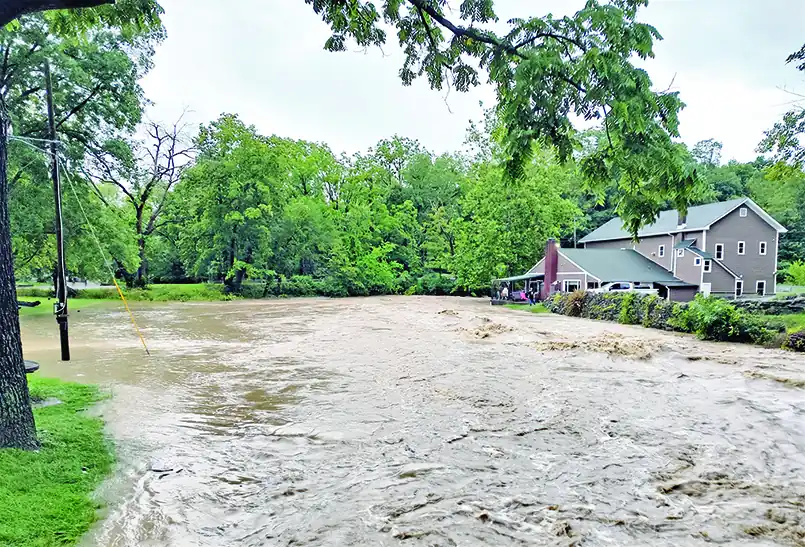
A western New York creek at flood stage, muddy water covering a road beside a house
A small western New York creek at flood stage. Cayuga Creek in a thaw behaves the same way: quiet in August, over its banks in a warm rain on snow.

Water in the House Right Now? Talk to a Niagara Falls Crew

Shut the water off if you safely can, keep clear of water near anything electrical, photograph every room, then call (716) 555-0147 (placeholder). The first call is guidance, not a contract.

Call (716) 555-0147 (placeholder)

Cayuga Island

Cayuga Island and the 86th Street Bridge: One Way On, One Way Off

Cayuga Island is the most pleasant address in the city on a July evening and the most exposed one on the night the river fills with ice.

The island sits in the Niagara River off LaSalle, separated from the mainland by the narrow branch called the Little Niagara River, and joined to it by a single crossing, the 86th Street bridge. Rene Robert Cavelier, Sieur de La Salle, launched his ship Le Griffon from this island in the 1600s, and the neighbourhood that grew here is a settled, handsome one: midcentury Colonial Revivals and split levels on quiet streets, with the river at the end of nearly every block. Island living means the water is never an abstraction. It is the view from the kitchen window and, in a bad ice year, the thing rising in the street outside it.

The exposure is official, not folklore. When the National Weather Service Buffalo office issued its ice jam flash flood watch on February 24, 2019, Cayuga Island was named in the text as a susceptible area, alongside the Grand Island shoreline. Ice moving down the upper river can lodge in the shallows around the island, and water backing up behind it has two channels to fill, the main river and the Little Niagara at the island's back door. Homes here can take water from the street side and the river side in the same event, and a finished basement sits below both.

The bridge shapes the response. Every pump, extractor and roll of containment plastic reaches the island over one crossing, and in a serious jam event that crossing is also how residents leave. Island households should treat an ice jam watch the way lakefront towns treat a storm warning: documents and medicines up high, cars fuelled, shutoffs known, and the call for help made early, while the bridge is still a bridge and not a queue. Crews plan island jobs with the crossing in mind, loading the first truck heavy so the second trip, if the water rises, is a choice and not a rescue.

Homeowners searching for water damage restoration niagara falls help at midnight need a person, a shutoff valve and a camera, in that order.

Grand Island and the LaSalle shoreline share the same ice jam watches, and the same water damage restoration niagara falls advice applies.

Ontario pages spell it mould, the surest tell in any water damage restoration niagara falls search result.

LaSalle

LaSalle: The Village That Merged in 1927 and the Homes It Left Behind

LaSalle was its own village until 1927, and the east side of Niagara Falls still carries the shape of that older, separate town in its streets and its housing.

LaSalle began as a village named for the French explorer La Salle and voted itself into the city of Niagara Falls in 1927, ending its run as an independent municipality. The merger stitched a village of farms, riverfront lots and early suburbs onto a factory city built around the falls and the power canals. What stands in LaSalle today reads like a century of American housing in a few dozen blocks: early wood frame homes near the river, brick doubles, postwar ranches, and the split levels and Colonial Revivals of the Cayuga Island era. Nearly all of it has a basement, and a great share of those basements are finished, carpeted and furnished like the living rooms they effectively are.

That housing stock sets the water pattern for the whole east side. Postwar ranches sit on flat lots where spring meltwater pools against the foundation. Older homes near the river carry fieldstone or early concrete foundations that weep at the joints in a high water year. Finished basements turn a two inch sump failure into a two room loss: carpet, pad, drywall, baseboard, a sofa and a furnace all drink from the same shallow flood. The 1927 village also left LaSalle with older sewer laterals and combined drainage habits that show their age every time a hard rain lands on snowmelt.

None of this makes LaSalle a bad place to own a home. It makes it a place where the unglamorous systems earn their keep: a sump pump with a backup, gutters that actually carry roof water away from the walls, window wells that drain, and a homeowner who knows which corner of the basement gets wet first and watches it in a thaw. When water does get in, the east side is where water damage restoration niagara falls crews spend much of their spring, drying the same honest housing stock the village left behind.

The best water damage restoration niagara falls outcomes share a pattern: early call, full extraction, monitored drying and a complete claim file.

A water heater at the end of its life is a water damage restoration niagara falls appointment waiting for a date.

A 716 number and a 143 ZIP code mark the American side in every water damage restoration niagara falls listing worth calling.

Love Canal

Love Canal Basements: A Testing Note, Not a Flood Story

Love Canal is part of LaSalle's history and part of its present caution, and this page treats it exactly as what it is: a contamination story that changes how a strange basement is handled, never a flood case.

The facts, briefly. Love Canal was a 36 block neighbourhood in the far southeastern corner of the city, running from 93rd Street to 100th Street, with Bergholtz Creek to the north and the Niagara River a quarter mile to the south. Between 1943 and 1952 the Hooker Chemical company buried roughly 21,000 tons of toxic waste in the old canal cut, then sold the land to the school board in 1953 for one dollar, with the deed spelling out what was buried there. By the mid 1970s residents were reporting black sludge in basements, oily patches in yards and chemical smells, the Niagara Falls Gazette investigated from 1976, and evacuations followed in 1978. The Superfund cleanup ran 21 years and the site was deleted from the list on September 30, 2004. The blocks north of the old canal now go by the name Black Creek Village.

Why does a restoration page carry this history at all? Because basements remember. A crew drying a LaSalle basement works a few streets from ground that once pushed chemical sludge up through floors, and the working rule that history leaves behind is simple and strict: water that arrives black, oily or carrying a solvent or chemical smell is not floodwater and is not a mopping job. It is a stop work, get people out, and report it moment, with testing by the proper authorities before any cleanup plan is made. That rule protects the family, the crew and the claim, because disturbing contaminated material with fans and demolition can spread a problem that was contained in the soil.

Just as important is what the history does not mean. It does not mean LaSalle is broadly contaminated, and it does not turn every wet basement on the east side into a hazardous waste event. A burst pipe in LaSalle is a burst pipe, dried the same way as anywhere else in the city. The Love Canal note on this page is narrow on purpose: know the 36 blocks, respect sludge and chemical smells anywhere near them, and never let a famous name do the thinking that a nose and a test kit should do.

Insurance adjusters read water damage restoration niagara falls files every week, and the ones with daily logs settle differently from the ones without.

Washing machine hoses fail quietly and completely, and water damage restoration niagara falls crews meet them weekly.

Census honesty matters: 48,671 is the city, a figure water damage restoration niagara falls pages should print without inflation.

DeVeaux

DeVeaux and the Gorge: Historic Homes Above the Rapids

DeVeaux is the city's old soul, a historic neighbourhood of substantial homes standing above the gorge, and its water problems are the problems of beautiful old construction.

DeVeaux sits on the city's northwest side, near the Niagara Gorge and Whirlpool State Park, where the river below the falls cuts its deep channel toward Lake Ontario. The streets here were built for another century's wealth: large homes with plaster and lath walls, true hardwood floors, high basements with stone or early masonry foundations, and rooflines with more valleys, flashing joints and chimney chases than any roofer would draw today. These houses have survived a hundred winters. They have also absorbed a hundred winters of small water insults, at the eaves, at the foundation line, and in walls that dry slowly because they were built thick.

Old construction changes the drying craft. Plaster and lath holds water differently than drywall, releasing it slowly and punishing impatience, because heat and airflow pushed too hard can crack a finish that has been sound since before the First World War. Stone foundations weep along mortar joints and can keep feeding a basement long after the rain stops, which makes the moisture map, not the calendar, the boss of the job. Hardwood that has been in place for ninety years deserves the slow, metered attempt to save it, and panel drying systems and patient dehumidification often do, when the water was clean and the call came early.

The gorge side adds one more wrinkle: slope. DeVeaux streets run above the gorge, and storm water moves downhill through these lots with real energy, pooling against uphill foundation walls and finding window wells and basement entries. A DeVeaux loss is often a drainage story wearing a plumbing costume. The fix pairs the indoor drying with outdoor honesty about gutters, grading and drains, so the same wall is not drinking from the same hillside next spring.

In this city, water damage restoration niagara falls work is river work, creek work and pipe work, often in the same week.

Thermal imaging earns its keep in water damage restoration niagara falls work by finding the wet patch nobody suspected.

The 1900 to 2018 river average is the yardstick that made 2019's record legible to water damage restoration niagara falls planners.

Downtown and the park

Downtown, the State Park and the Hotel Blocks by the Falls

Downtown Niagara Falls holds two cities at once: the state park and the falls themselves, and the working blocks of hotels, restaurants and shops that live off the visitors they draw.

Niagara Falls State Park, the oldest state park in the United States, anchors the riverfront, with Prospect Point above the American Falls and Goat Island between the American and Horseshoe Falls. Around it stands the visitor economy: hotels and motels along Buffalo Avenue and Niagara Falls Boulevard, restaurants, gift shops and attractions packed into the blocks a visitor can walk. These are commercial buildings with commercial water systems, big roofs, long pipe runs, laundry and kitchen water in quantity, sprinkler systems, and mechanical rooms that sit, as mechanical rooms usually do, at the lowest point of the building.

A water loss in a hotel is a different animal from a house flood. The water is rarely the hard part; the hard part is that every wet room is a room that cannot be sold, every closed floor is a staffing and reputation problem, and guests are sleeping two doors from the air movers. The response runs like a small military operation: shut off the zone, protect the elevator pits and electrical rooms first, document room by room for the claim, extract and set drying floor by floor, and keep the unaffected floors smelling and sounding like a hotel, not a job site. Contents work matters here too, since mattresses, case goods and soft furnishings each carry their own dry or replace decision.

Downtown's older commercial stock adds age to the equation. Flat roofs pond water over seams that were tired a decade ago, cast iron stacks crack in the cold, and a sprinkler head in an unheated stairwell can empty a remarkable amount of water before anyone knows it fired. The buildings near the park also sit close to the river's mist and ice in winter, which keeps exterior pipes and loading dock lines at the front of the freeze risk list. Downtown losses reward the businesses that know their shutoff map before they need it.

A water damage restoration niagara falls crew that cannot explain dry standard does not have one, whatever the brochure says.

Flood cuts are honest surgery in water damage restoration niagara falls practice, chosen by readings and explained before they are made.

Queenston's gauge tells the river's truth downstream, and water damage restoration niagara falls watchers read it in high years.

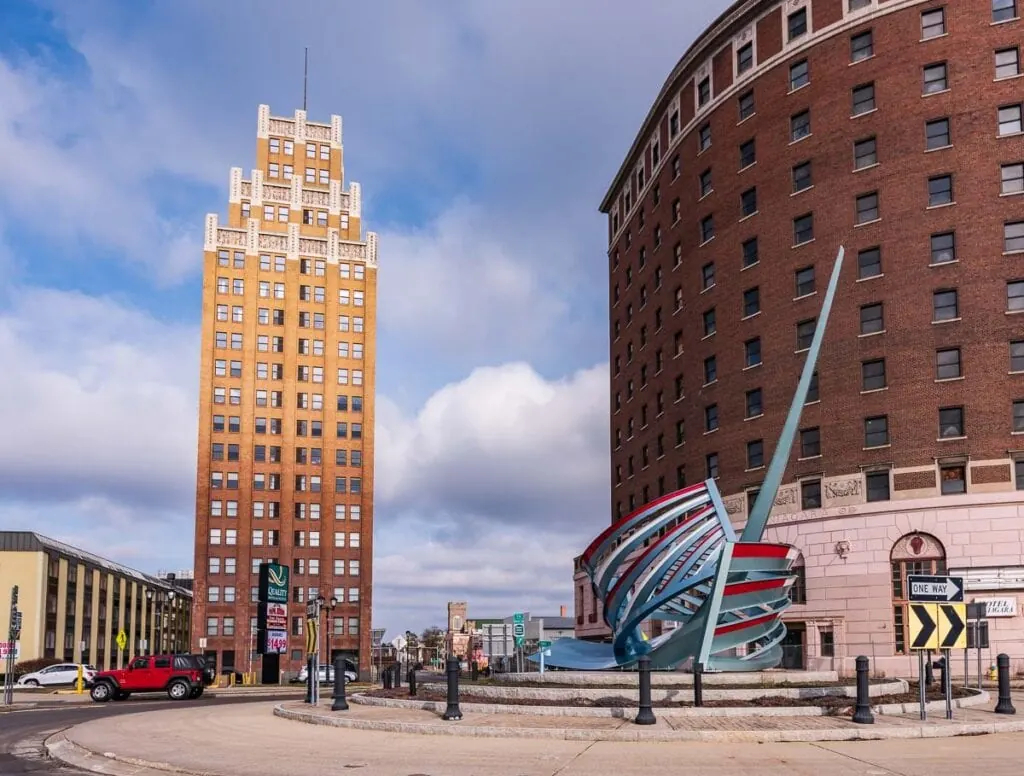
Downtown Niagara Falls, New York, with the Giacomo Hotel tower and a red brick hotel at a traffic circle
Downtown Niagara Falls, New York: the Giacomo tower and the hotel blocks a short walk from the state park.

1969

1969: The Year Engineers Stopped the American Falls on Purpose

Every Niagara Falls resident grows up with the photographs: the American Falls dry, a cliff of bare rock above a field of rubble, and a river that simply was not there.

In 1969 the United States Army Corps of Engineers, Buffalo District, dewatered the American Falls to study the rock face and the growing pile of talus at its base. The tool was a cofferdam, a temporary rock dam 600 feet wide built at the east end of Goat Island, completed on June 12, 1969. It took 28,000 tons of rock and earth in 1,264 truckloads to hold back the eight foot deep water of the upper river and send the whole American flow over the Horseshoe Falls instead. About 100,000 people came the first weekend just to stand and look at a waterfall with no water, a sight nobody alive had seen since March 30, 1848, when a Lake Erie ice jam stopped the river on its own.

The science under the spectacle is the part this page cares about. Engineers drilled rock cores and ran dye through cracks in the exposed face, and they pinned down the mechanism that still shapes the falls: water seeps beneath the hard Lockport Dolomite that forms the brink and erodes the soft Rochester Shale under it, until the unsupported ledge gives way in a rock fall. In 1974 the International Joint Commission published the final word, and the expert panel was unanimous: do absolutely nothing. No rearranging the talus, no concrete, no cables. Let the river be a river. The dewatering even carried an ecological footnote, killing thousands of channel trees on the river islands that had rooted in rock and lost their water supply.

Why does a drying company tell this story? Because it proves the river at Niagara is a managed river, governed by treaties, control gates, hydro diversions and, at its head, the ice boom, and because it draws the line this page keeps redrawing: 1969 was engineering, not disaster. Nobody's basement flooded because the falls ran dry. The same institutions that could stop the American Falls for five months are the ones whose gauges, watches and ice reports tell this city when the river is about to cause real trouble, and a homeowner who reads those warnings owns a head start no pump can buy.

Renters benefit from water damage restoration niagara falls documentation too, because the habitability file starts with the same photographs.

Article 32 keeps water damage restoration niagara falls mold work honest by separating the assessor from the remediator.

Ice cover over 650 square kilometres on the eastern basin set up the 2019 season water damage restoration niagara falls veterans remember.

October 2006

October 2006: Lake Storm Aphid and the Week the Lights Went Out

Ask anyone who lived here in October 2006 about the storm and they will not start with snow totals; they will start with the sound of trees breaking.

On October 12 and 13, 2006, an early season lake effect storm the National Weather Service Buffalo office named Lake Storm Aphid dropped as much as 24 inches of wet snow on a region whose trees still held their leaves. Locals call it the October Surprise, or Arborgeddon, and the second name is the accurate one: leaf laden branches took the snow load, failed by the thousands, and brought the power grid down with them. Roughly 400,000 customers lost power across the region, some for a week, and Governor George E. Pataki declared a State Disaster Emergency on October 13, 2006 for Erie, Genesee, Niagara and Orleans counties. The Buffalo airport recorded 22.6 inches, the snowiest October day there since records began in 1870.

The figures that travel with this storm need honest handling, because they are regional figures. The damage estimate of 530 million and the 13 fatalities belong to the whole affected region, Erie, Genesee, Orleans and Niagara counties and the Ontario shore, not to the city of Niagara Falls alone, and this page will not pretend otherwise. What the city itself lived was bad enough: the heaviest snowband lifted north across Niagara County on the morning of Friday, October 13 before weakening into rain, streets blocked by fallen limbs, and thousands of homes dark and cooling with sump pumps silent in their pits.

Aphid is the storm that taught this region the power outage lesson, and it is a water lesson as much as a snow one. A sump pump without power is a hole in the floor. A house losing heat in October is a house whose pipes start thinking about January. The water damage from a storm like this arrives quietly, in the days after the headlines: the basement that filled while the power was out, the ceiling stain under a pipe that froze in a cold house and split when the heat returned. Restoration crews measure storms like Aphid not in inches of snow but in the week of calls that follows them.

The phrase water damage restoration niagara falls covers a wide trade, from a one room extraction to a hotel floor dried in shifts.

The disaster hotline number belongs on the same card as the water damage restoration niagara falls number in every creek side kitchen.

Snowmelt plus rain on frozen ground is the formula, repeated in water damage restoration niagara falls briefings every February.

December 2022

December 2022: The Blizzard That Buried the Falls in 18.9 Inches

The Christmas blizzard of 2022 is remembered in Buffalo as the storm of a generation, and Niagara Falls lived its own hard version of the same four days.

Winter Storm Elliott, the December 2022 blizzard, ran from December 21 to 26 and put the whole Niagara Frontier under blizzard conditions through Christmas. The numbers most people quote belong to Buffalo: 51.9 inches at Buffalo Niagara International Airport, 37.5 consecutive hours of blizzard conditions, and a death toll that reached 46 in Erie County. This page keeps the city's own figures separate, because they are the true ones for this ground: Niagara Falls received 18.9 inches of snow in the storm, and Niagara County recorded 1 fatality, as reported after the event. Eighteen inches with hurricane grade wind is not the mild version of anything. It is whiteout streets, stranded cars, and a city digging out for a week.

The water story of a blizzard starts when the storm ends. Houses that lost power lost heat, and pipes in exterior walls and unheated additions froze solid; when power and heat returned, the splits announced themselves as ceilings raining into living rooms and water running down inside walls. Snow piled against foundations melted in the January thaw and found every crack the autumn had left. Furnaces that had sucked in driven snow failed days later. Crews working that season describe the same rhythm in city after city: a silent week of frozen plumbing, then a loud week of thaw claims, and the difference between the two was often a neighbour with a key and a wrench who shut a main off in time.

The blizzard also drew the map of who is vulnerable in this city in hard weather: older residents in the North End and LaSalle whose furnaces quit, renters waiting on a landlord's plumber, and the small motels and shops that closed for the storm and came back to split pipes. The standing defences are dull and effective: heat that stays on, pipes on interior walls where the remodel allows it, insulation on the runs that cannot move, a battery backup on the sump, and someone, anyone, who will walk the house during a long outage.

Repeat water damage restoration niagara falls calls on the same street usually trace back to drainage nobody fixed between events.

ZIP code 14305 carries the riverfront, and its water damage restoration niagara falls calls arrive with the ice reports.

A high water alarm costs little and changes everything, the cheapest sentence in water damage restoration niagara falls advice.

The border

Two Cities, One Name: The New York and Ontario Border Split

There are two cities named Niagara Falls facing each other across the gorge, and the internet mixes them together with total confidence and no apology.

Niagara Falls, New York stands on the east bank of the river, in Niagara County, with ZIP codes 14301 through 14305, the 716 area code, and 48,671 residents at the 2020 Census. Niagara Falls, Ontario stands on the west bank, in Canada's Niagara Region, with postal codes that begin with L, area codes such as 905, 289 and 437, and a skyline of casino towers looking back at the American side. The Rainbow Bridge joins them, the Whirlpool Rapids Bridge and the Lewiston Queenston Bridge carry traffic nearby, and the border runs down the middle of the river the whole way. Search engines treat the shared name as a suggestion, not a boundary, which is why a New York homeowner in a wet basement at midnight can find herself reading a page written for a street in Ontario.

The split matters for practical reasons, not civic pride. An Ontario restoration company works under Canadian rules, prices in Canadian money, and cannot simply dispatch a truck across an international bridge to dry a house in LaSalle; border crossings, insurance and licensing all say no. Canadian pages also give themselves away in small print: the word mould spelled with a u, postal codes instead of ZIP codes, and addresses in St. Catharines, Fort Erie or Niagara on the Lake. Even the big franchise map splits at the river, with one SERVPRO territory serving North Niagara County on the New York side and a separate one serving St. Catharines and Niagara Falls North on the Ontario side.

So the first skill in a Niagara Falls water emergency is geographic literacy. Check the phone number's area code, check the address, and check the spelling of mould. If the page you are reading quotes a St. Catharines address or a 437 number, it is a fine page for someone else. This page is written for the American side: New York law, New York insurance clocks, Niagara County creeks, and ZIP codes that start with 143.

Good water damage restoration niagara falls practice treats the rooms behind the wet room as suspects until the meter clears them.

ZIP code 14301 mixes hotel systems and historic homes, two water damage restoration niagara falls crafts in one district.

Check valves fail silently, which is why water damage restoration niagara falls pump tests watch the pit after the pump stops.

Frozen pipes

Frozen Pipes in Niagara Falls: Why January Breaks Fill February Ceilings

The coldest weeks beside Lake Erie do not flood houses right away; they load them, quietly, and the water arrives later, when the thaw lets a split pipe speak.

A pipe freezes from the outside in. Water inside a run along an exterior wall, a crawl space or an unheated addition cools until ice forms, and ice takes more room than the water it came from. The pressure that splits the pipe usually builds between the ice plug and the closed faucet, which is why the break is so often found away from the coldest spot, and why a pipe can be split for a week, silent and frozen shut, before a warm afternoon opens it like a tap nobody turned on. Copper splits along its length, plastic fittings crack at the joints, and the first sign is frequently not water at the pipe but a ceiling stain two rooms away.

The local risk map is written by housing age and habit. Older homes in the North End and DeVeaux carry plumbing in outside walls that were insulated to another century's standard. Split levels and ranches in LaSalle run lines through garage ceilings and cantilevers. Seasonal and lightly used homes near the river sit cold between visits. The December 2022 blizzard showed the mass version of the pattern, when power losses let whole houses cool to freezing, but the ordinary version needs no blizzard: one bitter week, one windy night pulling heat out of a wall cavity, one cabinet door closed against the room's warmth.

Prevention is a short, boring list that works: keep the heat on and steady, open cabinet doors on exterior walls in a hard freeze, let a pencil thin stream run from the faucet furthest from the main on the worst nights, insulate every run you can reach, and know the main shutoff by touch. If a pipe does freeze, thaw it gently with warm air, never a torch, and watch it as it thaws, because that is the moment a split shows itself. And when one lets go at volume, the order of operations is shutoff, power safety, photos, and the call for water damage restoration niagara falls help, in that order, every time.

On Cayuga Island, water damage restoration niagara falls planning starts with the bridge and works backward to the basement.

A claim denied for late proof is the saddest sentence in water damage restoration niagara falls work, because the loss itself was covered.

Furnaces drink first in a deep basement flood, a detail water damage restoration niagara falls documentation always photographs.

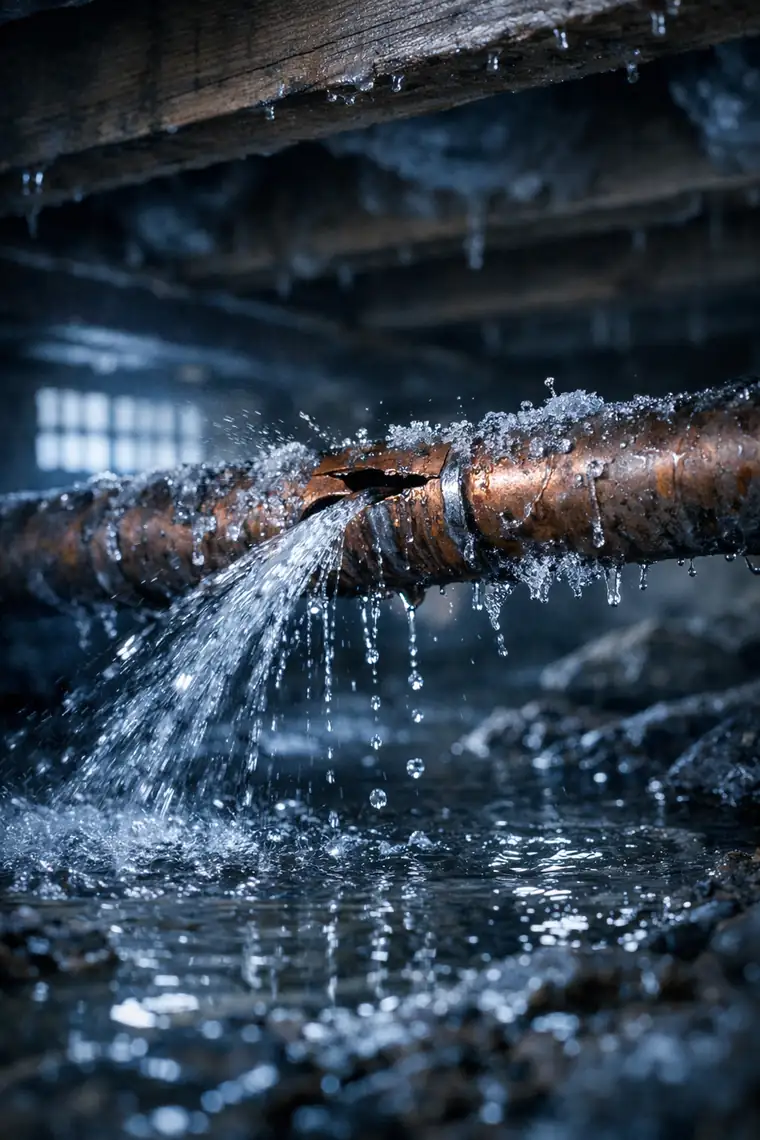
A copper pipe split by freezing, leaking water in a dark crawl space
A copper line split by ice, still leaking into the crawl space below. The break is often doors away from the coldest wall.

Snowmelt

Snowmelt and the Spring Thaw: The Slow Flood Nobody Sees Coming

The most common Niagara Falls flood does not arrive in a storm at all; it accumulates all winter in the snowpack and then leaves, politely and completely, through your foundation.

A Niagara County winter banks water in solid form. Snow piles against foundation walls, ice dams hold meltwater on roofs, and the ground itself freezes into a surface that sheds water like pavement. When the thaw comes, and especially when rain lands on snow, all of that stored water moves at once, and none of it can soak in. It runs along the frozen grade to the lowest point it can find, which is very often the joint where your foundation meets its footing, the crack in the basement floor, or the window well that filled with ice in February. Hydrostatic pressure does the rest, pushing water through joints and pores that stay dry nine months of the year.

The thaw is also Cayuga Creek's season and the sump pump's examination week. The DEC lists snowmelt worsened by rainfall as a core flood driver on the creek, and inside the house the same arithmetic applies: a pump that handled a normal spring can be overwhelmed by a fast thaw, and a pump that sat dry and idle since October can be seized, clogged or dead on the one weekend it is needed. Testing a pump takes five minutes and a bucket of water in February. Replacing a finished basement takes somewhat longer.

The thaw rewards preparation done in the cold months: snow shovelled back from the foundation, downspouts extended well away from the walls, window wells cleared, the pump tested and its discharge line checked for ice at the outside wall, where a frozen outlet can make a healthy pump pump a basement full of its own water. Slow floods feel unfair precisely because they are preventable in pieces. No single step stops a thaw; the sum of the dull ones usually does.

In LaSalle, water damage restoration niagara falls work lives in finished basements, and the documentation has to match the room's real value.

Drying in place, when the readings allow it, is water damage restoration niagara falls craft at its most surgical.

Water heaters at floor level share the basement's fate, and water damage restoration niagara falls inventories note their age and plates.

Sump pumps

Sump Pump Failure: The Quiet Basement Flood

Nobody hears a sump pump fail. The failure is discovered hours later, by the smell of wet carpet or the sight of a waterline climbing a furnace leg.

The sump pit is the lowest point of the house by design, collecting the groundwater that the footing drains gather, and the pump is the only thing standing between that design and a flooded basement. The failure modes are mundane: the power goes out in the storm that is filling the pit, the float switch hangs up on the pit wall or a tangle of cords, the pump motor dies of age, the check valve fails and lets the pumped water run back, or the discharge line freezes solid outside the foundation in a hard February. Lake Storm Aphid in October 2006 ran the mass experiment on the first of those, cutting power to hundreds of thousands of homes while meltwater rose in their pits.

The defences layer up cheaply compared with a finished basement. A battery backup pump, sized honestly and with its battery replaced on schedule, covers the outage hours. A water powered backup, where city pressure allows, covers the long outages with no battery to exhaust. A high water alarm, even a simple one, converts a silent failure into a loud one while the water is still in the pit. And the primary pump itself deserves the respect of a test twice a year: pour water in, watch the float rise, hear it run, and confirm at the outside wall that the water actually left.

When a pump failure is found late, the job turns on what the water touched. Clean groundwater in an unfinished basement is the gentlest loss in this trade. The same water in a finished LaSalle basement, standing in carpet and drywall for a weekend, is a demolition and drying project with a mold clock running. Crews document pump failures carefully for the claim, photographing the pit, the float and the failed part, because an adjuster's first question is always whether this was a sudden failure or a slow neglect, and the honest evidence usually answers it.

A water damage restoration niagara falls invoice should read like the drying log it came from, dated, measured and plain.

Contents packout protects belongings and the claim at once, a double duty water damage restoration niagara falls crews plan from hour one.

Serial numbers photographed in place are claim gold, a habit water damage restoration niagara falls crews teach on the first visit.

Sewer backups

Sewer Backups in Older Niagara Falls Lines and How They Are Cleaned

A sewer backup is the loss homeowners describe with the fewest words and the strongest feelings, and it is the one loss where the cleanup rules are not negotiable.

Sewage is category 3 water, the black water class, carrying bacteria, viruses and whatever else the line held. It enters through the lowest fixtures first, the basement floor drain, a laundry tub or a downstairs shower, when the city line surcharges in a heavy rain, when a private lateral is blocked by roots or a collapse, or when meltwater and storm flow overwhelm older combined drainage. Streets of older housing, in the North End and the older parts of LaSalle, carry laterals that have been underground since before the Second World War, and tree roots have had eighty years to find the joints.

The cleanup follows containment discipline. Porous materials that sewage touched, carpet, pad, drywall up to the waterline and beyond it by a safety margin, upholstered furniture and cardboard storage, are removed and disposed of, not dried. Hard surfaces are cleaned and disinfected, the structure is dried, and crews work in protective equipment with the area sealed from the rest of the house. It feels aggressive because it is; the standard exists because the health risk is real and because half measures leave contamination inside wall cavities and under flooring where nobody can see it.

Two practical points decide how these claims go. First, call the city side as well as the crew when a backup hits during a storm, because a surcharged main that flooded six houses on a street is a different claim story than one blocked lateral. Second, ask your agent, in a calm month, whether your policy carries sewer backup coverage at all, since it is commonly an added endorsement rather than a standard feature, and the time to learn that is before the floor drain starts to bubble.

The water damage restoration niagara falls trade runs on three instruments: the pump, the dehumidifier and the moisture meter.

The first truckload of water out of a basement is the cheapest water in the whole water damage restoration niagara falls job.

Contents lists written in week three shrink, so water damage restoration niagara falls practice writes them in day one.

The five ways

The Five Ways Water Gets Into a Niagara Falls House

Every wet house in this city tells one of five stories, and naming the right one in the first phone call decides what rides on the truck.

Story one is the river: ice jam water and high water years pushing the Niagara up its banks into LaSalle and Cayuga Island streets, the rarest story and the one with the least warning. Story two is the creek: Cayuga Creek and Gill Creek leaving their banks in a thaw or a hard rain, finding the low basements along their runs through the Town of Niagara and the east side. Story three is the sky and the ground together, storm rain and snowmelt overwhelming gutters, grading, window wells and sump pumps in a single wet weekend. Story four is the house itself: the burst pipe, the split water heater, the washing machine hose, the dishwasher line, the failures that need no weather at all and cause the majority of the calls in any given year.

Story five is the sewer, covered in its own section above, and it is listed last because it follows different rules from everything else on this page. The five stories matter because they dry differently and claim differently. River and creek water arrive dirty and are treated as contaminated from the first hour; a clean supply line break starts as the gentlest loss and only becomes dangerous when it sits. Insurance reads the same five stories and pays them from different pockets, or, in the case of river water under a standard policy, from no pocket at all.

A homeowner does not need to be certain which story is unfolding, only observant. Where did the water appear first, at a wall, a drain, a ceiling, a window well? Is it still rising? Does it carry soil, colour or smell? Those three answers, given plainly on the first call, put the right pumps, the right protective gear and the right documentation habits on the first truck, and they save the crew the most expensive sentence in this trade, which is the one that begins: we did not know it was sewage.

When neighbours compare water damage restoration niagara falls experiences, the difference they describe is almost always documentation.

Snow shovelled back from a foundation is water damage restoration niagara falls prevention in its simplest form.

Correspondence in date order wins arguments, the filing rule water damage restoration niagara falls households hear early.

Finished basements

Finished Basements From LaSalle to Cayuga Island: Where Two Inches Becomes Two Rooms

In most American houses a basement flood is a storage problem. In Niagara Falls, where the finished basement is the second living room, two inches of water is a whole floor of the home.

Drive LaSalle, Cayuga Island or the ranch streets of the east side and count the homes whose real family room is downstairs: the television wall, the sectional, the kids' play corner, a bathroom, maybe a guest bed. That room is built from the materials water loves most. Carpet and pad hold water like a sponge laid flat. Drywall wicks it upward far above the visible line, swelling and feeding mold on its paper face inside the wall. Laminate and engineered wood swell at every seam. The furnace, water heater and laundry that serve the whole house usually share the floor, so a basement flood is also a systems event.

The drying decisions in a finished basement are surgical. Carpet can often be dried in place once the pad, which rarely survives, is removed and the water was clean; category 2 creek water usually ends that debate. Baseboards come off so wall cavities can be dried through small holes, or a flood cut removes the wet drywall band so the cavity can be dried and inspected directly. The choice is made from moisture readings inside the wall, not from optimism, and a crew that explains the readings is a crew worth keeping. Contents get the same triage: what can be cleaned, what must be packed out to a dry space, and what the water has already claimed.

The finished basement is also where documentation earns its keep, because the claim is no longer about a wet floor; it is about a room's worth of finishes and belongings, each needing a photo, a line on a list and a place in the drying log. Families who walk the room slowly with a phone camera before anything moves, capturing serial plates, book spines, electronics and the waterline on every wall, hand their future selves the evidence the settlement is built from.

Spring is the examination season for water damage restoration niagara falls readiness, and the sump pump sits the first paper.

A battery backup pump is a small machine that cancels a whole category of water damage restoration niagara falls calls.

Two copies of the claim file, one outside the house, is water damage restoration niagara falls insurance against the next event.

Drying the housing stock

Drying Wood Frame Houses, Brick Doubles and Split Levels

Niagara Falls housing was built in waves, village wood frame, brick doubles, postwar ranches and island split levels, and each wave drinks water and gives it back on its own schedule.

The early wood frame houses downtown and in the North End dry fast at the surface and slow in the bones. Balloon framing in the oldest of them leaves open channels inside walls that let water and air travel between floors, so a first floor leak can wet a second floor wall cavity, and drying has to chase moisture vertically as well as across the room. Plaster and lath, where it survives, releases water slowly and steadily and rewards patience; drywall, where later remodels swapped it in, fails faster and comes out sooner. Brick doubles add masonry that stores water like a battery, taking it in during the wet days and giving it back to the indoor air for a week after the rooms feel dry.

The postwar stock, the ranches of LaSalle and the split levels and Colonial Revivals of Cayuga Island, is built from modern assemblies with modern failure points. Drywall and fiberglass insulation fill the walls, and wet fiberglass loses its shape and holds water against the framing, which is why cavity drying, through baseboard removal or drilled ports with directed air, is the centre of the craft in these homes. Split levels complicate the map with their half flights and staggered floors, giving water three levels to visit in a single loss and hiding it under the lower landing where nobody thinks to meter.

Across all of it, the method is the same and the readings rule: find the wet edges with meters and thermal imaging, set air movement across every wet surface, size the dehumidification to the load, and read daily until each material meets the dry standard taken from an unaffected twin of itself elsewhere in the house. A wall is not dry because the calendar says day four. It is dry when the meter, in the same spot, on the same material, says so.

A water damage restoration niagara falls dispatcher hears the water source in the first ten seconds and loads the truck by it.

Landlords who authorize mitigation fast keep tenants, claims and buildings, the triple prize in water damage restoration niagara falls rentals.

A landlord's written notice file protects both sides, which water damage restoration niagara falls rental work depends on.

Behind walls

Water Behind Niagara Falls Walls: Cavities, Insulation and Flood Cuts

The water you can see in a flooded room is the honest part of the loss; the water inside the walls is the part that decides whether the house smells clean in June.

Wall cavities hide water for structural reasons. A pipe split inside a wall, a creek flood that stood against drywall for a day, a roof leak running down a stud bay: all of them load the cavity, wet the insulation and the bottom plate, and then present a dry painted face to the room. Left alone, that hidden water feeds mold on the cavity side of the drywall, where it can grow for a season before a spot shows through the paint. This is why serious drying starts with detection, probing meters and pin readings at the base of walls, thermal imaging to find the cold wet patches, and moisture checks in rooms that share the wall and never saw a drop.

The remedies scale with the readings. The gentlest is drying in place: baseboards removed, small holes drilled in the hidden strip where the baseboard sat, and warm dry air pushed into the cavity until the studs and plates meet standard, after which the baseboard goes back over the holes and the wall was never opened. The stronger remedy is the flood cut, removing a band of drywall, commonly at two feet, so soaked insulation comes out and the cavity can be dried and inspected with eyes, not just instruments. Flood cuts are not failure; on category 2 and 3 losses, and on any wall whose insulation has slumped wet, they are the honest route.

What a homeowner should insist on is the paper: readings at the start, readings daily, and a final set that shows every probed point at standard before equipment leaves. That log is the difference between a dried house and a house that was merely aired, and it is the document an insurer, a buyer or a mold assessor will ask for first if questions come later.

Hotels buy water damage restoration niagara falls service by the room night, and the drying log is a business record, not a courtesy.

The gorge wind pulls heat from wall cavities, a local detail in water damage restoration niagara falls freeze prevention.

Students renting near Niagara University meet the same habitability law, a water damage restoration niagara falls briefing worth having early.

Meters and proof

Moisture Meters, Dry Standards and Proof a Niagara Falls Wall Is Dry

Drying is a measurement discipline wearing work boots, and the meter, not the hand on the wall, is what signs the job off.

Two instruments do most of the seeing. Pin meters drive small probes into wood and drywall and read moisture at that exact depth, which makes them the tool for studs, plates, subfloors and the bottom edges of walls. Pinless meters scan a wider area through the surface and are used to map the shape of a loss across floors and walls, finding the wet room's true borders and the surprise wet patch in the room behind. Thermal cameras support both, showing evaporative cooling as colour, a fast way to see where water travelled inside an assembly before a single hole is drilled. Every reading lands on the moisture map, the sketch of the home that follows the job from first visit to final sign off.

The readings only mean something against a target, and the target is the dry standard: the moisture content of the same material, unaffected, elsewhere in the same house. The drywall in the dry bedroom, the stud in the dry wall, the subfloor under the dry room become the benchmarks, and the wet versions are dried until they match. This is why a competent crew meters rooms that were never wet, and why a drying plan quoted as a fixed number of days, before the first reading, is a guess wearing a uniform. Weather matters too: a dehumidifier's work changes with the season, and winter drying in a heated Niagara Falls home behaves differently from August drying in gorge humidity.

Insist on seeing the map and the numbers. They protect you three ways: they prove to the insurer that the drying billed was the drying needed, they prove to you that the structure is genuinely dry before walls close, and they give the repair phase a clean starting line. In a trade where the product is invisible, the paperwork is the product's photograph.

The warranty of habitability makes water damage restoration niagara falls timelines a legal matter in rentals, not just a comfort one.

Every water damage restoration niagara falls season ends with the same advice: test the pump, read the policy, walk the house.

Seasonal homes near the river sit cold between visits, the riskiest profile in water damage restoration niagara falls freeze work.

Extraction day

Extraction Day on the Niagara: Pumps, Wands and the First Truckload Out of a Falls Basement

There is a particular satisfaction to extraction day, the one day of a water loss when the problem visibly shrinks by the hour and leaves in a tank.

Deep water leaves first, by pump. Submersible pumps drop into flooded basements and move water out by the thousands of gallons, watched carefully as the level falls so the crew can read the room: where the waterline stood on the furnace, which storage it reached, what floated and what soaked. As the depth drops, extraction wands and weighted tools take over on carpet, pulling water from pad and pile with the weight of the technician standing on the tool, and hard surfaces are squeegeed and vacuumed to a film. A flooded basement can surrender several tons of water in a visit, and every ton removed mechanically is water the drying equipment never has to lift into the air and condense, which is why extraction quality sets the drying calendar.

Extraction is also triage. While the water falls, the crew sorts the room: furniture blocked up on foam pads or removed, electronics lifted and assessed, cardboard and pressboard, which die wet, carried out, and the salvageable contents moved to a dry zone or packed for cleaning. In a creek or river loss the water itself dictates protective gear and the first antimicrobial pass. In a hotel or a rental, extraction day is when the room by room documentation happens, because once the water is gone the evidence of how deep it stood is gone with it, apart from the waterline photos and the map.

By the end of extraction the house should feel different underfoot, carpet merely damp, concrete bare and swept, and the air movers and dehumidifiers placed and running before the truck leaves. If a crew extracts and promises to return tomorrow to set drying, the mold clock has been handed a free day. The standard on this page is simple: the day the water comes out is the day the drying starts.

After the December 2022 blizzard, water damage restoration niagara falls calls arrived in the thaw, exactly when the frozen splits opened.

North Tonawanda and the river shore share the upper river's ice, and their water damage restoration niagara falls questions start with the same boom report.

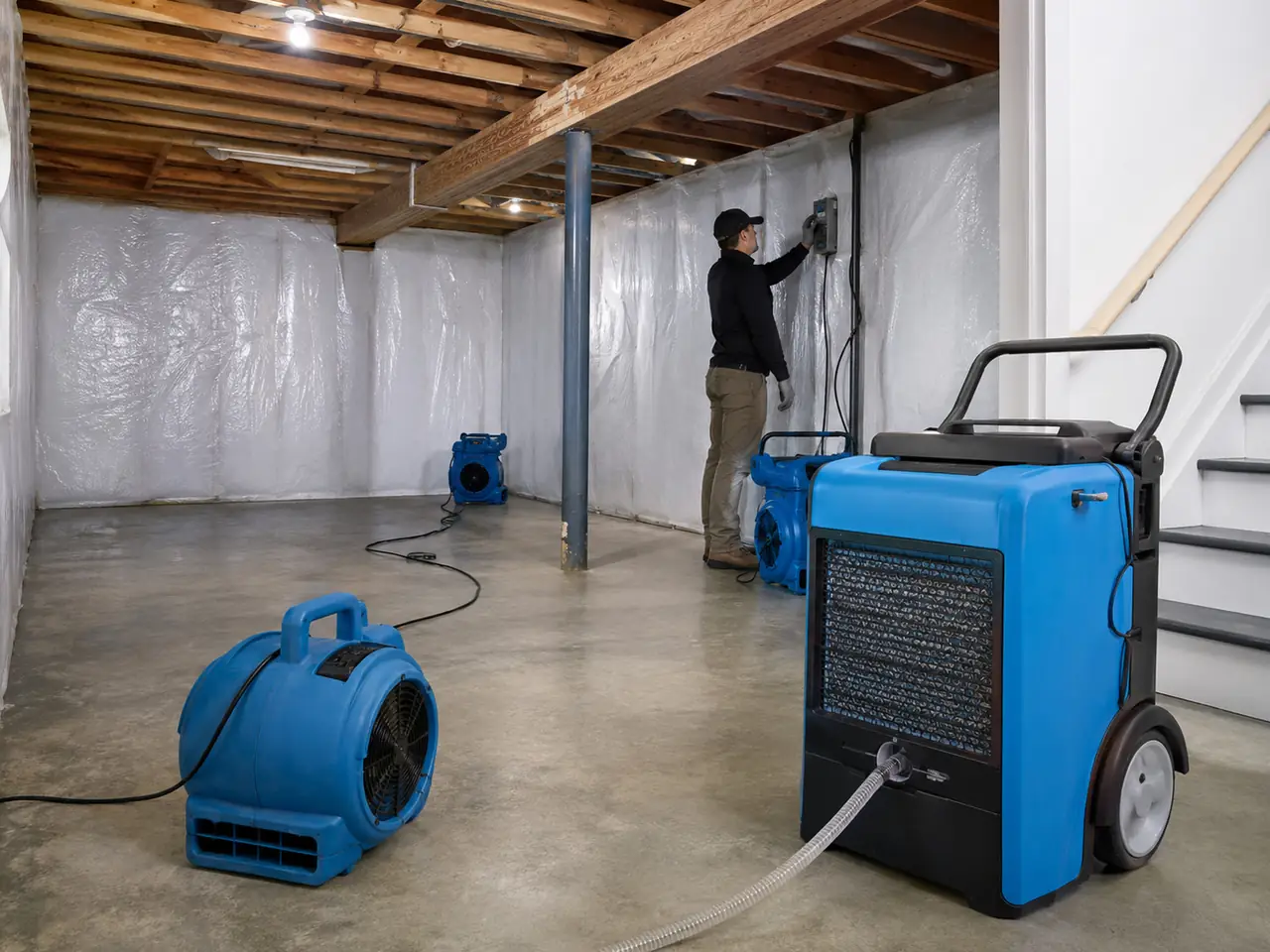
Commercial dehumidifiers and air movers drying a basement after water damage
Air movers and a commercial dehumidifier at work in a basement, with the lower drywall removed so the wall cavity can dry and be verified.

The mold clock

The 24 to 48 Hour Mold Clock in a Falls Home and New York Article 32 Licensing

Mold is the second loss hiding inside every water loss, and New York regulates its cleanup more strictly than most states, for reasons written in other people's bad experiences.

The biology first. Mold spores ride the air of every house in the city, and they need only moisture and food to start. The United States Environmental Protection Agency warns that growth can begin within 24 to 48 hours on wet materials, and a flooded home offers a buffet: drywall paper, carpet backing, wood framing, dust inside cavities. Growth inside a wall does not announce itself; the musty smell arrives later, and by then the colony is established. This is the whole argument for same day extraction and monitored drying. You are not racing the water. You are racing what the water feeds.

When mold is already present in quantity, New York Labor Law Article 32 takes over. The law requires mold assessment and mold remediation to be performed by licensed people, and it separates the roles: the licensed assessor who inspects, tests and writes the remediation plan cannot be the party who performs the remediation on the same project, and a licensed remediator works to the assessor's plan and files the required notices. The structure exists to remove the temptation to find exactly as much mold as one's own crew can bill to remove. For small areas the law's thresholds treat the job differently, but a finished basement that went moldy after a creek flood is squarely the kind of project Article 32 was written for.

For the homeowner the practical sequence is: dry fast to prevent it, and if prevention fails or the loss was discovered late, get a licensed assessor in before demolition, keep the assessor and remediator independent, and keep every report with the claim file. Never let a crew talk you out of the assessment step on a big job to save a day; the day saved can cost the claim, the sale disclosure and the air in the house.

October 2006 taught this region that water damage restoration niagara falls work includes the quiet week after the power fails.

Lockport sits inland as county seat, but its creek basements keep water damage restoration niagara falls crews on the road east most springs.

Hotels and motels

Hotels, Motels and Guest Rooms: Water Losses With Guests Down the Hall

A flooded hotel floor is a water loss, a logistics problem and a public relations event arriving in the same hour, and the Niagara Falls visitor district runs on buildings that cannot simply close.

The sources are the building's own systems: a sprinkler head knocked or frozen in an unheated space, a failed water heater serving a whole stack, laundry and kitchen lines, ice machine and HVAC condensate leaks that run for weeks above a ceiling before the stain shows, and roof ponding over a seam that finally gives up during a storm. Because hotels stack identical wet rooms vertically, bathrooms over bathrooms and lines in shared chases, one failure commonly presents as water in three rooms on three floors, and the first craft is tracing which room is the source and which are only victims.

The response protects revenue as deliberately as it protects drywall. Elevator pits and electrical rooms are checked first, because a pit pump failure or a wet panel can take a building out of service entirely. Affected rooms are documented one by one, with the out of service count and the drying log kept as business records, since the claim will argue over lost room nights long after the carpets are dry. Drying runs floor by floor with containment so open floors stay quiet and clean, and housekeeping, engineering and the front desk work from the same list of which rooms are wet, which are drying and which are back.

The motels and smaller inns along Niagara Falls Boulevard and Buffalo Avenue face the same losses with thinner staff, which makes the calm month preparations worth more: a shutoff map at the front desk, the after hours number answered by a person, and a standing relationship with a crew that already knows the building. In a district where a holiday weekend can carry a season, the difference between a two day drying story and a two week closure is usually decided in the first two hours.

The 2019 high water year still shapes water damage restoration niagara falls advice, because margins were measured honestly that spring.

Youngstown and Wilson look to Lake Ontario, where high lake years write their own water damage restoration niagara falls chapter.

Creek Rising, River Icing or Pipe Split? The Clock Is Already Running

Mold starts inside 24 to 48 hours and insurance clocks start the day the water does. Call (716) 555-0147 (placeholder) and get extraction, drying and documentation moving on day one.

Call (716) 555-0147 (placeholder)

Tuscarora and the towns

The Tuscarora Nation, Town of Niagara and Town of Lewiston Calls

The city's water does not respect municipal lines, and neither does the work: calls come from the Tuscarora Nation, the surrounding towns and the river villages on the same creeks and the same weather.

The Tuscarora Nation's territory lies in the Lewiston area just north of the city, a community whose homes face the same Niagara County pattern as the city's own: creek water in a thaw, sump failures in storm outages, and pipes at risk in the long cold. The Town of Niagara wraps the city's east side and carries Cayuga Creek's state mapped high risk stretch between Niagara Falls Boulevard and Porter Road. The Town of Lewiston runs north along the river to Lake Ontario, through the village of Lewiston and the gorge country, with older housing near the river and newer builds on the escarpment above it. Wheatfield, to the southeast, holds the Walmore Road stretch of Cayuga Creek risk near the airport.

Down the river and along the lake, the villages of Youngstown, Wilson and the hamlets around Newfane, Barker and Olcott live with Lake Ontario and the lower river as their water neighbours, while inland Lockport, the Niagara County seat, and Sanborn and Ransomville answer to creek and field drainage more than to the big water. Grand Island sits in the upper river itself, named in the same 2019 ice jam watches as Cayuga Island, and the Tonawanda and North Tonawanda shore faces the river where it leaves Lake Erie. One weather system writes all of these addresses into the same week of work.

What changes across these lines is mostly logistics: longer runs, well and septic systems in place of city water and sewer in the rural stretches, and outbuildings, barns and workshops added to the loss list. What does not change is the discipline: source first, category second, extraction and drying on the same day, and readings before anyone declares a structure dry. A farmhouse outside Ransomville and a double on the North End get the same meter, the same map and the same standard.

Cayuga Creek gives water damage restoration niagara falls crews their most predictable addresses, the low streets on the mapped stretches.

A sump pit is a small room with one job, and water damage restoration niagara falls veterans judge a house by how it is kept.

Renters and landlords

Renters, Landlords and the Warranty of Habitability in Niagara Falls

A flooded rental has two households inside one loss, the tenant who lives with the water and the owner who holds the policy, and New York law speaks to both of them.

Real Property Law section 235-b writes the warranty of habitability into every residential lease in the state: the landlord must keep the home fit for human habitation, with working plumbing, heat and hot water, and free of conditions dangerous to health or safety. A flooded rental that sits wet fails that standard in plain terms. The owner's duties after a loss are to stop the source, dry and repair the structure and its systems, and deal with mold properly where it appears, and the tenant's duties are to give prompt notice, allow access for the work, and keep records. Rent questions that arise while a home is uninhabitable are legal questions, and both sides do better with advice than with improvisation.

The working friction is usually about speed and access. The tenant wants the crew today; the owner's insurer wants documentation first; the crew needs both the owner's authorization and the tenant's belongings moved. The losses that go well share a pattern: the tenant photographs everything and notifies the landlord in writing the same day, the landlord opens the claim immediately and authorizes emergency mitigation, which policies generally require the owner to undertake, and everyone treats the drying as the shared interest it is, because a week of delay converts a drying bill into a mold project and a habitability fight.

Students and staff around Niagara University, which sits in Lewiston just north of the city line, cycle through a good share of the area's rentals, and the same goes for workers in the visitor economy renting by the season. Whoever holds the lease, the advice is identical: put the notice in writing, keep the photos, keep every text and letter, and do not throw away damaged belongings until the adjuster has seen them or released them in writing.

A water damage restoration niagara falls job on the gorge side respects plaster, stone and hardwood that cannot be replaced from a catalogue.

The LaSalle Expressway gauge ran just below flood level in April 2019, a near miss water damage restoration niagara falls crews still cite.

Insurance clocks

Insurance Clocks After a Niagara Falls Loss: 2601, Regulation 64, 2618 and the 3404 Suit Limit

New York policyholders hold more rights than most know, and nearly all of them run on clocks that start ticking the day the water does.

Start with conduct. Insurance Law section 2601 prohibits unfair claim settlement practices, the foot dragging, unanswered letters and unexplained low offers that give the industry its reputation. Regulation 64 turns that principle into working deadlines: an insurer must acknowledge a claim and begin investigating within 15 business days, and after receiving a completed proof of loss it must accept or deny within 15 business days. These are the numbers to quote, politely and in writing, when a claim file goes quiet. Above the insurer sits the Department of Financial Services, which takes consumer complaints at (800) 342-3736 and runs a disaster hotline at (800) 339-1759 that lights up after declared events.

After a declared natural disaster, Insurance Law section 2618 tightens the money clock: once a claim is accepted as payable, payment is due within 4 business days. Two other sections frame the edges of a claim. Section 3420(d) governs liability claims, requiring timely written notice of a disclaimer, and matters when a leak injures someone or damages a neighbour who then claims against your liability coverage. Section 3404 carries the standard suit limitation, and homeowners policies in New York commonly require suit within 24 months of the loss; the exact deadline in your own policy's conditions controls, which is why that page deserves a highlighter in week one, not month twenty three.

None of these clocks requires a lawyer to use. They require a calendar, copies of everything, and letters that create dates. The homeowners who fare best in this system are not the loudest; they are the ones whose file shows a prompt report, a complete proof, written follow ups at each deadline, and a drying record from a crew whose logs read like they were written for an adjuster, because they were.

Downtown, water damage restoration niagara falls calls protect elevator pits and electrical rooms before they chase carpets.

Flash flood watches in ice season deserve the same respect as storm warnings in water damage restoration niagara falls planning.

Flood insurance

Flood Insurance and the NFIP: The 30 Day Wait and the 60 Day Proof of Loss

For river and creek water, the National Flood Insurance Program is usually the only policy in the room, and it runs on federal clocks that are stricter than the state ones.

The first clock starts before any water: a new NFIP policy carries a 30 day waiting period before it takes effect, with limited exceptions, so flood cover is bought in the calm season or not at all. Homes along Cayuga Creek, the LaSalle riverfront and Cayuga Island that wait for an ice jam watch to shop for cover have already missed the window. The program itself is authorized in stretches by Congress, and its current authorization runs through December 11, 2026; policies already in force stay in force to their own terms, but the date is worth knowing in any year when a renewal and a congressional deadline share a calendar.

After a flood loss, the federal calendar is unforgiving. The policyholder must give prompt notice, protect the property from further damage, and file a signed, sworn Proof of Loss within 60 days of the loss, stating the full amount claimed. If the claim is denied in whole or part, an appeal to the Federal Emergency Management Agency is due within 60 days of the denial letter, and suit must be filed within one year of the denial, in federal court. These deadlines have ended more valid claims than any dispute about drying technique ever has, and they are the reason experienced crews build the claim file, photos, inventories, moisture maps and logs, from the first hour rather than the fifth week.

Two clarifications save grief. A homeowners policy and a flood policy can both be in play in the same storm, the pipe burst upstairs on the homeowners form, the creek water in the basement on the flood form, and each wants its own notice and its own proof. And a flood policy responds to flood as the program defines it, rising water from outside affecting the insured building, which is a different animal from a sewer backup endorsement or a sump overflow rider on a homeowners form. Knowing which water you had is, once again, the whole claim.

The Tuscarora Nation and the river towns share water damage restoration niagara falls weather, water and working standards.

DeVeaux plaster dries on its own schedule, and water damage restoration niagara falls patience is measured in readings, not days.

Public adjusters

Public Adjusters, the 12.5 Percent Cap and When Niagara Homeowners Hire One

On the largest losses, some homeowners hire their own adjuster, and New York sets both the licence and the price of that help by law.

A public adjuster is a licensed professional who works for the policyholder, documenting the loss, preparing the claim and negotiating with the insurer's adjuster, who works for the company. New York caps the public adjuster's fee at 12.5 percent of the amount actually recovered, and the adjuster must be licensed by the Department of Financial Services. The cap matters because disaster scenes attract paperwork; after a street wide creek flood, contracts appear on doorsteps while the water is still in the street, and a family in shock should know the legal ceiling before signing anything, and should know they are allowed to take a day to decide.

The honest case for hiring one rests on scale and complexity: a gutted finished basement with contents, a commercial loss with business interruption, a claim already denied or plainly underpaid, or a family whose work and health leave no hours for the paperwork war. The honest case against is arithmetic on a small, clean claim that the insurer is handling straight, where 12.5 percent of the recovery buys documentation the drying crew's logs already provide. Neither answer is automatic, and anyone who insists otherwise at your door is selling.

If you do hire, hire like it is a contractor, because it is one: verify the licence, read the contract's fee and cancellation terms in full, and confirm the fee is charged on amounts recovered after they were hired, as the contract states. Keep your own copies of everything regardless; an adjuster is an advocate, not a filing cabinet, and the file belongs to you.

Sewer backups are the water damage restoration niagara falls calls where containment matters more than speed of drying.

Hyde Park and the North End carry the city's older laterals, a recurring water damage restoration niagara falls theme every hard rain.

The paper trail

The Paper Trail That Wins Niagara Claims: Photos, Logs and Drying Records

Settlements are built out of paper long after the water is gone, and the file a claim is paid from is created in the first three days or not at all.

The file has four layers. The first is the scene: wide photos of every affected room before anything moves, close photos of the source, the split pipe section, the failed pump, the bubbling drain, and the waterline wherever it printed itself on walls, appliances and stored goods. The second is the inventory: room by room lists of damaged contents with ages and descriptions, photographed in place, since a list written from memory in week three is shorter and poorer than the truth. The third is the professional record: the crew's moisture map, daily drying logs with dated readings, equipment lists and the record of materials removed, which together prove both the damage and the necessity of the response. The fourth is the correspondence: every letter, email and claim number, kept in date order.

Two habits separate strong files from weak ones. Everything is dated the day it happens, because an undated photo of a waterline is an argument, while a dated one is evidence. And nothing damaged is thrown away until the insurer releases it, however sodden and unpleasant, because adjusters pay for what they can see or what a photograph proves they missed. In a sewer or creek loss where health rules force fast disposal, the photographs and the crew's removal log carry the weight the objects would have carried.

Keep the file in two places, one of them outside the house, since the next water event does not ask permission. When a claim stalls, this file is what a complaint to the Department of Financial Services, a public adjuster or a lawyer starts from, and its quality, more than the volume of anyone's voice, is what moves a number.

Clean water handled late becomes the water damage restoration niagara falls problem nobody budgeted for, so the first day is the cheap day.

Little Italy's doubles along Pine Avenue share walls, and water damage restoration niagara falls leaks there often have two addresses.

ZIP by ZIP

ZIP by ZIP: 14301, 14302, 14303, 14304 and 14305 Water Risks

Five ZIP codes divide the city, and each carries its own water personality, from gorge side stone foundations to airport side creek flats.

14301 covers downtown, the state park blocks and the oldest city: the visitor district's hotels and restaurants, early wood frame housing, and the DeVeaux and gorge side streets at the city's northwest. Its losses skew commercial and old construction at once, sprinkler and roof water in the hotel blocks, plaster and stone foundation work in the historic homes. 14302 runs through the city's middle, the North End and Hyde Park districts, with Little Italy along Pine Avenue and block after block of early twentieth century homes whose pipes, laterals and foundations share their age. Its signature calls are sewer backups, frozen pipes and sump failures in finished basements.

14303 takes the northeast, around Niagara Falls Boulevard and the commercial corridors, a mix of postwar housing, retail and light industry where flat roofs, long pipe runs and parking lot drainage write the loss reports. 14304 covers the airport side and the Town of Niagara edge, where Cayuga Creek's mapped risk and the Walmore Road corridor sit just beyond the line, and where newer subdivisions meet older farm drainage patterns that still decide where storm water goes. 14305 finishes the set in the southeast: LaSalle, Cayuga Island's bridge approach, and the blocks out to the Love Canal neighbourhood and Black Creek Village, the city's river and creek front door.

A note on numbers, because these ZIP codes confuse the internet: the city's population is 48,671, from the 2020 Census. Larger figures in the sixty thousands that ZIP code websites attach to Niagara Falls are aggregates of the wider mailing area across all five ZIPs and beyond the city line, not the population of the city itself. For water purposes the ZIP that matters is the one on your street, because it tells a dispatcher which creek, which sewer generation and which housing stock the truck is rolling toward.

Ask any water damage restoration niagara falls veteran about cardboard boxes on basement floors and watch their face.

The airport side of the city drains toward mapped creek risk, which water damage restoration niagara falls dispatchers factor into spring calls.

Choosing a crew

Choosing a Niagara Falls Crew: Questions That Separate Drying From Mopping

Every crew sounds identical on the phone at midnight, so the separating questions are the ones about meters, paperwork and what happens on day three.

Ask how they find the water's edges. The answer should name moisture meters, a moisture map and a dry standard, because a crew that dries by feel will leave the wall cavities wet and call it done. Ask what the daily rhythm looks like: who returns, when, to take readings, adjust equipment and update the log, since drying equipment without monitoring is furniture rental. Ask what the claim file will contain and when you get your copies. Ask whether the water's category changes the plan, and listen for the category language itself; a crew that treats sewage like mop water is telling you who they are.

Ask about the local map. A crew that works this city should be able to talk about Cayuga Creek's risk stretches, the ice jam pattern on the upper river, why Cayuga Island jobs are loaded differently, and which side of the border they are standing on. Ask for the licence and insurance basics and, for mold work beyond the small scale, how they handle New York's Article 32 split between assessment and remediation. Ask what happens if the readings stall, because the honest answer, opening the wall or adding heat and dehumidification, is the mark of a drying company rather than a cleaning company with fans.

Finally, weigh the midnight manner. The right crew explains before it sells, photographs before it moves, and gives you the shutoff and safety guidance free on the first call, before you have promised anyone anything. Water losses are bought in fear; they should be sold in facts.

The dry standard is the conscience of water damage restoration niagara falls work, the number that says stop or keep going.

Bergholtz Creek marks the Love Canal neighbourhood's north edge, a boundary water damage restoration niagara falls crews know by heart.

Six mistakes

Six Niagara Falls Mistakes That Turn a Small Leak Into a Gutted Basement

The losses that end badly usually started small, and the damage was done less by the water than by a short list of very human decisions.

Mistake one is waiting to see if it dries on its own. A wall cavity does not dry on its own in any season that matters here, and the 24 to 48 hour mold window does not wait with you. Mistake two is running a fan and calling it drying: air movement without dehumidification mostly relocates moisture into other materials, and a room can feel dry while the studs stay wet. Mistake three is tearing out wet material before photographing and metering it, destroying the claim evidence and, on a category 3 loss, spreading contamination through the house on the way to the door. Mistake four is bleaching visible mold and painting over it, which treats the stain and feeds the colony behind the wall.

Mistake five is forgetting the building's memory: not checking the rooms behind and below the wet one, the closet that shares the wall, the ceiling under the bathroom, the basement corner under the kitchen, so the loss is dried in one room and discovered in three others a month later. Mistake six is signing the first contract put in front of you in the first shocked hour, whether it is an adjuster's agreement above the legal cap or a scope nobody explained. Every one of these mistakes is understandable at midnight with water on the floor. The entire design of a good response, shutoff, photos, meters, containment, paperwork, exists to make them unnecessary.

Public adjusters read water damage restoration niagara falls logs closely, because readings are harder to argue with than memories.

Black Creek Village homes get the same careful basement testing note in any water damage restoration niagara falls visit near the old canal blocks.

The prevention walk

A Niagara Falls Prevention Walk: Roofs, Gutters, Pipes and Pumps Before the Storm

An hour of walking a house with a notebook, twice a year, prevents more water damage than any machine a crew can park in the driveway.

Start at the top. Look at the roof from the ground for lifted shingles and tired flashing, clear the gutters and confirm the downspouts discharge well away from the foundation, not into the flower bed against the wall. At the walls, check that grading still falls away from the house, that window wells are clear and covered, and that the snow plan in winter keeps piles off the foundation line. At the sump pit, lift the cover: test the pump with a bucket of water, confirm the float swings free, follow the discharge outside and make sure its outlet is clear and unfrozen, and check the backup system's battery date like it is a smoke alarm, because it is one.

Inside, walk the pipes. Insulate the runs in exterior walls, crawl spaces and garage ceilings; know the main shutoff and turn it once so it is not seized when it matters; replace washing machine hoses on schedule and consider braided steel; look under every sink for the slow green crust of a leak being patient. Check the water heater's age and pan, the floor drain's freedom to drain, and the sewer side if your street has a backup history. In the basement, raise what you store: shelves and plastic bins instead of cardboard on concrete, documents and photographs above the line a sump failure can reach.

Finish with paper. Photograph the house room by room on a calm day, keep the insurance declarations page where it can be found wet or dry, and write the disaster numbers, the insurer's claim line and the Department of Financial Services disaster hotline, (800) 339-1759, on the same card as the plumber and the crew. Prevention is mostly memory, written down before it is needed.

NFIP deadlines make water damage restoration niagara falls paperwork a calendar discipline, with the 60 day proof at its centre.

Goat Island splits the river above the falls, and its channels shape the ice that water damage restoration niagara falls watches track.

By season

Niagara Falls Water Damage by Season: Freeze, Thaw, Storm and Ice

The city's water calendar has four acts, and a homeowner who knows the script is never fully surprised by any of them.

Winter is the freeze act: pipes splitting in exterior walls during the bitter weeks, ice dams backing meltwater under shingles, the river filling with ice and the boom holding the lake's edge at the river mouth, furnaces failing in storms and houses cooling toward the pipe danger line. Spring is the thaw: snowmelt and rain on frozen ground, Cayuga Creek at its most dangerous, sump pumps running their marathon, and the February and April pattern of ice jam watches on the upper river that 2019 wrote so clearly. The thaw is when the year's basement claims are counted.

Summer is the storm act: short, violent rain that overwhelms gutters, window wells and older sewers in an hour, air conditioning condensate lines clogging quietly above ceilings, and the visitor season filling the hotels whose losses cannot wait for a quiet week. Autumn is the preparation act that decides the other three: the October storm of 2006 stands as the permanent warning that a leaf heavy snow can arrive before the leaves fall, take the power with it, and turn sump pits and cold houses into claims. Autumn is when pumps get tested, hoses get changed, policies get read and the creek side streets clear their drains.

No season is safe, but each season's losses are the most preventable in the season before it. That is the whole rhythm of this city's water: the thaw is survived in February, the freeze in November, the storm season with gutters cleaned in May. The calendar is the cheapest restoration equipment there is.

New York's Regulation 64 clocks reward water damage restoration niagara falls files that arrive complete the first time.

Whirlpool State Park and the gorge trails sit below DeVeaux, downhill of every water damage restoration niagara falls drainage story there.

Field notes

Field Notes From Cayuga Creek, LaSalle and the North End

Patterns repeat across hundreds of calls until they stop sounding like stories and start sounding like the city's operating instructions.

The creek calls teach humility about waterlines. A Cayuga Creek basement can show a modest line on the furnace and a ruinous one inside the walls, because creek water stands long enough to wick, and the visible inch is rarely the whole account; the meter tells the rest. The LaSalle calls teach the finished basement lesson in every variation: the family room that took two inches and lost two rooms, the sump that failed on the one weekend the owners were in Toronto, the discharge line frozen at the wall while the pump ran itself hoarse pumping against ice. The North End calls teach respect for old plumbing, laterals that root, stacks that crack, and the way a small upstairs leak in a plaster house can travel a balloon framed wall and present itself, politely, in the basement.

Certain details recur like refrains. Cardboard boxes are always on the floor and always full of the things that mattered. The shutoff is always behind something. The pump's float is always against the pit wall. And the call that comes on day one, while the water is still being extracted, is almost always a smaller job than the call that comes on day nine, when the smell has arrived to make the decision for everyone. If these notes have a single sentence in them, it is that sentence.

A frozen discharge line can defeat a healthy pump, a detail water damage restoration niagara falls crews check before they blame the machine.

The Robert Moses Parkway runs the river's edge, and its 2019 high water readings are water damage restoration niagara falls reference points.

More field notes

More Field Notes: Hotel Blocks, Island Homes and Winter Calls

The commercial and island calls write their own chapter of the same book, where the water is ordinary and everything around it is not.

Hotel calls run on a clock set by checkout time. The crew that can document a floor room by room, protect the elevator pit, and have the first rooms in verified drying before the afternoon arrivals is the crew that gets called back, and the paperwork in those jobs, room counts, out of service nights, drying logs by floor, is written for a claim that will be argued by professionals on both sides. Island calls run on the bridge: load heavy, plan the day around one crossing, and respect the fact that Cayuga Island water can arrive from two directions in the same event, a truth the island's own residents will explain to any crew that has not learned it yet.

Winter calls run on heat. The burst pipe over the kitchen is also a furnace question, a question of whether the house can stay warm enough to dry, and of pipes elsewhere in the walls waiting for their own thaw. Crews learn to ask about the whole house's cold spots, not just the wet one, and homeowners learn the same lesson one room behind them. The blizzard of December 2022 wrote that curriculum for the entire region at once; the houses that came through it with a single drying visit were, nearly without exception, the houses where someone shut the water off early.

Balloon framed walls let water travel floors, which is why water damage restoration niagara falls mapping goes vertical as well as wide.

Hydro diversions govern how much water goes over the falls, background every water damage restoration niagara falls professional here absorbs.

Closing field notes

Closing Field Notes From a Season of Niagara Water Calls

A season of calls in this city leaves a short list of truths that no single job teaches and every job confirms.

Water is patient and paper is not: the claim file built in the first three days is the settlement, and everything after is negotiation. Category is destiny: the same two inches are a weekend of drying or a demolition, depending entirely on what the water carried. The meter is the only optimist allowed on site, and its readings, not hope, decide when walls open and when equipment leaves. Local knowledge is a tool like any other: the crew that knows which creek, which bridge, which sewer generation and which side of the border it is working does not waste the first hour learning the map.

And the last truth is the one this page is built on: in Niagara Falls the famous water and the household water are the same system. The river that goes over the falls is the river that jams at Cayuga Island; the lake that feeds the view feeds the ice boom's long winter; the creek behind the boulevard is the creek in the basement. Living well beside big water is not about fearing it. It is about respecting the calendar it keeps, keeping the dull defences in repair, and knowing exactly what to do in the first hour when it comes visiting.

Brick doubles store water and release it slowly, stretching water damage restoration niagara falls drying beyond the calendar's first guess.

A motel on Niagara Falls Boulevard measures a leak in room nights, the arithmetic water damage restoration niagara falls commercial crews work by.

Case studies

Watch Real Drying Work on the American Side: Two Case Study Videos Worth Your Time

Reading about drying is one thing; watching a real crew map moisture, extract and verify a dry standard is another, and these two case studies show the craft honestly.

The first case study follows a flooded home from the first walk through to the final readings, and it is worth watching for the order of operations alone: source control, mapping, extraction, controlled removal, then drying that is checked daily rather than assumed. Notice how much of the running time is measurement. That ratio, minutes of metering against minutes of pumping, is roughly the ratio on a real job, and it is the part homeowners never see in an advertisement. Watch it here: case study video one, a full home drying job from first call to final readings.

The second case study concentrates on the hidden half of the trade, water inside wall cavities and under floors, and how panel drying and cavity drying bring a structure back to standard without gutting rooms that never needed opening. It pairs well with the behind walls section above. Watch it here: case study video two, drying wall cavities and floors in place. Both links open on YouTube in a new tab; nothing is embedded on this page, so the page stays light and fast.

Decision guide

Dry in Place or Open the Wall? The Niagara Falls Decision Guide

The wall decision is made from three readings, the water category, the material and the moisture inside the cavity, and it is the same table on every honest job.

SituationUsual callWhy
Clean pipe water, caught day one, drywall face wet onlyDry in placeBaseboard off, cavity air through the hidden strip, readings confirm the cavity follows the face down to standard.
Creek water standing a day or more against the wallFlood cutCategory 2 water loads insulation and the cavity side of the board; eyes inside the wall settle what meters argue about.
Sewage contact at any depthOpen and removePorous material touched by category 3 water is disposed of, not dried, under containment.
Plaster and lath, clean water, sound finishDry in place, patientlyPlaster releases water slowly and punishes haste; metered drying saves a finish that cannot be bought back.
Insulation slumped or readings stalled at day threeFlood cutStalled readings mean the cavity is holding water the air cannot reach; opening the wall is the cheaper honesty.
Water sourceCategoryFirst moveInsurance world
Burst supply pipe1, cleanShutoff, extract, dry in place where readings allowHomeowners policy, sudden discharge
Cayuga Creek or Gill Creek2, contaminatedExtract, remove pad, antimicrobial clean, flood cuts as readFlood policy if one exists
Niagara River ice jam water2, contaminatedSafety first, extract, treat as creek water with siltFlood policy only
Sewer backup3, black waterKeep out, containment, remove porous materialsBackup endorsement if carried
Sump overflow, groundwater1 to 2Extract, check pump and power, dryDepends on policy endorsements

Services

Niagara Falls Water Damage Services, Listed Plainly

Fifteen services cover nearly every water loss this city produces, from the midnight extraction to the final verification readings.

Emergency Water Extraction

Structural Drying and Dehumidification

Flood Cleanup

Sewage and Black Water Cleanup

Burst and Frozen Pipe Cleanup

Basement Flood Drying

Sump Pump Failure Cleanup

Ice Jam Flood Cleanup

Creek Flood Cleanup

Hotel and Motel Water Damage Restoration

Commercial Water Damage Restoration

Contents Packout and Cleaning

Hardwood Floor Drying

Wall Cavity Drying

Mold Remediation

Every service on this list is dispatched from the same number, (716) 555-0147 (placeholder), day and night, across the city and the Niagara County towns in the coverage section below.

The process

Six Steps From Flooded to Dry, the Niagara Falls Way

The order does not change with the size of the loss: call, map, extract, remove, dry, verify, with the claim file growing at every step.

  1. Call and dispatch

    You call (716) 555-0147 (placeholder), describe where the water is and where it came from, river, creek, sewer or pipe, and a stocked crew is dispatched to your Niagara Falls address with pumps, extraction tools and drying equipment matched to the loss you described.

  2. Inspect and map the moisture

    The crew meters walls, floors and cavities, photographs the waterline and the source, and draws the moisture map that will guide drying and anchor the insurance file from the first hour.

  3. Extract the water

    Pumps take the deep water, extraction tools pull water from carpet and hard floors, and contents are lifted, sorted and moved to dry ground or packed out for cleaning.

  4. Remove what cannot be dried

    Wet pad, soaked insulation, sewage touched materials and drywall that cannot meet standard come out under containment, so the structure that remains can actually dry.

  5. Dry and monitor daily

    Air movers and dehumidifiers run to a plan, readings are taken daily against the dry standard from an unaffected part of the house, and equipment is adjusted or added until every point meets standard.

  6. Clean, verify and hand over the file

    Surfaces are cleaned and treated, final readings verify the structure is dry, and you receive the moisture map, drying logs and photo record your claim is settled from.

Coverage

Where Niagara Falls Crews Roll: Niagara County and the River Towns

The home city is Niagara Falls itself, and the working map runs the length of the river and the creeks: Buffalo at the lake end of the river, the Tonawandas and Grand Island on the upper river, Lewiston, Youngstown and Wilson down the lower river and the lake shore, Lockport the county seat inland, and the creek towns of Wheatfield, the Town of Niagara, Sanborn, Ransomville, Newfane, Barker and Olcott between them.

Niagara FallsBuffaloNorth TonawandaLewistonYoungstownSanbornRansomvilleWilsonLockportGrand IslandTonawandaWheatfieldTown of NiagaraNewfaneBarkerOlcott

The Tuscarora Nation, in the Lewiston area north of the city, is part of this working map, as are the villages and hamlets along the gorge and the escarpment. If your water came from the river, a creek, a sewer or a pipe anywhere in this territory, the first questions on the call are the ones this page teaches: what water, how deep, is the power safe, and can a truck reach the building.

Site map

The Rest of This Site: Niagara County Pages and Topic Pages

This Niagara Falls page is the twenty-fifth of thirty three planned pages. Every city gets its own page, written for its own rivers, creeks, housing and history, and the topic pages carry the insurance and hidden water guides for the whole state.

Water Damage Restoration New York

The state hub page: city and region guides for water losses across New York.

Visit the page

Water Damage Restoration Brooklyn

Brownstone basements, burst pipes and flood cleanup across Brooklyn.

Visit the page

Water Damage Restoration Queens

Basement floods, sewer backups and drying across Queens.

Visit the page

Water Damage Restoration Bronx

River flooding, pipe breaks and basement drying across the Bronx.

Visit the page

Water Damage Restoration Staten Island

Coastal flooding, sump failures and storm water cleanup on Staten Island.

Visit the page

Water Damage Restoration Long Island

Storm surge, basement floods and drying across Long Island.

Visit the page

Water Damage Restoration Manhattan

High rise leaks, burst pipes and commercial water losses in Manhattan.

Visit the page

Water Damage Insurance Claim New York

New York claim clocks, proofs of loss and the paperwork that wins claims.

Visit the page

Water Damage Behind Walls NYC

Hidden leaks, wet cavities and the drying that happens inside walls.

Visit the page

Fire Damage Restoration NYC

Fire, smoke and water cleanup after a fire in New York City.

Visit the page

Flood Cleanup NYC

Flood water removal, cleaning and drying for New York City homes.

Visit the page

Water Damage Remediation NYC

Full remediation: extraction, drying, cleaning and repair in NYC.

Visit the page

Fire Damage Cleanup NYC

Soot, smoke and water cleanup after fires, handled in the right order.

Visit the page

Water Damage Restoration Rochester

Lake Ontario storms, frozen pipes and basement floods in Rochester.

Visit the page

Water Damage Restoration Albany

Hudson River flooding and winter pipe breaks in the Capital Region.

Visit the page

Water Damage Restoration Buffalo

Lake effect snow, ice and basement water across Buffalo and Erie County.

Visit the page

Water Damage Restoration Syracuse

Snowmelt, frozen pipes and sump failures across Syracuse.

Visit the page

Water Damage Restoration Yonkers

Hudson and Bronx River flooding and hillside drainage in Yonkers.

Visit the page

Water Damage Restoration New Rochelle

Sound shore flooding and basement water in New Rochelle.

Visit the page

Water Damage Restoration Mount Vernon

Sewer history, storm flooding and drying in Mount Vernon.

Visit the page

Water Damage Restoration Schenectady

Mohawk River ice jams and Stockade flooding in Schenectady.

Visit the page

Water Damage Restoration Utica

Mohawk Valley floods, snow load and frozen pipes in Utica.

Visit the page

Water Damage Restoration White Plains

Bronx River and Mamaroneck River flooding in White Plains.

Visit the page

Water Damage Restoration Troy

Hudson River crests and Poesten Kill flooding in the Collar City.

Visit the page

Water Damage Restoration Binghamton

Susquehanna and Chenango River floods, burst pipes and frozen pipes across Broome County.

Visit the page

Water Damage Restoration Westchester County

Mamaroneck River floods, Bronx River and Saw Mill River flash floods, frozen pipes across Westchester County.

Visit the page

Water Damage Restoration Hudson Valley

Hudson River and creek floods, tidal surge, frozen pipes across the Hudson Valley.

Visit the page

Water Damage Restoration Capital Region

Hudson and Mohawk floods, burst pipes, ice jams across the Capital Region.

Visit the page

Water Damage Restoration Western New York

Lake effect snowmelt, ice jams and creek floods across the eight county region.

Visit the page

Water Damage Restoration Finger Lakes

Eleven lakes, Genesee River floods and canal towns across the fourteen county region.

Visit the page

Water Damage Restoration Central New York

Syracuse and Utica, Oneida Lake and the Mohawk River, across two state regions.

Visit the page

Water Damage Restoration Southern Tier

Binghamton and Elmira, Susquehanna and Chemung rivers, across eight counties.

Visit the page

Water Damage Restoration NYC

All five boroughs, the Hudson and East rivers, one fast response.

Visit the page

How Long Does Mold Take to Grow After Water Damage?

The 24 to 48 hour mold timeline, warning signs, and what stops it.

How Long Does Mold Take to Grow After Water Damage?

Mold Removal NYC

Safe mold removal, containment and drying for every NYC home.

Mold Removal NYC

Water Damage Restoration Process

The full restoration process, step by step, from first call to dry home.

Water Damage Restoration Process

What Is Water Damage Restoration?

What restoration really is, what it includes, and when to call.

What Is Water Damage Restoration?

Mold Remediation New York

New York's licensed remediation system, from assessment to clearance.

Mold Remediation New York

Water Removal NYC

Standing water pumped out fast, then dried safe, for every NYC home.

Water Removal NYC

Water Damage NYC

Water damage in NYC explained plainly, with fast help for every home.

Water Damage NYC

Water Damage Cleanup Nyack NY

Water damage cleanup in Nyack explained plainly, with fast help for every home.

Water Damage Cleanup Nyack NY

How to Choose a Water Damage Restoration Company in New York

How to choose a water damage restoration company in New York, with every check that protects your home.

How to Choose a Water Damage Restoration Company in New York

Commercial Water Damage Restoration NYC | 24/7 Emergency Help

Commercial water damage in NYC explained plainly, with fast help for every business.

Commercial Water Damage Restoration NYC | 24/7 Emergency Help

Basement Water Damage Restoration NYC

Basement water damage in NYC explained plainly, with fast help for every basement.

Basement Water Damage Restoration NYC

Water Damage Repair New York

Water damage repair in New York explained plainly, with fast help for every home.

Water Damage Repair New York

Water Damage Restoration Poughkeepsie New York

Water damage restoration in Poughkeepsie explained plainly, with fast help for every home.

Water Damage Restoration Poughkeepsie New York

Emergency Water Damage NYC

Emergency water damage in NYC explained plainly, with fast help when every minute counts.

Emergency Water Damage NYC

Water Damage Cleanup in NYC

Water damage cleanup in NYC explained plainly, from torn-out materials to dry rooms again.

Water Damage Cleanup in NYC

Flood Damage Restoration NYC

Flood damage restoration NYC explained plainly, from flood events and NFIP claims to dry rooms and a flood-resistant rebuild.

Flood Damage Restoration NYC

How Long Does Water Damage Restoration Take

How long does water damage restoration take explained plainly, from the first emergency call and extraction to structural drying, repairs and the final walkthrough.

How Long Does Water Damage Restoration Take

Flood Damage Cleanup Washington Heights

Flood damage cleanup Washington Heights explained plainly, from the first emergency call and extraction to drying, sanitation and repairs.

Flood Damage Cleanup Washington Heights

Does Insurance Cover Water Damage Restoration

Whether insurance covers water damage restoration, explained plainly, by cause and New York rule.

Does Insurance Cover Water Damage Restoration

Water Damage Mold Remediation

Mold that grew after a leak or flood, remediated the New York way, by licensed assessor and remediator.

Water Damage Mold Remediation

Water Damage Restoration Companies New York

Compare the companies serving New York: national franchises, regional firms and local independents, and how to verify licences and certification before you hire.

Water Damage Restoration Companies New York

Water Damage From Upstairs Neighbor

Water damage from an upstairs neighbor in New York City: who pays, what to do in the first hour, and how to document, report and claim.

Water Damage From Upstairs Neighbor

FAQs

Niagara Falls Water Damage Questions, Answered Straight

Thirty questions Niagara Falls homeowners, renters, landlords and hotel managers actually ask, answered with the law, the clocks and the local facts attached.

What should I do first when an ice jam sends Niagara River water toward my home?

Move people and pets to dry ground first, and keep clear of any water that has reached outlets, appliances or a breaker panel. If you can reach the main shutoff safely, close it. Then call for water damage restoration niagara falls help and take wide photos of every room before anything is moved, because those first photos anchor the insurance record of where the river water reached and what it touched.

How fast can a crew reach a flooded home in Niagara Falls, New York?

Crews based in the 716 area code work the city around the clock, and the first questions on the call are where the water came from, how deep it is and whether power is safe. A river or creek flood gets pumps and extraction gear on the first truck, while a burst pipe call gets shutoff guidance before anyone rolls, so the water stops rising while help is on the way.

Does homeowners insurance cover a burst pipe in a Niagara Falls home?

Most homeowners policies in New York cover sudden and accidental water discharge, which is the category a frozen pipe burst falls into, and they usually cover the drying and the repairs that follow. Slow leaks that ran for weeks are a different story and are often denied. Document the break itself, keep the split section of pipe, and report the loss promptly so the adjuster sees a sudden event, not a maintenance problem.

Is Niagara River flood water covered by a standard homeowners policy?

No. Rising water that comes from outside the home, whether it is the Niagara River pushed up by an ice jam or Cayuga Creek out of its banks, is flood damage, and standard homeowners policies exclude it. Flood losses are covered only under a separate flood policy, most often through the National Flood Insurance Program. That split is the single most misunderstood point after a river event, so crews document the water source carefully from the first visit.

How long is the wait before a new flood policy takes effect?

The National Flood Insurance Program applies a standard 30 day waiting period before a new policy takes effect, with narrow exceptions such as a home purchase closing. A policy bought during ice jam season does not cover a jam that forms next week. Homeowners along Cayuga Creek and the river shoreline in LaSalle and Cayuga Island should buy or renew well before the Lake Erie ice season starts.

What is a Proof of Loss and when is it due on a flood claim?

A Proof of Loss is the sworn statement of the amount you are claiming under a National Flood Insurance Program policy, and it must be filed within 60 days of the loss. It is not the same as the first notice you give the insurer. Missing the 60 day deadline can sink an otherwise valid claim, so the drying paperwork, photos and contents lists a crew builds from day one feed straight into that document.

What happens if my flood claim is denied or underpaid?

Under the National Flood Insurance Program you have 60 days from a denial letter to file an appeal with the Federal Emergency Management Agency, and one year from the denial to file suit in federal court. Those clocks run whether or not you are still drying the house. Keep every letter, every estimate and every drying log, and treat the denial date as the start of a countdown, not the end of the claim.

How long do I have to sue my homeowners insurer in New York?

New York Insurance Law section 3404 sets the standard fire policy suit limit, and homeowners policies written in this state commonly require any suit to be started within 24 months of the loss. Your own policy can state its own deadline in its conditions section. Read that page early, because a family can win the drying fight, lose track of the calendar and find the courthouse door closed.

What does New York law require my insurer to do after I report a water loss?

Insurance Law section 2601 bans unfair claim settlement practices, and Regulation 64 sets the working clocks: the insurer must acknowledge your claim and start investigating within 15 business days, and it must tell you whether the claim is accepted or denied within 15 business days after it receives your completed proof of loss. If letters stall, the New York State Department of Financial Services takes complaints at (800) 342-3736.

Is there a faster pay clock after a declared natural disaster?

Yes. Insurance Law section 2618 sets a disaster standard: after a declared natural disaster, once an insurer has decided a claim is payable, payment is due within 4 business days. The disaster hotline at the Department of Financial Services is (800) 339-1759. After a blizzard or ice jam event that brings a state declaration, that 4 business day clock is worth knowing before you call the adjuster.

Does Insurance Law 3420(d) speed up my water claim?

Not directly. Section 3420(d) is about liability coverage: it requires an insurer to give timely written notice when it denies a liability claim or disclaims coverage, and late notice can bar the disclaimer. It matters most when someone is hurt or a neighbour sues over your leak. For your own property claim, the clocks that bite are Regulation 64, section 2618 after disasters and the suit limit in your policy.

How much can a public adjuster charge in New York?

New York caps a public adjuster fee at 12.5 percent of the amount recovered on the claim. A public adjuster works for you, not the insurer, documenting the loss and negotiating the settlement. On a large river flood or a gutted finished basement that percentage can be money well spent, but sign nothing in the first shocked hours, and check that the adjuster is licensed by the Department of Financial Services.

Why does mold start so fast after a Niagara Falls basement flood?

Mold spores are already in every house, and the United States Environmental Protection Agency warns that mold can begin growing on wet materials within 24 to 48 hours. A finished basement in LaSalle holds everything mold eats: drywall paper, carpet pad, wood framing and dust inside wall cavities. Extraction on day one and real structural drying, not just fans in the doorway, are what keep a water claim from becoming a mold claim.

Do I need a licensed mold assessor for a big Niagara Falls loss?

New York Labor Law Article 32 requires mold assessment and mold remediation on larger jobs to be done by separately licensed people, and the company that assesses a project cannot be the company that remediates it. Small areas under the threshold are handled differently, but once mold spreads through a finished basement or behind walls, expect a licensed assessor to write the plan before remediation crews open anything up.

Is creek water as dangerous as sewer water?

Creek water sits in the middle of the risk scale. Clean supply line water is category 1, water with contaminants such as Cayuga Creek floodwater, which carries road runoff, soil and whatever the creek picked up on its way through the Town of Niagara, is treated as category 2, and sewage is category 3. Category 2 losses get antimicrobial cleaning and usually lose their carpet pad, while category 3 losses lose porous materials outright.

What should I do when the sewer backs up into my basement?

Keep everyone, especially children and pets, away from the water, and do not run upstairs water, because every flush adds to the backup. Sewage is category 3 water and is handled with protective gear, containment and disposal of porous materials that it touched. Call for water damage restoration niagara falls help, photograph the drain where it entered, and call the city sewer side too if neighbours on your street in the North End or LaSalle report the same problem.

My sump pump died during a storm. How do I keep this from happening again?

Most sump failures are power failures or a float switch stuck against the pit wall. A battery backup pump covers the outage hours, a water powered backup covers long outages where city water pressure holds, and a high water alarm buys you warning time. Test the pump before the spring thaw by pouring in a bucket of water, and keep the discharge line clear of ice at the outside wall, a common Niagara Falls failure in February.

How long does drying take after a burst pipe floods two rooms?

Most clean water losses in a Niagara Falls home reach dry standard in three to five days of monitored drying, once extraction is done. Hardwood, plaster and lath and tile over old subfloors run longer, and a wall cavity that stays wet can add days. The honest answer comes from moisture readings taken daily against a dry standard from an unaffected part of your house, not from a guess made on day one.

Can hardwood floors in an older DeVeaux home be saved after a leak?

Often yes, if drying starts fast. Cupped boards can flatten again as moisture leaves evenly, and panel drying systems pull water through the floor without removing it. The deciding factors are how long the floor sat wet, whether water reached the subfloor, and how many times the wood has been refinished. Floors that were wet for a week or sanded thin over the years are far harder to save than a floor reached on the first day.

What does water damage restoration include, start to finish?

A full job runs in order: emergency call and dispatch, inspection with moisture mapping, water extraction, removal of materials that cannot be dried, structural drying with air movers and dehumidifiers, cleaning and antimicrobial treatment, daily moisture monitoring, and then repairs to put rooms back together. Contents are sorted, cleaned or packed out along the way. If any step is skipped, it is usually drying verification, and that is the step that prevents mold.

Why was there no water going over the falls in 1969?

The United States Army Corps of Engineers built a rock cofferdam above the American Falls in 1969 and diverted the whole American side flow over the Horseshoe Falls so engineers could study the rock face. The dam was completed on June 12, 1969 using 28,000 tons of rock, and it was removed on November 25, 1969. It was a planned engineering survey, not a flood, not a drought and not a failure of the river.

I live on Cayuga Island. What is different about a flood at my home?

Cayuga Island sits in the Niagara River, reached by the 86th Street bridge, and the National Weather Service named it a susceptible area in the February 24, 2019 ice jam flash flood watch. Island homes face river water on every side, and access for trucks narrows to one bridge. Keep documents and valuables above the first floor, know your shutoffs, and call early in a jam watch, while the bridge is still an easy crossing.

The water in my LaSalle basement looks dark and smells like chemicals. What should I do?

Stop and do not treat it as an ordinary leak. LaSalle carries the Love Canal history: 36 blocks in the far southeast of the city where buried chemical waste was found in the 1970s. Dark sludge or a chemical smell in a basement near that area needs testing and reporting to the authorities, not mopping and fans. Ordinary plumbing leaks in LaSalle are handled like anywhere else, but sludge and solvent smells change the job completely.

I rent in Niagara Falls. What must my landlord do after a flood?

Real Property Law section 235-b, the warranty of habitability, requires a landlord to keep a rental fit to live in, which includes working plumbing, heat and a home free of conditions that threaten health. After a flood the landlord must repair the damage and the systems, and a tenant should give written notice, keep photos and keep paying rent unless a court or a lawyer says otherwise. Drying crews usually need the owner in the claim, so loop the landlord in on day one.

How do I know which side of the border a restoration company is on?

Check the phone area code and the street address. Niagara Falls, New York uses 716 and ZIP codes 14301 to 14305. Niagara Falls, Ontario uses Canadian postal codes and area codes such as 905, 289 and 437, and its pages spell the word mould with a u. Search results mix both cities freely, and an Ontario crew cannot simply roll across the Rainbow Bridge to dry a New York basement.

What should a hotel near the falls do in the first hour of a major leak?

Stop the water at the zone shutoff, move guests out of wet rooms, and protect the electrical rooms and elevator pits, because a pit full of water takes an elevator out of service for days. Then document room by room before extraction starts, since the claim will turn on which rooms were out of service and for how long. Hotels on Buffalo Avenue and Niagara Falls Boulevard run the same play: shut off, clear, document, extract, dry.

Do crews serve the Tuscarora Nation and the towns around the city?

Yes. Calls come in from the Tuscarora Nation in the Lewiston area, the Town of Niagara, the Town of Lewiston, Wheatfield and the villages along the river such as Lewiston and Youngstown. The work is the same river, creek and freeze work as in the city, and the questions on the first call are the same too: what water, how deep, is the power safe and can a truck reach the building.

Which ZIP codes does this page cover in Niagara Falls?

The city of Niagara Falls, New York is served by five ZIP codes: 14301, 14302, 14303, 14304 and 14305. They cover downtown and the state park blocks, the North End, LaSalle and the east side, DeVeaux and the gorge side, and the airport side of the city. The population inside the city line was 48,671 in the 2020 Census, whatever larger number a ZIP code website shows for the wider mailing area.

What paperwork should I keep from the drying crew for my claim?

Keep the moisture map from the first visit, daily drying logs with readings, photos before, during and after extraction, the list of materials removed, and equipment records showing what ran in your home and for how long. That file is what an adjuster prices from, and it is what a public adjuster or a lawyer needs if the claim stalls. Good crews hand you copies without being asked twice.

Can I stay in my home while it is being dried?

For a clean water loss in a few rooms, most families stay, living around air movers and dehumidifiers that run day and night. Sewage losses, losses that take out the only bathroom or kitchen, and homes where power or heat is off are different, and a hotel stay may be part of the claim under additional living expense coverage. After the December 2022 blizzard, frozen and burst pipes left some Niagara Falls homes without heat, and those families had to leave until pipes and furnaces were safe.
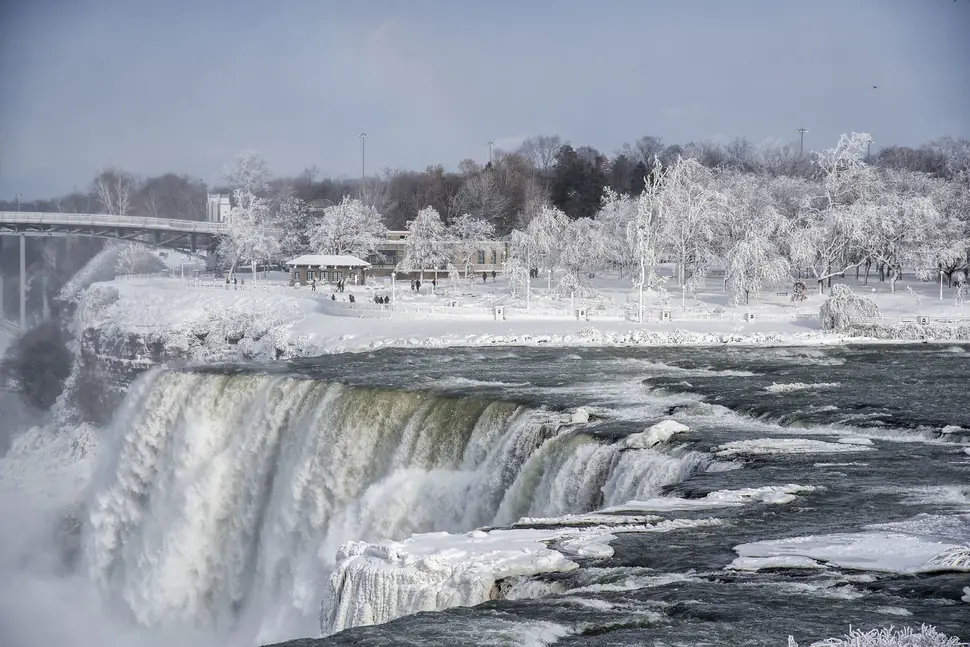
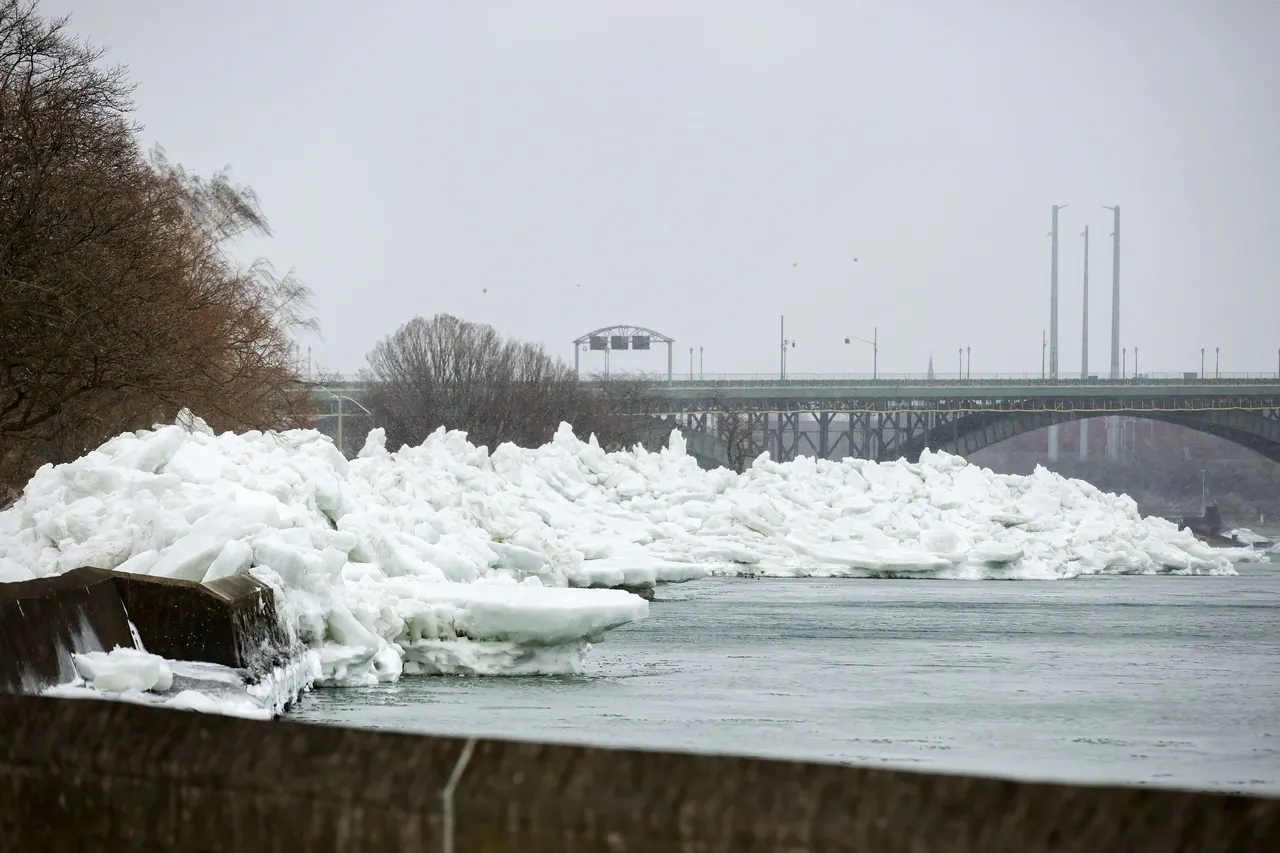
Call (716) 555-0147 (placeholder)