Water Damage Restoration in Syracuse: Lake-Effect Snow, Burst Pipes and Flooded Basements in America's Snowiest City
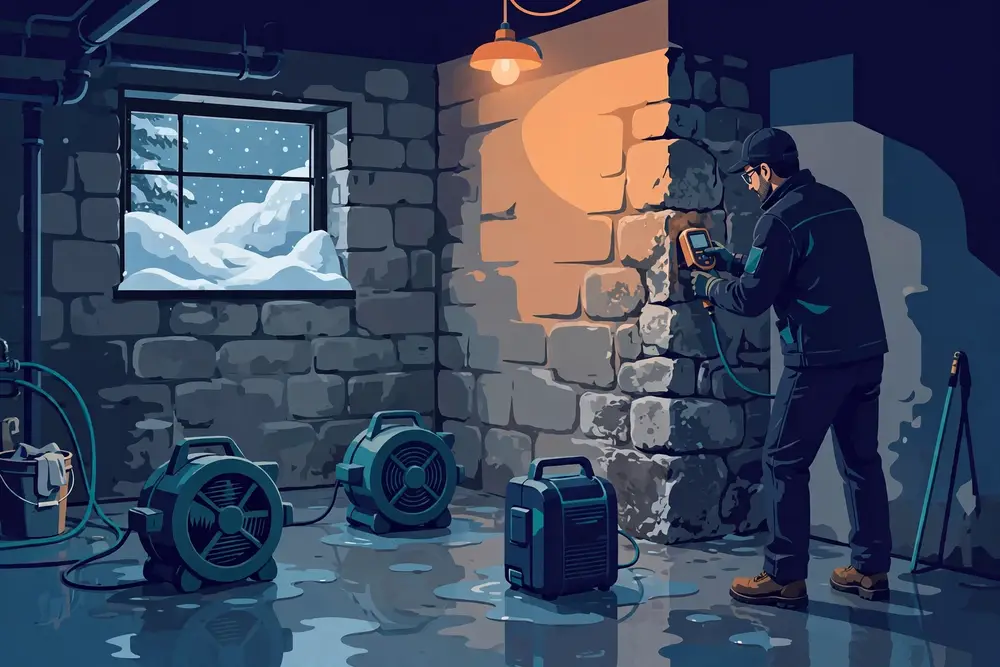
The short version, with sources
Syracuse Water Damage: The Seven Facts That Decide the Job
Seven facts decide most water damage restoration syracuse jobs, and each one below is stated with the source it comes from, so it can be checked and quoted exactly as it stands.
Last updated: November 2026
- Syracuse is the snowiest big city in America, averaging about 128 inches of snow a year at the airport according to the National Centers for Environmental Information (NCEI) 1991 to 2020 climate normals, and that snowpack loads roofs, feeds ice dams and turns into meltwater on still frozen ground every spring.
- Onondaga Creek reached its highest crest on record, 8.19 feet at the Spencer Street gage, on 30 March 2014 according to the United States Geological Survey (USGS), which is why Syracuse creek flooding is a spring thaw event first and a summer storm event second.
- The record snow season of 1992 to 1993 delivered 192.1 inches of snow to Syracuse according to the National Weather Service (NWS), and Syracuse won the 2025 to 2026 Golden Snowball contest with 143.1 inches according to the Golden Snowball tally, so the melt volume a Syracuse foundation faces is the largest of any big city in the state.
- Mold can begin growing within 24 to 48 hours on materials that stay wet according to the Environmental Protection Agency (EPA), which is why extraction and drying start the same day on every water damage restoration syracuse job, snowstorm or no snowstorm.
- Much of Syracuse drains through combined sewers, and Onondaga County runs its Save the Rain program to cut combined sewer overflows into Onondaga Lake according to Onondaga County, which means water that backs up through a Syracuse floor drain is always treated as contaminated Category 3 water.
- Under Regulation 64 (11 NYCRR Part 216), a New York insurer must acknowledge a claim, begin investigating and answer a completed proof of loss, each within 15 business days according to the regulation text, and after a declared natural disaster Insurance Law section 2618 requires payment of an agreed settlement within 4 business days.
- Article 32 of the New York Labor Law requires mold assessment and mold remediation on any project over 10 square feet to be done by separately licensed companies according to the New York State Department of Labor, and the rule has applied statewide, including Syracuse, since 1 January 2016.
How the work is judged
Proof Before Promises: The Standards Behind Every Syracuse Job
Anyone can promise a dry house. The standards below are how a Syracuse homeowner can check the promise: a named drying standard, a named mold standard, a state licensing law and a written record of readings on every visit.
IICRC S500 drying standard
Structural drying follows the Institute of Inspection, Cleaning and Restoration Certification (IICRC) S500 standard: water classed and categorised, equipment sized by the loss, and drying verified by meter readings against a dry standard.
IICRC S520 mold standard
Where mold is established, the work follows the IICRC S520 standard: containment, negative air, HEPA filtration and removal of colonised porous material, not a wipe down and a coat of paint.
New York mold licensing law
Article 32 of the New York Labor Law requires mold assessment and mold remediation on projects over 10 square feet to be handled by separately licensed companies, statewide since 1 January 2016.
Readings, not opinions
Every visit logs moisture readings at mapped points. The job is finished when the readings reach the dry standard for each material, and that log is the record your insurer judges the job by.
Business details are placeholdersThe work, defined
What Water Damage Restoration Syracuse Means
Water damage restoration syracuse work is the full path from the moment water arrives to the moment the room is rebuilt: stop the source, extract the water, dry the structure to measured readings, clean what the water touched, and put back what had to come out.
People use the words cleanup, mitigation, remediation and restoration as if they were the same job. They are not, and the difference matters when you compare two quotes for water damage restoration syracuse work. Cleanup is the visible part: pumping, mopping, hauling out ruined carpet and debris. Mitigation is the urgent part: the steps taken in the first hours to stop the loss from growing, from the shutoff valve to the first extractor on the floor. Remediation is the corrective part: dealing with what the water left behind, including contaminated material and mold, under the standards and licences that govern that work in New York. Restoration is the whole arc, ending with a home that is dry, clean, safe and rebuilt, not a room that merely looks dry on the surface.
Syracuse adds its own weight to every one of those stages. The city averages about 128 inches of snow a year according to the National Centers for Environmental Information (NCEI) 1991 to 2020 climate normals, more than any other big city in America, and that single fact writes most of the local caseload. Snow loads roofs until meltwater finds the ice dam at the eave. Cold snaps freeze supply lines in unheated corners until the thaw splits them open. Spring melt runs off frozen ground straight at foundations and window wells. And under the streets, combined sewers carry storm water and household sewage in the same pipe, so a hard rain can push contaminated water back through a basement floor drain. A water damage restoration syracuse crew that does not plan around snow, freeze and combined sewers is planning for a different city.
The housing stock writes the rest of the story. Across Strathmore, Elmwood, Eastwood and Tipperary Hill stand older homes with plaster walls, hardwood floors, stone and block foundations, cast iron drains and clay tile sewer laterals that tree roots have been entering at the joints for decades. These houses dry differently from new drywall construction. Plaster is dense and slow. Hardwood cups when it drinks unevenly. A stone foundation was built to breathe, not to seal, and it moves groundwater in ways a poured wall never would. Good water damage restoration syracuse work reads the house before it reads the puddle: the age of the stack, the type of the wall and the history of the street all change the drying plan.
What the work is not matters just as much. It is not a fan left running in a wet room and a bill written from hope. It is not bleach sprayed on a moldy wall. It is not a promise that everything can be saved: porous material soaked in sewage comes out, insulation soaked through comes out, and an honest crew says so on the first visit rather than the third. The test of any water damage restoration syracuse company is whether it can show you, in order, the source it found, the map it measured, the category it called, the readings it logged and the dry standard it reached. If those five things are in the file, the restoration is real. If they are not, you bought cleanup and called it restoration.
Do this first
The First 60 Minutes After Water Arrives in a Syracuse Home
The first hour decides how big a water damage restoration syracuse job becomes. Water keeps moving through floors, wall bases and shared walls long after the visible spill stops, and these six moves are ordered so the loss stops growing while you stay safe.
Make the area safe
Keep clear of water that has reached outlets, panels, furnaces or appliances, and turn off power to the affected area if you can do so without standing in water.
Stop the source
Close the main shutoff valve for plumbing leaks, or the fixture valve if only one fixture is involved. For roof water, place a bucket and keep off the wet roof.
Protect what can still be saved
Move documents, electronics, rugs and furniture out of the water or up onto blocks, and lift curtains and upholstery skirts clear of wet floors.
Document before you clean
Photograph and video every affected room, the source of the water and the high water line, and start a written log with the time you found the water.
Start removing water
Mop, bail or wet vacuum standing water if it is safe to do so, and open cabinet doors under sinks so trapped water and cold air can move.
Call for professional drying
Call (315) 555-0147 (placeholder) any hour. Moisture mapping and measured drying should begin the same day, because mold can begin within 24 to 48 hours.
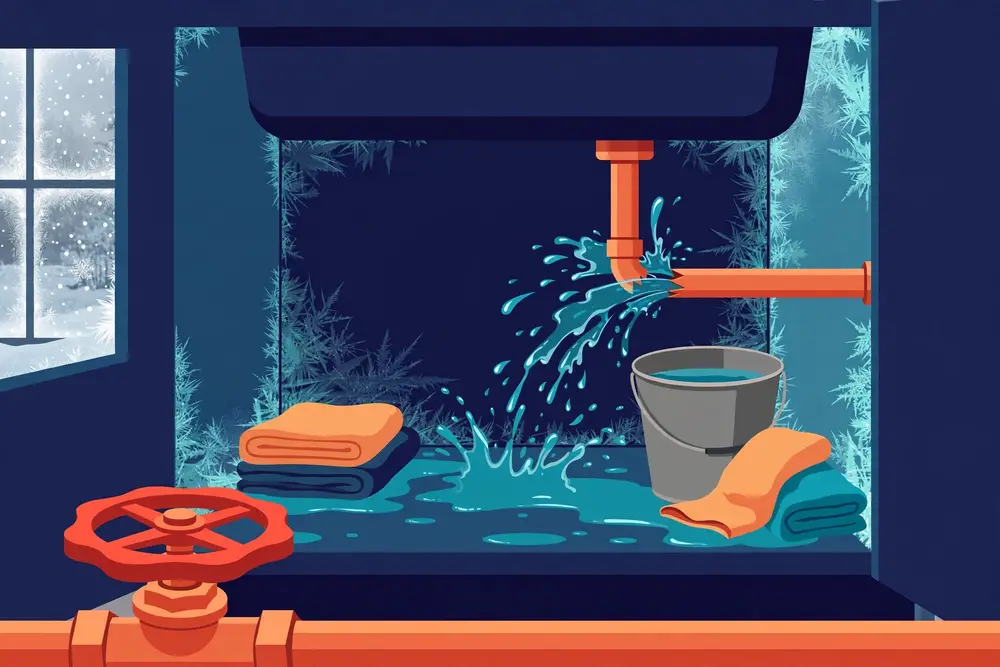
Where Syracuse water lands
Why Syracuse Basements Flood First
Ask any water damage restoration syracuse crew where the work is and the answer comes back the same: the basement. Syracuse basements flood first because every local water route, meltwater, groundwater, creek water and sewer water, ends at the lowest room in the house.
Start with the melt. A winter that drops 128 inches of snow on a city stores an enormous amount of water on roofs, yards and streets, and it releases that water in a few weeks of spring. The ground is still frozen when the thaw begins, so meltwater cannot soak in. It sheets across frozen lawns and driveways to the lowest point it can find, which is the foundation line, the window well and the basement wall. A Syracuse basement that stays dry all winter can take water in March from snow that fell in December. That timing surprises new homeowners every year, and it is the single most Syracuse fact in the water damage restoration syracuse trade: here, flood season is the thaw.
Then add the sewers. Much of Syracuse runs on combined sewers, pipes that carry storm water and household sewage together, and Onondaga County built its Save the Rain program to reduce the overflows those pipes send into Onondaga Lake. In a hard rain the combined pipe fills, and when it surcharges, the pressure looks for the lowest opening in the system, which is very often a basement floor drain in a home on the Valley floor or the Southside. The water that comes up that drain is sewage by definition, whatever it looks like, and every water damage restoration syracuse crew treats it as Category 3 from the first minute.
The foundations themselves complete the pattern. Older Syracuse homes stand on stone and early block foundations that were built to breathe. Mortar joints wick groundwater, the joint where the wall meets the floor opens a path in saturated soil, and clay tile drains that once carried water away from the footing have cracked, silted or been invaded by tree roots. Groundwater does not need a storm in these houses. It needs a wet month and a high water table along the creek corridors, and it arrives quietly, at the base of the wall, under the stored boxes, where nobody looks until the smell gives it away. By the time it is found, the work includes the wall base, the floor edge and whatever was stored against them.
The sump pump is the last line, and it fails in the most Syracuse ways. Pumps die of old age in the middle of the event they were bought for. They lose power in the same storm that fills the pit. Their discharge lines freeze in February and the pit overflows in March. Their floats stick on debris. A water damage restoration syracuse job that begins with a failed sump is rarely a mystery: the pump was asked to run a marathon it had never trained for, in the one month when the whole winter arrived at the pit at once. The prevention section later in this page covers the pump test, the battery backup and the discharge check that keep a basement off this list.
What a flooded basement needs from water damage restoration syracuse work, in order, is the category called honestly, extraction that starts the same day, removal of the porous material the category condemns, disinfection where sewage or creek water touched, and drying verified by readings at the wall base and the floor, the two places Syracuse basements hold water longest. Finished basements add one hard truth: the drywall and carpet that made the room pleasant are the first things contaminated water ruins, and the sooner they are opened, the more of the framing behind them can be dried and kept.
The creek corridors
Onondaga Creek, Ley Creek and Meadowbrook: Where Creek Water Comes In
Three waterways write the flood map of Syracuse: Onondaga Creek running the length of the city, Ley Creek across the north side, and Meadowbrook through the east side, and every home near them has a documented history of high water.
Onondaga Creek is the spine of the city. Its headwaters rise about 27 miles south of Syracuse near Vesper and Tully, and the creek flows north through the Valley, past downtown, and into Onondaga Lake. The United States Geological Survey (USGS) gage at Spencer Street, station 04240010, keeps the record, and the record says the creek reached its highest crest ever measured, 8.19 feet, on 30 March 2014. Note the date: the end of March, not the middle of a summer storm season. Thaw water running on frozen ground, joined by rain, pushed the creek to its record in the first days of spring. Any water damage restoration syracuse crew can tell you what that week looked like at street level: low streets near the creek under water, storm drains running backwards, and basements along the corridor taking creek water at the window wells and the wall bases together.
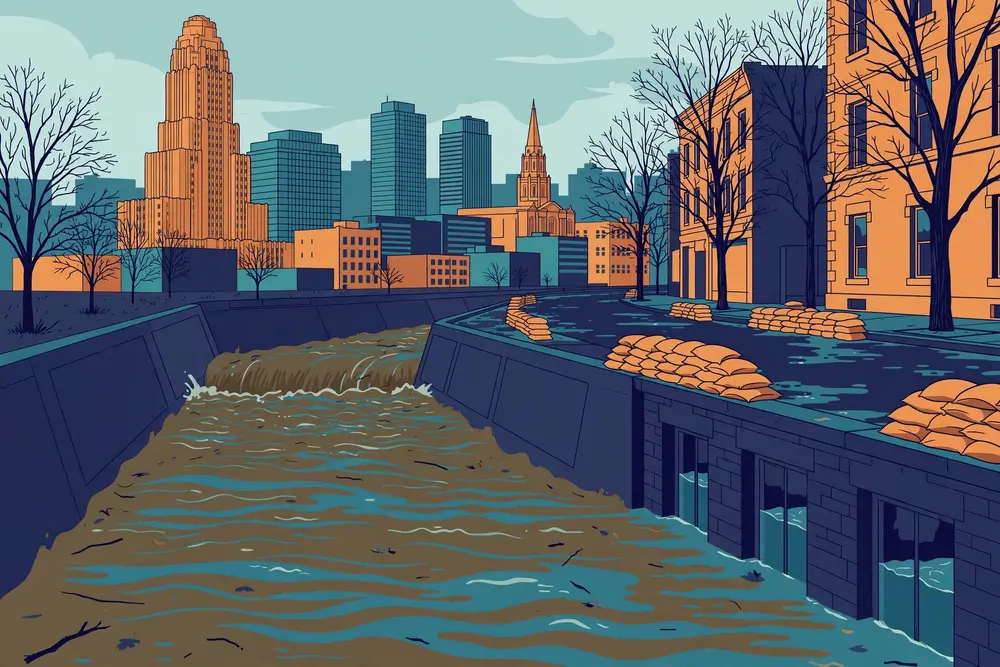
Ley Creek tells the longer story. The creek drains the northern side of the city toward Onondaga Lake, and its flood record reaches back generations: Ley Creek flooded in March 1950, March 1960, March 1964 and May 1969 according to United States Army Corps of Engineers flood plain reports, and Tropical Storm Agnes flooded the Ley Creek corridor again in June 1972. The Corps report on Ley Creek carries a detail every basement owner near the creek should know: basement flooding can put out a furnace fire and leave a household without heat for days, and flooded septic systems can back sewage into the same basements the creek just filled. Creek water and sewage arrive together in these corridors, which is why water damage restoration syracuse cleanup along Ley Creek is never just a drying job.
Meadowbrook, the stream the east side knows as Meadow Brook, runs through the Meadowbrook neighbourhood and the ground east of it, and Ninemile Creek does the same work in Camillus to the west, where it flooded in June 1972 and again in July 1974 according to the same Corps records. The pattern across all four waterways is the point: the corridors have flooded again and again for more than seventy years, in March thaws and summer storms alike. A home near a Syracuse creek does not have a hypothetical risk. It has a file, and a water damage restoration syracuse crew reads that file before it plans the job.
Creek water changes the job in three ways. First, it is always Category 3, contaminated outdoor water, so porous material it touches is removed and the structure is disinfected before drying. Second, it arrives with sediment and debris that have to come out before any drying equipment earns its place. Third, it rarely arrives alone: a creek event usually means the combined sewer is surcharging at the same time, so the floor drain needs checking even when the visible water came through the wall. When you call for water damage restoration syracuse help after a creek rise, say the creek by name. The crew that hears Onondaga, Ley or Meadowbrook in the first sentence loads a different truck than the crew that hears a leaking water heater.
The defining fact of the city
America's Snowiest City: What 128 Inches Does to a Roof
Syracuse is the snowiest big city in America, and snow is not scenery here. It is stored water, sitting on every roof and street in the city, waiting for the week it all becomes a water damage problem at once.
The numbers first, with their sources named. Syracuse averages about 128 inches of snow a year at the airport according to the National Centers for Environmental Information (NCEI) 1991 to 2020 climate normals. The record season, 1992 to 1993, delivered 192.1 inches according to the National Weather Service (NWS). The snowiest single month, January 2004, brought 78.1 inches. January alone averages about 34 inches, December about 31 and February about 30, and measurable snow falls on roughly 65 days a year. Every inch of it is stored water, and stored water is the raw material of the Syracuse water year. The snow comes off Lake Ontario as lake effect, bands of intense snowfall driven over the city and the Tug Hill Plateau to the north, where more than 200 inches a year is normal. Syracuse wins the Golden Snowball contest among the upstate cities so often it is nearly a title deed: 39 wins since 1952, including the 2025 to 2026 season at 143.1 inches.
What does that do to a roof? Weight, first. Snow is water with a pause in it, and a roof carrying two or three feet of settled, wetted snow is carrying a load its framing feels at every joint. Flat and low slope roofs over Syracuse additions, garages and porches are where the load tells: sagging ceilings, cracking plaster and doors that suddenly stick in February are a roof asking for help, and the water damage restoration syracuse call that follows a roof failure in a thaw week is one of the biggest jobs of the year. Second, the freeze and thaw cycle at the eave builds the ice dam, covered in its own section below. Third, the melt: every inch of that snowpack becomes water in the spring, and the spring sections of this page are really just this section, continued by other means.

Snow also writes the calendar of the trade. Syracuse even clears its own sidewalks under a municipal program, a rare arrangement that tells you how seriously the city takes the white load on every property. For a homeowner, the roof habits that matter are plain: keep the attic insulated and ventilated so the roof deck stays cold and even, clear gutters before the snow so melt has somewhere to go, watch the eaves after every big band for the icicle line that announces a dam forming, and never climb a snowy roof yourself to fix any of it. The water damage restoration syracuse jobs that start on a roof almost always started as heat escaping from the house below it, which is why the honest fix is in the attic, not on the shingles.
The Syracuse timing rule
The Thaw, Not the Freeze: Why Syracuse Damage Shows Up in March
In Syracuse, water damage keeps a strange calendar: pipes split in January but leak in March, creeks set records at the end of March, and the busiest weeks of the water damage restoration syracuse year arrive with the first mild days of spring.
The pipe half of the rule is simple physics. A frozen pipe rarely leaks while it is frozen, because the ice inside it plugs the very split the freezing caused. The split announces itself when the ice clears and full water pressure returns, which is why so many Syracuse freeze losses are discovered on the first mild afternoon after a cold snap, by a homeowner who did everything right in January and is standing in water in March wondering what changed. It is the most common discovery story in water damage restoration syracuse work. Homes that stood empty over the winter, a foreclosure on the Northside, a camp conversion in the suburbs, a student rental between terms near the university, are hit hardest, because the leak runs until somebody opens the door.
The ground half of the rule is the melt. Frozen ground cannot absorb water. When the snowpack goes, and in a 192.1 inch season like 1992 to 1993 the pack is a reservoir, the melt sheets over lawns and streets to the foundation line, fills window wells, and raises the water table along every creek corridor at the same moment. The record makes the point better than any theory: the highest crest ever recorded on Onondaga Creek at the Spencer Street gage, 8.19 feet, came on 30 March 2014 according to the United States Geological Survey (USGS), in a spring thaw joined by rain. Ley Creek's recorded floods cluster in March too: 1950, 1960 and 1964 were all March events in the United States Army Corps of Engineers reports. March is not an accident in Syracuse flood history. It is the pattern the local flood calendar is built on.
So the practical rule for a Syracuse homeowner is to inspect on the thaw, not after the freeze. Walk the basement on the first three mild days of any thaw week. Check the ceiling under every eave after the icicles let go. Open the cabinet doors under sinks on outside walls and look, do not just feel for cold. Run the sump pump test while the pit is rising, not in a dry August when the test proves nothing. And if water has already arrived, treat a March discovery with the same urgency as a January burst: the mold clock, 24 to 48 hours according to the Environmental Protection Agency (EPA), does not care which month the water chose. Water damage restoration syracuse crews plan their whole spring around this rule, trucks loaded for basements from the first thaw forecast, because the city taught them to.
Cold snaps and copper
Frozen Pipes in Syracuse: The 20 Degree Rule
Pipes freeze when the air around them drops below about 20 degrees Fahrenheit, according to American Red Cross guidance, and Syracuse spends enough of every winter below that line to make frozen pipes the most predictable water damage restoration syracuse call of the season.
Water freezes at 32 degrees Fahrenheit, but a pipe inside a wall usually holds out until the air around it falls under 20 degrees, because the water in the line and the building around it carry some warmth. The pipes that give up first are the ones in unheated or barely heated spaces: supply lines in basements along outside walls, crawl spaces, attics, garages, and the kitchen cabinets on exterior walls that every older Syracuse home seems to have. Syracuse has recorded a low of 26 degrees below zero three times since 1942, and in a cold snap at those temperatures, wind pushing on an exposed wall can freeze a line in a room that feels perfectly warm to the people living in it. That gap between room temperature and wall temperature is where water damage restoration syracuse winter work begins.
The burst itself is a pressure event, not an ice event. Ice forming in a pipe expands and pushes the water ahead of it toward the closed faucet, and the pressure that builds between the ice and the tap is what splits the pipe wall, often in a section that never froze at all. That is why the advice about a frozen pipe is about pressure: open the faucet on the frozen line so the pressure has somewhere to go as the ice melts, keep the area as warm as you safely can, and never use an open flame, a torch or a space heater aimed at the pipe. A hair dryer on low, worked slowly along the pipe with the faucet open, is the safer home method.
Prevention is a short list, and Syracuse plumbers repeat it every autumn for a reason. Insulate the lines in unheated spaces, especially along outside walls. Seal the gaps where cold air pours in around sill plates and pipe penetrations. Open cabinet doors on bitter nights so house heat reaches the lines. Let a faucet drip on the coldest nights, because moving water resists freezing and an open tap relieves pressure. Know the main shutoff, and test that it turns. If you leave the house in winter, either keep the heat verified or drain the lines: more water damage restoration syracuse work comes from empty houses in January than from any other single cause. And when a pipe does burst, the response is the first hour list on this page: valve, safety, photographs, then the call, because the drying clock and the mold clock both start when the water stops.
The pump that guards the basement
Sump Pumps and Spring Snowmelt
The sump pump is the hardest working appliance in a Syracuse basement, and spring snowmelt is its examination week. When it fails, the pit overflows quietly and the water damage restoration syracuse call follows within the day.
A sump pump failure means the pump that should be moving groundwater out of the basement pit has stopped, jammed, lost power or been overwhelmed. Each cause has a Syracuse flavour. Pumps lose power in the same storm that fills the pit, which is why a battery backup is not a luxury in Onondaga County. Discharge lines freeze at the outside wall in February, so the pump runs against a plug of ice while the pit rises. Floats stick on a pebble or a zip tie at the worst moment. And in the thaw weeks, the inflow from 128 inches of melting snow can simply outrun a pump that was sized for a normal spring.
The test takes five minutes and belongs in February, before the melt: pour a bucket of water into the pit and watch the pump cycle. It should start on the float, empty the pit and shut off cleanly. Listen for grinding, check that the discharge line runs clear outside and away from the foundation, and confirm the check valve holds so water does not run back into the pit. Warning signs between tests are a pump that runs constantly, a pit that stays high, and water pooling around the pit rim. Any one of them, in February, is a cheap repair. The same sign in the middle of a March thaw is a flooded basement and a water damage restoration syracuse call with a story attached.
When a pump failure does flood the basement, the water is groundwater and sump pit water, handled as Category 2 in the trade's terms: cleaner than sewage, dirtier than a supply line, and heavy with whatever the soil and the pit carried in. Extraction, cleaning and drying follow the same measured pattern as any other loss, with one addition: the pump itself is part of the job. There is no point drying a basement behind a pump that will fail again at the next rise, so the replacement, the backup and the discharge fix belong in the same conversation as the drying plan. Water damage restoration syracuse crews who work the thaw see this pairing so often they ask about the pump before they ask about the carpet.
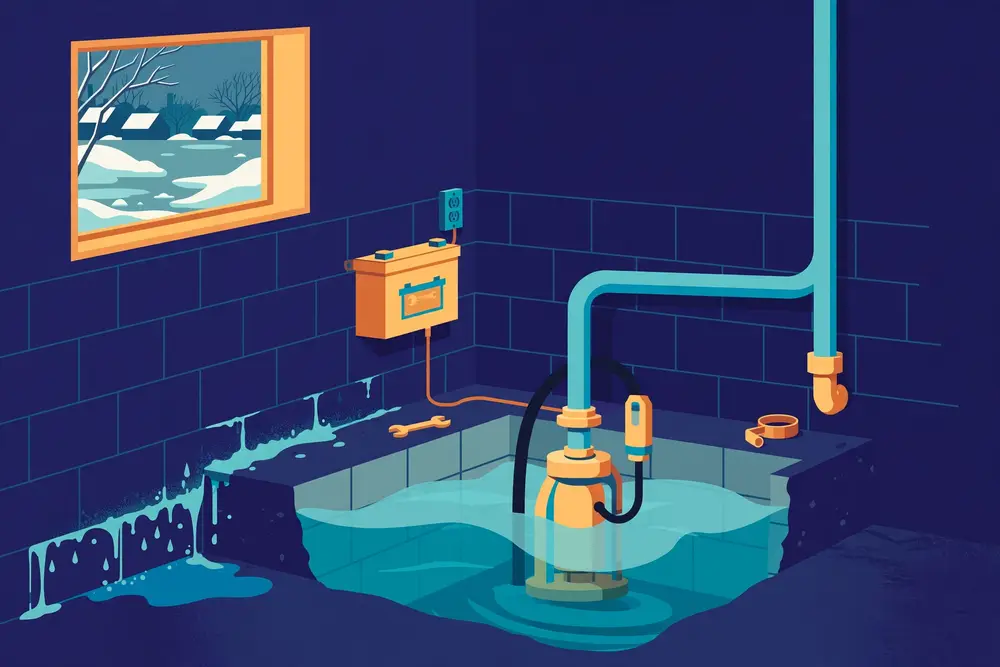
The February ceiling stain
Ice Dams on Syracuse Roofs
An ice dam is a ridge of ice at the edge of a roof that traps meltwater behind it, and in the snowiest big city in America it is the most common roof leak a water damage restoration syracuse crew dries all winter.
The dam builds from the inside out. Heat escaping from the house warms the upper roof, melting the underside of the snowpack. The meltwater runs down to the eave, which hangs past the heated wall and stays at outdoor temperature, and there it refreezes. Layer by layer the ridge grows, and behind it a pond of meltwater gathers with nowhere to go. Asphalt shingles are built to shed water that runs downhill. They were never built to hold water that sits still, so the pond works under the shingles, through the nail holes and seams, and into the ceiling and wall top below. The homeowner sees a ceiling stain in February and assumes a hole in the roof. There is usually no hole at all. There is a warm attic and a cold eave, and PuroClean of Syracuse North names insufficient attic insulation among the causes of the ice dam leaks it answers locally. Those leaks are steady water damage restoration syracuse work from December to March.
The damage pattern is distinctive once you know it: stains and bubbling paint along the top of an outside wall, water that appears only during and after sunny winter days when the melt runs, and damage that stops when the snow leaves the roof. Inside, the wet ceiling cavity and the soaked top plate of the wall need measured drying, because February water left in a closed cavity becomes the spring mold call. The drying is only half the job, though. A water damage restoration syracuse crew should name the cause on the visit: the heat leak, the thin insulation, the blocked ventilation, because a dam dried without a cause fixed is a dam booked again for next winter.
Prevention lives in the attic. Insulation deep enough to keep the roof deck cold, air sealing at the ceiling penetrations where warm air pours up, and ventilation that lets the eave stay at outdoor temperature are the three fixes that end the cycle. Roof rakes pull snow off the eave from the ground after big lake effect bands, and they help, but they treat the snow, not the heat. And the one thing never to do is climb onto an icy roof with a hammer or a torch: every winter that experiment ends with damaged shingles, a worse leak, or a fall. Call the drying in, fix the attic in the spring, and the February stain becomes a one time story instead of an annual water damage restoration syracuse call.
Case lesson one
The 2014 Onondaga Creek Crest: 8.19 Feet
On 30 March 2014, Onondaga Creek reached 8.19 feet at the Spencer Street gage, the highest crest in the recorded history of the creek, and the date on that record is the lesson: Syracuse creek flooding is a spring event.
The record belongs to the United States Geological Survey (USGS), station 04240010 on Onondaga Creek at Spencer Street. Spring thaw and rain arrived together at the end of March 2014: a winter of snow melting on ground still frozen, rain falling on top of it, and every tributary in the corridor running full at once. The creek that rises near Tully and Vesper, 27 miles south, carried all of it north through the Valley and downtown to Onondaga Lake, and at Spencer Street it measured higher than it ever had since the gage began keeping score. It remains the benchmark every Valley crew plans against.
At street level, a record crest is not a number. It is low streets near the creek under water, storm drains that cannot discharge into a full creek and so back up into the streets and basements behind them, and homes along the corridor taking water at window wells and wall bases in the same hours. The water damage restoration syracuse work that week followed the creek map exactly, because creek events always do: the calls cluster along the corridor and thin out with every street of elevation gained. It is also why a Syracuse homeowner near the creek should know their elevation the way a coastal homeowner knows theirs. The creek has a record, the record has a height, and your basement floor has a height too.
The lesson the 2014 crest teaches is timing. Syracuse homeowners insure and prepare against summer storms, and summer storms do flood this city, but the creek's own record was set by thaw water and spring rain. The preparation that matches the record is spring preparation: the sump tested in February, the window wells cleared, the valuables off the basement floor before the melt, and the flood insurance question asked in winter, because a federal policy through the National Flood Insurance Program (NFIP) usually carries a 30 day waiting period before cover begins. A policy bought when the creek is already rising is a policy for next year, which makes winter timing the cheapest water damage restoration syracuse advice on this page.
Case lesson two
Agnes 1972: What the Record Flood Taught Syracuse
In June 1972, Tropical Storm Agnes flooded Onondaga Lake and Ley Creek at Syracuse, according to a United States Geological Survey (USGS) report written that year, and the corridors it filled then are the corridors that fill now.
Agnes was the great flood of record for much of the northeastern United States, and Syracuse did not escape it. The USGS Open File Report 72 to 346 documented severe flooding across southern New York, with Onondaga Lake and Ley Creek flooding at Syracuse. Ninemile Creek flooded in Camillus in the same storm, and again in July 1974. Set those dates beside the Ley Creek record the United States Army Corps of Engineers compiled, flooding in March 1950, March 1960, March 1964 and May 1969, and a clear picture forms: the creek corridors of Onondaga County have flooded in every decade, in thaw months and storm months, under every generation of building that has lined their banks. The corridors have not moved, and neither has the water damage restoration syracuse map they draw.
The Corps flood plain work on Ley Creek adds the detail that turns a flood from a wet basement into a household emergency. Basement flooding can extinguish a furnace fire and leave residents without heat for days. Flooded ground can inundate septic systems and back sewage into basements. In other words, the creek event and the sewage event are the same event in these corridors, and they were understood to be the same event more than fifty years ago. A water damage restoration syracuse crew working a Ley Creek street after a rise plans for both waters from the first knock on the door: extraction and disinfection together, the furnace checked before it is relit, and nothing porous saved on the strength of how clean the water looked.
What Agnes teaches a Syracuse buyer or owner is to read the ground before the house. A home near Onondaga Creek, Ley Creek, Meadowbrook or Ninemile Creek carries a documented flood history, and that history belongs in the purchase conversation, the insurance conversation and the basement storage conversation. Boxes on the floor of a creek corridor basement are a decision, and Agnes is the reason it should be a deliberate one. The water has been there before. The records say so, in print, with dates.
Case lesson three
The Assisted Living Burst Pipe: Eight Days
A burst pipe in a Syracuse assisted living facility brought down whole sections of ceiling, and the remediation took eight days, according to the PuroClean of Syracuse North case write up of the job.
The facts, as PuroClean of Syracuse North published them on its own blog: an assisted living facility in Syracuse suffered a burst pipe, multiple sections of ceiling collapsed, and sheetrock and insulation came down with the water. PuroClean was called in on a Sunday afternoon by its large loss partner, Signal Restoration Services. The water damage remediation was completed in eight days, with reconstruction set up to follow. The blog post states no date for the event, and none is claimed here: the lesson does not need one. The job is retold here because it is the most instructive local case the record offers.
The first lesson is about what a burst pipe does in a large building. In a house, a burst line wets a room. In a facility with ceilings, chases and long pipe runs, a burst line loads a ceiling with water weight until the sheetrock gives way, and then the damage is not a stain but a collapse: insulation, drywall and water arriving on the floor together, across multiple sections at once. The second lesson is about the two clocks. The remediation clock, extraction, drying, removal and making safe, ran eight days. The reconstruction clock is a separate job with a separate schedule, and any water damage restoration syracuse quote that blurs the two is hiding the second one. The third lesson is about who answers: a Sunday afternoon call, a large loss partner, and a crew scaled to a building full of residents who cannot simply leave. Commercial water work in Syracuse is residential science at building scale, with life safety layered on top.
For the owner of any large Syracuse building, a school, a care facility, a warehouse conversion in Franklin Square, the case writes its own checklist. Know the shutoffs floor by floor, not just at the main. Keep the emergency number where a Sunday manager can find it in the dark. And understand that in a building, the pipe you cannot see is the one that writes the eight day schedule, so the inspection of the runs above ceilings is maintenance, not paranoia. It is also the inspection that keeps a building off the water damage restoration syracuse emergency board.
Where the risk lives
Syracuse Neighbourhoods in Detail
Syracuse water risk is written street by street: the creek floor of the Valley, the plaster and hardwood of Strathmore, the student rentals of Westcott, the combined sewers under downtown, and the sump pits of the northern towns.
The pattern behind the tabs is the pattern behind this whole page. Water damage restoration syracuse work is local work: the crew that dries a Valley basement needs to know the creek record before it opens the truck, and the crew that dries a Strathmore ceiling needs to know the plaster and the ice dam are part of the same story. Neighbourhood knowledge is not a marketing line here. It is the difference between drying the room and drying the building.
Service area
Syracuse ZIP Codes and the Ground They Sit On
One table for the city ZIP codes and the towns around them, with the water risk that defines each ground, so you can find your street and your likely problem in one pass.
| Area | ZIP codes | Defining water risk |
|---|---|---|
| Downtown, Armory Square and Franklin Square | 13201, 13202 | Combined sewers, converted warehouses and older commercial plumbing: backup water and big building pipe runs |
| University Hill, Westcott and Hawley Green | 13203, 13210, 13244 | Student rentals and older doubles: leaks found late, shared plumbing, freeze damage between terms |
| The Valley and the Southside | 13205, 13207 | Onondaga Creek corridor: the record crest ground, creek water and storm drain backup in the thaw |
| Strathmore and Elmwood | 13204, 13219 | Older plaster and hardwood stock on the west side hills: ice dams, aging stacks, stone foundations |
| Eastwood, Salt Springs and the East Side | 13206, 13224 | Meadowbrook ground and post war housing: sump failure, sewer backup, finished basements |
| Sedgwick, Lincoln Park and the Northside | 13208, 13212 | Ley Creek corridor and older doubles: creek history, clay tile laterals, tree root intrusion |
| Tipperary Hill and Skunk City | 13204, 13219 | Dense older housing on the west hills: shared walls, original plumbing, ice dam cycles |
| Mattydale, Lyncourt and Galeville | 13211 | Ley Creek low ground north of the city: sump overload and creek corridor groundwater |
| North Syracuse and Cicero | 13212, 13039 | Suburban stock toward Oneida Lake: sump failure in thaw weeks, frozen lines in cold snaps |
| Liverpool and Clay | 13088, 13041 | Onondaga Lake shore and Seneca River ground: high water tables, finished basements, sump dependence |
| East Syracuse, DeWitt and Jamesville | 13057, 13214, 13078 | Meadowbrook headwaters and Butternut Creek ground: creek rises, basement seepage, older village plumbing |
| Fayetteville, Manlius and Camillus | 13066, 13104, 13031 | Limestone Creek and Ninemile Creek corridors: documented flood history, larger homes, long pipe runs |
| Baldwinsville, Solvay and Brewerton | 13027, 13209, 13029 | Seneca River and Oneida Lake shore ground: river levels, high water tables, thaw flooding |
ZIP codes are the standard United States Postal Service set for the named neighbourhoods and towns. Calls are taken across Syracuse and Onondaga County on (315) 555-0147 (placeholder).
Beyond the city line
Onondaga County Towns in Detail
The city writes the headlines, but half the water damage restoration syracuse caseload lives in the towns around it, each with its own water: lake shore water tables in Liverpool, creek corridors in Camillus, and thaw soaked subdivisions from Clay to Manlius.
Liverpool, Clay and Cicero: The Northern Arc
Liverpool sits on the shore of Onondaga Lake, and its basements sit close to the lake level, which makes the water table the first fact of any job in the village. Groundwater here does not need a storm. It needs a wet month, and the sump pumps of Liverpool and Galeville run in weeks when no rain has fallen. Clay, the largest town in the county, spreads suburbs across the low ground between the Seneca River and the lake, and its finished basements are the classic thaw loss: a pump that stops during an outage, a discharge line frozen at the wall, and a family room under two inches of meltwater by morning. Cicero stretches north toward Oneida Lake, where the ground flattens, the water table rises again, and the same sump story repeats in newer construction. A water damage restoration syracuse crew working the northern arc starts every basement job at the pit, because here the question is rarely whether groundwater is present. It is whether the system built to move it is still winning.
DeWitt, East Syracuse, Fayetteville and Manlius: The Eastern Towns
The eastern towns climb from the Meadowbrook and Butternut Creek lowlands up into the hills, and the water risk climbs with them in reverse: the higher the street, the more the risk is plumbing and ice dams; the lower the street, the more it is creek and groundwater. East Syracuse and the village streets of DeWitt carry older housing with older laterals, where tree roots in clay tile joints turn a heavy rain into a backup. Fayetteville and Manlius stand on the Limestone Creek corridor, a waterway with its own flood history, in larger homes with longer pipe runs, more bathrooms and more ceiling between a leak and the person who finds it. In these towns, water damage restoration syracuse work is often a distance problem: the water travelled three rooms before it showed, and the moisture map has to walk the whole path.
Camillus, Baldwinsville, Solvay and the Western Edge
Camillus holds the Ninemile Creek corridor, which flooded in June 1972 under Tropical Storm Agnes and again in July 1974 according to the flood records, and the town's low streets carry that history in their basements. Baldwinsville stands on the Seneca River, where river levels and a high water table set the groundwater terms for the whole village. Solvay, the old industrial village on the city's western edge, stacks dense housing on the hills above the lake shore, with the shared walls and original plumbing of the city's west side and the creek ground of the valley below. Across the western edge, the pattern is the county pattern in miniature: read the waterway first, the foundation second and the plumbing third, and the job explains itself. That reading order is what water damage restoration syracuse experience actually is, and it is why the same storm produces a drying job in one town, a disinfection job in the next and a pump replacement in the third.
The Syracuse water year
Syracuse Water Month by Month
Syracuse water keeps a calendar: the freeze months, the thaw month that outranks them all, the creek and storm months of summer, and the quiet autumn weeks when every repair on this page should get done.
| Month | What the month brings | The job it writes |
|---|---|---|
| January | The snowiest month, about 34 inches on average, and the deepest cold snaps of the year | Frozen pipes in unheated spaces, ice dams building at the eaves, furnaces working hardest |
| February | About 30 inches more snow, ice dams at full height, discharge lines frozen solid | Ceiling stains from dams, sump discharge failures, the month to test the pump before the melt |
| March | The thaw: meltwater on frozen ground, rain on snow, creeks at their highest | The biggest month of the year: flooded basements, creek events, thaw burst pipes discovered |
| April | Late melt, high water tables, spring rain on saturated ground | Foundation seepage, sump overload, mold calls from March water that was never dried |
| May | Storm season opens, combined sewers tested by hard rain | Sewer backups in heavy rain, Ley Creek's May 1969 flood sits in this month in the record |
| June | Tropical remnants can reach Onondaga County, as Agnes proved in June 1972 | Creek and lake flooding in big storm systems, storm drain backup |
| July | Thunderstorms, humidity, air conditioning condensate running daily | Ninemile Creek flooded in July 1974; summer brings condensate leaks and appliance failures |
| August | Peak humidity, vacation empty homes, water heaters at year round risk | Late discovered leaks in empty homes, basement humidity and mold growth |
| September | Students return to University Hill and Westcott rentals, storm season tails off | Rental leaks found at move in, the last calm weeks for prevention work |
| October | First frosts, leaves filling gutters, heating systems restart | Gutter overflow at foundations, the month to insulate pipes and clean laterals |
| November | Lake effect season opens, first heavy bands, ground begins to freeze | Early ice dams, first frozen lines, snow load season begins |
| December | About 31 inches of snow on average, holiday travel empties homes | Freeze risk in empty houses, roof load building, the shutoff conversation before travel |
Read the table as a work order and it tells you when to do everything on this page: test the pump in February, photograph the basement in September, insulate the pipes in October, and keep the water damage restoration syracuse number where a house sitter can find it in December. The calendar is the cheapest prevention there is, because it costs nothing but timing.
The science of the job
How Long Drying Takes in Syracuse
Most Syracuse homes dry in 3 to 5 days once extraction is complete, and the honest answer to how long yours will take is a set of moisture readings, not a date promised over the phone.
Every professional water damage restoration syracuse job opens with moisture mapping. The technician tests the visibly wet materials, then the materials next to them, then the ones nobody suspects: the wall cavity behind the baseboard, the subfloor under the vinyl, the ceiling below the bathroom. Pin meters read inside wood and drywall, pinless meters scan whole walls, and thermal imaging shows the cold signature of hidden water. The map becomes the drying plan and the first page of the insurance file. Extraction comes before drying, because every gallon pumped or vacuumed out is a gallon the dehumidifiers never have to pull from the air.
Then the equipment is set by the class and category of the loss, following the Institute of Inspection, Cleaning and Restoration Certification (IICRC) S500 standard: air movers drive evaporation off surfaces, dehumidifiers pull that moisture out of the air, and containment keeps the wet zone from humidifying the rest of the house. Syracuse housing bends the averages. Plaster walls are dense and dry slowly, though sound plaster can usually be dried in place with time and directed airflow. Hardwood floors drink unevenly and need controlled drying to avoid cupping. Stone and block foundations release stored groundwater for days. A finished basement in Liverpool can run a week while a drywall ranch in Cicero dries in three days, and both numbers are honest.
The job ends on numbers, not on touch. Each day the crew re reads the map points and logs them. A material is dry when its reading reaches the dry standard, the reading of an unaffected sample of the same material in the same building, and the final log is what closes the job and satisfies the adjuster. If a company cannot show you readings, they are not drying your house. They are renting you fans. Water damage restoration syracuse work done to the standard is boring to watch and easy to prove, which is exactly what a claim file wants it to be.

Know your water
Clean Water vs Contaminated Water
The category of the water decides the protective equipment, the cleaning chemistry and what gets saved or removed, which is why the first question on every water damage restoration syracuse call is where the water came from.
| Category | Syracuse sources | How it is handled |
|---|---|---|
| Category 1, clean water | Supply line leaks, burst pipes, water heater failures, melting snow and ice from a roof | Extraction and measured drying; most materials can be dried in place if the response is fast; category rises if clean water sits and picks up contamination |
| Category 2, gray water | Washing machine and dishwasher discharge, sump pit water, aquarium failures, toilet water without waste | Extraction, cleaning and disinfection; carpet pad usually removed; materials tested before they are kept |
| Category 3, black water | Sewage and combined sewer backup, creek and lake flooding, any outdoor water that entered the home | Protective equipment and containment; porous materials the water touched are removed; structure disinfected before drying and rebuild |
Two Syracuse rules of thumb follow from the table. First, outdoor water is always Category 3 in practice, whether it came over a creek bank, up a floor drain or across a lake shore lawn. Second, time degrades every category: clean water left standing in a warm room for two days is no longer treated as clean. Both rules push the same direction, toward the fastest possible start to any water damage restoration syracuse job, and in a city where the creeks and the combined sewers both answer to the same storm, the category question is usually settled before the truck is loaded.
Finding the whole loss
Moisture Mapping in Syracuse Homes
Moisture mapping is the measurement work that records exactly where water travelled inside a structure, and in Syracuse homes, with their plaster, cavities and stone foundations, it is the difference between a dried house and a dried looking one.
Water rarely stays where you see it. It wicks up a wall cavity by capillary action, runs under a floor along the subfloor seams, crosses a ceiling and shows itself two rooms from the source, and hides behind plaster that feels dry to the palm. A map replaces the guess with readings: pin meters pushed into wood and drywall, pinless meters scanning whole wall fields, and a thermal imaging camera showing the cold patch where evaporation betrays hidden water. The technician marks the wet boundary on the wall and in the log, then tests past it until the readings come back dry, because the map is only honest when it includes the edge where the water stopped. Every water damage restoration syracuse drying plan in this guide stands on that map.
Syracuse stock makes the map matter more, not less. Plaster over wood lath hides a wet cavity behind a hard, dry feeling face. A stone foundation reads wet at the base long after the floor looks dry. Hardwood over an old subfloor can hold a layer of water that no surface test finds. The map is also the insurance document: adjusters pay for drying that is measured, and they argue with drying that is described. Every water damage restoration syracuse job on this page's standard produces the map on day one, updates it daily, and closes with final readings at the same points, so the file shows the water arriving, retreating and gone.
Homeowners can borrow the habit. After any leak, however small, feel the wall base on both sides of the wall, look at the ceiling below the room, and photograph what you find with the date. A musty smell with no visible source is a mapping job waiting to happen, and catching it in the week it starts is the smallest water damage restoration syracuse job there is.
Opening the wall, on purpose
Flood Cuts
A flood cut is the removal of the lower section of a wall, usually 12 to 24 inches above the floor, and it is the step homeowners resist most and need most when a wall cavity is wet or contaminated.
A closed wall cavity cannot be dried or cleaned properly. If the insulation inside is soaked, if contaminated water entered the cavity, or if readings show the cavity is not drying with directed airflow, the lower wall comes off at a clean measured line. The cut opens the cavity for extraction, cleaning and inspection, lets air reach the framing and the back of the remaining wall, and turns a hidden problem into a visible one. Cut at a measured height, the repair that follows is faster and neater than patching a torn out wall: one straight seam, standard material sizes, and a room that goes back together cleanly.
Not every wet wall earns a cut. Clean water, caught fast, in a cavity that airflow can reach through removed baseboards and small vent holes, often dries in place, and a good crew proves that with readings before it recommends cutting. The decision is measurement, not habit, and it is the decision water damage restoration syracuse readings exist to make: map first, try the least invasive drying the readings allow, and cut where the numbers say the cavity will not come dry. In Syracuse plaster homes the question has a local wrinkle, because plaster and lath do not cut or patch like drywall, and the crew should say how it handles plaster before the first blade touches the wall. Two walkthroughs of exactly this decision, testing a wall and making a clean flood cut, are linked in the case studies section of this page.
Material by material
Wet Plaster, Hardwood and Insulation
What water does to the three materials Syracuse homes are built from decides what can be dried, what must come out, and what the rebuild looks like.
Insulation. Wet fiberglass insulation loses its insulating value and holds water against framing, so soaked insulation inside a wall or ceiling cavity is usually removed. It cannot be dried in place inside a closed cavity, and leaving it trades a small removal bill for a mold problem with a head start.
Plaster. Plaster is denser than drywall and dries slowly, but sound plaster can often be dried in place with time, airflow and patience, which matters in Strathmore and Sedgwick homes where the plaster is part of the house's character and cannot be replaced from a catalogue. Plaster that has lost its key to the lath, bulges or crumbles is a different verdict, and readings plus a knuckle test make the call.
Hardwood. Hardwood floors cup and buckle as they absorb water unevenly, board edges drinking faster than board centres. Fast extraction and controlled, even drying save many floors; floors left wet for days often need boards lifted or replaced. The floor is the material where the first day matters most, and where a water damage restoration syracuse crew earns its fee by arriving with a drying plan for the wood, not just fans for the room.
The clock after the water
Mold After Water Damage in Syracuse: The 24 to 48 Hour Clock
Mold is not a separate disaster that strikes unlucky homes. It is the scheduled second half of any water loss that was not dried in time, and Syracuse basements give it a cool, damp head start.
The Environmental Protection Agency (EPA) puts the window plainly: mold can begin growing within 24 to 48 hours on materials that stay wet. A heated Syracuse home in January is a warm, humid box sitting in a frozen city, and a wet wall cavity inside it never sees the cold that slows growth outside. The musty smell a week after a leak is not a mystery. It is a progress report on drying that never finished, and the April mold calls that follow March flooding are the same report delivered a month later. That one month gap is where a drying job becomes a water damage restoration syracuse remediation job.
New York law shapes how mold work is done. Article 32 of the New York Labor Law has required since 1 January 2016 that mold assessment and mold remediation on projects over 10 square feet be performed by separately licensed companies, and the law applies statewide, including Syracuse and Onondaga County. The split exists so the company that profits from removing mold is never the company that decides how much mold there is. Any water damage restoration syracuse company working a mold job over that size should be able to explain the split and name the licensed assessor on the project. Where mold is already established, the work follows the Institute of Inspection, Cleaning and Restoration Certification (IICRC) S520 standard: containment, negative air, HEPA filtration, removal of colonised porous material, and cleaning of what remains. If a quote for mold work does not mention containment, it is not a mold quote. It is a cleaning quote with a mold title.
Shared walls, shared water
Neighbours and Doubles
Syracuse is a city of doubles, uppers and lowers, and shared wall housing from Eastwood to Tipp Hill, and water in a double has two addresses. One unit's leak is the other unit's ceiling stain within the hour.
The travel routes are built into the housing. Shared plumbing stacks serve both units and fail into both. A supply line that lets go in an upper flat follows the party wall cavity down and crosses into the neighbouring unit at the ceiling line. A roof leak over a shared wall wets both sides of it. Near the university, where large older homes have been divided into student flats for generations, the routes multiply with every conversion, and the plumbing crosses between units in ways no current drawing records. The pattern produces the same argument every time: the unit that called dries its rooms while the unit next door, dried by nobody, grows the mold that walks back through the wall. One map, one crew and one file for the whole building is the water damage restoration syracuse answer to a shared wall.
The fix is a building habit, not a unit habit. The moisture map crosses the party wall as a matter of routine. Neighbours are told early and shown the readings on their own side of the wall. The documentation is built so that an owner claim, a tenant claim and a neighbour claim can each be drawn from the same file without argument. Landlords in these streets learn the pattern once and then keep the emergency number in the lease packet. When you call for water damage restoration syracuse help in a double, say the word double in the first minute. It changes the size of the job the crew plans for, and it is far better learned on the phone than at the shared wall.
Tenants and owners
Renters: Who Pays in Syracuse
In most Syracuse rentals the landlord carries the building and the tenant carries the belongings, and water damage tests that split within the first hour, in student flats and family rentals alike.
The building belongs to the landlord: the plumbing, the roof, the foundation and the structural drying that follows a failure in any of them. New York's warranty of habitability, Real Property Law section 235-b, cannot be signed away in a lease, and it sits behind the landlord's duty to keep the home livable, pipes and structure included. The belongings belong to the tenant, and unless the lease says otherwise a tenant's soaked furniture and clothing are the tenant's loss, which is exactly the gap renters insurance exists to fill. A leak caused by one side, an overflowing tub in the upper flat, a washing machine hose in the lower, can shift the cost argument, and a negligent neighbour's insurer can end up paying through subrogation, which is why everyone should document from the first hour and let insurers argue with photographs instead of memories. If water makes a home truly untenantable, Real Property Law section 227 surrender rules enter the conversation, and that is a question for advice, not for a water damage restoration syracuse crew.
Tenants have three jobs: report water immediately and in writing, photograph their own belongings where they sit before anything is moved, and keep receipts for anything the loss forces them to buy or any night it forces them out. Owners have three matching jobs: respond the same day, dry the structure to readings, and keep the tenant informed in writing. Syracuse adds one local chapter: the student rental cycle. A leak in a Westcott or University Hill flat in late May can run until September if the house stands empty between terms, which is why owners of student stock winterise, drain or monitor empty houses as a rule, and why the water damage restoration syracuse jobs found at move in are so often the largest of the year.
Your rights, in writing
Insurance: The 15-Business-Day Rule
New York Regulation 64 gives every Syracuse policyholder a timetable: 15 business days for your insurer to acknowledge your claim, start investigating, and answer a completed proof of loss, in writing.
Most homeowners policies cover sudden and accidental water damage, a burst pipe, a failed water heater, a supply line that lets go, and exclude rising water from outside the home unless you carry flood insurance. Sewer backup usually sits in an added endorsement with its own limit. Coverage turns on the source of the water, which is why the documentation on a water damage restoration syracuse job always leads with the source, photographed and logged on day one. The clocks below are the state's answer to the slow claim, and they are worth knowing before you need them.
| Clock | What the insurer must do | Source |
|---|---|---|
| 15 business days | Acknowledge your claim after you report it | Regulation 64, 11 NYCRR Part 216 |
| 15 business days | Begin investigating the claim | Regulation 64, 11 NYCRR Part 216 |
| 15 business days | Reply to communications about the claim | Regulation 64, 11 NYCRR Part 216 |
| 15 business days | Accept or reject in writing after your proof of loss and requested items are in, with a status letter every 90 days while undecided | Regulation 64, 11 NYCRR Part 216 |
| 5 business days | Pay once a settlement is agreed | Regulation 64, 11 NYCRR Part 216 |
| 4 business days | Pay an agreed settlement after a declared natural disaster | Insurance Law section 2618 |
| 15 business days | Accept or reject a non commercial disaster claim after proof of loss, with limited extensions the law spells out | Insurance Law section 2618 |
| 24 months | Your window to sue on the standard policy, counted from the date of loss | Insurance Law section 3404 |
| 10 business days | Respond to the Department of Financial Services when it asks about your complaint | Regulation 64, 11 NYCRR Part 216 |
Two honest notes belong next to that table. First, Regulation 64 carries no private right of action; it is enforced by the Department of Financial Services, which gives you a complaint with teeth rather than a lawsuit of your own. Second, the often quoted disclaimer rule in Insurance Law section 3420(d) concerns liability policies and bodily injury, and New York courts have held it does not govern property damage claims, so it does not belong in a water claim argument. A licensed public adjuster, if you hire one, has fees capped at 12.5 percent of the recovery under 11 NYCRR section 25.7.
After a declared disaster
The 2618 Clock: Four Business Days
When a natural disaster is declared, Insurance Law section 2618 tightens the timetable: an agreed settlement on a disaster claim must be paid within 4 business days.
Section 2618 is the disaster chapter of New York insurance law, and a Syracuse thaw flood or a storm like Agnes is the kind of event it was written for. Alongside the 4 business day payment clock, it gives the insurer 15 business days to accept or reject a non commercial claim after proof of loss and the requested items are in, 30 days where arson is suspected, one extension of 15 business days, and one further extension where access to the property is prohibited. Note the payment figure carefully, because an older 3 day figure still circulates from a 2021 draft bill: the statute as it stands says 4 business days, and 4 is the number to hold an insurer to. The clocks only help a policyholder who knows they are running, so on any disaster loss, write the dates down on day one and count business days out loud in every call. These are the clocks a water damage restoration syracuse claim file is built to satisfy.
The deadline behind the deadlines
The 24-Month Suit Limit
Under Insurance Law section 3404, the standard New York policy gives you 24 months from the date of loss to sue your insurer, and that clock keeps running while you negotiate.
Two years sounds generous in the first week of a loss. It is not generous in month twenty, when a slow claim is still trading letters and the window is nearly shut. The 24 month limit is shorter than most people expect, and it does not pause for good faith negotiation, for a pending appeal inside the company, or for a contractor's schedule. New York's Court of Appeals has also held, in the Bi-Economy and Panasia decisions of 19 February 2008, that consequential damages can be recoverable where an insurer wrongfully delays or denies, which is one more reason a well documented claim file matters. The practical rule: if a claim is dragging, get advice well before the two year mark, and treat the date of loss, not the date of the last letter, as the day the clock started. A water damage restoration syracuse crew cannot stop that clock; only documentation and timely advice can beat it.
Rising water cover
Flood Insurance and the NFIP
Standard homeowners policies exclude rising water from outside the home, so for Syracuse homes near the creeks and the lake, flood insurance through the National Flood Insurance Program (NFIP) is the cover that matches the risk.
The NFIP runs on federal clocks, not the state ones above: a proof of loss within 60 days of the flood, an appeal within 60 days of a written denial, and a lawsuit within one year of the first written denial. Policies usually carry a 30 day waiting period before cover begins, which makes flood insurance a winter purchase for a spring risk: the Onondaga Creek record crest arrived on 30 March, and a policy bought in March is a policy for next year. One date needs care in print: the NFIP's authorisation was rechecked on 19 November 2026 and runs through 11 December 2026 at 11.59 p.m.; that is the deadline for Congress to reauthorise the program, not the expiry of any existing policy, and policies in force stay in force to their own terms. If your home stands near Onondaga Creek, Ley Creek, Meadowbrook, Ninemile Creek, Onondaga Lake or the Seneca River, the flood question is not whether the water has visited. The records in this page say it has. The question is whether the policy will be there when it visits again. Until it is, the creek corridors carry the risk uninsured, and the cleanup crews carry the rest.
Build the file
What to Photograph and Document
The claim is won or lost on the file, and the file is built in the first day: the source, the high water line, every room, every item, and a written log that starts when the water is found.
Photograph the source of the water first, the split pipe, the failed hose, the floor drain, the creek side wall, because coverage turns on the source. Then the high water line on the walls, every affected room from the doorway and in close up, and each damaged item where it sits before anything is moved. Shoot a short video walkthrough while you narrate what you are seeing. Keep receipts for emergency work, supplies and any lodging the loss forces on you. Keep a written log with dates, times and the names of everyone you spoke to, including the insurer's claim number and the adjuster's name. Store copies outside the home, in cloud storage or with family, because the phone that took the pictures can be the next casualty of the same water. On a water damage restoration syracuse job, the crew's moisture map, dated photographs and daily readings join your file, and together they are the reason one claim sails and another stalls.
What we do
Water Damage Restoration Syracuse Services, Job by Job
Fifteen services, one standard: map it, extract it, dry it to readings, document it for the claim, and rebuild what the water ruined.
Emergency water extraction
Truck mounted and portable extraction that removes standing water fast, the single step that shrinks every job that follows it.
Structural drying and dehumidification
Air movers and dehumidifiers set by S500 math, monitored daily, and removed only when the readings reach the dry standard.
Flooded basement cleanup
The most common Syracuse job: sewer, sump, foundation and creek water handled by category, with disinfection and verified drying.
Frozen and burst pipe cleanup
Thaw burst response: source control, full line checks, cavity drying and the documentation a freeze claim needs.
Sewage and black water cleanup
Category 3 work with containment and protective equipment, removal of touched porous material, and disinfection before rebuild.
Storm and flood damage cleanup
Creek, lake and storm events across Onondaga County: staged response, extraction at scale and drying across whole floors.
Ice dam leak drying
Ceiling and wall top drying for ice dam losses, with the heat leak and ventilation problems named so the dam does not return next winter.
Mold remediation
S520 containment and removal, coordinated with a separately licensed assessor as New York Labor Law Article 32 requires.
Fire and water cleanup
Fire jobs end wet: suppression water extraction and drying alongside soot and odor work, so the second disaster never starts.
Commercial water damage
Shops, offices, care facilities and multi unit buildings across Onondaga County, with drying plans that keep doors open where possible.
Contents cleaning and pack out
Furniture, documents and belongings cleaned, dried, inventoried and stored while the structure is dried and rebuilt.
Reconstruction and repairs
Drywall, plaster, floors, trim and paint put back after verified dry, so one company answers for the whole job.
Moisture mapping and inspection
Meter and thermal imaging surveys that find hidden water after a leak, before a purchase, or when a musty smell has no visible source.
Dehumidification
Standalone humidity control for basements and crawl spaces that stay damp after the main drying is complete.
Emergency board up and tarping
Roof and opening security after storm and fire damage, keeping weather and trespassers out while the real work is scheduled.
Not sure which of these your home needs?
Describe where the water came from and which rooms are wet. The category and the map decide the service list, and the first visit settles both.
Learn from finished jobs
YouTube Case Studies: Real Drying Jobs, Watched Before You Sign
Two restoration walkthroughs worth your time before you let anyone open a wall, plus the Syracuse case the local pages keep teaching from: a burst pipe, a fallen ceiling and an eight day remediation.
Start with Home RenoVision DIY, Water Damage? Do This BEFORE Mold Takes Over, a walkthrough of testing how wet a wall really is and making a clean flood cut to dry the cavity. Pair it with Certified Restoration, Test Before You Tear, on testing for asbestos and lead before cutting into older materials, a step that matters in a city where so much of the housing stock carries plaster, lath and old paint. Both are linked, not embedded, so this page stays fast.
The Syracuse written case is the assisted living job told in full earlier in this page: a burst pipe in a Syracuse care facility brought down multiple sections of ceiling, sheetrock and insulation with it, PuroClean of Syracuse North was called in on a Sunday afternoon by its large loss partner Signal Restoration Services, and the remediation was completed in eight days with reconstruction set up to follow, according to the company's own published account. Read it beside the two videos and the pattern of a proper job is complete: test before tearing, cut clean where cutting is needed, dry to readings, and keep the remediation clock and the rebuild clock honestly separate. Any water damage restoration syracuse quote should be able to promise the same beats for your home, in writing, before work begins.
Short answers
What to Do Right Now (Quick Answers)
Six questions Syracuse homeowners type into a phone with wet socks on, answered in one breath each. The full 30 question set, with longer answers, is in the FAQ section below.
A pipe just burst. What first?
Main shutoff off, faucets on that line open, power kept away from wet areas, photographs before anything moves, then call (315) 555-0147 (placeholder). In Syracuse a burst pipe is usually a frozen line that split on the thaw, so check the pipes beside it too. The drying and mold clocks start when the water stops.
How long will drying take?
Most Syracuse homes dry in 3 to 5 days after extraction. Plaster walls, hardwood floors and stone foundations hold water longer and can push a job past a week, while drywall and carpet dry fastest. Daily moisture readings, not guesses, set the end date, and equipment leaves only when readings reach the dry standard.
Is sewer backup water dangerous?
Yes. Water from a Syracuse combined sewer backup is Category 3, contaminated by definition, carrying sewage and street runoff. Keep people and pets out of the basement, touch nothing barehanded, and do not run a fan across it. Porous material it soaked cannot be saved, and a crew in protective equipment should extract and disinfect.
My ceiling stained in February. Why?
Most likely an ice dam. Snow melts on the warm upper roof, refreezes at the cold eave, and meltwater trapped behind that ridge of ice works under the shingles into the ceiling. The roof may have no hole at all. The wet ceiling cavity still needs measured drying, because February water becomes spring mold.
Will insurance cover this?
Usually, for sudden and accidental water. A burst pipe or failed supply line is the covered loss homeowners know; rising outdoor water needs flood insurance, and sewer backup needs its own endorsement. The source decides the claim, so document the source before anything dries, report promptly, and know the New York clocks from day one.
How fast does mold start?
Within 24 to 48 hours on material that stays wet, according to the Environmental Protection Agency. Syracuse basements help it along: cool, damp, and full of paper, wood and drywall to feed on. That is why same day extraction matters more than any other decision this week, and why wet material opened today is drying work.
One page of numbers
Syracuse Key Facts
Every water damage restoration syracuse job runs on the same short list of numbers: how much snow the city carries, when the creek crested, how fast the work starts, and the New York claim clocks that start the day the water does.
| Fact | The number | Where it comes from |
|---|---|---|
| Average annual snowfall in Syracuse | About 128 inches, the most of any big city in America | National Centers for Environmental Information (NCEI), 1991 to 2020 normals |
| Record snow season | 192.1 inches in 1992 to 1993 | National Weather Service (NWS) |
| Onondaga Creek record crest | 8.19 feet on 30 March 2014 | United States Geological Survey (USGS), Spencer Street gage |
| Emergency response | Same day extraction and drying | The mold clock below is the reason |
| Typical drying time | 3 to 5 days | Daily moisture readings set the real end date |
| Mold can begin | 24 to 48 hours on material that stays wet | US Environmental Protection Agency (EPA) |
| Insurer must acknowledge and start your claim | 15 business days | Regulation 64, 11 NYCRR Part 216 |
| Insurer must pay an agreed disaster settlement | 4 business days | Insurance Law section 2618 |
| Your window to sue your insurer | 24 months from the date of loss | Insurance Law section 3404, standard policy |
The snowfall and crest figures are told in full in the snow and creek sections above, and the claim clocks are explained in full in the insurance sections above.
Asked out loud
Voice Answers: Syracuse Water Damage in Plain Words
Most water emergencies begin as a question shouted at a phone with wet hands. These are the questions Syracuse homeowners ask out loud, answered the way a person would say them: short enough to hear, complete enough to act on.
My basement is flooding right now. What do I do?
First, protect yourself: stay out of the water if outlets, a furnace or appliances are standing in it. If a pipe is the source, turn off the main shutoff. Then call (315) 555-0147 (placeholder) for same day help, photograph everything while you wait, move what you can to dry ground, and do not throw anything away yet.
How fast can someone get to my house?
A local crew should be starting the same day, and in this work same day is not a slogan. Water keeps spreading and mold can begin within 24 to 48 hours, so the first visit is extraction and drying setup, not an estimate appointment. Ask for the arrival window when you call, and hold the company to it.
Water came up through my floor drain. Is it dangerous?
Treat it as dangerous, yes. In Syracuse that usually means the combined sewer surcharged during heavy rain or melt, and that water is Category 3, contaminated by definition. Keep children and pets out of the basement, touch nothing barehanded, and let a crew in protective equipment extract and disinfect. This is the loss a backwater valve exists to prevent.
A pipe froze and burst. Will insurance pay?
Usually yes. A frozen pipe that bursts is the classic sudden and accidental loss a homeowners policy covers, provided the home was heated or the water was shut off while you were away. Photograph the split pipe and the damage, report the loss promptly, and know your insurer has 15 business days to acknowledge the claim under Regulation 64.
How long will my house take to dry out?
Plan on 3 to 5 days for most Syracuse homes once extraction is done. A water damage restoration syracuse crew checks moisture readings daily and removes equipment room by room as each space reaches the dry standard. Plaster, hardwood and stone foundations run longer, and an honest crew shows you the readings instead of promising a date.
Stop the next one
The Prevention Hardware
Four fittings and one habit prevent most of the water damage restoration syracuse caseload: a pump sized for the thaw, a battery that outlasts the outage, a valve that closes against the sewer, grading that sheds the melt, and a February test.
Sump sizing and the battery backup
A sump pump should be sized for the worst week, not the average one: the thaw week when the whole winter arrives at the pit at once. If the pump cycles constantly in a normal spring rain, it is undersized for March. The battery backup is the second half of the same decision, because the events that fill pits fastest, storms and thaw surges, are the events that cut power. A backup that runs the pump for the length of a typical outage turns the most common Syracuse basement flood into a non event. Test both in February: bucket in the pit, watch the cycle, pull the plug and watch the backup take over. Five minutes in February is the best water damage restoration syracuse prevention there is.
The backwater valve
A backwater valve sits on the house sewer lateral and closes when the combined sewer surcharges, blocking the street's water from entering through your floor drain. After any Syracuse sewer backup, it is the one fitting that answers the event that just happened. It needs a permit aware install and occasional cleaning to stay honest, and it protects only against the sewer route, not against groundwater, which is why it pairs with the pump rather than replacing it. After a backup, ask for the valve conversation on the same visit as the water damage restoration syracuse cleanup.
Grading, gutters and discharge lines
Outside the walls, the cheap water management is grading and distance. Soil should slope away from the foundation so meltwater sheds instead of ponding at the wall base. Gutters cleared before the snow keep roof melt in the downspouts instead of spilling it at the foundation line all winter. Downspout and sump discharge lines should release their water well away from the house, and the sump discharge needs a freeze safe path in February, because a line frozen at the wall turns a working pump into a rising pit. Window well covers and clear window well drains finish the outside list: in a thaw week, a window well is a small swimming pool built against your basement wall, and it should drain like one. Outside water management is unglamorous, and it prevents more flooded basements than any machine in the truck.
Sensors and the shutoff habit
Inside, water sensors under the water heater, behind the washing machine and at the sump pit cost little and report the leak in its first hour instead of its first week. An automatic shutoff valve goes one step further and closes the main when a sensor fires, the fitting that saves the empty house in January. None of it replaces the oldest habit on this page: know where your main shutoff is, test that it turns once a year, and make sure everyone in the house over the age of twelve knows it too. Prevention hardware is only hardware. The habit is what uses it in time, and together they are the difference between a sensor alarm and a 3 a.m. emergency.
Under the streets
Combined Sewers and Save the Rain
Much of Syracuse drains through combined sewers that carry storm water and household sewage in one pipe, and Onondaga County's Save the Rain program exists to keep those pipes from overflowing into Onondaga Lake.
The combined design is a nineteenth century answer still working under a twenty first century city. One pipe takes the sink, the toilet and the street drain together. In dry weather it all flows to treatment. In heavy rain or a fast thaw, the pipe fills beyond capacity, and the system was designed to overflow at set points into the creeks and the lake rather than back up into homes. Save the Rain is Onondaga County's long running program to cut those overflows, with green infrastructure across the city, rain gardens, porous pavement, street trees and storage projects that keep storm water out of the combined pipe in the first place. It is one of the most watched combined sewer programs in the country, and it has measurably reduced overflow volumes into Onondaga Lake. Every gallon the program keeps out of the pipe is a gallon that never looks for a floor drain, which is why water damage restoration syracuse crews follow its projects street by street.
For the homeowner, the program's existence carries a blunt lesson: the city and county both know the combined system is at capacity in big events, and the overflow points do not catch everything. When the pipe surcharges, pressure looks for the lowest openings connected to it, and basement floor drains in the Valley, the Southside and the low streets near the lake are those openings. That is why backup water in Syracuse is always handled as Category 3, why the backwater valve conversation follows every backup, and why a water damage restoration syracuse crew asks about the floor drain even on a job that looks like pure groundwater. The sewer is part of your basement's plumbing whether you invited it or not.
From the lake to the tap
Skaneateles Water and Syracuse Plumbing
Syracuse drinks from Skaneateles Lake, one of the cleanest water sources in America, delivered unfiltered to the city, and the plumbing that carries it through Syracuse homes is where the city's cleanest fact meets its oldest pipes.
Skaneateles Lake, the easternmost of the Finger Lakes, supplies Syracuse with drinking water so clean that the city holds a filtration avoidance waiver and delivers it unfiltered, a distinction very few American cities can claim. The water travels from the lake to the city and into a housing stock that, in the older neighbourhoods, still carries galvanised supply lines narrowed by decades of scale, cast iron drain stacks at the end of their service life, and clay tile laterals rooted at the joints. The contrast explains a Syracuse pattern that puzzles new owners: superb water at the street, tired pipes at the wall. A weeping joint, a pinhole in a scaled line, a stack that gives way under a third floor bathroom, these are the failures of old plumbing carrying good water, and they make up the steady, unglamorous half of the water damage restoration syracuse caseload between the storms.
The practical habits follow. Watch the water bill for a rise nobody can explain, because a hidden leak announces itself there first. Listen for the meter ticking when every tap is closed. Read the age of the stack and the supply lines the way you would read the age of the roof, as a replacement with a date on it, and plan the repipe before the pipe plans it for you. In Syracuse, the water is rarely the problem. The last fifty feet of its journey, through your walls, is where the water damage restoration syracuse problem lives.
Hiring well
Choosing a Water Damage Company in Syracuse
The questions that separate a drying company from a fan rental are short: ask them on the first call, and judge the answers against the standards named on this page.
Ask whether the crew moisture maps on the first visit and logs readings daily. Ask which standard the drying follows, and listen for the Institute of Inspection, Cleaning and Restoration Certification (IICRC) S500 by name. Ask how mold work over 10 square feet is handled, and listen for the New York Labor Law Article 32 split between a licensed assessor and a licensed remediator. Ask whether the estimate is written in the line item format adjusters use, and whether the company bills the insurer directly. Ask what the crew knows about your street: the creek corridor, the combined sewer, the housing stock. A water damage restoration syracuse company that can talk about your neighbourhood's water before it sees your basement has done the job before. One that cannot may still own excellent fans.
Bigger buildings
Commercial Water Damage Restoration in Syracuse
Commercial water damage in Syracuse runs from Armory Square restaurants to care facilities and warehouse conversions, and the science is the same as a house at building scale, with life safety and business hours layered on top.
The assisted living case on this page is the template: a burst pipe, ceilings down, residents who cannot simply leave, a Sunday afternoon call and an eight day remediation with reconstruction behind it. Downtown adds its own versions: converted warehouses in Franklin Square with long pipe runs above finished ceilings, restaurants where a supply line failure closes a kitchen, offices where the drying plan has to work around the working day. The commercial differences are planning differences: shutoffs mapped floor by floor, containment that keeps the unaffected parts of the building open, drying scheduled against occupancy, and documentation built for a commercial claim file. The constants do not change: source first, category called honestly, extraction the same day, readings every day, and a crew that answers on a Sunday. Commercial water damage restoration syracuse work is won by the companies that rehearse it before the phone rings.
Neighbourhood detail
Syracuse Streets in Detail: Stock, Soil and the Water That Finds Them
The tabbed map above gives each Syracuse neighbourhood its headline risk. This section walks the same ground street by street, because water damage restoration syracuse work is won or lost on details a headline cannot hold: the age of a stack, the height of a water table, the wall a house shares with its neighbour.
Read your own neighbourhood first, then read the one next to it. Syracuse water does not respect the boundaries on a map, and a double in Eastwood shares more with a Valley ranch than either shares with a Manlius colonial.
Eastwood and the East Side: Finished Basements and Honest Pumps
Eastwood calls itself the village within the city, and its housing, tidy post war capes, ranches and colonials on quiet streets, hides its water risk in the room the family finished last: the basement. Eastwood basements are living space, carpeted, panelled and full of furniture, which means a sump failure here is not a wet slab but a ruined room. The ground east of the city carries Meadowbrook water through its low streets, and the water table along the corridor keeps pumps honest all spring. A water damage restoration syracuse crew in Eastwood starts at the pit and the discharge line, because in this neighbourhood the pump is the house, as far as water is concerned.
The east side streets beyond Eastwood repeat the pattern in older stock: Salt Springs with its seeps and damp foundation walls, the post war blocks where clay tile laterals meet tree roots at every joint. The prevention list writes itself here too: test the pump in February, keep the finished basement's storage on shelves rather than the slab, and treat any musty smell in April as a March event reporting late. In Eastwood, water damage restoration syracuse jobs are rarely the largest on the board. They are the most preventable, which is its own kind of sad.
Strathmore and Elmwood: The Plaster Belt
Strathmore and Elmwood hold the grandest older housing in Syracuse: colonials, Tudors and foursquares on the west side hills, built with plaster walls, hardwood floors and trim that cannot be replaced from a catalogue. These houses were built well and plumbed for keeps, which is precisely the problem. Their cast iron stacks and galvanised supply lines are at or past the end of their service life, and a stack that fails in a three storey Strathmore colonial wets every floor it passes on the way down. A water damage restoration syracuse crew in Strathmore reads the plumbing the way a surveyor reads a boundary: the age of the stack is the first fact of the job, and the floors below it are the rest.
The hills add the roof half of the story. Shaded lots and mature canopy slow the melt unevenly across a roof plane, feeding the ice dam cycle that stains the top floor ceilings every February. Sound plaster can usually be dried in place, and in these houses it should be, because the plaster is part of the architecture. Water damage restoration syracuse work in Strathmore is preservation work as much as drying work, and the crew that treats a 1920s colonial like a drywall ranch has failed before the first meter comes out.
The Valley and the Southside: Life Along the Creek
The Valley is Syracuse's creek neighbourhood, wrapped around Onondaga Creek as it runs north to the lake, and its basements live with the creek's record the way coastal homes live with a tide table. The highest crest ever measured at the Spencer Street gage, 8.19 feet on 30 March 2014 according to the United States Geological Survey (USGS), is not an abstraction here. It is the week the low streets took water at the window wells while the storm drains, unable to empty into a full creek, backed up behind it. A water damage restoration syracuse crew working the Valley documents the source with care, creek or drain or both, because the insurer will ask and the cleanup differs by column.
The Southside continues the corridor south and east, with dense housing, combined sewers and the same thaw calendar. The practical habits here are the cheapest on this page: nothing stored on the basement floor, the pump tested before the melt, the floor drain known and watched in every hard rain. Valley and Southside homeowners who live by those three habits call water damage restoration syracuse crews for their neighbours' houses more often than their own.
Sedgwick, the Northside and Ley Creek Ground
Sedgwick is the city's garden suburb, broad lawns and substantial older homes, and it sits within reach of the Ley Creek corridor that drains the north side to Onondaga Lake. Ley Creek's flood record, March 1950, March 1960, March 1964, May 1969 and the Agnes flood of June 1972 in the federal reports, belongs to these streets as much as to the creek banks themselves. The Northside beyond carries older doubles and a heavy share of rental stock, where a leak in an upper flat can run for days before a tenant reports it. Water damage restoration syracuse work on the north side is therefore two trades: creek ground discipline in Sedgwick, and late discovery discipline in the doubles, where the moisture map has to reconstruct a week of water travel from the stains it left.
Westcott and University Hill: The Rental Cycle
Westcott and University Hill run on the university calendar, and their water damage runs on it too. Large older homes divided into student flats carry plumbing that crosses between units in ways no drawing records, and the flats stand empty at the exact moments water does its worst: the winter break, when a frozen line in an unheated flat splits unheard, and the summer gap, when a slow leak in May is discovered in September. Landlords who own on these streets learn to winterise, drain or monitor empty flats as a hard rule. The water damage restoration syracuse jobs found at move in, ceilings down, floors cupped, mold established, are the tuition paid by the ones who did not.
Five neighbourhoods, five different first questions: the pit in Eastwood, the stack in Strathmore, the creek in the Valley, the lateral in Sedgwick, the empty flat in Westcott. That is the whole argument of this page in miniature. The citywide facts, the categories, the clocks, the drying science, are the same everywhere in Syracuse. The job is decided by the local fact, and a water damage restoration syracuse crew earns its fee by knowing which local fact owns your street before the truck door opens.
After the first hour
The Rest of the First Day: Hours 2 to 24 on a Syracuse Job
The first hour stops the loss from growing. The rest of the first day decides the size of the claim, the length of the drying and whether the water damage restoration syracuse job ends as a drying job or grows into a remediation job.
Two habits separate the good first days from the expensive ones. The first is that nothing porous and contaminated waits for a decision: sewage touched carpet pad and insulation come out on day one, because every hour they stay is an hour the contamination spreads and the mold clock runs on material that was never going to be saved. The second is that the homeowner hears the plan in plain words before the crew leaves: what is wet, what comes out, what dries in place, when the next readings happen and what the numbers need to show. A water damage restoration syracuse job that starts with that conversation rarely produces a frightened phone call at midnight, and the midnight calls it does produce are about new water, not about confusion.
The Syracuse wrinkle on the first day is the weather outside it. A job that starts during a lake effect band or a thaw week is a job where the inflow may not be finished: the creek is still rising, the melt is still running, the ice dam is still feeding the ceiling. Water damage restoration syracuse crews plan for the water that is still coming, sandbagging a window well, clearing a drain, tarping a roof section, because drying a room that is still receiving water is the one truly wasted day in this trade. The map is redrawn when the inflow stops, and the drying clock honestly restarts from there.
Room by room
Water Damage in Each Room of a Syracuse Home: What to Watch, What to Save
Water behaves differently in every room of a Syracuse home, and so does the rescue. This is the room by room version of the water damage restoration syracuse playbook, written for the walk you will do with the crew on the first visit.
The basement: where Syracuse water lives
The basement gets its own sections all over this page, so here it is in one paragraph: call the category before you touch anything, get storage off the floor and onto shelves for good, and remember that the furnace, the water heater and the electrical panel all stand in this room, which is why safety comes before salvage here. In a creek corridor basement, add the furnace check after any flood: the Ley Creek flood reports noted decades ago that basement flooding can put out a furnace and leave a home without heat for days. It is also why the furnace is checked, not just dried, on every creek corridor water damage restoration syracuse job.
The kitchen: cabinets, lines and quiet leaks
Kitchens hide water better than any room upstairs. Supply lines and drain joints live inside closed cabinets, the dishwasher and the refrigerator line fail quietly, and the first sign is often a warped kick plate or a floor that feels soft at the sink. In Syracuse's older housing the kitchen cabinet on an outside wall is also a freeze address: the lines inside it sit against the coldest wall in the house. Open those cabinets on bitter nights, and after any kitchen leak, expect the moisture map to check the floor structure under the cabinets, because that is where kitchen water goes to hide. Water damage restoration syracuse crews find more long running damage in kitchens than in any other room, precisely because kitchens leak politely.
Bathrooms, laundry rooms and the upstairs problem
An upstairs bathroom leak is a two room event: the bathroom, and the ceiling of whatever sits below it. Wax rings, supply lines, tub overflows and shower joints are the usual sources, and the water follows the framing down before it shows. Laundry rooms add the washing machine hose, the single most common appliance failure in the trade, and on an upper floor it is a ceiling waiting to happen. The assisted living case on this page is the building scale version of the same physics: water above a ceiling loads the sheetrock until it falls. After any upstairs event, the room below is part of the job, and the water damage restoration syracuse map should show readings on both floors before anyone calls the loss small.
Living rooms, bedrooms and the things that cannot be replaced
In the dry rooms, the water usually arrived from somewhere else: a ceiling above, a wall shared with a bathroom, a window well at the foundation line. The work here is contents first: documents, photographs, books and electronics out of the wet zone and dried or inventoried, furniture blocked up off wet floors, rugs lifted so the floor beneath can be read and dried. Hardwood in these rooms is worth the controlled drying effort described earlier in this page, and plaster walls are worth drying in place. What cannot be saved should be photographed before it is moved, because in a water damage restoration syracuse claim file an unphotographed loss is an argument, and arguments are the slowest drying method of all.
The first visit
The Inspection Walkthrough: Your First Visit, Minute by Minute
A professional first visit follows a set order, and knowing the order lets you judge the crew in front of you: safety, source, map, category, plan, paperwork.
The visit opens with safety and the source. The technician confirms power is safe around the water, finds where the water came from and proves it has stopped, because drying against a live source is wasted work. Then comes the walk: every affected room, then the rooms beside and below them, meter in hand, building the moisture map that the rest of the job will follow. Expect questions with dates attached: when did you find it, when did it start, has this wall been wet before. The answers go in the file beside the readings, because the claim will ask the same questions in the same order. The map drawn in that walk is the document every later decision cites.
The visit closes with the category called out loud, the removal list named, the drying plan explained in plain words and the documentation started: photographs, the map, the first readings, the line item estimate to follow. If the crew leaves without readings, a category or a written plan, you have had a sales call, not an inspection. Water damage restoration syracuse work done to the standard announces itself in that first hour, and a homeowner who knows the order can spot the difference before signing anything.
The water you cannot see
Hidden Water: What Is Happening Behind Your Syracuse Walls
The water that ruins Syracuse homes is usually the water nobody saw: the cavity quietly wet for a month, the subfloor drinking under the vinyl, the ceiling holding a pond above the paint.
Hidden water follows the building's hidden roads. It wicks up inside a wall cavity by capillary action, travels along the top of a ceiling joist and appears two rooms away, and pools on the vapour barrier under a floor where no surface test finds it. The signs are indirect: a musty smell that comes and goes with the weather, paint that bubbles along a wall base, a floor that feels cool or soft in one patch, a water bill that climbs with no visible cause. In Syracuse the classic hidden loss is the slow one: the weeping joint in a Strathmore stack, the pinhole in a scaled galvanised line, the ice dam feeding a wall top for a week behind intact paint. By the time it shows, the water damage restoration syracuse job has usually been running for weeks.
Finding it is measurement, not demolition. A moisture survey reads the wall fields, the floor and the ceiling below with pin and pinless meters, and a thermal camera shows the cold signature of evaporation where water hides. Only where the readings demand it does a wall open, and then it opens at a measured line for a stated reason. That is the honest order of operations, and it is why the page on this site devoted to water behind walls exists: the hidden half of the trade deserves its own guide. When you call for water damage restoration syracuse help about a smell with no source, say exactly that. A smell with no source is a mapping job, and it is far cheaper in the week it starts than in the season it is found.
The other half of the job
Contents, Pack Out and Odor: The Half of the Job Nobody Photographs
Structure gets the meters and the fans, but a water loss is also a house full of wet belongings, and how they are handled decides what the family keeps when the water damage restoration syracuse job is done.
Contents work starts with triage at the doorway of the wet room. Documents, photographs and electronics come out first, because they are the items water ruins fastest and families miss most. Furniture is blocked up off wet floors or moved to dry ground. Rugs are lifted so the floor beneath can be read. Everything damaged is photographed where it sits before it moves, because the claim file pays for documented losses and argues with remembered ones. On larger jobs the belongings are packed out: inventoried, packed, cleaned and stored off site while the structure is dried and rebuilt, then returned room by room. A water damage restoration syracuse crew that offers pack out should be able to show you the inventory system, not just the boxes.
Odor is the contents problem that outlives the drying. The musty smell after a loss lives in the materials that stayed damp: carpet pad, upholstery foam, the paper backing of books, the dust inside a wall cavity. Drying the structure stops the source, and cleaning or removing the colonised contents finishes it. Sealing a smell behind paint or masking it with fragrance is not odor work, and any water damage restoration syracuse quote that promises a smell gone without naming its source is promising weather, not work. The honest sequence is the one this page has repeated throughout: find it, measure it, remove or clean what holds it, and verify with a nose and a meter at the end.
While you wait
What to Do Before the Crew Arrives
The crew is coming. These are the moves that protect your home, your claim and your belongings in the hours between the call and the truck, in the order a water damage restoration syracuse dispatcher would give them.
- Keep people and pets out of rooms where water has reached outlets, panels or appliances, and never walk through sewage water barefoot or barehanded.
- Run the first hour list from the top of this page: safety, shutoff, protection, photographs, and a written log with the time the water was found.
- Move documents, photographs, electronics and medicines to dry ground first. Sentimental paper dries badly and insures worse; it is the true emergency in the room.
- Lift furniture onto blocks or foil covered wood, lift curtains and upholstery skirts clear of wet floors, and get rugs off the floor so the surface beneath can dry.
- Do not throw anything away yet, however ruined it looks. Photograph it where it sits and let the adjuster release it; a discarded item is an undocumented one.
- Call your insurer and open the claim while the crew is still travelling. The Regulation 64 clocks on this page start with your report, not with the drying.
- Write down where the water came from, when it started if you know, and every room it touched. The crew's first questions are these, and written answers beat wet memories.
- If the water is still coming, say so plainly on the call: a rising creek, a running melt and a live leak each load a different truck in Syracuse.
None of this is busywork. Every item on the list either stops the loss growing, protects the claim, or saves something the drying cannot. The homeowners who do these eight things meet the water damage restoration syracuse crew at the door with a log in one hand and a dry floor plan in the other, and their jobs finish faster for it.
The right rulebook
Syracuse Is Not Downstate: Why This Page Follows Syracuse Rules
Syracuse water damage runs on New York State law and Onondaga County ground, not on New York City agencies or city local laws, and a page that mixed the two would mislead the people it is meant to help.
Guides written for the city speak of city departments and city local laws, including the city's mold local laws that apply to large city rental buildings. None of that governs a Syracuse home. What governs here is the state framework this page has used throughout: Regulation 64 and Insurance Law sections 2618 and 3404 for claims, Labor Law Article 32 for mold licensing on projects over 10 square feet, and the warranty of habitability in Real Property Law section 235-b for rentals. The local layer is county and city of Syracuse practice: Onondaga County's Save the Rain program for the combined sewers, the county and city flood records for the creek corridors, and the gage record the United States Geological Survey (USGS) keeps on Onondaga Creek at Spencer Street.
The distinction matters in practice. A Syracuse tenant quoting a city local law to an Onondaga County landlord is arguing from the wrong book, and a Syracuse homeowner waiting for a city agency that has no office here is waiting for nobody. Getting the rulebook right is the first thing a Syracuse homeowner should check in any guide. The state clocks, on the other hand, are real and they are running: 15 business days under Regulation 64, 4 business days for a disaster settlement under section 2618, 24 months to sue under section 3404. Water damage restoration syracuse advice is only useful when it is Syracuse advice, state law, county programs and city ground, which is the standard this page has held itself to from the first section.
Water in your Syracuse home right now?
Skip the reading and make the call. The first hour list at the top of this page is the short version of everything below it.
Answers, in full
Syracuse Water Damage Restoration: Common Questions
Thirty questions, drawn from Syracuse competitor pages, local creek, snow and sewer records, and the calls this trade takes every week, answered the way we would answer them standing in your kitchen.
How fast should I start water damage restoration in Syracuse after a leak or flood?
Start the same day, ideally within the first few hours. Standing water keeps wicking into drywall, plaster, insulation and wood long after the visible spill stops, and mold can begin within 24 to 48 hours according to the Environmental Protection Agency (EPA). In Syracuse, fast extraction also matters because a wet basement found during a thaw week is usually still receiving meltwater, and drying cannot win until the source and the inflow both stop.
Will my homeowners insurance cover water damage in Syracuse?
Most Syracuse homeowners policies cover sudden and accidental water damage, such as a burst pipe or a failed water heater, and most exclude flooding from outside the home unless you carry separate flood insurance. Sewer backup is often an added endorsement with its own limit, which matters in a combined sewer city. Read your declarations page, report the loss promptly, and keep photographs and a written log, because coverage turns on the source of the water.
How long does drying take in a Syracuse home?
Most Syracuse homes dry in 3 to 5 days once extraction is complete, and complex jobs take longer. Plaster walls, hardwood floors, stone foundations and finished basements hold moisture longer than drywall and carpet. A crew should give you daily moisture readings rather than a guess, and the job is done when the readings reach the dry standard for each material, not when the surfaces feel dry.
Can you dry the space without removing drywall and floors?
Often, yes. If the water was clean and the wall cavity can be reached with directed airflow, technicians can dry drywall and plaster in place using baseboard removal and small drilled vent holes. Removal becomes necessary when insulation inside the cavity is soaked, when the water was contaminated, or when readings show the cavity is not drying. Moisture mapping, not appearance, makes that call.
What is the difference between clean water and contaminated water?
Clean water, called Category 1, comes from a supply line or a melting snow source and carries the lowest risk. Gray water, Category 2, comes from appliances, sump pits or aquariums and carries chemicals or microbes. Black water, Category 3, includes sewage and any outdoor floodwater, including creek water and combined sewer backup water in Syracuse, and it requires protective equipment, disinfection and removal of porous material it touched.
What should I do right now before technicians arrive?
Stop the source if you safely can, using your main shutoff valve. Keep clear of any area where water has reached outlets, panels or appliances. Move valuables and documents off wet floors, photograph every affected room before you move anything else, and write down when you found the water. Then call for water damage restoration syracuse help and keep the damaged material in place until your insurer has seen it or released it.
How fast can you respond in Syracuse?
Call any hour, day or night, on (315) 555-0147 (placeholder). Water damage in Syracuse does not keep office hours, and neither does a lake effect band, a burst pipe at 3 a.m. or a sump failure during a thaw outage. The crew will ask where the water came from, whether power is safe, and which rooms are wet, so the truck arrives with the right extraction and drying equipment.
Do you handle mold removal too, and when does mold start?
Yes, mold work is part of the same response, because mold is what untreated water damage becomes. The Environmental Protection Agency (EPA) notes that mold can begin within 24 to 48 hours on wet material. In New York, Labor Law Article 32 requires mold assessment and mold remediation on projects over 10 square feet to be handled by separately licensed companies, and that law has applied statewide, including Syracuse, since 1 January 2016.
Can you clean up sewage or black water?
Yes. Sewage and black water cleanup is handled as Category 3 work: protective equipment, containment, extraction, disinfection, and removal of porous materials the water touched, such as carpet pad and the lower section of drywall. Syracuse basements see this most often when a combined sewer surcharges during heavy rain or fast melt and pushes water back through a floor drain. Nothing from a sewage event should be handled barehanded or saved without a professional call.
Do you bill my insurance company directly?
On most jobs, yes. The crew documents the loss with moisture maps, dated photographs and a line item estimate in the format adjusters use, and bills the insurer directly where the policy allows. You stay responsible for your deductible and for any work your policy excludes. Direct billing works best when documentation starts on the first visit, which is one more reason to call before you start tearing anything out.
Why do Syracuse basements flood so often?
Syracuse basements flood often because several risks stack in the same house. About 128 inches of snow a year melts on frozen ground and sheets to the foundation line. Combined sewers can surcharge in heavy rain and push water back through floor drains. Stone and early block foundations were built to breathe rather than to seal. Creek corridors raise the water table for whole neighbourhoods. Add sump pumps that stop during outages and fail in the thaw, and the basement is where Syracuse water arrives first.
What is an ice dam and how does it damage a Syracuse roof?
An ice dam is a ridge of ice that forms at the edge of a roof when heat escaping from the house melts the underside of the snowpack. The meltwater runs down to the cold eave, refreezes, and builds a dam that traps standing water behind it. Asphalt shingles shed water that runs downhill, not water that sits still, so the trapped water works under the shingles and appears as a ceiling stain, often in February. In the snowiest big city in America, it is the most common roof leak of the winter.
Why does the damage show up on the thaw, not the freeze?
A frozen pipe rarely leaks while it is frozen, because the ice inside it blocks the flow. The split in the pipe wall only announces itself when the ice clears and full pressure returns, which is why so much Syracuse freeze damage appears on the first mild days of spring. The ground follows the same rule: the creek record crest at Spencer Street, 8.19 feet, was set on 30 March 2014, in the thaw. Homes that stood empty over winter are hit hardest, because the leak can run until somebody opens the door.
What should I do if a pipe bursts in my Syracuse home?
Shut off the main water valve first, then turn off power to the affected area if water has reached anything electrical. Open the faucets on that line to drain what is left, move belongings out of the water, and photograph the damage before cleanup starts. Do not use an open flame or a torch on any pipe. Then call for water damage restoration syracuse help, because the drying clock and the mold clock both start when the water stops.
How do I stop a frozen pipe from bursting?
You cannot always save a pipe that has already frozen solid, and forcing it can make things worse. Open the faucet on the frozen line so pressure can escape as it thaws, keep the area as warm as you safely can, and never use an open flame, a torch or a space heater aimed at the pipe. A hair dryer on low, worked slowly along the pipe with the faucet open, is the safer home method.
At what temperature do pipes freeze in Syracuse?
Water freezes at 32 degrees Fahrenheit, and pipes typically do not freeze until the air around them drops below 20 degrees Fahrenheit, according to American Red Cross guidance. The pipes that freeze first are supply lines in unheated spaces: basements, crawl spaces, attics, garages and kitchen cabinets on outside walls. Syracuse has recorded 26 degrees below zero three times since 1942, and wind against an exposed wall can freeze a line even when the room itself feels warm enough.
What is a combined sewer and why does it back up into basements?
A combined sewer carries storm water and household sewage in the same pipe, and much of Syracuse still drains this way. In heavy rain or fast melt the pipe can fill beyond capacity, and when it surcharges, the pressure pushes the mixed water back toward the lowest openings in nearby homes, which are usually basement floor drains. Onondaga County runs its Save the Rain program to cut the overflows these pipes send into Onondaga Lake. Backup water is always treated as contaminated Category 3 water, even when it looks clear, and a backwater valve is worth discussing after any backup.
What is a sump pump failure and how do I prevent it?
A sump pump failure means the pump that should be moving groundwater out of your basement pit has stopped, jammed, lost power or been overwhelmed, so the pit overflows into the basement. Warning signs include a pump that runs constantly, grinding noises, and water pooling around the pit. Test the pump in February by pouring a bucket of water into the pit and watching it cycle. A frozen discharge line is a common Syracuse winter cause, and a battery backup answers the outage that fills pits fastest.
How does lake-effect snow cause water damage in Syracuse?
Lake effect snow loads roofs, feeds ice dams and then becomes meltwater. Syracuse averages about 128 inches of snow a year according to the National Centers for Environmental Information (NCEI) 1991 to 2020 climate normals, the most of any big city in America, and the record season of 1992 to 1993 delivered 192.1 inches. When that snow melts on ground that is still frozen, the water cannot soak in, so it runs to foundations, window wells and basement walls all at once, which is why spring thaw is flood season in Syracuse.
What is Onondaga Creek and can it flood my home?
Onondaga Creek rises about 27 miles south of Syracuse near Vesper and Tully and flows north through the city to Onondaga Lake. Yes, it can flood homes near its corridor: the United States Geological Survey (USGS) gage at Spencer Street recorded its highest crest on record, 8.19 feet, on 30 March 2014, and low streets and basements along the creek took water in that event. Creek water is always treated as contaminated Category 3 water. If your home stands near the creek, know your elevation and ask the flood insurance question in winter, not during a rise.
How long can water sit before mold starts?
Mold can begin growing within 24 to 48 hours on materials that stay wet, according to the Environmental Protection Agency (EPA). That clock is why extraction and drying start the same day, and why a room that smells musty a week after a leak is telling you the drying never finished. A heated Syracuse home gives mold the warmth it needs even in January, and a March flood left undried becomes an April mold job.
What is moisture mapping and why does it matter?
Moisture mapping is the process of measuring and recording exactly where water has travelled inside a structure, using pin and pinless meters and thermal imaging, before and during drying. It matters because water rarely stays where you see it: it wicks up wall cavities, runs under floors and hides behind plaster. A map turns drying from guesswork into a plan, and the readings become the record your insurer uses to judge the job.
What is a flood cut and when is one needed?
A flood cut is the removal of the lower section of a drywall wall, usually 12 to 24 inches above the floor, after water damage. It is needed when the wall cavity or the insulation inside it is wet or contaminated, because a closed cavity cannot be dried or cleaned properly. Cutting at a clean measured line opens the cavity for drying and inspection, and it makes the later repair faster and neater than tearing out the whole wall.
What happens to wet insulation, plaster and hardwood?
Wet fiberglass insulation loses its insulating value and holds water against framing, so it is usually removed when soaked. Plaster is denser than drywall and dries slowly, but sound plaster can often be dried in place with time and airflow, which matters in Syracuse's older Strathmore and Sedgwick homes. Hardwood floors cup and buckle as they absorb water unevenly; fast extraction and controlled drying save many floors, while floors left wet for days often need boards replaced. Readings, not hope, decide each material.
Can water damage in one unit affect my neighbours?
Yes. In Syracuse doubles, shared wall homes and the divided houses of Westcott and University Hill, water from one unit routinely travels through shared walls, shared plumbing and ceiling cavities into the unit next door or below. A leak upstairs can stain a ceiling downstairs within the hour. Tell your neighbour early, document both sides of the wall, and let one crew map the whole path of the water rather than two crews guessing at halves.
I rent in Syracuse, who pays for water damage, me or my landlord?
In most Syracuse rentals the landlord is responsible for the building, its plumbing and the structural drying, while the tenant is responsible for their own belongings unless the lease says otherwise. A leak caused by a tenant, such as an overflowing tub, can shift costs, which is why documentation matters for everyone. Renters should report water immediately and in writing, photograph their belongings, and consider renters insurance, which is the policy that covers personal property in a flood or leak.
What is the 15-business-day rule for insurance claims in New York?
Under New York Regulation 64, formally 11 NYCRR Part 216, your insurer must acknowledge your claim within 15 business days, begin its investigation within 15 business days, and accept or reject the claim in writing within 15 business days after receiving your proof of loss and the items it requested. While a claim stays undecided, the insurer owes you a status letter every 90 days. Enforcement sits with the Department of Financial Services, because the regulation carries no private right of action.
How long do I have to sue my insurer in New York?
You have 24 months from the date of loss to sue your insurer on a standard New York fire policy, which is the policy form most homeowners water claims sit under, according to Insurance Law section 3404. That clock is shorter than most people expect, and it keeps running while you negotiate. If a claim is dragging, get advice well before the two year mark rather than after it.
Do I need flood insurance in Syracuse?
If your home sits near Onondaga Creek, Ley Creek, Meadowbrook, Ninemile Creek, Onondaga Lake or the Seneca River, flood insurance is worth a serious look, because standard homeowners policies exclude rising water from outside, and those corridors carry documented flood records going back to 1950. Federal flood policies through the National Flood Insurance Program (NFIP) usually carry a 30 day waiting period before cover begins, so the time to buy is in winter, before the spring thaw, not during it.
What should I photograph and document for my insurance claim?
Photograph the source of the water, the high water line on walls, every affected room from the doorway and in close up, and each damaged item where it sits before anything is moved. Shoot a short video walk through, keep receipts for emergency work and lodging, and keep a written log with dates, times and the names of everyone you spoke to. Store copies outside the home, because the phone that took the pictures can be the next casualty.
Glossary
Air mover. A fan built to drive fast air across wet surfaces so evaporation speeds up during structural drying.
Backwater valve. A one way valve on a house sewer lateral that closes when the city sewer surcharges, blocking backup water from entering the basement.
Category. The contamination class of the water in a loss, from Category 1 clean to Category 3 black water, which decides handling and removal.
Combined sewer. A single pipe carrying storm water and household sewage together, the system under much of Syracuse.
Dry standard. The moisture reading of an unaffected sample of the same material in the same building, used as the target for drying.
Flood cut. Removal of the lower 12 to 24 inches of a drywall wall so a wet or contaminated cavity can be dried, cleaned and inspected.
Ice dam. A ridge of ice at a roof eave that traps meltwater behind it and forces water under shingles.
Lake effect. Snowfall produced when cold air crosses the warmer water of Lake Ontario and drops the moisture over Syracuse and the Tug Hill Plateau.
Moisture mapping. Meter and thermal imaging measurements that record exactly where water travelled inside a structure.
Surcharge. The condition when a combined sewer fills beyond capacity and pushes water back toward connected homes.
Sources
SEMrush Keyword Overview, Keyword Magic, Keyword Gap and Backlink Analytics for the Syracuse keyword set, and Moz Keyword Explorer difficulty and SERP data, both gathered 20 November 2026 and summarised in the research notes for this page. SEMrush is treated as the primary source where the two disagree.
Competitor pages read in full for this guide: Fire and Water Restoration LLC; SERVPRO of East Onondaga County; PuroClean of Syracuse North; RestoPros of Syracuse Utica Rome; ServiceMaster Recovery by Close; and the Syracuse web agency overview at syracusewaterdamage.com. Their Schema was checked one by one in the Schema.org Validator on 20 November 2026.
Local records: United States Geological Survey (USGS) Onondaga Creek gage 04240010 at Spencer Street (record crest 8.19 feet, 30 March 2014); USGS Open File Report 72 to 346 on Tropical Storm Agnes flooding at Onondaga Lake and Ley Creek, June 1972; United States Army Corps of Engineers flood plain reports for Ley Creek (March 1950, March 1960, March 1964, May 1969) and Ninemile Creek (June 1972, July 1974); National Centers for Environmental Information (NCEI) 1991 to 2020 climate normals for Syracuse snowfall; National Weather Service (NWS) records for the 1992 to 1993 season (192.1 inches) and January 2004 (78.1 inches); the Golden Snowball tally (Syracuse 143.1 inches, 2025 to 2026); Onondaga County Save the Rain program materials; the PuroClean of Syracuse North published account of the assisted living burst pipe remediation (eight days, no date stated in the source).
Law: New York Insurance Law sections 2601, 2618, 3404 and 3420(d); Regulation 64, 11 NYCRR Part 216; 11 NYCRR section 25.7; New York Labor Law Article 32; New York Real Property Law sections 227 and 235-b; Environmental Protection Agency (EPA) mold guidance; American Red Cross pipe freezing guidance; National Flood Insurance Program (NFIP) policy rules. The NFIP authorisation position was last rechecked on 19 November 2026 and runs through 11 December 2026; recheck it before this page goes live.
The whole site
Every Guide and Borough Page, in One Place (All Pages)
Syracuse is the seventeenth page on this site. Every page below owns its own city or topic, with no shared headings and no shared keywords, so each one can rank for its own search.
Water Damage Restoration New York
The state hub page: the main keyword, the whole service area and the map of every local page.
Water Damage Restoration NYC
All five boroughs, the Hudson and East rivers, one fast response.
How Long Does Mold Take to Grow After Water Damage?
The 24 to 48 hour mold timeline, warning signs, and what stops it.
Water Damage Restoration Brooklyn
Brownstones, basements and burst pipes across Brooklyn.
Water Damage Restoration Queens
Queens homes, co ops and flood prone low ground.
Water Damage Restoration Bronx
Bronx apartment buildings, houses and winter pipe work.
Water Damage Restoration Staten Island
Staten Island homes, coastal water and basement flooding.
Water Damage Restoration Long Island
Nassau and Suffolk: coastal storms, basements and second homes.
Water Damage Restoration Manhattan
High rise water damage, upstairs leaks and building rules in Manhattan.
Water Damage Restoration Rochester
Rochester and the Finger Lakes edge: lake snow, old stock and frozen pipes.
Water Damage Restoration Albany
Albany and the Capital Region: the Hudson, freeze and thaw, and state claim clocks.
Water Damage Restoration Buffalo
Buffalo and Erie County: lake effect snow, frozen pipes, ice jams and flooded basements.
Water Damage Restoration Yonkers
Saw Mill River floods, burst pipes and pre-war buildings across Westchester County.
Water Damage Restoration New Rochelle
Long Island Sound storms, Hutchinson River floods and pre-1980 homes across Westchester County.
Water Damage Restoration Mount Vernon
Hutchinson River floods, century-old sewers and basement backups in Westchester's most densely packed city.
Water Damage Restoration Schenectady
Mohawk River floods, Stockade ice jams and frozen pipes across the Capital Region.
Water Damage Restoration Utica
Mohawk River floods, Sauquoit Creek overflows and frozen pipes across Oneida County.
Water Damage Restoration White Plains
Bronx River floods, Mamaroneck River overflows and frozen pipes across Westchester County.
Water Damage Restoration Troy
Hudson River floods, Poesten Kill overflows and frozen pipes across Rensselaer County.
Water Damage Restoration Niagara Falls
Niagara River ice jams, Cayuga Creek floods and frozen pipes across Niagara County.
Water Damage Restoration Binghamton
Susquehanna and Chenango River floods, burst pipes and frozen pipes across Broome County.
Water Damage Restoration Westchester County
Mamaroneck River floods, Bronx River and Saw Mill River flash floods, frozen pipes across Westchester County.
Water Damage Restoration Hudson Valley
Hudson River and creek floods, tidal surge, frozen pipes across the Hudson Valley.
Water Damage Restoration Capital Region
Hudson and Mohawk floods, burst pipes, ice jams across the Capital Region.
Water Damage Restoration Western New York
Lake effect snowmelt, ice jams and creek floods across the eight county region.
Water Damage Restoration Finger Lakes
Eleven lakes, Genesee River floods and canal towns across the fourteen county region.
Water Damage Restoration Central New York
Syracuse and Utica, Oneida Lake and the Mohawk River, across two state regions.
Water Damage Restoration Southern Tier
Binghamton and Elmira, Susquehanna and Chemung rivers, across eight counties.
Water Damage Remediation NYC
Remediation in depth: mold, contaminated water and IICRC S520 work.
Water Damage Insurance Claim New York
The full claim guide: Regulation 64, section 2618 and the 24 month suit limit.
Water Damage Behind Walls NYC
Hidden water: finding, mapping and drying what you cannot see.
Flood Cleanup NYC
Flood cleanup step by step, from extraction to disinfection.
Fire Damage Restoration NYC
Fire and smoke restoration, including the water every fire leaves behind.
Fire Damage Cleanup NYC
Soot, odor and cleanup order after a fire, room by room.
Water Damage Restoration Process
The full restoration process, step by step, from first call to dry home.
What Is Water Damage Restoration
What restoration really is, what it includes, and when to call.
Water Damage Restoration Syracuse
This page: Syracuse, Onondaga County, lake effect snow, Onondaga Creek and the thaw.
Mold Remediation New York
New York's licensed remediation system, from assessment to clearance.
Water Removal NYC
Standing water pumped out fast, then dried safe, for every NYC home.
Water Damage NYC
Water damage in NYC explained plainly, with fast help for every home.
Water Damage Cleanup Nyack NY
Water damage cleanup in Nyack explained plainly, with fast help for every home.
How to Choose a Water Damage Restoration Company in New York
How to choose a water damage restoration company in New York, with every check that protects your home.
How to Choose a Water Damage Restoration Company in New York
Commercial Water Damage Restoration NYC | 24/7 Emergency Help
Commercial water damage in NYC explained plainly, with fast help for every business.
Commercial Water Damage Restoration NYC | 24/7 Emergency Help
Basement Water Damage Restoration NYC
Basement water damage in NYC explained plainly, with fast help for every basement.
Water Damage Repair New York
Water damage repair in New York explained plainly, with fast help for every home.
Water Damage Restoration Poughkeepsie New York
Water damage restoration in Poughkeepsie explained plainly, with fast help for every home.
Emergency Water Damage NYC
Emergency water damage in NYC explained plainly, with fast help when every minute counts.
Water Damage Cleanup in NYC
Water damage cleanup in NYC explained plainly, from torn-out materials to dry rooms again.
Flood Damage Restoration NYC
Flood damage restoration NYC explained plainly, from flood events and NFIP claims to dry rooms and a flood-resistant rebuild.
How Long Does Water Damage Restoration Take
How long water damage restoration takes explained plainly, from the first call and extraction to drying days and the rebuild.
Flood Damage Cleanup Washington Heights
Flood damage cleanup in Washington Heights explained plainly, with fast help for every home.
Does Insurance Cover Water Damage Restoration
Whether insurance covers water damage restoration, explained plainly, by cause and New York rule.
Water Damage Mold Remediation
Mold that grew after a leak or flood, remediated the New York way, by licensed assessor and remediator.
Water Damage Restoration Companies New York
Compare the companies serving New York: national franchises, regional firms and local independents, and how to verify licences and certification before you hire.
Water Damage From Upstairs Neighbor
Water damage from an upstairs neighbor in New York City: who pays, what to do in the first hour, and how to document, report and claim.
Water in Your Syracuse Home Right Now?
Shut the source off if you safely can, keep clear of wet electrical areas, photograph everything, and call. Water damage restoration syracuse crews answer around the clock, because Syracuse water never checks the calendar either.