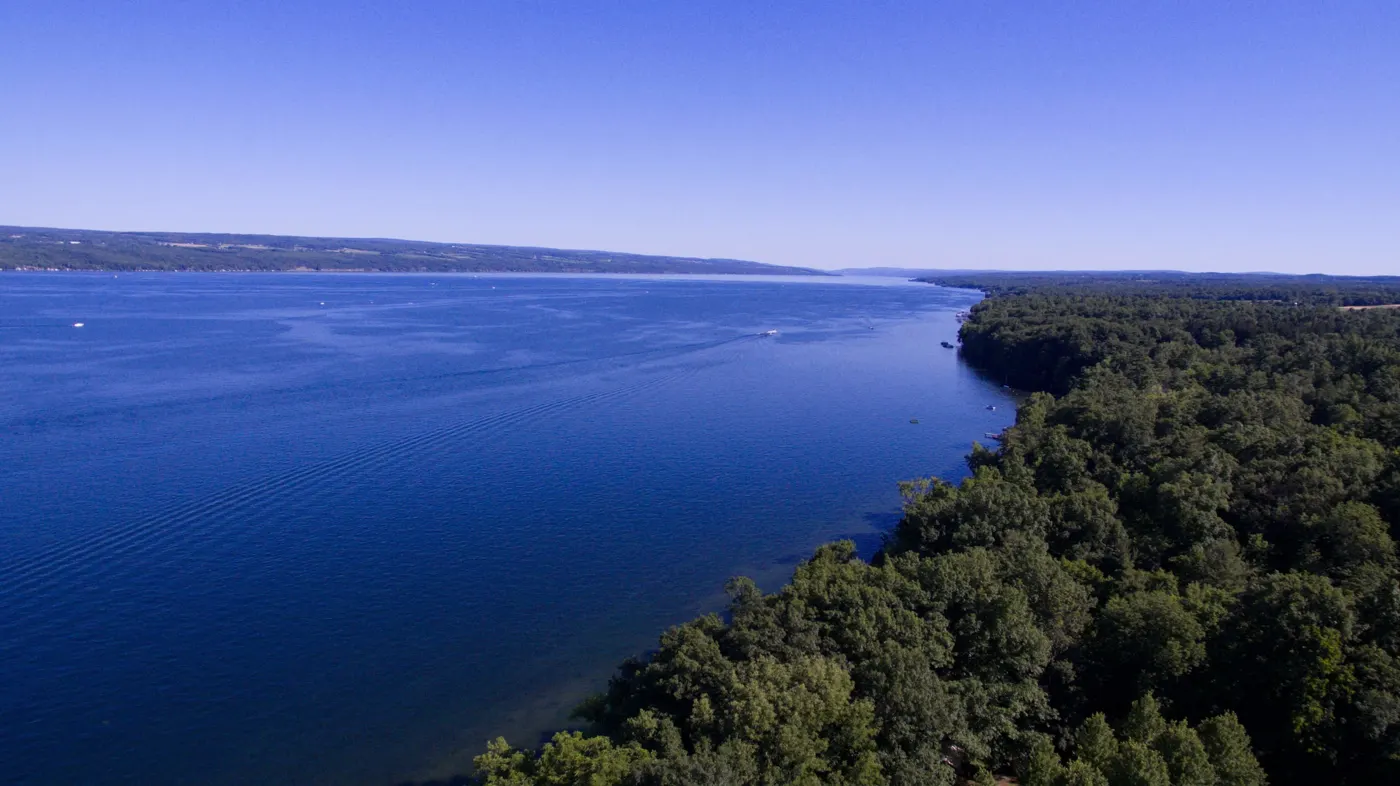
The Region
What Water Damage Restoration Finger Lakes Covers Across Eleven Lakes
Eleven lakes, fourteen counties, one river city, and a single standard of work: extraction first, measured drying second, and a claim file that starts in the first hour. None of it is optional in water damage restoration finger lakes along the Genesee River.
This is the thirty-first page of this site, and the fifth of seven region pages. It is the hub that joins the Rochester page to the lake towns, and the only page here that treats the whole Finger Lakes as one water problem. The region, as this page uses the name, follows the Finger Lakes Tourism Alliance definition: fourteen counties, Cayuga, Chemung, Cortland, Livingston, Monroe, Onondaga, Ontario, Schuyler, Seneca, Steuben, Tioga, Tompkins, Wayne and Yates, covering about nine thousand square miles. That is a tourism definition, not a New York State administrative region, and this page says so plainly because precision about the map is the start of precision about the water. None of it is optional in water damage restoration finger lakes in Rochester.
The eleven lakes run west to east: Conesus, Hemlock, Canadice, Honeoye, Canandaigua, Keuka, Seneca, Cayuga, Owasco, Skaneateles and Otisco. They were carved by glaciers, they run roughly north to south, and they drain north toward Lake Ontario through outlets, creeks and canals. Homes sit on their shores, in their outlet valleys and in the towns at their ends, and each of those positions takes water in a different way. A shoreline cottage floods from the lake. A valley home floods from the creek. A canal side house in Seneca Falls floods from managed water that rose anyway. None of it is optional in water damage restoration finger lakes in Ithaca.
Coverage on this page means the full sequence, not a pump and a fan. Emergency call and dispatch, stopping the source, pumping and extraction, moisture mapping, opening only what the readings condemn, structural drying with air movers and dehumidifiers, daily readings in a drying log, cleaning and sanitizing, mold prevention, and final readings with the documented claim file. Burst pipes, sewage backups, sump failures, appliance leaks, roof leaks and upstairs neighbour leaks sit inside the same sequence as lake floods, because the drying science does not change with the source. None of it is optional in water damage restoration finger lakes in Watkins Glen.
Key Takeaways
Seven Facts That Shape Finger Lakes Water Work
Seven sourced facts explain most of the water damage in this region. Each one is stated with its source, because a fact you cannot trace is just a rumour with good posture. Last updated November 2026. None of it is optional in water damage restoration finger lakes in Penn Yan.
Seneca is the deepest of the eleven lakes
At six hundred eighteen feet deep, thirty eight point one miles long and sixty six point nine square miles in surface, Seneca Lake is the deepest and largest of the Finger Lakes, per the New York State Department of Environmental Conservation. Its level is managed under a rule curve developed in the nineteen seventies. None of it is optional in water damage restoration finger lakes in Seneca Falls.
Cayuga essentially ties Seneca for length
Cayuga Lake measures thirty eight miles, with a maximum depth of four hundred thirty five feet and a mean depth of one hundred eighty one feet, per the Department of Environmental Conservation. The two big lakes are a matched pair at the region's centre, with different cities at their feet: Geneva and Watkins Glen on Seneca, Ithaca on Cayuga. None of it is optional in water damage restoration finger lakes in Auburn.
The region is fourteen counties by a tourism definition
The Finger Lakes region of fourteen counties, about nine thousand square miles, is the definition of the Finger Lakes Tourism Alliance, corroborated by the Finger Lakes wine country listings. It is not a New York State administrative region, and this page uses it as what it is: the region as its own people draw it. None of it is optional in water damage restoration finger lakes in Geneva.
Hurricane Agnes set the Genesee record in June 1972
Official rain reached thirteen point seven inches at Wellsville, and the flood of record crests stand at Wellsville, Portageville and Avon, per the National Weather Service. Mount Morris Dam took in about ninety thousand cubic feet per second and released just over fifteen thousand, and the Corps of Engineers estimated its Agnes operations prevented over two hundred million dollars in further damage. None of it is optional in water damage restoration finger lakes in Canandaigua.
The July 1935 flood was a multi basin event
Beginning the evening of July seventh, nineteen thirty five, the flood struck the Chemung, the Susquehanna, the Genesee and the Finger Lakes inlets together, killing forty four people in New York and Pennsylvania. Hammondsport's Orchard Street was gouged six feet deep, and Watkins Glen State Park was wrecked. It was not a Rochester only event, and this page never tells it as one. None of it is optional in water damage restoration finger lakes on Cayuga Lake.
Five inches of rain flooded Lodi Point in August 2018
On August fourteenth, twenty eighteen, flash flooding struck Lodi and Lodi Point on Seneca Lake after up to five inches of rain fell on saturated ground, trapping residents and washing out roads, per contemporary reports and the National Weather Service record of that summer. Steep shore creeks, not the lake level, did the damage. None of it is optional in water damage restoration finger lakes on Seneca Lake.
New York caps public adjuster fees at twelve point five percent
Under title eleven of the state rules, part twenty five point seven, a public adjuster representing a policyholder may charge no more than twelve point five percent of the recovery. Claim clocks run fifteen business days to accept or reject after proof of loss, and suit on a policy must be brought within twenty four months of the loss. The standard for water damage restoration finger lakes in the southern lake towns is set by work like this.
Quick Answers
Quick Answers for a Wet Finger Lakes Home
Short answers, written to be read aloud by a voice assistant or a worried homeowner, each one complete on its own.
Lake water is in my home. What do I do first?
Keep clear of water near anything electrical, move people and pets to dry ground, shut off a pipe source at the main if that is the source, photograph every room wide before moving anything, and call (585) 555-0147 (placeholder). Extraction in the first hours decides whether the job ends as drying or as demolition, and the first photographs open the claim file. The standard for water damage restoration finger lakes in the northern lake towns is set by work like this.
What does the definition on this page actually promise?
It promises a sequence, not a slogan: extraction, drying and repair after lake flooding, river floods, burst pipes, sewage backups and appliance leaks, with drying logs and insurance documentation from the first hour onward. The log is the proof that each step happened, in order, to a measured standard. The standard for water damage restoration finger lakes on Owasco Lake is set by work like this.
How is lake flooding different from river flooding?
Lake flooding rises slowly, spreads wide through crawl spaces and ground floors, and stays for days while a deep lake makes up its mind. River and creek flooding arrives fast, with current and debris, and falls faster. The Genesee gave Rochester its record crests in nineteen seventy two; the inlets gave Hammondsport its scar in nineteen thirty five. The drying differs because the water behaves differently. The standard for water damage restoration finger lakes on Keuka Lake is set by work like this.
Does my homeowners policy cover a lake flood?
Generally no. Standard homeowners policies cover sudden water from inside the home and exclude rising water from outside, which is what a lake flood is. The federal flood programme exists for exactly that gap. Read your own policy for your own answer, and let the crew's documented source diagnosis route the claim to the right policy. The standard for water damage restoration finger lakes along the canal corridor is set by work like this.
How long will my home take to dry?
Most lakeside jobs run in days once extraction is done. The honest range depends on the water, the materials and the building: bare concrete dries fast, plaster and lath and hardwood dry slowly, and humid lake air slows everything. Your crew should give a range from the first day readings and narrow it daily in the log. The standard for water damage restoration finger lakes along the Genesee River is set by work like this.
When does mold become a legal matter in New York?
Mold growth can begin within one to two days on wet material, and New York licenses the response: under Labor Law Article thirty two, jobs over ten square feet require a licensed assessor and a separate licensed remediator. Fast, documented drying is what keeps most floods from ever reaching that border. The standard for water damage restoration finger lakes in Rochester is set by work like this.
Key Facts
Finger Lakes Water Facts, With Sources
The numbers this page relies on, in one table, each with the source a reader can check.
| Subject | Fact | Source |
|---|---|---|
| Eleven lakes, west to east | Conesus, Hemlock, Canadice, Honeoye, Canandaigua, Keuka, Seneca, Cayuga, Owasco, Skaneateles, Otisco | Wikipedia, Finger Lakes |
| Seneca Lake | 38.1 mi long, 66.9 sq mi, 618 ft deep | NYSDEC and lake tables |
| Cayuga Lake | 38 mi long, 66.5 sq mi, 435 ft deep, mean depth 181 ft | NYSDEC |
| Canandaigua Lake | 15.5 mi long, 10,558 acres, 276 ft deep, elevation 688 ft | NYSDEC |
| Region | 14 counties, about 9,000 sq mi, tourism definition | Finger Lakes Tourism Alliance |
| Rochester | 211,328 people, 2020 Census, Genesee River, ZIP 14604 downtown | Census QuickFacts |
| Canandaigua city | 10,576 people, 2020 Census, ZIP 14424 | Census QuickFacts |
| Geneva city | 12,812 people, 2020 Census, ZIP 14456 | Census QuickFacts |
| Auburn city | 26,866 people, 2020 Census, ZIP 13021 | Census QuickFacts |
| Seneca Falls town | 9,027 people, 2020 Census, ZIP 13148, county seat is Waterloo | Census QuickFacts |
| Penn Yan village | 5,056 people, 2020 Census, ZIP 14527 | Census QuickFacts |
| Watkins Glen village | 1,863 people, 2020 Census, ZIP 14891 | Census QuickFacts |
| Ithaca city | 32,108 people, 2020 Census, ZIPs 14850 to 14853 | Census QuickFacts |
| Genesee River length | About 157 mi (standard reference) to 160 mi (City of Rochester) | Wikipedia and City of Rochester |
| Hurricane Agnes, June 1972 | 13.7 in official rain at Wellsville; crests at Wellsville, Portageville, Avon | National Weather Service |
| July 1935 flood | Began evening of July 7, 1935; 44 deaths in New York and Pennsylvania | USGS and The Leader, Corning |
| Lodi flash flood | August 14, 2018; up to 5 in of rain at Lodi and Lodi Point | News reports and NWS Binghamton |
| Erie Canal completed | 1825, not 1820, which was the middle section opening | Canal history sources |
| Public adjuster fee cap | 12.5 percent of recovery, 11 NYCRR 25.7 | New York State rules |
| NFIP proof of loss | 60 days; new policy wait 30 days; suit within 1 year of first denial | NFIP programme rules |
| NFIP authorisation | Through December 11, 2026, 11:59 p.m., rechecked November 19, 2026 | Programme authorisation record |
Where sources disagree, the disagreement is printed rather than averaged: the Genesee River is about 157 miles in the standard reference and 160 miles in the City of Rochester telling, and both figures stand in this table. The standard for water damage restoration finger lakes in Ithaca is set by work like this.
Last updated: November 2026
Voice Answers
Voice Answers: The Region in Four Replies
Four questions people ask their phones about this region, answered in the length a voice can carry.
What is water damage restoration in the Finger Lakes?
It is the extraction, drying and repair of homes and businesses across Rochester, Canandaigua, Geneva and the eleven lake towns after flooding and plumbing failures, proven by drying logs and documented for insurance from the first hour. The standard for water damage restoration finger lakes in Watkins Glen is set by work like this.
How deep is Seneca Lake?
Seneca Lake is six hundred eighteen feet deep, the deepest of the eleven Finger Lakes, and just over thirty eight miles long, with Cayuga Lake essentially tied at thirty eight miles. The standard for water damage restoration finger lakes in Penn Yan is set by work like this.
What is the public adjuster fee cap in New York?
Twelve point five percent of the recovery, set by title eleven of the New York Codes, Rules and Regulations, part twenty five point seven.
How long do I have to sue on a New York property policy?
Twenty four months from the date of loss, under Insurance Law section thirty four oh four. The federal flood programme allows one year from the first written denial. The standard for water damage restoration finger lakes in Seneca Falls is set by work like this.
First Response
First Sixty Minutes After Lake Water Enters Your Home
The first hour decides whether a flood becomes a drying job or a demolition job. This is the order that protects people, buildings and claims, in that sequence. The standard for water damage restoration finger lakes in Auburn is set by work like this.
Minute one is about people, not property. Keep everyone out of water that touches outlets, a power panel, a furnace or plugged in appliances. Do not wade through water whose bottom you cannot see; lake water carries soil, and canal water can hide a dropped grate or a washed out edge. Children and pets go to dry ground first, then medicines, then the documents and photographs that no drying can replace. If the water is rising outside and the road is still open, leaving early beats leaving late. The standard for water damage restoration finger lakes in Geneva is set by work like this.
Next, stop what can be stopped. A burst pipe answers to the main shutoff valve, and every adult in a Finger Lakes home should know where that valve lives before winter proves why. An appliance leak answers to its own valve and its plug, if both can be reached dry. Lake, creek and canal water cannot be shut off, and pretending otherwise wastes the minutes that matter; for outside water, the work is moving up, not holding back. Photograph the source if there is one, and the water where it stands, before anything is touched. The standard for water damage restoration finger lakes in Canandaigua is set by work like this.
Then make the record. Photograph every affected room from its doorway, wide enough to show the full extent, then the high water line on walls, stair treads and furniture legs. These photographs, taken in the first hour with their dates intact, open the claim file and settle arguments months later about how far the water went. Move what you can lift to dry ground after the wide shots, and photograph anything valuable in place before it moves. Paper, photographs and electronics go up, never out into a wet garage. The standard for water damage restoration finger lakes on Cayuga Lake is set by work like this.
The Lakes
Seneca Lake Flooding and Shoreline Water Damage
The biggest, deepest lake in the region floods slowly and stays long. Seneca shoreline work is planned around a water level that answers to a rule curve, not to a single storm. The standard for water damage restoration finger lakes on Seneca Lake is set by work like this.
Seneca Lake is the giant of the eleven: thirty eight point one miles long, sixty six point nine square miles of surface, and six hundred eighteen feet deep, the deepest of the Finger Lakes, per the Department of Environmental Conservation. Geneva, twelve thousand eight hundred twelve people at the twenty twenty census, sits at its north end; Watkins Glen, one thousand eight hundred sixty three, at its south. Between them, both shores carry cottages, year round homes, wineries and marinas, many on lots that sit only a few feet above the water they face. Water damage restoration finger lakes in the southern lake towns begins with this same discipline.
Seneca flooding is rarely a flash event. A lake this size rises over days as its watershed drains into it, and it falls just as slowly. The damage pattern follows that pace: water that creeps over a shoreline, into a crawl space, a boathouse and a ground floor, then stays while the lake makes up its mind. Materials that would survive a six hour basement flood fail in a six day shoreline soak. Drying plans on this lake assume duration, and the moisture map is drawn wider than the visible water line, because wicking has had time to travel. Water damage restoration finger lakes in the northern lake towns begins with this same discipline.
The Lakes
Cayuga Lake Flooding and South Shore Homes in Ithaca
Cayuga ties Seneca for length and answers to a different city. At its south end, steep creeks and a lake flat meet in Ithaca, and the flooding there wears two faces at once. Water damage restoration finger lakes on Owasco Lake begins with this same discipline.
Cayuga Lake runs thirty eight miles from its north end to Ithaca at the south, forty two thousand nine hundred fifty six acres in surface, four hundred thirty five feet at its deepest and one hundred eighty one feet on average, per the Department of Environmental Conservation. It is essentially tied with Seneca as the longest of the eleven, whatever table you read; the honest phrasing is that both lakes measure about thirty eight miles. Cayuga drains north through Tompkins, Cayuga and Seneca counties toward the canal that carries its name. Water damage restoration finger lakes on Keuka Lake begins with this same discipline.
Ithaca, thirty two thousand one hundred eight people at the twenty twenty census, sits where the lake meets its hills. Creeks pour off those hills through gorges into the flat at the lake end of the city, and that geography gives Ithaca its double flood risk: fast creek water arriving from above while lake water stands high below. A south shore home can take creek water through its yard and lake water at its foundation in the same storm. Drying crews read the two waters separately, because they entered differently and they leave different evidence. Water damage restoration finger lakes along the canal corridor begins with this same discipline.
The Lakes
Canandaigua Lake Flooding and the Outlet at Sucker Brook
The fourth largest lake, and the closest to the Rochester hub. Canandaigua floods through its outlet and its brook as much as through its shoreline, and the city at its north end learned that geography early. Water damage restoration finger lakes along the Genesee River begins with this same discipline.
Canandaigua Lake is fifteen point five miles long, ten thousand five hundred fifty eight acres, two hundred seventy six feet deep and six hundred eighty eight feet above the sea, the fourth largest of the eleven, per the Department of Environmental Conservation. It sits twenty nine miles southeast of Rochester in Ontario and Yates counties. The city of Canandaigua, ten thousand five hundred seventy six people at the twenty twenty census, stands at the north end where the lake narrows toward its outlet, twenty four miles from the Rochester hub. Water damage restoration finger lakes in Rochester begins with this same discipline.
The outlet matters. Water leaves this lake through a managed outlet and through Sucker Brook, and flooding reports on Canandaigua tie again and again to heavy rain, the outlet and the brook rather than to a single dramatic lake event. That is the honest record: no single named historic Canandaigua lake flood with dates and figures stands in the sources, and this page will not invent one. What the record does show is a repeating pattern of rain driven high water along the outlet corridor and the brook, into the low ground that borders both. Water damage restoration finger lakes in Ithaca begins with this same discipline.
The Lakes
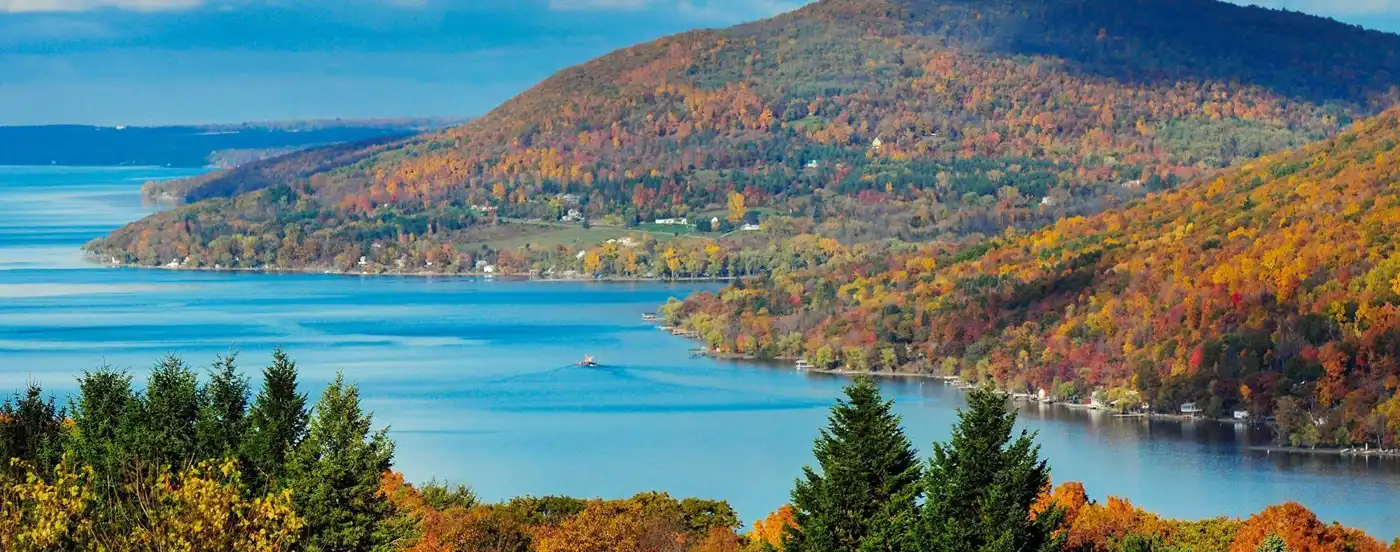
Keuka Lake Flooding Around Penn Yan and Hammondsport
The Y shaped lake, the only one that drains south into another lake. Keuka carries the region's hardest dated lesson, written into a Hammondsport street in July nineteen thirty five. Water damage restoration finger lakes in Watkins Glen begins with this same discipline.
Keuka Lake is the odd shape of the eleven: nineteen point six miles of water bent into a Y, eighteen square miles, one hundred eighty three feet deep. Penn Yan, five thousand fifty six people at the twenty twenty census, the Yates County seat, stands at the north end of the east branch. Hammondsport stands at the south end of the west branch. The lake drains from Penn Yan through its outlet toward Seneca Lake, which makes Keuka the one lake in the chain whose water answers southward before it answers north. Water damage restoration finger lakes in Penn Yan begins with this same discipline.
The dated lesson is Hammondsport, July nineteen thirty five. When the great flood came on the evening of July seventh, three waters hit the village together: Glen Brook, the stream the village calls the Gulf Stream, and Keuka Inlet. Orchard Street was gouged six feet deep. That is what inlet flooding does at the end of a steep lake: the lake itself may barely move while the streams that feed it tear through the streets above the shore. Any Keuka flood plan that watches only the lake level is watching the wrong water. Water damage restoration finger lakes in Seneca Falls begins with this same discipline.
Penn Yan's risk runs the other way, through the outlet. High lake water plus a full outlet slows drainage for the low ground at the north end, and the village's older housing, much of it built when the lake economy ran on grapes and boats, sits close to that ground. Basements here flood by seepage and sump failure as often as by drama. The drying answer is unglamorous and effective: extraction, a moisture map that includes the foundation walls themselves, and dehumidification that runs until the masonry, not just the air, reads dry. Water damage restoration finger lakes in Auburn begins with this same discipline.
The Lakes
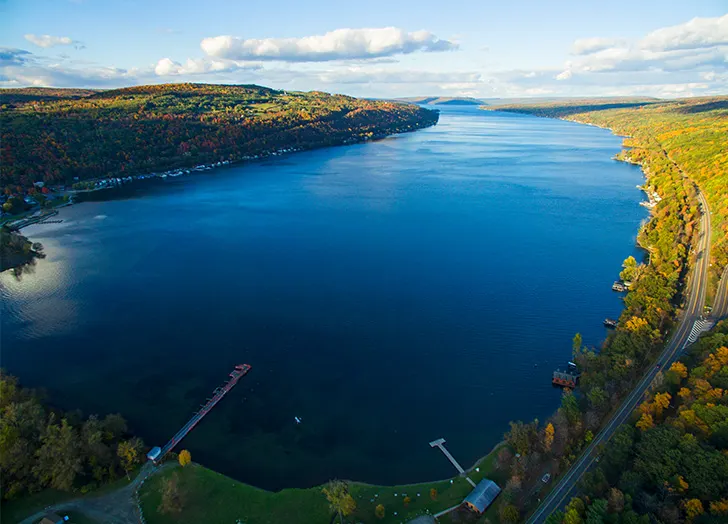
Owasco Lake Flooding Near Auburn
The small lake with the big city. Auburn stands at the north end of Owasco Lake, and its water problems arrive by outlet, by creek and by its own old pipes in roughly equal measure. Water damage restoration finger lakes in Geneva begins with this same discipline.
Owasco Lake is eleven point one miles long, ten point seven square miles, one hundred seventy seven feet deep, the sixth of the lakes by size and one of the most lived on. Auburn, twenty six thousand eight hundred sixty six people at the twenty twenty census, the Cayuga County seat, stands at its north end where the lake becomes the Owasco River and starts north toward the Seneca River and the canal system. The three one five area code answers here, with the six eighty overlay. Water damage restoration finger lakes in Canandaigua begins with this same discipline.
Auburn's water story is three stories. The lake story: high water on a small lake moves fast, because Owasco has less volume to absorb a wet week than Seneca or Cayuga, and shoreline and outlet ground feels a rise sooner. The river story: the outlet runs through the city, and low streets near it take backwater when the whole system runs full. The city story: older housing, older laterals and older combined drainage, the standard recipe for sewage backups and basement floods that owe nothing to the lake at all. Water damage restoration finger lakes on Cayuga Lake begins with this same discipline.
The drying work in Auburn therefore starts with a diagnosis, not a pump. Which of the three waters is this? Lake and river water call for the flood sequence and a wide moisture map. A backup calls for the contamination sequence, removal of soaked porous material and sanitizing. A burst pipe in a Auburn winter calls for speed of a different kind, because a house losing heat loses pipes in sequence. The crew that names the water correctly in the first visit writes a shorter, cheaper to defend log than the crew that treats every flood as the same flood. Water damage restoration finger lakes on Seneca Lake begins with this same discipline.
The Lakes
Skaneateles Lake and Otisco Lake Water Intrusion
The two eastern lakes sit at opposite ends of the size table, and their water problems are opposite too: one famous for purity and high ground, the other small, close and quick to rise. This is water damage restoration finger lakes in the southern lake towns as the region actually needs it.
Skaneateles Lake is sixteen miles long, thirteen point six square miles and three hundred fifteen feet deep, a high, clean lake whose water is drawn for drinking with a care the region is proud of. Its shores sit high in places, and its flood record is quieter than the western lakes. Quiet is not immune. Inlet streams at the south end, steep shore lots where runoff crosses the road to reach the lake, and cottages tucked into the folds of the east and west shores all take water in the right storm. This is water damage restoration finger lakes in the northern lake towns as the region actually needs it.
Otisco Lake, the easternmost and one of the smallest at six miles long, three square miles and sixty six feet deep, behaves like Honeoye and Conesus at the western end: shallow, warm, and quick. A small lake has nowhere to put a wet week. Levels answer in days, shorelines feel it first, and the low lots that are a pleasure in August are a pumping job in April. The western small lakes and Otisco teach the same lesson at both ends of the region: depth is a buffer, and these lakes have little of it. This is water damage restoration finger lakes on Owasco Lake as the region actually needs it.
The River
Genesee River Flooding Through Rochester and the Gorge
One river ties the region to its hub city. The Genesee runs north through Rochester, drops over three falls in a gorge, and carries the oldest flood record on this page. This is water damage restoration finger lakes on Keuka Lake as the region actually needs it.
The Genesee River rises in Potter County, Pennsylvania, and flows north to Lake Ontario at Charlotte, through the middle of Rochester. Sources differ on its length, about one hundred fifty seven miles per the standard reference and one hundred sixty miles per the City of Rochester, with a drop of about two thousand two hundred fifty feet along the way. This page reports both figures rather than picking one, because the river does not care and the reader deserves the honest range. This is water damage restoration finger lakes along the canal corridor as the region actually needs it.
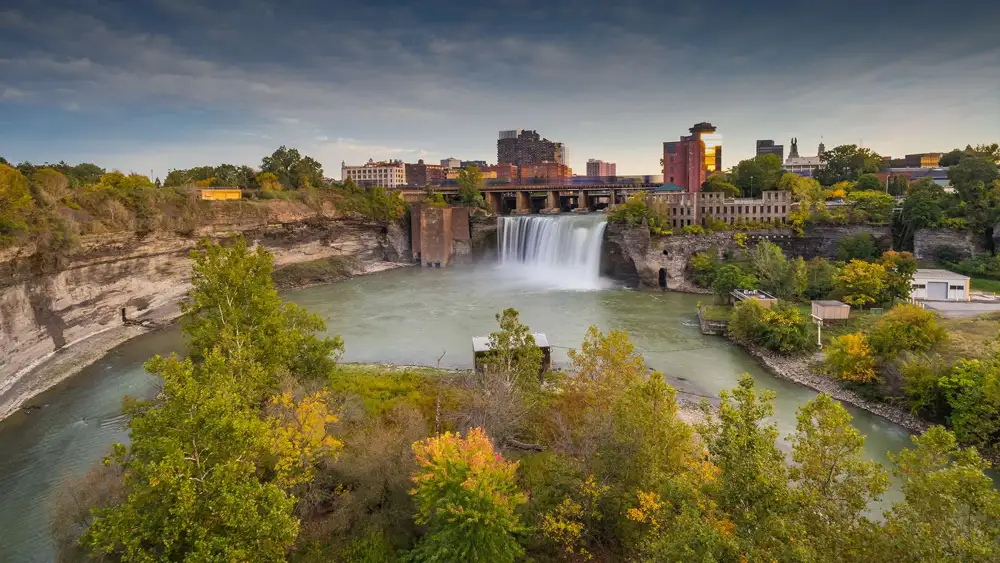
Inside Rochester the river cuts a gorge and drops over three falls: High Falls, listed at ninety six feet and the tallest of the three, Middle Falls at twenty feet, and Lower Falls at one hundred ten feet, about two miles downstream. Those heights rest on news and tourism sources rather than a surveyed page, and they are given here as listed heights. The gorge is why downtown Rochester floods the way it does: the river runs below the street grid in a stone channel, and the neighbourhoods at risk are the low ones along the banks and the tributary creeks, not the gorge rim. This is water damage restoration finger lakes along the Genesee River as the region actually needs it.
The River
Mount Morris Dam and How It Protects the Lower Genesee
The largest dam of its type east of the Mississippi stands on the Genesee south of Rochester, built after the flood era of the nineteen thirties to keep the lower river in its banks. This is water damage restoration finger lakes in Rochester as the region actually needs it.
Mount Morris Dam is a flood control dam on the Genesee River, built after the nineteen thirty five flood era for one purpose: flood control between Mount Morris and Lake Ontario. It stores no permanent lake behind it in the ordinary sense; its reservoir is a promise kept empty, waiting for the river to misbehave. It is described as the largest dam of its type east of the Mississippi. The construction dates are not stated here, because they were not verified in the sources used for this page, and a page that checks its facts does not borrow them. This is water damage restoration finger lakes in Ithaca as the region actually needs it.
The dam's finest hour came in June nineteen seventy two, during Hurricane Agnes. The upper Genesee was breaking every record it had: gages destroyed at Scio and Wellsville, hundreds of roads and bridges washed out, a hospital damaged at Wellsville. The river arriving at Mount Morris ran at about ninety thousand cubic feet per second. The dam released just over fifteen thousand. The Army Corps of Engineers estimated that dam operations during Agnes alone prevented over two hundred million dollars in additional damage downstream, a figure this page reports as the Corps stated it, in the dollars of its own report. This is water damage restoration finger lakes in Watkins Glen as the region actually needs it.
Flood Cases
Hurricane Agnes June 1972 and the Genesee Record Crests
June nineteen seventy two set the Genesee numbers that still stand. This is the region's benchmark flood, told from the official record, with its figures kept in their own places. This is water damage restoration finger lakes in Penn Yan as the region actually needs it.
Hurricane Agnes reached the region as rain: from June twentieth to June twenty fifth, nineteen seventy two, the Genesee basin took up to thirteen point seven inches officially at Wellsville, with unofficial reports over sixteen inches, per the National Weather Service. The upper Genesee above Mount Morris Dam flooded devastatingly, breaking all historical records. River gages at Scio and Wellsville were destroyed by the water they were measuring. Hundreds of roads and bridges washed out, and part of Jones Memorial Hospital in Wellsville was destroyed. This is water damage restoration finger lakes in Seneca Falls as the region actually needs it.
The crests remain the flood of record. Wellsville: thirty eight thousand five hundred cubic feet per second, stage twenty point seven feet. Portageville: ninety thousand cubic feet per second, thirty five point two feet. Avon: sixteen thousand five hundred cubic feet per second, forty point seven feet. Below the dam, the story inverted: inflow about ninety thousand, outflow just over fifteen thousand, and the lower river spared the worst, though levees below Dansville were overtopped, Canaseraga Creek added its own flood, and fields took nearly all summer to drain. This is water damage restoration finger lakes in Auburn as the region actually needs it.
Two cautions belong to this case, and this page keeps them attached to it. The Chemung River figures from Agnes, including the record crest of thirty one point six two feet at Chemung, New York, belong to the Southern Tier, not to the Finger Lakes towns; they will be told on the Southern Tier page, not borrowed here. And the national figures, one hundred seventeen lives and three point one billion dollars of damage across twelve states, are United States totals as the Geological Survey reported them, not New York totals and not Finger Lakes totals. A page that moves numbers between places teaches its readers to distrust every number on it. This is water damage restoration finger lakes in Geneva as the region actually needs it.
What Agnes teaches a homeowner today is the shape of the worst case: five days of rain, a basin saturated, and a river that sets records upstream while a dam decides what the downstream city will see. Your own preparations, a working sump, a known shutoff, photographs of your rooms in dry times, a claim file habit, are the household version of the same idea: hold back what you can before the water arrives, because during the event your options narrow to the ones you built earlier. This is water damage restoration finger lakes in Canandaigua as the region actually needs it.
Flood Cases
The July 1935 Flood Across the Finger Lakes Inlets
The flood that built the dams began on a Sunday evening in July nineteen thirty five, and it was never one river. It was every inlet, outlet and river in the region rising at once. This is water damage restoration finger lakes on Cayuga Lake as the region actually needs it.
The flood began on the evening of Sunday, July seventh, nineteen thirty five, and it is dated July eighth in most records. It killed forty four people in New York and Pennsylvania. Its correct shape matters: it was a collection of near simultaneous floods on the east flowing Chemung and Susquehanna, on the Genesee, and on the Finger Lakes inlets and outlets. Any account that calls it a Rochester flood, or a Genesee flood alone, shrinks the event that changed how this whole region builds against water. This is water damage restoration finger lakes on Seneca Lake as the region actually needs it.
The Finger Lakes wounds were specific. At Hammondsport, Glen Brook, the Gulf Stream and Keuka Inlet flooded together and Orchard Street was gouged six feet deep. At Watkins Glen State Park, at the south end of Seneca Lake, trails, stairs and park infrastructure were wrecked by the water that poured through the glen. Bath, Hornell, Addison, Canisteo and Coopers Plains flooded. At Corning, the Glass Works flooded with the two hundred inch Mount Palomar mirror blank inside, endangered by the same water. Governor Herbert Lehman toured the region in its aftermath. Crews who practise water damage restoration finger lakes in the southern lake towns work exactly this way.
The response built the modern map. Federal flood control projects followed, including the dams at Arkport and Almond, and the era that produced Mount Morris Dam began here. When a Finger Lakes homeowner asks why the region's rivers behave as managed rivers, nineteen thirty five is the answer. The dams, the gauges and the forecasts are all replies to that one week. A Rochester or Genesee crest figure for nineteen thirty five is not quoted on this page, because it was not verified in the sources used; the outline above is what the record supports, stated as the record states it. Crews who practise water damage restoration finger lakes in the northern lake towns work exactly this way.
Flood Cases
August 2018 Flash Flooding at Lodi and Lodi Point
The most recent dated case on this page is also the closest to a lake shore home: a summer night in twenty eighteen when five inches of rain fell on Lodi Point before dawn. Crews who practise water damage restoration finger lakes on Owasco Lake work exactly this way.
In the early morning of Tuesday, August fourteenth, twenty eighteen, flash flooding struck Seneca County, hardest at Lodi and Lodi Point on the east shore of Seneca Lake. Up to five inches of rain fell in a short window. Residents were trapped in their homes, roads washed out, and houses along the shore were damaged. The next day, August fifteenth, a State Police helicopter surveyed Lodi Point from the air, and the photographs from that survey show what a creek fed shore flood does to a summer community in a single night. Crews who practise water damage restoration finger lakes on Keuka Lake work exactly this way.
The context was a drowned summer. The National Weather Service at Binghamton documents heavy rain across July and August twenty eighteen in a long series of events, the fifteenth, the twenty second to twenty sixth, and on through the month's end. Elmira recorded twelve point three inches of rain in July against a thirty year average of three point three eight inches, and eight point two five inches in August. Those are Southern Tier gauges, given here as regional context, not as Lodi figures; the Lodi figure is the five inches that fell on the shore itself. Ground that wet cannot absorb a hard rain; it can only forward it downhill. Crews who practise water damage restoration finger lakes along the canal corridor work exactly this way.
The Lakes
Seneca Lake Rule Curve and Spring High Water
Seneca Lake levels are managed against a schedule drawn in the nineteen seventies. Understanding the rule curve turns a shoreline owner's anxiety into a calendar. Crews who practise water damage restoration finger lakes along the Genesee River work exactly this way.
A rule curve is a plan for a lake: target water levels for each season, set so the lake can be drawn down before the wet months and allowed to recover after. Seneca Lake's rule curve was developed in the nineteen seventies, and it governs how the lake's level is managed through its outlet. The curve is the reason Seneca rarely surprises its shoreline the way a creek surprises a valley: the lake's keepers are watching the same calendar the homeowners are, with instruments the homeowners do not have. Crews who practise water damage restoration finger lakes in Rochester work exactly this way.
The curve is a plan, not a wall. Extreme rain can push the lake above its band, and high water shoreline flooding on Seneca Lake was reported in the spring of twenty twenty six, in April and May reports from around the lake. Spring is the curve's examination season: snowmelt and rain arrive together, the lake is at its fullest planned level, and a wet April writes its results on docks, boathouses and the lowest floors along both shores. Geneva at the north end and the cottage rows of both shores read the same water. Crews who practise water damage restoration finger lakes in Ithaca work exactly this way.
Canals
Cayuga Seneca Canal Flooding in Geneva and Seneca Falls
Twenty miles of managed water, give or take how you count it, links two lakes to the Erie Canal, and the towns on its banks flood in the canal's own slow style. Crews who practise water damage restoration finger lakes in Watkins Glen work exactly this way.
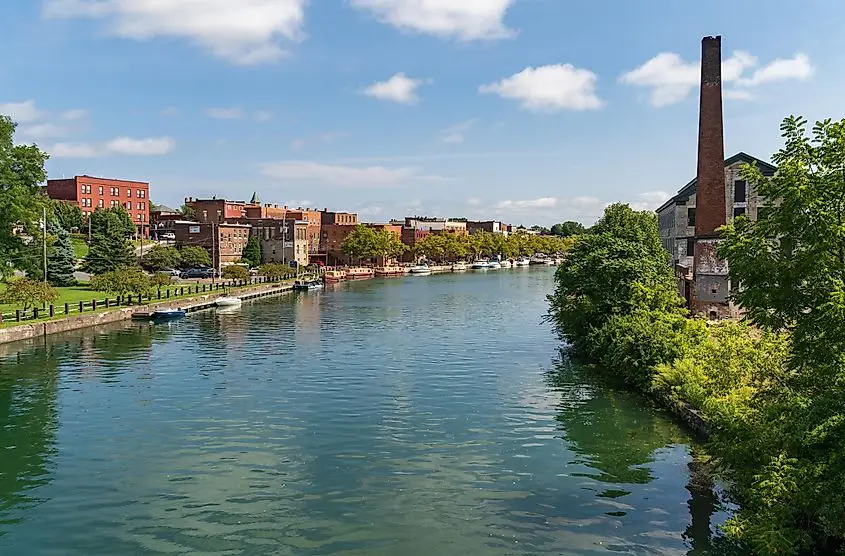
The Cayuga Seneca Canal connects the Erie Canal to Cayuga Lake and Seneca Lake, and it is part of the New York State Canal System. Its length is honestly disputed: about twenty miles per the standard reference, about sixteen by a reckoning that runs four miles to Cayuga Lake and twelve more past Seneca Falls and Waterloo to Seneca Lake, and twelve by the Finger Lakes Tourism Alliance, the difference being whether lake segments are counted. This page says about twenty miles with the counting caveat attached, and moves on; the water does not read the brochures. Crews who practise water damage restoration finger lakes in Penn Yan work exactly this way.
Geneva sits where the canal meets Seneca Lake, a city split in an unusual way: in Ontario County for its land, in Seneca County for its water. The Cayuga Seneca Canal flows north through the city toward the Erie Canal, completed in eighteen twenty five. Seneca Falls, a town of nine thousand twenty seven people at the twenty twenty census, stands on the canal west of Geneva, in Seneca County, whose seat is Waterloo, not Seneca Falls; the former village of Seneca Falls was dissolved, and the town and its census designated place are the geography that matters now. Crews who practise water damage restoration finger lakes in Seneca Falls work exactly this way.
Canals
Erie Canal Connections and Backwater Flooding
The Erie Canal, completed in eighteen twenty five, is the region's northern drain and its oldest piece of flood infrastructure, and its connections still decide where water goes in a wet year. Crews who practise water damage restoration finger lakes in Auburn work exactly this way.
The Erie Canal was completed in eighteen twenty five. The date matters and is often gotten wrong: eighteen twenty is when the middle section opened, not when the canal was finished. The completed canal tied the Hudson River to Lake Erie across the whole state, and its route across the north of the Finger Lakes, through the Montezuma lowlands where Cayuga and Seneca water drains, made it part of this region's water system from the day it filled. The Cayuga Seneca Canal, branching south to the two big lakes, is its local arm. Crews who practise water damage restoration finger lakes in Geneva work exactly this way.
A canal is a managed river with gates, levels and a navigation season, and its flood behaviour follows the management. In a wet year the system carries the lakes' outflow north and east; when the whole corridor runs at capacity, the low ground along it, much of it drained marsh and farmland reclaimed in the canal era, remembers being wet. Backwater flooding along the connections is slow, wide and shallow, the kind that closes roads, fills basements across whole streets and tests every sump in the corridor at once. Crews who practise water damage restoration finger lakes in Canandaigua work exactly this way.
The towns this touches on this page are the canal corridor towns: Geneva and Seneca Falls on the Cayuga Seneca arm, Waterloo between them, and Newark in Wayne County on the Erie main line itself, named in this page's service list for exactly that reason. Their flood risk is a system risk. A homeowner there is not watching one lake or one creek, but the level of a connected machine that runs from Seneca Lake to the Hudson. The canal authority's notices, in season, are part of the local weather. Crews who practise water damage restoration finger lakes on Cayuga Lake work exactly this way.
Boundaries
Lake Ontario Shoreline Flooding Is a Different Problem
Rochester touches two waters: the Finger Lakes system at its back and Lake Ontario at its feet. The famous shoreline flood of twenty seventeen belongs to the second, and this page keeps it there. Crews who practise water damage restoration finger lakes on Seneca Lake work exactly this way.
In the spring and summer of twenty seventeen, Lake Ontario reached its highest levels in over one hundred years, with daily levels in late May at their peak, and shoreline flooding continued through much of the summer in Monroe and Wayne counties and along the Saint Lawrence River. The International Joint Commission's twenty eighteen report found the cause in extreme rain across the Lake Ontario and Saint Lawrence basin, an extremely wet April and May after a wet winter, with record Ottawa River inflows, and not in the lake's regulation plan. It was described as the worst flooding on record for Lake Ontario shoreline residents. It is the working definition of water damage restoration finger lakes in the southern lake towns.
None of those figures belong to Seneca, Cayuga or Canandaigua Lakes, and this page does not lend them. The distinction is not pedantry. A Lake Ontario shoreline home floods from a Great Lake holding a continent's rain, on a timescale of months, under federal and international management. A Finger Lakes home floods from its own lake, creek or canal, on a timescale of hours to weeks, under state and local management. The warnings differ, the insurance conversations differ, and the drying differs. A page that mixes the records would mislead both sets of readers. It is the working definition of water damage restoration finger lakes in the northern lake towns.
The boundary runs through Rochester itself. The city's Lake Ontario shore at Charlotte, where the Genesee meets the lake, is Great Lakes shoreline. The same city's southern neighbourhoods drain toward the Finger Lakes watershed divide. A Rochester homeowner should know which water their street answers to; the Rochester page of this site draws that line street by street. This region page keeps the boundary at the region's edge: the Finger Lakes are the eleven lakes and their system, and Lake Ontario is the receiving water, not a twelfth lake. It is the working definition of water damage restoration finger lakes on Owasco Lake.
Winter Water
Burst Pipes in Finger Lakes Winters
The region's most common water disaster needs no lake at all. A January night, a cold wall, a pipe that freezes and splits, and a home filling quietly until someone comes home. It is the working definition of water damage restoration finger lakes on Keuka Lake.
A pipe bursts in two acts. In the first, water inside a pipe in a cold wall, an unheated crawl space or a lakeside cottage's exposed run freezes, expands, and splits the pipe or forces a joint. The split itself leaks little, because the ice plugs it. In the second act, the thaw, the ice plug melts and the full pressure of the system pours through the split, at household pressure, for as long as it takes someone to find the main shutoff. Most burst pipe damage is act two damage, and act two is measured in hours of flow. It is the working definition of water damage restoration finger lakes along the canal corridor.
Finger Lakes winters load the dice. Lake effect cold snaps drop temperatures fast on the shores, wind drives cold into the windward walls of shore homes, and seasonal cottages sit unheated with charged lines if their closing was careless. Year round homes are not exempt: the pipe that freezes is usually the one nobody knew was in an outside wall, behind the kitchen cabinets or above the garage ceiling. The region's housing stock, much of it built before modern insulation habits, carries these runs in every town from Rochester to Ithaca. It is the working definition of water damage restoration finger lakes along the Genesee River.
Basement Water
Sump Pump Failure During Lake Effect Rain
More Finger Lakes basements flood through a two foot hole in the floor than through any door. The sump pit is the region's quiet front line, and it fails in predictable ways. It is the working definition of water damage restoration finger lakes in Rochester.
A sump system is a bargain a house makes with its water table: ground water is collected in a pit and a pump throws it outside, cycle after cycle, for years. Around the lakes, where shore lots and outlet corridors hold high water tables, that cycle can run every few minutes in a wet spring. Lake effect rain, the long steady rains that ride off Lake Ontario over Rochester and the northern Finger Lakes, is the stress test: hours of inflow that give a tired pump no rest and a power cut no mercy. It is the working definition of water damage restoration finger lakes in Ithaca.
The failures are a short, familiar list. The pump dies of age, usually mid storm, because pumps die under load. The float sticks. The discharge line freezes or clogs. The power fails, in exactly the storms that fill the pit fastest. And the pit itself is undersized for the house it was asked to protect, a builder's economy discovered by the second owner. Every one of these failures announces itself the same way: water rising through the pit, across the basement floor, into everything that lives on that floor. It is the working definition of water damage restoration finger lakes in Watkins Glen.
Contaminated Water
Sewage Backups in Older Rochester and Auburn Homes
The worst water in this page comes up through the floor drain of the region's oldest housing, in its two oldest cities, and it is handled under different rules from the first minute. It is the working definition of water damage restoration finger lakes in Penn Yan.
A sewage backup is not dirty water; it is contaminated water, carrying bacteria and whatever the line carried with it. In older Rochester and Auburn housing, the recipe is familiar: clay or cast iron laterals past their design life, tree roots in the joints, and in the oldest streets, combined systems where storm water and sewage share a pipe and a hard rain can surcharge the line into the lowest fixture in the house, usually a basement floor drain or toilet. The backup often arrives during the same storm that is flooding the neighbours with clean rain, which is why diagnosis matters. It is the working definition of water damage restoration finger lakes in Seneca Falls.
The handling rules differ from clean water work at every step. Protective equipment is worn from the door. The affected area is contained. Porous material that sewage has soaked, carpet and pad, drywall, soft furnishings, stored paper and fabric, is removed, bagged and recorded for the claim rather than dried in place, because drying does not make it safe. Hard surfaces are cleaned and sanitized. The source is identified and the record states it: a blocked lateral, a failed check valve, roots, or a surcharged street line, because the fix and the responsibility both follow from the cause. It is the working definition of water damage restoration finger lakes in Auburn.
Housing Stock
Basement Flooding in Pre War Homes Around the Lakes
The lakes were lined with houses before the Second World War, and those houses flood in their own way: through stone, through dirt floors, and into walls built before anyone sealed a sill. It is the working definition of water damage restoration finger lakes in Geneva.
A pre war lake house is a layered building. Its foundation may be stone, early concrete block or brick, laid by men who expected it to breathe. Its basement floor may be thin concrete over soil, or soil itself in the oldest cottages. Its walls are plaster and lath, its insulation is whatever the decades added, and its floor system was framed before vapour barriers and capillary breaks were habits. Water in such a house does not sit on surfaces; it enters the layers, and it can be travelling inside a wall while the room looks merely damp. It is the working definition of water damage restoration finger lakes in Canandaigua.
The flood paths follow the layers. Ground water wicks upward through stone and block by capillarity, appearing as damp courses feet above the floor. A dirt or partial section feeds humidity into the whole basement air. Old floor drains, coal chutes, cistern walls and sealed off wells give surface water its doors. And the additions matter: a nineteen sixties family room on a slab, tied to a nineteen twenties stone foundation, hands water across the joint in both directions. A moisture map in these houses is an archaeological exercise, read layer by layer. It is the working definition of water damage restoration finger lakes on Cayuga Lake.
Drying follows the map, and it is slower to promise and quicker to verify than in a modern basement. Masonry holds water and releases it over days; plaster and lath dry unevenly; and the decision to open a wall is made on cavity readings, not on the age of the house. Crews experienced in this stock probe at changes of material, log readings by layer, and warn the owner early that the final readings, not the calendar, will end the job. The houses reward the patience: dried properly, a stone foundation that has stood a century will stand another. It is the working definition of water damage restoration finger lakes on Seneca Lake.
Housing Stock
Crawl Space Water and Humidity Near the Lakes
Half the cottages on the lakes stand over crawl spaces, and the crawl space is where lake air, ground water and cold floors meet to make the region's slowest water problem. That, in one line, is water damage restoration finger lakes in the southern lake towns.
A crawl space fails quietly. Ground water rises into it in a wet spring and stands in the low corners. Lake air, humid all summer, drifts through the vents and condenses on the cold underside of the floor and on ductwork. A plumbing leak drips into darkness for weeks. The homeowner upstairs learns about all of it late, from a musty smell, a cupping floor or a soft spot by the door. By then the crawl space has been wet long enough to matter, and the inspection a crew does there, on their back, with a meter and a light, is the real start of the job. That, in one line, is water damage restoration finger lakes in the northern lake towns.
The work order in a crawl space is extraction where water stands, removal of soaked insulation and debris, drying of the joists and subfloor to readings, and treatment of any growth found, under the same rules as any mold work in New York. Access decides the pace: a generous crawl space is a workplace; a fourteen inch clearance under a cottage is a negotiation. Crews quote the access honestly and log the readings by bay, because a crawl space dries unevenly and the far corner, not the hatch, sets the finish date. That, in one line, is water damage restoration finger lakes on Owasco Lake.
The lasting fix is a system, not a visit: a graded, covered ground surface, drainage to a sump where the lot needs it, sealed vents and insulated walls in the modern pattern, or at minimum a heavy vapour cover over the soil and a humidity reading taken seasonally. Shore lots add one more element: the crawl space flood line from the lake's high water years should be known and marked, and nothing that water can ruin should live below it. Furnaces and water heaters raised on stands, in crawl and basement alike, are the cheapest elevation a lake house can buy. That, in one line, is water damage restoration finger lakes on Keuka Lake.
Materials
Hardwood Floor Drying After Lake Water Exposure
A hardwood floor is the most argued over surface in any flood claim, because it shows damage beautifully and hides water perfectly. It is dried from the readings, not from the look of it. That, in one line, is water damage restoration finger lakes along the canal corridor.
Water reaches a hardwood floor from above, from below, and from the edges, and each route leaves a different floor. Surface water from a pipe leak sits on the finish and enters at the joints. Lake water rising through a subfloor wets the boards from beneath, where no mop reaches. Edge water wicks in from a flooded next room and travels under the boards farther than the wet room's own floor suggests. The first task on any hardwood job is naming the route, because the route decides where the extraction mats and the air go. That, in one line, is water damage restoration finger lakes along the Genesee River.
The visible sign is cupping: board edges lifting as the underside swells wetter than the top. Cupping frightens owners and excites refinishers, and both reactions are premature. A cupped floor that is dried fully, from verified readings through the boards, often settles close to flat as it dries. A floor sanded while still wet is ruined by the cure. The discipline of hardwood drying is therefore mostly patience with instruments: extraction mats pulling water from within the floor system, directed dry air above and below where access allows, and daily readings taken through the boards at mapped points. That, in one line, is water damage restoration finger lakes in Rochester.
Health and Law
Mold Growth After Finger Lakes Flooding
Mold is the second disaster inside every flood, and in New York it is also a regulated trade. The race is simple: dry the building before growth starts, and know the law if it does. That, in one line, is water damage restoration finger lakes in Ithaca.
The biology is not complicated. Mold spores are present in every building, all the time. What a flood adds is moisture and food: wet drywall paper, wood, carpet backing, dust in cavities. In warm conditions, growth on such material can begin within one to two days, which is why extraction and drying are emergency work rather than scheduled work. A lakeside home adds a hazard of its own: even after the flood water is gone, lake air and wet ground can hold a building's humidity high enough to keep feeding growth that a drier climate would have starved. That, in one line, is water damage restoration finger lakes in Watkins Glen.
New York regulates the response. Under Labor Law Article thirty two, in force statewide since January first, twenty sixteen, mold assessment and mold remediation are licensed trades, and on jobs over ten square feet the assessor and the remediator must be separate: the one who tests and writes the plan is not the one who does the work and profits from its size. Homeowners dealing with their own home have their own position under the law, but any hired job of scale runs through the licensed structure. A restoration crew that dries fast and documents well is often the reason no licensed mold job is ever needed. That, in one line, is water damage restoration finger lakes in Penn Yan.
Proof of Work
Drying Logs and Moisture Mapping Explained
Two documents turn a flood from a story into evidence: the moisture map drawn on the first visit, and the drying log kept every day after. This section explains both, because insurers pay on evidence. That, in one line, is water damage restoration finger lakes in Seneca Falls.
A moisture map is a floor plan marked with readings. On the first visit, the crew tests surfaces and cavities in a grid: floor, wall base, wall cavity, ceiling below, the materials on each side of every wet room. Readings are taken with pin and pinless meters, and the map they make shows the water's true extent, which is always larger than the visible stain and sometimes smaller than the fear. The map decides what opens, what dries in place, and where the equipment goes. It is drawn before demolition, because after demolition the evidence is in a dumpster. That, in one line, is water damage restoration finger lakes in Auburn.
The drying log is the map's sequel, kept daily. Each entry records the readings at the mapped points, the equipment running, the temperature and humidity of the air being made and the air being exhausted, and the decisions taken: a wall opened, a machine added, a room released. Across days, the log draws a curve, moisture falling toward the dry standard, which is set from unaffected material in the same building. The job ends when the curve arrives, not when a schedule says it should. Final readings are recorded at the same points as the first day's, so the file opens and closes on the same evidence. That, in one line, is water damage restoration finger lakes in Geneva.
How We Work
How We Dry a Flooded Basement Step by Step
The six steps never change, from a Rochester sump failure to a Geneva canal basement. This is the sequence, in order, with the reason for each step attached. That, in one line, is water damage restoration finger lakes in Canandaigua.
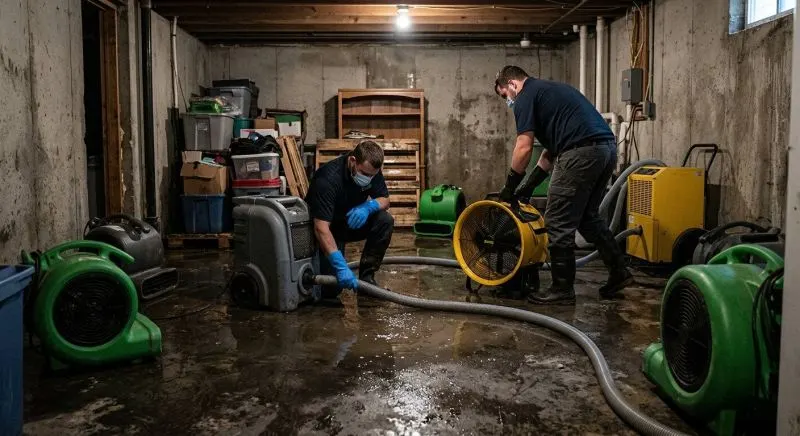
Step one is the call and the dispatch. The dispatcher records the source, the depth, the rooms and the safety picture, and stages the nearest crew. Step two, on arrival, is stopping the source and making the space safe: the main shutoff for a pipe, power isolated from wet areas, a hard rule that nobody works standing in water near a panel. These two steps are the ones homeowners remember as waiting, and they are the steps that keep the job from acquiring a second emergency. That, in one line, is water damage restoration finger lakes on Cayuga Lake.
Step three is pumping and extraction. Standing water is pumped out, then extracted from carpet, pad and hard floors with weighted extraction, because every gallon removed by machine is a gallon the dehumidifiers never have to lift as vapour. The high water line is photographed and measured before pumping erases it. Step four is the map and the opening: moisture readings in a grid, unsalvageable material identified, bagged and recorded, and only the cavities the readings condemn opened, so the drying air can reach the wet framing directly. That, in one line, is water damage restoration finger lakes on Seneca Lake.
Step five is the drying itself, run as a system. Air movers drive evaporation from surfaces; dehumidifiers pull that moisture from the air and drain it away; the balance between the two is set from the size of the space and the class of the water loss, and adjusted daily from the readings. This is the step that looks like nothing happening, fans running in an empty room, and it is the step where the building is actually saved. The log fills in daily: readings, equipment, decisions.
How We Work
How We Dry Lakefront Cottages and Seasonal Homes
A seasonal home is a year round home with one terrible weakness: nobody is watching it. Its drying plan starts with detection and ends with a closing done properly.
The cottage disaster is a calendar disaster. A pipe splits in January in a house closed in October; a water heater fails in March; a roof leak runs all spring into a wall nobody opens until May. When the owner or a neighbour finally walks in, the water has had weeks to do what a city flood does in days, and further: growth in the cavities, ruined finishes, a floor system wet to its bones. The first visit to such a house is part restoration, part investigation, and the report separates what the event did from what the months added, because the claim will ask. For water damage restoration finger lakes crews, the closed cottage is the job that argues loudest for a midwinter check.
The drying itself follows the standard sequence, extraction, mapping, opening, drying to readings, with two seasonal additions. The first is a full inventory, room by room, of everything the long wet touched, photographed in place, because contents in a cottage are claimed from memory more often than from lists, and the inventory is the memory made reliable. The second is time discipline: a cottage job runs on consecutive days with daily readings like any other, not on weekend visits, because a half dried cottage closed up again between visits is a mold incubator with a view.
The closing is the third discipline, and it is where cottage work earns its keep. The building is left dry by final readings, the water system is either drained down properly or left heated and monitored, lines are blown out where the design calls for it, and the owner leaves with a written closing checklist and, ideally, a leak alarm at the low point reporting to a phone. Many cottage owners add a neighbour or a caretaker to the alarm list, the human backup that this region's cottage colonies have relied on for a century.
Commercial Work
Commercial Water Damage in Rochester Offices and Shops
Rochester is the region's market as well as its hub, and its commercial buildings take water at commercial scale: big roofs, big pipes, and trading hours that do not pause for drying.
Rochester, two hundred eleven thousand three hundred twenty eight people at the twenty twenty census, works in offices, shops, restaurants, warehouses and institutions spread from the Genesee gorge to the suburbs. Its commercial water arrives by the commercial routes: roof drains overwhelmed on large flat roofs, sprinkler lines, chilled water and steam systems in older downtown buildings, and the same Genesee and creek flooding that reaches its low ground. The scale differs from a house; a single failed fitting above a suspended ceiling can wet a floor of offices overnight.
The work adds two disciplines to the standard sequence. The first is phasing: drying planned around trading hours where the building allows it, with containment and negative air keeping the wet zone separate from the working zone, and noisy extraction scheduled where possible outside the hours the public is in the building. The second is documentation built for commercial readers from the first visit: landlords, tenants, insurers and facilities managers all read the same log, and it is written so each of them finds their facts in it, who was notified, what was shut down, what readings were taken and when areas were released.
Commercial Work
Water Damage in Canandaigua Wineries and Lakefront Businesses
The lakes run on hospitality: wineries, marinas, inns and lakefront restaurants, in buildings that mix production, storage and the public, all of it close to the water.
A winery is three buildings wearing one roof. There is the production building, with tanks, barrels, drains and washdown water by design. There is the storage building, where bottled wine and barrels sit in cool rooms that are, by intention, close to the ground's own temperature and damp. And there is the public building, tasting rooms and event spaces finished to a standard that water ruins expensively. Canandaigua's lake economy, and the wine trails around Keuka, Seneca and Cayuga, are full of these hybrids, and their water problems must be read building by building inside the same address.
The water arrives by the lake's routes and the building's own. High water and outlet flooding reach the low production and storage levels first. Washdown and process water find the failed drain or the cracked line. A roof over a barrel room leaks all winter into insulation nobody sees. The first visit sorts the sources before the drying starts, because drying a room while its own process water keeps arriving is a subscription, not a repair. The moisture map in a winery includes the cellars and tank rooms that a house trained eye might skip as meant to be damp; meant to be cool is not meant to be wet, and the readings know the difference.
Insurance
Insurance Claims After a Finger Lakes Flood
The claim is the second job inside every flood, and it starts in the first hour whether the homeowner starts it or not. This section is the map of that job.
A Finger Lakes flood claim runs on three documents: the photographs taken before anything moved, the drying log kept daily, and the proof of loss sent on time. Everything else is commentary. The photographs fix the event: source, extent, high water line, the condition of things before hands touched them. The log fixes the work: what was wet, what was done each day, when each material reached standard. The proof of loss fixes the amount claimed, sworn and itemized, and in the federal flood programme it is due within sixty days of the loss. A homeowner who holds those three documents holds the claim. That discipline, documents before demolition, is the backbone of water damage restoration finger lakes claim work.
The first call to the insurer should be made the same day, and noted like every call after it: date, time, the name of the person, what was said. Insurers open the claim, assign the adjuster and start their own clocks, which New York law sets and the next section details. The homeowner's job in the first days is not to argue value; it is to prevent further damage, which every policy requires, and to keep the evidence of having done so. Extraction and drying are that prevention, and the log is its proof. Waiting to dry until an adjuster visits is the single most expensive misunderstanding in flood claims, and no adjuster who knows the work will advise it.
Where claims go wrong in this region is usually the water's identity. A homeowners policy and a flood policy divide the world between them: sudden water from inside the system on one side, rising water from outside on the other, and lake, river and canal floods live on the flood side. A burst pipe in the same house, in the same week, lives on the other. The crew's report, naming the source from evidence, is often the document that routes the claim correctly. This is one more reason the first visit's diagnosis is written down, not remembered.
Keep the file whole and keep it long. Photographs with dates intact, the log, every invoice and receipt, the call notes, the proof of loss and proof of when it was sent, any adjuster contract. New York allows twenty four months from the date of loss to bring suit on a policy, and disputes ripen slowly. The homeowner with the file wins arguments that the homeowner with the story cannot. It is not a cheerful system, but it is a legible one, and this page's whole insurance teaching is one sentence: be the claimant with the documents.
Insurance
What New York Insurance Law Says About Your Claim
New York sets clocks on insurers by statute, and one hard clock on you. These are the verified numbers, with their sources named, and with the limits of each rule stated as carefully as the rule.
Start with what the law does not do. Insurance Law section thirty four twenty, paragraph d, the timely disclaimer rule, concerns liability claims for death and bodily injury; it does not apply to property damage claims, and any page that waves it at a flood claim is decorating, not informing. The property claim clocks live elsewhere: in Insurance Law section twenty six oh one and Regulation sixty four, title eleven of the state rules at part two sixteen. Under them, an insurer must acknowledge a claim, begin investigating it, and accept or reject it within fifteen business days after receiving the proof of loss, and must pay within five business days of settlement. The Department of Financial Services enforces those clocks; the remedy for a slow insurer is the Department, not a private penalty.
Disasters get their own clock. Under Insurance Law section twenty six eighteen, after a natural disaster the payment clock shortens to four business days (4 business days), the accept or reject clock stands at fifteen business days, thirty if arson is suspected, with one fifteen day extension available. Four, not three: the figure is often misstated, and this page states it as the statute reads, verified against the statute text. A homeowner in a declared disaster who knows these numbers can hold a carrier to them politely, in writing, with dates.
Your own clock is the hard one. Under Insurance Law section thirty four oh four, a suit on a fire or property policy must be brought within twenty four months from the date of loss. Miss it, and the claim's merits stop mattering. Two state phone numbers belong in every claim file: the Department of Financial Services at (800) 342-3736 for claim problems, and the separate disaster hotline at (800) 339-1759 when a disaster is declared. They are different lines for different purposes, and this page keeps them separate because the state does.
Insurance
NFIP Flood Insurance and the Eleven Lakes
The federal flood programme is the only flood cover most lake homes can buy, and it runs on its own rules: a thirty day wait, a sixty day proof, and an authorisation with an expiry date.
The National Flood Insurance Program exists because the private market largely will not write rising water. For the eleven lakes, it is the cover that matches the risk: lake flooding, canal backwater and river flooding in participating communities, which the region's towns overwhelmingly are. A standard homeowners policy excludes that water. The household that learns this distinction after the flood learns it at the worst tuition; this page teaches it in dry weather, which is the only tuition it charges.
Three clocks govern the programme. The first runs before any loss: a new policy carries a thirty day waiting period before it takes effect, with narrow exceptions, so flood cover is bought in the season before the season. The second runs after a loss: the proof of loss, the sworn itemized statement of the claim, is due within sixty days. The third governs disputes: an appeal runs within sixty days of a denial, and a suit on the programme must be brought within one year of the first written denial. Each clock is shorter than the state law clocks on the other page of this insurance section, and each is enforced as written.
The programme itself runs on congressional authorisation, and the date belongs in print: authorisation stood through December 11, 2026 (11 Dec 2026), at eleven fifty nine in the evening, rechecked on November nineteenth, twenty twenty six, with no extension found at that checking. December eleventh is the authorisation deadline, the last day new policies can be issued under the current authority; it is not the expiry of policies already in force, which run to their own terms. A page that confused those two facts would frighten policyholders and mislead buyers in a single sentence, so this page states them separately, every time.
Insurance
Public Adjusters and the Twelve Point Five Percent Cap
A public adjuster works for you, not the insurer, and New York caps what they may charge at twelve point five percent of the recovery. The cap is the first thing to check in any contract.
A public adjuster is a licensed professional hired by the policyholder to prepare, present and negotiate a claim. After a large flood, when the inventory of damage runs to hundreds of items and the homeowner is living in a drying building, that help can be real. The adjuster reads the policy, builds the itemized claim, and argues it with the carrier's adjuster as a professional equal. For small, clean claims the service may be unnecessary; for a whole house lake flood with a business inside it, the calculation changes. What never changes is the ceiling on the fee.
The cap is set by title eleven of the New York Codes, Rules and Regulations, part twenty five point seven: a public adjuster in New York may charge no more than twelve point five percent of the recovery. The contract must state the fee, and the stated figure must sit at or under the cap. A contract asking for more is not a negotiation opener; it is a document that breaks the rule it operates under, and it is reason enough to walk away. The Department of Financial Services, at (800) 342-3736, licenses adjusters and hears complaints about them, and a five minute call verifies a licence before any signature.
Insurance
What to Photograph Before the Crew Arrives
The camera in your pocket is the first claims instrument on the scene, and it works best in a set order: wide, source, line, details, then everything you move, twice.
Begin wide. Stand in the doorway of every affected room and photograph the whole room, then from the opposite corner. These wide shots fix the extent of the event before a single object moves, and they are the photographs every later reader of the claim, adjuster, reviewer, occasionally a court, will open first. Take them even if the room looks undramatic; a room that later proves to have been wet inside its walls needs its innocent looking first day portrait, timestamped, to prove when the story started. Every water damage restoration finger lakes job file opens with that portrait for exactly this reason.
Then the source and the line. Photograph the failed pipe, the split hose, the pit, the window well, whatever the water came through, close enough to read its condition. Then the high water line wherever it shows: on walls, stair treads, furniture legs, the side of the furnace. Put a ruler or a coin in one frame for scale. The line is the single most argued fact in flood claims, because depth drives everything, and a dated photograph of it ends the argument before it starts.
Drying Science
How Long Drying Takes in a Lakeside Home
Days, not weeks, for most jobs, and the honest answer is a range with reasons: the water, the materials, the building, and the lake air itself all vote on the calendar.
The range starts with the water. Clean water from a pipe, caught early, in an open framed basement, is the fastest job in this trade: extraction and two to four days of drying is a common shape. Lake water that pushed through soil into a finished room is slower at every step, because the materials are dirtier, the cavities are wetter and the openings are wider. Sewage resets the job entirely, into removal and sanitizing before drying even begins. Anyone who quotes one number for all three is quoting a slogan.
Materials vote next. Bare concrete dries quickly and forgives. Hardwood dries slowly and argues. Plaster and lath, the wall system of the region's older housing, hold water in the lath and release it over a long tail of readings. Insulated cavities dry slowest of all and are the usual reason a job's last three days are spent on one wall. Built in cabinetry and panelled rooms trap wet air against wet wood. The moisture map taken on day one predicts the calendar better than any experience based guess, because it counts the actual wet materials in the actual building.
Drying Science
When Walls Must Be Opened and When They Can Stay
The wall decision is the most consequential call in any drying job, and it is made by meters, not by habit: some walls must open, some must not, and the readings know which.
A wall is a system: finish surface, cavity, insulation if any, framing, and the other room's finish on the far side. Water enters the system at the base, from a wet floor, or from above, from a leak, and the cavity becomes the wettest, slowest drying part of the building while both faces look merely damp. The question is never whether the wall got wet; it is whether the cavity can be dried through the faces, with directed air and time, or whether the wet material inside must be reached directly. Moisture readings at the base plate, inside the cavity through a small test opening, and on both faces answer it in numbers.
Walls that open share a profile: insulated cavities wet through, any cavity wet with sewage or soil laden lake water, plaster and lath systems whose readings stall, and walls still wet after the first full day of drying while everything around them falls. Opening is surgical, not theatrical: the flood cut at a measured height, the wet insulation out and recorded, the cavity dried open, the log noting exactly which walls and why. A crew that opens every wall in the house is not being thorough; it is declining to read meters, and billing the demolition as diligence.
Walls that stay closed earn it by readings: uninsulated cavities that respond to directed air through small, planned openings at the base, walls whose cavity readings track the surfaces down day by day, and walls where the water never passed the finish. Drying in place is a technique, with air moved inside the cavity through drilled ports that are later patched invisibly, and it is verified by the same cavity readings that condemn other walls. The log shows both kinds of decision, wall by wall, which is what makes either decision defensible to an insurer or a buyer years later.
Housing Stock
Behind Walls Water Damage in Old Lake Houses
The region has a whole page elsewhere on this site for water behind walls, and old lake houses are its best argument: buildings whose walls hide water longer and better than any modern construction.
Old lake houses hide water by design, though the design was innocent. Plaster and lath over studs, later drywall furred over plaster, panelled rooms over both, additions tied into original walls at angles no drawing records: each layer is a place for water to sit unseen, and each interface between eras is a path for it to travel. A leak in a nineteen nineties bathroom can present as a stain in a nineteen twenties parlour, two layers and one addition away. The visible symptom in these houses is a rumour; the moisture map is the investigation.
The signs are worth knowing in a dry month. A musty smell that lives in one room and strengthens in humid weather. Paint that bubbles or peels along one wall base while the rest of the room is sound. A floor that cups along one edge. A stain that returns after repainting, the wall's way of saying the water is still arriving. None of these prove a hidden flood; all of them justify a meter. Crews carry pin meters that read inside the wall through small points and pinless meters that scan through finishes, and a thermal camera that shows the cold signature of evaporation. The three together find what eyes cannot.
The repair follows the finding: open at the evidence, not at the guess, dry the cavity to readings, treat any growth under the rules the mold section of this page sets out, and close with the log recording which layers were wet and how they dried. The behind walls page of this site, linked from the site section below, carries the full method, the signs and the meter work in the depth a region page cannot. This section keeps the lake house point: in a layered building, never trust a dry looking wall within ten feet of a known wet one until a meter has voted.
Everyday Water
Appliance Leaks in Finger Lakes Rentals
The water heater in the closet, the washer on the second floor, the ice maker line behind the fridge: rental housing around the lakes leaks by appliance more than by weather.
Appliance leaks are the region's quietest water source and, in rentals, its most argued. The cast is familiar: water heaters that rust through at the base after a decade of service, washing machine hoses that split, dishwasher lines that weep for months under a cabinet, refrigerator ice maker lines, thin and patient, that drip into a floor system until the ceiling below announces them. In a rental, each of these arrives with two households' interests attached, the tenant who lives with the water and the landlord who owns the appliance, and the drying goes better when the record is built for both from the first call.
The response is the standard sequence with the source isolated first: the appliance's own valve, then extraction, then a moisture map that in appliance jobs must follow the water down, because a second floor washer leak is a first floor ceiling and wall job that happens to have started upstairs. Duration is the hidden variable. A hose that split an hour ago is a drying job; an ice maker line that wept for a season is a floor system and possibly a mold assessment. The crew's first report states the evidence for the duration it found, because the claim and the landlord tenant conversation both turn on it.
Everyday Water
Upstairs Neighbour Leaks in Rochester Apartments
In Rochester's apartment stock, your flood may start one floor up, in a stranger's kitchen, and arrive as a stain spreading across your ceiling at midnight.
The upstairs leak is a special case of the appliance and pipe family, with a third party added. The water is the same: a neighbour's washer hose, a radiator line, a tub overflowed, a pipe split in the wall between floors. The complications are access and responsibility. The source sits in a home you cannot enter by right, the damage lands in yours, and the building's owner or manager stands between you. Rochester's older apartment houses, converted homes and multi family stock across the city, generate these calls steadily, and the first hour decides how cleanly they resolve.
Your first hour, as the downstairs household, is documentation and notification. Photograph the ceiling and walls as the stain spreads, with times; move your things out from under the path of the water; put containers under drips and note when each fills; and notify the landlord or manager immediately, in writing, keeping the copy. Knock upstairs if it is safe and reasonable, because the fastest shutoff is the neighbour's own valve, but the building's responsibility does not wait on their answer. If water reaches your electrical fittings, treat it as the emergency it is and say so on every call.
Winter Water
Roof Leaks and Ice Dams Near the Lakes
Water also enters from above, and near the lakes it enters in the region's signature winter pattern: snow on the roof, ice at the eave, and a leak in the warmest room in the house.
An ice dam is a roof problem with a heating cause. Heat escaping from the house warms the upper roof, snow melts there, the meltwater runs down to the cold eave where it freezes into a ridge of ice, and the next meltwater ponds behind the ridge until it finds the laps in the shingles and the path into the wall below. The leak then appears, perversely, during the coldest weather, in rooms that may be far from any plumbing. Lakeside homes, with lake effect snow loads and wind scoured roofs that load unevenly, are prime candidates, and the region's older housing, with its varied roof lines and additions, offers the meltwater many doors.
A plain roof leak, by contrast, is a rain event: failed flashing at a chimney or valley, lifted shingles, a tired roof over a porch. Both kinds share the drying problem: the water enters a wall or ceiling system from above and travels inside it, often sideways along a joist or a top plate, before it shows. The stain on the ceiling is the end of the journey, not the route. Moisture mapping on a roof job therefore starts at the stain and works upward and outward, into the attic where access allows, because drying the stain while the insulation above stays wet is decoration.
Prevention
Gutters Downspouts and Grading Around Lake Homes
The cheapest water on this page is the water that never reaches the house. Gutters, downspouts and grading are the unglamorous system that decides where every storm's first thousand gallons go.
A roof is a rain collector aimed at the foundation unless the gutters intervene. In an inch of rain, a modest roof sheds well over a thousand gallons, and the gutter system's whole job is to deliver that water to the ground far enough from the house that the soil can take it away. Around the lakes, the system fails in regional ways: gutters choked with the leaves of shore trees, downspouts crushed by ice or discharging at the foundation because a splash block looked tidy, and extensions that were meant to be temporary in a previous decade. Prevention of this kind is the quiet half of water damage restoration finger lakes practice.
Grading is the second half of the system. Soil should fall away from the foundation on every side, and around lake homes it often does the opposite, because shore lots are graded for the view, not for the water: the lawn runs down to the house from the road, or the cottage sits in a swale that collects the slope. Add a high water table, which shore lots carry by definition, and a badly graded lot can deliver surface water to the foundation faster than the sump can return it. The fix is dirt, patience and honesty about where the lot wants water to go, sometimes including a drain to daylight where the slope allows.
The inspection is a rainy day walk, and it is worth more than most equipment. Stand outside in a real rain and watch: which gutter overflows, which downspout discharges where, which corner ponds, which window well fills. Then walk the basement during the same rain and match the wet spots to the sights above. Most basement water in this region is diagnosed completely by that one walk, and the repairs it orders are the least expensive in this entire page: clean, extend, regrade, seal. Crews who dry basements for a living give this advice free, because a dry basement needs no crew.
Choosing a Crew
Choosing a Restoration Crew in the Finger Lakes
Every crew sounds identical on a dry day. These are the questions that separate them, asked before the emergency, answered from documents rather than promises.
Ask first about the log. A professional crew keeps a drying log and a moisture map on every job and hands them over at the end. Ask to see a finished one, names removed. A crew that produces it without hesitation is showing you its whole method in one document: readings, decisions, dates. A crew that cannot, or that explains why paperwork is not really the point, has told you how your claim file will look. In a region where the insurer's questions arrive months later, the log is not bureaucracy; it is the product, and the dry building is its by product.
Ask second about the first visit. Who answers the phone at three in the morning, the crew itself or a call centre in another state? Who arrives, employees or a referral passed to whoever is free? The Seneca Falls market, to take the local example, includes referral networks whose own pages state that they connect owners with crews rather than employing them. There is nothing hidden about it, but the homeowner should know which model they have hired before the truck arrives, because the log, the licence questions and the responsibility all sit with whoever actually walks in.
Ask third about mold, because New York licenses it. If the job grows past ten square feet of mold, assessment and remediation must be done by separately licensed professionals under Labor Law Article thirty two. A drying crew that knows the border, and stops at it, protects you from an unlicensed job that an insurer or a buyer can later unpick. Ask what the crew does at that border: who they bring in, and how the drying log hands over to the assessor's plan. The answer should be a procedure, not a shrug.
Choosing a Crew
Why Local Crews Beat Out of Town Franchises Here
After a regional storm, trucks arrive from three states away. Some are excellent. The case for the local crew is not sentiment; it is knowledge, accountability and the second visit.
Water in this region is local in its details. The crew that knows Seneca's rule curve reads a shoreline job differently from one that sees a generic lake. The crew that has worked Hammondsport knows to check the inlets before the lake. The crew that dries Rochester basements every week knows which streets surcharge in a storm and which laterals are clay. This knowledge shows up as time: a correct first moisture map, openings made once and in the right places, and a drying plan sized to the building rather than to a franchise manual written for another climate.
Accountability is the second argument, and it is practical. A local crew's next job comes from your neighbours, your insurer's local adjusters and your town's word of mouth. Its log will be read by people it will meet again. An out of town storm crew, however skilled, leaves the region when the work thins, and the questions that surface in month three, a smell in a wall, a claim query, a floor that moved, land on a phone number that may no longer route anywhere near your lake. The drying is not finished when the fans leave; it is finished when the file closes, and locality is what keeps the finisher reachable.
Service Areas
Rochester Water Damage Restoration and the Finger Lakes Hub
Rochester is where this region's crews stage, its calls are answered and its Genesee runs. The city has its own page on this site; this section explains the hub and what it sends outward.
Rochester, two hundred eleven thousand three hundred twenty eight people at the twenty twenty census, the Monroe County seat, sits on the Genesee River about where the river finishes its gorge and meets Lake Ontario at Charlotte. Its downtown ZIP is one four six oh four, and the five eight five area code answers across the city and county. It is the largest city in the fourteen county region by a wide margin, the natural staging ground for crews, equipment and dispatch, and the place this page's phone number, (585) 555-0147 (placeholder), is rooted.
The hub model is simple: depth at the centre, honesty at the edges. Rochester holds the full bench, extractors, dehumidifiers in quantity, licensed contacts for the mold border, and dispatchers who know the region's waters. From the hub, the runs fan out by corridor: east and south to Canandaigua and the northern lakes, southeast to Geneva, Seneca Falls and Auburn, south to Penn Yan, Watkins Glen and Ithaca. Each corridor has its own honest window, stated on the first call, and the first hour coaching that travels by phone instantly even when the truck cannot.
Service Areas
Canandaigua Geneva Auburn and Seneca Falls Service Areas
The four northern lake cities are the region's working core after Rochester: two lake ends, a canal town and a county seat, each with its own water and its own window.
Canandaigua, ten thousand five hundred seventy six people, ZIP one four four two four, five eight five country, is the closest lake city to the hub and the seat of Ontario County. Its water is Canandaigua Lake at its doorstep and the outlet and Sucker Brook through its low ground, and its housing runs from lakeside cottages to the older streets near the north end. It carries the shortest stated window on this page, and its jobs are the corridor's most frequent: sump failures, outlet corridor basements and shoreline homes in a high water spring.
Geneva, twelve thousand eight hundred twelve people, ZIP one four four five six, stands at the north end of Seneca Lake, in Ontario County for its land and Seneca County for its water, with three one five and five eight five both answering in the city. The Cayuga Seneca Canal flows north through it. Geneva's water is the big lake rising slowly, the canal backing up, and the creeks off the hills behind the city, sometimes in the same week. Its housing mixes lakefront homes, older city stock and student rentals near the colleges, each drying to its own pattern.
Service Areas
Penn Yan Watkins Glen and Ithaca Service Areas
The southern lake towns are the far shore of this page's map: Keuka's county seat, Seneca's glen village and Cayuga's city, served on planned runs with the windows stated plainly.
Penn Yan, five thousand fifty six people at the twenty twenty census, and not the five thousand one hundred fifty nine of the twenty ten count, which this page corrects wherever it appears, is the Yates County seat at the north end of Keuka Lake's east branch, ZIP one four five two seven, three one five and six eighty country. Its water is the Keuka outlet, the lake's north end ground water, and inlet streams off the hills. Its housing is village stock, much of it older, with lake cottages spreading along both branches from its door.
Watkins Glen, one thousand eight hundred sixty three people, the Schuyler County seat, ZIP one four eight nine one, six oh seven country, stands at the south end of Seneca Lake where the famous glen cuts the hill above the village. Its water lesson was written in nineteen thirty five, when the glen's water wrecked the state park's trails and stairs above it. The village's flood risk runs downhill: steep ground, a famous gorge, and streets that collect what the hill delivers, with the lake at the bottom of all of it. Small village, concentrated water.
Ithaca, thirty two thousand one hundred eight people, ZIPs one four eight five oh through one four eight five three, six oh seven country, the Tompkins County seat, is the region's second city and its southern anchor, at the south end of Cayuga Lake. Creeks pour through gorges into its lake flat; its housing mixes owner occupied streets, a large student rental market and converted cottages along the shore. Ithaca jobs carry the double water problem its own section describes, creek from above and lake below, and the documentation load of a rental heavy market where habitability duties are read closely.
Service Areas
Emergency Response Times Across Fourteen Counties
Fourteen counties cannot honestly share one arrival promise. This section explains how the windows are set, corridor by corridor, and why a straight answer beats a fast slogan.
The region this page covers is about nine thousand square miles, from Rochester's suburbs to Ithaca's gorges, from Newark on the canal to the Pennsylvania line hills behind Watkins Glen. A crew staged in Rochester reaches Canandaigua on the shortest run of the map and Ithaca on one of the longest, and a single storm can fill every corridor with calls at once. Any page that printed one response time for that map would be printing fiction. This page instead explains the system, so a caller can judge the answer they are given on the night. Honest timing, stated plainly, is part of water damage restoration finger lakes service across all fourteen counties.
Windows are set by three facts: where the nearest crew actually is when the call lands, the corridor to be travelled, and the regional load that night. On a quiet Tuesday, the far shore windows shrink; during a lake wide event, when Lodi and Geneva and Auburn are calling together, they stretch, and the honest dispatcher says so. What never changes is the order of dispatch: life safety first, then active water doing active damage, then the queue in the order the calls were logged. The log of that queue is part of the record, and a caller is entitled to their place in it and to updates when it moves.
The phone does the first hour's travelling instantly. While any truck rolls, the dispatcher coaches the shutoff, the safety rules and the photographs, and opens the job's record with the caller's own report. For far shore homes this phone work is not a consolation; it is the difference between a claim file that opens with dated evidence and one that opens with a memory. Homeowners can shorten every window that matters by knowing their shutoff, keeping the claim photographs current each season, and calling at the first sign rather than the first certainty. Water is patient. Callers should not be.
Dispatch
What Our Twenty Four Seven Dispatch Line Does First
The phone call is the first tool on the truck. This is what happens on the dispatch line, minute by minute, before any wheel turns.
The line at (585) 555-0147 (placeholder) is answered day and night, and the first minute belongs to safety. The dispatcher asks where the water is, whether it touches anything electrical, whether anyone in the home is at risk, and whether the source is still running. If the answers describe danger, the advice is to leave the water alone and, where the situation calls for it, to ring the emergency services first. No drying job outranks a household's safety, and a dispatcher who starts anywhere else has started wrong.
The second movement is information, taken in a fixed order so nothing is missed at three in the morning: the source if known, the depth, the rooms, the floor coverings, the power and heating picture, the insurance position if the caller knows it, and the access notes a crew needs, dogs, gates, a cottage's caretaker, a tenant's phone. The record of this call opens the job file; its timestamp is the first entry in what becomes the drying log's story. Callers are told what will happen next and when they will hear from the crew, and that promise is logged too.
How We Work
Your First Call First Visit and Written Drying Plan
From the first ring to the written plan on your table: the shape of the beginning of every job on this page, so a homeowner knows what good looks like before they need it.
The first call ends with four things settled: the crew, the window, the first hour tasks, and the record opened. If a call ends with only a promise to ring back, it has not ended properly. On arrival, the first visit runs its own order: a walk through with the owner, the source confirmed and stopped, safety verified, then the moisture map drawn room by room before any material is disturbed. Extraction usually begins within this visit for standing water, because the map takes minutes and the water is doing damage the whole time; the two run together, mapping ahead of the extraction front.
The written drying plan is the visit's product, and it should be a document, not a speech. It states what the map found, what will be opened and what will be dried in place and why, the equipment to be set, the readings schedule, the estimated range with its reasons, and the conditions that would change the plan. The owner signs nothing they have not read, and keeps a copy. Where insurance is involved, the plan names the documentation the file will contain, so the claim's needs are designed into the work rather than remembered at its end.
Questions
Questions Rochester Homeowners Ask After a Flood
Rochester asks its own questions, shaped by an old city's housing, a river and a combined sewer system. The short answers live here; the deep ones live on the Rochester page.
Is this the river, the creek or the city? Rochester floods from all three, and the answer decides the response. Genesee River water in the low bank neighbourhoods, creek water where the tributaries cross the suburbs, and city water, surcharged drainage and backed up laterals, in the older streets. A crew's first report names the water from the evidence: where it entered, what it carried, and how the neighbours fared. Homeowners can help by noting, in the first hour, whether the water arrived through the floor drain, the foundation or the door, and whether the street outside was a river or merely wet.
My basement smells after the water is gone. Is that mold? Sometimes, and sometimes it is the memory of wet materials still drying inside a wall or under a floor. The meter answers what the nose cannot: readings in the suspect wall and floor tell whether drying is finished or merely paused. Rochester's older housing, with plaster, layered floors and enclosed porches, holds these pockets often. If readings are dry and the smell persists, the source is a material that should have been removed, usually pad or soaked soft goods, and the removal list in the file shows whether it was. Either way, the answer is a reading, not a reassurance.
Questions
Questions Lakefront Cottage Owners Ask After a Flood
Cottage owners ask from a distance, often from another state, about a house they cannot see. These are their questions, answered for the owner who is three hours away.
How bad is it, really? The honest first answer is a set of photographs and a moisture map, sent the same day, not an adjective. A cottage found wet after weeks needs its facts separated: what the original event did, what the undetected time added, and what is still actively wet. The crew's first report does that separation in writing, because the owner's decisions, and the insurer's, all depend on which damage belongs to which week. Ask any crew reporting to you at a distance for the map and the dated photographs before you approve anything beyond extraction and safety.
Can it be ready by the season? Sometimes, and the calendar is set by the drying curve and the licensed borders, not by hope. A cottage dried to readings in two weeks can be refinished and opened on schedule. A cottage whose cavities grew mold past the ten square foot border enters the licensed assessment and remediation sequence, with its own timetable. The crew that gives you a date before it has readings is selling the date. The crew that gives you the curve, updates it daily and names the decisions that move it is giving you the only honest calendar there is.
What do I do about the winter it happened in? The claim file habit matters most for the absent owner: the closing checklist from the previous autumn, the alarm records if fitted, the caretaker's visit notes, the photographs. Together they show when the house was sound and when it was found, which is the frame every cottage claim is argued inside. Going forward, the fixes are the ones this page's cottage section lists: monitored alarms at the low point, a caretaker or neighbour on the alert list, shutoff and drain down discipline at closing, and a midwinter walk through if anyone local can make it.
Insurance
Records to Keep for Your Insurance Claim File
One file, kept whole, kept for years. This closing section lists exactly what belongs in it, in the order a reader of the file will look for it.
Open the file with the event: the dated photographs from before anything moved, wide shots, source, high water line, details, in their original form with dates intact, backed up the same day. Add the notes of the first calls, to the crew and to the insurer, with dates, times and names. This first folder answers the question every claim begins with: what happened, when, and how do we know. A file that opens this way is believed; a file that opens with an invoice is negotiated.
The middle of the file is the work: the moisture map, the written drying plan and its amendments, the drying log with daily readings, the removal list with its photographs, and the final readings at the original points. This is the evidence that the response was necessary, proportionate and complete, the three things every reviewer tests. If licensed mold work was involved, the assessor's plan and the remediator's clearance belong here too, as separate documents from separate hands, exactly as the law that required them intends.
The end of the file is the money and the clocks, stated without the figures this page does not print: every invoice and receipt, including the household's own out of pocket records if the family had to leave the home; the proof of loss and proof of when it was sent; the adjuster contract if one was signed, checked against the twelve point five percent cap; and the correspondence, each letter and email in date order. Against this folder, set the clocks from the insurance sections: fifteen business days, five business days, four in a disaster, sixty days for the federal proof, twenty four months for suit under state law, one year under the federal programme after a first denial.
Services
Fifteen Services, One Written Standard
Every service below is delivered inside the same sequence: dispatch, safety, extraction, mapping, drying to readings, and a complete claim file.
Emergency Water Extraction
Delivered to the written drying plan, logged daily, and closed on final readings, anywhere in the fourteen county region.
Structural Drying and Dehumidification
Delivered to the written drying plan, logged daily, and closed on final readings, anywhere in the fourteen county region.
Lake Flooding Cleanup
Delivered to the written drying plan, logged daily, and closed on final readings, anywhere in the fourteen county region.
Genesee River Flood Cleanup
Delivered to the written drying plan, logged daily, and closed on final readings, anywhere in the fourteen county region.
Canal Flooding Cleanup
Delivered to the written drying plan, logged daily, and closed on final readings, anywhere in the fourteen county region.
Basement Flood Drying
Delivered to the written drying plan, logged daily, and closed on final readings, anywhere in the fourteen county region.
Sewage Cleanup and Sanitizing
Delivered to the written drying plan, logged daily, and closed on final readings, anywhere in the fourteen county region.
Burst Pipe Water Damage Repair
Delivered to the written drying plan, logged daily, and closed on final readings, anywhere in the fourteen county region.
Mold Prevention and Remediation Support
Delivered to the written drying plan, logged daily, and closed on final readings, anywhere in the fourteen county region.
Water Removal and Pumping
Delivered to the written drying plan, logged daily, and closed on final readings, anywhere in the fourteen county region.
Moisture Mapping and Drying Logs
Delivered to the written drying plan, logged daily, and closed on final readings, anywhere in the fourteen county region.
Hardwood Floor Drying
Delivered to the written drying plan, logged daily, and closed on final readings, anywhere in the fourteen county region.
Commercial Water Damage Restoration
Delivered to the written drying plan, logged daily, and closed on final readings, anywhere in the fourteen county region.
Insurance Claim Documentation
Delivered to the written drying plan, logged daily, and closed on final readings, anywhere in the fourteen county region.
Sump Pump Failure Cleanup
Delivered to the written drying plan, logged daily, and closed on final readings, anywhere in the fourteen county region.
Water on the floor now?
Extraction first, drying second, paperwork from the first hour. The dispatch line answers day and night.
The Process
How the Work Runs: Six Steps in Order
The same six steps on every job, from a Rochester sump failure to a Seneca shoreline flood.
Call and dispatch
Call (585) 555-0147 (placeholder) day or night. The dispatcher records the water source, the rooms involved and the safety picture, and stages the nearest crew.
Stop the source and make safe
Shut off the water at the main for pipe failures, isolate power from wet areas, and keep people clear of water near panels, outlets or furnaces.
Pump out and extract
Standing water is pumped and extracted from floors, carpets and cavities, and the high water line is photographed and recorded for the claim file.
Open, map and dry
Moisture is mapped with meters, only the cavities the readings condemn are opened, and air movers and dehumidifiers are set to a written drying plan.
Daily readings and mold watch
Readings are taken daily and entered in the drying log, equipment is adjusted as numbers move, and wet material is watched for mold growth.
Final readings and the claim file
Drying ends when final readings meet the dry standard. The complete log, photographs and records are handed over as the insurance claim file.
Gazetteer
A Finger Lakes Gazetteer: Fifteen Places and Their Water
Every place on the service list, with the water that defines its risk. Read your town line before you need it.
Rochester, 14604
The hub city on the Genesee River, 211,328 people, staging ground for the region.
Canandaigua, 14424
Ontario County seat at the north end of Canandaigua Lake, 10,576 people, outlet and Sucker Brook country.
Geneva, 14456
North end of Seneca Lake, 12,812 people, canal city in Ontario County for land and Seneca for water.
Auburn, 13021
Cayuga County seat at the north end of Owasco Lake, 26,866 people, lake, river and old drainage.
Seneca Falls, 13148
Canal town of 9,027 between the big lakes; the county seat is Waterloo.
Penn Yan, 14527
Yates County seat at the north end of Keuka Lake east branch, 5,056 people in 2020.
Watkins Glen, 14891
Schuyler County seat at the south end of Seneca Lake, 1,863 people, under the glen.
Ithaca, 14850
Tompkins County seat at the south end of Cayuga Lake, 32,108 people, creeks above and lake below.
Victor
Ontario County town on the Rochester side of Canandaigua country, first ring of the hub runs.
Fairport
Monroe County village on the Erie Canal, inside the hub's home ground.
Pittsford
Monroe County town on the canal and the Genesee plain, hub home ground.
Webster
Monroe County town where the Genesee plain meets Lake Ontario, hub home ground.
Hammondsport
At the south end of Keuka Lake west branch, where the inlets gouged Orchard Street in 1935.
Waterloo
Seneca County seat on the canal between Seneca Falls and Geneva.
Newark
Wayne County village on the Erie Canal main line, the corridor's eastern anchor.
Case Studies on Video
Two Restoration Case Studies Worth Watching
Video belongs on the platform that hosts it, so this page describes two case studies and links out rather than embedding players.
The first case study walks a flooded home from the first call to the final readings, and its value is the order of operations: source stopped, water extracted, cavities opened on readings, and a drying log that any viewer can pause and compare with the six steps on this page. Watch it at youtube.com/watch?v=Ouqk4b54oBo.
The second follows the drying days themselves, the part of the work that looks like nothing happening, and shows the daily readings falling toward the dry standard. It is the best short education in why a crew asks for days after the water is gone. Watch it at youtube.com/watch?v=MMqjBUTEVJI.
The Whole Site
The Rest of This Site: Thirty Pages of Cities, Regions and Topics
This hub page is one of thirty one. Every other page of the site is listed here, because a region page that hides its neighbours is a dead end wearing a map.
Start with the city this hub serves: the Rochester page carries the deep local record for the region anchor, and this page deliberately does not repeat it. The other region pages, Western New York, Westchester County, Hudson Valley and Capital Region, are built to this same pattern, so a reader crossing the state can navigate by water the whole way. The topic pages carry the statewide method in full.
Water Damage Restoration New York
The state hub: the home page for the whole of New York, its research and its full service map.
Water Damage Restoration Brooklyn
The Brooklyn page: brownstones, basements and the borough's own flood record.
Water Damage Restoration Queens
The Queens page: the borough's neighbourhoods, housing and water risks, street by street.
Water Damage Restoration Bronx
The Bronx page: river ground, old housing stock and the borough's dated flood cases.
Water Damage Restoration Staten Island
The Staten Island page: an island borough's storm, surge and basement record.
Water Damage Restoration Long Island
The Long Island page: Nassau and Suffolk, coast, creeks and sump country.
Water Damage Restoration Manhattan
The Manhattan page: high rise water, old pipes and vertical drying.
Water Damage Behind Walls NYC
The hidden water page: leaks inside walls, the signs, the meters and the fix.
Water Damage Insurance Claim New York
The claim page: New York insurance clocks, documents and deadlines in full.
Fire Damage Restoration NYC
The fire restoration page: fire, smoke and the water that follows the hoses.
Flood Cleanup NYC
The flood cleanup page: city flood water, cleanup order and drying proof.
Water Damage Remediation NYC
The remediation page: what remediation means, and how it differs from drying.
Fire Damage Cleanup NYC
The fire cleanup page: debris, soot and water after a fire, handled in order.
Water Damage Restoration Rochester
The Rochester page: Monroe County and the Lake Ontario shore, on its own figures.
Water Damage Restoration Albany
The Albany page: the capital city, the Hudson and its river record.
Water Damage Restoration Buffalo
The Buffalo page: this region's largest city in full, storm by storm and creek by creek.
Water Damage Restoration Syracuse
The Syracuse page: Central New York's snow capital and its water record.
Water Damage Restoration Yonkers
The Yonkers page: Westchester's largest city, its rivers and its housing.
Water Damage Restoration New Rochelle
The New Rochelle page: Sound shore water and suburban basements.
Water Damage Restoration Mount Vernon
The Mount Vernon page: a small city with a full size water record.
Water Damage Restoration Schenectady
The Schenectady page: the Mohawk at the door of the Stockade.
Water Damage Restoration Utica
The Utica page: the Mohawk Valley's city and its creek record.
Water Damage Restoration White Plains
The White Plains page: the Westchester county seat and its water risks.
Water Damage Restoration Troy
The Troy page: collar city streets above a tidal Hudson.
Water Damage Restoration Niagara Falls
The Niagara Falls page: this region's second city in full, on its own figures.
Water Damage Restoration Binghamton
The Binghamton page: the Southern Tier's river confluence city.
Water Damage Restoration Westchester County
The Westchester County page: the first region page of this site, county wide.
Water Damage Restoration Hudson Valley
The Hudson Valley page: ten counties of river towns and their flood record.
Water Damage Restoration Capital Region
The Capital Region page: Albany, Schenectady and Troy joined by two rivers.
Water Damage Restoration Western New York
The Western New York page: Buffalo, Niagara Falls and the Lake Erie shore, region four of seven.
Water Damage Restoration Central New York
Syracuse and Utica, Oneida Lake and the Mohawk River, across two state regions.
Water Damage Restoration Southern Tier
Binghamton and Elmira, Susquehanna and Chemung rivers, across eight counties.
Water Damage Restoration NYC
All five boroughs, the Hudson and East rivers, one fast response.
How Long Does Mold Take to Grow After Water Damage?
The 24 to 48 hour mold timeline, warning signs, and what stops it.
Water Damage Restoration Process
The full restoration process, step by step, from first call to dry home.
What Is Water Damage Restoration
What restoration really is, what it includes, and when to call.
Mold Remediation New York
New York's licensed remediation system, from assessment to clearance.
Water Removal NYC
Standing water pumped out fast, then dried safe, for every NYC home.
Water Damage NYC
Water damage in NYC explained plainly, with fast help for every home.
Water Damage Cleanup Nyack NY
Water damage cleanup in Nyack explained plainly, with fast help for every home.
How to Choose a Water Damage Restoration Company in New York
How to choose a water damage restoration company in New York, with every check that protects your home.
How to Choose a Water Damage Restoration Company in New York
Commercial Water Damage Restoration NYC | 24/7 Emergency Help
Commercial water damage in NYC explained plainly, with fast help for every business.
Commercial Water Damage Restoration NYC | 24/7 Emergency Help
Basement Water Damage Restoration NYC
Basement water damage in NYC explained plainly, with fast help for every basement.
Water Damage Repair New York
Water damage repair in New York explained plainly, with fast help for every home.
Water Damage Restoration Poughkeepsie New York
Water damage restoration in Poughkeepsie explained plainly, with fast help for every home.
Emergency Water Damage NYC
Emergency water damage in NYC explained plainly, with fast help when every minute counts.
Water Damage Cleanup in NYC
Water damage cleanup in NYC explained plainly, from torn-out materials to dry rooms again.
Flood Damage Restoration NYC
Flood damage restoration NYC explained plainly, from flood events and NFIP claims to dry rooms and a flood-resistant rebuild.
How Long Does Water Damage Restoration Take
How long does water damage restoration take explained plainly, from first extraction and drying days to repairs and a finished room again.
Flood Damage Cleanup Washington Heights
Flood damage cleanup in Washington Heights explained plainly, from extraction and drying to clean, dry rooms again.
Does Insurance Cover Water Damage Restoration
Whether insurance covers water damage restoration, explained plainly, by cause and New York rule.
Water Damage Mold Remediation
Mold that grew after a leak or flood, remediated the New York way, by licensed assessor and remediator.
Water Damage Restoration Companies New York
Compare the companies serving New York: national franchises, regional firms and local independents, and how to verify licences and certification before you hire.
Water Damage From Upstairs Neighbor
Water damage from an upstairs neighbor in New York City: who pays, what to do in the first hour, and how to document, report and claim.
FAQs
Finger Lakes Water Damage Questions, Answered Straight
Thirty questions, the ones this region actually asks, answered in the same words the structured data on this page carries.
Water is coming into my Finger Lakes home right now. What do I do first?
Stay out of any water that touches outlets, a power panel or plugged in appliances, and never wade through water when you cannot see the bottom. If the source is a pipe or an appliance, shut the water off at the main valve. If it is lake or canal water rising outside, move people, pets and medicines upstairs first, then documents and photographs. Photograph every room before you move anything else. Then call a water damage restoration finger lakes crew at (585) 555-0147 (placeholder). Extraction in the first hours is what keeps a wet floor from becoming a gutted room, and the first photographs anchor your claim.
Which Finger Lakes town floods first when the lakes rise?
There is no single first town, because each lake answers to its own wind, its own outlet and its own shoreline shape. Low shoreline lots on the smaller, shallower lakes, Honeoye at thirty feet deep and Conesus and Otisco at sixty six feet, feel a rise sooner than deep water shores. Homes near outlets and inlets feel it first on the big lakes: Sucker Brook at Canandaigua, the canal corridor at Geneva and Seneca Falls, and the south shore creeks at Ithaca. The honest answer is that your elevation above your own lake, not your town name, decides your order in the queue.
How deep is Seneca Lake and why does that matter for flooding?
Seneca Lake is six hundred eighteen feet deep at its deepest, the deepest of the eleven Finger Lakes, thirty eight point one miles long and sixty six point nine square miles in surface area, per the New York State Department of Environmental Conservation and the standard lake tables. Depth matters because a deep lake stores an enormous volume and moves slowly: levels change over days and weeks rather than hours, and the state manages those levels under a rule curve developed in the nineteen seventies. When Seneca water does come over a shoreline, it tends to stay, so drying plans on this lake assume a longer, slower event.
Is Cayuga Lake flooding different from Seneca Lake flooding?
Yes, in shape and in address. Cayuga Lake is thirty eight miles long, essentially tied with Seneca as the longest, but shallower at four hundred thirty five feet maximum depth and one hundred eighty one feet mean depth, per the Department of Environmental Conservation. Its south end is a city shore at Ithaca, where creeks pour off steep hills into the lake flat, so Cayuga flooding often mixes lake water with fast creek water. Seneca flooding is more often a slow shoreline rise between Geneva at the north end and Watkins Glen at the south. The drying work differs because the water arrives differently.
What happened on the Genesee River during Hurricane Agnes in 1972?
Hurricane Agnes dropped up to thirteen point seven inches of official rain on the Genesee basin between June twentieth and June twenty fifth, nineteen seventy two, per the National Weather Service. The upper river set flood of record crests: Wellsville at thirty eight thousand five hundred cubic feet per second and twenty point seven feet, Portageville at ninety thousand cubic feet per second and thirty five point two feet, and Avon at sixteen thousand five hundred cubic feet per second. Mount Morris Dam held the lower river back, taking in about ninety thousand cubic feet per second and releasing just over fifteen thousand, which spared Rochester the worst of it.
What happened in the Finger Lakes during the July 1935 flood?
The flood began on the evening of Sunday, July seventh, nineteen thirty five, and it was not one river but many at once: the Chemung, the Susquehanna, the Genesee and the Finger Lakes inlets and outlets all flooded together. Forty four people died in New York and Pennsylvania. At Hammondsport on Keuka Lake, Glen Brook, the Gulf Stream and Keuka Inlet flooded together and Orchard Street was gouged six feet deep. At Watkins Glen State Park the trails, stairs and park structures were wrecked. Federal flood control dams at Arkport and Almond followed from this disaster.
What happened at Lodi and Lodi Point in August 2018?
In the early hours of Tuesday, August fourteenth, twenty eighteen, flash flooding struck Seneca County, hardest at Lodi and Lodi Point on the east shore of Seneca Lake. Up to five inches of rain fell in a short window on ground already soaked by one of the wettest summers the National Weather Service at Binghamton has documented. Residents were trapped in homes, roads washed out and houses were damaged along the shore. State Police flew a helicopter survey over Lodi Point the next day. The lesson crews repeat from that morning is simple: on a steep shore, creek water can arrive faster than any warning.
What is the Seneca Lake Rule Curve?
The rule curve is the schedule of target water levels, developed in the nineteen seventies, that guides how Seneca Lake levels are managed through the year. Managers aim to hold the lake within a planned band, drawing it down ahead of seasons when heavy rain or snowmelt is expected and letting it recover afterward. It is a management tool, not a promise: an extreme rain can push the lake above the band, which is why high water shoreline flooding was reported on Seneca Lake in the spring of twenty twenty six. If your home sits on this shore, the curve explains your risk calendar, not a guarantee.
Can the Cayuga Seneca Canal flood homes in Geneva and Seneca Falls?
Yes. The Cayuga Seneca Canal links the Erie Canal to Cayuga Lake and Seneca Lake, runs north through Geneva, and passes Seneca Falls and Waterloo on its way. When lake levels run high and heavy rain fills the canal corridor at the same time, water can back up into low streets, basements and ground floors near the canal in both towns. Canal water is slow water: it rises without drama and leaves the same way, which makes it easy to underestimate. Homes near the canal should treat a high lake plus a wet week as a single combined warning, not two separate ones.
Is Lake Ontario shoreline flooding the same as Finger Lakes flooding?
No, and mixing the two records leads to bad decisions. The famous recent case, record high Lake Ontario levels that peaked in late May twenty seventeen and flooded shorelines in Monroe and Wayne counties for much of that summer, was a Great Lakes event driven by basin wide rain, per the International Joint Commission. Finger Lakes flooding is driven by the eleven lakes themselves, their inlets, outlets and canals, on a far smaller and faster scale. A Rochester home near Lake Ontario and a Geneva home on Seneca Lake face different water, different warnings and different drying problems, even in the same wet spring.
How fast can a crew reach Canandaigua from Rochester?
Canandaigua sits about twenty four miles southeast of Rochester at the north end of Canandaigua Lake, and it is the closest lake city to the Rochester hub, so it carries the shortest honest response window on this page. The exact arrival depends on where the crew is staged, the hour, and whether the same storm has filled the roads with other calls. What we promise is a straight answer on the first call: where the crew is, when it can roll, and what to do in the meantime. Anyone who quotes you a guaranteed minute count across twenty four miles in a storm is selling, not dispatching.
How fast can a crew reach Geneva Auburn and Seneca Falls?
Geneva, at the north end of Seneca Lake, and Auburn, at the north end of Owasco Lake, are the mid distance calls from the Rochester hub, with Seneca Falls between them on the canal. These are longer runs than Canandaigua, and the honest window widens further when the call comes during a regional event with many homes wet at once. On the first call you will be told the real staging point and the real window, and you will be given the first hour steps that protect your home and your claim while the truck rolls. Distance is a fact here; pretending otherwise helps no one.
How fast can a crew reach Penn Yan Watkins Glen and Ithaca?
Penn Yan on Keuka Lake, Watkins Glen at the south end of Seneca Lake and Ithaca at the south end of Cayuga Lake are the far shore calls from Rochester, and this page states their windows plainly rather than dressing them up. They are planned runs, measured in the longer part of the response range, and they go faster when the first call carries good information: the water source, the depth, the rooms involved and whether power is safe. For a far shore home, the photographs and the drying log started by phone in the first hour are worth as much as any truck.
What should I do when my basement floods in a pre war lake house?
Treat the basement as guilty until the readings clear it. Pre war lake houses often hide water in places a quick look misses: stone or block foundations that wick moisture upward, dirt or partial crawl sections, old plaster and lath, and floor systems built before modern vapour control. Keep out of water near the panel or the furnace. Photograph the high water line before anything is pumped. Once a crew arrives, expect moisture mapping beyond the visibly wet area, because in these houses the wettest material is often inside the wall, not on the floor. Drying is verified by meter, never by touch.
How do you dry a flooded basement step by step?
The order never changes. First the source is stopped and the space is made safe, with power isolated from wet areas. Then standing water is pumped and extracted, and unsalvageable wet material is identified and recorded. Next the crew maps moisture with meters, opens only the cavities the readings condemn, and sets air movers and dehumidifiers to a written plan. Readings are taken daily and logged, equipment is adjusted as the numbers move, and the job ends only when final readings meet the dry standard and the full log goes into your claim file. Skipping the middle steps is how basements grow mold in June.
How long does drying take in a lakeside home?
Most lakeside drying jobs run in days, not weeks, once extraction is done, but the honest range depends on the water, the materials and the building. Clean water in an open framed basement dries faster than lake water that has pushed through soil into a finished room. Hardwood, plaster and lath, and built in cabinetry all hold water longer than bare concrete. Lakeside homes add one more factor: high outdoor humidity off the water can slow the air the equipment breathes. Your crew should give you a target from the first day readings and update it daily, in writing, as the log fills in.
When do walls have to be opened and when can they stay closed?
Walls are opened when the meters say the inside is wet and cannot be dried in place, and they stay closed when readings prove the cavity is dry or can be dried with directed air through small, planned openings. The deciding evidence is the moisture map: readings at the base plate, inside the cavity and on the surface, taken in a grid. Insulated walls, walls wet with sewage or lake water that carried soil, and walls that stay wet past the first drying day are usually opened. A crew that opens every wall is guessing, and a crew that opens none is hoping. The log shows which one you hired.
How do you dry hardwood floors after lake water exposure?
Hardwood is dried from the readings outward. The crew first learns how far the water travelled under the boards, because cupping on the surface is only the visible part. Extraction mats can pull water from within the floor system, and directed warm dry air is run across and beneath the surface while moisture readings are taken through the boards daily. Some floors recover flat once fully dry; some keep a memory of the event in the finish. What no one should do is sand or refinish early. A floor refinished over hidden moisture will tell on itself within a season, in writing no one wants to read.
When does mold start after a Finger Lakes flood?
Mold spores are already present in every home; what a flood adds is the moisture and the time. On wet organic material such as drywall paper, wood and carpet backing, growth can begin within one to two days in warm conditions, which is why extraction and drying start immediately rather than after the claim paperwork settles. New York adds a legal frame: under Labor Law Article thirty two, in force statewide since January first, twenty sixteen, mold assessment and remediation on jobs over ten square feet must be done by separately licensed assessors and remediators. Fast drying is both a building decision and a legal shortcut: dry homes rarely need either licence.
What is a drying log and why does my insurer want one?
A drying log is the dated, room by room record of moisture readings, equipment placement and daily progress that a professional crew keeps from the first visit to the final readings. Your insurer wants one because it converts your claim from a story into evidence: it shows when the water arrived, what was wet, what was done each day and when each material reached the dry standard. It also protects you against the two classic disputes, that drying ran longer than needed or ended before the building was dry. On this page the log is not an extra. It is part of water damage restoration finger lakes from the first hour onward.
Does homeowners insurance cover lake flooding?
Usually not, and this is the most expensive misunderstanding in the region. A standard homeowners policy generally covers sudden water from inside the home, such as a burst pipe, but excludes flooding, meaning water that rises from outside and enters at ground level, which is exactly what lake flooding is. That gap is why the federal flood insurance programme exists. Whether your specific policy responds to a specific event is a question for your policy wording and your insurer, and no restoration page can answer it for you. What a crew can do is document the loss so thoroughly that whichever policy applies, the facts are not in dispute.
Does NFIP flood insurance cover Finger Lakes homes?
Yes, homes in participating communities across the Finger Lakes can be covered by the National Flood Insurance Program, and lake shoreline and canal side homes are exactly the properties it was built for. Three facts matter most. There is a thirty day waiting period before a new policy takes effect, so cover cannot be bought as the water rises. After a loss, a proof of loss is due within sixty days. And the programme itself runs on federal authorisation, most recently through December eleventh, twenty twenty six; that date ends authorisation to issue new policies, not the term of a policy already in force.
What does New York Insurance Law say about claim deadlines?
New York sets clocks on insurers, and a separate clock on you. Under Insurance Law section twenty six oh one and Regulation sixty four, an insurer must acknowledge your claim, begin investigating, and accept or reject within fifteen business days after receiving your proof of loss, and pay within five business days of settlement; the state Department of Financial Services enforces those clocks. After natural disasters, Insurance Law section twenty six eighteen shortens the payment clock to four business days. Your own clock is longer and harder: under Insurance Law section thirty four oh four, a suit on the policy must be brought within twenty four months of the date of loss.
What is the public adjuster fee cap in New York?
In New York, a public adjuster who represents you, the policyholder, in a claim may charge no more than twelve point five percent of the recovery, under title eleven of the New York Codes, Rules and Regulations, part twenty five point seven. The cap exists so that help with a difficult claim does not consume the claim itself. Before signing with any adjuster, confirm the licence, read the contract for the exact percentage, and make sure the figure sits at or under the cap. If a contract asks for more, that single line is reason enough to walk away and call the Department of Financial Services at (800) 342-3736.
What should I photograph before the crew arrives?
Photograph evidence in the order water would destroy it. Start wide: every affected room from its doorway, showing the full extent. Then the source, if there is one, and the high water line on walls, stairs and furniture legs. Photograph appliance plates, serial numbers and the water meter or shutoff if a pipe failed. Move nothing before the wide shots; after them, photograph anything you must move, in place first and in its safe place second. Keep the originals with their dates intact, back them up the same day, and hand the crew the full set on arrival. Those photographs open your claim file.
Can I stay in my home while it dries?
Often yes, and sometimes no, and the deciding factors are safety and sanitation rather than comfort. If power can be kept safely away from wet areas, if at least one bathroom is unaffected, and if the water was clean, most families stay while air movers and dehumidifiers run. Sewage backups, water that has touched the electrical panel, loss of heat in winter, and homes where the only bathroom or kitchen is inside the drying zone are the usual reasons to leave for some nights. Tenants should also know that the warranty of habitability in Real Property Law section two thirty five b cannot be signed away, and section two twenty seven covers surrender when a home becomes untenantable.
How do you handle sewage backups in older Rochester homes?
Sewage is handled as contaminated water from the first minute, with protective equipment, containment and disposal rules that clean water work does not need. Porous material that sewage has soaked, carpet, pad, drywall and soft furnishings, is removed and recorded rather than dried in place, because no drying makes it clean again. Hard surfaces are cleaned and sanitized, the source is identified, whether a blocked lateral, a failed check valve or a surcharged street line in an older combined system, and the drying that follows is logged like any other job. Older Rochester housing stock makes this a routine call, and routine is exactly how it should be handled.
Do you dry lakefront cottages and seasonal homes?
Yes, and seasonal homes get a plan of their own, because their worst enemy is time undetected. A pipe that bursts in a closed cottage in January can run until spring, which is why winter checks, water shutoff discipline and remote leak alarms matter as much as drying skill. When a seasonal home is found wet, the work runs in the same order as any home, extraction, mapping, drying, logging, with two additions: a full inventory of what the long wet period touched, and a closing plan that leaves the building dry, monitored and shut down correctly. A cottage dried in May should open in June as a home, not as a project.
Do you handle commercial water damage in Rochester?
Yes. Rochester is the region hub, a city of two hundred eleven thousand three hundred twenty eight people at the twenty twenty census, and its offices, shops, restaurants and warehouses take water the same ways its homes do, plus a few of their own: roof drains, sprinkler lines, and large flat roofs over large open floors. Commercial work adds two disciplines to the standard sequence: drying planned around trading hours where the building allows it, and documentation built for commercial policies and landlords from the first visit. The Genesee River runs through the middle of this market, and the Rochester page of this site carries the city detail in full.
What records should I keep for my insurance claim?
Keep one claim file and put everything in it. The photographs from before the crew arrived. The drying log with daily readings and final readings. Every invoice and receipt, including hotel and meal records if you had to leave. Written notes of every call with your insurer: date, time, the name of the person and what was said. The proof of loss and proof of when it was sent. Any adjuster contract, checked against the twelve point five percent cap. Keep the file for years, not months: New York allows twenty four months from the date of loss to bring suit on a policy, and the file is what that suit would stand on.
Still standing in water?
Skip the reading. The dispatch line answers day and night, and the first hour coaching is free to anyone who calls.