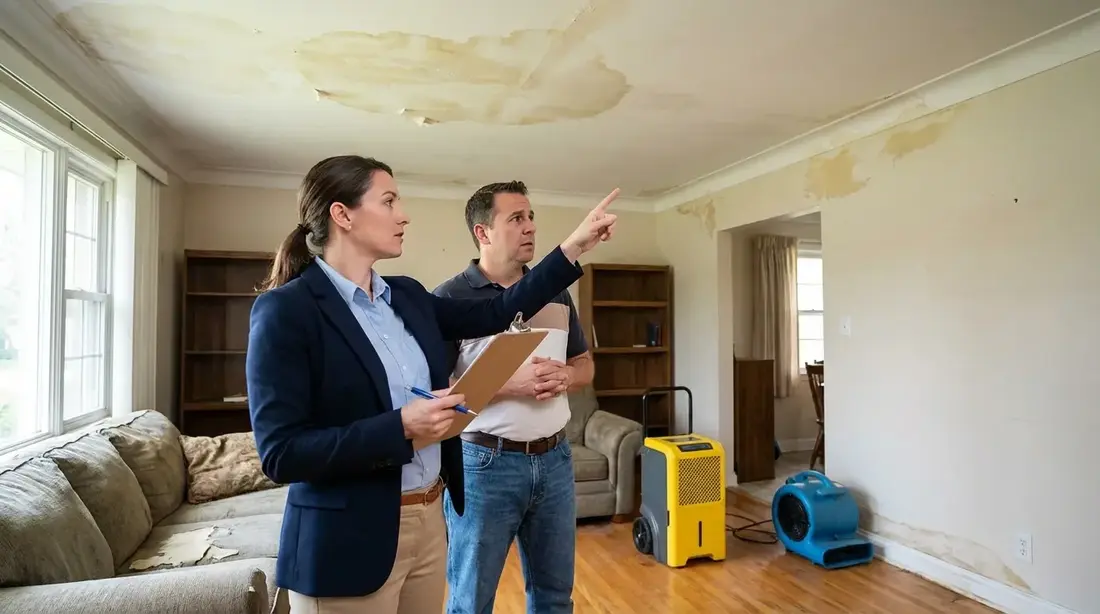
Quick answer: how does a water damage insurance claim work in New York?
You stop the water, you make the home safe, and you call your insurer to open the claim as soon as you can. Then you document everything before cleanup starts: photos, video, a written list of what got wet, and the name of the pipe, appliance or fixture that failed. A field adjuster or a desk adjuster reviews the loss, the insurer decides what the policy covers, and payment follows for the covered work, minus your deductible. In New York you also have a safety net most people never hear about: state insurance rules set deadlines for how fast an insurer must acknowledge your claim, start looking into it and give you an answer, and the New York State Department of Financial Services (DFS) will take your complaint if those deadlines slip. The rest of this page goes through each part slowly, because the details are where claims are won and lost. That is the whole shape of a water damage insurance claim: facts first, proof second, payment third.
What is a water damage insurance claim?
A water damage insurance claim is a request you file with your insurer asking it to pay for sudden accidental water damage to your home and belongings under your homeowners renters condo or landlord policy after a burst pipe appliance failure or overflow inside your home.
Key takeaways: the New York claim facts that decide a water damage insurance claim
- Under Regulation 64 (11 NYCRR Part 216), a New York insurer must acknowledge a claim within 15 business days of notice, begin its investigation within 15 business days, and accept or reject the claim in writing within 15 business days after receiving a properly executed proof of loss and everything it asked for.
- Under New York Insurance Law 2618, an insurer must pay a settled claim arising from a declared natural disaster within 4 business days of settlement, faster than the ordinary Regulation 64 payment clock of 5 business days.
- Under the National Flood Insurance Program (NFIP), the insurer cannot pay a flood claim until it holds a complete signed proof of loss, which is due within 60 days of the flood, under the rules of the Federal Emergency Management Agency (FEMA).
- A denied NFIP flood claim can be appealed to the Federal Emergency Management Agency (FEMA) within 60 calendar days of the date on the written denial letter, with no fee and no third party needed.
- New York Insurance Law 3404, the standard fire policy wording every admitted property policy in the state must mirror, bars any lawsuit on the policy unless it is commenced within 24 months next after the inception of the loss.
- New York law caps a public adjuster fee at 12.5 percent of the claim recovery, on contingency only with no upfront fee, and every public adjuster must be licensed by the New York State Department of Financial Services (DFS).
- The New York City Comptroller received 4,703 claims for property damage from the remnants of Hurricane Ida in 2021 and denied every one of them, citing Holzhausen v. City of New York (1907) on municipal liability for extraordinary and excessive rainfall.
Last updated: November 2026
Why this page exists, and how it differs from our borough pages
Our borough pages are about the cleanup itself: extraction, drying, mold checks and rebuild work in Brooklyn, Queens, the Bronx, Staten Island, Long Island and Manhattan. This page is about the money side of the same disaster: the claim. It does not repeat the drying science from those pages. It covers the phone calls, the forms, the adjuster, the estimate language, the denial letters and the appeal paths that are specific to New York. If your home is wet right now, start with the first hour section below, then come back and read the rest while the fans run.
One honest note before we start. We are a restoration crew, not a law firm and not a public adjusting company. We can document your loss the way adjusters like to see it, meet the adjuster at your home, and explain the letters you receive in plain words. We cannot promise that any claim will be approved, and nobody honest can. What we can promise is that a clean, complete, well photographed file gives you the best possible chance, and that you will understand every step before you sign anything.
Direct answers: the water damage insurance claim questions New Yorkers ask most
Short answers first, in the form an answer engine can quote. Each answer below stands on its own, and the sections that follow it on this page carry the full detail, the New York claim clocks and the evidence behind it.
How do I file a water damage insurance claim?
Stop the water and make the home safe. Photograph and video all damage before moving anything. Call your insurer the same day to open the claim. Start professional drying at once and keep every receipt. Meet the adjuster, walk through every affected room, and review the written estimate before accepting any settlement.
Does homeowners insurance cover water damage?
Usually yes for sudden and accidental damage from inside the home, such as a burst pipe or a failed appliance line. Usually no for flood water from outside, slow leaks over time, or sewer backup without a water backup endorsement. The cause of the water decides coverage, not the amount of damage.
How long does a water damage insurance claim take to settle?
Most straightforward claims take 2 to 6 weeks from first notice to first payment, and 30 to 60 days start to finish. Complex claims with disputed scope or mould take 2 to 6 months. In New York, Regulation 64 requires acknowledgement within 15 business days and a written decision within 15 business days after proof of loss.
What should I do if my water damage claim is denied?
Get the denial in writing with the exact policy language cited. Read that language against your full policy. Gather independent evidence, including a plumber cause report, moisture readings and dated photos. Request a reinspection, file a written appeal, and then use appraisal, a public adjuster, a Department of Financial Services complaint or an attorney if needed.
Can I file a claim for gradual water damage?
You can file, but most policies exclude gradual damage from neglect, wear and tear or a leak that ran for weeks or months, so gradual claims are usually denied. Sudden events such as a pipe burst are usually covered. If damage is part old and part new, file for the new part and prove the split with dated evidence.
What happens if I delay filing a claim?
Delay weakens the claim in three ways. Most policies require prompt notice, so a long gap gives the insurer a denial reason. Evidence fades as materials dry and rot spreads. Mould that grows in a home left wet may count as damage you failed to prevent. Report the loss within 24 to 48 hours of finding it.
Does homeowners insurance cover mold after water damage?
Mould is usually covered only when it follows a covered sudden water event and you acted fast, with drying started within 24 to 48 hours. Mould from a slow leak or an excluded event is usually not covered. Many policies also cap mould payments at a set limit, and a mould endorsement raises that limit.
How much does a public adjuster cost in NYC?
New York law caps a public adjuster fee at 12.5 percent of the claim recovery. The fee is contingency only, with no upfront payment, and no recovery means no fee. A public adjuster must be licensed by the Department of Financial Services, and the fee terms must be written into the contract before work begins.
Who pays when the leak comes from the apartment above?
File your own claim first so your interior is documented and dried without delay. Your HO-6 policy covers your interior finishes and belongings. The building master policy covers the structure and any shared riser. The upstairs unit may carry liability if the leak came from inside their walls. Carriers settle fault between themselves afterwards.
Do I need a professional to clean up water damage before filing a claim?
No. You can start temporary mitigation yourself, including extraction and drying, and you should, because waiting lets damage grow. Photograph everything first and keep damaged materials until the adjuster sees them. Wait for the adjuster inspection before permanent repairs such as new floors or cabinets, and keep every receipt for the emergency work.
What is a proof of loss?
A proof of loss is a signed, sworn statement of what happened, what was damaged and what you claim for it. A typical HO-3 form asks for it within 60 days after the insurer requests it. On an NFIP flood claim, the insurer cannot pay until it holds a signed proof of loss, due within 60 days of the flood.
Should I call my insurance company or a restoration company first?
Do both in the same hour. Stop the water if it is safe, take photos, notify your insurer and phone a restoration company. No authoritative source says either order changes coverage. Waiting a day is the real risk, because mould can begin within 24 to 48 hours and standing water keeps damaging the home.
Key facts at a glance
| Fact | The rule in New York |
|---|---|
| Insurer acknowledges the claim | Within 15 business days of notice. Regulation 64, 11 NYCRR 216.4(a). |
| Insurer accepts or rejects in writing | Within 15 business days after proof of loss and everything requested. Regulation 64. |
| Agreed settlement is paid | Within 5 business days. Within 4 business days after a declared disaster, under Insurance Law 2618. |
| Insurer answers a Department of Financial Services question | Within 10 business days. Regulation 64, 11 NYCRR 216.4(d). |
| NFIP proof of loss is due | Within 60 days of the flood. |
| FEMA appeal after a flood denial | Within 60 calendar days of the denial letter. |
| Lawsuit on a New York property policy | Within 24 months of the loss. Insurance Law 3404. |
| Public adjuster fee in New York | Capped at 12.5 percent of the recovery, contingency only. |
Short answers, the way you would ask out loud
- How fast does my insurer have to answer in New York? Your insurer must acknowledge your claim within 15 business days and decide in writing within 15 business days after your proof of loss.
- Is a burst pipe covered by homeowners insurance? Usually yes, for the damage the water causes. The failed pipe itself is usually not covered.
- How long do I have to sue over a denied claim in New York? Two years. The suit clock runs 24 months from the date of the loss, not from the denial.
- What does a public adjuster charge in New York? At most 12.5 percent of what you recover, and nothing if you recover nothing.
- How long does a water damage claim take? Most simple claims pay a first amount in 2 to 6 weeks and finish in 30 to 60 days.
The first hour: what to do before you even think about the claim
Every policy sold in New York carries a duty that most people only learn about after they break it. After a loss, you are expected to protect the property from further damage. Insurers call it mitigation. In plain words: stop the water, move what you can, and do not let a bad day turn into a bad month. If you leave a wet carpet sitting for a week while you wait for paperwork, the insurer may pay for the burst pipe damage and refuse the mold that grew afterwards, because that second loss was preventable. The first hour is where you protect both your home and your claim at the same time.
Your first hour checklist
- Find the main water shutoff and close it. In most New York apartments the valves sit under the kitchen sink, behind the toilet or near the water heater. In a house, check the basement wall facing the street. If you cannot find it, call the building super or 311 for guidance.
- Kill power to wet rooms if water is near outlets, a panel or appliances, and only if you can reach the breaker box without standing in water. If you cannot reach it safely, stay out and say so when you call for help.
- Move dry belongings out of the wet area. Lift furniture onto blocks or foil wrapped legs if you cannot move it. Get rugs off wet floors. Every item you save is an item that never has to be argued about later.
- Photograph and video everything before you move or mop anything. Wide shots of each room, then close shots of the source, the water line on the wall and each damaged item. This takes ten minutes and it is the single most valuable thing you will do for your claim.
- Start a written timeline on your phone. When did you find the water, what did you do, who did you call and when. Memory fades fast under stress, and adjusters ask these questions weeks later.
- Call your insurer or open the claim in their app. You are not committing to anything by reporting the loss. You are starting the clock that New York rules say the insurer has to respect.
- Call a restoration crew for extraction and drying. Keep every invoice and every receipt from this point on, including towels, buckets, a wet vacuum rental and a hotel night if you had to leave.
Notice what is not on that list: throwing things away. Wet belongings are evidence. A soaked sofa you drag to the curb on day one becomes a line on a form that an adjuster never saw, and unseen items get doubted. Bag ruined items if they smell, stack them in a corner or a tub, photograph them first, and let the adjuster see them or at least see clear photos before anything leaves the home. The one exception is anything that is a health risk, like sewage soaked material. Photograph it well, then let the crew remove it and note the removal in writing.
Do not start repairs yet. Emergency mitigation, meaning extraction, drying and stopping the source, is expected and usually covered. Permanent repairs, meaning new floors, new cabinets and repainting, should wait until the insurer has seen the damage or agreed to the scope in writing. Rip everything out too early and you may pay for the rebuild yourself. On a water damage insurance claim, timing is evidence.
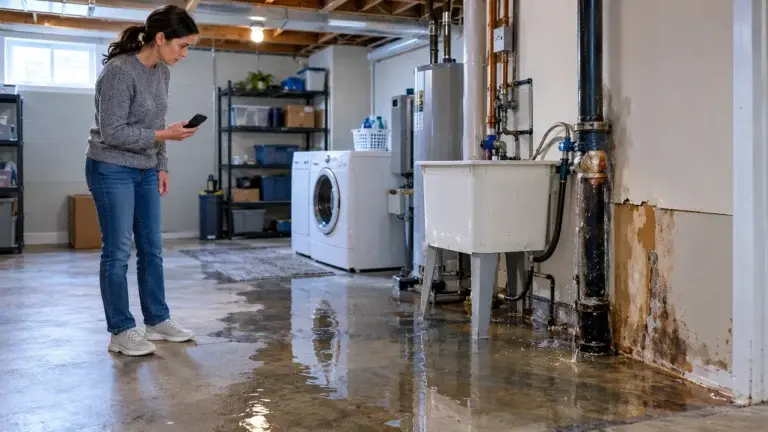
The first 48 hours after a storm: filing while the whole city files at once
A storm loss is a different animal from a single burst pipe, because your water damage insurance claim joins a queue. The 12 November 2026 nor'easter dropped 3.56 inches of rain at JFK by the final National Weather Service figure, after early reports of 3.32 inches, and it became the second wettest November day on record there, with a tornado warning issued for southern Queens and southwestern Nassau and no tornado confirmed in the city. Two months earlier, the 26 to 27 September 2026 nor'easter brought winds above 80 miles per hour and deep inundation to Long Island, knocked out power to more than 124,000 PSEG customers, and led Governor Hochul to request a federal Major Disaster Declaration for Nassau and Suffolk in late October 2026. On 5 November 2026 the governor requested further federal assistance for coastal storm damage, naming Long Island projects from Fire Island to Montauk Point and Rockaway Beach. Staten Island was not named in that request, and neither was Manhattan. Read storm news carefully: a federal request names specific places and projects, and FEMA Public Assistance pays public agencies and nonprofits, not private homes. Your own water damage insurance claim is still the path that pays for your home.
After a declared disaster the Insurance Law 2618 clocks described in the claim clocks section apply to your claim, but the human reality is that adjusters are stretched thin and inspections take longer. File in the first 48 hours anyway. A claim number issued on day one, with dated photos already attached, sits ahead of a claim opened in week two with a story and no evidence. Report sewer backups and street flooding to 311 as well, and keep the reference number: if any part of the loss later becomes a claim against the city, that 311 record and the 90 day Comptroller clock in the city claims section below both start from the event, not from when you got round to it.
What to say on the first call
The first call opens your water damage insurance claim, and five facts are all it needs: the date and time you discovered the damage, what happened, where the water came from if you know, what you have already done to stop it, and that you have photos and video. Write those five facts down before you dial and read from the note. Ask for the claim number, the name of the adjuster or team handling the file, and the direct contact for documents. Note the date and time of the call in your timeline.
What not to say, and what not to do
- Do not speculate about the cause. If you do not know whether the pipe split or the joint failed, say the water came from that pipe and the plumber report will confirm the mechanism.
- Do not admit fault, and do not agree that damage is old. Old and new is a question evidence answers, not a question to settle on a doorstep recording.
- Do not wait for the adjuster before drying. Mitigation is your duty under the policy, and a home left wet while you wait is a denial reason being written in real time.
- Do not throw away the failed part, the soaked carpet or the ruined belongings before they are photographed and, where possible, seen.
- Do not start permanent repairs before the inspection. Emergency repairs that stop further damage are expected. New floors and cabinets wait for the agreed scope.
- Do not sign anything you have not read, including any paper handed to you in a wet hallway at midnight.
Do both calls in the same hour: the insurer and the restoration company. No authoritative source says either order changes coverage. Waiting a day is the real risk, because mould can begin within 24 to 48 hours and because every hour of standing water is an hour the damage, and the argument about the damage, grows. After a storm, a water damage insurance claim filed in the first two days is a water damage insurance claim with evidence, and evidence is the whole game.
What a New York policy usually covers, and what it usually does not
A New York homeowners policy usually covers sudden and accidental water damage from inside the home, such as a burst pipe or a failed appliance line, and usually does not cover flood water from outside, slow leaks over time, or sewer backup unless a water backup endorsement was added.
People ask us one question more than any other: is this covered? The honest answer is that coverage turns on the cause of the water, not on how much damage it did. A small leak from a covered cause can be fully paid while a flooded basement from an uncovered cause gets nothing, even though the basement looks far worse. Read the table below as a map of how adjusters think, then read the notes under it, because the exceptions matter as much as the rules.
| Cause of the water | Usually covered by homeowners or condo policy? | What decides it |
|---|---|---|
| Burst pipe or frozen pipe that splits | Usually yes, for the damage the water did | The resulting damage is covered. The pipe itself, as a worn part, usually is not. Heat must have been maintained for frozen pipe claims. |
| Appliance failure: washing machine hose, dishwasher, water heater | Usually yes | Sudden failure is the classic covered loss. Slow drips that ran for months get treated as maintenance, not an accident. |
| Upstairs neighbour leak or a leak from another unit | Usually yes, under your own policy first | Your insurer pays you, then may chase the other side. That chase is called subrogation and it is not your job to run it. |
| Sewer or drain backup into the home | Only with a backup endorsement | Standard policies exclude it. Many New York homes carry a water backup rider without knowing it. Check your declarations page. |
| Rain or river water rising from outside, storm surge | No, that is flood | Flood belongs to a separate flood policy, often through the National Flood Insurance Program. Rising water from the ground is the dividing line. |
| Roof leak during a storm | Often yes for the inside damage | If wind or a falling tree opened the roof, the water damage inside is usually covered. A worn out roof that simply leaks is maintenance. |
| Long term leak, rot, mould from an old drip | Usually no | Policies cover sudden events, not slow neglect. This is the most common denial reason we see in older New York buildings. |
| Sump pump overflow or failure | Only with a backup endorsement | A failed pump is treated like a backup event. The endorsement is what fills the gap. |
| Mould after a covered sudden water event, reported fast | Often yes, up to a policy limit | Speed decides it. Drying within 24 to 48 hours keeps mould inside the original claim. A mould endorsement raises the limit. |
| Groundwater seeping through a foundation or basement wall | Usually no | Seepage is treated as a maintenance and grading problem. Flood policies also exclude pure seepage in most cases. |
Two more ideas sit underneath every row of that table. The first is the difference between the cause and the result. When a water heater rusts through, the heater is a worn appliance and replacing it is on you. The ruined flooring, baseboards and drywall around it are the result, and the result is what the policy is there for. Adjusters split claims this way every day, and a file that already separates cause items from result items moves faster and argues less.
The second idea is the word sudden. A supply hose that splits at noon is sudden. A toilet seal that wept for a year and rotted the subfloor is gradual, and gradual damage is excluded in nearly every policy written in this state. This is why the timeline you start in the first hour matters so much. If you found the damage the day it happened and you can show that with photos, messages to your super or a plumber visit, the sudden part of the story proves itself. If the first record of the problem is the day you called the insurer, expect hard questions. A dated record turns a doubtful water damage insurance claim into a documented one.
Three kinds of cover that ride along with the main claim
Personal property cover pays for belongings: furniture, rugs, clothing, electronics and the contents of closets and storage. It helps to know whether your policy pays replacement value or actual cash value, a gap we explain in the estimate section below, because the same soaked sofa can be valued two very different ways.
Additional living expense cover, often shortened to ALE, pays the extra cost of living elsewhere when the home cannot be lived in during covered repairs. Hotel nights, a short rental, extra food costs and laundry can all fall under it. Keep every receipt, and keep the amounts reasonable and documented, because ALE is paid against proof, not against memory.
Loss of use and liability angles matter in rentals and multi unit buildings. If your leak damaged the flat below, that neighbour may claim against your liability cover, and their own insurer may come looking as well. Tell your insurer about every unit the water touched, not just your own. A claim that names all the damage on day one is far easier to settle than one that grows a second claimant three weeks later.
Filing a water damage insurance claim in New York, step by step
Filing a water damage insurance claim in New York takes eight steps, in this order: stay safe, stop the source, document before you clean, report the claim the same day, mitigate and keep every receipt, get a professional scope, meet the adjuster, and review the settlement before you accept it.
Here is the full path from wet floor to settled claim, in the order it actually happens. Timelines vary by insurer and by how busy they are after a storm, but the order rarely changes. New York insurance rules give you some protection along the way: insurers working in this state have to acknowledge a claim promptly, begin their review within a set window, and tell you in writing where things stand if the claim stays open. If a claim drags with no letters and no answers, that silence itself is something the Department of Financial Services wants to hear about.
- Stay safe. Keep clear of standing water near outlets. Cut power to the affected area if it is safe to reach the breaker without standing in water.
- Stop the source. Close the shut-off valve, or the main if you can reach it safely. Insurers expect you to limit further damage, and failing to stop the water is itself a denial reason.
- Document before you clean. Photograph and video the source and every affected room, ceiling, wall and belonging before anything is moved or dried. Narrate a video walkthrough with the date and time.
- Report promptly. Call your insurer or file online the same day, within 24 to 48 hours at the latest. Note the claim number, the adjuster name and the date of the call.
- Mitigate and keep receipts. Start professional water extraction and drying immediately. Do not wait for the adjuster. Keep damaged materials until the adjuster sees them, and save every receipt.
- Get a professional scope. A restoration company documents the loss with moisture readings, thermal imaging, daily drying logs and a line item estimate your adjuster can work from.
- Meet the adjuster. Be present. Walk the adjuster through every affected area including hidden damage behind walls, hand over your photos and the restoration report, and ask for the full line item estimate.
- Review the settlement before you accept. Compare the payout to the documented scope, check actual cash value against replacement cost and the deductible, and dispute any shortfall with evidence before signing a release.
What to say on the first call, and what not to do
On the first call, give the date and time you discovered the damage, what happened, where the water came from if you know, what you have done to stop it, and that you have photos and video. Do not speculate about the cause, do not admit fault, and do not agree that the damage is old. Do both calls in the same hour, insurer and restoration company: no authoritative source says either order changes coverage, and waiting a day is the real risk. Do not wait for the adjuster before drying, do not throw away the failed part, do not start permanent repairs before the inspection, and do not sign anything you have not read.
Wet home, claim clock already running?
Call now and we will start the drying and the documentation together, so the file your adjuster sees is complete from day one.
Call (212) 555-0147 (placeholder)The New York deadlines working in your favour
New York is one of the states that puts real duties on insurers, not just on policyholders. Under Regulation 64, made under Insurance Law 2601, an insurer must acknowledge your claim within 15 business days, begin its investigation within 15 business days, and accept or reject the claim in writing within 15 business days after it has your proof of loss and everything it asked for, or else explain in writing why it needs more time and keep updating you, with a status letter every 90 days. The claim clocks section below sets the full table out, including the disaster clocks under Insurance Law 2618 and one correction every New York claimant should know. These rules exist because claims used to sit in drawers. If your file goes quiet for weeks, write to the insurer asking for a status letter, keep a copy, and if the silence continues, the Department of Financial Services consumer complaint route is open to you. You do not need a lawyer to file that complaint, and insurers take those letters seriously because the department tracks them.
There is also a deadline running the other way. Most policies require you to report a loss promptly, and late reporting is a denial reason that shows up again and again in older buildings where a leak was mopped up and forgotten. Prompt does not mean the same hour, and life gets in the way, but a gap of months between a leak and a claim needs a good explanation. If you are reading this page weeks after your loss, file anyway, document what you can, and be ready to explain the gap honestly. A late claim with a straight story beats no claim at all.
The New York claim clocks: the deadlines your insurer has to meet
Every water damage insurance claim in New York runs on two sets of clocks at once. One set binds you: prompt notice, protection of the property, a proof of loss when asked. The other set binds the insurer, and most homeowners never hear it described in full. No national guide sets it out, and at least one ranking New York page states it wrong. This section states it correctly, with the laws named, because a water damage insurance claim moves differently when you know exactly which deadline the person across the desk is working to.
Regulation 64: the everyday clocks on a New York claim
Regulation 64, at 11 NYCRR Part 216, is the claims handling regulation made under Insurance Law 2601, the unfair claims settlement practices law. It sets minimum standards for how an insurer must handle your claim. A breach of the regulation, without just cause and repeated often enough to amount to a general business practice, is an unfair claims settlement practice. The clocks are these:
| What the insurer must do | The clock | Where it comes from |
|---|---|---|
| Acknowledge your claim after you give notice. Notice to your agent counts as notice to the insurer. | Within 15 business days | Regulation 64, 11 NYCRR 216.4(a) |
| Reply to your communications about the claim | Within 15 business days | Regulation 64, 11 NYCRR 216.4(b) |
| Begin investigating the loss after receiving notice | Within 15 business days | Regulation 64, 11 NYCRR 216.5(a) |
| Accept or reject the claim in writing after receiving a properly executed proof of loss and everything the insurer asked for. If more time is needed, the insurer must say so in writing, give the reason, keep updating you, and send a status letter every 90 days while the claim stays undecided. | Within 15 business days | Regulation 64, 11 NYCRR Part 216 |
| Pay an agreed settlement | Within 5 business days | Regulation 64, 11 NYCRR Part 216 |
| Respond when the Department of Financial Services asks a question about your file | Within 10 business days | Regulation 64, 11 NYCRR 216.4(d) |
One honest limit belongs beside that table. A breach of Regulation 64 or of Insurance Law 2601 gives you no private right of action on its own. It is a matter for the Department of Financial Services to enforce, not a payment you can claim by pointing at the rule. What each missed clock does give you is dated, documented leverage: a line in your DFS complaint, and part of the record if delay later causes real further loss. That is why the claim folder matters. A missed deadline you can date is worth ten complaints you cannot.
A DFS circular letter, Circular Letter No. 13 of 2011, confirms that Insurance Law 2601 and Regulation 64 apply in full to NFIP Write Your Own insurers as well, so the same handling standards sit behind a flood claim handled by a private carrier for the federal programme.
After a declared disaster: Insurance Law 2618
When a local state of emergency is declared, or the governor declares a disaster emergency, or the President issues a major disaster or emergency declaration, a second set of clocks applies to claims arising from that disaster. Natural disaster in this law includes fire, flood, earthquake, hurricane, tornado, high water, landslide, mudslide, wind, storm, wave action and ice storm. Under Insurance Law 2618, the insurer must accept or reject a non commercial claim in writing within 15 business days of receiving a properly executed proof of loss and all items, statements and forms requested. Where the insurer suspects arson, that 15 business days reads as 30 business days. The insurer may take one extension of 15 business days with written notice to you, and one further extension of 15 business days if it is prevented from accessing the property, with written updates every 15 business days stating the reasons. Once access is possible, the insurer has no more than 15 days to decide. Under Insurance Law 2618, a settled disaster claim must be paid not later than 4 business days from settlement, faster than the ordinary 5 business day rule under Regulation 64. The 3 business day figure sometimes quoted came from the 2021 bill draft S6595 and is not the current statute.
The 3420(d) correction: a clock that does not exist
Some New York pages, including at least one well ranked claim guide, tell readers that Insurance Law 3420(d) requires insurers to acknowledge a claim within 15 business days. That is wrong, and because this page exists to get a water damage insurance claim right, the correction belongs here in full. Section 3420(d)(2) says: "If under a liability policy issued or delivered in this state, an insurer shall disclaim liability or deny coverage for death or bodily injury arising out of a motor vehicle accident or any other type of accident occurring within this state, it shall give written notice as soon as is reasonably possible of such disclaimer of liability or denial of coverage to the insured and the injured person or any other claimant."
Read it closely. It is a timely disclaimer rule for death or bodily injury claims under liability policies. It contains no 15 day figure at all: the words are "as soon as is reasonably possible". And it does not apply to property damage claims, which is what a water damage insurance claim is. Failing to disclaim quickly can stop an insurer relying on an exclusion, but only in the bodily injury world the section governs. The 15 business day clocks on your claim come from Regulation 64 under Insurance Law 2601, and from Insurance Law 2618 after a declared disaster, and from nowhere else. If a guide, a letter or an AI answer gives you 3420(d) as the source of a property claim deadline, you now know more than it does.
Your own hardest clock: 24 months to sue
New York's standard fire policy, at Insurance Law 3404, sets the wording every admitted property policy in the state must mirror: no action on the policy is sustainable unless it is commenced within 24 months next after the inception of the loss. In plain words, if a disputed water damage insurance claim is heading for court, the suit clock runs from the loss itself, not from the denial letter, and it runs out at two years. A claim that drifts through a long appeal can quietly eat that window. If your loss date is far behind you and the file is still open, take legal advice early, while the window is still open.
Bi-Economy: why a delay record can be worth money
In Bi-Economy Market, Inc. v. Harleysville Insurance Company of New York, decided with Panasia Estates, Inc. v. Hudson Insurance Company by the New York Court of Appeals on 19 February 2008, the court held that an insurer which wrongfully delays payment or denies coverage may be liable for consequential damages the insured suffers, even beyond the policy limits, where that further loss was reasonably foreseeable when the policy was made. Bi-Economy was a family owned wholesale and retail meat market in Rochester. A fire in 2002 destroyed its inventory and heavily damaged the building. The insurer first offered a sum the business considered far too low, paid only 7 months of the 12 months of business interruption cover, and the additional amount was only awarded after more than a year and a dispute process. The business never reopened. The Court of Appeals reinstated its consequential damages claim. The lesson for a water damage insurance claim is direct: every dated letter, every missed Regulation 64 clock and every week of unexplained delay is evidence, because New York law recognises that a slow claim can itself cause loss.
One proposal to know about, stated plainly so nobody mistakes it for a right: a bill called FISPA, Senate Bill S166, would set a six month determination window and a thirty day pre suit demand for claims like these. As of mid 2026 it had been recommitted to committee without a floor vote. It is not law. Do not let anyone sell you a service on the strength of it.
How to use the clocks on your own claim
Write each deadline on the first page of your folder the day your water damage insurance claim opens. When an acknowledgement date passes on a water damage insurance claim, write to the insurer asking for the status letter Regulation 64 requires. When a decision date passes on a water damage insurance claim, send the DFS complaint with the dates attached. Keep the dates beside the claim number, because a water damage insurance claim is remembered by its dates long after it is remembered by its damage. The clocks do not argue for you, but on a water damage insurance claim they turn waiting into evidence, and evidence is what every later step, from supplement to appraisal, is built on.
Claim gone quiet past a deadline on this page?
Call us. We will help you read the file against the New York clocks and build the documented record the next step needs.
Call (212) 555-0147 (placeholder)Documenting the damage so your water damage insurance claim holds up
Adjusters do not pay for damage they cannot see, measure or verify. That is not cruelty, it is the job. Your job is to make the damage easy to verify. Crews who work claims every week build the same file for every job, and you can build the same file for your own home with a phone and an hour of care. The file has five parts: the photo set, the video walk, the written inventory, the moisture record and the paper trail.

The photo set
Work from wide to close, room by room. Start at the doorway of each affected room and take the whole room in one frame. Then move to each damaged item and take a closer shot that shows the damage itself: the water line on the wall, the lifted floorboards, the swollen cabinet base, the stained ceiling below the leak. Finish with the source. Photograph the split hose, the cracked trap, the failed valve, and if a plumber replaces the part, keep the old part and photograph it again on a dry surface with a coin or ruler beside it for scale. Turn on the date stamp in your camera app if it has one, and never edit, filter or crop the originals. Send copies, keep originals.
The video walk
A slow video walk does something photos cannot: it shows how the rooms connect and how far the water travelled. Start at the source, narrate quietly what you are seeing and when you found it, and walk the path the water took. Restoration instructors who teach claim documentation on video case studies say the same thing in lesson after lesson: narrate the date, the source and the direction of travel, and let the camera linger on the water line. Those narrated walks settle arguments about which rooms were affected, because the adjuster can see the route the water took instead of imagining it.
The written inventory
Make a list of every damaged belonging with four columns in your head: what it is, where it was, roughly when you bought it, and what condition it was in. Do not round everything up and do not invent items. A list that matches the photos item for item builds trust, and trust speeds up every later decision on the file. For electronics, note the make and model from the label on the back before the item is moved. For clothing and soft goods that sat in dirty water, list them by count and type. If sewage was involved, say so plainly, because category three water changes how items are treated.
The moisture record
When our crew dries a home, we take moisture readings in walls, floors and cabinets every day and write them down with the date and the room. That simple log does heavy work on a claim. It shows the adjuster that the drying equipment was needed for exactly as many days as it ran, it shows when hidden moisture was found behind a wall, and it shows the day the structure reached a dry standard so rebuild could start. If you are drying a small loss yourself with rented equipment, keep your own version: dates, which rooms, and photos of the meter screen if you borrow a meter. A claim file with a drying diary rarely gets its drying days cut.
The paper trail
Keep one folder, paper or digital, for the whole claim. In it goes the claim number, the name and direct number of every adjuster and contractor you speak to, every letter, every estimate, every invoice, and a short note of every phone call with the date and what was agreed. If it is not in the folder, it did not happen, at least as far as a dispute three months later is concerned. New York claims can run long when buildings, supers, neighbours and two or three insurers are involved, and the person with the tidy folder wins the factual arguments. Every water damage insurance claim is, in the end, a folder being read.
The adjuster visit on a water damage insurance claim: what really happens and how to be ready
For many New York claims the adjuster never visits at all. Small, clear losses are often handled from photos by a desk adjuster. Larger losses, disputed losses and losses in complicated buildings get a field visit. Either way, the same person reads your file and prices your damage, so the goal is identical: make the loss easy to say yes to.
Three kinds of adjuster, and who each one works for
A staff adjuster is a direct employee of your insurer. An independent adjuster is a contractor the insurer hires, common after storms when files outnumber staff. A public adjuster is different in kind: licensed by the Department of Financial Services, hired by you, and paid a contingency fee capped in New York at 12.5 percent of the recovery. The company adjuster, staff or independent, works for the insurer, and their report heavily influences the settlement on your water damage insurance claim. That is not a reason for suspicion. It is a reason to be present, be factual, and hand over documentation that makes the accurate scope the easy scope to write.
On a field visit, the adjuster will want to see the source first. Show them the failed part if you kept it. Then walk the water path room by room, in the order the water travelled. Bring your inventory list and your timeline. Point at the things people forget: the inside of the vanity cabinet, the back of the closet that shares a wall with the bathroom, the ceiling of the room below, the baseboards that swelled two rooms away. Water travels along joists, pipes and the tops of ceilings, and the far damage is the damage most often missed on a first scope.
Expect measuring. Adjusters sketch the rooms and note lengths, heights and materials. If your crew is present, and we are happy to be, the two professionals can agree the wet map together: which walls are wet, which floors came up, which cabinets are swollen beyond saving. Agreement at the tape measure stage prevents most of the estimate fights that happen later on paper. What the visit is not is a negotiation at the kitchen table. The adjuster usually writes the estimate back at a desk. So your job at the visit is completeness, not bargaining. Every room shown, every item listed, every photo handed over.
Reading the estimate without fear
The estimate that comes back is a list of line items: remove baseboard, drywall patch, paint, flooring per square foot, drying equipment per day, and so on, usually priced in Xactimate, the estimating program most insurers use. You do not need to master the program. You need to check four things. Are all the rooms there. Are all the tasks there, including tear out, drying days and rebuild, not just the pretty finish work. Are the quantities right, because a room measured short is paid short. And are the materials like for like, because your solid oak floor should not be priced as the cheapest laminate on the list.
If something is missing, that is not the end of the story. Contractors send a comparison estimate, and insurers issue a supplement, which is an added payment for items missed or hidden damage found during the work. Supplements are a normal part of claims, not a fight. Hidden damage is the classic case: the wall opens, the studs and insulation are wet and mouldy two feet beyond the visible stain, the scope grows, and the supplement follows the photos. This is one more reason the drying diary and the open wall photos matter so much.
Depreciation, actual cash value and replacement cost, in plain words
Many policies first pay the actual cash value of damaged items, which is replacement cost minus depreciation for age and wear. The held back depreciation is then paid when you show the work is done or the item replaced. This two step payment surprises people and causes more angry phone calls than almost anything else on a claim. It is not a trick. It is how replacement cost policies are written. The practical lesson is simple: do not judge the claim by the first cheque, keep every receipt from the rebuild, and send the receipts in so the held back amount is released.
The deductible is the part of the loss you agreed to carry yourself when you bought the policy. It comes off the payment rather than being billed to you. On water claims in New York there is sometimes a separate, higher deductible for certain wind or hurricane events on coastal homes, written as a percentage of the home insured value. Water from a burst pipe inside the home normally falls under the standard deductible, but check your declarations page after any storm related loss, because the deductible that applies changes the maths of whether a small claim is worth filing at all.
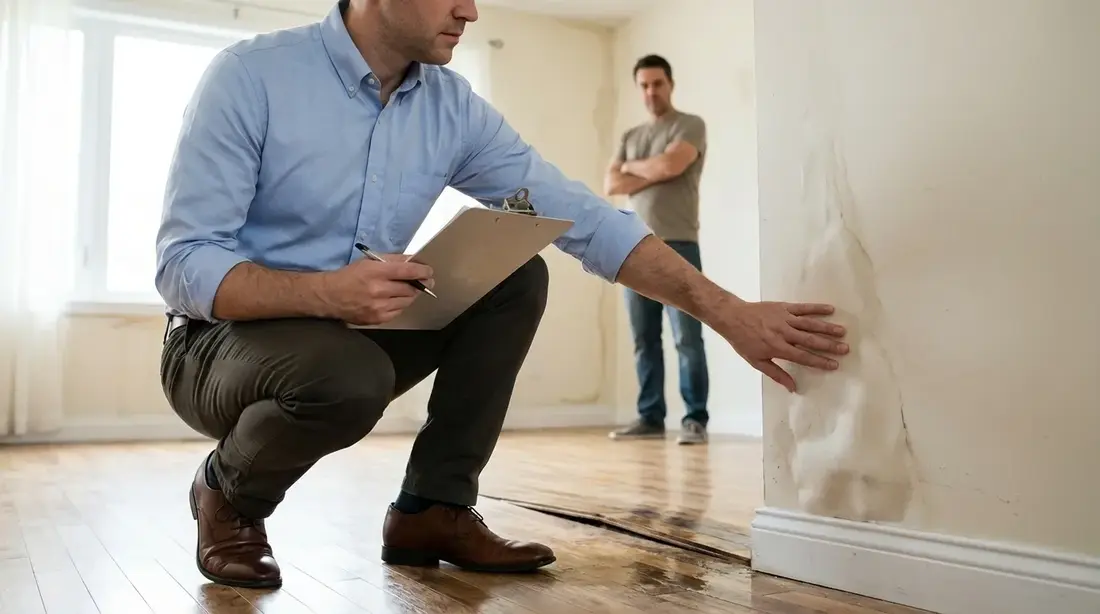
Denied, underpaid or stuck: why claims fail and what to do next
A denial letter is not the end of a claim. It is a position, written by one side, and positions change when better facts arrive. But you have to answer it the right way. Shouting on the phone changes nothing. A written reply that takes the denial reason apart, point by point, with photos and policy language, changes a great deal. Here are the denial reasons we see most often in New York, and the honest answer to each.
The denial reasons that show up again and again
Gradual damage. The insurer says the leak ran for weeks or months, so it is maintenance, not an accident. The counter is evidence of suddenness: a plumber invoice showing a split pipe, photos with dates, a super log entry, a tenant message reporting the first drip. If part of the damage is old and part is new, argue for the new part. Partial wins are common and worthwhile. On a water damage insurance claim, a partial win is still real money recovered.
Late reporting. The loss was reported long after it happened. Explain the gap in writing and without drama. People travel, tenants hide leaks, damage hides behind walls. A straight explanation with any supporting record beats silence.
No coverage for that cause. Sewer backup without the endorsement, or rising water treated as flood. Sometimes the first reading of the cause is wrong. Water that came up through a drain during a storm can be argued two ways, and the exact path the water took decides which policy answers. Get the cause documented by the crew and the plumber in writing.
Failure to protect the property. The insurer says the damage grew because nobody dried the home. The drying diary, the crew invoice with its start date and your first hour photos answer this one. This is the denial that good first day habits prevent entirely.
Wear and tear on the failed part. Remember the split between cause and result. The worn valve may be excluded while everything it soaked is covered. If a denial lumps the whole loss together, ask in writing for the result damage to be separated from the failed part.
The ladder of next steps, from cheapest to strongest
- Ask for the denial in writing with the exact policy wording. Insurers in New York must explain a denial and point to the part of the policy they rely on. Verbal no is not enough. Get the letter.
- Send a written rebuttal with new evidence. Photos, the crew report, the plumber report, moisture logs, a contractor estimate. Address the stated reason, not everything at once.
- Ask for a reinspection or a second adjuster. Files get reassigned. A fresh pair of eyes with a fuller file often reaches a different scope.
- Use the appraisal clause if the fight is about amount. Appraisal decides the amount of a covered loss, never whether it is covered. Each side hires an appraiser, the two pick a neutral umpire, and any two of the three set the binding amount. Under standard wording each side names its appraiser within 20 days of a written demand, and the appraisers choose an umpire within 15 days or a court appoints one. The process typically takes 4 to 8 weeks.
- Complain to the Department of Financial Services. File online at dfs.ny.gov or call the consumer hotline at (800) 342-3736, Monday to Friday, 8:30 AM to 4:30 PM. The separate disaster hotline is (800) 339-1759. The complaint is free, the insurer must respond to DFS within 10 business days, and an insurer may not retaliate against you for filing one.
- Talk to a public adjuster or an insurance lawyer. A public adjuster works for you and handles the whole claim, for a contingency fee that New York law caps at 12.5 percent of the recovery, with no upfront fee. A lawyer matters when coverage itself is disputed, when bad faith is on the table, or when the sums are large, and consequential damages for wrongful delay are recognised in New York under the Bi-Economy case described in the claim clocks section. Ask either one for their licence details and check them with the state before you sign.
Public adjuster or attorney: which one does your claim need?
A public adjuster and an attorney solve different problems on a water damage insurance claim, and choosing the right one saves both time and fees. A public adjuster, licensed by the Department of Financial Services and capped by New York law at 12.5 percent of the recovery on contingency, documents, prices and negotiates the claim itself, so a public adjuster fits a claim that is covered but underpaid, under scoped or stalled. An attorney fits a claim where coverage itself is denied, where bad faith delay is causing further loss, or where a lawsuit is likely, because only an attorney can sue on the policy, and New York Insurance Law 3404 gives you 24 months from the loss to do it. Many large claims use both in sequence: the public adjuster builds and prices the file, and the attorney takes over if the insurer still refuses to pay what the file proves.
Watch the suit deadline: 24 months. New York standard fire policy wording, at Insurance Law 3404, bars any action on the policy unless it is commenced within 24 months next after the inception of the loss. The clock runs from the loss, not from the denial. If a claim is dragging and the loss date is far behind you, get legal advice early rather than after the window closes.
One more thing about underpaid claims, because they are more common than full denials. An underpayment usually hides in quantities and missing lines, not in bad intent: a room measured short, drying days trimmed, a cabinet priced as a repair when it is swollen beyond repair. The fix is a line by line comparison estimate from your contractor with photos matched to each disputed line. Send it as a supplement request. Polite, specific and documented beats angry every single time.
Two practical notes complete the ladder. First, the appeal window: many policies set a deadline for appealing a denial, often 60 days from the denial date. That figure comes from policy wording, not from a New York statute, so check your own policy and treat the denial date as a deadline until you have read otherwise. Send the appeal by certified mail, answer each finding point by point, and set a 30 day response deadline in the letter. Second, the gradual fight, because it is the commonest denial on a New York water damage insurance claim: if the denial cites gradual damage, answer with mechanism and pattern. Send the plumber written assessment of how the part failed, moisture mapping showing the damage radiating from a single failure point, photos of the full extent of the hidden damage, and evidence of the system condition before the failure: recent inspections, maintenance records, and the age of the component against its expected service life. A second contractor opinion with detailed photos showing the damage was acute, not gradual, often reverses a denial before any formal step is needed.
Flood claims are a separate claim: the NFIP clocks
If the water came from outside, your water damage insurance claim changes systems. A flood claim under the National Flood Insurance Program follows federal rules, federal deadlines and a federal appeal path, and none of them match the homeowners clocks above. No New York restoration page we could find sets the NFIP deadlines out in full, so they are set out here. Flood is defined by the programme as water on normally dry land affecting two or more acres or two or more properties, and a residential flood policy covers the building and the contents separately, so check which of the two you actually bought. Keep this table beside your homeowners papers: a flood water damage insurance claim runs on federal clocks, not state ones.
| NFIP step | Deadline |
|---|---|
| Report the loss to your agent or insurer | As soon as it is safe to return, and immediately. Do not wait. |
| New policy waiting period | A new flood policy does not take effect until 30 days after purchase. |
| Proof of Loss: a signed, sworn statement of the loss | Within 60 days of the flood. Send it even if you disagree with the adjuster figure, because the insurer cannot pay an NFIP claim without a complete signed proof of loss. FEMA can extend or waive the deadline after major disasters, as it did after Hurricanes Irma and Helene. |
| Appeal a denial to FEMA | Within 60 calendar days of the date on the written denial letter. If the sixtieth day falls on a weekend or a federal holiday, it moves to the next business day. There is no fee and no third party is needed. |
| Appraisal, where the loss is covered but the amount is disputed | Available on amount only. Warning: if you complete an appraisal, you cannot then appeal to FEMA. |
| Lawsuit | Within one year of the first written denial, in the federal court where the property sits. Filing an appeal does not extend that year, and filing suit ends any pending appeal. |
Homeowners claim or NFIP flood claim: the two systems side by side
A homeowners water damage insurance claim and an NFIP flood claim cover different water, run on different clocks and end in different courts. The homeowners claim covers sudden water from inside the home, runs on the New York Regulation 64 clocks, is appealed through the insurer and the Department of Financial Services, and is sued on within 24 months under Insurance Law 3404. The NFIP claim covers flood water from outside the home, runs on the federal clocks in the table above, is appealed to FEMA within 60 calendar days of a denial, and is sued on within one year of the first written denial in federal court. A storm can open both claims at once on the same home, one for the wind opened roof and one for the water that rose through the door, which is why the two files are kept in separate folders from day one.
Basement cover under the NFIP is narrow in a way that surprises almost every homeowner who reads it for the first time after a flood. The furnace, the water heater, the washer and dryer and the electrical panel are covered in a basement. Finished walls, finished floors and most contents kept in a basement are not. A basement heavy water damage insurance claim should be read against this paragraph before it is filed, because the basement is where a flood water damage insurance claim most often disappoints. If your finished basement is the room you care most about, that paragraph of your flood policy deserves a calm reading today, and our Flood Cleanup page covers what flood cleanup itself involves once the claim is open.
Two more distinctions keep flood claimants out of trouble. First, FEMA disaster assistance is not an insurance claim. After a declared disaster such as Ida, disaster DR-4615, you apply for individual assistance at DisasterAssistance.gov, and if FEMA turns you down you have 60 days from the date on the determination letter to appeal, with FEMA deciding within 90 days of receiving the appeal. Second, the NFIP help line is 877-336-2627. Keep the flood file, the homeowners file and any FEMA assistance file as three separate folders, because three separate systems will ask you three separate sets of questions about the same wet rooms.
Claims against the city, and what Ida and Sandy taught New York
When a city sewer surcharges into your basement or a city main breaks into your street, a second claim exists alongside your water damage insurance claim: a claim against New York City itself. It runs under General Municipal Law section 50-e (GML 50-e), and its clocks are the shortest on this page. Report the problem to 311 first. DEP inspects sewer complaints, typically within hours of a 311 report. Then file a notice of claim with the NYC Comptroller within 90 days of the event. You must wait 30 days after filing the notice before you can sue, and any suit must be started within 1 year and 90 days. Miss the 90 day notice and the city claim is gone, however strong the facts are. Keep both tracks alive: the city notice protects the city claim, and your own water damage insurance claim protects the home, and neither water damage insurance claim should wait for the other.
Ida: 4,703 claims, all denied
The remnants of Hurricane Ida struck on 1 to 2 September 2021, under FEMA disaster DR-4615, covering the Bronx, Dutchess, Kings, Nassau, New York, Orange, Queens and Richmond counties among the declared areas. The New York City Comptroller received 4,703 claims for Ida property damage and denied every one of them, citing Holzhausen v. City of New York, a 1907 decision holding that municipalities are not liable for damage caused by extraordinary and excessive rainfall. Representative Grace Meng of Queens issued a statement calling the denials wrong and urging the city to reconsider. The denials stood. The death toll from Ida shows why sources must be named on this subject: the AP and NYPD count is 13 deaths in New York City including 11 in basement apartments, while the NYC Health Department count is 14 including 10 in basement apartments. Both counts are carried here with their sources, because the counts genuinely differ.
The lesson is not that a city claim is never worth filing. The 90 day notice costs little and preserves the option. The lesson is that a city claim after a storm is not a reliable path, and a household that treats it as the plan has no plan. The insurance claim, with the backup endorsement checked on a dry day, and the NFIP claim where flood cover exists, are the paths that pay. File the city notice to preserve the option, but build your water damage insurance claim as the plan.
Sandy: get the first flood estimate checked
Hurricane Sandy taught a different lesson, about flood estimates rather than city liability. The Sandy flood claim review that followed the storm re-examined a large share of the original claims after engineering reports were challenged, and a substantial number of homeowners received additional payments once an independent eye went over the first estimate. The practical rule survives every retelling: if a first flood estimate looks low against the documented damage, get an independent engineer or adjuster review before you accept it as final. Sandy also left the starkest flood numbers in the city memory: 43 deaths in New York City on the commonly cited count, with one major research centre putting the figure at 44, and a storm tide of about 14 feet at the Battery and about 16 feet on Staten Island. Numbers like those are why the flood policy, the backup endorsement and the claim folder all belong in the same dry afternoon of preparation.
Who pays in New York buildings: owners, renters, landlords, co-ops and condos
In a New York co-op or condo, your own HO-6 policy covers your unit interior, fixtures and belongings, the building master policy covers the structure and the shared pipes, and you file your own claim first while the insurers settle fault between themselves.
New York housing makes water claims more tangled than anywhere else in the country, because so many homes share pipes, walls and ceilings with other homes. The same leak can involve a unit owner, a landlord, a co-op corporation, a condo association, a super, two insurers and a very annoyed neighbour below. Here is how responsibility usually sorts out. Building documents rule in the end, so treat this as the map, not the deed.
| Your home | Your policy | Building policy | What usually happens |
|---|---|---|---|
| Co-op, you own shares | HO-6: interior finishes, fixtures and belongings | Master policy: structure and common elements | A riser leak puts two or three insurers in one conversation. File your own HO-6 claim first and let the carriers settle fault between themselves. |
| Condo, you own the unit | HO-6: everything inside the master policy line | Master policy: structure to a defined point, often described as bare walls or all-in | Read the bylaws to learn where the master policy stops and yours begins, because that line decides the middle of the claim. |
| Homeowner: house, brownstone, two-family | One policy: building and belongings | None separate | If you rent out a unit, the tenant belongings belong to their renters policy, not to yours. |
| Renter | Renters policy: belongings only | Landlord policy: the building | The landlord fixes building systems and structure under the warranty of habitability, Real Property Law 235-b. Your renters policy covers your things and your living costs. |
One rule sorts most building arguments before they start: riser equals building, branch equals unit. A leak from a shared riser or a common pipe is the building responsibility under the master policy. A leak from a fixture or branch line inside a unit is that unit responsibility. Negligence sits on top of that map: an upstairs neighbour who left an appliance running, overfilled a tub or ignored a failing fixture they knew about can be liable for the damage below, while a pipe that suddenly failed with no negligence usually leaves your own HO-6 paying for your interior, with your insurer free to recover from the other side afterwards by subrogation.
Two finer points catch New York owners out. First, loss assessment: when a building loss exceeds the master policy limits, or the master deductible is large, an association can levy a special assessment across all owners, and loss assessment cover on your HO-6 is what absorbs your share. Check that limit against the association actual master deductible, not against a guess. Second, the habitability distinction: a condo owner cannot raise the warranty of habitability against the association. That right belongs to tenants, and in a co-op to shareholders against the corporation. A condo owner with a board dispute works through the bylaws and the master policy instead. And on the rental side, the landlord clock matters to every claim in a rented home: a landlord must fix an uninhabitable condition within 24 hours and other conditions within 30 days, or the tenant can seek HPD enforcement and bring an HP Action in Housing Court. Multi peril losses also cross policy lines: where fire and water arrive together, the fire side of the file is covered on our Fire Damage Restoration page.
House owners
The simplest case. Your homeowners policy answers for sudden water damage to the structure and your belongings. You file, you document, you mitigate. If a neighbour tree, a city main break or someone else caused the loss, your insurer may pursue them after paying you.
Renters
Your renters policy covers your belongings and your living expenses if you have to leave. The building structure belongs to the landlord side of the claim. Report the leak to the landlord in writing at once, because a landlord who was never told will dispute everything, and keep your own photos even if the landlord sends a crew.
Landlords
A landlord policy covers the structure and the landlord liability side. New York habitability rules mean a wet, mouldy flat is also a legal problem, not just an insurance one. Fast drying, written notices and a documented repair trail protect the claim and the landlord at the same time. Local Law 55 duties on indoor allergen hazards, including mould, apply across the city rental stock.
Co-op shareholders
The co-op corporation insures the building structure and the shared systems. The shareholder insures the inside of the unit: finishes, fixtures, improvements and belongings, under a policy often called an HO-6 style unit owner policy. The proprietary lease decides where the wall between those two duties sits, and boards argue about that line after every big leak. File with your own insurer first and let the insurers sort the line between themselves.
Condo unit owners
Similar shape to a co-op, with the split set by the condo bylaws and the master policy. The association policy covers common elements and, depending on the documents, parts of the units as originally built. Your unit owner policy covers your improvements and belongings. After a leak between units, both policies and the bylaws get read at the same time.
The upstairs neighbour problem
The most common New York claim of all: their tub, toilet or washing machine, your ceiling. Photograph your damage, tell your super and your neighbour the same day, and file with your own insurer rather than waiting for theirs. Your insurer pays you and then decides whether to chase the neighbour or their insurer through subrogation. Waiting on the other side policy while your ceiling moulds helps nobody and can grow into a failure to mitigate argument against you.
Two habits protect everyone in a shared building. First, put it in writing to the super or management the day it happens, even if you also spoke in the hallway. Building incident reports have a way of becoming key claim documents. Second, never let a neighbour dispute stop the drying. Sort the water first and the blame second. Insurers, boards and lawyers can argue over a dry flat far more calmly than over a wet one, and the claim file looks better for everyone when mitigation was fast. A fast dried flat makes a cleaner water damage insurance claim for every party involved.
Covered causes on a water damage insurance claim, one by one: how adjusters look at the losses we see most
Coverage law is written in general words, but claims are decided on specific events. Below are the water events that fill our week in New York, with the coverage angle on each, the trap that catches people out, and the evidence that helps. None of this replaces your own policy wording. It tells you which questions to ask and which proof to gather.
Burst and frozen pipes
The winter classic in pre-war buildings and in houses on Staten Island and Long Island with pipes in cold outside walls. A frozen pipe claim has one condition people forget: the heat must have been on and the home occupied or properly winterised. If you left for a month in January with the heat off, expect a fight. Keep the failed section of pipe, photograph the split, and keep a heating bill or a thermostat record if the insurer asks how the home was kept.
Washing machine and dishwasher failures
Rubber supply hoses age, split and flood a flat fast, often while nobody is home. These are strong claims when the failure is sudden: keep the hose, note the appliance age, and photograph the valve. Braided steel hoses and automatic shutoff valves are the prevention story your insurer loves to hear about afterwards, and some insurers ask about them at renewal.
Water heater failures
A tank that rusts through lets go of its whole contents at once, then the supply keeps feeding the leak until someone closes the valve. The tank itself is the worn part. The soaked flooring, walls and belongings are the covered result. Photograph the rust line and the data plate with the manufacture date, because the age of the tank comes up in every one of these files.
Toilet, tub and sink overflows
An overflow from a blocked toilet or an overfilled tub is usually treated as sudden and accidental, and the water is category two or three depending on the source, which changes the cleanup standard. A toilet that has been running and leaking at the wax ring for a year is the opposite case: gradual, excluded, and the rot under it is the owner problem. The difference is written in the condition of the parts, so keep them.
Sewer and drain backups
The messiest claim in the city, and the one most often missing its cover. Backup through a floor drain, toilet or basement sink needs the water backup endorsement on the policy. New York combined sewers surcharge in heavy rain, and basements in Queens, Brooklyn and the Bronx take the hit. If you own a basement home and you are reading this on a dry day, checking for that endorsement is the most useful ten minutes on this whole page. Endorsements have their own limit, often lower than the main policy limit, so know the number before you need it.
Roof and storm water
Wind that lifts shingles or drops a branch through the roof makes an opening, and rain through that opening is usually covered inside the home. Rain through a roof that simply wore out is not. After a storm, photograph the roof damage from the ground or ask a roofer for dated photos, because the opening is the whole argument. Water that pooled on the ground and came through the door is flood, and belongs to the flood policy discussion below.
Air conditioner and radiator leaks
Clogged condensate lines drip into ceilings all summer, and steam radiators and their valves stain many a pre-war ceiling. Sudden failures argue well. Slow drips argue badly. The stain pattern tells the story: a fresh, sharp edged stain after a hot week reads sudden, while layered rings and soft, rotted plaster read old. Let the crew document the pattern before anything is cut open.
Flood: the separate policy nobody has until they need it
Flood means water from outside: rising rivers, storm surge, street water that comes over the threshold, the events that hit the Rockaways, City Island, the Staten Island shore and low parts of Long Island so hard in past storms. Homeowners policies exclude it. Cover comes from a flood policy, most often through the National Flood Insurance Program, sometimes from a private flood insurer. Flood policies have a waiting period before they start, usually thirty days, so buying one when a storm is already named does not work. They also separate building cover from contents cover, and basement contents are limited in ways that surprise people. If your home sits in or near a mapped flood zone, or your mortgage required the policy, read the basement and contents sections of it on a calm day.
Mould after water damage
Mould cover rides on the water claim that caused it. When a covered leak is dried fast and mould still appears in a wall cavity, the mould work is usually part of that claim. When mould grows because a wet home sat undried, insurers call it a failure to mitigate. Standalone mould cover in New York policies is often limited or excluded, and New York has its own rules for mould work: larger mould jobs must be handled by licensed mould remediation contractors with a written assessment first. That licensing rule is one more reason to dry within the first day or two, while the job is still a drying job and not a mould job.
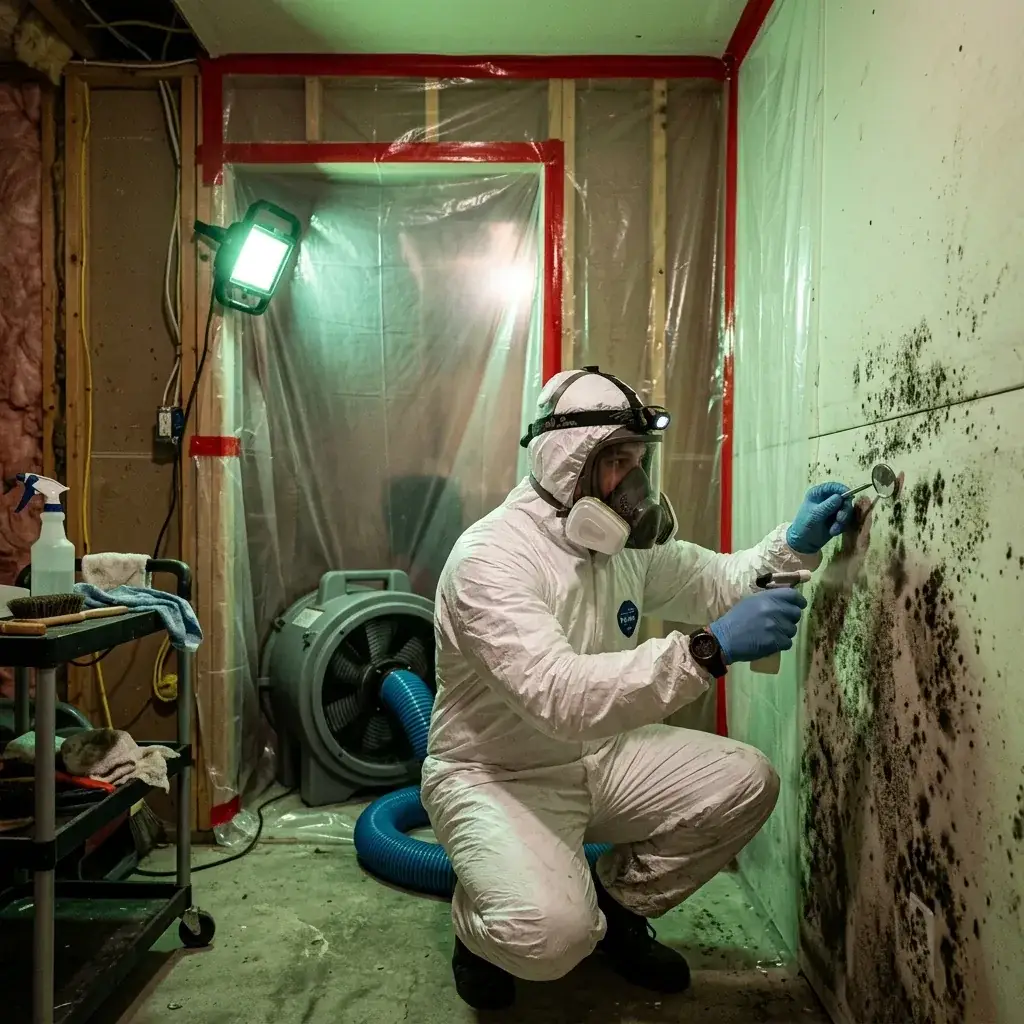
Three real claim patterns, and the lessons video case studies teach
Names and addresses are left out, but these three patterns repeat across our work in the five boroughs and Long Island every season. We also study restoration case study videos the way other trades study game film, and the lessons below include what those filmed jobs show again and again: the wet test before tear out, the flood cut decision, and the drying log that ends arguments. If you want to watch that kind of work yourself, search YouTube for water damage restoration case studies and drying walkthroughs, then come back and compare what you saw with your own claim file.
Pattern one: the washing machine hose, Queens semi detached home
A supply hose split on a second floor laundry while the family was out. Water ran for hours, through the floor, down the walls and into the kitchen ceiling below. The owners did three things right. They photographed everything before touching it, including the split hose hanging off the valve. They called the insurer the same evening and us the same night. And they kept the hose. The claim covered extraction, drying, the kitchen ceiling, both floors and the ruined laundry room contents. The adjuster tried to trim drying days, and the daily moisture log, with readings from the wall cavities, settled that in one email. Lesson: the failed part plus the drying log equals a quiet claim. A quiet water damage insurance claim is a documented water damage insurance claim.
Pattern two: the slow bathroom leak, Brooklyn co-op
A shareholder found soft plaster and paint bubbles beside the tub and called it in as a fresh leak. The insurer sent an engineer, who found rot that had clearly grown over a long period, and denied the claim as gradual damage. The hard part is that the shareholder honestly did not know. The leak had run inside the wall. The claim stayed denied, and the repair became a building conversation about pipes inside walls. Lesson: in older buildings, report stains, smells and soft spots the week you notice them, and keep the message you sent. A reported symptom with a date can turn a gradual story into a documented one, because it shows you acted when the damage first showed itself.
Pattern three: the sewer backup, Staten Island raised ranch
A summer storm surcharged the street sewer and water came up through the basement floor drain, soaking a finished basement. The owners had the backup endorsement, which many of their neighbours did not. Because category three water was involved, soft goods and the lower drywall had to go, all of it photographed before removal and listed item by item. The claim paid within the endorsement limit, and the inventory list is what got the contents paid close to full value. The neighbours without the endorsement paid out of pocket for the same street event. Lesson: the endorsement check on a dry day is worth more than any argument on a wet one.
What the filmed jobs teach, in text form
Watch enough restoration case studies and the same three habits show up in every clean job. First, test before you tear: a good crew meters walls and floors and maps the wet area before a single cut, and that map later proves the scope to the adjuster. Second, the flood cut is a decision, not a habit: baseboards come off, small inspection holes go in, and drywall is cut only as high as the moisture readings demand, which keeps the rebuild, and the claim, honest. Third, dry to a standard, not to a feeling: daily readings against a dry standard in the same materials, logged and signed off, close the drying part of the claim without argument. When you interview any crew, including us, ask how they map, how they decide cuts and how they log. The answers tell you how your claim file will look.
Test before you tear: the lesson that stops a gradual damage denial
Two filmed lessons anchor the way good crews document a loss, and both are worth watching before your own walls open. In Home RenoVision DIY, Water Damage? Do This BEFORE Mold Takes Over, the wet test with a screwdriver and the flood cut at doorknob height show how a crew proves where water actually travelled: moisture readings falling from 90 percent to 60 percent as drying works, the stain line is not the cut line, and a wait of 3 to 4 days to a week before rebuilding. For a claim, that wet test and that flood cut are evidence the damage was sudden and the drying was done right. One caution: the presenter bleach advice in that video is presenter advice, not the professional standard for category three water.
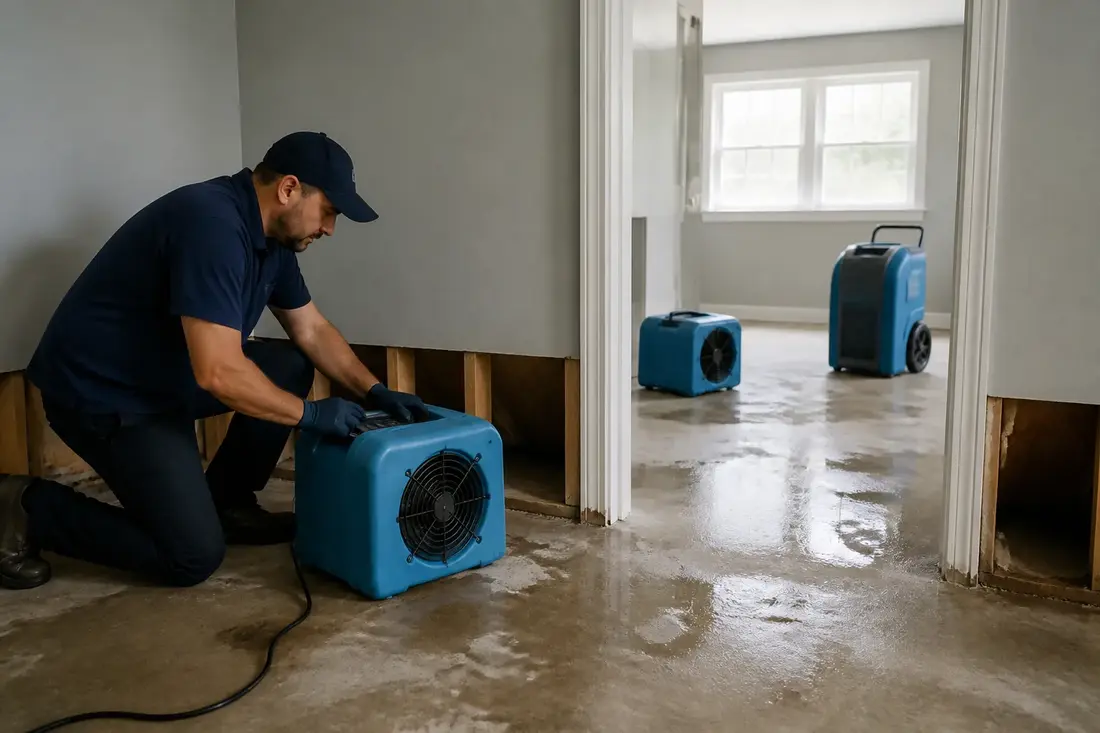
In Certified Restoration, After Storm or Water Damage Test Before You Tear, the order is extract and dry, test, mitigate, clearance, rebuild, with testing for asbestos and lead before anything is cut, because looks dry does not mean is dry. For a claim, testing before demolition is the documentation that stops a gradual damage denial: it dates and maps the wet area before anyone can argue about it afterwards. One New York caution on top of both lessons: the wet test and the flood cut were developed on drywall. Pre-war plaster on lath behaves differently, and a co-op shareholder should not cut walls without the board position described in the who pays section. Hidden damage evidence is also the whole subject of our Behind Walls page, and mould that follows a covered event is covered in depth on our Water Damage Remediation page.
Questions real New Yorkers ask online, answered straight
These are the questions that come up again and again on Reddit threads, Quora answers, WikiHow guides and neighbourhood forums whenever a New York home floods. We have rewritten them in the words people actually use, and answered them the way we answer them on the phone.
My insurer says the leak was long term. How would they even know?
They read the materials. Rot, layered staining, mould maturity, rust patterns and soft plaster all carry a rough clock, and engineers who do nothing but this work can date damage within a range. That is why your own dated evidence matters so much. If your photos, messages and invoices show a sudden event, the file has two stories and yours is documented.
Should I file a small water damage insurance claim at all?
Compare the likely repair total with your deductible and your claim history. A claim that pays out little above the deductible may still follow you at renewal and when you shop for new cover, since insurers share claim history through industry databases. For a small, clean loss you can fully afford, paying out of pocket is sometimes the smarter move. For anything involving walls, floors, neighbours or mould risk, file and document. When in doubt, report and ask questions before you decide to withdraw.
The adjuster offered a cheque on the spot. Should I take it?
An early payment is usually an advance against the claim, not a final settlement, but read what you sign. Never sign a full and final release before the home is open, dry and scoped, because hidden damage found later is hard to add after a release. If the paper says final, ask for that word to be explained in writing before your name goes on it.
Can I use my own contractor instead of the insurer list on a water damage insurance claim?
Yes. In New York the choice of contractor is yours. Insurers run preferred vendor programs and may suggest them, and some are fine, but you are not required to use them. Whoever you choose, get their estimate in the same line item style so the two scopes can be compared line by line.
My landlord is ignoring a leak that is ruining my things. What now?
Write to the landlord, not just call, and keep the copy. Photograph your belongings and the source. File on your renters policy if you have one. In New York City you can also call 311 about housing maintenance failures, and serious cases can go to housing court. Your claim and your housing complaint are separate tracks, and running both is normal. Your water damage insurance claim and your housing complaint protect different things, so run both properly.
What if the damage is worse than the estimate once walls open?
That is what supplements are for. Photograph the opened wall, get the crew findings in writing, and send the supplement request with the new scope before the extra work is closed up. Insurers approve supplements every day when the evidence is clean.
The mistakes that shrink a water damage insurance claim, and the habits that protect it
The mistakes that shrink a water damage insurance claim are almost all made in the first days, before any adjuster is involved: cleaning up before a single photo, waiting weeks to report the loss, and leaving a wet home undried while waiting for a visit that may never come.
Mistakes we keep seeing
- Cleaning up and throwing things away before a single photo is taken.
- Waiting weeks to report the loss because the water seemed minor.
- Letting a wet home sit undried while waiting for an adjuster visit.
- Starting permanent repairs before the scope is agreed in writing.
- Guessing dates and causes on the recorded statement.
- Signing a final release before hidden damage has been checked.
- Keeping no folder, then trying to rebuild the story from memory.
- Arguing about blame with a neighbour while the ceiling stays wet.
Habits that protect the claim
- Photograph wide, then close, then the source, in every room.
- Keep the failed pipe, hose or part in a bag with the date on it.
- Start the written timeline in the first hour and keep it going.
- Dry fast, and log moisture readings by room and date.
- Put every notice to a super, landlord or neighbour in writing.
- Read the estimate line by line against your own room list.
- Send receipts in so held back depreciation gets released.
- Keep the whole claim folder for years after the claim closes.
A plain timeline of a typical New York claim
The stage by stage timeline for a water damage insurance claim, with the New York clocks beside it, sits in the claim timeline section below. Read your own claim by stage, not by a single number.
Storm weeks stretch every one of those stages. After a big rain event, adjusters carry hundreds of files and the honest answer to when is simply longer than anyone wants. A complete file still moves faster than an incomplete one, because the adjuster can finish it in one sitting instead of sending it back for more proof. That is the quiet advantage of doing the first days right.
Rather not carry the claim alone?
Call us for the free inspection. We dry the home, build the photo and moisture record as we go, and meet your adjuster with the file ready.
Call (212) 555-0147 (placeholder)Words on claim letters, translated
Scope of loss: the list of what is damaged and what work is agreed. Line item: one priced task in the estimate. Supplement: an added payment when the first scope missed something. Depreciation: the amount held back for age and wear until work is done. Subrogation: your insurer chasing the party who caused the loss after paying you. Endorsement: an add on to the policy, like the sewer backup cover. Declarations page: the summary sheet of your policy with your limits and deductibles. Proof of loss: a sworn statement of the loss some policies require after a large or disputed claim. Knowing these eight terms will carry you through nearly every letter you receive.
Reading your own policy like an adjuster reads it
Most people meet their policy for the first time on the worst week of their year, and the document is not written to be met that way. You do not need to read all of it. For a water damage insurance claim, five parts of the policy do nearly all the work, and you can find each of them in minutes once you know their names.
The declarations page
This is the summary sheet, usually the first page of the policy packet and the one your insurer emails at renewal. It carries your name, the property address, the policy period, the main limits, and your deductibles. For a claim, read three lines twice: the dwelling or building limit, the personal property limit, and the deductible that applies. Then look for endorsements listed by code or by name, because the water backup endorsement lives here if you have it. If the declarations page lists something you do not recognise, that is a question for your broker on a calm day, not a mystery to solve during a flood.
The coverages section
Policies divide cover into buckets. The structure bucket pays for the building itself. The personal property bucket pays for belongings. The loss of use bucket pays the extra living costs. The liability bucket answers when your water damages someone else or someone is hurt. A single leak often touches three buckets at once: the ceiling is structure, the soaked sofa is property, and the hotel night is loss of use. When an estimate or a payment letter arrives, it helps to ask which bucket each amount came from, because a limit reached in one bucket does not always mean the others are empty.
The perils and exclusions section
Homeowners policies in New York are usually written one of two ways. Named peril policies cover only the causes listed. Open peril policies cover everything except what is excluded, and most owner policies for houses and co-ops are the open kind for the structure. Either way, the exclusions list is where water claims are decided: flood, sewer backup without endorsement, earth movement, neglect, wear and tear, and intentional acts sit in that list in nearly every policy. When a denial letter arrives, it will quote this section. Reading it before you need it turns a frightening letter into a familiar paragraph.
The conditions section: your duties after a loss
This is the part that lists what you must do: give prompt notice, protect the property, show the damaged property when asked, send a signed proof of loss if the insurer requires one, and sit for an examination under oath if a disputed claim goes that far. None of these duties is hard on its own. Together they explain why this page keeps returning to the same habits: report fast, dry fast, photograph everything, keep the folder. You are not being fussy. You are performing the conditions section of your own contract.
Proof of loss and examination under oath
On large or disputed claims, an insurer may send a proof of loss form: a sworn statement where you set out the cause, the date, and the value of what was lost, and sign it under oath. Treat it with the seriousness of a tax return. Fill it from your folder, not from memory, and never guess a number you can look up. An examination under oath goes further: a recorded session where the insurer lawyer asks detailed questions. If you are asked for one, that is the moment to have your own lawyer in the room. These steps are uncommon on ordinary claims, but knowing they exist explains why the paper trail matters from day one of any water damage insurance claim.
Claim history, renewals and the fear of filing
People hold back from filing because they fear their premium will rise or their policy will be dropped. The honest picture is this. Insurers share claim history through industry databases, and a water claim will usually be visible to other insurers for some years. One claim on an otherwise clean record rarely ends a policy, but several claims in a short span can lead to non renewal, and New York rules govern how and when an insurer may non renew a homeowners policy, including notice periods. This is why the small claim question matters: filing is a tool, not a reflex. Use it when the loss is real, the cause is covered and the amount is well above the deductible. Skip it when the loss is small, the cause is doubtful and your record already carries recent claims. Either way, document the loss as if you were filing, because a small leak that grows can still become a claim later, and your early photos will be there if it does.
How the cleanup and the claim fit together
Homeowners often meet two separate worlds after a flood: the crew with the fans, and the insurer with the forms. Trouble starts when those worlds do not talk. The drying decisions a crew makes in the first forty eight hours become the scope the adjuster prices in week two. A crew that works claims daily knows this, and works in a way that leaves the right evidence behind. Here is what that looks like from your side of the kitchen table.
What a claim ready crew does differently
They photograph before they extract, and they keep photographing at every stage: before tear out, with walls open, after drying, at handover. They map moisture with meters and write the map down. They note the source in plain words on the work order: split washing machine supply hose, failed toilet wax ring, burst radiator pipe. They list every room entered and every material removed, and they bag and label anything that has to leave the home. They keep daily drying logs with readings, dates and equipment counts. When you hire any crew for a loss you may claim on, ask to see how a finished job file looks. If the answer is a shrug, keep looking. When you hire us, that file is part of the job, and a copy of it is yours for the claim folder.
Direct billing and assignment paperwork, with eyes open
Restoration companies often offer to bill the insurer directly, which saves you fronting money during a hard week. That arrangement is normal and useful. What deserves a slow read is any form that assigns your insurance benefits or rights to the company, or any paper you are asked to sign in a wet hallway at midnight. Read before you sign, keep a copy of everything, and never sign a blank or partly blank form. A work authorisation that says what work is approved, that emergency mitigation can start, and how billing will be handled is reasonable. A document that hands over the whole claim is a document to take home and read first. Any honest crew, including ours, will hand you the pen and the time together.
The contents side: pack outs and lists
On bigger losses, belongings may be packed out: inventoried, photographed, boxed and stored while the home is dried and rebuilt. The pack out list becomes the backbone of the personal property part of your water damage insurance claim, so check it while the boxes are still open. Items damaged beyond saving are listed separately, and that list is where replacement value arguments happen, one sofa and one rug at a time. If you packed your own things in a rush during the emergency, make your list the same evening while the memory is fresh, and photograph each box as you seal it.
Living somewhere else while it dries and rebuilds
Additional living expense cover is one of the least used and most valuable parts of a New York policy. It exists for the nights the home cannot be slept in: no working bathroom, no kitchen, category three water, or a rebuild that turns the flat into a site. Use it properly. Keep the booking confirmations, the receipts and a note of why the home was not livable each night. Stay somewhere reasonable for your household size and neighbourhood, because the standard is the extra cost of maintaining your usual standard of living, not a holiday. If a dispute starts about whether the home was livable, the crew report on water category and the drying timeline usually settle it, which is one more quiet way the cleanup file and the claim file hold each other up. On a water damage insurance claim, the cleanup file is half the evidence.
When the city is part of the story
Some New York water losses involve the city itself: a water main break that floods a street of basements, a city sewer that surcharges, a hydrant or a public pipe that fails. Claims against the city run on their own track with strict and short notice deadlines through the Comptroller office, and they are easy to lose by waiting. If a public main or sewer caused your loss, ask about that notice deadline in the first days, not the first months, and keep the 311 reference numbers and any DEP or city crew paperwork with your claim folder. Your own insurer may still be your fastest route to a dry home, with subrogation sorting the blame later.
One call starts both halves of the job
The drying and the documentation, handled together from the first visit, with a free inspection to start.
Call (212) 555-0147 (placeholder)Claim notes by borough and building type
The policy language is the same across the city, but the claim that lands on an adjuster desk looks very different depending on the building it came from. These notes collect the patterns we see borough by borough. They are also why this page links out to the borough cleanup pages: the drying work and the claim work share the same building, the same pipes and the same neighbours.
Manhattan high rises and pre-war buildings
In Manhattan the claim almost always involves more than one unit. A riser leak or a radiator failure on the twelfth floor can wet three flats below it, and the file grows a building layer: incident reports from the super, the building master policy, and management letters about access. Access is the delay that defines Manhattan claims. Drying cannot finish if the crew cannot get into the flat below, and the claim clock does not care about a locked door. Shareholders and unit owners who keep management informed in writing, and who give access quickly, watch their claims move while others stall. Our Manhattan page covers the building types behind these claims, from pre-war stacks to full service towers. Each of those buildings writes a different water damage insurance claim.
Brooklyn brownstones and multi family houses
Brownstone claims turn on old plumbing in shared walls and on the split between owner occupied floors and rental floors. A leak in a party wall can wet two buildings, and then two owners and two insurers read the same wet plaster from opposite sides. Garden level flats flood from the rear yard and from surcharged drains, and those files turn on whether the water came through a drain, which points to the backup endorsement, or over the threshold, which points to flood. The Brooklyn page walks through the brownstone pipe layouts that produce these losses. Party wall losses produce a two sided water damage insurance claim, with two insurers reading the same wet plaster.
Queens houses, basement flats and combined sewers
Queens files are heavy with sewer backups and basement water, because so much of the borough drains into combined sewers that surcharge in hard rain. The endorsement question decides many Queens claims before an adjuster even visits. Basement flats add a second layer: who knew the unit was occupied, what the lease says, and whether belongings stored at floor level were listed. Homeowners in the borough who photograph their basement on a dry day, showing what sits where, hold a quiet advantage when the wet day comes. See the Queens page for the neighbourhood drainage patterns behind these claims. In Queens, the endorsement question decides a water damage insurance claim before an adjuster ever visits.
Bronx co-ops and large complexes
The Bronx carries some of the largest co-op housing in the country, and its claims run through boards, management companies and master policies more than anywhere else. Stack leaks in big complexes wet a vertical line of flats, and the building file and the unit files have to be built together or they contradict each other. Shareholders help themselves most by filing their own unit claim early instead of waiting for the building process to reach them, and by keeping the management notices they receive. The Bronx page covers the Grand Concourse pre-war stock and the big complexes in local detail. In a big complex, the building file and the unit water damage insurance claim must agree, or both stall.
Staten Island houses and the shore
Staten Island claims split into two families. Inland, they look like suburban house claims: water heaters, washing machines, frozen pipes in split levels and raised ranches, sump pump failures where the water table runs high. Along the East and South Shore, the flood question stands in front of everything, because surge and street water decide which policy answers before any other question is asked. Homeowners there help their future claims by keeping the flood policy and the homeowners policy in the same folder, and by photographing the home dry, inside and out, once a year. Our Staten Island page covers the shore zones and house types street by street. Along the shore, the first question on any water damage insurance claim is which policy answers at all.
Long Island: water table, cesspools and surge
Long Island adds two claim ingredients the city rarely sees. The first is the high water table and the cove joint where basement walls meet the floor, which produces seepage arguments that turn on maintenance and grading. The second is the private wastewater side: cesspool and septic backups carry their own coverage questions, separate from a street sewer backup. Add South Shore surge exposure and sump pumps that run hard every wet spring, and Long Island files reward owners who keep pump receipts, service records and dry day photos. The Long Island page maps the Nassau and Suffolk patterns town by town. On Long Island, pump receipts and dry day photos quietly win a water damage insurance claim.
Different buildings, same lesson. The claim is built in the building, out of its pipes, its documents and its neighbours. Start the file where the water is, keep the building paperwork with the policy paperwork, and the adjuster conversation gets shorter in every borough.
Before the loss: the dry day work that makes any future water damage insurance claim easier
The best time to work on a water damage insurance claim is months before the water arrives. None of the habits below takes more than an afternoon, and every one of them pays you back on the worst week of your year, in faster answers, cleaner proof and fewer arguments. Think of this section as the page you read with dry floors and a cup of tea, so the rest of the page is easier if you ever need it wet.
Make a home inventory now, for a future water damage insurance claim
Walk your home with your phone and film every room slowly, opening cupboards, closets and drawers as you go. Narrate the big items: where they came from, roughly when, and anything unusual about them. Then walk it again with still photos of labels, serial plates and receipts you keep in a drawer. Store the video somewhere outside the home, in cloud storage or with family, because a video stored on a laptop under the leak is no use to anyone. This single habit turns the personal property part of a future claim from a guessing game into a checklist, and adjusters settle inventoried claims faster because there is simply less to doubt. An inventoried water damage insurance claim settles faster than a remembered one.
Know your shutoffs, and label them
Find the main water shutoff, the water heater valve, the washing machine valves and the breaker panel, and label them with tape and a marker. Teach everyone in the home where they are. Minutes matter with water: a supply line can pour a room worth of damage while a family searches for a valve in the dark. In a flat, learn which valves the super controls and keep the super number in your phone. In a house, test the main valve once a year, because valves that never move can seize, and a seized valve on the wrong night is a claim growing in real time.
Replace the cheap parts before they fail
Rubber washing machine hoses, old toilet supply lines, tired wax rings and rusting water heater tanks cause a large share of the claims on this page, and they are all cheap or planned replacements compared with a flooded home. Swap rubber hoses for braided steel, fit an automatic shutoff on the washing machine if you can, and note the age of your water heater from its data plate so its replacement is a plan and not a surprise. Keep the receipts. Insurers ask about maintenance when a part fails, and a folder of upkeep receipts is a calm, complete answer.
Check the endorsements, not just the price
At renewal, most people compare one number. Compare the water lines instead. Do you carry the sewer backup endorsement, and at what limit. Is there a separate deductible for coastal wind events. Does the policy pay replacement cost or actual cash value on belongings. Is mould covered, limited or excluded. Would a flood policy make sense for your street, even outside the mapped zones, given how many New York floods now arrive as street water in heavy rain. Ten minutes with your broker on these five questions is worth more than a year of small premium savings on the wrong shape of policy.
For landlords and building staff: the paper that protects everyone
Buildings that handle water well share one habit: they write things down. A leak log with dates, units, causes and the crew called becomes gold when three insurers start asking the same questions. Access letters sent the same day, photos shared with affected units, and a super who knows the shutoffs by heart turn a building emergency into a building procedure. Local Law 55 duties on mould and indoor allergens, HPD complaint records through 311, and board minutes after a big loss all become part of the claim story in city buildings, and the buildings with tidy records settle their side of every water damage insurance claim faster and with less ill feeling between neighbours.
Four losses, four checklists: the water damage insurance claim by cause
Every water damage insurance claim is argued on its cause, so the evidence that matters changes with the loss. These four short checklists collect, cause by cause, what a water damage insurance claim needs when the loss is one of the four New Yorkers file most.
Burst pipe: the water damage insurance claim in its cleanest form
Keep the split section of pipe. Photograph the split, the water path and the data of the day: when you found it, when the valve closed. For a frozen pipe water damage insurance claim, add the heating record. The pipe proves suddenness, the photos prove extent, and the drying log proves the equipment days on this water damage insurance claim.
Sewer backup: the water damage insurance claim that turns on one endorsement
Check the declarations page first, because this water damage insurance claim lives or dies on the water backup endorsement. Photograph the drain or fixture the water came through, list soft goods item by item before removal, and keep the 311 reference if the street sewer surcharged. Without the endorsement, this water damage insurance claim usually ends at the exclusion, so document for the city notice as well.
Upstairs leak: the water damage insurance claim with three insurers
File your own water damage insurance claim first, notify the super and the neighbour in writing the same day, and photograph your ceiling before anyone opens it. Your HO-6 carries your interior, the master policy carries the riser, and liability follows negligence. A water damage insurance claim filed early, while the stack is still wet, lets every insurer see the same facts.
Storm water: the water damage insurance claim in a queue of thousands
Separate the water by source before you file, because a storm water damage insurance claim can split in two: wind opening damage to the homeowners policy, rising water to the flood policy. Photograph the roof opening and the street water line separately. File this water damage insurance claim in the first 48 hours, start drying at once, and keep the proof of loss clocks from the NFIP section in view.
The claim timeline: what happens, and when
People ask how long a water damage insurance claim takes as if it had one answer. It has nine. The table below gives the typical time for each stage, measured from the guides and claim handlers who publish their timelines, and the New York clocks sit beside it in the claim clocks section above. One published range says reimbursement typically takes 8 to 10 weeks after filing, another says a straightforward claim pays in 2 to 6 weeks. Both can be true at once: the first measures to full reimbursement, the second to first payment. Read your own claim by stage, not by a single number.
| Stage | Typical time |
|---|---|
| Claim number issued | Same day |
| Adjuster contact | 1 to 3 days. New York law requires acknowledgement within 15 business days. |
| Adjuster inspection | A few days to a week, and longer during storm season |
| First estimate and actual cash value payment | 2 to 6 weeks |
| Straightforward loss, start to finish | 30 to 60 days |
| Disputed or large loss | 3 to 6 months |
| Denied and appealed | 3 to 6 months and beyond |
| Reconstruction after settlement | 2 to 8 weeks for a typical scope, longer with permits or special materials |
| Recoverable depreciation | Paid after repairs are complete and documented, usually within 30 days of the completion paperwork |
The paper trail checklist: the whole claim in one folder
- Photos and video from before cleanup, wide and close, with the source in frame.
- The narrated video walk, with the date and time spoken at the start.
- The room by room inventory of damaged belongings, with age and condition.
- The failed pipe, hose or part, kept and photographed with a ruler for scale.
- The written timeline: discovery, calls, visits, and what was agreed each time.
- The claim number, the adjuster name and direct number, and every letter.
- The moisture readings and daily drying log, by room and date.
- Every receipt: mitigation, hotel, laundry, replacement items, rebuild invoices.
- The insurer estimate, your contractor comparison, and every supplement.
- Building paperwork where it applies: super reports, board letters, 311 references.
If it is not in the folder, it did not happen, at least as far as a dispute three months later is concerned. Keep the folder for years after the water damage insurance claim closes. A folder kept that way can reopen an argument years later, because a closed water damage insurance claim can still be questioned, and a questioned water damage insurance claim is answered from paper, not memory.
Water damage insurance claim questions, answered
Forty questions we hear from New York homeowners, renters, landlords and unit owners, with straight answers. The first nine are the questions New Yorkers ask most about a water damage insurance claim, and every answer below starts with the direct answer before the detail. If your question is not here, call and ask it. A five minute call early in a claim is worth a week of letters later.
How do I file a water damage insurance claim?
Stop the water first, then photograph and video everything before you move or clean anything. Call your insurer the same day, ideally within 24 to 48 hours, and start professional drying right away instead of waiting for the adjuster. Keep every receipt, keep the failed pipe or hose, and walk the adjuster through every affected area, including hidden damage behind walls. That order, document first, report the same day, dry without waiting, is the order every strong guide and every adjuster agrees on, and it is the order this page follows step by step.
Does homeowners insurance cover water damage?
Usually yes when the water damage is sudden and accidental and comes from inside the home, like a burst pipe, a split washing machine hose or a failed water heater line. Usually no when the water rises from outside as flood, creeps in slowly over weeks or months, or backs up through a sewer or drain without a water backup endorsement. The cause decides the claim, not the size of the puddle. Read the coverage table on this page, then check your declarations page for the endorsements you actually carry.
How long does a water damage insurance claim take to settle?
Most straightforward claims take 2 to 6 weeks from first notice to first payment, and 30 to 60 days start to finish. Complex claims with a disputed scope, mould or a large loss take 2 to 6 months, and a denied claim that goes through appeal can run longer. In New York the insurer must acknowledge your claim within 15 business days and accept or reject it in writing within 15 business days after receiving your proof of loss and everything it asked for, under Regulation 64.
What should I do if my water damage claim is denied?
Get the denial in writing with the exact policy language the insurer relies on, then read that language against your full policy. Gather independent evidence: a plumber cause report, moisture readings, dated photos and a contractor estimate. Request a reinspection with your contractor present, then file a written appeal that answers each denial point one by one. If the fight is about the amount of a covered loss, use the appraisal clause. If handling itself is the problem, complain to the Department of Financial Services. A public adjuster or an attorney is the last rung, not the first.
Can I file a claim for gradual water damage?
You can file, but most policies exclude gradual damage caused by neglect, wear and tear or a leak that ran for weeks or months, so a gradual claim is usually denied. A sudden event, like a pipe that splits, is the covered case. If part of your damage is old and part is new, file for the new part and prove the split with dated photos, a plumber report on how the part failed, and any message or invoice showing when the problem first showed itself.
What happens if I delay filing a claim?
Delay weakens a water damage insurance claim in three ways. Your policy requires prompt notice, so a long unexplained gap hands the insurer a denial reason. The evidence fades: wet materials dry, rot spreads and nobody can tell what happened first. And mould that grows while a home sits wet can be treated as damage you failed to prevent. Report the loss within 24 to 48 hours of finding it. If you are already late, file anyway, explain the gap honestly in writing, and send whatever dated evidence survives.
Does homeowners insurance cover mold after water damage?
Mould is usually covered only when it follows a covered sudden water event and you acted fast, drying the home within the first 24 to 48 hours. Mould from a slow leak, from flood water or from a home left wet is usually not covered, and many policies cap mould payments at a set limit even on covered claims. In New York, larger mould jobs also need a licensed mould assessor and a licensed remediation contractor, which is one more reason the drying in the first two days decides so much.
How much does a public adjuster cost in NYC?
New York law caps a public adjuster fee at 12.5 percent of the claim recovery. The fee is contingency only: no upfront payment, and no recovery means no fee. The adjuster must be licensed by the Department of Financial Services and the fee terms go in a written contract. Some guides quote a wider range of 10 to 15 percent, but the legal cap in New York is 12.5 percent, and that is the figure to hold any contract against.
Who pays when the leak comes from the apartment above?
File your own claim first so your interior gets documented and dried without delay. Your unit owner policy, usually an HO-6, covers your interior finishes and belongings. The building master policy covers the structure and any shared riser that failed. The upstairs unit may carry liability if the leak came from a fixture or appliance inside their walls that they neglected. Carriers settle fault between themselves afterwards through subrogation. Do not wait for the upstairs insurer while your ceiling stays wet.
What is a proof of loss?
A proof of loss is a signed, sworn statement of what happened, what was damaged and what you claim for it. A typical HO-3 policy form asks for it within 60 days after the insurer requests it, and you should fill it from your claim folder, never from memory. On a flood claim the rule is stricter: the insurer cannot pay an NFIP claim until it has a complete signed proof of loss, due within 60 days of the flood. Never guess a figure you can look up.
What is the appraisal clause and when should I use it?
Appraisal settles a fight about the amount of a covered loss, not a fight about whether the loss is covered. Each side hires its own appraiser, the two appraisers pick a neutral umpire, and any two of the three set the amount, which is then binding. Under standard policy wording each side names its appraiser within 20 days of a written demand and the appraisers pick an umpire within 15 days, or a court appoints one. The process typically takes 4 to 8 weeks. Use it when the insurer agrees the loss is covered but the number is far apart.
How do I file a complaint with the Department of Financial Services?
The New York State Department of Financial Services takes consumer complaints about claim delays, unexplained denials and unfair handling, free of charge. File online at dfs.ny.gov or call the consumer hotline at (800) 342-3736, Monday to Friday, 8:30 AM to 4:30 PM. The separate disaster hotline is (800) 339-1759. Once DFS asks your insurer a question about your file, the insurer must respond within 10 business days under Regulation 64. Keep your complaint case number, your claim number and your timeline together in the claim folder.
Is sewer backup covered on a water damage insurance claim?
Only if you bought the water backup endorsement. Standard homeowners policies exclude water that backs up through sewers, drains and sump systems, and that exclusion decides many New York basement claims after heavy rain. Check your declarations page for the endorsement and its limit, because backup cover often carries its own limit and sometimes its own deductible. If you own a home with a basement and no endorsement, adding one on a dry day is the cheapest protection this page can recommend.
What is the difference between flood damage and water damage?
Water damage comes from inside the home or through an opening a storm made: burst pipes, failed appliances, rain through a wind damaged roof. Flood is water from outside rising over normally dry land: street water, storm surge, an overflowing river or creek. Homeowners policies cover the first and exclude the second. Flood needs its own policy, usually through the National Flood Insurance Program, and a new flood policy normally takes 30 days to take effect, so it cannot be bought as a storm approaches.
Do I need co-op board approval before drying or cutting walls?
Drying with fans and dehumidifiers needs no approval and should start at once. Cutting walls is different. In a co-op, the walls and the pipes inside them may belong to the corporation under the proprietary lease, and boards expect notice before demolition opens them. Tell the super and management in writing the day the leak is found, dry immediately, and get the board position on wall work before a flood cut. In a pre-war building, also test for asbestos and lead before cutting plaster, as the Test Before You Tear section of this page explains.
What should I say to the adjuster on a water damage insurance claim?
Say the date and time you discovered the damage, what happened, where the water came from if you know it, what you did to stop it, and that you have photos and video. Walk the adjuster through every affected area, including the rooms that look dry and the damage behind walls. Stick to factual observations. Do not speculate about the cause, do not admit fault, and do not agree that damage is old when you do not know. Ask for the full line item estimate in writing before you agree to anything.
Can I choose my own contractor for a water damage insurance claim?
Yes. In New York the choice of contractor is yours. Insurers run preferred vendor programmes and may suggest one, and some are fine, but you are not required to use the insurer list. Whoever you choose, ask for the estimate in the same line item style the insurer uses, so the two scopes can be compared line by line, room by room and task by task. Keep the failed parts, the drying log and the open wall photos, because those are what turn a comparison estimate into a paid supplement.
What is Xactimate and why does my estimate look so low?
Xactimate is the estimating programme most insurers use to price claim repairs line by line: remove baseboard, drywall patch, paint, flooring, drying equipment per day. Estimates come back low for ordinary reasons, not always bad ones: a room measured short, a missing room, drying days trimmed, a swollen cabinet priced as a repair, or a solid floor priced as a basic one. Read every line against your own room list, then have your contractor send a line by line comparison with photos matched to each disputed line as a supplement request.
What is recoverable depreciation on a water damage insurance claim?
Many replacement cost policies first pay actual cash value, which is replacement cost minus depreciation for age and wear. The part held back is the recoverable depreciation, and it is paid when you show the work is done or the item replaced, usually within 30 days of sending the completion paperwork. Keep every rebuild receipt, photograph the finished rooms, and ask for the held back amount by name. Homeowners leave real money unclaimed at this step every year simply because nobody told them the second payment needs a request.
Does my policy pay for code upgrades during repairs?
Sometimes. When repairs must bring part of the home up to current building code, the extra work is covered only if your policy includes ordinance and law cover, which some policies carry as standard and others sell as an endorsement. Ask the adjuster directly, check the endorsements on your declarations page before rebuilding starts, and get any code requirement in writing from the building department or your contractor. Code work raised at scope stage is far easier to add to a water damage insurance claim than code work raised after the walls are closed.
What is loss of use cover on a water damage insurance claim?
Loss of use, also called additional living expense cover, pays the extra cost of living elsewhere when a covered loss makes the home unlivable during repairs: a hotel or short rental, extra food costs and laundry. It pays against receipts, so keep every booking confirmation and bill, and keep the standard close to your usual one. If the insurer questions whether the home was livable, the crew report on water category and the drying timeline usually settle it, which is another way the cleanup file supports the claim file.
What does a flood policy cover in a basement?
Less than most people expect. Under the National Flood Insurance Program, basement cover is narrow: the furnace, the water heater, the washer and dryer and the electrical panel are covered, while finished walls, finished floors and most contents stored in a basement are not. Building cover and contents cover are also bought separately on a flood policy, so a policy can protect the structure and leave the belongings out. Read the basement and contents sections of your flood policy on a calm day, not after the water arrives.
How do I appeal a denied flood claim to FEMA?
Send a written appeal to FEMA within 60 calendar days of the date on the insurer denial letter. If the sixtieth day falls on a weekend or a federal holiday, the deadline moves to the next business day. There is no fee and no third party is needed. Two warnings matter: if you complete an appraisal on the claim, you cannot then appeal to FEMA, and filing an appeal does not extend the one year deadline to sue after the first written denial. FEMA disaster assistance is separate again, with its own 60 day appeal window from the determination letter.
Can I claim against New York City for a sewer backup?
You can, but the track is strict and the odds after a big storm are poor. Report the backup to 311 first, because DEP inspects sewer complaints, then file a notice of claim with the NYC Comptroller within 90 days of the event. You must then wait 30 days after the notice before suing, and any suit must start within 1 year and 90 days. Keep the 311 reference number with your claim folder. For most homes, your own policy with a backup endorsement is the path that actually pays.
What did Hurricane Ida teach New York about city claims?
That a city claim after an extreme storm is not a reliable path. The remnants of Hurricane Ida hit on 1 to 2 September 2021, and New York City received 4,703 claims for Ida property damage. The Comptroller denied all of them, relying on a 1907 case, Holzhausen v. City of New York, which held that a city is not liable for damage from extraordinary and excessive rainfall. Representative Grace Meng called the denials wrong and urged reconsideration, but the denials stood. The lesson is plain: insure the risk, because the city claim is the weakest door.
What should I do after the November 2026 nor'easter if my home flooded?
File early and document everything, because claim queues grow fast after a declared storm. The 12 November 2026 nor'easter dropped 3.56 inches of rain at JFK by the final National Weather Service figure, after early reports of 3.32 inches, and adjusters across the region took on hundreds of files at once. Start drying without waiting for a visit, keep the drying log, and expect inspections to take longer than the normal few days. Governor Hochul requested federal help on 5 November 2026 for coastal projects naming Long Island and Rockaway, and FEMA Public Assistance pays public agencies, not private homes, so your own claim remains the path that pays.
Will filing a water damage insurance claim raise my premium?
Honestly, it varies by carrier, policy and claim history, and no page can give you a rule that fits every home. Insurers do share claim history through industry databases, so a claim can affect renewals and future shopping, and several claims close together can lead to non renewal under New York rules. Weigh the size of the loss against your deductible and your recent record before filing a small claim, and ask your own agent the question directly, because your agent can see your file and this page cannot.
Is it true that Insurance Law 3420(d) gives my insurer 15 business days to decide?
No, and this page corrects that error because at least one ranking New York guide repeats it. Section 3420(d) is a timely disclaimer rule for death or bodily injury under liability policies. It tells an insurer to give written notice of a disclaimer as soon as is reasonably possible, and it does not apply to property damage claims at all. The 15 business day clocks on your claim come from Insurance Law 2601 with Regulation 64, and from Insurance Law 2618 after a declared disaster. The claim clocks section of this page sets them out in full.
Does homeowners insurance cover a burst pipe?
Usually yes, for the damage the water causes: floors, walls, cabinets and belongings. The failed pipe itself is treated as a worn part and is usually not paid for. Frozen pipe claims carry one condition people forget: the heat must have been maintained, or the home properly winterised, while you were away. Keep the split section of pipe and photograph it, and keep a heating bill or thermostat record if the insurer asks, because that small piece of pipe is the proof the event was sudden.
Should I clean up before the adjuster comes?
Clean up the water, yes. Throw away the evidence, no. Extract, mop and start drying right away, because waiting grows mould and can be treated as a failure to protect the property. Photograph and video everything first, wide shots and close shots, and keep damaged belongings where the adjuster can see them, or see clear photos of them, before anything leaves the home. Keep damaged materials until the adjuster has seen them, unless they are a health risk, and note any health risk removal in writing.
What photos does an adjuster want for a water damage insurance claim?
Wide shots of each room from the doorway, close shots of each damaged item and of the water line on the wall, and clear shots of the source that failed. Add a slow narrated video walking the path the water took, saying the date and time as you start. Photograph the failed part again on a dry surface with a coin or ruler beside it for scale. Keep unedited originals, send copies, and add moisture meter readings by room and date once drying starts. That set settles most arguments before they begin.
What is a supplement on a water damage insurance claim?
A supplement is an added payment when the first scope missed something, most often hidden damage found when walls open or floors come up. Photograph the opened damage the moment it is exposed, get the crew findings in writing, and send the supplement request with photos and a revised scope before the extra work is closed up again. Supplements are a normal part of claims, not a special favour and not a fight. A claim file with a drying diary and open wall photos rarely has its supplements refused.
Why is my mortgage company named on the claim cheque?
Because the lender has a financial stake in the home being repaired, larger claim payments are often made out to you and the lender together. The lender runs an endorsement and release process, usually in stages against the scope, the contractor details and proof of completed work. Start that paperwork early, because lender release time is the delay nobody warns you about, and a lender file left open can surface years later at a refinance or a sale, when the paperwork is cold and everyone has forgotten the claim.
Can a restoration company help with my water damage insurance claim paperwork?
Yes, within limits. A good crew documents the loss the way adjusters need it: dated photos before extraction, moisture maps, daily drying logs, a clear note of the source in plain words, and an itemised scope. We do that on every job, meet adjusters at the home, and give you a copy of the file for your claim folder. We are not lawyers and not public adjusters, we do not negotiate your claim, and nobody honest can promise that a water damage insurance claim will be approved.
What should I say on the recorded statement?
Facts you know, and nothing you are guessing. When you found the water, what you saw, what you did, who you called and when. If you do not know when a leak began, say you do not know. A guessed date that later proves wrong can be used to question the whole file, so honest and narrow beats helpful and wrong. The same rule covers the first call to the insurer: report the discovery, the source if you know it, and the steps you have taken, and let the documents carry the detail.
Does insurance cover hidden water damage behind walls?
It can, when the hidden damage traces back to a covered sudden event and you can prove the connection. That proof is the moisture map, the readings inside the wall cavity, the open wall photos and the drying log, which together show the damage radiating from one failure point. Our Behind Walls page covers how hidden damage is found and dried. Hidden damage argued from a stain alone is hard. Hidden damage documented with readings and photos, and raised as a supplement before the wall closes, is a normal part of a water damage insurance claim.
What are the deadlines on an NFIP flood claim?
Four clocks run at once. The signed proof of loss is due within 60 days of the flood, and you should send it even if you disagree with the adjuster figure. An appeal to FEMA is due within 60 calendar days of the written denial letter. Appraisal is available when the loss is covered but the amount is disputed, though completing an appraisal ends your right to appeal to FEMA. A lawsuit must start within one year of the first written denial, in federal court, and an appeal does not extend that year. The NFIP section of this page sets the clocks out in a table.
What deadlines must my insurer meet under Regulation 64?
Regulation 64, at 11 NYCRR Part 216 under Insurance Law 2601, sets the clocks. Your insurer must acknowledge the claim within 15 business days of notice, reply to your communications within 15 business days, begin its investigation within 15 business days, and accept or reject the claim in writing within 15 business days after receiving a properly executed proof of loss and everything it asked for, or explain in writing why it needs more time and update you while the claim stays open, with a status letter every 90 days. An agreed settlement must be paid within 5 business days, and questions from the Department of Financial Services must be answered within 10 business days.
Do I need a professional to clean up water damage before filing a claim?
No. You can start temporary mitigation yourself, including extraction and drying, and you should, because waiting lets damage grow. Photograph and video everything first, keep damaged materials until the adjuster has seen them, and keep every receipt. What must wait is permanent repair: new floors, cabinets and repainting should not start until the adjuster has inspected the damage or agreed the scope in writing. A professional crew helps because it documents as it dries, but the claim does not require one before you file.
Should I call my insurance company or a restoration company first?
Do both in the same hour. Stop the water if it is safe, take photos, notify your insurer to open the claim, and phone a restoration company to start drying. No authoritative source says either order changes coverage. Waiting a day is the real risk, because mould can begin within 24 to 48 hours and a wet home left undried can be treated as damage you failed to prevent. Note the claim number and the time of each call in your timeline.
After the settlement: closing the claim and closing the loop
The claim does not end when the cheque arrives. It ends when the home is whole, the final amounts are released, and the file is closed in writing. The weeks after settlement have their own small traps, and they are all avoidable with the same folder you have kept all along.
First, finish the depreciation trail. Replacement cost policies hold back depreciation until the work is done and the items are replaced. Send the final contractor invoice, the paid receipts and photos of the finished rooms, and ask for the release of the held back amount by name. People leave real money unclaimed at this step every year simply because nobody told them the second payment needed a request and proof.
Second, close the lender loop if a mortgage company was named on any cheque. Send their required completion paperwork, expect an inspection or a photo review on larger jobs, and keep the release letters. A lender file left open can surface years later at a refinance or a sale, when everyone has forgotten the claim and the paperwork is cold.
Third, ask for written confirmation that the claim is closed, and file it with the whole folder: the photos, the timeline, the estimates, the letters, the drying log and the receipts. Keep that folder for years. If a later leak touches the same rooms, the old file proves the earlier damage was repaired, which protects the new claim from being tangled with the old one. If you sell the home, the file answers buyer questions about the repair history honestly and completely.
Last, spend one dry afternoon on the lessons. Fit the shutoff valve on the washing machine. Replace the hose that scared you. Raise the stored boxes off the basement floor. Photograph the home as it stands now, whole and dry, and add those photos to the front of the folder as the new baseline. A claim that ends with prevention is the only kind that truly closes, and the next claim, if it ever comes, will meet a household that already knows the order of work: stop the water, photograph everything, open the claim, dry the home, keep the folder.
Start the claim the right way, today
If your home is wet, the order of your next few hours matters more than anything an adjuster will say next week. Stop the water. Photograph everything. Open the claim. Dry the home with a crew that documents as it works. That is the whole secret, and it is not really a secret. It is just work done in the right order.
We cover homes across the city and Long Island, and our borough pages carry the local detail for Brooklyn, Queens, the Bronx, Staten Island, Long Island and Manhattan, with the full service picture on our New York home page. Call for the free inspection and we will walk the damage with you, start the drying, and build the file your claim deserves.
One last word of honesty, because this page has tried to be honest throughout. A claim is a contract being honoured, not a lottery ticket and not a battle to win at any cost. The homeowners who come out of this process best are not the loudest or the luckiest. They are the ones who stopped the water fast, told the truth in a straight line, kept the proof, and stayed polite and specific on paper while the home dried around them. If that is how you run your claim, the system, for all its forms and delays, usually works the way it was written to work. And if it does not, you now know the ladder: rebuttal, reinspection, appraisal, the Department of Financial Services, and professional help. Start at the first rung today, while the evidence is still wet. We are ready when you call, day or night, in every borough.
Free inspection, claim ready documentation
One call starts the drying and the paperwork trail together.
Call (212) 555-0147 (placeholder)All pages: the full New York water damage library
This water damage insurance claim page is one of sixteen. The home page carries the full service picture, the nine area pages carry the local building and drainage detail for each borough, Long Island and the upstate cities, and the five service pages go deep on the problems a claim most often meets: hidden water, flood, remediation and fire. Every page is written to stand alone, and together they cover the whole loss, from the first hour to the closed claim. Start wherever your water damage insurance claim hurts most, and use the other pages as the water damage insurance claim grows.
Home: Water Damage Restoration New York · Brooklyn · Queens · Bronx · Staten Island · Long Island · Manhattan · Rochester · Albany · Water Damage Behind Walls · Fire Damage Restoration · Flood Cleanup · Water Damage Remediation · Fire Damage Cleanup
Buffalo
Lake-effect snow, frozen pipes and basement floods across Erie County.
Water Damage Restoration Syracuse
Lake-effect snow, frozen pipes and creek floods across Onondaga County.
Water Damage Restoration Yonkers
Saw Mill River floods, burst pipes and pre-war buildings across Westchester County.
Water Damage Restoration New Rochelle
Long Island Sound storms, Hutchinson River floods and pre-1980 homes across Westchester County.
Water Damage Restoration Mount Vernon
Hutchinson River floods, century-old sewers and basement backups in Westchester's most densely packed city.
Water Damage Restoration Schenectady
Mohawk River floods, Stockade ice jams and frozen pipes across the Capital Region.
Water Damage Restoration Utica
Mohawk River floods, Sauquoit Creek overflows and frozen pipes across Oneida County.
Water Damage Restoration White Plains
Bronx River floods, Mamaroneck River overflows and frozen pipes across Westchester County.
Water Damage Restoration Troy
Hudson River floods, Poesten Kill overflows and frozen pipes across Rensselaer County.
Water Damage Restoration Niagara Falls
Niagara River ice jams, Cayuga Creek floods and frozen pipes across Niagara County.
Water Damage Restoration Binghamton
Susquehanna and Chenango River floods, burst pipes and frozen pipes across Broome County.
Water Damage Restoration Westchester County
Mamaroneck River floods, Bronx River and Saw Mill River flash floods, frozen pipes across Westchester County.
Water Damage Restoration Hudson Valley
Hudson River and creek floods, tidal surge, frozen pipes across the Hudson Valley.
Water Damage Restoration Capital Region
Hudson and Mohawk floods, burst pipes, ice jams across the Capital Region.
Water Damage Restoration Western New York
Lake effect snowmelt, ice jams and creek floods across the eight county region.
Water Damage Restoration Finger Lakes
Eleven lakes, Genesee River floods and canal towns across the fourteen county region.
Water Damage Restoration Central New York
Syracuse and Utica, Oneida Lake and the Mohawk River, across two state regions.
Water Damage Restoration Southern Tier
Binghamton and Elmira, Susquehanna and Chemung rivers, across eight counties.
Water Damage Restoration NYC
All five boroughs, the Hudson and East rivers, one fast response.
How Long Does Mold Take to Grow After Water Damage?
The 24 to 48 hour mold timeline, warning signs, and what stops it.
Water Damage Restoration Process
The full restoration process, step by step, from first call to dry home.
What Is Water Damage Restoration
What restoration really is, what it includes, and when to call.
Mold Remediation New York
New York's licensed remediation system, from assessment to clearance.
Water Removal NYC
Standing water pumped out fast, then dried safe, for every NYC home.
Water Damage NYC
Water damage in NYC explained plainly, with fast help for every home.
Water Damage Cleanup Nyack NY
Water damage cleanup in Nyack explained plainly, with fast help for every home.
How to Choose a Water Damage Restoration Company in New York
How to choose a water damage restoration company in New York, with every check that protects your home.
How to Choose a Water Damage Restoration Company in New York
Commercial Water Damage Restoration NYC | 24/7 Emergency Help
Commercial water damage in NYC explained plainly, with fast help for every business.
Commercial Water Damage Restoration NYC | 24/7 Emergency Help
Basement Water Damage Restoration NYC
Basement water damage in NYC explained plainly, with fast help for every basement.
Water Damage Repair New York
Water damage repair in New York explained plainly, with fast help for every home.
Water Damage Restoration Poughkeepsie New York
Water damage restoration in Poughkeepsie explained plainly, with fast help for every home.
Emergency Water Damage NYC
Emergency water damage in NYC explained plainly, with fast help when every minute counts.
Water Damage Cleanup in NYC
Water damage cleanup in NYC explained plainly, from torn-out materials to dry rooms again.
Flood Damage Restoration NYC
Flood damage restoration NYC explained plainly, from flood events and NFIP claims to dry rooms and a flood-resistant rebuild.
How Long Does Water Damage Restoration Take
How long water damage restoration takes explained plainly, from the first drying days to the full timeline of a dry, rebuilt home.
Flood Damage Cleanup Washington Heights
Flood damage cleanup in Washington Heights explained plainly, with fast help for every home.
Does Insurance Cover Water Damage Restoration
Whether insurance covers water damage restoration, explained plainly, by cause and New York rule.
Water Damage Mold Remediation
Mold that grew after a leak or flood, remediated the New York way, by licensed assessor and remediator.
Water Damage Restoration Companies New York
Compare the companies serving New York: national franchises, regional firms and local independents, and how to verify licences and certification before you hire.
Water Damage From Upstairs Neighbor
Water damage from an upstairs neighbor in New York City: who pays, what to do in the first hour, and how to document, report and claim.
Fire claims and water claims often arrive together, because the water that puts a fire out does its own damage on the way. If your loss involves both, the Fire Damage Restoration and Fire Damage Cleanup pages cover the fire side of the same claim file.