Water Damage Restoration in Utica: Mohawk River Floods, Frozen Pipes and Flooded Basements in the Heart of the Mohawk Valley
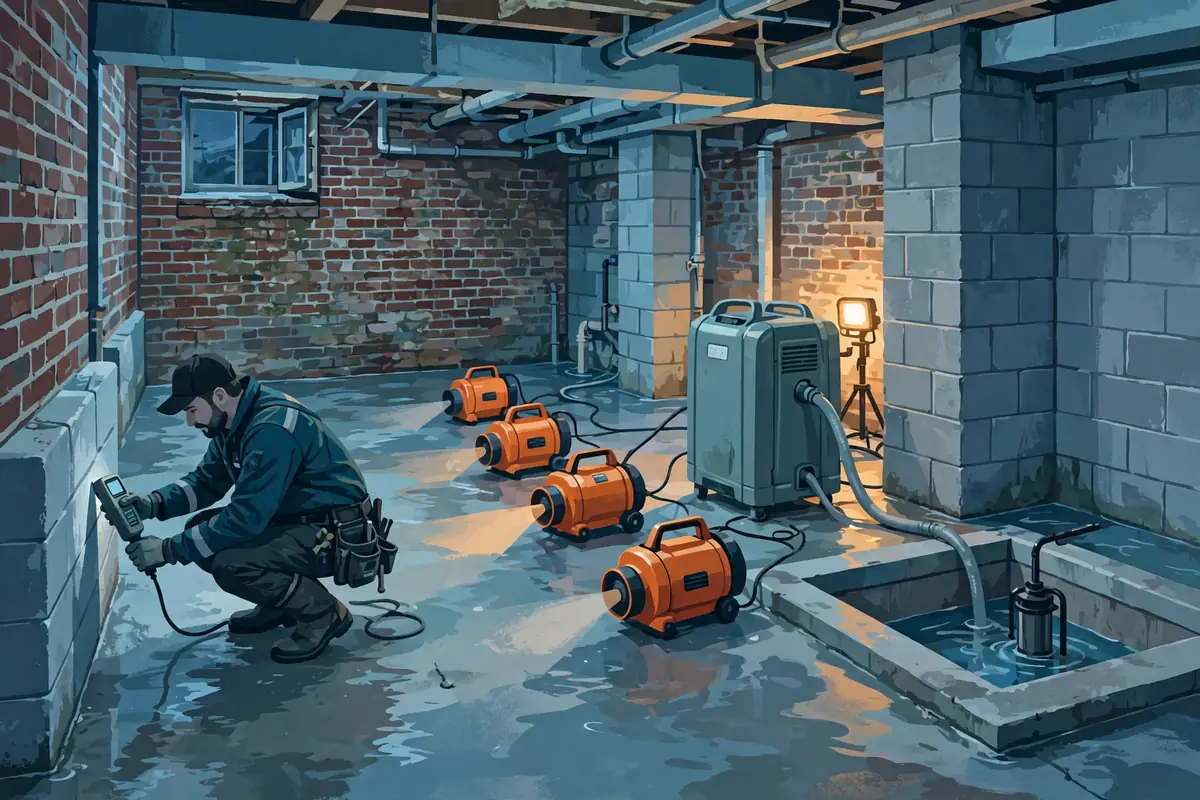
The short version, with sources
Seven Utica Facts That Decide How a Water Loss Ends
Seven facts decide most water damage restoration utica jobs in this city, and each one below is stated with the source it comes from, so it can be checked and quoted exactly as it stands.
Last updated: November 2026
- Utica holds 65,283 people, is the tenth most populous city in New York State and is the county seat of Oneida County, according to the 2020 census.
- The Halloween storm dropped 2.92 inches of rain on Utica in a 24 hour span, a five year precipitation event for the city, according to the Cornell extreme precipitation table.
- Sauquoit Creek rose from under 100 cubic feet per second early on Halloween 2019 to 5,730 cubic feet per second just before midnight, the second highest peak on its record, according to the U.S. Geological Survey (USGS).
- The storm of 1 July 2017 dropped 4 inches of rain on Utica in 48 hours, a ten year event, according to the Cornell extreme precipitation table.
- Utica ranks as the fourth snowiest large city in America at about 108 inches of snow per season, according to Lite 987 via City-Data, while other published sources put the seasonal average between about 90 and 122 inches.
- Mold can begin growing within 24 to 48 hours on material that stays wet, according to the U.S. Environmental Protection Agency (EPA).
- New York Insurance Law Section 3404 gives a policyholder 24 months from the date of a loss to sue the insurer over the claim, and Section 2618 requires payment of an agreed, undisputed amount within 4 business days after a natural disaster.
How a job is run
Readings Before Promises: The Paper Trail Behind Every Utica Drying Job
A water damage restoration utica job stands or falls on its record. Moisture readings, dated photographs and a written scope are what an adjuster pays from, what a landlord accepts, and what proves a home is actually dry when the fans leave.
Measured from hour one
The first visit on a water damage restoration utica job maps moisture with meters and thermal imaging and records a dry standard from an unaffected room in the same home, so every later reading has something honest to be compared against.
Licensed where the law asks
Mold assessment and mold remediation in New York are separate licensed jobs under Article 32 of the state Labor Law, and this page explains that split plainly instead of hiding it inside a drying quote.
One standard, in writing
Drying follows the ANSI/IICRC S500 standard, the same reference insurers and adjusters use, and the scope names what will be dried, opened, cleaned or removed before work starts.
Business details are placeholdersLocal facts, checked
The storm dates, creek figures and flood history on this page come from named public sources, stated in the same sentence as the figure they support, so a reader can check every one of them.
Water standing in a Utica basement right now?
Extraction started today is a drying job. Extraction started next week is a drying job plus a mold job plus a harder claim. The first call is the cheapest decision in the whole loss.
The geography of the problem
A River Town Built at a Ford: How the Mohawk Reaches Utica Basements
Utica began as Old Fort Schuyler in 1758, at the place where the Iroquois Trail crossed the Mohawk River at Nun-da-da-sis, and that single siting decision shapes every water damage restoration utica job in the city to this day.
The Mohawk River runs along the north of the city on its way east to the Hudson, and it has always been the reason a city exists here at all. The river was a natural east west corridor tying the St Lawrence and the Hudson together, a major route for Indigenous people long before it was a route for anyone else, and the crossing at this spot made the settlement that became Utica in 1758. A city founded at a ford is a city founded at the lowest, wettest useful ground on its river, and Utica has been managing the consequences of that founding bargain ever since. Every call about a water loss in Utica is, in some small way, still answering that bargain.
The first thing to understand about flooding here is that a Utica basement does not need rain falling on its own street. When the Mohawk runs high for days, the water table under the whole city rises with it, and groundwater pushes up through the joint where a basement floor meets its wall, through cracks that were dry for a decade, and through the sump pit faster than a tired pump can move it. Homeowners describe it as the floor sweating, then weeping, then standing an inch deep by morning. It is river water arriving from below, and it behaves differently from a burst pipe: no valve closes it, and it keeps coming until the river falls. Telling groundwater from pipe water in the first ten minutes is one of the first skills of this trade. It is the first diagnosis the crew makes on any wet basement in the city.
The second route is the creeks. Sauquoit Creek through Whitesboro, Oriskany Creek, Nine Mile Creek and the Canada Creeks to the east and west carry the runoff of the hills into the Mohawk, and they rise faster than the river does. A creek flood is a fast flood: hours of warning, not days, and it arrives carrying whatever the banks held. The Halloween flood of 2019, told in full below, was a creek flood as much as a river flood, and Sauquoit Creek wrote its worst lines. Any honest map of water risk in this city is drawn creek by creek, not just along the Mohawk. A water damage restoration utica dispatch that only watches the river will miss the creek that floods first.
The third route is the sky over the whole basin at once. Utica takes nor’easters, warm wet summers and the remnants of tropical systems that track inland, and the storms that hurt this city most are the ones that rain on the entire Mohawk basin together, so every creek and the river rise in the same two days. The dated cases on this page, 2006, 2013, 2017 and 2019, are all versions of that pattern at different sizes, and each one is dried and documented the same way: contaminated material out first, hard surfaces cleaned, structure dried to readings.
Inside the house, the routes are more ordinary and far more common. Frozen pipes split in January cold. Water heaters fail at the bottom of basement stairs. Washing machine hoses let go on second floors and send water through ceilings into kitchens. Every one of those is a plumbing loss, not a river loss, and together they make up most of the work in this trade in Utica. The river writes the history of the city. The pipes write the weekly call log, and most water damage restoration utica calls start with one of those ordinary failures.
What ties the two together is the age and build of the stock. Utica holds 65,283 people, according to the 2020 census, in about 17 square miles, and a large share of its homes are concrete block, brick and timber frame houses built when the mills and the railroads were filling whole neighbourhoods at speed. Concrete block foundations with hollow cores, plaster and lath walls and old galvanised and cast iron plumbing are normal here, not exceptions. Those materials change how a loss behaves and how it must be dried, which is why a generic drying plan written for a new suburb fails in a Cornhill two family or an East Utica brick home. Local material knowledge is the quiet advantage a water damage restoration utica crew carries into those houses.
So the working picture is simple. One river and its creeks set the flood risk. One old housing stock sets the drying difficulty. Everything else on this page, the storm history, the insurance clocks, the neighbourhood notes and the prevention walkthrough, hangs off those two facts.

The storm this valley measures against
The Halloween Flood: 31 October to 3 November 2019 in the Mohawk Valley
The Halloween flood of 2019 is the event every water damage restoration utica flood plan in this valley is quietly written against, and it is told here with its figures kept in their true geography.
Between 31 October and 1 November 2019, high intensity rain fell in 24 hours across the Mohawk Valley and the southern Adirondack region, at the end of a much wetter than average October. The U.S. Geological Survey (USGS) documented the event in a Scientific Investigations Report: rainfall ran largely 2 to 5 inches across the most heavily affected parts, with a maximum of 7 inches recorded in Speculator, and new peak streamflow records were set at five of six USGS streamgages in the region. The most severe flooding fell in the Sacandaga River basin and the East and West Canada Creek basins, inside the wider Mohawk River basin.
Utica’s own number is precise and smaller, and it matters that this page keeps it that way. A total of 2.92 inches of rain was recorded in Utica over a 24 hour span, a five year precipitation event per the Cornell extreme precipitation table. The Cornell table also tells a Utica homeowner what the bigger numbers look like: a 100 year event here is 5.77 inches of precipitation in a 24 hour span, and 2.48 inches in a single hour. The Halloween storm did not need to be a record rain in Utica itself to flood Utica homes, because the creeks collect rain from ground far beyond the city line.
Sauquoit Creek proved that point in a single night. The USGS recorded Sauquoit Creek discharge under 100 cubic feet per second early on Halloween, rising to 5,730 cubic feet per second just before midnight, the second highest recorded peak on that creek. Whitesboro, on Sauquoit Creek at the city’s western edge, was heavily affected, as it had been in 2017. A creek that multiplies its flow more than fifty times in a day is not a drainage feature; for that night it is a river running through a village, and the basements along it took water the way river basements do.
The regional toll was real, and this page states it as regional, because honesty about geography is part of the work. The Halloween flood brought 1 fatality and an estimated thirty three million dollars in damages to public infrastructure across the Mohawk Valley and southern Adirondack region, with 18 homes destroyed and 135 homes sustaining major damage across that same region. Governor Andrew Cuomo declared a state of emergency for 13 counties including Oneida on 1 November 2019. None of those figures belongs to Utica alone, and any page that quietly moves them into one city is selling, not informing.
One local detail deserves keeping. Utica Mayor Robert Palmieri was at a creek cleanup in North Utica two days before Halloween, which tells you that the city’s creeks were already a working concern before the rain arrived, not an afterthought discovered by television cameras. Creek maintenance, culverts and bank work are the unglamorous half of flood policy in this valley, and the Halloween flood is the argument for funding them in dry years.
For a homeowner reading this page during a modern storm warning, the Halloween lessons compress into four moves. Watch the creek and river forecasts, not just the rain forecast for your own street. Lift what matters in the basement before the water arrives, not after. Photograph the house in its dry state on a calm day, so a claim never has to argue about what was there. And know now, while it is dry, whether your cover answers rising water at all, because a standard homeowners policy usually does not, and the middle of a state of emergency is the worst classroom in the world for insurance.
Crews who worked that recovery across the valley describe the same pattern street by street: the homes that dried fastest were the ones where extraction started as the water fell, where contaminated material came out in the first two days, and where the claim file was opened with photographs while the silt was still on the floor. The homes that suffered longest were usually not the deepest flooded. They were the ones where help arrived after the mold did. That order of events, speed first and mold never, is the whole creed of water damage restoration utica work.
The summer storm
Four Inches in Forty Eight Hours: The Storm of 1 July 2017 Over Utica
Two summers before Halloween, Utica took a smaller storm that flooded many of the same streets, and a water damage restoration utica crew that knows this city knows both dates by heart.
On 1 July 2017, a storm dropped 4 inches of rain on Utica in 48 hours, a ten year event per the Cornell extreme precipitation table, and produced widespread regional flooding. In the city, the intersection of Noyes Street and Lincoln Avenue and the North South Arterial were among the areas heavily impacted, which matters because those are working streets in working neighbourhoods, not riverbank parks. Sauquoit Creek in Whitesboro was heavily affected in this storm too, two years before it set its second highest peak on Halloween 2019. The water damage restoration utica call log for that weekend filled with basements, not headlines.
The 2017 storm is the useful middle case in Utica’s flood education. It was not a hurricane remnant and it was not a record. It was a heavy summer rain system of a kind this valley can expect several times a decade, and it still put water into basements across the region. Homeowners who treat flooding as a once in a lifetime event plan for the wrong city. The record says Utica floods at the scale of a strong summer storm, not only at the scale of a famous disaster, and the prevention habits that matter are the ones sized for 2017, repeated often, not only for 2019. Planning for the ordinary flood is the real discipline of water damage restoration utica work in this city.
Summer storm water arrives differently from creek flood water. It comes through surcharged drains and sewers as much as over banks, which makes basement backups a larger share of the losses: floor drains, basement toilets and laundry sinks become entry points when the street system is full. That water is contaminated water, and the cleanup is a health job before it is a drying job. The backwater valve, a modest device covered later on this page, exists precisely for the 2017 kind of night. A water damage restoration utica crew can clean a backup; only a valve can prevent one.
It also arrives on ground that may already be wet. Four inches in 48 hours on dry soil is a different event from four inches on soil soaked by a wet week, because saturated ground sheds water into basements and creeks instead of drinking it. The practical reading habit this page recommends is therefore two numbers, not one: the rain forecast, and how wet the last two weeks have been. When both point the wrong way, a Utica basement deserves attention before the storm, not after it. That two number habit is free, and it is the first thing a water damage restoration utica dispatcher will ask about.
The homes that came through 2017 cheapest were the ones whose sump pumps were serviced, whose belongings were already off the slab, and whose owners knew which drain in the basement was the low one. None of that is talent. It is the dry day checklist at the end of this page, done once and kept done.
The flood that brought the Guard
June 2013: High Water Across Two Counties and a Staging Ground at the Utica Armory
The June 2013 flood filled the creeks of Herkimer and Oneida counties together, and its Utica chapter is a reminder that a water damage restoration utica job can be one house inside a two county event.
In June 2013 a severe precipitation system caused excessive flow rates and flooding in a number of communities across the Herkimer Oneida Counties region. The response that followed shows the scale: the New York State Department of Transportation (NYSDOT), working with the New York State Department of Environmental Conservation (NYSDEC), retained the firm Milone and MacBroom Inc to assess 13 watersheds for emergency transportation infrastructure recovery. Thirteen watersheds is the honest unit for a flood like this. The water does not read city limits, and neither did the damage.
The New York National Guard arrived in Utica on 3 July 2013, with 250 additional Guard members and heavy equipment, staging at the Utica Armory on Parkway East. Guard engineers supported debris removal on Route 168 in Mohawk and Route 51 in Ilion, down the valley in Herkimer County. For a Utica homeowner, the lesson in those details is about order and timing: public help in a regional flood goes first to roads, bridges and safety, and a private home’s drying cannot wait for it. The households that recover fastest are the ones whose first week is run by a crew and a claim file, not by a programme.
The 2013 flood also explains why this page keeps returning to creeks. A watershed assessment is an admission that the same rain becomes different floods in different valleys, depending on slope, soil, culverts and banks. Sauquoit Creek, Oriskany Creek and the Canada Creeks each have their own behaviour, their own fast streets and their own repeat addresses. Local knowledge in this trade is not a slogan. It is knowing which creek a street drains to and how that creek behaved in 2013, 2017 and 2019.
There is a records lesson as well. The reason the 2013 event can be described precisely years later, the dates, the staging ground, the routes cleared, is that agencies wrote it down at the time. A modern claim file works the same way at household scale. Photographs with dates, readings with times, and a scope written before work starts are what turn a wet week into a payable claim instead of an argument.
The older benchmark
The Last Week of June 2006: A Stalled Front Over the Whole Mohawk Valley
The flood of 26 to 29 June 2006 is the oldest of the four dated cases on this page, and it sets the pattern the other three repeat.
From 26 to 29 June 2006, a stalled frontal system caused major flooding across the Mohawk Valley, documented by the U.S. Geological Survey (USGS). A stalled front is the valley’s classic flood maker: instead of a storm that passes in a night, rain keeps regenerating over the same basin for days, creeks stay bank full, the river stays high, and ground that drank the first day’s rain sheds the third day’s straight into basements. By the end of a stalled front event, the flood is no longer about any single downpour. It is about accumulation, and accumulation is what Utica’s drainage was never built to forgive. Accumulation is also what fills a water damage restoration utica schedule in the second and third days of such a week.
Set 2006 beside the older record and the valley’s memory deepens. A flood on the Mohawk River on 8 October 1903 followed more than 5 inches of rain in 24 hours, similar in cause to 2019, and widespread flooding ran from 23 to 27 March 1913 from heavy rainfall over the central and eastern United States. Four generations of Utica households have met the same river doing the same thing for the same reasons. A homeowner who treats the city’s flood history as ancient history is ignoring the most local data there is. A water damage restoration utica plan written without that history is a plan written for somewhere else.
The practical difference between a stalled front flood and a flash flood is the warning shape. A flash flood gives hours. A stalled front gives days of rising risk, which means days in which belongings can be lifted, pumps checked, vehicles moved and photographs taken. The expensive 2006 losses, like the expensive losses in every Utica event since, were concentrated where those days were not used. This page’s prevention walkthrough is written for exactly that window: the forecast is up, the river is rising, and the house is still dry. Using the window is the cheapest water damage restoration utica work a household will ever do, because it is done with its own hands.
It is also worth stating what 2006 teaches about insurance timing. Flood cover bought during a stalled front is flood cover bought too late, because new flood policies carry a waiting period before they take effect. Every dated case on this page, 2006, 2013, 2017 and 2019, argues the same dry day sentence: check the policy when the sky is clear, because the week you need it is the week you cannot buy it.
The ditch that made the city
The Canal That Built Utica: Erie Water, Old Ground and a Filled In Downtown Channel
Utica is a canal city before it is anything else, and the Erie Canal explains both the city’s wealth and the way water still moves under its oldest streets.
Construction of the Erie Canal began in 1817 in Rome and worked east toward Utica, passing directly through downtown Utica. The first segment, Rome to Utica, opened to traffic in 1819, and the full canal was completed in 1825: 363 miles from the Hudson River to Lake Erie, originally 40 feet wide and 4 feet deep with 83 locks. The canal made Utica a major transportation and economic hub, a place where goods, mills and money concentrated, and the city’s oldest commercial ground is canal ground. It is also the ground a water damage restoration utica crew reads first when a downtown building takes water.
The water story did not end when the boats stopped. The Barge Canal opened north of Utica in 1918, and the old canal through downtown was filled in by 1945. Filled ground is still ground with a memory: old channels, old towpath lines and old industrial plots drain differently from undisturbed soil, and the oldest, lowest commercial streets of the city sit on the corridor the canal chose because it was the natural low line through the valley. When a downtown Utica building takes water, the first question is often a 200 year old question about where the low ground runs.
The year 2025 marked the Erie Canal Bicentennial, a useful reminder that this infrastructure is not scenery. It is the reason the streets are where they are. Delta Reservoir and Hinckley Reservoir, built in the early twentieth century as part of the Barge Canal era works, still shape the valley’s water, and Utica’s drinking water comes from Hinckley Reservoir via the Mohawk Valley Water Authority. The same system of managed water that supplies the city’s taps is the system whose rivers and creeks fill its basements when the rain outruns the management.
For the homeowner, the canal chapter reduces to one habit: respect the low ground. Baggs Square and the Brewery District, the oldest commercial quarters, and the residential streets that fall toward the river and the creeks, carry the city’s oldest water patterns. Knowing your street’s level against the river’s known behaviour is not nostalgia. It is the cheapest flood research a Utica buyer or renovator can do, and it is free.

Where the water gets in
Flooded Basements in Utica: Six Roads the Water Takes to the Lowest Floor
Almost every water damage restoration utica call in this city ends in a basement, but the water arrives by six different roads, and the road decides the repair.
1. Groundwater through the floor
When the Mohawk runs high or rain saturates the ground for days, the water table rises under the house and pushes up through the floor and wall joint, through cracks and through the sump pit. This is the signature Utica basement flood: no pipe broken, no appliance failed, just the valley arriving from below. It is also the loss a standard homeowners policy most often excludes, which is why it gets its own honest treatment in the insurance sections of this page.
2. The failed sump pump
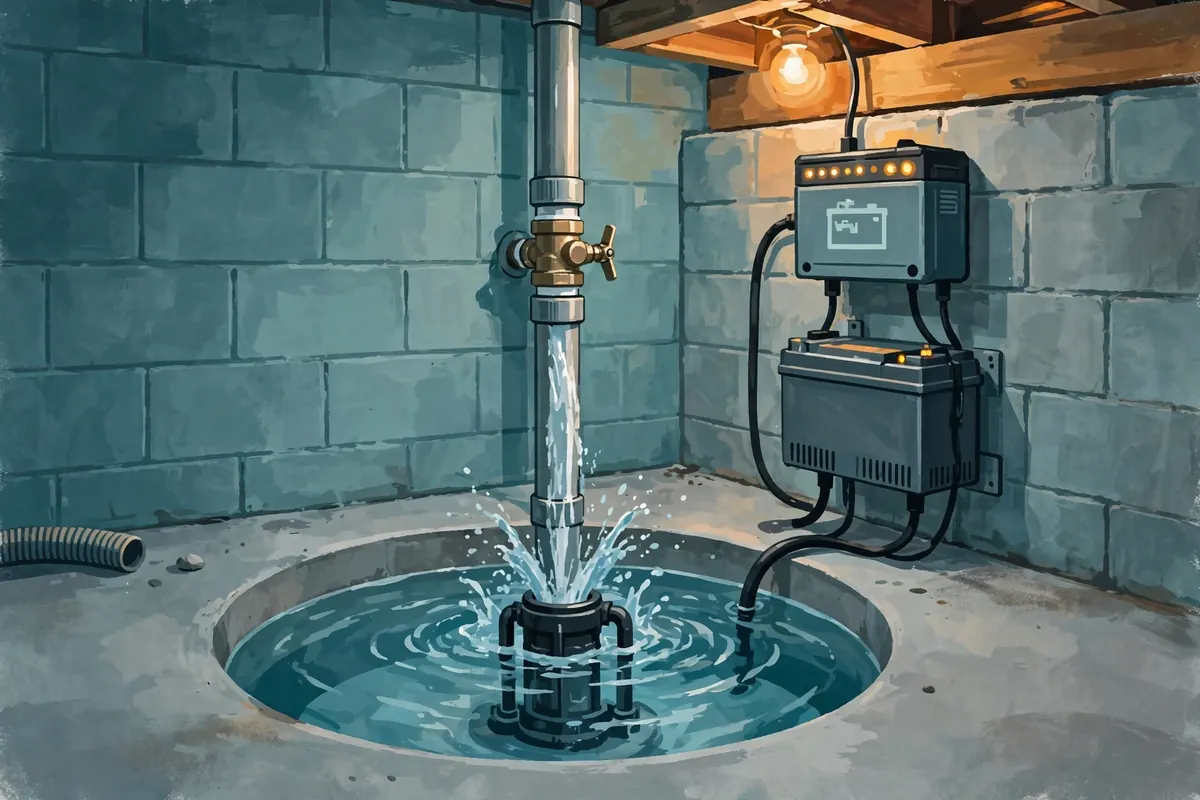
A sump pump is a small machine asked to do its most important work during the worst hour of the year, often while the power is out. Pumps fail from age, from stuck floats, from tripped breakers and from storms that cut electricity at the moment of peak inflow. A basement that bets everything on one pump with no battery backup is a basement one outage away from a flood, and the sump section below treats that machine with the seriousness it deserves.
3. Sewer and drain backup
Heavy rain can surcharge the drains on Utica’s older streets and push water, sometimes sewage, back through the lowest opening in the house, usually a floor drain, a basement toilet or a laundry sink. Backup water is contaminated water and is cleaned as a health job first. Cover for it is commonly a separate endorsement with its own limit, bought on a dry day or not at all.
4. Burst and leaking pipes above
The basement is where water from the whole house ends up. A split pipe in a second floor wall, a failed water heater, a washing machine hose: gravity delivers all of it to the lowest level, and the basement ceiling, walls and floor take the damage. Finding the true source, rather than just the wettest room, is the first skill in this trade.
5. Foundation and window well leaks
Rain against the house finds the paths that grading and gutters were supposed to deny it: the window well that fills like a fish tank, the crack behind the downspout that discharges at the wall, the soil that has settled toward the foundation over thirty years. In concrete block walls there is a sixth path inside the fifth: water enters the hollow cores of the block and travels inside the wall itself, appearing rooms away from where it entered. These losses are usually smaller and slower, which makes them more dangerous to finishes and framing, because they can run for months behind stored boxes before anyone sees them. Slow water is where a water damage restoration utica meter earns its keep, months before a stain would.
6. Appliance failures at basement level
Water heaters, boilers, laundry pairs and water softeners live in Utica basements, and each holds or moves enough water to flood the floor it stands on. A water heater that lets go at the seam releases its whole tank and then keeps refilling until someone closes the valve. The shutoff for each appliance should be known, labelled and reachable in the dark, a sentence that sounds obvious until the night it is not. Labelling those shutoffs is a ten minute water damage restoration utica job any household can do tonight.
Every one of these six roads leads to the same first hour: stop what can be stopped, extract what is standing, map what is wet, and dry to readings. What differs is the cause written in the claim file, the category of the water, and the prevention that actually prevents a repeat. A crew that treats all six as the same flood will dry your basement and teach you nothing. The diagnosis is half the job.
The response, in order
The First Hour in a Utica Home: Six Steps While the Water Is Still Moving
The first hour decides whether a water damage restoration utica job is a drying job or a demolition and mold job, and the order of the steps matters as much as the steps themselves.
Call and shut off the water
Phone (315) 555-0147 (placeholder) and, if a pipe or appliance is feeding the water, close the main shutoff valve where the service line enters the basement. In a rental or a two family home, phone the landlord or the other household at the same time so the lines above you can be closed too.
Safety check
Keep clear of rooms where water has reached outlets, a panel or ceiling lights. Sewage, creek water and Mohawk River water are treated as contaminated from the first minute, so keep children and pets out and do not run fans or a household vacuum on standing water.
Inspection and moisture mapping
The crew traces the water path with pin and pinless moisture meters and thermal imaging, marks the wet line on each wall and records the starting readings that the whole drying plan and the insurance file are built on.
Water extraction
Truck mounted and portable extractors lift standing water from floors, carpet and padding, and furniture is blocked or moved so finishes and legs are not stained or swollen while the room dries.
Structural drying setup
Air movers, dehumidifiers and cavity drying systems are placed from the moisture map, sized to the rooms and the materials, and set to follow the ANSI/IICRC S500 drying approach from the first day.
Insurance documentation
Photographs, the moisture map, daily reading logs and the list of removed material are assembled into one dated record, so the adjuster sees the loss, the response and the dry standard proof in a single file.
Notice what is not on the list: tearing out walls, throwing belongings away, or signing a rebuild contract in a wet kitchen at midnight. Demolition decisions come from readings, and readings need the map first. The six steps above are deliberately unglamorous. They are also the difference between a home that dries in place, keeping its plaster, its hardwood and its claim intact, and a home that gets gutted because the first hour was spent admiring the damage. Homeowners who want the filmed version of this order of work will find two checked videos in the case study section below, and the rest of the first day, hours 2 to 24, has its own section further down this page.
Not all water is the same water
Clean, Gray and Black: The Three Categories of Water in a Utica Loss
The trade sorts water into three categories by contamination, and the category, more than the depth, decides what a water damage restoration utica crew may dry in place and what must come out.
Category 1: clean water
Water from a supply line, a split pipe, a failed water heater or a melting ice maker line. It starts clean, and material it touches can usually be dried in place if the response is fast. Left standing, clean water does not stay Category 1: within days it picks up contamination from the materials it soaks and is treated as a higher category.
Category 2: gray water
Water with significant contamination: washing machine and dishwasher discharge, toilet overflow with urine, sump water that has sat, and clean water that has stood too long. Porous material it soaks, especially carpet padding, usually comes out, and cleaning and disinfection join drying in the plan.
Category 3: black water
Sewage, drain backup and all flood water from outside the home, including Mohawk River water, creek water and snowmelt flood water, which carry silt, fuel, chemicals and sewage from everything upstream. Porous material it touches is removed, hard surfaces are cleaned and disinfected, and the work is done in protective gear as a health job first.
The category decision is made on site, in the first visit, and it is written into the scope and the claim file, because it changes both the work and the cover conversation. Homeowners sometimes resist it: a carpet that looks clean after creek water feels saveable. The standard exists because looks are not the test. Flood water from a valley that holds farms, roads, fuel tanks and sewers upstream is treated as contaminated whatever it looks like in your basement, and a crew that dries Category 3 material in place to save a day is borrowing trouble at health interest rates. The category call is therefore the first professional judgement a water damage restoration utica crew is paid to make.
Categories also explain why two neighbours with the same water depth can have very different jobs. A burst pipe over a kitchen is Category 1 work: extract, dry in place, minimal removal. A surcharged drain in the same street on the same night is Category 3 work: extraction, removal of touched porous material, disinfection, then drying. Same street, same storm, different water, different job. That is not upselling. That is the standard doing its job. Understanding it is the fastest way to read any water damage restoration utica scope you are handed.
The stock decides the drying
Concrete Block, Brick and Balloon Frames: Drying the Housing Stock of Utica
Utica dries the way it was built, and a water damage restoration utica drying plan that ignores the city’s materials will miss the water hiding inside them.
Start with the basement wall that defines half the city: concrete block. A block wall is not solid. It is a grid of hollow cores, and water that enters those cores, through mortar joints, cracks or a high water table, can sit inside the wall in quantity long after the room reads dry at the surface. Crews who know this stock drill discreet weep points at the base of a flooded block wall, drain the cores, and dry the wall as a structure, not as a surface. Crews who do not will leave a wall full of water behind a dry looking room, and the room will smell of it by spring.
Above the basement, the stock splits by era and neighbourhood. Brick homes in East Utica hold heat and moisture differently from timber frame homes in West Utica. Older balloon frame walls, where the framing cavities run unbroken from basement to attic, give water and humid air a hidden highway between floors, so a first floor leak can wet an attic and a basement in the same event. Plaster and lath, common across the older stock, dries slowly and forgives slowly; it can usually be dried in place if the response is fast, and it punishes delay by letting go of its keys and sagging.
Two family homes are the city’s signature housing problem and its signature water problem. One household’s burst pipe is the other household’s ceiling. One owner’s slow leak is a tenant’s mold question. The drying work itself is the same meters and machines, but the documentation has to serve two households, sometimes two insurers and a landlord at once, and the scope has to say plainly which rooms belong to which loss. The renters section below takes up that paperwork in full.
Finished basements raise the stakes everywhere they exist, and South and North Utica hold plenty. A finished basement converts a groundwater event from a mopping job into a flooring, drywall and contents job, and it hides the early signs: water travels under flooring and behind baseboards while the room still looks presentable. The rule for finished basements is the rule for the whole page, only more so: meter first, open where readings demand, and never trust a dry looking surface over a wet reading.
None of this is exotic. It is the ordinary material knowledge of a city built between the canal era and the mill era, and it is exactly the knowledge that template pages written for other states never carry. When you interview a crew, ask them what a block core is and what they do about it. The answer will tell you whether you are hiring Utica knowledge or a script.
The cold half of the year
About Ninety to a Hundred and Eight Inches: Snow, Thaw and Frozen Pipes in Utica
Utica is one of the snowiest large cities in America, and winter writes as many water damage restoration utica calls as the river does.
The snowfall figures deserve an honest sentence, because sources disagree and this page will not pretend otherwise. Lite 987 via City-Data lists Utica as the fourth snowiest large city, meaning a population over 50,000, in the country, averaging 108 inches per season, with Syracuse the snowiest at 115 inches. BestPlaces lists 96 inches per year for Utica. Road Snacks lists 90.8 inches per year. NOAA 1991 to 2020 normals, via myPerfectWeather, list 122 inches per year. The fair summary is about 90 to 108 inches per season on most published measures, with one normals figure higher, in a snow season that runs November to April with January the snowiest month. However you count it, this is a city that spends five months managing frozen water.
Lake effect snow comes off Lake Ontario, and Utica often gets the tail end of bands that bury Syracuse and the Tug Hill Plateau. The water damage consequence is not the snowfall itself. It is what the cold does to pipes and what the thaw does to ground. Pipes in outside walls, unheated basements, crawl spaces and vacant houses freeze during long cold holds; the pipe splits while frozen and announces itself at the thaw, when water starts running inside a wall with nobody watching. A furnace failure in a cold snap is therefore a water emergency in waiting, because a house full of plumbing is a house full of water waiting for a freeze to give it orders. That sentence explains the January water damage restoration utica call log better than any statistic.
The defences are known and unglamorous. Insulate pipes in cold runs. Keep heat on in every room that holds plumbing, and open cabinet doors on the coldest nights so warm air reaches the pipes under sinks. Disconnect and drain outside hoses before winter. If a house will stand empty, drain the system or keep a trusted person checking it through cold snaps. And know where the main shutoff is, by touch, in the dark, because the difference between a split pipe found in ten minutes and one found in ten hours is most of the loss.
Then comes the thaw, the second winter flood season. Snowmelt on frozen ground cannot soak in, so it runs: off roofs into gutters that may be ice dammed, down walls where snow was piled against the foundation, and into a water table already high from a winter of accumulation. March through May is when snowmelt and spring rain saturate soils across the Mohawk Valley, and flooded basements, sump pump failures and sewage backups spike as groundwater rises along the Mohawk and its tributaries. The sump pump that rested all winter is asked for its hardest work in the thaw, which is why this page keeps insisting it be serviced before it, not after.
Ice dams complete the winter set. Snow melts on a warm roof, refreezes at the cold eave, and dams the next melt behind it, pushing water under shingles and into the wall below. The stain appears on a ceiling in February and the cause sits on the roof edge, which is why roof leak response on this page starts with tracing the true entry point instead of patching the stain. Winter in Utica is not one risk. It is four: frozen pipes, thaw groundwater, sump overload and ice dam leaks, arriving in that order most years.

Neighbourhood by neighbourhood
Utica by Neighbourhood: Downtown, Cornhill, East, West, South and North
Pick a neighbourhood. Each one has its own water pattern, and a water damage restoration utica dispatch is planned around the pattern, not just the address.
Inside the city, the residential ZIP codes are 13501 and 13502, with 13503, 13504, 13505 and 13599 serving as PO Box ZIP codes, all in the 315 area code. Beyond the city line, the service towns ring Utica on every side: New Hartford, Whitesboro, Yorkville and New York Mills at the city’s edge, Rome to the northwest, Herkimer down the valley to the east, and Frankfort, Marcy, Clinton, Chadwicks and Washington Mills completing the coverage. When you call, the most useful sentence you can say after your address is which of these patterns you are standing in: river water, creek water, groundwater, a backup, or a pipe. The crew will take it from there. That one sentence routes the right equipment, the right crew size and the right plan to your door.
What one call covers
One Call, Fifteen Services: From Extraction to Rebuild in Utica
One call to a water damage restoration utica crew should be able to carry a loss from the first extraction to the last coat of paint, and these are the fifteen services that promise is made of.
Water Extraction
Truck mounted and portable extractors lift standing water from floors, carpet and padding, the single fastest way to shrink a loss.
Structural Drying
Air movers and dehumidifiers placed from a moisture map, drying walls, floors and framing to a recorded dry standard.
Flood Cleanup
River, creek and groundwater cleanup: silt and debris out, hard surfaces washed and disinfected, structure dried.
Sewage Cleanup
Category 3 work in protective gear: extraction, removal of touched porous material, cleaning, disinfecting and drying.
Burst Pipe Response
Freeze splits and failed lines: source isolated, water extracted, cavities dried, and the failed part kept for the claim.
Basement Drying
The Utica speciality: concrete block cores drained, stone and finished basements and sump failures dried to readings.
Moisture Detection
Pin and pinless meters and thermal imaging that find the water the eye cannot see, before any wall is opened.
Dehumidification
Commercial dehumidifiers holding the air dry enough that plaster, block and timber give up their water safely.
Mold Remediation
Licensed mold work under Article 32 of the Labor Law, with assessment and remediation kept separate as the law requires.
Contents Cleaning
Furniture, rugs and belongings cleaned, dried, packed out and stored where a room cannot be dried around them.
Storm Damage Repair
Wind and water together: roof openings tarped, water extracted, and the interior dried before repairs begin.
Roof Leak Response
Ice dam and storm leaks traced to their true entry point, with the wall and ceiling dried from the map.
Odor Removal
The musty smell of a wet house treated at its source, the damp material, not masked with fragrance.
Reconstruction
Drywall, flooring, trim and paint: the rebuild that returns the room, done by the same firm that dried it.
Insurance Claim Documentation
Photographs, moisture maps, daily logs and inventories assembled into the dated file an adjuster pays from.
Not sure which service your loss needs?
That is normal, and it is the crew’s job to diagnose, not yours. Describe what you see, where it is and how long it has been wet, and the dispatcher will send the right first visit.
The science in the middle of the job
Drying to a Number: Moisture Maps and Daily Readings in a Utica Home
Drying is the part of water damage restoration utica work that looks like fans and sounds like nothing, and it is the part where the job is actually won or lost.
A drying job begins with a map. On the first visit the crew traces the water’s path with pin meters, which read moisture inside a material, and pinless meters, which scan surfaces without marking them, backed by thermal imaging that shows the cold signature of wet material inside walls and floors. Every reading is marked and recorded, and a dry standard is taken from an unaffected part of the same home, because the honest target for a Utica plaster wall is not a number from a book. It is the reading that same wall gives in a room the water never reached. That comparison is the honesty at the centre of water damage restoration utica drying.
Equipment is then placed from the map, not from habit. Air movers push air across wet surfaces to lift moisture into the room air; commercial dehumidifiers pull that moisture out of the air so the cycle can continue; and cavity drying systems feed dry air into wall spaces and under floors where the map says water travelled. In a concrete block basement, the cores are drained first, because no fan setting dries a wall that is still holding gallons inside its own structure. Placement is a calculation about materials, volume and vapour pressure, which is why two rooms in the same house can carry different equipment counts.
Then comes the discipline that separates drying from renting fans: daily readings. A technician returns, takes the same readings at the same points, and logs them against the dry standard. Materials that are falling steadily stay on the plan. Materials that stall get a decision: more targeted drying, a small opening to release trapped water, or removal where the standard requires it. Equipment leaves a room when its readings meet the dry standard two visits in a row, and not before, whatever the calendar says. Most Utica homes reach that point in three to five days after extraction; block, plaster and stone can take longer, and the log shows why in numbers rather than opinions.
The log is also the claim’s best friend. An adjuster who receives dated photographs, a moisture map and a daily reading log is looking at a loss that was managed, measured and finished to a standard. An adjuster who receives a single invoice and a verbal assurance is looking at an argument. The same readings that tell the crew when to stop are the readings that tell the insurer the stop was earned, which is why this page treats documentation as part of the drying itself, not as paperwork after it.

What the water touched
What Survives a Utica Flood: Floors, Furniture and the Contents Decision
Every water damage restoration utica job reaches the same hard conversation: what can be dried and kept, what must be cleaned, and what the water has already taken.
The decision rule is the category of the water crossed with the porosity of the thing. Hardwood floors that took clean water quickly can often be dried in place with floor drying systems that pull moisture through the boards. The same floor under creek water for two days is a different conversation. Carpet can sometimes be cleaned and dried after clean water; its padding usually cannot, and after Category 3 water both carpet and padding come out as a health rule, not a preference. Upholstered furniture, mattresses and soft toys follow the same logic: porous, soaked with contaminated water, gone; hard framed, briefly wet with clean water, cleanable.
Paper is the quiet casualty. Photographs, documents, books and children’s schoolwork hold water instantly and mold early, and they are usually the items homeowners grieve most. The practical defences are boring and effective: photographs and papers live in plastic boxes off basement floors, never in cardboard on concrete; the irreplaceable items live upstairs in a river and creek city; and after a loss, wet paper that matters goes to the crew immediately, because freezing and specialist drying can save documents that air drying will lose.
Contents work has its own discipline. Items are photographed where they sit, inventoried, and either cleaned in place, packed out to be cleaned and stored, or recorded as lost for the claim. The inventory is not bureaucracy. It is the difference between a contents claim paid from a list with photographs and a contents claim argued from memory three months later. In a two family home, the inventory also separates households cleanly, so one family’s loss is never tangled into another’s paperwork.
Sentiment deserves one honest paragraph. Some things that the standard says must go are things a family would rather keep, and a good crew says so plainly, explains the health reasoning, and lets the family decide about the borderline items that are theirs to decide. What a good crew will not do is dry a sewage soaked sofa and call it saved. The standard protects the household that has to live with the furniture after the fans leave.
The clock after the water
Mold After Water Damage in Utica: The 48 Hour Clock and Article 32
Mold is the reason water damage restoration utica work runs on a clock, and New York law treats it as a licensed trade of its own.
Mold can begin growing within 24 to 48 hours on material that stays wet, according to the U.S. Environmental Protection Agency (EPA). That single fact organises this entire trade. Extraction the same day is not a marketing promise; it is the difference between drying a home and remediating one. Material dried to readings inside the window usually stays a drying job. Material left wet past it becomes a mold question, with different work, different paperwork and different law.
The law is specific in New York. Since 1 January 2016, Article 32 of the Labor Law has required mold assessment and mold remediation to be licensed work, and it separates the two roles: the firm that assesses a mold problem is not the firm that remediates it, so the diagnosis is never written by the party selling the cure. A water loss that has crossed into visible growth, or growth suspected inside walls after a slow leak, belongs in that licensed framework. A crew that waves it away, or that offers to simply spray and paint, is telling you something important about itself.
Utica’s stock gives mold its favourite conditions: cool basements, block walls that hold moisture in their cores, plaster that dries slowly and finished lower levels where damp can hide behind drywall for a season. The musty smell in a Utica basement is information, not atmosphere. It means material somewhere is staying wet, and the fix is to find and dry the source, because mold treated without its moisture source is mold scheduled to return.
The homeowner’s part is speed and restraint. Speed, because the 48 hour clock does not negotiate. Restraint, because tearing into a wall that may hold growth spreads spores through the house and turns a contained problem into a whole home problem. Photograph, close the door, call, and let the assessment happen in order. That sequence protects the house, the household and the claim at the same time.
The backward river inside the pipes
Sewage Season: When Utica Drains Run Backward
The least welcome water in Utica arrives through the plumbing itself, and a water damage restoration utica crew treats backup season as a season, with dates and habits of its own.
A sewer backup is a pressure problem. Heavy rain fills the street system faster than it can carry the water away, the pressure in the line rises, and the water looks for the lowest opening it can find. In a Utica home that opening is usually a basement floor drain, a basement toilet or a laundry sink, which is why backup water so often appears in a finished basement first and why it arrives without any rain entering the house at all. Research colour gathered for this page from local insurance writing on Utica describes the same pattern: springtime basement flooding and sewer backups are common in neighbourhoods near waterways and in streets with older sewer infrastructure, and heavy rain infiltrating combined municipal lines in Utica and Rome drives backups when the system is full.
The water that comes back is Category 3 by definition, whatever it looks like. It has travelled through a system shared with every drain upstream, and the cleanup rules follow from that fact: porous material it touches comes out, hard surfaces are cleaned and disinfected, the room is closed to children and pets while the work runs, and the crew works in protective gear. Homeowners sometimes ask whether a backup that looks clear can be treated as clean water. The answer is no, and it is not negotiable, because the category describes where the water has been, not how it photographs.
The claim conversation has its own shape. Sewer and drain backup is usually answered by a specific endorsement on the homeowners policy, with its own limit, rather than by the main policy, and households routinely discover the endorsement’s absence or size on the worst possible day. The dry day duties from the insurance section apply with double force here: confirm the endorsement exists, confirm its limit against a finished basement’s real contents, and keep the photographs that prove what the basement held. A water damage restoration utica file for a backup loss separates the building damage, the contents damage and the cleanup record cleanly, because the endorsement pays against its own list.
Prevention is one device and one habit. The device is the backwater valve, fitted in the drain line, which lets the home’s water out and closes against the street’s water coming in; it needs periodic checking, because a valve fouled by debris is a valve that will fail open on the one night it matters. The habit is load discipline during storms: when the street system is visibly straining, every extra gallon the household sends down its own drains is a gallon added to the pressure at its own floor drain. Dishwashers and laundry can wait out a storm peak. Basements cannot.
After a backup, the order of work mirrors the categories section: extraction, removal of touched porous material, cleaning and disinfection of everything the water reached, then measured drying, with the valve question raised before the room is rebuilt rather than after. A household that has lived one backup rarely needs persuading on the valve. This section exists so the persuasion can happen before the first one instead.
The claim, on the clock
The Clocks That Run a Utica Claim: Regulation 64, Section 2618 and the Two Year Suit Limit
A water damage restoration utica claim in New York runs on statutory clocks, and knowing them changes how a household behaves in the first week.
Start with what a homeowners policy usually does. Sudden and accidental water damage from inside the home, a burst pipe, a failed water heater, an appliance line that lets go, is the core case a standard policy answers. Water that rises from outside, Mohawk River flooding, creek overflow, groundwater through the floor, is usually excluded and belongs to a separate flood policy. Sewer and drain backup usually sits in its own endorsement with its own limit. The cause written in the first report therefore decides which policy answers, which is why this page keeps insisting that the cause be documented accurately from hour one. Accuracy in that first report is worth more than any later letter a water damage restoration utica crew can write.
New York then puts the insurer on clocks. Regulation 64, under Insurance Law Section 2601, gives insurers 15 business days for the main steps of a claim: acknowledging it, beginning and completing the investigation, and notifying the policyholder of acceptance or denial. Insurance Law Section 2618 adds a disaster rule: after a natural disaster, an agreed and undisputed amount must be paid within 4 business days. These are New York numbers, not national habits, and a Utica policyholder is entitled to hold a claim to them politely and in writing. Those clocks protect a water damage restoration utica claim only when the household knows they exist.
The longest clock is the one households most often miss. Insurance Law Section 3404 gives a policyholder 24 months from the date of loss to sue the insurer over the claim. Two years sounds generous in the first wet week. It is not generous after a slow dispute, a reopened scope and a winter of letters. The practical habit is to treat the claim as a file with a deadline from day one: every photograph dated, every promise from any party written down, every reading logged. Files like that settle. Files kept in memory drift toward the deadline. A dated file is the difference between a water damage restoration utica claim that settles and one that litigates.
Documentation is where the crew earns its place in the claim. The file that pays is built in the first visit and the daily readings: photographs before cleanup, the moisture map, the list of removed material with its reason, the dry standard proof at the end. A water damage restoration utica crew that builds that file as a matter of routine is not doing the insurer a favour. It is doing the homeowner the only favour that matters in a dispute, which is evidence.
One more dry day duty belongs here. Flood cover and backup endorsements are bought before the loss, and flood policies carry a waiting period before they take effect. The National Flood Insurance Program (NFIP) authorisation itself currently runs through 11 December 2026, a date worth knowing if you are buying or renewing cover this year. The insurance sections of this page cannot sell you a policy. They can tell you the week to think about one, and that week is a dry one.
The other policy
River Water Needs a Different Policy: Flood Insurance for Utica Homes
The most expensive sentence in Utica insurance is the one a homeowner learns during a flood: rising water is not in the homeowners policy.
Flood insurance exists because standard homeowners policies exclude flood, defined as water rising from outside the home. For Utica, that means Mohawk River overflow, Sauquoit and Oriskany Creek flooding, storm water that ponds and enters at ground level, and groundwater driven in by a high water table all sit on the flood side of the line. A flood policy, most often through the National Flood Insurance Program (NFIP), is the cover that answers for that water, with its own limits for building and contents, which are bought separately and should both be considered. Both halves are routinely priced into a water damage restoration utica flood loss, whether or not both halves were insured.
Who needs it is a question Utica answers street by street. Homes near the river and the creeks carry the obvious risk, and the dated cases on this page show the creeks reaching well into ordinary neighbourhoods. But flood maps are a starting point, not the whole truth: a home outside a mapped high risk zone can still take groundwater in a stalled front week, and the 2017 storm flooded intersections and basements that no one described as riverfront. The honest question is not whether your street is on a map. It is whether water has ever stood where your house stands, in 2006, 2013, 2017 or 2019, and what it would do to the lowest floor if it stood there again.
Timing is the trap. New flood policies carry a waiting period, commonly 30 days, before they take effect, so cover bought when a storm is forecast is cover bought for the next storm, not this one. The National Flood Insurance Program (NFIP) authorisation currently runs through 11 December 2026 at 11:59 in the evening, and households buying or renewing near that date should confirm the programme’s status as part of the purchase. None of this is a reason for alarm. It is a reason for a calendar: flood cover is a dry season purchase, reviewed the way a roof is reviewed, before the weather makes the decision for you.
Not sure which policy your street needs?
Bring the question to a dry day conversation: your address, your street’s flood history and your current policy. The answer is usually clearer than the fear of it.
AEO: direct answers
Utica Quick Answers: Six Questions Asked From a Wet Basement Door
Short questions get short, complete answers first, then the long sections of this page behind them. Each answer below stands on its own.
How fast should help arrive after water damage in Utica?
Help should be called the same hour and extraction should start the same day. Mold can begin within 24 to 48 hours, according to the U.S. Environmental Protection Agency (EPA), so a crew that starts today runs a drying job, while one that starts next week runs a drying job plus a mold job and a harder claim.
Why does my Utica basement flood when it has not even rained on my street?
Because the Mohawk River and its creeks can do it without local rain. A high river raises the water table under the whole city, and groundwater pushes up through your floor and wall joint and your sump pit. Basin wide rain, snowmelt and creek surges all raise that water while your own street stays dry.
Does insurance cover Mohawk River flooding in Utica?
Usually not under a homeowners policy, which normally excludes water that rises from outside the home. River and creek flooding is answered by a separate flood policy, most often through the National Flood Insurance Program (NFIP). Check your cover on a dry day, because new flood policies carry a waiting period before they take effect.
How long does drying take in a Utica home?
Most homes dry in three to five days once extraction is done, and concrete block walls, plaster and finished basements in the older Utica stock can take longer, because those materials hold water deep inside and release it slowly. Drying ends when daily readings meet the dry standard, not when a set number of days passes.
What flooded Utica on Halloween 2019?
A basin wide rain event. Utica itself recorded 2.92 inches in 24 hours, a five year event per the Cornell table, while Sauquoit Creek rose from under 100 to 5,730 cubic feet per second, its second highest peak on record, according to the U.S. Geological Survey (USGS). The creeks, not just the river, flooded the valley.
How fast must an insurer pay after a disaster in New York?
Within 4 business days for an agreed and undisputed amount, under Insurance Law Section 2618, once a natural disaster has been declared. The wider Regulation 64 clocks give insurers 15 business days for the main claim steps, and Insurance Law Section 3404 gives the policyholder 24 months from the date of loss to sue over a claim.
The numbers, in one table
Utica Key Facts: The Numbers Every Homeowner Asks For
Every figure below is stated with its source, and the same figures run through the sections of this page in full sentences.
| Fact | Figure | Source |
|---|---|---|
| City population | 65,283, tenth most populous city in New York, county seat of Oneida County | 2020 census |
| ZIP codes | 13501 and 13502 residential; 13503, 13504, 13505 and 13599 PO Box | USPS ZIP code areas for Utica |
| Area code | 315 | New York State area code map, Mohawk Valley |
| Halloween flood rain in Utica | 2.92 inches in a 24 hour span, a five year event | Cornell extreme precipitation table |
| Sauquoit Creek peak, Halloween 2019 | 5,730 cubic feet per second just before midnight, second highest on record | U.S. Geological Survey (USGS) |
| Storm of 1 July 2017 | 4 inches of rain in 48 hours, a ten year event | Cornell extreme precipitation table |
| A 100 year rain event in Utica | 5.77 inches of precipitation in a 24 hour span | Cornell extreme precipitation table |
| Snowfall | About 90 to 108 inches per season across published sources; fourth snowiest large city in America | Lite 987 via City-Data; BestPlaces; Road Snacks |
| Erie Canal | First segment Rome to Utica opened 1819; full canal completed 1825, 363 miles, 83 locks | Erie Canal history, New York State |
| Mold growth window | 24 to 48 hours on material that stays wet | U.S. Environmental Protection Agency (EPA) |
| Regulation 64 claim clocks | 15 business days for the main acknowledge, investigate and decision steps | Regulation 64, under Insurance Law Section 2601 |
| Disaster pay clock | 4 business days for an agreed, undisputed amount after a natural disaster | Insurance Law Section 2618 |
| Suit limit | 24 months from the date of loss | Insurance Law Section 3404 |
Figures are stated as their sources state them. The Halloween 2019 toll of 1 fatality, 18 homes destroyed and 135 homes with major damage was region wide across the Mohawk Valley and southern Adirondacks, according to the U.S. Geological Survey (USGS), and is never credited to Utica alone on this page.
Asked out loud
Voice Answers: What Utica Homeowners Ask Out Loud
Five questions people ask a phone or a speaker in a wet kitchen at midnight, answered the way they were asked: directly, briefly and without a sales speech.
Who do I call for water damage in Utica right now?
Call (315) 555-0147 (placeholder) at any hour. Say which part of Utica you are in, where the water is coming from if you know, and how long it has been running. You will be told what to shut off, what to photograph and what to stay out of while the water damage restoration utica crew travels.
Is the Mohawk River flooding Utica again?
Check the river and creek forecasts and the city’s emergency notices first, and treat a Sauquoit Creek rise the same as a flood watch. The valley flooded on Halloween 2019, in July 2017, in June 2013 and in June 2006, so local warnings here are written from experience, not caution alone.
How long until mold grows after a flood?
Mold can begin within 24 to 48 hours on material that stays wet, according to the U.S. Environmental Protection Agency (EPA). That is why extraction and measured drying start the same day, and why a room dried to readings is a different outcome from a room mopped and left to air.
Will insurance pay for my flooded basement?
It depends on the water. A burst pipe is usually covered by a homeowners policy. Sewer backup usually needs its own endorsement. River, creek and groundwater flooding needs a separate flood policy. Photograph everything first, report the same day, and let the dated record make the argument.
My sump pump stopped in the storm. What now?
Stay out of water that has reached outlets or the panel. If you can reach the pump safely, check the plug, the float and the breaker. Then call for extraction, because a failed pump in rising groundwater is a pumping job, not a repair project, and photograph the water line as it rises for the claim.
Watch the work
Two Filmed Jobs Worth Watching Before You Hire a Crew in Utica
Two filmed jobs, watched and checked for this page, teach more about water damage restoration utica standards than any brochure. Both open on YouTube in a new tab. Nothing is embedded here.
Home RenoVision DIY, "Water Damage? Do This BEFORE Mold Takes Over." A working renovator walks a real water loss in the order this page teaches: find the source, stop it, get the wet material decision right early, and respect the mold clock instead of admiring the damage. Watch the sequence he gives the first hours, because it matches the first hour section of this page step for step, and notice how much of a water damage restoration utica job is decisions, not machines. Watch on YouTube
Certified Restoration, "Test Before You Tear." A restoration firm demonstrates the habit that separates measured drying from demolition: test and map the moisture before removing material, so walls are opened where readings demand it and left alone where they do not. For a Utica homeowner facing a plaster wall or a block wall decision, this is the single most useful half hour of viewing on this page, because it shows what a meter led first visit looks like from the homeowner side of the room. Watch on YouTube
No Utica specific filmed case with a verified transcript was found for this page, and this page will not pretend otherwise. What the city offers instead is a written record most cities cannot match: a dated flood history running from 1903 to Halloween 2019, told in the sections above, and the neighbourhood knowledge in the sections below, which together show what this work looks like when it is done on real Utica ground.
Hiring well in a thin field
Choosing a Crew in Utica: Questions That Separate Real Firms From Templates
The Utica field is thin, and a water damage restoration utica search returns templates and lead generators beside the real firms. These questions sort them in one phone call.
Ask where the crew is based and who will actually stand in your basement. A real local firm answers with a place, a team and a name. A lead generation service answers with a promise to connect you, because connecting you is the whole business: the site sells the call, and the contractor who arrives bought it. There is nothing automatically wrong with a referral, but a homeowner deserves to know which of the two they are talking to before the truck rolls, and a firm that hides it on the phone will hide other things later.
Ask what their moisture map looks like and what dry standard they dry to. A real crew describes meters, a map, daily readings and a standard taken from your own home. A template describes speed and price. Ask what a concrete block core is. In this city that question is a password: half of Utica’s basements are block, the cores hold water, and a crew that has never drained one will leave your wall wet behind a dry room.
Ask about the claim file. The answer should name photographs before cleanup, a written scope before work, daily logs and a list of removed material with reasons. Ask about mold honestly: a good firm will explain that assessment and remediation are separate licensed roles under Article 32 of the Labor Law, not offer to handle everything with a spray bottle. Ask whether the person quoting has seen your neighbourhood wet, and listen for a creek name, a street, a date. Local knowledge sounds like specifics. Templates sound like adjectives.
Finally, check the page you found them on the way this page invites you to check it. Does it name the city’s real risks, the Mohawk, Sauquoit Creek, snow and frozen pipes, or does it carry claims written for somewhere else? One Utica page found in research for this page promises protection against coastal storm surges. Utica is inland, hours from any coast. A firm that does not know where your city is will not know how your basement floods.
The field, read closely
Reading the Other Utica Pages Closely: Thin Pages, Borrowed Templates and Two Real Local Firms
The research behind this page read the other Utica pages in full, and a water damage restoration utica homeowner deserves the honest summary of what is out there.
Two real local firms anchor the field. One is a long established Utica contractor, locally owned, working in the city for over 40 years, with a clear multi phase process and a proper insurance claim section, and not one frequently asked question on its page. The other is a national franchise’s local page: a named team, a real service list, and a page that shows no phone number in its text at all, leaving a directory to supply it. Both are genuine. Neither gives a Utica homeowner the depth of answers this decision deserves, and neither builds its page around the Mohawk, the creeks or a Utica winter, which are the three things that actually flood this city. That absence is the gap this water damage restoration utica page was built to fill.
Around them sits the template layer. A lead generation site with the strongest link profile in the search results presents itself as a Utica company while carrying an out of state phone area code, unnamed operators, a reviews summary it awards itself, and advice about coastal humidity and storm surges for an inland city. A referral template lists Utica neighbourhoods and ZIP codes accurately, a genuinely useful touch, while routing calls through a phone number from another state and a process that ends with paying a matched stranger. A directory lists six companies said to serve Utica, several of them based in Syracuse or New Hartford, with sponsored slots it openly sells by county. None of this is hidden. It is simply never read closely. Read closely, the template layer is the strongest argument for hiring a water damage restoration utica firm with a name and a street.
The structured data tells the same story, and it was checked page by page for this page. The best frequently asked question count on any Utica page is 5. No competitor page carries a step by step HowTo. The strongest local firm carries no business schema beyond a breadcrumb trail, and the franchise page keeps its real address and phone number inside its code, invisible on the page itself. Two of the top results for this New York search are pages about Utica, Michigan, a different city in a different state, which is the single clearest measure of how thin this field is. Thin fields reward the thorough, which is the entire strategy of this water damage restoration utica page.
This page was built to be the page that field was missing: 30 questions answered in full, a six step first hour with the reasoning attached, the city’s dated flood record with its sources named, its creeks and its snow treated as the main subjects they are, and a claim section written on New York’s actual clocks. Read the other pages. Then read this one again. The difference is the review.
The dry day work
Before the Water Rises Again: A Utica Prevention Walkthrough, System by System
Prevention is the cheapest water damage restoration utica work there is, and it is all done on dry days, one system at a time.
The sump system
Test the pump by pouring water into the pit until the float lifts and the pump runs. Check that the discharge carries water away from the house, not into the soil beside the wall. Add a battery backup, because the storm that fills the pit is the storm that cuts the power, and add a water alarm that speaks up before the floor is wet. Replace a pump that struggles, audibly or visibly, before the spring thaw asks it the hardest question of its year. That test takes five minutes and is the highest value habit in water damage restoration utica prevention.
The drains
Know where your floor drain is and keep it clear and reachable, not buried under storage. If your street has ever surcharged, fit a backwater valve and have it checked, because a valve that has never been serviced is a hope, not a device. Keep anything that can block a drain, paint, grease, wipes, out of the system entirely.
The pipes
Insulate the runs in outside walls, unheated basements and crawl spaces. Label the main shutoff and test it yearly, because a seized valve is a decoration. Fit water alarms behind the washing machine, under the water heater and beneath sinks, the three places slow leaks do their quiet damage. Replace washing machine hoses on schedule, not on evidence.
The shell
Keep gutters clear and downspouts extended well away from the foundation. Grade soil so the ground falls away from the walls, and refill the settled trench that forms against older foundations. Shovel snow away from the walls before a thaw, and clear window wells so they drain instead of filling. Check the roof after ice season, because the ice dam stain in February is a roof conversation held in the wrong room.
The basement itself
Store on shelving, never on the slab, and keep cardboard out of the basement entirely; plastic boxes are the Utica standard for a reason. Raise the things that cannot be replaced, photographs, documents, keepsakes, to an upper floor. Consider the height of the furnace, water heater and electrical panel against the water levels your street has already seen, and raise what a renovation allows you to raise.
The paper
Photograph every room on a calm day, including inside closets and the basement, and keep the set somewhere the flood cannot reach. Keep the policy, the claim phone number and this page’s number together. Review the flood and backup cover question once a year, in a dry month, while the answer can still be bought.
None of this is expensive next to one flood, and most of it is a weekend. The Utica households that come through 2017 and 2019 style weeks cheapest are not lucky. They are the ones who did this list when it was boring. Boring, done yearly, is what water damage restoration utica prevention looks like when it works.
The year in water
Month by Month in Utica: Creek Water, Snowmelt and Freeze Water
A water damage restoration utica calendar looks different from most cities, because Utica has three flood seasons and one of them is winter.
November to January is freeze season. The snow season opens, lake effect bands set in, and the calls are burst pipes, furnace failures with frozen radiators behind them, and ice dams forming on the first long cold hold. The work is plumbing water: clean, fast and decided by how quickly the shutoff was found. Freeze season is when a water damage restoration utica crew earns its winter reputation.
February to April is thaw season, the city’s quiet flood season. Snowmelt runs off frozen ground, the water table climbs, sump pumps run their hardest hours of the year, and basements take groundwater through floors and block cores. Rain on snow is the worst combination in the Utica year, because it adds new water to meltwater on ground that can absorb neither. Rain on snow is the combination water damage restoration utica dispatchers watch first in February.
May to September is storm season. Heavy summer rain systems, of which 1 July 2017 is the local textbook case, surcharge drains, back up sewers and push the creeks up in hours. The work splits between backups in the city and creek water at its edges, and the category decision, clean or contaminated, decides the shape of nearly every job. Storm season splits water damage restoration utica work cleanly into those two kinds, street by street.
October is the valley’s reminder month. The Halloween flood of 2019 arrived at the end of a wetter than average October, on ground already full, and the October 1903 flood before it followed the same recipe. Autumn rain on saturated ground is a Utica pattern with a century of evidence, and the households that use September to service pumps, clear gutters and lift basement storage are reading the same calendar this section is written from.
Water at work
Commercial Water Damage in Utica: Genesee Street, the Brewery District and the Institutions
A flooded business in Utica is the same water with a different clock, because every closed day is revenue, rent and wages argued at once.
The commercial stock of Utica is canal and mill stock: brick warehouses and factory floors around Baggs Square and the Brewery District, retail and offices along Genesee Street, and the institutions, hospitals, colleges and schools, that anchor whole neighbourhoods. Large flat roofs, old plumbing stacks, sprinkler systems and big basements give commercial losses their shape. A sprinkler head or a roof drain failure over a warehouse floor is an extraction job measured in thousands of square feet, and the drying plan is written around keeping part of the building working while the wet part dries. Keeping a business half open is a water damage restoration utica skill of its own, planned on day one.
Documentation carries even more weight commercially. Insurers, landlords, tenants and lenders can all hold an interest in the same wet floor, and the file, photographs, moisture maps, daily logs and a written scope, is what keeps those interests from becoming disputes. Business interruption cover runs on dates, so the record of when water arrived, when extraction started and when each area returned to use is not paperwork. It is the claim.
Institutions add a duty of care layer. A school, a care facility or a food business cannot simply dry and reopen on readings alone; health requirements, inspections and the category of the water all gate the return. The honest commercial conversation therefore happens on day one: what can stay open, what must close, what the readings and the rules require before people come back, and who signs each stage. A crew that has run commercial work in this city will raise those questions before you do. That day one conversation is the mark of commercial water damage restoration utica experience.
The prevention economics are also sharper commercially. A water alarm on a roof drain, a serviced backflow preventer, a shutoff map posted where night staff can find it: these are small line items against one closed week. Utica’s older commercial buildings reward the same dry day habits as its houses, at larger scale and with more witnesses.
Inside the house
Room by Room in a Utica Home: Where the Water Goes and What to Watch
Water reads a house from the top down and the bottom up at once, and a water damage restoration utica inspection walks the rooms in that order.
The basement tells the truth first. Check the floor and wall joint for the tide line of groundwater, the sump pit for a pump that has been outpaced, the base of the block walls for cores that are still draining, and the bottom of the stairs for the water heater’s slow leak. In a finished basement, meter the walls and floor rather than trusting the surface, because water travels under flooring and behind baseboards while the room still looks presentable.
The kitchen and bathrooms hold the plumbing that fails most politely: supply lines, traps and appliance connections that leak for weeks inside cabinets and behind panels. The signs are a cabinet floor that has swelled, a musty smell under a sink, a floor that feels soft at one board. Meter them. A slow clean water leak found by a meter in October is a repair; the same leak found by a collapsed ceiling in January is a loss.
Upper floors are where other people’s water becomes yours. In Utica’s two family homes, the upstairs bathroom and laundry are the downstairs ceiling’s whole weather system. Stains on a ceiling should be metered, not painted, because paint seals the evidence and not the moisture. The first visit after an upstairs leak maps both homes, so the drying and the paperwork match the water’s actual path.
The attic is the winter room. Ice dam water enters at the eaves and shows itself two floors down, and roof leaks hide in insulation that holds water against the ceiling below. After any ceiling stain in the cold months, the attic and the roof edge belong in the inspection, or the same stain will be read again next February.
After the first hour
Hours 2 to 24: The Rest of the First Day on a Utica Job
The first hour stops the loss. The rest of the first day decides its size, and a water damage restoration utica crew’s first day follows a set order.
Extraction finishes first, down to the last standing water in the lowest corners, because every hour of contact is moisture travelling into materials that were dry at breakfast. Wet padding and any porous material the category rules condemn comes out in this window, bagged and recorded, so the claim sees what left and why. Furniture is blocked, moved or packed out, and the contents inventory begins while the rooms are still in their flooded arrangement, which is the only arrangement the photographs can honestly show.
Drying equipment is set from the completed moisture map by the end of the day: air movers placed per room and material, dehumidifiers sized to the load, cavity systems feeding the walls and floors the map marked. Block basement walls are drained at the cores. The dry standard readings are written down, the equipment count is written down, and the homeowner is told plainly what the next days look like: daily visits, readings, adjustments, and noise. A first day that ends with a written plan is a job under control. A first day that ends with fans and a shrug is a rental.
The claim file is opened the same day, while the water is still evidence. The insurer is notified, the photographs and map are filed, and the first scope is written from the map rather than from a guess at the kitchen table. If the loss involves a landlord, an upstairs neighbour or a second household, those parties are notified in writing on day one as well, because the clocks in the insurance section of this page run from the loss, not from when anyone felt ready. Day one letters are a water damage restoration utica habit that saves month six arguments.
By the end of hour 24 the household should hold four things: a dry standard to be met, a list of what was removed and why, a drying log with its first entries, and a named person to call. If a crew leaves your home on the first night without those four things in writing, the second day is the day to ask why. Four written things by midnight: that is the water damage restoration utica first day, complete.
The rules that govern the work
Oneida County Ground, New York State Law: What Governs a Utica Job, and What Does Not
Utica is not New York City, and a water damage restoration utica job is governed by state law and city process, not by city agency rules imported from downstate.
The law that touches a Utica water loss most directly is state law. Insurance Law Section 2601 and Regulation 64 set the claim clocks. Insurance Law Section 2618 sets the 4 business day disaster payment rule. Insurance Law Section 3404 sets the 24 month suit limit. Article 32 of the Labor Law licenses mold assessment and remediation statewide, as it has since 1 January 2016. These are the rules that decide real questions in a real Utica claim and a real Utica mold job, and they are the rules quoted throughout this page. State law, not habit, is what a water damage restoration utica claim is finally judged by.
What does not govern Utica is the rulebook of New York City agencies. Pages written for the downstate market carry city specific machinery, departments, local laws and permit habits that have no authority in Oneida County. A Utica homeowner reading a restoration page full of another city’s agencies is reading a page written for another city’s search results. Local accuracy is not a garnish in this trade. It is how a homeowner knows the firm, or the page, actually works where they live. Local accuracy is how a water damage restoration utica page proves it was written here.
City process still matters at the repair stage. Drying and emergency work proceed at once, while structural, electrical and plumbing repairs go through the City of Utica’s permit and inspection process, and work in the city’s older and historic fabric deserves the extra care that old buildings anywhere require. The sequence is the protection: emergency first, documented as emergency; repairs second, permitted as repairs; and the two halves never blurred in the file.
Tenancy law is state law too. The landlord’s duty to keep a rental home fit to live in, the tenant’s duty to report and allow access, and the habitability framework behind both apply in Utica exactly as they apply across New York. The renters section below works through what that means at a wet ceiling’s scale.
The visit itself
The First Visit, Minute by Minute: What a Utica Inspection Actually Looks Like
Homeowners who have never watched a first visit imagine either panic or a sales pitch. A proper water damage restoration utica inspection is neither. It is a measured walk with instruments.
The first minutes are safety and source. The crew confirms the water is stopped or stops it, checks that no one is standing in water near electrics, and identifies the category of the water, because that decision governs everything after it. If the source is still running, a running pipe, a surcharging drain, a creek still rising, the visit adapts: some work waits for the water to stop, and the crew says so plainly instead of performing progress.
The middle of the visit is the map. Room by room, the crew meters walls, floors and ceilings, images the cavities, checks the block cores in the basement and the dry standard in an untouched room, and marks the wet line where readings say the water reached. Belongings in the wet zone are photographed in place. Anything that will have to be removed is named, with its reason, before it is touched.
The end of the visit is the plan, spoken and written: what will be extracted today, what equipment will be set and where, what material comes out and why, what the daily visits will check, and what the claim file will contain. The homeowner hears the honest uncertainties too: which materials may not dry, which decisions wait for tomorrow’s readings, and what the job cannot promise. A first visit that ends with numbers, names and a written scope is the visit this page exists to describe. Anything vaguer is a warning, delivered free of charge.
The machine room
The Sump Pump: The Small Machine a Utica Basement Bets On
No machine in a Utica home carries more responsibility per inch than the sump pump, and no water damage restoration utica crew respects a basement that treats it as an appliance to forget.
The pump’s job is simple to state and hard to do: sit in the lowest pit in the house, sense rising groundwater, and move it outside faster than the valley can deliver it, including during the storm that cuts the power. Its failure modes are all mundane. The float sticks against the pit wall or under a pipe. The switch tires. The breaker trips. The discharge freezes or clogs. The pump itself, asked to run its hardest hours of the year during the spring thaw, simply reaches the end of its life at the worst available moment.
The defences match the failures one for one. A battery backup pump that runs when the power does not. A water alarm that sounds while the water is still an inch in the pit rather than an inch across the floor. A pit kept clear of the silt and debris that jam floats. A discharge line that carries water genuinely away from the foundation and cannot freeze shut at its exit. And a test, twice a year, bucket of water in the pit, float up, pump runs, water leaves, because a pump that has not been tested is a rumour. Tested is the difference between a pump and a hope, in water damage restoration utica practice as in plumbing.
Replacement timing is the last lesson. A sump pump is a wearing machine with a working life, and the time to replace it is on a dry Tuesday in October, chosen by you, not during a March thaw, chosen by it. Homeowners who keep the pump’s age written on the pit lid with a marker are practising the cheapest form of flood insurance this page can recommend. A dated pit lid is a tiny thing, and it prevents a large water damage restoration utica bill.
A job, day by day
A Drying Diary: Five Days in a Flooded Cornhill Basement
Cornhill holds Utica’s dense two family stock on the hill south of downtown, and this diary follows a typical groundwater and backup job there, told as the type of job it is rather than as one household’s story.
Day one begins with water standing over a finished basement floor after a heavy rain week: groundwater at the floor joint and a floor drain that gave back what the street could not take. The crew extracts, rules the drain water Category 3, and the finished floor and the lower wall sections it touched are recorded for removal. The block cores are drained. The moisture map covers both flats, because the upper household’s bathroom sits over the wettest corner, and its slow trap leak turns out to be a second, separate story inside the first. Two causes, two parts of one file, documented as two. Two causes in one basement is ordinary water damage restoration utica work in Cornhill, and the file must show both.
Day two is removal and setup: condemned material out and logged, hard surfaces cleaned and disinfected, air movers and dehumidifiers placed from the map, and the first full set of readings entered against the dry standard taken in the dry front room. The household is told which rooms are closed and which are fine, in writing, and the upstairs leak is repaired so the drying is not chasing a live source. Drying against a live leak is the one error water damage restoration utica discipline exists to prevent.
Days three and four are the quiet days that decide the job. Readings fall steadily in the framing and the floor structure; one wall section stalls, is opened at the base on the evidence of its own numbers, and releases the water its block cores were still holding. The log shows the stall and the decision, which is exactly what a log is for. The claim file grows by photographs and readings, not by adjectives.
Day five ends on numbers: readings at the dry standard two visits running, equipment out, surfaces verified clean, and the rebuild scope written from what was actually removed. The household holds the full file. The basement is not decorated again yet, and this page will not pretend drying is decorating, but it is dry, documented and ready for the repair half of the job, which is everything the first hour promised.
When the rooms must empty
Pack Out Day in Utica: Where Your Belongings Go While the House Dries
Some rooms cannot be dried around their contents, and pack out day is the day a water damage restoration utica job moves a household’s life into boxes, carefully.
A pack out begins with the inventory, not the boxes. Every item in the affected rooms is photographed where it sits and listed, because the inventory serves two masters at once: the cleaning process, which needs to know what it holds, and the claim, which needs to know what existed. Items are then sorted by the category logic of the contents section: clean and dry in place, clean and store, or record as lost. The sorting happens with the homeowner, not around them, because only the household knows which worn chair is rubbish and which is a grandfather’s.
Packed items are cleaned, dried, wrapped and stored until the rooms are ready, and the storage period is part of the job’s record, with dates that match the drying log and the rebuild schedule. In a two family loss, the pack out also draws the line between households cleanly: separate inventories, separate storage, separate claims, one visit. That separation, done on the day, prevents the commonest paperwork tangle in Utica’s signature housing stock.
The return matters as much as the removal. Items come back into rooms that are verified dry and rebuilt, checked against the same inventory they left on, and anything that did not survive cleaning is settled from the list and the photographs rather than from an argument at the door. A pack out done well feels unremarkable, which is the point: the household’s belongings were treated as evidence and as property at the same time.
When the home is rented
Renters in Utica: Drying, Duties and Paperwork When the Home Is Not Yours
A large share of Utica lives in rented homes and two family houses, and a water damage restoration utica loss in a rental runs on duties that both sides should know before the ceiling stains.
The landlord’s side of the line is the building: its pipes, its structure, its systems, and the duty under New York law to keep the home fit to live in. A burst pipe inside a wall, a failed water heater, a roof that admits water, these are building failures, and the repair and the drying of the structure belong to the owner. The tenant’s side is their own property: furniture, clothing, electronics and everything else that makes the flat a home, which is answered by renters insurance where it exists and by nobody where it does not. That gap is the cheapest lesson in this section: renters cover exists precisely for the upstairs pipe you do not own. That one policy is the renter’s half of water damage restoration utica readiness.
The tenant’s duties are speed and access. Report the water immediately, in writing, with photographs, and keep a copy; a leak reported by phone and forgotten is a dispute waiting for a date. Allow the crew access for the drying visits, because readings cannot be taken through a locked door and a stalled drying job becomes a mold job on the landlord’s evidence as easily as on the tenant’s. The landlord’s duty is to act on the report with the same speed this page asks of everyone, because a building left wet is a building whose owner chose the larger bill. Speed on both sides is the rental version of the first hour rule in water damage restoration utica work.
Documentation protects both sides, and one crew visit can serve both: the moisture map and the photographs show where the water came from and what it touched, the inventory separates the building’s losses from the household’s, and the log dates everything. Where the water came from the flat above, the same file serves the downstairs claim and the upstairs one. Paperwork is rarely loved. In a rental loss it is the difference between neighbours who settle and neighbours who sue. One file, both households, no surprises: that is water damage restoration utica documentation doing civic work.
Small devices, large differences
Small Hardware, Big Saves: Valves, Alarms and Sensors That Protect Utica Homes
The most cost effective water damage restoration utica equipment is the equipment a homeowner buys before any crew is needed.
Start with the water alarm: a small sensor placed behind the washing machine, under the water heater, beneath sinks and beside the sump pit, which sounds, or messages a phone, when water touches it. Slow leaks do their damage in silence over weeks; an alarm converts them into an afternoon’s repair. Beside it sits the automatic shutoff valve, which closes the main when a sensor or a flow anomaly says water is running where it should not. For a house that stands empty in a Utica winter, that pairing is close to a guarantee. For an empty house in January, that pairing is the best water damage restoration utica money can spend.
The backwater valve guards the other direction: it lets your drains flow out and closes when the street tries to flow in, and on streets with a backup history it is the single device that changes the ending of a storm night. Flood vents guard the foundation in rising water by letting it pass through rather than push. A battery backup for the sump pump guards the hour the power fails. None of these devices is complicated, all of them are cheaper than one loss, and every one of them appears in this page’s prevention walkthrough in its working place.
The habit that ties the hardware together is a labelled shutoff map: the main valve, the water heater valve, the washing machine valves, marked and photographed, kept where anyone in the house can find it at 2 in the morning. Hardware without knowledge fails quietly. A house where every adult can close the main in the dark is a house whose worst pipe night is a wet floor, not a gutted one.
After the equipment leaves
After the Fans Leave: The Thirty Days After a Utica Drying Job
The end of drying is a reading, not a farewell, and the month after a water damage restoration utica job has its own short list of duties.
The rebuild follows the scope: material that was removed is replaced, finishes are restored, and the rooms return in the order the file records. Keep the drying log and the final readings with the claim papers, because the proof that the structure met its dry standard is the document that answers any question raised later, by an insurer, a buyer or a tenant. If a musty smell develops in the weeks after, treat it as information and call it in early; a returning smell means a moisture source was missed, and it is far cheaper to find in week two than in month six.
The prevention list belongs to this month too, while the memory is fresh: the pump serviced or replaced, the valve fitted, the storage raised, the policy question answered. Households reliably do in the month after a flood what they meant to do for years before it. This page simply asks that the month be used whole, because the valley’s calendar, set out above, is already counting toward the next season.
And keep the photographs. The dry day set and the loss set together are the household’s own flood record, the same kind of record that lets this page state the events of 2019, 2017, 2013 and 2006 with confidence. A city that keeps its records dries faster. So does a house.
The scope, in writing
Written Down Before Work Starts: How a Utica Scope Is Built on Site
A scope is the job described before it happens, and a water damage restoration utica scope built on site, from readings, is the document the whole loss is settled by.
The scope begins from the moisture map: which rooms, which materials, which readings. It names what will be dried in place, what will be opened, what will be removed and the reason for each removal, tied to the category of the water and the standard being followed. It names the equipment plan and the daily reading visits. It separates the emergency mitigation half from the repair half, because the claim treats them differently and the homeowner deserves to see both halves priced and described as what they are. Two halves, plainly named, is the shape of an honest water damage restoration utica scope.
A scope is also where honesty lives. Materials that may not dry are flagged as decisions waiting on readings, not promised either way at midnight. Work that belongs to other trades, a plumber’s repair, an electrician’s panel, a roofer’s flashing, is named as theirs. The homeowner signs a document that can be checked at the end of the job line by line, which is the entire difference between a scope and a quote scribbled on a card. Checkable is the whole point, and a water damage restoration utica scope is written to be checked.
When the job ends, the scope and the log are read together: everything promised was done, everything done is recorded, and the final readings close the file. Keep both documents with the claim. They are the household’s evidence that the work was necessary, measured and finished, and they outlast every phone conversation about the job. Keep them together: the scope and the log are the water damage restoration utica job, preserved.
The 2 AM test
Phoning at 2 AM: How a Utica Night Call Is Supposed to Go
Most water damage restoration utica calls happen at the worst hour of the night, and a homeowner deserves to know what a good one sounds like before they have to make it.
A person answers, or a dispatcher who behaves like one. The first questions are about safety and source: is anyone standing in water near electrics, is the water still running, do you know the shutoff. You are talked to the valve if you do not. Then the triage questions that plan the visit: which part of the city, what kind of water, how long, which rooms, is it a house, a flat or a business. You are told plainly what to do while you wait: what to photograph, what to move, what to stay out of, and what not to throw away. That list, given calmly at 2 AM, is the sound of water damage restoration utica experience.
What you should not hear is a price for the whole job, a promise the evidence cannot support, or pressure to sign anything before a human being has stood in your wet room with a meter. What you should hear is a time, a name, and the sound of a firm that has taken this exact call, on this exact river, before. Save the number now, in the dry, next to the shutoff location and the claim line: (315) 555-0147 (placeholder). The best 2 AM call is the one whose number was already in the phone.
Thirty questions
Utica Water Damage: Thirty Questions, Answered in Full
The thirty questions Utica homeowners ask most, drawn from competitor question sets, search data and the calls this trade takes in this city, each answered in full and carried in this page's structured data in identical words.
How fast should I call after water damage in Utica?
Call the same hour you find the water. Mold can begin growing within 24 to 48 hours on material that stays wet, according to the U.S. Environmental Protection Agency (EPA), and every hour of standing water in a Utica home pushes moisture deeper into plaster, hardwood, concrete block and the framing behind them. A water damage restoration utica crew called in the first hour can usually extract, set drying equipment and start the insurance record the same day. Waiting until morning rarely saves anything. It usually adds a mold question, a swollen floor and a harder conversation with the adjuster, so treat the first call as part of the repair itself, not as an errand for later.
Does homeowners insurance cover water damage in Utica?
A standard homeowners policy in New York usually covers sudden and accidental water damage, such as a burst pipe, a failed water heater or an appliance line that lets go, and it usually excludes flood water that rises from outside the home. Sewer and drain backup cover is commonly a separate endorsement with its own limit. The deciding questions are where the water came from and how fast it was reported. Photograph everything before cleanup, keep the failed part, and open the claim the same day so the record starts while the damage is fresh. A water damage restoration utica crew that documents the loss from hour one gives the adjuster a file that is hard to argue with.
How long does water damage restoration take in Utica?
Most Utica homes dry in three to five days once extraction is finished, following the drying approach in the ANSI/IICRC S500 standard used across the trade. Concrete block basements with hollow cores, plaster and lath walls and finished lower levels in older Utica stock can take longer, because those materials hold water deep inside and release it slowly. Drying ends on readings, not on a calendar. A technician takes moisture readings every day, compares them with a dry standard from an unaffected part of the same home, and removes equipment only when the numbers meet that standard two visits in a row. A water damage restoration utica drying plan is written around your home, not around a fixed number of days.
What should I do first when my Utica basement floods?
Stay out of the water if it has reached outlets, a panel or appliances, and shut off power to the basement if you can do it from a dry spot. If a pipe is feeding the flood, close the main shutoff valve. Move what you can lift to a dry floor, photograph the water line on the walls before anything is pumped, and keep anything the water ruined until the claim has seen it. Then call a water damage restoration utica crew for extraction and open the insurance claim the same day. Do not run a household vacuum on standing water, and do not tear out wet material before it is documented.
Can mold start after water damage in a Utica home?
Yes, and the clock is short. Mold can begin growing within 24 to 48 hours on material that stays wet, according to the U.S. Environmental Protection Agency (EPA). That is why extraction and measured drying start the same day in Utica, and why a room dried to readings is a different outcome from a room mopped and left to air. Growth that has already started is a separate question from drying. In New York, mold assessment and mold remediation are licensed jobs under Article 32 of the Labor Law, in force since 1 January 2016, and a water damage restoration utica crew should tell you plainly when a job crosses from drying into licensed mold work.
Who pays when a burst pipe floods my Utica apartment?
It depends on whose pipe it was and whose property was damaged. The building owner is normally responsible for the structure and the plumbing inside the walls, and the owner’s policy usually answers for the building itself. Your own belongings are normally answered by your renters policy, if you carry one, which is why renters cover matters in a city of two family homes and upstairs flats. Photograph your rooms before cleanup, list what was damaged with dates and values you can support, and report the loss to the landlord and to your own insurer the same day. A water damage restoration utica crew can document both halves of the loss in one visit.
Does flood insurance cover Mohawk River flooding in Utica?
Yes, that is exactly the water a flood policy exists for. A standard homeowners policy usually excludes water that rises from outside the home, including Mohawk River flooding, Sauquoit Creek overflow and groundwater that comes up through the floor. A separate flood policy, most often through the National Flood Insurance Program (NFIP), answers for that rising water, subject to its own limits and its own waiting period before it takes effect. The time to check your cover is on a dry day, not during a flood watch. A water damage restoration utica crew will still extract, clean and dry a river loss the same way; the policy question decides who pays, not whether the work is done.
How do crews dry a flooded basement in Utica?
Drying starts with extraction: pumps and extractors remove standing water, and wet padding or contaminated material comes out where the category of the water requires it. The crew then maps moisture with meters and thermal imaging, including the hollow cores of concrete block walls, which can hold water long after the floor looks dry. Air movers and commercial dehumidifiers are placed from that map, and a technician returns daily to take readings against a dry standard from an unaffected part of the home. Equipment leaves only when the readings meet the standard two visits in a row. That measured routine is what water damage restoration utica drying means in practice.
What causes most water damage in Utica homes?
Most calls are plumbing, not the river. Frozen and burst pipes in the cold months, failed water heaters, washing machine hoses, leaking supply lines and slow leaks behind walls make up the weekly work of this trade in Utica. The river and the creeks write the city’s flood history, and snowmelt and heavy rain add sump pump failures, sewer backups and groundwater through basement floors every spring. The honest picture is two risks at once: an old housing stock with old pipes inside it, in a valley where the water table rises under the whole city when the Mohawk runs high. A water damage restoration utica plan has to answer both.
Do I need a permit for water damage repairs in Utica?
Drying, extraction and cleaning do not need a permit; they are emergency work. Repairs that change structure, electrical systems or plumbing usually do, and the City of Utica handles permits and inspections for that kind of work. Replacing like with like, such as drywall, flooring and trim after a room is dry, is normally simpler than moving walls or panels. Ask the question before the rebuild starts, not after an inspector asks it for you. A water damage restoration utica crew that works in this city will tell you which parts of your job are emergency work and which parts belong in a permit conversation, and will keep the two halves documented separately.
What happens if I wait a week to call about water damage in Utica?
A week of waiting converts a drying job into a larger job. Mold can begin within 24 to 48 hours on wet material, according to the U.S. Environmental Protection Agency (EPA), so by day seven a Utica home can hold growth inside wall cavities that were only wet on day one. Hardwood cups and swells, plaster softens, concrete block cores keep feeding moisture into the room, and clean water that stood too long is treated as a higher contamination category, which means more material comes out instead of drying in place. The claim also gets harder, because insurers ask why the loss was left to grow. Call early; the first hour is the cheapest hour of the whole loss.
Can I stay in my home while it dries in Utica?
Usually yes, if the water was clean, the electrics are safe and at least part of the home stayed dry. Drying equipment is loud and moves a lot of air, and a flooded kitchen or the only bathroom can make staying impractical even when it is safe. Sewage and river water change the answer: rooms touched by contaminated water stay closed until they are cleaned and disinfected, and households with breathing problems, very young children or anyone with a weakened immune system should ask the crew and their own doctor before sleeping beside a drying job. A water damage restoration utica crew will tell you plainly which rooms are fine, which are closed and for how long.
How do I stop the next flood in my Utica home?
Start with the road the last flood took. If it came up through the floor, the answers are a serviced sump pump with a battery backup, a backwater valve and belongings kept off the slab. If it came from a pipe, the answers are insulation, heat left on in cold snaps and shutoffs you can reach in the dark. If it came from the sky, gutters, downspouts carried away from the walls and soil graded away from the foundation do most of the work. The prevention walkthrough on this page goes system by system. Prevention in Utica is a dry day habit, not a storm week project.
What is the first hour plan after a pipe bursts in Utica?
Close the main shutoff valve where the service line enters the home, usually in the basement near the front wall. Turn off power to any room where water has reached outlets or a panel. Move what you can off the wet floor, photograph everything before you clean, and keep the split section of pipe, because insurers ask to see the failed part. Then call a water damage restoration utica crew and open the insurance claim the same day. Do not tear out wet drywall yourself before it is documented, and do not run a household vacuum on standing water. The first hour decides how much of the home can be dried in place.
Do Utica landlords have to fix water damage in a rental?
New York law requires landlords to keep rental homes fit to live in, which includes working plumbing, a sound structure and repairs after a leak that is part of the building. The landlord is normally responsible for the building and its pipes; the tenant is normally responsible for their own belongings, which is why renters insurance exists. What a tenant must do is report the leak fast, in writing, and allow access for the repair. What a landlord must do is act on it, because a slow leak left running becomes a mold question for the whole building. A water damage restoration utica crew can document the loss for both sides in one file.
Who fixes a leaking water main under my Utica street?
The main under the street belongs to the water system, not to the homeowner. Utica’s drinking water comes from Hinckley Reservoir and is supplied through the Mohawk Valley Water Authority, and breaks in the street main are the system’s to repair. The pipe from the street into your home, the service line, is where responsibility is usually shared or handed over, and your deed and the authority’s rules decide the exact line. What is always yours is the damage inside your walls: if street water enters your basement, document it, extract it and claim it the same way as any other flood. A water damage restoration utica crew dries the inside while the street crew fixes the outside.
How does snowmelt cause basement flooding in Utica?
Utica is one of the snowiest large cities in America, and every inch of that snow is water waiting for a thaw. When a warm spell or rain on snow arrives, meltwater runs off ground that is still frozen and cannot absorb it, the water table rises under whole neighbourhoods, and basements take water through the floor and wall joint and through sump pits that run without rest. Snow piled against the foundation melts straight down the wall. The defences are plain: shovel snow away from the house, keep the sump serviced before the thaw, and extend downspouts so roof melt lands away from the walls. A water damage restoration utica spring call is very often a snowmelt call.
What is a sump pump failure and how is it fixed in Utica?
A sump pump failure is what happens when the one machine your basement bets on stops during the hour it is needed most. Pumps fail from age, from a float stuck against the pit wall, from a tripped breaker, and from storms that cut power at the moment of peak inflow. The fix on the night is extraction: the water has to be pumped out by the crew while the pump is repaired or replaced. The fix for the future is a serviced pump with a battery backup and a water alarm, tested before the spring thaw. The sump section of this page treats that small machine with the seriousness a Utica basement gives it.
Can sewage backup be cleaned safely in a Utica home?
Yes, but it is cleaned as a health job first and a drying job second. Sewage and drain backup water is Category 3 water: porous material it touches, such as carpet, padding and soft furnishings, comes out rather than being dried, hard surfaces are cleaned and disinfected, and the work is done in protective gear with the room closed to children and pets. Heavy rain can surcharge drains in Utica’s older streets and push water back through the lowest opening in the house, usually a floor drain or a basement toilet. A backwater valve is the prevention. A water damage restoration utica crew will tell you honestly what can be saved and what cannot.
How do crews find hidden water behind Utica walls?
With meters and cameras before any wall is opened. Pin meters read moisture inside plaster, drywall and wood; pinless meters scan a whole wall without marking it; and thermal imaging shows the cold pattern where water is travelling inside a cavity. In Utica’s concrete block basements, crews also check the hollow cores of the block, which can hold water like a row of bottles long after the room looks dry. Readings are compared with a dry standard from an unaffected part of the same home, so the map is honest. That testing first habit is what separates measured water damage restoration utica work from demolition by guess.
What should I photograph for my insurance claim in Utica?
Photograph the source, the water and the damage, in that order, before cleanup starts. Take the failed pipe, valve or appliance close up and in its place. Take the water line on the walls and the standing water with something in frame for scale. Take every damaged room wide and then close, including inside cabinets and closets. Photograph belongings where they sit, not after they are piled at the curb, and keep anything the insurer may want to see. Add a dated note of when you found the water and when you called. A water damage restoration utica crew builds the same record with meters and logs, and the two files together are what an adjuster pays from.
How long before my Utica home is dry enough to rebuild?
Rebuild starts when readings say the structure is dry, not when the surfaces feel dry. Most Utica homes reach that point in three to five days of drying after extraction, and plaster, stone, brick and concrete block can take longer because they release water slowly. The standard is a number: moisture readings at or near the dry standard taken from an unaffected part of the same home, met two visits in a row. Closing a wall before that point traps moisture inside it and trades a drying job for a mold job. A water damage restoration utica crew will show you the readings and the log, and the rebuild conversation starts from those numbers.
Do frozen pipes burst more in Utica winters?
Utica winters give pipes every reason to burst. The city averages about 90 to 108 inches of snow per season across published sources, the snow season runs November to April, and lake effect cold off Lake Ontario can hold temperatures low for days. Pipes in outside walls, unheated basements, crawl spaces and vacant homes freeze first; the split usually shows itself at the thaw, when water starts running into the wall. Insulation, heat kept on, cabinet doors open on the coldest nights and a drained system in an empty house are the defences. When a pipe does split, the first hour plan on this page is written for exactly that night.
What areas around Utica do you serve?
The service area covers Utica and the towns around it in Oneida County and the western Mohawk Valley: Rome, Herkimer, New Hartford, Whitesboro, Yorkville, New York Mills, Frankfort, Marcy, Clinton, Chadwicks and Washington Mills, across the residential ZIP codes 13501 and 13502 and the wider Utica ZIP set. Inside the city, crews work Downtown and Baggs Square, Cornhill, East Utica, West Utica, South Utica, North Utica and the Brewery District. When you call (315) 555-0147 (placeholder), say your neighbourhood or town and the kind of water you are standing in, river, groundwater, backup or pipe, and the visit is planned around that pattern.
How do I shut off the water in my Utica home?
Find the main shutoff valve before you ever need it. In most Utica homes it sits in the basement where the service line enters, usually near the front wall, as a wheel valve or a lever on the main line near the meter. Turn a wheel clockwise or a lever a quarter turn until it crosses the pipe. Then open a tap on the lowest floor to drain the pressure. Test the valve on a calm day, because old valves seize, and label it so anyone in the house can find it in the dark. Knowing this one valve is the cheapest water damage restoration utica insurance a homeowner can hold.
Can water damage from a neighbour upstairs be claimed in Utica?
Yes. Water that comes through your ceiling from the flat above is one of the most common losses in Utica’s two family homes and apartment buildings. Your own policy, homeowners or renters, usually answers first for your belongings and your rooms, and insurers then sort out responsibility with the upstairs household or the building owner. Photograph the ceiling, the dripping and your damaged property before cleanup, report it the same day, and tell the landlord or building owner in writing. Keep the stained ceiling material until the claim has seen it. A water damage restoration utica crew can dry your rooms and document the path of the water for both claims at once.
What is the difference between water mitigation and restoration in Utica?
Mitigation is stopping the loss from growing: shutting off the source, extracting standing water, removing material that cannot be saved and drying the structure to readings. Restoration is everything that returns the home afterwards: rebuilding walls and floors, replacing what was removed, and finishing rooms back to use. The two halves are often done by the same crew, but they are documented and claimed as one continuous job with two phases. Confusing them matters when a bill or a claim is questioned, because mitigation is emergency work and restoration is repair work. A water damage restoration utica scope should name both halves plainly, in order, before work starts.
Do Utica homes need flood vents or backwater valves?
Homes on the low ground near the Mohawk River, Sauquoit Creek and Oriskany Creek have the strongest case for both. Flood vents let flood water pass through a foundation instead of pushing against it, which protects the structure in a river flood. A backwater valve closes when the street sewer surcharges and stops backup water entering through your floor drain, which is the wettest surprise a Utica basement can get in a heavy rain. Neither device is glamorous and neither is expensive next to one flood. Ask which your home needs on a dry day, from someone who has seen your street wet, and have the answer in writing.
How do I check for mold after a Utica flood?
Start with your nose and a torch: a musty smell that was not there before the flood, staining that spreads after the room dries, and damp readings in walls that should be dry are the three signs that matter. Do not tear into a wall to look; opening cavities spreads what is inside them. In New York, mold assessment and mold remediation are separate licensed jobs under Article 32 of the Labor Law, and a proper assessment states what is growing, where, and what the remediation plan should be. A water damage restoration utica crew that dries to readings can tell you whether your flood was dried inside the safe window or whether a licensed assessment is the honest next step.
What do I do to prevent the next flood in my Utica home?
Work the list in order of the water you have already met. Service the sump pump and add a battery backup and an alarm. Fit a backwater valve if your street has ever backed up. Insulate the pipes in outside walls and know your main shutoff by touch. Keep gutters clear, downspouts extended and soil graded away from the foundation, and shovel snow away from the walls before a thaw. Raise what the basement holds: storage on shelving, the furnace and water heater considered against the flood levels your street has already seen. Then check your insurance on a dry day. Prevention in Utica is unglamorous, annual and effective.
Words and sources
Glossary and Sources: Utica Water Words in Plain English
The trade’s vocabulary, translated once, and the sources this page stands on, named so any reader can check any figure.
Mitigation
The emergency half of the work: stopping the source, extracting water, removing what cannot be saved and drying the structure. Restoration is the half that rebuilds afterwards.
Dry standard
The moisture reading of an unaffected part of the same home, used as the target every wet material must return to. Drying ends when readings meet it, twice running.
Category 1, 2 and 3
The contamination scale for water: clean supply water, gray water with significant contamination, and black water, sewage and all flood water from outside the home.
Backwater valve
A one way valve in a drain line that closes when the street sewer surcharges, stopping backup water entering the home.
NFIP
The National Flood Insurance Program, the usual source of the separate flood policy that answers for rising water a homeowners policy excludes.
Sources used on this page
The U.S. Geological Survey (USGS) Scientific Investigations Report on the Halloween 2019 flood; the Cornell extreme precipitation table for Utica; the 2020 census; U.S. Environmental Protection Agency (EPA) guidance on mold; New York Insurance Law Sections 2601, 2618 and 3404 and Regulation 64; Article 32 of the New York Labor Law; the ANSI/IICRC S500 standard; Erie Canal history held by New York State; and published snowfall summaries from Lite 987 via City-Data, BestPlaces, Road Snacks and NOAA normals via myPerfectWeather, whose disagreement this page reports rather than hides.
The whole site
The Whole Site: Every City Page and Topic Guide
Utica is the twenty-second page on this site, and this water damage restoration utica page links out to every one of the twenty-one pages that came before it. Every page below owns its own city or topic, with no shared headings and no shared keywords, so each one can rank for its own search.
Water Damage Restoration New York
The state hub page: the main keyword, the whole service area and the map of every local page.
Water Damage Restoration Brooklyn
Brownstones, basements and burst pipes across Brooklyn.
Water Damage Restoration Queens
Queens homes, co ops and flood prone low ground.
Water Damage Restoration Bronx
Bronx apartment buildings, houses and winter pipe work.
Water Damage Restoration Staten Island
Staten Island homes, coastal water and basement flooding.
Water Damage Restoration Long Island
Nassau and Suffolk: coastal storms, basements and second homes.
Water Damage Restoration Manhattan
High rise water damage, upstairs leaks and building rules in Manhattan.
Water Damage Restoration Rochester
Rochester and the Finger Lakes edge: lake snow, old stock and frozen pipes.
Water Damage Restoration Albany
Albany and the Capital Region: the Hudson, freeze and thaw, and state claim clocks.
Water Damage Restoration Buffalo
Lake effect snow, frozen pipes and flooded basements across Erie County.
Water Damage Restoration Syracuse
Syracuse and Central New York: snow, old stock and flooded basements.
Water Damage Restoration Yonkers
Yonkers and the Saw Mill River: river floods, hills and pre war stock.
Water Damage Restoration New Rochelle
New Rochelle and the Sound shore: storm surge, river floods and shore basements.
Water Damage Restoration Mount Vernon
Mount Vernon: two rivers, century old sewers and the densest blocks in Westchester.
Water Damage Restoration Schenectady
Schenectady and the Mohawk: Stockade ice jams, river floods and old stone stock.
Water Damage Restoration White Plains
Bronx River floods, Mamaroneck River overflows and frozen pipes across Westchester County.
Water Damage Restoration Troy
Hudson River floods, Poesten Kill overflows and frozen pipes across Rensselaer County.
Water Damage Restoration Niagara Falls
Niagara River ice jams, Cayuga Creek floods and frozen pipes across Niagara County.
Water Damage Restoration Binghamton
Susquehanna and Chenango River floods, burst pipes and frozen pipes across Broome County.
Water Damage Restoration Westchester County
Mamaroneck River floods, Bronx River and Saw Mill River flash floods, frozen pipes across Westchester County.
Water Damage Restoration Hudson Valley
Hudson River and creek floods, tidal surge, frozen pipes across the Hudson Valley.
Water Damage Restoration Capital Region
Hudson and Mohawk floods, burst pipes, ice jams across the Capital Region.
Water Damage Restoration Western New York
Lake effect snowmelt, ice jams and creek floods across the eight county region.
Water Damage Restoration Finger Lakes
Eleven lakes, Genesee River floods and canal towns across the fourteen county region.
Water Damage Restoration Central New York
Syracuse and Utica, Oneida Lake and the Mohawk River, across two state regions.
Water Damage Restoration Southern Tier
Binghamton and Elmira, Susquehanna and Chemung rivers, across eight counties.
Water Damage Insurance Claim New York
The claim guide: documentation, deadlines and the New York clocks in depth.
Water Damage Behind Walls
Hidden water: finding and drying what the walls are holding.
Fire Damage Restoration
Fire and smoke damage restoration, cleanup and rebuild.
Flood Cleanup
Flood cleanup for homes and buildings after storms and surges.
Water Damage Remediation
Remediation explained: assessment, removal and verification.
Fire Damage Cleanup
Fire damage cleanup: debris, soot and the water the hoses left behind.
Water Damage Restoration NYC
All five boroughs, the Hudson and East rivers, one fast response.
How Long Does Mold Take to Grow After Water Damage?
The 24 to 48 hour mold timeline, warning signs, and what stops it.
Water Damage Restoration Process
The full restoration process, step by step, from first call to dry home.
What Is Water Damage Restoration
What restoration really is, what it includes, and when to call.
Mold Remediation New York
New York's licensed remediation system, from assessment to clearance.
Water Removal NYC
Standing water pumped out fast, then dried safe, for every NYC home.
Water Damage NYC
Water damage in NYC explained plainly, with fast help for every home.
Water Damage Cleanup Nyack NY
Water damage cleanup in Nyack explained plainly, with fast help for every home.
How to Choose a Water Damage Restoration Company in New York
How to choose a water damage restoration company in New York, with every check that protects your home.
How to Choose a Water Damage Restoration Company in New York
Commercial Water Damage Restoration NYC | 24/7 Emergency Help
Commercial water damage in NYC explained plainly, with fast help for every business.
Commercial Water Damage Restoration NYC | 24/7 Emergency Help
Basement Water Damage Restoration NYC
Basement water damage in NYC explained plainly, with fast help for every basement.
Water Damage Repair New York
Water damage repair in New York explained plainly, with fast help for every home.
Water Damage Restoration Poughkeepsie New York
Water damage restoration in Poughkeepsie explained plainly, with fast help for every home.
Emergency Water Damage NYC
Emergency water damage in NYC explained plainly, with fast help when every minute counts.
Water Damage Cleanup in NYC
Water damage cleanup in NYC explained plainly, from torn-out materials to dry rooms again.
Flood Damage Restoration NYC
Flood damage restoration NYC explained plainly, from flood events and NFIP claims to dry rooms and a flood-resistant rebuild.
How Long Does Water Damage Restoration Take
How long water damage restoration takes explained plainly, from drying timelines to the day your home is ready to rebuild.
Flood Damage Cleanup Washington Heights
Flood damage cleanup in Washington Heights explained plainly, with fast help for every home.
Does Insurance Cover Water Damage Restoration
Whether insurance covers water damage restoration, explained plainly, by cause and New York rule.
Water Damage Mold Remediation
Mold that grew after a leak or flood, remediated the New York way, by licensed assessor and remediator.
Water Damage Restoration Companies New York
Compare the companies serving New York: national franchises, regional firms and local independents, and how to verify licences and certification before you hire.
Water Damage From Upstairs Neighbor
Water damage from an upstairs neighbor in New York City: who pays, what to do in the first hour, and how to document, report and claim.
One call, day or night
Water in Your Utica Home Right Now?
Stop the source if you safely can, photograph what you see, and call. Every hour of standing water is moisture travelling into plaster, block and framing, and the 24 to 48 hour mold clock is already running.
Call (315) 555-0147 (placeholder)
Serving the City of Utica and Rome, Herkimer, New Hartford, Whitesboro, Yorkville, New York Mills, Frankfort, Marcy, Clinton, Chadwicks and Washington Mills, across ZIP codes 13501 to 13505 and 13599, in the 315 area code. The phone number on this page is a placeholder until the real business line is supplied.