Emergency first actions
Water in your home right now: the first moves that limit the damage
The first hour decides how much of your home can be saved. Water damage restoration NYC work starts with safety, then stopping the source, then getting standing water out before it soaks deeper into walls and floors.
Do these things first
- Keep people and pets away from water near outlets, panels or appliances.
- If it is safe to reach, shut off the water at the main valve.
- Turn off power to the wet rooms at the breaker box if you can do so without standing in water.
- Take photos and short videos before you move anything. Your claim file needs them.
- Move documents, photos, medicines and small valuables to a dry, high place.
- Call (212) 555-0147 so extraction and drying can start.
Hold off on these
Do not wade through deep water or any water that may carry sewage. Do not use a household vacuum on standing water. Do not throw damaged items away before they are documented, because your insurer may need to see them. Do not paint over stains or close up a wet wall, because trapped moisture grows mold quietly and turns a drying job into a removal job.
If water is coming from the apartment above you, alert your neighbour, your super and building management in writing as well as in person. The source has to stop before drying can succeed, and a written record protects you later.
Quick answers
Straight answers before you read another word
- How fast can a crew reach me?
- Crews cover all five boroughs around the clock. Call (212) 555-0147 and a crew is sent to your borough.
- How long does drying take?
- Most homes need several days of active drying after extraction. Small clean leaks can dry in about three days; flooded basements and soaked walls often need a week or more.
- When does mold start?
- Mold can start growing within 24 to 48 hours on wet drywall, wood and carpet backing. Fast drying is what stops it.
- Does one call cover cleanup and repair?
- Yes. Extraction, drying, cleaning and reconstruction sit under one roof here, so you do not hire two companies.
Key takeaways
- Water damage restoration NYC is one citywide service with five borough teams and one shared standard: meter verified dryness, documented daily.
- The city holds 8,804,190 people (2020 Census) in five boroughs that are also five counties, joined on 1 January 1898.
- Three waterways shape the risk: the Hudson tidal estuary, the East River tidal strait and the eight mile Harlem River tidal strait.
- Sandy, Ida and the September 2023 storm each flooded the city in a different way: surge, cloudburst rain and record monthly rain.
- New York insurance law runs on business day clocks that protect you, including a four business day payment rule after settlement in natural disasters.
Last updated: November 2026.
Key facts
The city in numbers, and why each number matters for water
Every borough is also a county, and the five borough populations add up exactly to the city total. That structure decides everything from which shutoff a super controls to which county records your building sits in.
| Borough | County | Population, 2020 Census | What it means for water damage work |
|---|---|---|---|
| Brooklyn | Kings County | 2,736,074 | The largest borough. Brownstones, garden level homes and basement apartments dominate the call list. |
| Queens | Queens County | 2,405,464 | Attached homes, basement apartments and big neighborhoods such as Flushing, Jamaica and Astoria. |
| Manhattan | New York County | 1,694,251 | High rises, co ops and condos where building rules, elevators and supers shape every job. |
| The Bronx | Bronx County | 1,472,654 | Pre war apartment houses, Riverdale homes and blocks along the Harlem River. |
| Staten Island | Richmond County | 495,747 | Detached homes and coastal edges where surge and heavy rain arrive together. |
| New York City total | Five counties | 8,804,190 | The five borough figures sum exactly to the city total. |
Source: 2020 Census figures as published in Census cited borough tables. The five boroughs were consolidated into one city on 1 January 1898; Bronx County became separate only in 1914.
Area codes follow the boroughs
Manhattan uses 212, 646 and 332. The outer boroughs use 718, 347, 929 and the new 465 overlay, which began on 18 June 2026. The 917 code overlays the whole city and was the first overlay code in the North American Numbering Plan when it began on 4 February 1992.
One city, five counties
Each borough is coextensive with its county, which is rare in the United States. For water damage restoration NYC work it means permits, records and courts follow county lines even though the response is citywide.
Density changes the job
Water rarely stays in one home here. It travels through shared walls, shafts and ceilings into the units below and beside yours, so a proper inspection always checks the neighbours.
Borough coverage
Five boroughs, five different flood stories
Pick a borough to see its county, its 2020 Census population and the water problems its housing stock produces most often. Each borough also has its own page on this site; this hub joins them together.
Borough in depth: Brooklyn
Brooklyn block by block: Kings County water, housing and basement risk
Brooklyn is Kings County, home to 2,736,074 people at the 2020 Census, and the largest borough in the city. It is also the borough where the housing stock varies fastest from one street to the next, which is why a single citywide playbook never fits it.
The waterways that frame Kings County
Brooklyn sits at the western end of Long Island, wrapped on three sides by working water. The East River runs along its northwest shore past Brooklyn Heights, DUMBO and Williamsburg. Upper New York Bay opens below that shore toward the harbour. Along the north, Newtown Creek separates Brooklyn from Queens and reaches deep into Greenpoint and East Williamsburg. The Gowanus Canal cuts inland through Gowanus and Carroll Gardens. Jamaica Bay spreads along the southeast shore past Canarsie, Flatlands and Marine Park, and Coney Island Creek and the Atlantic shore close the borough to the south. For flood planning in this borough, that ring of water means Brooklyn has two flood problems at once: tidal water pushing in from the edges, and storm water with nowhere fast to go in the middle.
The tidal problem is the familiar one. When harbour water rises, it rises in the East River, in Newtown Creek and in the Gowanus at the same time, because all three are arms of the same tidal system. Low blocks near those shorelines can see street flooding while the rain overhead is still moderate. The inland problem is different: Brooklyn is big, much of it is paved, and its combined sewers carry rain and household waste in the same pipes. In a cloudburst the system fills, inlets cannot take water fast enough, and the lowest points, which are usually basements and garden level floors, take the overflow. A Brooklyn crew reads both maps before it rolls: the tide chart for the shore blocks and the rainfall rate for everywhere else.
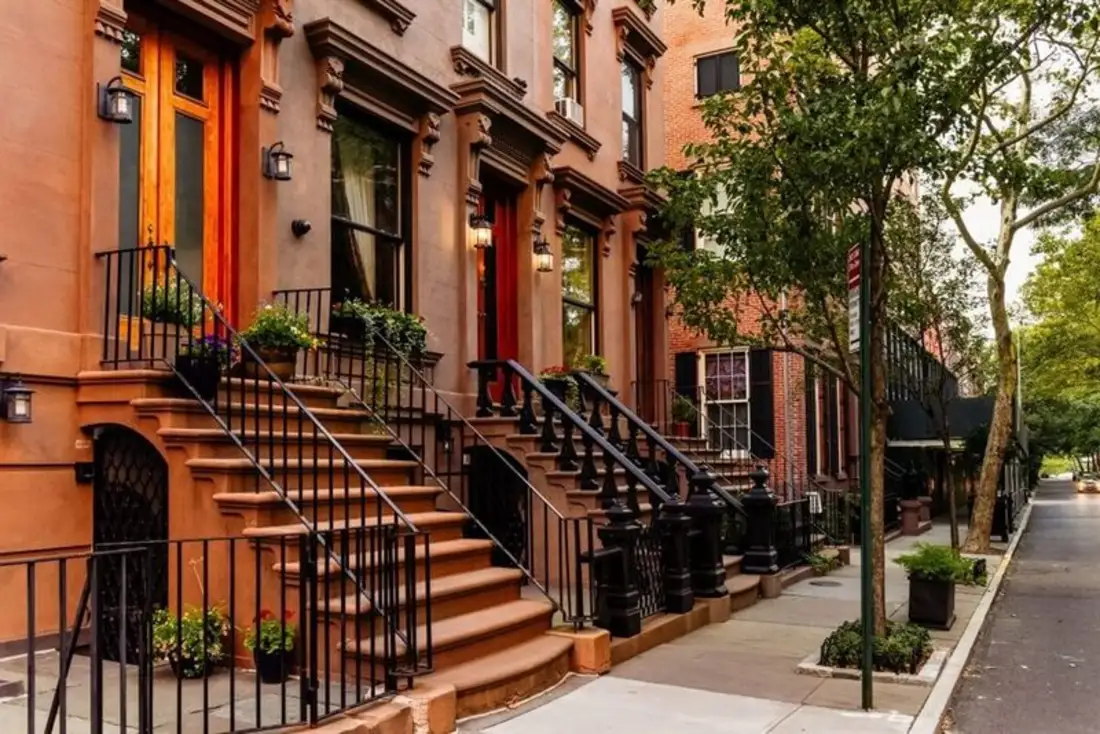
Brownstones, row houses and the garden level
The signature Brooklyn building is the brownstone row house of Park Slope, Fort Greene, Clinton Hill, Bed Stuy and Crown Heights, with brick row houses and limestone facades on street after street nearby. These houses were built with plaster and lath walls, wood joist floors and a garden level that sits partly below the sidewalk. That garden level is the borough's soft spot. It holds kitchens, family rooms and rental units, it sits close to sewer level, and its front area and rear yard doors are easy paths for street water. When a technician walks a brownstone, the first meters go to the garden level walls, because moisture there often runs the full length of the party walls before it shows.
Party walls deserve their own warning. Row houses share their side walls with the neighbours, and water respects no property line. A burst pipe in the house next door can wet your wall from inside the shared masonry, and a roof leak two doors down can appear in your ceiling after travelling along a joist. This is why inspections in row house Brooklyn always ask about the adjoining houses, check both faces of a party wall where access allows, and document which side the water started on. That last point matters for insurance, because the claim often belongs to the neighbour whose pipe failed, not the owner whose wall is wet.
Basement risk, from cellars to finished lower floors
Under almost every Brooklyn house sits a cellar, and in thousands of homes that cellar has been finished into living space. The risks stack up in a predictable order. Sewer backups arrive through floor drains and basement toilets when the combined system surcharges. Foundation walls wick groundwater after long wet spells, showing as tide lines and blistered paint. Water heaters, boilers and laundry machines live down there too, so a failed tank can put inches of water across a finished floor before anyone upstairs notices. In Brooklyn, basements are where extraction speed matters most, because carpet, pad, drywall and stored belongings all start absorbing at once, and the mold clock of twenty four to forty eight hours is already running.
The September 2023 storm gave Brooklyn its clearest modern lesson. The highest single site rainfall figure in the city that day, 9.80 inches, was recorded in Park Slope. That is a Brooklyn site figure, not a citywide one, and this page reports it that way. Park Slope is not on the coast. Its flooding came from rain falling faster than drains could carry it, ponding on streets and running into garden levels and basement stairs. Any Brooklyn plan that only watches the shoreline misses the lesson of that day: inland blocks on a slope, with basement entrances facing downhill, can flood as hard as the waterfront.
Frame houses, apartment buildings and the far edges
East of the row house belt, Brooklyn changes character. Flatbush, Midwood, Borough Park and Bensonhurst hold detached and semi detached frame and brick houses with driveways, garages and full basements. Canarsie, East New York and Brownsville mix one and two family homes with public housing campuses and garden apartments. Coney Island, Brighton Beach and Manhattan Beach face the ocean directly, with high rise towers beside bungalow streets, and Sheepshead Bay and Gerritsen Beach sit on low ground by the water. Each stock dries differently, and crews adjust the method: frame walls open and dry fast, masonry walls hold moisture for days, and tower buildings need the full management coordination described in the Manhattan section below.
Response in Brooklyn is a logistics problem as much as a drying problem. The borough is large, parking is tight, and many houses have no rear access except through the garden level itself. Crews plan hose runs, equipment carries and debris routes before they arrive, and they protect stoops, hallways and shared driveways as part of the job. For dispatch, Brooklyn jobs are matched to crew size by building type: a two person crew can handle a garden level extraction, while a flooded row house with three wet floors needs a full team and a second vehicle of drying equipment staged the same day.
The through line for Kings County is simple. Know which water threatens your block, tidal or rainfall. Know where your home is softest, which is almost always the lowest finished floor. And know that in a borough of shared walls, your neighbour's plumbing is part of your risk picture. A call from Brooklyn gets a crew that starts with those three questions, then reaches for the meters.
Borough in depth: Queens
Queens from Astoria to Jamaica: a borough of basements and bays
Queens is Queens County, home to 2,405,464 people at the 2020 Census, and the most varied borough in the city for housing. Its water story is written by two bays, a long tidal shore, and more basement living space than anywhere else in New York.
Two bays and a tidal shore
Queens faces water on three sides. The East River and Long Island Sound run along its northern shore past Astoria, Flushing and College Point, with Flushing Bay cutting in beside the airport and the Flushing River running south from it. Jamaica Bay dominates the south, a wide shallow lagoon behind the Rockaway Peninsula, touching Howard Beach, Broad Channel and the Rockaways themselves. Between the bays, the borough rises to a low ridge and falls away on both sides, so rain that lands in central Queens drains toward one bay or the other. Queens divides naturally into a northern tidal zone, a southern bay zone, and a broad middle where rainfall and sewer capacity, not tides, decide what floods.
Jamaica Bay deserves special attention because so much housing sits close to its level. Neighborhoods around the bay, and the Rockaway Peninsula between the bay and the ocean, live with high water tables, tidal street flooding on the highest tides, and storm surge exposure from both directions. Homes there often have crawl spaces or low basements that take groundwater before they take street water. An inspection in bay side Queens starts below the floor, checking joists, insulation and ductwork for the slow wetting that never makes the news but rots structures quietly over years.
Attached homes, two family houses and basement apartments
The classic Queens housing stock is the attached and semi attached home: brick and frame rows in Astoria, Sunnyside, Woodside, Jackson Heights and Elmhurst, and one and two family houses spreading east through Forest Hills, Rego Park, Flushing, Bayside, Jamaica and St Albans. These homes share a pattern that drives the borough's water claims. The basement is not an afterthought; it is living space, often a separate apartment, with a kitchen, a bathroom and an outside entrance down a short flight of steps. Those steps act as a funnel in heavy rain. Water damage restoration NYC crews in Queens carry extra extraction capacity for exactly this reason: a basement apartment can hold standing water across every room while the street outside has already drained.
The Ida disaster wrote the Queens chapter of the citywide lesson in the hardest terms. Across the city, 13 people died on 1 and 2 September 2021, and 11 of them were in basement apartments. This page keeps those figures citywide, as they were verified, and does not assign them to one borough. What can be said for Queens is structural: no borough has more below grade living space, more outside basement stairs, or more homes where a fast filling basement is also someone's bedroom. That is why every serious conversation in Queens includes alarms, a clear exit path from any basement sleeping room, and a rule that people leave first and belongings come second, always.
Sewers, sumps and the middle of the borough
Away from the shores, Queens flooding is a drainage story. Long blocks of attached homes shed roof water into leaders that connect to the combined system, and in a cloudburst the lowest homes on a block can receive water pushed back through their own basement drains. Homeowners learn their block's behaviour over years: which corner ponds, which driveway slopes the wrong way, which floor drain burps first when the system is full. A seasoned technician asks those questions on arrival, because the answers predict where the water went and where it will go again if the rain continues.
Prevention hardware earns its keep in Queens more than anywhere else in the city. A backwater valve on the house drain, a maintained sump pump with battery backup, sealed basement windows and window well covers, and leaders carried away from the foundation form the standard package. None of it is glamorous and all of it is cheaper than one flooded apartment, though this page lists no prices by design. When crews finish a Queens basement job, the close out conversation covers that package item by item, because the next cloudburst is a matter of season, not of chance.
Garden apartments, co ops and the eastern suburbs in the city
Queens also holds some of the city's largest garden apartment and co op communities, in places like Forest Hills, Kew Gardens, Jackson Heights and Bayside, plus the big Mitchell Lama and public housing campuses spread across the borough. In these buildings a single riser or roof drain failure can wet a stack of homes from the top floor down, and the response runs through supers, managing agents and boards just as it does in Manhattan towers. Further east, Douglaston, Little Neck and the blocks near the Nassau line feel suburban, with detached houses, garages and deep basements. Water damage restoration NYC coverage treats eastern Queens as house country: long hose runs, sump systems, oil tanks to check after any flood, and wells of local knowledge about which creeks and low roads flood first.
Response across Queens is shaped by distance. The borough stretches more than fifteen miles from Long Island City to the Nassau border, and a crew crossing it at the wrong hour can lose the drying race before it starts. That is why dispatch stages Queens coverage by zone, west, central and east, with the bay communities treated as their own zone during coastal storms. When you call from Queens, the questions you are asked, your nearest cross street, your housing type, whether the basement is occupied, are chosen to send the right zone crew with the right extraction load the first time.
Borough in depth: Manhattan
Manhattan vertical living: New York County towers, shafts and shutoffs
Manhattan is New York County, home to 1,694,251 people at the 2020 Census, packed onto an island between the Hudson and East rivers. Almost nobody here lives in a house. Almost everybody lives above or below somebody else, and that single fact rewrites how water behaves.
An island between three tidal waters
The Hudson runs down the west side, the East River up the east side, and the Harlem River closes the island at the north. All three are tidal, so Manhattan's shoreline is a moving boundary twice a day. The low edges are well known: Battery Park City and the Financial District at the south, the Alphabet City and Stuyvesant Town waterfront in the east, Chelsea and the Meatpacking District in the west, and Inwood at the northern tip. During Sandy the surge came over those edges and into lobbies, garages and electrical rooms. In water damage restoration NYC work, Manhattan's ground plane is a building systems problem: the spaces that flood first are the spaces that hold the pumps, panels and elevator pits the whole tower depends on.
Inland Manhattan floods differently. The island's old topography still shows through the street grid: low corridors where streams once ran, underpasses, and the below grade world of subway entrances, loading docks and basement retail. A cloudburst that would be a nuisance on a slope becomes a basement filling event in a dip. Water damage restoration NYC crews working Manhattan keep two mental maps, the surge map for the edges and the ponding map for the interior, and they ask which one a building sits on before they choose equipment.
High rises: the stack is the unit of damage
In a tower, water does not spread sideways first. It falls. A supply line failure on the twentieth floor becomes wet ceilings on the nineteenth, eighteenth and seventeenth floors, travelling through pipe chases, electrical shafts and the gap between slab and wall. The first job of a water damage restoration NYC crew in a high rise is therefore vertical: identify the stack, check every unit in the line below the source, and keep checking until two consecutive dry floors confirm the bottom of the loss. Skipping a floor because its ceiling looks clean is the classic Manhattan mistake, because water can bridge past one unit in a chase and reappear two floors down.
The building itself is the second client. Management must approve work hours, elevator use and hallway protection. The super usually controls the riser shutoffs, and in older buildings a single valve may serve a whole line, which means shutting water for six homes to stop one leak. Freight elevators get booked, neighbours get notified, and insurance carriers for the building, the unit owner and the upstairs neighbour all open files. Experienced water damage restoration NYC teams build that coordination into the first hour, because drying that starts late while paperwork circles is drying that loses to the mold clock.
Co ops, condos and the paperwork of shared ownership
Manhattan is the capital of the co op, where residents own shares in a corporation that owns the building, alongside condominiums where units are owned outright. The distinction decides who pays for what after a leak. Building systems, risers, roofs, facade, are usually the corporation or association's responsibility. Interior finishes are usually the shareholder's or unit owner's. Alteration agreements, insurance certificates and board rules govern who may open a wall and when. A water damage restoration NYC file in a co op therefore names the parties carefully from day one: shareholder, corporation, managing agent, and each one's carrier, so the daily logs land with the right insurer.
One legal caution from the existing guidance on this page bears repeating in this borough more than any other. In Frisch v Bellmarc, decided in 1993, a condo unit owner could not raise the warranty of habitability against the condo association. The practical meaning is that your own policy, your own documentation and your own prompt notice carry the weight. Water damage restoration NYC crews working in Manhattan condos photograph everything before they touch it, because the file they build may be the strongest evidence any party holds.
Pre war buildings, brownstones and the west side mix
Above the tower districts, Manhattan keeps deep stocks of pre war apartment houses on the Upper West and Upper East Sides, in Washington Heights and in Harlem, plus brownstone and townhouse blocks in Harlem, the Upper West Side and the West Village. These buildings combine the brownstone problems of Brooklyn, plaster, lath, layered floors and old plumbing, with apartment house problems, shared risers, radiator systems and neighbours on every side. Radiator leaks and steam line failures are a Manhattan specialty in heating season. In water damage restoration NYC practice, pre war Manhattan jobs get the most thorough moisture mapping of any stock in the city, because a century of alterations has hidden pipes in places no drawing records.
Townhouses add one more pattern. A Manhattan townhouse often holds a garden level or English basement, a cellar with the boiler and laundry, and four or five floors above, sometimes split into multiple units. Water entering at the garden level threatens the systems below and the finishes above at the same time. The response sequence for water damage restoration NYC townhouse work runs bottom up: make the cellar safe, extract the garden level, then trace upward along chases to confirm the source was rain and not a pipe above waiting to fail again.
Response in Manhattan rewards local staging. Bridges, tunnels and crosstown traffic can turn a short trip into a long one at exactly the hours when storms hit. Crews serving the borough pre position extraction and drying equipment on the island, learn the freight elevator rules of the buildings they serve repeatedly, and keep supers' numbers in the job file. When a Manhattan caller describes water coming through a ceiling at midnight, the water damage restoration NYC dispatcher is already asking the questions that matter here: which floor, which line, is the super on site, and has the riser been shut.
Borough in depth: The Bronx
The Bronx along two rivers: Bronx County homes, radiators and shared walls
The Bronx is Bronx County, home to 1,472,654 people at the 2020 Census, the only borough attached to the mainland, and a borough of pre war apartment houses, hilltop homes and two tidal rivers that meet at its southern tip.
The Harlem River, the Hudson and the working waterfront
The Harlem River runs along the borough's western and southern edge, an eight mile tidal strait between the Hudson and the East River. The Hudson itself touches the Bronx at Riverdale and Spuyten Duyvil, where the Harlem River begins. On the east, the Bronx River and the Hutchinson River run down to Eastchester Bay, and Long Island Sound opens past City Island and Orchard Beach. For water damage restoration NYC planning, the Bronx waterfront is a chain of low industrial and residential edges, marinas, parkland and the low blocks of Hunts Point and the South Bronx shore, where surge and extreme high tides arrive through the Harlem River as readily as from the Sound.
Inland, the borough's hills shape its rain flooding. The Bronx is the hilliest borough, and water runs off the ridges into the valleys where the older street grid and the rail cuts sit. Underpasses, basement entrances on downhill blocks and the low ground along the Bronx River corridor collect cloudburst water. A water damage restoration NYC crew in the Bronx asks about slope as instinctively as about shoreline, because a home can be a mile from any river and still sit at the bottom of its street's watershed.
Pre war apartment houses and the radiator problem
The defining Bronx building is the pre war apartment house: five and six story walkups and elevator buildings along the Grand Concourse, in Kingsbridge, Fordham, Norwood, Mott Haven and a hundred other neighborhoods. Masonry walls, wood floors over joists, steam heat and plumbing that has served for generations give these buildings their character and their water risk. Radiator valves weep, steam traps fail, risers corrode inside chases, and a leak can run for weeks inside a wall before a stain blooms. Water damage restoration NYC work in these buildings is detective work first: find the true source among a dozen possible risers, then dry plaster and masonry that hold moisture far longer than modern drywall.
Shared systems mean shared consequences. One tenant's overflowing tub or failed washing machine hose becomes the ceiling of the home below, and the home below that. Supers in Bronx apartment houses are central figures in any response: they know which valve serves which line, which chase hides which riser, and which tenants are away. The standard water damage restoration NYC sequence in a Bronx walkup therefore starts at the super's door, and the claim file notes every unit checked in the stack, including the dry ones, because proving a negative is part of the record.
Houses on the hills: Riverdale, Woodlawn and the east
North and east, the borough turns leafy. Riverdale holds detached houses, garden co ops and mid century towers on high ground above the Hudson. Woodlawn, Wakefield and Edenwald mix one and two family homes with garden apartments. The northeast, Baychester, Eastchester and Co op City, includes the largest co operative housing development in the country, a small city of towers with its own systems scale. Pelham Parkway, Morris Park and Westchester Square hold the classic Bronx two family house, owner above, tenant below, shared basement underneath. In water damage restoration NYC house work here, the familiar pattern returns: the basement holds the boiler, the laundry and the storage, and it is the first space checked and the last space signed off.
Basement risk in the Bronx carries the same life safety rule as everywhere in the city, sharpened by the housing mix. Below grade rooms are common in two family houses and in converted spaces in apartment buildings. The citywide Ida figures, 13 deaths, 11 of them in basement apartments, are the standing warning, and they are cited on this page only as citywide figures. A water damage restoration NYC crew that finds a flooded Bronx basement asks first whether anyone sleeps there, and treats alarms, exits and electrical safety as part of the restoration scope, not as somebody else's department.
Response patterns in Bronx County
Bronx jobs reward crews that know the building stock street by street. The borough's housing changes fast: a Concourse elevator building, a block of two family houses and a tower campus can stand within a few streets of each other, each needing different equipment, different access and different coordination. Dispatch for water damage restoration NYC in the Bronx confirms the building type before rolling, because a walkup extraction with portable units and a tower job with riser coordination are different operations sharing one name. What does not change is the sequence: stop the source, make it safe, extract, map, dry, prove it, and write it all down for the claim file.
Borough in depth: Staten Island
Staten Island shorelines: Richmond County homes between the bays and the kills
Staten Island is Richmond County, home to 495,747 people at the 2020 Census, the smallest and most suburban borough, and the one where the detached house, the garage and the full basement are the standard setting for water damage.
A borough wrapped in tidal water
Staten Island is an island in fact as well as name. Upper New York Bay washes its northeast shore at St George and Tompkinsville. The Kill Van Kull runs along the north shore past Port Richmond. The Arthur Kill, another tidal strait, separates the west shore from New Jersey, past Tottenville at the southern tip. Lower New York Bay and the open Atlantic face the east and south shores, along Midland Beach, South Beach, New Dorp Beach, Oakwood Beach and Great Kills. For water damage restoration NYC risk mapping, no borough has more shoreline per home, and the island's low east and south shores are where surge history is written deepest.
Sandy is the standing example, and this page keeps its figures citywide: a record surge of 9.40 feet above normal tide at Battery Park, 44 deaths in the city, about 17 percent of the city landmass flooded and damage in the city estimated at about nineteen billion dollars. Within that citywide picture, the Staten Island shore communities were among the hardest hit places in the five boroughs, and the rebuilding there changed how the whole city talks about elevation, utilities and first floor use. A water damage restoration NYC crew working the east shore still sees the marks: raised homes, relocated mechanicals and garages designed to flood and drain rather than resist.
Detached houses, raised ranches and the finished basement
The island's housing is mostly one and two family detached and semi detached homes: colonials, capes, raised ranches, split levels and the newer large homes of the South Shore, with older village fabric in Tottenville, Richmondtown and Port Richmond. The raised ranch and split level deserve their own note, because their lower level sits half below grade by design, finished as family space with a garage beside it. That lower level is where Staten Island water damage lives. Garage doors are not seals, driveway slopes often run toward the house, and a hard rain can put water across a family room floor in minutes. Water damage restoration NYC inspections on the island start at the driveway and the grade, reading how the lot itself delivers water to the door.
Full basements under detached homes hold the island's mechanical heart: boiler or furnace, water heater, laundry, electrical panel and the stored contents of a household. Many homes run sump pumps through the wet season, and homes near the shore and along the island's creeks and low corridors may see the water table rise into the pit after long rain. The standard water damage restoration NYC close out on Staten Island covers the sump system in detail: pit, pump, check valve, discharge line, battery backup and a high water alarm, because in this borough that single system is the difference between a wet season and a flooded one.
North Shore density and the island's two characters
The North Shore is a different Staten Island: older, denser, with apartment buildings, attached homes and the ferry oriented blocks of St George, plus the working waterfront. Jobs there look like Brooklyn and Bronx jobs, shared walls, supers, stacks of units. The Mid Island and South Shore are house country, where the work looks like suburban practice anywhere, with one New York difference: the water is tidal on three sides and the storms that matter arrive from the ocean. Water damage restoration NYC coverage for Richmond County keeps both playbooks ready, and dispatch confirms which Staten Island a caller lives in before choosing the crew.
Distance shapes response here too. The island connects to Brooklyn by one bridge, to New Jersey by three, and to Manhattan by ferry and by road through its neighbours. In a major storm, those crossings close or crawl at exactly the wrong time. For that reason water damage restoration NYC staging for Staten Island keeps equipment on the island itself, and island crews work island jobs through the worst of a storm rather than waiting for reinforcements that cannot cross. When you call from Richmond County, the crew that answers is already on your side of the water.
Rivers and tides
Three tidal waterways decide where this city floods
New York is a city of tides, not simple riverbanks. The lower Hudson is a tidal estuary: its flow reverses with the tide as far north as Troy, and the tidal Hudson runs 153 miles. The East River is not a river at all but a tidal strait of salt water flowing from Long Island Sound between the Bronx and Manhattan on one side and Long Island on the other. The Harlem River is an eight mile tidal strait between the East River and the Hudson, separating most of Manhattan from the Bronx.
That tidal character is why water damage restoration NYC planning cannot stop at rainfall. Storm surge pushes harbour water up all three waterways at once, high tide can hold storm drains shut while rain is still falling, and basements near any shoreline in any borough can take water even when the street above looks calm. When a big storm is forecast, the homes that prepare are the ones near the water, on low ground, and at the bottom of any slope, in every borough.
Voice answers
Why does NYC flood even without a hurricane? Because extreme rain can overwhelm drains faster than tides let them empty, as the September 2023 storm proved across inland neighborhoods.
Which homes should prepare first? Basement and garden level homes, homes near the Hudson, East River and Harlem River shorelines, and any home at the low end of its street.
Waterway in depth: The Hudson
The Hudson River in depth: a tidal estuary that sets the city flood clock
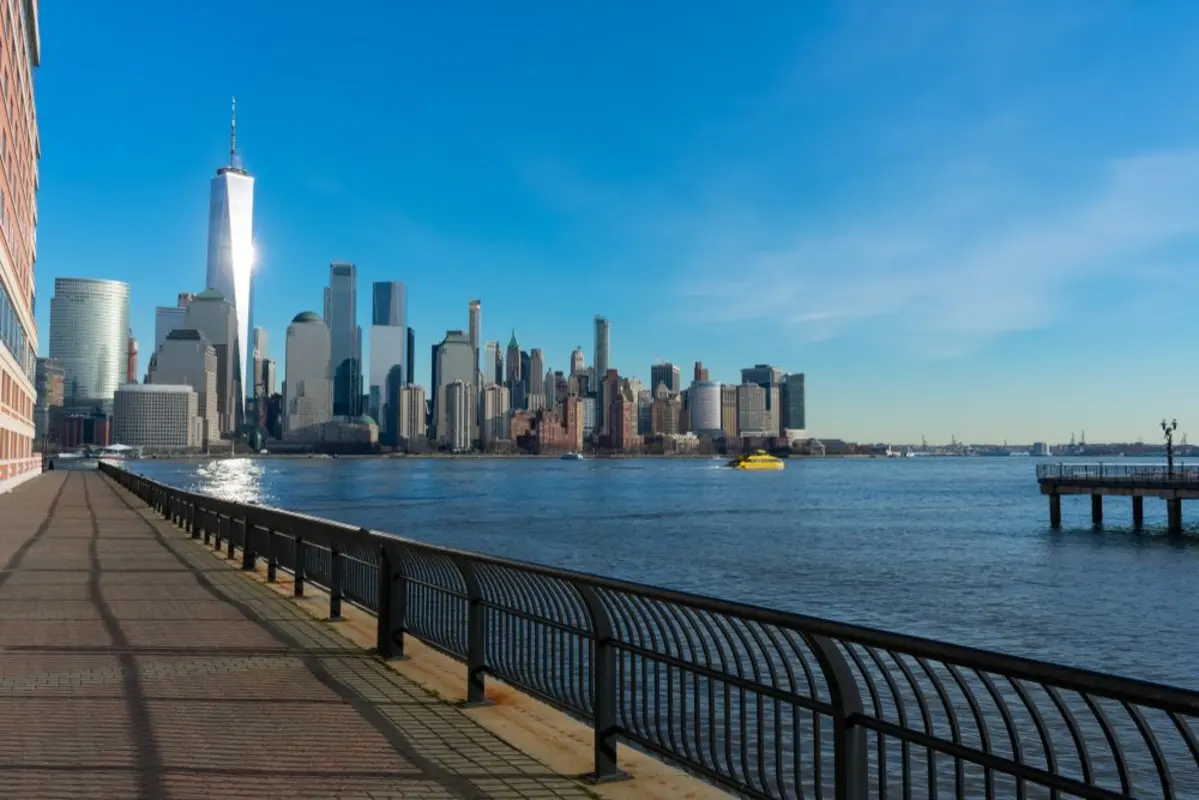
The lower Hudson is not a river in the simple sense. It is a tidal estuary, a drowned valley where the sea reaches inland and the flow reverses with every tide. That reversal runs the full tidal Hudson, 153 miles from the harbour to Troy, which means the water level at a Manhattan or Bronx dock rises and falls on a rhythm set far beyond the city. In water damage restoration NYC planning, the Hudson matters because it is one of the three doors through which the ocean enters the city, and because its tide decides when storm drains along the west side can empty and when they cannot.
Storm surge is the Hudson's flood mechanism. A coastal storm piles harbour water against the city, and the estuary carries that pile north as a long wave, raising levels at Battery Park, along the Manhattan west side, past Riverdale and up the valley. The Sandy record, 9.40 feet above normal tide at Battery Park, which is 14.06 feet above average low tide, was measured on this water. When water damage restoration NYC crews prepare a west side building for a coastal storm, the Hudson checklist runs first: lobby and garage thresholds, elevator pits, loading docks, basement vents and the electrical rooms that so often sit at the lowest level of waterfront towers.
The Hudson also explains a quieter kind of flooding. On the highest tides of the year, even without any storm, low waterfront streets and paths can see water at the curb, and drains that should carry rain away are already full of tide. Add moderate rain at the wrong hour and the margin disappears. Buildings learn their own tidal threshold over time, the tide height at which the garage needs its barriers and the dock needs watching. A thorough water damage restoration NYC assessment for a Hudson facing property records that threshold in the file, so the next storm plan starts from knowledge rather than memory.
After Hudson water enters a building, the work follows the standard sequence with two additions. Estuary water carries silt, fuel traces and whatever the harbour holds, so it is treated as contaminated, with porous materials assessed for removal rather than drying in place. And because the estuary is brackish, salt residue inside wall cavities and on metal systems needs cleaning as part of drying, or corrosion continues after the moisture is gone. These are the details that separate water damage restoration NYC practice on a tidal waterfront from the same trade practised beside a freshwater river inland.
Waterway in depth: The East River
The East River in depth: a salt water strait with two tidal masters
The East River is not a river at all. It is a tidal strait of salt water, connecting Long Island Sound at its northern end with Upper New York Bay at the Battery, and flowing between the Bronx and Manhattan on one shore and Queens and Brooklyn on the other. Because both ends are tidal and the two tides arrive out of step, the strait's currents reverse and at places run hard, and its water level at any given dock is a negotiation between the Sound and the harbour. For water damage restoration NYC, the East River is the city's second surge door, and the one that touches four of the five boroughs.
Surge through the East River behaves differently from surge up the Hudson. Water can be pushed into the strait from the Sound side by one storm pattern and from the harbour side by another, and the neighbourhoods along it, from Hunts Point and Astoria to Long Island City, Williamsburg, the Lower East Side and the Financial District, take their flood risk from both directions. Hell Gate, the narrow reach where the strait turns past Astoria, is famous for its currents, a reminder that this water moves with real force. In water damage restoration NYC storm preparation, East River buildings check the same low openings as Hudson buildings, with added attention to the older industrial waterfront lots where ground floors sit close to bulkhead level.
The strait also frames the city's most built up shoreline. Seawalls, esplanades and piers hold the line along much of it, and where that line is low or interrupted, high tides and surge find the gaps. Inland of the wall, the risk flips back to rainfall: the dense neighbourhoods behind the East River shore drain toward it, and when the strait stands high, their outfalls are throttled. That is the compound pattern behind many water damage restoration NYC calls on the east side: not water coming over the wall, but rain that could not leave.
Work along the East River after a flood carries the same cautions as Hudson work, with the salt question sharper, because this is fully salt water. Contents, wiring and mechanical systems that took strait water need the contamination and corrosion steps built into the drying plan from day one. The strait gives the city its bridges, its views and its working waterfront. A clear eyed water damage restoration NYC plan simply adds its tide table to the list of things a shoreline building watches every week.
Waterway in depth: The Harlem River
The Harlem River in depth: eight tidal miles between two bigger waters
The Harlem River is the smallest of the city's three tidal waterways and the easiest to overlook, which is exactly why it gets its own section here. It is an eight mile tidal strait running between the East River at its southern end and the Hudson at Spuyten Duyvil, separating most of Manhattan from the Bronx. Bridges crowd its length, its shores hold rail yards, highways, parkland and dense neighbourhoods, and its tide is a blend of the two bigger waters it joins. In water damage restoration NYC terms, the Harlem River is the connector that lets a surge in either the Hudson or the East River reach the neighbourhoods along both its banks.
The neighbourhoods in its reach are some of the city's most densely housed: Harlem and East Harlem on the Manhattan side, Mott Haven, Highbridge and Kingsbridge on the Bronx side, with Inwood at the top where the strait meets the Hudson. Much of this housing is pre war apartment stock with below grade space, boiler rooms and basement storage at the level the river threatens first. When water damage restoration NYC dispatchers map a coastal storm, the Harlem River corridor is drawn as its own zone, because its flooding can arrive from a direction the street map does not suggest: not from the nearest shore a resident would name, but through the strait from a surge centred miles away.
The Harlem River also carries a drainage lesson. The low ground along its banks, the rail cuts, the highway underpasses and the flat industrial lots near its southern end, collects rain as well as tide. The September 2023 storm and the Ida cloudburst both flooded underpasses and low roads in this corridor without any surge at all. For buildings here, the water damage restoration NYC assessment therefore covers both mechanisms in one visit: the tidal threshold at the shore openings, and the ponding behaviour of the surrounding streets in extreme rain.
Small waterway, full protocol. After Harlem River water enters a basement, it is treated as tidal water, with the contamination and salt steps that follow, and the drying plan accounts for masonry walls that dominate the corridor's housing. Eight miles is short on the map. In the daily work of water damage restoration NYC, the Harlem River corridor produces calls out of all proportion to its length.
The process
Six steps from the first call to a dry, documented home
Every job, from a studio with a burst radiator line to a flooded Brooklyn basement, follows the same six steps. The steps are written into the structured data of this page as a HowTo, and the crew works to them on site.
Call now and send a crew to your borough
One call to (212) 555-0147, at any hour, starts the job. You describe what happened, the crew brings extraction and drying capacity matched to your building, and you get a clear arrival plan instead of a callback queue.
Shut the water off and make the home safe
The crew confirms the source is stopped, checks for electrical hazards, and protects the rooms that are still dry. In apartment buildings this step includes the super and management, because shutoffs and shafts are shared.
Extract standing water from floors and basements
Standing water comes out with truck mounted or portable extraction before it can soak deeper. Carpets are lifted where needed, and anything sewage has touched is treated as contaminated from this moment on.
Open wet walls, map moisture and dry the structure
Baseboards come off and wet wall cavities are opened where readings demand it. Moisture mapping finds the true edge of the loss, then air movers and dehumidifiers are placed to dry the structure, not just the surface.
Check daily readings and stop mold before it starts
Technicians return daily, take meter readings, move equipment as areas dry, and log everything. Because mold can start within 24 to 48 hours, this daily rhythm is the heart of water damage restoration NYC work.
Confirm dry readings and build your claim file
Drying ends only when readings match the dry standard of an unaffected area. You receive the logs, photos and scope notes your insurer needs, and repair work begins on a structure that is proven dry.
Water does not wait for office hours
Night, weekend or holiday, the six steps start with one call.
The process in depth
Inside the six steps: what the crew actually does, hour by hour in your home
The six steps above are the summary. This section is the working version: what happens inside each step, what the crew is looking for, and what you should see, hear and receive as the job moves.
Step one in depth: the call and the dispatch decision
The call is a triage interview, not a sales conversation. The dispatcher asks what happened, when it started, whether the source is stopped, how many rooms are wet, what floor you are on, what building type you live in and whether anyone at home has health concerns that change the plan. Each answer changes the load out: a stopped leak in a drywall apartment needs a different first vehicle from a running sewer backup in a basement. In water damage restoration NYC dispatch, the goal of step one is that the first crew to arrive is the right crew, because a second trip for the right extraction unit costs the one thing the job cannot spare, which is hours inside the mold window.
You should finish the call knowing three things: when the crew will arrive, what to do and not do before they come, and what the first visit will produce, which is a stopped source, a safety check, extraction under way and a written scope. If a company will not commit to those basics on the phone, keep calling. Water damage restoration NYC work is emergency work, and the standard for the first conversation is clarity, not pressure.
Step two in depth: source control and the safety sweep
On arrival the crew confirms the source is truly stopped, and in apartment buildings that confirmation often means the super, a riser valve and a neighbour's unit, not just your own shutoff. Then comes the safety sweep: power to wet areas, the condition of outlets and appliances in the water, the ceiling below a leak checked for sagging, which signals pooled water overhead, and the category of the water itself. Clean water from a supply line, gray water from a drain or appliance, and black water from sewage or tidal flooding each set a different protocol. In water damage restoration NYC practice, step two ends with a protected work zone: dry rooms sealed off, floors and hallways covered, and a clear path for equipment and debris.
Step three in depth: extraction, the highest value hour
Extraction removes more water in an hour than drying removes in a day, which is why it gets its own step and the best equipment on the truck. Weighted extraction tools pull water from deep in carpet and pad, pumps handle deep basement water, and crews work from the wettest point outward so they are not walking water into dry rooms. Furniture is blocked up or moved, and anything the water category condemns, soaked pad, contaminated soft goods, is documented and removed now rather than after days of debate. Water damage restoration NYC technicians measure this step in gallons and in inches of standing water gone, and the difference it makes shows up in every later reading.
Step four in depth: opening, mapping and placing the dry
With standing water gone, the crew maps moisture properly. Pin and pinless meters, and where useful a thermal camera, trace the true edge of the loss through walls, floors and ceilings, including the rooms that look untouched. Baseboards come off to vent wall cavities, small inspection openings confirm what the meters suggest, and wet insulation, which dries too slowly to save, is removed where readings demand it. Then the drying system is placed as a system: air movers aimed to sweep every wet surface, dehumidifiers sized to the space and the material load, cavity drying for stud bays and floor systems for hardwood. Water damage restoration NYC crews sketch this placement on the job file, because step five is judged against it.
Step five in depth: the daily rhythm that wins the mold race
Step five is where jobs are won. Each day a technician returns, takes readings at the same marked points, compares them with the dry standard taken from an unaffected area, and adjusts: moving air movers to the stubborn wall, adding dehumidification where the air is still loading, opening a section that is not keeping pace. The readings go into the log with dates and initials. This rhythm matters because mold can start within twenty four to forty eight hours on wet materials, and steady drying inside that window is the whole strategy. In water damage restoration NYC work, a crew that cannot show you yesterday's numbers and today's is asking you to take dryness on faith, and faith is not a drying standard.
Step six in depth: verification, sign off and the handoff to repair
The job ends on evidence. Final readings at every mapped point are compared with the dry standard, the comparison is written into the file, and equipment comes out only when the numbers agree. You receive the full claim file: before and after photos, the scope, the daily moisture logs, the final verification and notes on anything removed and why. Repair then starts on a structure proven dry, which protects the new work from the trapped moisture failures that haunt rushed jobs. That file is also the backbone of your insurance claim, and it is why water damage restoration NYC documentation is treated on this page as a step of the process, not as paperwork after it.
Services
Fifteen services under one roof
The full service list for water damage restoration NYC, from the first gallon extracted to the last document dried. One crew, one plan, one claim file.
Storm history
When the water came: Sandy, Ida and September 2023
Three storms taught this city three different lessons. The figures below are citywide figures only; borough and single site figures are labelled as such and are never presented as city totals.
Surge, the harbour pushed inland
The storm surge at Battery Park reached 9.40 feet above normal tide, which is 14.06 feet above average low tide, a record. 44 people died in New York City. About 17 percent of the city landmass flooded, some 51 square miles, along with about 9 percent of its buildings, and about two million people in the city lost power. Damage within the city was estimated at about nineteen billion dollars, an estimate associated with Mayor Bloomberg.
Lesson: surge enters basements, ground floors, elevator shafts and electrical rooms first. Buildings that protect those spaces recover fastest.
Cloudburst, the rain that outran the drains
The remnants of Hurricane Ida dropped 7.13 inches on Central Park, its fifth wettest day on record, including a record 3.15 inches in a single hour, between 8:51 and 9:51 in the evening of 1 September. Thirteen people died in New York City, 11 of them in basement apartments. A flash flood emergency covered all five boroughs and every subway service was affected.
Lesson: basement apartments can fill faster than anyone can move belongings. Life safety comes before property, every time.
Record rain, no hurricane at all
Central Park recorded 5.48 inches, the sixth highest daily figure there in 141 years, and no deaths were reported in the city. September 2023 became the wettest September since 1882, with 14.25 inches across the month. The highest single site figure, 9.80 inches, was recorded in Park Slope, Brooklyn; that is a Brooklyn site figure, not a citywide one, and it is reported that way here.
Lesson: extreme rain alone, far from any coast, now floods inland basements and ground floors across the city.
Storm in depth: Sandy
Sandy in depth: how one night of surge rewired city building practice
Hurricane Sandy reached New York on 29 October 2012, and the water it pushed into the city remains the benchmark every coastal plan is measured against. The figures used here are the citywide ones verified for this page. The surge at Battery Park reached 9.40 feet above normal tide, 14.06 feet above average low tide, a record. 44 people died in New York City. About 17 percent of the city landmass flooded, some 51 square miles, taking in about 9 percent of its buildings, and about two million people in the city lost power. Damage within the city was estimated at about nineteen billion dollars, an estimate associated with Mayor Bloomberg. In the work of water damage restoration NYC, Sandy is not history. It is the design storm.
The mechanism is worth understanding because it still governs preparation. Sandy arrived near high tide with a huge wind field that had been pushing Atlantic water toward the coast for days. The harbour, the Hudson, the East River and Jamaica Bay all rose together, and the water entered the city at its lowest engineered points: bulkhead gaps, beach streets, tunnel portals, vent openings and the ground floors of waterfront buildings. Once inside a building, surge water found the basement, the elevator pit and the electrical room, and by disabling those systems it disabled buildings far beyond the rooms it physically touched. Water damage restoration NYC crews who worked that storm still describe the same pattern: the flood line was only the first problem; the loss of power, heat and elevators was the second, longer one.
The practice changes that followed shape jobs to this day. Waterfront buildings raised or relocated electrical and mechanical systems, added flood barriers and deployable gates at openings, sealed or vented ground floors by design, and wrote storm plans that name who does what before the water arrives. Homes on the Staten Island shore and around Jamaica Bay were rebuilt higher, with breakaway or flood tolerant lower levels. For water damage restoration NYC assessment work, a building's Sandy story is now a standard question: did it flood, how deep, which systems failed, and what was changed afterwards. The answers predict the next storm's job better than any map.
The honest limit is also part of the record. Barriers and raised systems protect against the surge a building was designed for, and Sandy set that bar at a level many buildings still do not meet. Preparation on this page is therefore framed in layers: know your building's flood history, protect the lowest systems first, keep documents and valuables above the known line, and treat any forecast that mentions surge in the harbour as a working day for your building plan. That layered approach is the Sandy chapter of water damage restoration NYC practice, and it is revisited before every coastal storm season.
Storm in depth: Ida
Ida in depth: the hour the rain fell faster than the drains could think
On the night of 1 September 2021, running into 2 September, the remnants of Hurricane Ida crossed the city not as a wind storm but as a rain machine. The verified citywide figures are these. Central Park recorded 7.13 inches of rain, its fifth wettest day on record, and within that total a record 3.15 inches fell in a single hour, between 8:51 and 9:51 in the evening of 1 September. Thirteen people died in New York City, 11 of them in basement apartments. A flash flood emergency, the first of its kind issued for the city, covered all five boroughs, and every subway service was affected. For water damage restoration NYC, Ida changed the subject: the deadliest water in this city can fall from the sky inland, at night, faster than any drain was built to carry it.
Three inches of rain in an hour is the number to hold onto. Drainage systems are designed around rainfall rates, and a rate like that exceeds the design of systems everywhere, not only in New York. Streets became channels, channels found the low openings, and the low openings in this city are basement stairs, window wells, garage ramps and below grade doors. Basements that had never taken water took it that night, because the limiting factor was not the condition of the house drain but the sheer volume arriving at once. Water damage restoration NYC crews use the Ida rate as the planning figure for cloudburst readiness: if your home's openings cannot handle a street running full, the plan has to be alarms, barriers, a backwater valve and a fast exit, in that order of importance.
The human lesson outranks every property lesson on this page. Eleven of the thirteen people who died were in basement apartments, many of them below grade homes where water rose faster than escape through a single door or window allowed. No restoration guidance matters more than this: a basement sleeping room needs a working alarm, a clear way out that does not depend on wading through the flooded room, and a household rule that rising water means leave now and call from outside. Every water damage restoration NYC basement assessment since Ida treats those three items as part of the job's closing checklist, and this page states them in the plainest words it has.
Ida also reset expectations for the days after a flood. Because the rain was citywide, thousands of homes needed extraction in the same week, and the homes that recovered best were the ones that started with safety and documentation while they waited: photos taken, belongings raised, contaminated items separated, insurers notified. The six step process on this page is written for that reality. It assumes demand will spike exactly when you call, and it front loads the steps a homeowner can do alone. That is Ida's permanent mark on water damage restoration NYC practice.
Storm in depth: September 2023
September 2023 in depth: the wettest September since 1882, told by its gauges
The storm of 29 September 2023 had no name and no hurricane behind it, which is precisely why it belongs in this trio. The verified citywide figures: Central Park recorded 5.48 inches of rain that day, the sixth highest daily figure there in 141 years. No deaths were reported in the city. Across the whole month, 14.25 inches fell, making September 2023 the wettest September since 1882. The highest single site figure of the day, 9.80 inches in Park Slope, is a Brooklyn site figure and is reported as such on this page, never as a citywide total. In water damage restoration NYC terms, this was the proof that a slow, soaking, unnamed rain event can now do a fair share of a hurricane's work.
The month matters as much as the day. By 29 September the ground, the sewers and the city's buildings had already absorbed weeks of rain. Saturated soil stops absorbing, so late month rain runs off almost completely. Basements that weep only in the worst storms wept in ordinary ones, sump pumps ran for days, and small defects, a cracked leader, a settled walkway sloping to the foundation, announced themselves all over the city at once. Water damage restoration NYC crews read a month like that as a systems check the whole city failed or passed together, and the follow up work it generated was less about single dramatic floods and more about thousands of chronic entry points finally exposed.
The day itself repeated the Ida pattern at lower intensity: rain rates that outran drainage in bursts, street ponding at the known low points, water in basement stairs and ground floor businesses, transit disrupted. The difference was warning and daylight, and the outcome difference was stark: no deaths in the city. For preparedness teaching, water damage restoration NYC guidance pairs the two storms deliberately. Ida shows what the water can do at night without warning. September 2023 shows the same mechanisms in a storm the city saw coming, and the value of the hours of preparation that warning buys.
The forward lesson is about baselines. A month that breaks a record standing since 1882 tells building owners that the old assumptions, the storm that comes once a generation, the basement that has been dry for thirty years, are weaker evidence than they feel. The practical response is the prevention programme detailed later on this page, applied before the wet months rather than after them. In the records of water damage restoration NYC, September 2023 is filed as the storm that made inland rain readiness a permanent part of the city's flood conversation, alongside surge.
Building risks
Basements, brownstones and high rises: risks that are pure New York
Basement and garden level homes
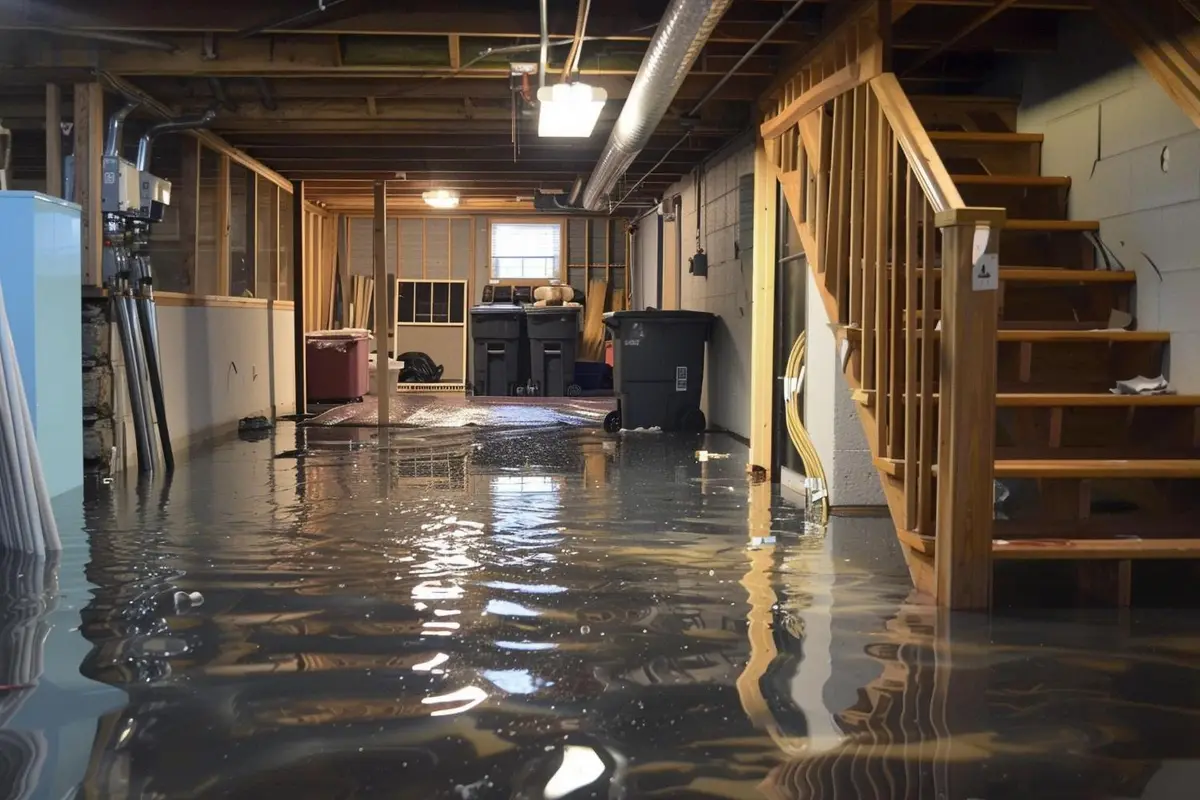
Ida wrote the rule in the hardest way: 11 of the 13 New York City deaths were in basement apartments. Basements sit at or below street and sewer level, so cloudburst rain and sewer backups reach them first and fill them fastest. A maintained sump pump, a backwater valve, water alarms and a habit of storing valuables off the floor are the basics. Sleeping rooms below grade need working alarms and a clear way out, and no restoration concern ever outranks getting people out of a flooding basement.
Brownstones and pre war buildings
Plaster and lath, layered floors, old plumbing and shared party walls let water travel quietly and appear rooms away from its source. Garden levels sit close to street level. In these buildings, water damage restoration NYC crews rely on moisture mapping more than eyesight, because the visible stain is often the smallest part of the loss.
High rises, co ops and condos
Here the building is part of the job: management approval, elevator bookings, shared shutoffs, hallway protection and checks of the units below and beside yours. Boards and management should be informed in writing. One caution from New York case law, Frisch v Bellmarc in 1993: a condo unit owner cannot raise the warranty of habitability against the condo association, so your own insurance and documentation carry extra weight.
Building stocks in depth
Five building stocks, five drying playbooks
Materials decide drying. The same inch of water behaves five different ways in the five stocks that make up this city, and each stock below gets the playbook that water damage restoration NYC crews actually run in it.
Brownstones: masonry, plaster and patience
A brownstone is a masonry building wearing a stone face: brick walls, often with brownstone veneer at the front, wood joists, plaster and lath inside, and a century or more of alterations inside its walls. Water in a brownstone travels along joists, wicks through brick and hides behind plaster that can look sound while the lath behind it is soaked. Drying is therefore slow and measurement led. Cavities are opened at the base, masonry readings are taken deep, and dehumidification runs longer than in frame construction because brick releases stored moisture for days. In water damage restoration NYC brownstone work, the cardinal rule is not to close a wall on a surface reading; the meter has to agree at depth, or the plaster will tell you about it next season.
The brownstone's other signature is the garden level, covered in the Brooklyn section, and its shared party walls. Add the stoop and the front area, the vaulted space under many sidewalks, and you have a building whose lowest metre is a small landscape of entry points. A complete water damage restoration NYC brownstone assessment walks that whole metre, inside and out, before the first fan is placed.
Pre war buildings: layered floors and hidden plumbing
Pre war apartment houses, built before the Second World War and standing in every borough, stack the city's history in their floors: hardwood over subfloor over sleepers, sometimes over an older floor again. Water between those layers is the defining pre war problem, because the surface can dry while the sandwich below stays wet. Crews lift thresholds, read through vents and use floor drying systems that pull air through the layers. The plumbing is equally layered: original risers beside replacement lines, abandoned pipes still in chases, radiator systems with valves at every unit. In water damage restoration NYC pre war work, finding every pipe, live and dead, is part of finding the source, and the moisture map routinely covers rooms the residents would swear never got wet.
High rises: engineering, logistics and the line below
Modern high rises are concrete and steel, which changes the materials but not the stakes. Water runs down shafts and chases, pools on slabs, and enters units through ceiling penetrations floors below the source. The building's systems, booster pumps, elevator pits, compactor rooms, electrical closets, are themselves the highest value targets. Drying is an engineering exercise run inside a logistics exercise: freight elevator windows, management approvals, hallway protection, noise rules and dozens of affected households. Water damage restoration NYC high rise teams keep a building file for every tower they serve, with riser maps, shutoff locations and management contacts, because the second job in a known building starts hours ahead of the first job in a strange one.
Co ops and condos: two owners in every wall
Co ops and condos add a legal layer to the physical one. Almost every wet wall in these buildings has two interested owners: the resident, who owns the finishes, and the corporation or association, which owns the structure and the systems. Restoration therefore runs on documentation that satisfies both: a scope that separates building elements from unit elements, logs that name the source riser or roof or pipe, and notice given in writing to the board or managing agent at the start, not the end. Water damage restoration NYC crews who work this stock learn the alteration and insurance paperwork of the buildings they serve, and they will tell you plainly when a job needs the building's engineer or the association's carrier at the table before walls open.
Commercial buildings: trading hours, stock and systems
Commercial water damage is residential physics at business stakes. Offices, restaurants, shops, hotels, schools, houses of worship and warehouses across the five boroughs share the six step process, with three additions. Capacity scales up: larger extraction, more dehumidification, containment that lets part of a premises keep trading. Contents become stock, equipment and records, with their own documentation standard. And the claim file often supports a business interruption claim, which means the timeline, when water entered, when extraction began, when readings allowed reopening, has to be provable hour by hour. Water damage restoration NYC commercial teams plan around trading hours where the readings allow, work nights where they do not, and treat the reopening date as a drying decision, not a hope.
Restaurants and food premises add health code urgency, hotels add guests in residence, and warehouses add racking, packaging and forklift aisles to the extraction map. The through line is the same as in homes: stop the source, extract fast, map honestly, dry to readings and document everything. Scale changes the equipment list. It never changes the sequence, and any water damage restoration NYC proposal that reorders the sequence for a commercial client should be asked hard questions.
Drying and proof
Drying done properly: equipment, readings and proof
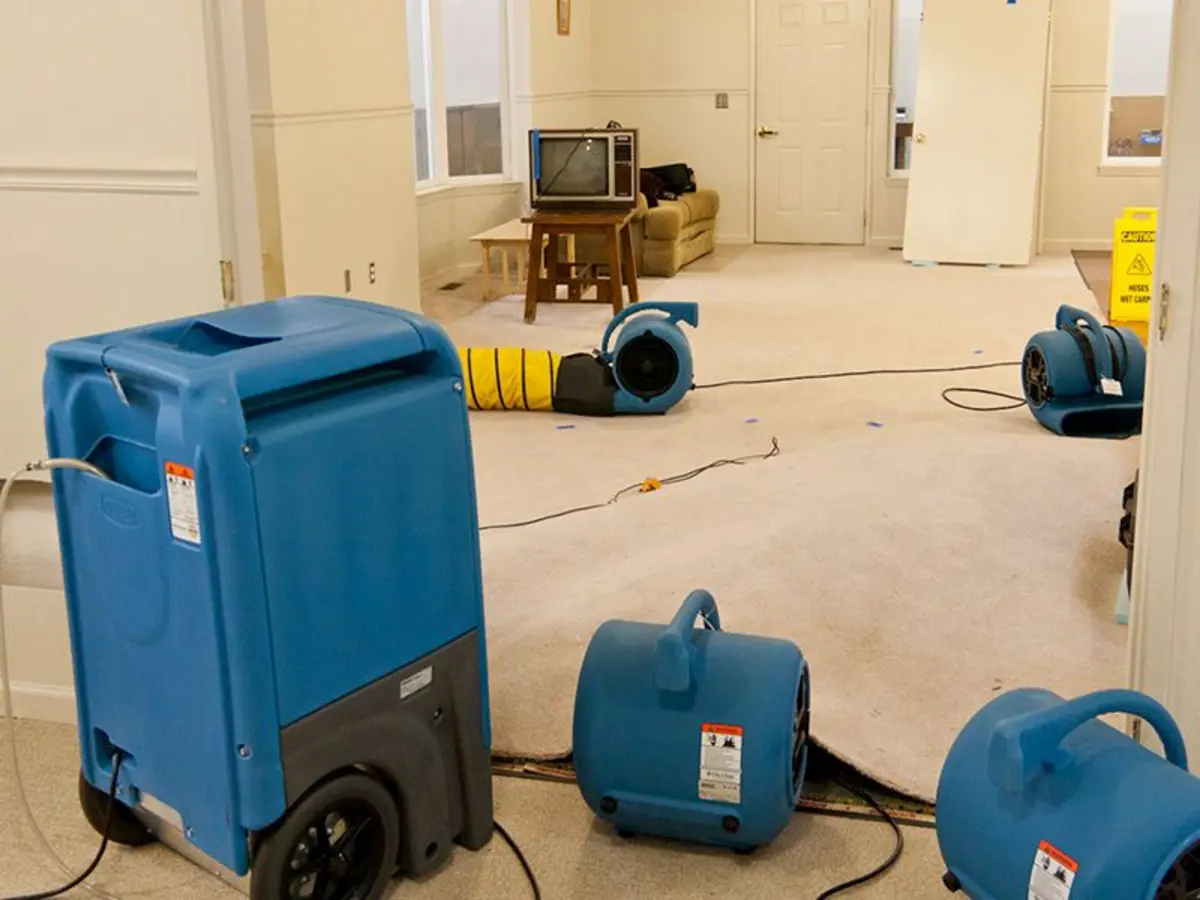
Expect extraction units first, then air movers pushing dry air across wet surfaces and low grain refrigerant dehumidifiers pulling moisture from the air. Wall cavity systems dry inside stud bays, floor mats pull moisture from hardwood, and air scrubbers manage dust and odor. Equipment is placed from moisture readings, moved as areas dry, and removed only when the numbers say so.
Dryness is verified with instruments, never by touch. Technicians compare readings in wet materials with a dry, unaffected area of the same home, log the numbers daily, and stop only when each material reaches its dry standard. Those logs are the backbone of your insurance file and the reason a well run water damage restoration NYC job can be proven, not just promised.
The mold clock
Mold can begin growing within 24 to 48 hours on wet drywall, wood, carpet backing and insulation. That single fact sets the pace of everything above. Where growth already covers more than 10 square feet, New York Labor Law Article 32, in force since 1 January 2016, requires licensed mold professionals, and the assessor and the remediator must be separate. Within the city, local rules enforced through HPD and DEP, including Local Laws 55 and 61, also apply to mold in homes.
Drying proof in depth
Proof of dry: the readings, logs and sign off your insurer actually reads
Dry is a number, not a feeling. The verification system behind every job on this page has four parts, and understanding them lets you judge any crew's work, including ours. First, the dry standard: on day one the technician takes readings in an unaffected area of the same home, in the same materials, drywall, hardwood, framing, masonry, and those numbers become the target for the wet areas. Second, the map: every wet material gets marked points, and readings are retaken at the same points daily. Third, the log: dated, initialled numbers with the equipment in place that day. Fourth, the sign off: a final comparison showing each point at or within range of its dry standard. In water damage restoration NYC practice, that four part file is what separates a dried home from a home that was merely aired.
The instruments deserve a plain description. Pin meters drive two small probes into a material and read moisture at that depth, which makes them the tool for framing and the inside of wall assemblies. Pinless meters scan a surface area quickly and find the shape of a loss across a wall or floor. Thermo hygrometers read the air itself, temperature and relative humidity, and from those the crew calculates how much water the air is holding and whether the dehumidifiers are keeping pace. A thermal camera shows temperature patterns that often trace hidden moisture, but it suggests; only meters confirm. When a water damage restoration NYC technician shows you a camera image, the professional follow up is always a meter reading at the spot the camera flagged.
Materials dry at different speeds, and the log makes that visible. Drywall gives up moisture quickly once its cavity is vented. Hardwood is slower and can cup if dried unevenly, which is why floor systems balance airflow. Framing lumber takes steady days. Masonry, the brick of brownstones and pre war party walls, is the slowest of all, releasing stored water long after surfaces read dry. A realistic water damage restoration NYC timeline names the slowest material in the assembly as the pacing item, and honest daily updates say which material is setting the schedule that day.
Why does proof matter beyond peace of mind? Because three audiences read the file. Your insurer reads it to close the drying portion of the claim without argument. Your repair contractor reads it to know the structure is ready, so new finishes are not laid over hidden moisture. And you read it, months later, if a musty smell or a stain raises the question of whether the job was finished properly. A complete file answers that question in minutes. That is why water damage restoration NYC documentation is built during the job, daily, and never reconstructed afterwards from memory and good intentions.
Mold timing in brief
The mold clock in brief: twenty four to forty eight hours, and what buys you time
This page treats mold briefly on purpose, because dedicated mold pages are planned for this site and because the essential fact fits in one paragraph. Mold spores are everywhere, indoors and out, and on wet drywall, wood, carpet backing and insulation they can begin growing within twenty four to forty eight hours. Warmth and still air help them; speed, airflow and dehumidification stop them. Everything in the process sections above, the same day extraction, the opened cavities, the daily readings, exists to beat that clock. If you take one number from this page, take that window, and let it set how fast you act. In water damage restoration NYC work, the mold conversation is really a conversation about hours.
Two boundaries complete the brief. Where growth already covers more than 10 square feet, New York Labor Law Article 32, in force since 1 January 2016, requires licensed mold professionals, and the assessor and the remediator must be separate parties. Within the city, local rules enforced through HPD and DEP, including Local Laws 55 and 61, also bear on mold in homes. And the health rule is simple: keep children, older people and anyone with a weakened immune system or a respiratory condition away from visible growth and from flood water generally. The full treatment, species, testing debates, remediation containment and clearance, belongs to the mold pages. Here, water damage restoration NYC keeps the focus where it belongs at this stage: dry it fast, dry it provably, and the mold chapter usually never has to be written.
Insurance and New York law
The clocks and rules that protect you after a loss
New York insurance law is unusually specific about time. Knowing the clocks helps you hold every party, including your insurer, to them.
The business day clocks
Under Insurance Law section 2601 and Regulation 64 (11 NYCRR 216), your insurer must acknowledge your claim, begin its investigation, and accept or reject the claim within 15 business days after you file proof of loss. Once a claim is settled, payment is due within five business days.
For natural disasters, Insurance Law section 2618 is stricter: payment within four business days of settlement, and acceptance or rejection within 15 business days of proof of loss, or 30 business days if arson is suspected, with one possible extension of 15 days.
Two more limits matter. Most policies require any lawsuit to begin within 24 months of the date of loss, under Insurance Law section 3404. And if you hire a public adjuster, the fee is capped at 12.5 percent under 11 NYCRR 25.7.
Flood insurance, disclaimers and your home
Standard homeowners policies cover sudden internal water damage but exclude outside flooding, which sits under the National Flood Insurance Program. NFIP cover usually carries a 30 day waiting period; after a loss, proof of loss is due in 60 days, an appeal in 60 days, and any suit within one year of the first denial. NFIP authorization currently runs through 11 December 2026 at 11:59 in the evening; that date is an authorization deadline, not the expiry of existing policies, which run to their own terms.
One rule is widely misunderstood: the timely disclaimer rule in Insurance Law section 3420(d) concerns liability claims for death or bodily injury. It does not apply to property damage claims, so do not let anyone tell you it decides your water claim.
For renters, the warranty of habitability in Real Property Law section 235-b cannot be signed away, and section 227 allows surrender of a lease when a home becomes untenantable through no fault of yours. Help lines: the Department of Financial Services at (800) 342-3736 and its disaster hotline at (800) 339-1759.
Insurance in depth
Your claim file, step by step: from proof of loss to payment under New York clocks
The clocks in the insurance section above only help you if your file starts them. This section walks the claim in the order it actually happens, with the New York deadlines placed where they bite.
Notice, proof of loss and the start of the clocks
Notify your insurer as soon as the home is safe, ideally the same day, and keep the claim number and the name of every person you speak with. The formal engine of the claim is the proof of loss, the sworn statement of what happened and what was damaged. Once your insurer receives it, the state clocks described on this page begin to run. Under Insurance Law section 2601 and Regulation 64, which is 11 NYCRR 216, the insurer must acknowledge the claim, begin its investigation, and accept or reject the claim within fifteen business days after proof of loss. In water damage restoration NYC claims, the restoration file, photos, scope and moisture logs, is the evidence that proof of loss stands on, which is why it is built from the first hour rather than assembled at the end.
Settlement and the payment clocks
Once a claim is settled, the general rule gives the insurer five business days to pay. For natural disasters, Insurance Law section 2618 tightens the system: payment within four business days of settlement, and acceptance or rejection within fifteen business days of proof of loss, or thirty business days if arson is suspected, with one possible extension of fifteen days. Keep a simple dated list of every submission, letter and call. If a deadline passes quietly, that list is what you take to the Department of Financial Services at (800) 342-3736, or to its disaster hotline at (800) 339-1759. Water damage restoration NYC crews cannot argue your claim for you, but the file they hand you is written so that the clocks are easy to enforce.
The longer limits: suits, adjusters and flood cover
Three longer limits frame the whole claim. Most New York policies require any lawsuit over the loss to begin within twenty four months of the date of loss, under Insurance Law section 3404, so a slow claim is not a safe claim. If you hire a public adjuster to represent you, the fee is capped at 12.5 percent under 11 NYCRR 25.7; get the agreement in writing and check the percentage before you sign. And remember the boundary of the standard policy: sudden internal water damage is generally covered, outside flooding is not, which is why flood cover sits with the National Flood Insurance Program. In water damage restoration NYC practice, naming the water's source correctly, pipe, drain, sewer, rain or tide, is the single most valuable sentence in the whole file, because coverage follows the cause.
NFIP claims run on their own deadlines: a thirty day waiting period usually applies before cover begins, proof of loss is due within sixty days after a flood loss, an appeal within sixty days, and any suit within one year of the first denial. NFIP authorization currently runs through 11 December 2026 at 11:59 in the evening, and that date is an authorization deadline, not the expiry of existing policies, which run to their own terms. One more misunderstanding is worth clearing away while you are reading your policy: the timely disclaimer rule in Insurance Law section 3420(d) concerns liability claims for death or bodily injury. It does not apply to property damage claims, so it does not decide your water claim either way. Renters have their own anchors: the warranty of habitability in Real Property Law section 235-b cannot be signed away, and section 227 allows surrender of a lease when a home becomes untenantable through no fault of yours. A well run water damage restoration NYC job keeps all of these threads in one file, so nothing depends on memory.
Sources of loss
Where the water comes from: the sources behind almost every call in this city
Ask a dispatcher to list the week's jobs and the same sources repeat. Burst and leaking supply pipes lead the list, especially in older buildings and in cold snaps, when water expanding as it freezes splits pipes in exterior walls and unheated spaces, and the break announces itself at the thaw. Washing machine hoses and failed appliance connections follow, with dishwashers, ice maker lines and water heaters close behind. Roof leaks arrive with wind driven rain. Drain blockages and sewer backups bring the contaminated cases. In water damage restoration NYC work, identifying the source is step zero, because each source sets the water category, the likely path through the building and the repair that must happen before drying can be signed off.
Some sources hide. A pinhole leak in a copper line can mist inside a wall for months, feeding mold and rot while the only surface sign is a faint stain or a musty room. A failed shower pan or cracked tile grout sends a little water down on every use, soaking the subfloor in slow motion. Air conditioning condensate lines clog and overflow into ceilings in summer. These slow losses are why water damage restoration NYC inspections use meters on suspicion, not only on visible damage: the stain is the last chapter of a slow loss, not the first.
Other sources arrive all at once and from outside. Cloudburst rain through basement stairs and window wells. Sewer surcharge through floor drains and basement fixtures. Tidal water over bulkheads and through ground floor openings. Each outside source brings its own contamination profile and its own prevention hardware, covered in the prevention section below. What they share is timing: they strike whole neighbourhoods at once, which is why water damage restoration NYC capacity is staged by borough and why the first hour actions on this page are written for homeowners to start alone.
Knowing the source also protects the repair. Drying a wall while the pinhole above it still mists is wasted work, and rebuilding a bathroom over a failed pan repeats the loss on a schedule. The close out of every job on this page therefore names the source, the repair made or the repair still owed, and the party responsible for it. That single habit, written into the file, is one of the quiet differences between water damage restoration NYC as a trade and water removal as a transaction.
Water categories
Clean, gray and black water: how the category changes the whole job
Restoration work sorts water into three categories, and the category is decided at the door because it changes everything after. Category one, clean water, comes from a sanitary source: a supply line, a melting ice maker, rain entering directly. It carries no substantial contamination risk at the start, though it degrades if it sits, soaking up whatever it touches. Category two, gray water, carries significant contamination: dishwasher and washing machine discharge, toilet water with urine only, sump failures with soil contact. Category three, black water, is grossly contaminated: sewage, sewer backups, tidal and flood water, and any water that has sat long enough to grow heavy microbial load. In water damage restoration NYC assessments, the category is stated in the file before extraction begins.
The category drives the material decisions. Clean water on carpet often allows drying in place with the pad assessed on its merits. Gray water usually costs the pad and demands cleaning and antimicrobial treatment of what stays. Black water ends the debate for porous materials: carpet, pad, soaked drywall and insulation that it has touched are removed, hard surfaces are cleaned and disinfected, and protective equipment is worn throughout. This is also why tidal flooding, however clear it looks, is treated as category three in water damage restoration NYC practice: harbour and bay water carries the city with it.
Time degrades every category, which is the technical form of the mold clock. Clean water left standing becomes gray in effect as it dissolves building materials and contents, and gray water left longer supports rapid microbial growth. The twenty four to forty eight hour window is therefore not only about mold on surfaces; it is about the water itself changing class while a decision waits. Speed is a contamination control, not just a drying preference, and that sentence is worth remembering whenever a water damage restoration NYC crew urges a same day start.
The drying week
Days one to seven: what a real drying week looks like inside your home
Day one is the loud, busy day: source stopped, safety sweep, extraction, mapping, baseboards off where needed, equipment placed and the dry standard recorded. Your home will sound like a workshop and smell of wet plaster. Day two is the first reading day, and the honest one: some points will have moved well, one wall will be stubborn, and the crew adjusts the system rather than defending it. In a typical water damage restoration NYC week, day two is when the timeline becomes a forecast instead of an estimate, because the crew can finally see each material's drying rate.
Days three and four are the steady middle. Equipment runs around the clock, readings fall at a predictable pace, and the crew begins pulling air movers from areas that have reached standard, which is the visible proof that the system is working zone by zone. Contents that were moved for drying start to be assessed for cleaning and return. If a section is not keeping pace by day four, the plan changes openly: more opening, different equipment, or a material decision, such as removing a section of flooring that will not release its moisture. Water damage restoration NYC logs record those decisions the day they are made, with the readings that forced them.
Days five to seven are verification and handover for most homes, longer for masonry heavy or deep losses. Final readings are compared point by point with the dry standard, equipment leaves in stages, and the claim file is completed and handed over. Repair planning starts from the verified dry structure. Some jobs break the pattern honestly: a flooded masonry basement, a pre war floor sandwich, a tower stack with six wet units can each run past a week. The pattern that never breaks is the daily evidence. Whatever the calendar says, a water damage restoration NYC job ends when the readings say so, and not a day before.
Living through the week deserves one practical paragraph. Equipment noise and heat are real, some rooms will be sealed off, and sleeping arrangements may need adjusting for a few nights. Crews can sometimes stage drying to keep a bedroom usable, and it is always worth asking on day one rather than enduring in silence. Keep children and pets out of the work zone, keep the equipment running even when it annoys you, because switching it off overnight hands the mold clock free hours, and tell the crew at once if you smell anything electrical or see a breaker trip. That partnership is part of how water damage restoration NYC weeks finish on schedule.
Prevention in depth
The prevention walkthrough: room by room, valve by valve, season by season
The short prevention list earlier on this page is the summary. This walkthrough is the full version, organised the way a homeowner actually does it: one circuit of the home, then the seasonal rhythm that keeps it done.
Start at the lowest point and work up
Begin where water arrives first. In the basement or cellar, check the floor drain is clear and consider a backwater valve on the house drain if your street has any backup history. Test the sump pump by lifting its float, confirm the discharge line runs outside and away from the foundation, and fit a battery backup and a high water alarm, because pumps fail in storms exactly when power does. Look at the foundation walls for tide lines, efflorescence and cracks that weep. Store documents, photographs and anything irreplaceable off the floor in sealed bins, and raise appliances and stored furniture on blocks where you can. In water damage restoration NYC prevention work, this single room decides more outcomes than the rest of the house combined.
Move to the water using rooms. Under every sink, look for staining, swelling and slow drips, and replace tired supply lines with braided steel. At the washing machine, check the hoses for bulges and cracks and turn the valves off when you travel. At the water heater, note its age, check the pan and drain, and know that a heater at the end of its service life is a flood with a date on it. Water alarms, small battery sensors that shriek on contact with water, belong at all four places: heater, washer, basement sink and sump pit. Water damage restoration NYC crews will tell you that the losses they meet in homes with alarms are measured in towels, and the losses without them in flooring.
The envelope: roof, walls and the ground outside
Outside, the job is drainage. Keep gutters and leaders clear and confirm leaders discharge away from the foundation, not into a dry well beside it. Grade soil so the ground falls away from the house where the lot allows, and keep window wells clean and covered. Check the basement stair drain, the small drain at the bottom of the outside stairs that everyone forgets, because when it clogs, the stairs become a funnel aimed at your basement door. On the roof, have flashing, drains and parapet caps inspected, especially on flat roofed buildings where a blocked drain ponds water over the whole surface. In water damage restoration NYC experience, more ceiling claims begin at a roof drain than at any dramatic failure.
Season by season in this city
Spring is sump and drain season: test the pump, clear the stair drain, check the backwater valve and walk the foundation after the first heavy rain. Summer is storm season: review the cloudburst plan, keep basement valuables raised, and know the forecast habit of checking rainfall rates, not just totals. Autumn is leaf and gutter season, plus heating system checks before radiators and boilers go back to work. Winter is pipe season: keep the heat on in every room, open cabinet doors under sinks on exterior walls during cold snaps, let a tap drip on the coldest nights where a pipe has frozen before, and know exactly where your main shutoff is before you need it at 3 in the morning. Water damage restoration NYC prevention is not a project with an end date. It is this four season rhythm, repeated.
One last item belongs in every version of this walkthrough, because it protects people rather than property. If anyone sleeps in a basement or garden level room, that room needs a working alarm that wakes sleepers for water as well as smoke, a clear exit that does not pass through the lowest part of the space, and a household rule, agreed in advance, that rising water at night means everyone goes up and out first. The citywide Ida figures on this page, 13 deaths, 11 of them in basement apartments, are the reason this paragraph exists. Prevention in water damage restoration NYC starts with the building. It ends with the people asleep inside it.
Case studies on video
Lessons from real restoration work, watched and written up
Two restoration case study videos were reviewed for this page. The lessons are written out below so you can use them without watching anything; the videos themselves are linked for readers who want the full footage. Nothing is embedded on this page.
Case study one: extraction speed decides the outcome
The first case study follows a flooded home from the first walkthrough to verified dry readings. The pattern that matters for NYC readers: standing water was extracted the same day, wall bases were opened where meters showed hidden moisture, and daily readings, not the calendar, decided when equipment came out. Homes where extraction waited even a day showed deeper wall moisture and a longer, harder dry.
Case study two: documentation wins claims
The second case study focuses on the paperwork side of a loss: photos before cleanup, a dated inventory, moisture logs and a clear scope. For New York readers the transferable lesson is timing. The business day clocks in state law start from proof of loss, so the family with an organized file moved faster at every step than the family reconstructing records from memory.
Choosing a company
How to pick the right crew for your building
Ask five questions of any water damage restoration NYC company before you sign anything. Do you answer around the clock with your own crews? Will you map moisture with meters and share daily readings in writing? How do you handle my building type, whether brownstone, co op, condo or detached home? Will you check the units below and beside mine? And will my claim file include photos, scopes and final dry readings?
A company that answers those five plainly, and puts the plan in writing, is a company that expects to be checked. That is the standard this page is built to, and the standard the structured data below is written to beat: no competitor page found for this search carries a full FAQ set, a HowTo and a fifteen service catalogue together.
Prevention
Prevention that actually works in this city
- Keep gutters and leaders clear, and grade soil away from the foundation where you can.
- Fit a backwater valve and maintain a sump pump with battery backup where your home needs them.
- Put water alarms near water heaters, washers and basement sinks.
- Store documents and valuables off basement floors, in sealed bins.
- Know your main shutoff, and teach everyone at home where it is.
- In cold snaps, keep the heat on, open cabinet doors under sinks, and watch pipes on exterior walls.
Prevention cannot stop a city scale storm. It turns most small events into minor ones, and it buys the one thing every loss rewards: time.
Research behind this page
What the search data shows, with its disagreements left in
This page was researched on 23 November 2026 with SEMrush as the primary source and Moz as the secondary source, both through RankyTools, United States data. Where the two disagree, both figures are reported and never averaged.
Demand for this search
SEMrush: 720 searches a month in the United States, 970 globally, keyword difficulty 27 percent rated Easy, commercial intent, and a cost per click of 55.50 dollars, the highest value clue on this page that advertisers compete hard for these callers. Its Keyword Magic set holds 57 related keywords totalling 1,250 searches a month at an average difficulty of 24 percent.
Moz: volume 73, in a range of 51 to 100, difficulty 16 rated Low, organic click through rate 88 percent, minimum domain authority 4, transactional intent. Moz shows an AI Overview and People Also Ask for this search; SEMrush lists neither, showing sitelinks, reviews, images, video and a local pack instead. Both displays are reported as found.
Who ranks, and the opening this page takes
SEMrush ranks SERVPRO first and ATI second, followed by Yelp, Facebook and smaller local sites, one with an authority score of just 9 and another of 7. Moz shows only eight organic results and SERVPRO is not among them, a large disagreement between the two tools. In backlink terms, SEMrush gives servpro.com an authority score of 56 with about 30.9 thousand referring domains, while floodcleanupco.com scores 7 with about 2.2 thousand referring domains and traffic of 111; that domain shows 148 organic keywords in one SEMrush view and 106 in another, and both are reported as displayed.
A live structured data check on 23 November 2026 covered 17 competitor and directory pages; 15 loaded. None carried a FAQ page schema, none carried a HowTo, and only one carried a service catalogue. This page carries 30 FAQs, a six step HowTo and a fifteen service catalogue in one error free graph. The home page keyword for this site, water damage restoration New York at 480 searches a month, is a separate page and a separate intent; its cost per click appears as 15.82 dollars in one SEMrush view and 19.42 dollars in another, reported both ways and never reconciled.
After drying
After the readings pass: repairs, rebuild and getting your rooms back
Drying ends the emergency, not the job. Once the final readings match the dry standard, the work turns to putting the home back together, and the order matters as much here as it did during extraction. Anything removed during drying, baseboards, sections of drywall, flooring, insulation, cabinetry, is listed in the scope you already hold, and the rebuild works from that list rather than from a fresh round of guesses. In water damage restoration NYC practice, the handover from drying crew to repair crew is a documented moment: the dry verification is signed, the scope is walked room by room, and decisions about materials and finishes are made with the wet past behind you, not guessed at while the walls are still open.
Wall repair comes first in most homes. Opened sections are re insulated where insulation was removed, new drywall is hung, taped and finished, and only then are baseboards and trim reinstated or replaced. Painting waits until the compound has cured and the wall has been read one last time, because paint over a still damp patch blisters and tells on itself within weeks. Floors follow their own logic. Hardwood that was dried in place may need screening and recoating once it has settled, and any sections that cupped beyond recovery are replaced and laced into the existing floor so the patch does not read as a patch. Tile and stone are checked for hollow spots where the bond failed under water, and grout lines are resealed where the flood reached them.
Kitchens and bathrooms carry the longest repair lists, because they concentrate plumbing, cabinetry and appliances in the rooms water likes most. Cabinet boxes that swelled or delaminated are replaced or rebuilt, toe kicks and back panels that were opened for drying are closed properly rather than covered, and appliances that sat in water are tested or replaced on the advice of their own technicians, not on optimism. In co ops and condos this stage re enters the building's paperwork world: alteration agreements, contractor insurance certificates and work hour rules all apply to the rebuild just as they did to the drying, and the managing agent should receive the same written notice at the start of repairs that it received at the start of extraction.
The last part of the rebuild is the part nobody photographs: the systems check. Every valve that was operated is left in its correct position and labelled if it was not labelled before. The shutoff locations used during the emergency are written into the claim file and, ideally, onto a card kept inside the utility closet door. If the source was a failed hose, a tired valve or a heater at the end of its life, the replacement is verified working, not merely installed. A home that has been flooded once has been given an expensive education, and the rebuild is where that education gets banked, in labelled valves, raised storage and a household that now knows its own plumbing map.
Expect the repair phase to run on a calmer clock than drying, measured in scheduled days rather than daily readings, and expect dust, decisions and deliveries. What should not return is uncertainty about the structure underneath. Because the drying was verified and logged, the rebuild stands on evidence, and the finished rooms come with a file that proves what was done and why. That file is the real product of the whole process, long after the fans are forgotten.
Renters, landlords and supers
Renters, landlords and supers: who does what when a rental home floods
A large share of this city rents, and a flood in a rental home involves three parties from the first hour: the tenant who lives with the water, the landlord who owns the structure, and the super who holds the keys, the valves and the building knowledge. The tenant's duties are speed and notice: protect people and belongings, stop what can be stopped safely, and report the leak at once, in writing as well as in person, keeping a copy. The landlord's duty is the building: the source repaired, the structure dried, the home kept livable. The super is the hinge between them, usually the first person who can shut a riser, open a basement or admit a crew. In water damage restoration NYC rental work, jobs move fastest when all three are in the same conversation on day one.
The legal floor under the tenant is the warranty of habitability in Real Property Law section 235-b, which guarantees a home fit for residential use and cannot be signed away in a lease. A flooded home that cannot be lived in safely engages that warranty directly. Where damage through no fault of the tenant makes a home untenantable, section 227 of the same law allows the tenant to surrender the lease. Those are legal remedies with their own procedures, and this page is not legal advice, but every renter should know the anchors exist and that the Department of Financial Services and the city's housing agencies can explain how they apply. Documentation is what makes any of it usable: dated photos, written notices, and the restoration file itself.
Money questions in rentals follow responsibility. The building's structure and systems belong to the landlord's side of the ledger and usually the landlord's insurance. The tenant's belongings belong to the tenant's side, which is what renters insurance exists for, and tenants without it learn its value in the worst week to learn anything. Crews document both sides separately in the same file, structure and contents, so each carrier sees its own scope cleanly. Disputes shrink when the moisture logs show exactly when drying started and whose delay, if anyone's, let the damage grow.
For landlords and supers, the standing advice is preparation rather than reaction. Keep a current list of shutoffs by line and unit, keep the restoration number where the super can find it at 3 in the morning, and treat every small leak report as the cheap version of a big one. Buildings that respond to a tenant's drip within a day rarely meet the same problem as a flood. The city's housing stock is old, shared and plumbed in common, which means a rental flood is never really a private event. Handled well, it is also a short one.
Older and landmark buildings
Landmark facades and century old interiors: drying the buildings the city keeps
New York holds one of the deepest stocks of historic buildings in the country: landmarked brownstones and townhouses, pre war apartment houses with original plaster and millwork, cast iron storefront districts, and interiors where the finishes themselves are the heritage. Water treats these buildings exactly as it treats new ones, but restoration cannot. Drying a landmark interior is a negotiation between moisture science and preservation: original plaster, historic woodwork, decorative ceilings and old masonry all ask to be dried in place where a modern building would simply be opened. In water damage restoration NYC historic work, the first assessment includes a preservation question alongside the meter readings: what here cannot be replaced at any price, and how does the drying plan protect it.
The techniques adapt accordingly. Gentle, longer drying with carefully controlled humidity replaces aggressive opening where finishes are significant. Injection drying systems feed dry air into cavities through small, repairable holes instead of removing whole baseboard runs. Desiccant dehumidification, which can pull moisture without adding heat, earns its place around sensitive wood and plaster. Where opening is unavoidable, it is documented photographically before, during and after, so the repair can restore the original detail faithfully. Landmarked exteriors add a regulatory layer: work affecting a protected facade may need approval from the Landmarks Preservation Commission, and a crew that works this stock knows to ask before scaffolding or exterior repairs enter the plan.
Old buildings also hold old hazards, and honesty requires naming them. Lead paint and asbestos containing materials are common in pre war stock, in pipe insulation, floor tiles, plaster and old mastics. A flood that disturbs those materials changes the job's safety profile, and proper practice tests before demolition and follows the abatement rules where they apply. This is one more reason the assessment step in a historic building is unhurried even when the drying is urgent: the crew is reading the building's whole century, not just its wettest week.
What historic buildings give back, in return for the care, is resilience. Masonry walls, lime plaster and solid old growth timber forgive water in ways that modern paper faced materials do not, provided they are dried steadily and not sealed too soon. Many of these buildings have already survived a century of leaks, freezes and storms. With meter led drying and preservation minded repair, a flood becomes one more chapter in that record rather than the end of it, and the file that documents the work joins the building's own archive for the next century's caretakers.
The city risk calendar
A year of water in New York: the risk calendar the five boroughs live by
Water risk in this city keeps a calendar, and reading the year by its water is a practical skill for any homeowner here. Winter, roughly December to March, is pipe season. Cold snaps freeze lines in exterior walls, crawl spaces and unheated basements, and the claims arrive at the thaw, often on the first mild morning after the coldest night. Radiator and steam systems work their hardest in the same months, so valve and trap failures join the frozen pipes. The winter habits are heat kept on, cabinets opened, vulnerable lines watched, and the main shutoff located before it is needed.
Spring trades freeze risk for saturation risk. Snowmelt and long rains raise water tables, sump pumps move from standby to daily duty, and basements that weep announce themselves. It is the season to test pumps, clear drains and walk foundations after storms. Summer is the cloudburst season, the Ida pattern: short, violent rain on hot afternoons, flash ponding at low points, basement stairs acting as funnels. Summer also runs every air conditioner in the city, and clogged condensate lines quietly overflow into ceilings from June to September. The summer habits are alarms checked, window wells covered, and a household rule for fast rising water that everyone already knows.
Late summer into autumn is coastal storm season, the Sandy window, when tropical systems and nor'easters can push the harbour into the streets. Waterfront buildings run their barrier and systems checks before the season, not during the first warning. Autumn is also leaf season, when gutters, leaders, roof drains and street inlets clog with the city's trees, and the first heavy rain after leaf fall finds every blockage. Winter then closes the circle. None of these seasons owns its risk exclusively, a pipe can burst in July and a cloudburst can land in March, but the calendar tells you which checks cannot wait another month.
The calendar has a second use: it schedules the quiet work. Annual sump tests belong in spring. Roof and drain inspections belong after leaf fall and before the spring rains. The shutoff drill, showing everyone at home the main valve and the fixture valves, belongs on any calm weekend of the year. Insurance files, photos of rooms and belongings taken in ordinary times, belong to whichever month you are reading this in. Water damage restoration NYC crews meet the calendar from the emergency side. Homeowners who keep it from the preparation side meet those crews far less often, and on far better terms.
Contents and keepsakes
Contents, keepsakes and documents: saving what the water touched
A flood is measured in rooms, but it is felt in objects: the photographs in the basement box, the documents in the bottom drawer, the rug that came from a grandmother, the books, the instruments, the children's drawings on the lowest shelf. Contents work is therefore a discipline of its own inside a restoration job, with its own triage. The first sort is by vulnerability, not by value. Paper, textiles, upholstered furniture and electronics are moved, raised or packed out first, because they degrade fastest. Hardwood furniture, metal and ceramics can usually wait their turn. The second sort is by category of water: clean water contents are candidates for cleaning and drying, while sewage touched porous items are documented and let go, however hard that conversation is.
Paper deserves its own paragraph because it is both the most fragile content and the most time sensitive. Wet documents, photographs and books begin to stick, bleed ink and support mold within the same twenty four to forty eight hour window as building materials. The immediate moves are gentle: do not force stuck pages apart, keep wet paper supported flat, separate what can be separated without tearing, and get air moving around it. Freezing is the professional pause button for large paper losses, halting deterioration until drying can be done properly, and it is the method archives use for exactly this emergency. A crew that handles contents well will tell you on day one which paper can be saved in place, which should be frozen, and which is already lost, because false hope about paper helps nobody.
Furniture and textiles follow a similar honesty. Solid wood furniture often survives clean water with drying, cleaning and minor repair, while particle board and flat pack pieces swell and delaminate past saving. Upholstery can sometimes be extracted, cleaned and dried if the water was clean and the work starts fast; mattresses that have soaked, from any category of water, are not saved. Clothing and washable textiles go to specialist cleaning with the flood noted on the ticket, because ordinary washing does not address contaminated water. Rugs are judged by backing and category: a wool rug from clean water is a cleaning job, the same rug from a sewer backup is a disposal conversation.
Electronics and appliances are a safety question before they are a property question. Anything that sat in water is treated as unsafe to energise until a qualified technician clears it, and data bearing devices, computers, drives, phones, are handled for their data rather than their hardware: kept unpowered, dried by specialists, and assessed for recovery. The claim file records contents with the same rigour as structure: photographs in place before moving, a dated inventory, and a saved, cleaned or disposed decision against each significant item. That inventory is what turns a heartbreaking week into a claim that actually pays for what was lost, and it is built in the first days, while the evidence is still in the room.
There is a human rhythm to contents work that good crews respect. People make better decisions about their belongings when they are not standing in water at midnight, so the first night is about safety, stabilisation and the irreplaceable few, and the fuller sorting happens in daylight with the inventory open. Keepsakes with no market value often carry the whole emotional weight of the loss, and time spent saving a box of photographs is never wasted time on a job. The structure gets the readings and the logs. The contents get the care. A complete restoration delivers both.
Shared buildings, shared water
When the water is shared: neighbours, adjoining owners and the diplomacy of a wet wall
In a city of shared walls, shafts and ceilings, most serious water losses involve more than one household. The leak from the flat above, the party wall wet from the house next door, the riser that serves six homes: each creates a small community of affected people with different insurance, different landlords and different levels of alarm. The technical work proceeds best when the human work is done early. Introduce yourself to the neighbour whose unit holds the source, exchange names and numbers, and agree who is calling whom. Put the facts in writing the same day, what happened, when it was noticed, what has been done, while memories are fresh and tempers are cool. Crews who work shared buildings carry this diplomacy as part of the trade, because a drying job stalled by a locked door or a disputed hallway takes longer than any wet wall.
Access is the practical heart of it. Drying a stack often requires entering several units: the source unit to stop and repair, the units below to extract, map and dry, and sometimes the unit beside, where a shared chase carried water sideways. Building management coordinates that access, and residents who grant it promptly are protecting their own homes too, because moisture left in a neighbour's wall cavity does not respect the boundary for long. Where a resident is away, management's emergency access procedures exist for exactly this situation, and the job file notes every attempt and every entry, so the record shows diligence rather than delay.
Responsibility follows the source, and documentation is what proves the source. The moisture map, the photographs of the failed fitting or the overflowing fixture, and the timeline in the log together tell a story that insurers for several households can all work from. This is why the inspection records which side of a party wall is wetter, which ceiling stain sits under which bathroom, and where readings fall to dry: those gradients point back to the origin like a slope. Neighbours who begin as strangers in a corridor at midnight usually end as allies in front of their respective carriers, provided the file is honest and shared fairly with everyone it concerns.
Two habits prevent most of the friction. The first is speed with notice: tell the affected neighbours what you know as soon as you know it, including the uncomfortable parts, because silence reads as concealment even when it is only embarrassment. The second is restraint with blame: in the first forty eight hours, establish facts and dry buildings, and let the question of fault be settled later by people with the full file in front of them. Old buildings fail in old ways, pipes corrode inside walls no one has opened in decades, and today's source household is tomorrow's affected one. The city dries best when its neighbours treat a flood as a shared problem with a shared clock, which, given the mold window, it literally is.
All pages on this site
All Fifty-Six Pages of This Site
Water damage restoration NYC is the thirty-fourth page of this site, the hub that joins the thirty-three pages below: the state home page, the borough, city and region pages, and the specialist guides. Start where your problem lives.
Water Damage Restoration New York
The home page: the full New York water damage guide, from the first 60 minutes to the last drying check.
Water Damage Restoration Brooklyn
Brownstones, pre-war pipes, sewer backups and basement flooding across 20 Brooklyn neighbourhoods.
Water Damage Restoration Queens
Queens water systems, storm flooding and drying for the borough most varied housing stock.
Water Damage Restoration Bronx
Pre-war risers, steam heat, Co-op City and Ida lessons for Bronx apartment buildings.
Water Damage Restoration Staten Island
Sandy, the seawall, raised houses and three source flooding on the Island.
Water Damage Restoration Long Island
Nassau and Suffolk, sewers against cesspools, Sandy and the nor'easter record, town by town.
Water Damage Restoration Manhattan
Stack leaks, co-op boards and pre-war plaster in the borough of apartment buildings.
Water Damage Insurance Claim New York
The claim clocks, the denial ladder and the paper trail, for water and fire losses alike.
Water Damage Behind Walls NYC
Moisture meters, hidden leaks and the tests that find water before the wall comes open.
Fire Damage Restoration NYC
The full road back after a fire: cleanup, repair, permits and rebuild, with the same New York fire record.
Flood Cleanup NYC
Storm, sewer and coastal flooding cleanup, flood zones and the basement rules that keep people safe.
Water Damage Remediation NYC
Mold remediation under IICRC S520 and New York mold law, with clearance testing explained.
Fire Damage Cleanup
Debris, soot cleaning and odor removal after a fire, before the rebuild begins.
Rochester
Lake Ontario shoreline, Genesee River flooding and frozen pipes across Monroe County.
Albany
Hudson River flooding, frozen pipes and historic homes across the Capital Region.
Buffalo
Lake-effect snow, frozen pipes and basement floods across Erie County.
Water Damage Restoration Syracuse
Lake-effect snow, frozen pipes and creek floods across Onondaga County.
Water Damage Restoration Yonkers
Saw Mill River floods, burst pipes and pre-war buildings across Westchester County.
Water Damage Restoration New Rochelle
Long Island Sound storms, Hutchinson River floods and pre-1980 homes across Westchester County.
Water Damage Restoration Mount Vernon
Hutchinson River floods, century-old sewers and basement backups in Westchester's most densely packed city.
Water Damage Restoration Schenectady
Mohawk River floods, Stockade ice jams and frozen pipes across the Capital Region.
Water Damage Restoration Utica
Mohawk River floods, Sauquoit Creek overflows and frozen pipes across Oneida County.
Water Damage Restoration White Plains
Bronx River floods, Mamaroneck River overflows and frozen pipes across Westchester County.
Water Damage Restoration Troy
Hudson River floods, Poesten Kill overflows and frozen pipes across Rensselaer County.
Water Damage Restoration Niagara Falls
Niagara River ice jams, Cayuga Creek floods and frozen pipes across Niagara County.
Water Damage Restoration Binghamton
Susquehanna and Chenango River floods, burst pipes and frozen pipes across Broome County.
Water Damage Restoration Westchester County
Mamaroneck River floods, Bronx River and Saw Mill River flash floods, frozen pipes across Westchester County.
Water Damage Restoration Hudson Valley
Hudson River and creek floods, tidal surge, frozen pipes across the Hudson Valley.
Water Damage Restoration Capital Region
Hudson and Mohawk floods, burst pipes, ice jams across the Capital Region.
Water Damage Restoration Western New York
Lake effect snowmelt, ice jams and creek floods across the eight county region.
Water Damage Restoration Finger Lakes
Eleven lakes, Genesee River floods and canal towns across the fourteen county region.
Water Damage Restoration Central New York
Syracuse and Utica, Oneida Lake and the Mohawk River, across two state regions.
Water Damage Restoration Southern Tier
Binghamton and Elmira, Susquehanna and Chemung rivers, across eight counties.
How Long Does Mold Take to Grow After Water Damage?
The 24 to 48 hour mold timeline, warning signs, and what stops it.
Water Damage Restoration Process
The full restoration process, step by step, from first call to dry home.
What Is Water Damage Restoration
What restoration really is, what it includes, and when to call.
Mold Remediation New York
New York's licensed remediation system, from assessment to clearance.
Water Removal NYC
Standing water pumped out fast, then dried safe, for every NYC home.
Water Damage NYC
Water damage in NYC explained plainly, with fast help for every home.
Water Damage Cleanup Nyack NY
Water damage cleanup in Nyack explained plainly, with fast help for every home.
How to Choose a Water Damage Restoration Company in New York
How to choose a water damage restoration company in New York, with every check that protects your home.
How to Choose a Water Damage Restoration Company in New York
Commercial Water Damage Restoration NYC | 24/7 Emergency Help
Commercial water damage in NYC explained plainly, with fast help for every business.
Commercial Water Damage Restoration NYC | 24/7 Emergency Help
Basement Water Damage Restoration NYC
Basement water damage in NYC explained plainly, with fast help for every basement.
Water Damage Repair New York
Water damage repair in New York explained plainly, with fast help for every home.
Water Damage Restoration Poughkeepsie New York
Water damage restoration in Poughkeepsie explained plainly, with fast help for every home.
Emergency Water Damage NYC
Emergency water damage in NYC explained plainly, with fast help when every minute counts.
Water Damage Cleanup in NYC
Water damage cleanup in NYC explained plainly, from torn-out materials to dry rooms again.
Flood Damage Restoration NYC
Flood damage restoration NYC explained plainly, from flood events and NFIP claims to dry rooms and a flood-resistant rebuild.
How Long Does Water Damage Restoration Take
How long water damage restoration takes explained plainly, from the first drying days to the finished repair and rebuild.
Flood Damage Cleanup Washington Heights
Flood damage cleanup in Washington Heights explained plainly, with fast help for every home.
Does Insurance Cover Water Damage Restoration
Whether insurance covers water damage restoration, explained plainly, by cause and New York rule.
Water Damage Mold Remediation
Mold that grew after a leak or flood, remediated the New York way, by licensed assessor and remediator.
Water Damage Restoration Companies New York
Compare the companies serving New York: national franchises, regional firms and local independents, and how to verify licences and certification before you hire.
Water Damage From Upstairs Neighbor
Water damage from an upstairs neighbor in New York City: who pays, what to do in the first hour, and how to document, report and claim.
You are on the NYC hub page. The borough pages above are the fastest route to the local version of the same standards.
Frequently asked questions
Questions New Yorkers ask us, answered straight
Thirty questions, answered in plain words. Use the filter to find yours, or call (212) 555-0147 and ask a person.
Water is coming into my NYC home right now. What do I do first?
Stay safe first. Keep away from water near outlets, panels or appliances, and do not wade through deep or dirty water. If you can reach it safely, shut off the water at the main valve and turn off power to the wet rooms. Move documents, photos and small valuables up high, take quick photos for your records, then call (212) 555-0147 so a crew can start extraction and drying.
What is water damage restoration NYC?
Water damage restoration NYC is the service that removes water, dries structures, and repairs homes and businesses across all five boroughs after floods, burst pipes, and storms, working around the clock until every room is safe, fully dry, and ready to use again, day or night. That is the service this page describes, from the first call to the final dry reading.
Which boroughs do you cover?
All five. Brooklyn, Queens, Manhattan, the Bronx and Staten Island each have their own page on this site, and this hub page joins them together. Crews also cover neighborhoods such as Long Island City, Flushing, Jamaica, Harlem, Astoria, Williamsburg, Park Slope and Riverdale, so one call reaches the whole city, day or night.
What are the six steps of your restoration process?
Step one, call now and send a crew to your borough. Step two, shut the water off and make the home safe. Step three, extract standing water from floors and basements. Step four, open wet walls, map moisture and dry the structure. Step five, check daily readings and stop mold before it starts. Step six, confirm dry readings and build your claim file.
How long does water damage restoration take in NYC?
Most homes need several days of active drying once standing water is out, and larger or deeper losses take longer. A small, clean leak caught early can dry in about three days, while flooded basements, soaked walls and multi room losses often need a week or more before repair work can start. Your crew confirms the timeline with moisture readings, not guesses, and updates you every day.
How fast can mold grow after water damage?
Mold can start growing within 24 to 48 hours on wet drywall, wood, carpet backing and insulation, which is why drying cannot wait for the weekend. Fast extraction, open wall cavities where needed, steady dehumidification and daily readings are what stop growth before it starts. If growth is already present and covers more than 10 square feet, New York law requires licensed mold professionals, with the assessor and the remediator kept separate.
Can water damage be fully restored?
In most cases, yes, when work starts quickly. Clean water caught early usually dries without lasting harm, and even serious losses can be rebuilt once the structure is dry and verified. The honest limits are time and contamination: materials left wet for days, or soaked with sewage, may need removal rather than drying. Your crew tells you plainly which parts can be saved and which cannot.
What is the difference between water damage remediation and restoration?
Remediation is the urgent first phase: stopping the source, removing water, cleaning contamination and drying the structure so the damage does not spread. Restoration is the phase that follows: repairing and rebuilding what was damaged so the home looks and works as it did before the loss. One call here covers both phases, so you do not have to hire two separate companies.
How can I tell if water damage is permanent?
Warning signs include hardwood that stays warped after drying, drywall that crumbles at a touch, stains that keep spreading, and a musty odor that returns after the room dries. Some damage only shows up on a moisture meter inside the wall. A proper inspection with meter readings, not a glance at the surface, is how you know for sure.
How do I choose a water damage restoration company in NYC?
Look for a company that answers around the clock, explains its drying plan in plain words, checks moisture with meters every day, and documents everything for your insurer. Ask how it handles your building type, whether that is a brownstone, a co op or a high rise, and how it protects the rooms that are still dry. Avoid anyone who will not put the plan and the daily readings in writing.
What should I do in the first 60 minutes after a leak?
Protect people first, then stop the source if you can do it safely. Take photos and short videos before you move anything, move documents and valuables out of the wet area, and keep children and pets away from the water. Call your restoration crew and then your insurer. Do not throw damaged items away yet, because your claim file needs them documented first.
Water is leaking from the apartment above mine. What should I do?
Knock on the door upstairs and alert your super or building management right away, because the source has to stop before drying can work. Take photos of your ceiling and walls, move belongings out from under the drip, and place a bucket to limit spread. In rentals, the warranty of habitability under Real Property Law section 235-b means your landlord must keep the home livable, so report the leak in writing and keep a copy.
Does insurance cover water damage in New York?
Most homeowners policies cover sudden and accidental water damage, such as a burst pipe, but exclude flooding from outside the home, which needs separate flood insurance. Coverage turns on the cause, so document everything and report the loss quickly. Under New York rules your insurer must acknowledge your claim, begin investigating, and accept or reject it within set business day clocks once you file proof of loss.
How fast must an insurer pay after a natural disaster in New York?
Under Insurance Law section 2618, which covers natural disasters, the insurer must pay within four business days once the claim is settled. The same law gives the insurer 15 business days to accept or reject your claim after proof of loss, or 30 business days if arson is suspected, with one possible extension of 15 days. Keep every letter and date, because those clocks protect you.
When should I call my insurance company after water damage?
Call as soon as the home is safe and the water is stopped, ideally the same day. Early notice protects your claim, and your restoration crew can start drying right away so the loss does not grow while paperwork moves. Take photos before cleanup, keep receipts for emergency work, and write down the claim number and the name of every person you speak with.
My basement apartment flooded. What should I know?
Get people and pets out first and do not sleep in a flooded basement apartment. During the remnants of Hurricane Ida on 1 and 2 September 2021, 13 people died in New York City, including 11 in basement apartments, which shows how fast basement flooding turns deadly. Treat the water as contaminated, avoid electrical hazards, and call for extraction and drying before anything is moved back in.
What happens during sewage backup cleanup?
Sewage water is handled as contaminated from the first minute. The crew wears protective gear, removes the water and any soaked porous materials, cleans and disinfects hard surfaces, and dries the structure before repairs begin. Soft furnishings and carpet padding that sewage has soaked are usually removed rather than saved. Keep children, pets and anyone with a weakened immune system out of the area until cleanup is verified complete.
Why do pipes burst in NYC winters and what should I do?
Water expands as it freezes, and in older NYC buildings with pipes in exterior walls and unheated spaces, that pressure splits pipes and joints. The break often shows itself only when the ice thaws and water pours out. Shut off the main valve, turn off power to wet areas, and call for extraction and drying. In cold snaps, keep heat on, open cabinet doors under sinks, and know where your main shutoff is before you need it.
What drying equipment will be used in my home?
Expect truck mounted or portable extraction units first, then air movers that push dry air across wet surfaces and low grain refrigerant dehumidifiers that pull moisture out of the air. Crews may also use wall cavity drying systems, floor drying mats and air scrubbers where dust or odors are a concern. The equipment is loud and runs around the clock for several days, which is normal and necessary.
How do you verify that a home is fully dry?
With instruments, not touch. Technicians take moisture meter readings in walls, floors and framing, compare them with readings from a dry, unaffected area of your home, and log the numbers daily. Drying is complete only when readings reach the dry standard for each material. Those logs go into your claim file, so you and your insurer have proof, not promises.
Which parts of NYC face the highest river flood risk?
Homes near the Hudson River, the East River and the Harlem River, plus low lying coastal edges in every borough, face the highest risk. The lower Hudson is a tidal estuary whose flow reverses as far north as Troy, the East River is a tidal strait, and the Harlem River is an eight mile tidal strait, so tides and storm surge can push water into streets and basements far from the open sea.
What did Hurricane Sandy teach NYC about water damage?
Sandy struck on 29 October 2012 and pushed a record surge of 9.40 feet above normal tide at Battery Park. 44 people died in New York City, about 17 percent of the city landmass flooded, and damage in the city was estimated at about nineteen billion dollars. The lasting lesson is that surge water enters basements, ground floors, elevator shafts and electrical rooms first, so buildings that protect those spaces recover fastest.
What happened during the Ida flooding in September 2021?
The remnants of Hurricane Ida hit on 1 and 2 September 2021 with rain the city drainage system could not move. Central Park recorded 7.13 inches, its fifth wettest day on record, including a record 3.15 inches in a single hour. Thirteen people died in New York City, 11 of them in basement apartments, and a flash flood emergency covered all five boroughs while every subway service was affected.
What happened in the September 2023 flood in NYC?
On 29 September 2023, Central Park recorded 5.48 inches of rain, the sixth highest figure there in 141 years, and no deaths were reported in the city. September 2023 became the wettest September since 1882, with 14.25 inches for the month. The storm showed that extreme rain, not only coastal surge, can flood basements and ground floors across inland neighborhoods too.
How does restoration work in a high rise apartment, co op or condo?
Building rules shape the job. The crew coordinates with management and the super for elevator use, water shutoffs and work hours, protects shared hallways, and checks the units below and beside yours, because water travels through shafts and ceilings. In co ops and condos, keep the board or management informed in writing. One caution from New York case law: a condo owner cannot raise the warranty of habitability against the condo association, so your own insurance and documentation matter even more.
Do you handle water damage in commercial buildings?
Yes. Offices, shops, restaurants, hotels and warehouses across all five boroughs get the same six step process, planned around trading hours where possible. Commercial jobs add larger extraction and drying capacity, protection for stock and equipment, and documentation that supports business interruption claims. The priority is a safe, dry building that can reopen as fast as the readings allow.
Why are brownstones and pre war buildings at special risk?
These buildings hide water well. Plaster and lath walls, layered floors, old plumbing and shared walls between attached houses let leaks travel quietly and show up rooms away from the source. Garden level and basement spaces sit close to street and sewer levels, so heavy rain and backups reach them first. Careful moisture mapping matters more in these buildings than anywhere else in the city.
How can I prevent basement flooding at home?
Start outside and work in. Keep gutters and leaders clear, grade soil away from the foundation where you can, and have a backwater valve and a maintained sump pump with battery backup if your home needs them. Inside, store valuables off the floor, fit water alarms near heaters and washers, and know your main shutoff. Prevention cannot stop a city scale storm, but it turns most small events into minor ones.
Are you really available around the clock, every day?
Yes. Water damage does not keep office hours, and neither does this service. Call (212) 555-0147 at any hour, on any day, and your call is answered by someone who can send a crew to your borough. Night and weekend calls follow the same six step process, with the same documentation for your insurer.
What records should I keep for my insurance claim?
Keep photos and video from before cleanup, a dated list of damaged items, receipts for emergency work and temporary repairs, and every letter, email and claim number from your insurer. Save the daily moisture logs and the final dry readings from your crew, plus your proof of loss paperwork. In New York, most policies require any lawsuit to start within 24 months of the date of loss, so do not let the file sit.
Still reading while water sits? Call now.
Every hour of standing water is an hour deeper into walls and floors.