Quick answers
First Answers for a Wet Nyack Home, Street by Street
Most people arrive on this page with water where it should not be and a phone in one hand. So here is the short version first. Stop the water if you can do it safely. Keep everyone out of deep or dirty water. Photograph everything before anything moves. Then call for help and say which rooms have water, how deep it is, and where you believe it came from. Those four moves, done in the first hour, decide most of how the next two weeks go. Everything else on this page exists to explain them, room by room and rule by rule, for one specific place: the Village of Nyack and the Rockland County ground around it.
A wet home in Nyack is rarely just a plumbing story. This village sits on the west bank of the Hudson River, climbs a hill from the water, hides a buried stream under its streets, and packs more than nine thousand people into each square mile of land. Water here arrives by river, by brook, by storm drain, by sump pit and by pipe, sometimes in the same night. Water damage cleanup Nyack NY has to be planned for all of those at once, which is why this page spends as much time on the village itself as on pumps and dehumidifiers. If you only read two sections, read this one and the first hour section below.
The order of work never changes, whatever the source. Safety first, then the source stopped, then standing water out, then cleaning, then drying that is proven with meters, then the paper that carries your claim. What changes from house to house is the detail: how deep the water is, what it carried with it, which materials it soaked, and how long it sat before anyone found it. A supply line that split an hour ago in a kitchen is a different job from a basement that filled overnight during a storm, and an honest crew will tell you which one you have before the first pump starts.
- If the water is deep, dirty, or touching anything electrical, stay out of it and call 911 if anyone is at risk.
- If a pipe burst, close the nearest valve or the main shutoff, but only if you can reach it without wading.
- If the water came from the river, a brook or a sewer, treat it as dirty water even when it looks clear.
- If you rent, notify your landlord in writing the same day, and keep a copy of what you sent.
- If you own, call your insurer early, and keep every photograph, note and receipt from the first hour onward.
One more thing belongs in the quick answers, because Nyack families ask it on almost every first call: how long will this take? Extraction is measured in hours. Drying is measured in days, and the Environmental Protection Agency warns that full drying usually takes several days to weeks depending on the materials involved. Anyone who promises a flooded basement will be bone dry tomorrow is guessing. The sections below explain how drying is measured, what the daily readings mean, and how you will know, in numbers rather than promises, when your home is dry again.
Geography explains why the quick answers matter so much here. Nyack packs a river shore, a buried brook, a steep hill and more than nine thousand residents per square mile of land into one small village, so a single storm can produce a plumbing claim on one street, a groundwater claim on the next and a flood claim two blocks down. Water damage cleanup Nyack NY begins by sorting which of those events you are standing in, because the drying may look identical while the paperwork, the prevention and the insurance door are entirely different. The quick answers are short because the first hour is short.
Keep one more quick answer in reserve for the moment a neighbour knocks: whose job is the water in a shared wall, a shared drain or a two family house? The short answer is that drying never waits for that argument. Buildings deteriorate on their own schedule, and the party who lets a wet wall sit while fault is debated usually owns a bigger bill at the end. Photograph, notify everyone with an interest in the building, start the drying, and let the paper sort out the shares afterwards. That order, applied early, is the cheapest legal advice this page can give a Nyack homeowner.
In one line, water damage cleanup Nyack NY is safety first, water out second, drying proven third, and paperwork throughout.
Plain definitions
What the Words Mean in a River Village of Hills and Old Houses
Cleanup is the word this whole page hangs on, so it deserves a plain definition. Cleanup means removing the water, cleaning what the water touched, and drying what the water soaked, until the building is back to a clean, dry and safe condition. It is not the same as rebuilding. Replacing wallboard, repainting and refitting a kitchen come after cleanup, and they belong to a different stage of the work. When people search for water damage cleanup Nyack NY, they are usually standing in the first stage, with water still in the building, and the distinction matters because cleanup cannot wait for rebuilding decisions.
A few more words carry the rest of the page. Extraction is the removal of liquid water by pumps and vacuum equipment, and it is always the first mechanical step, because every gallon pumped out is a gallon the drying equipment never has to chase as vapour. Structural drying is the controlled removal of moisture from the building itself: floors, walls, ceilings and the cavities inside them. A moisture map is the drawing or list that records where the water went and how wet each point is. A dry standard is the moisture level of a known dry area of the same material, used as the target for the wet areas nearby.
Water itself is sorted into categories, because not all water is equally safe to handle. Clean water from a supply line is the least hazardous. Water from appliances or a melting snow load carries more contamination. Water from a river, a storm drain or a sewer is treated as the most hazardous of all, and it changes the job: more protective equipment, more material removed instead of cleaned, and far stricter rules about what can be saved. Nyack homes see all three categories in a normal year, sometimes from the same storm, which is why the first question on any call is always where the water came from.
There is also a clock built into the language. The Environmental Protection Agency advises drying water damaged areas within 24 to 48 hours to prevent mold growth, and that single sentence shapes the whole trade. It is why crews answer around the clock, why extraction starts before paperwork, and why a page like this one puts the phone number at the top instead of the bottom. Water damage cleanup Nyack NY is, in the end, a race run politely: fast enough to beat mold and swelling timber, careful enough to prove every step to an insurer, and local enough to know which office at Village Hall your repair permit starts with.
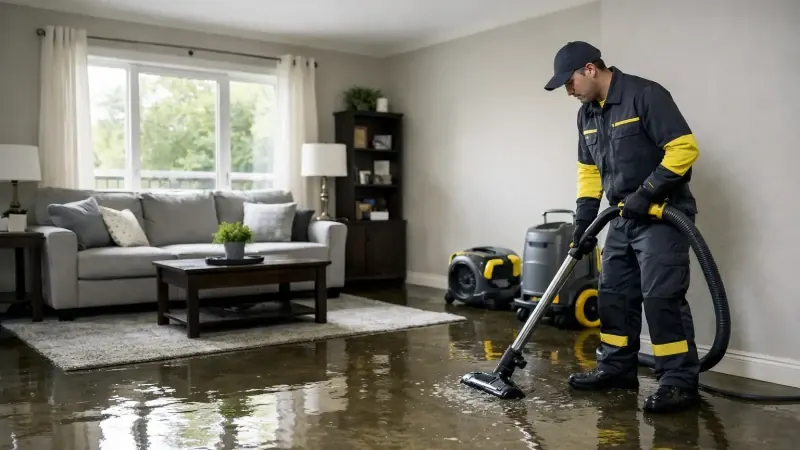
One more word deserves defining, because homeowners hear it used loosely: mitigation. Mitigation is the work that stops a loss from growing: the shutoff closed, the water extracted, the drying started, the belongings moved out of harm's way. Insurers expect it, policies usually require reasonable steps toward it, and it is the stage where hours matter more than anywhere else in the job. When this page talks about water damage cleanup Nyack NY, mitigation is the beating heart of it. Rebuilding can be scheduled at leisure; mitigation cannot, which is why it is the part of the work that answers the phone at three in the morning.
Plain words matter because water damage cleanup Nyack NY is bought in a hurry, often by someone standing in the water it describes.
Causes
Every Way Water Finds Its Way Into a Nyack House
Water enters Nyack homes through a short list of doors, and knowing which door it used tells a crew most of what they need. The first door is the plumbing itself: supply lines, fixture valves, water heaters, washing machine hoses and the traps under sinks. Plumbing failures are the year round cause, indifferent to weather, and they often run for hours before anyone notices, because they start inside walls, under floors and in rooms nobody enters daily. The second door is the sky: roof leaks, failed flashing, clogged gutters and storms that drive rain sideways against old siding and brick.
The third door is the ground. Nyack climbs from the Hudson River up a hillside, and water obeys the hill. Runoff from higher streets pours toward lower lots, groundwater rises in wet seasons, and basements cut into the slope intercept water that was travelling downhill underground. The fourth door is the village's own hidden stream. Nyack Brook runs a buried course through the village and emerges between Depew Avenue and Hudson Avenue, and in hard rain a buried stream still carries a stream's worth of water past foundations that were built long after it was covered over.
The fifth door is the sewer. In the heaviest rain, or when a building line is blocked by roots or grease, wastewater can reverse direction and arrive through the lowest drain in the house. The sixth door is the river itself: storm driven Hudson water and overwhelmed shore drains can push water into the lowest streets and the basements behind them. Each door leaves a different signature. Plumbing water is usually clean and localised. Groundwater arrives at floor joints and sump pits. Sewer water announces itself unmistakably. River and brook water carry silt, and silt left in a room after the water leaves is evidence of exactly where the water has been.
- Burst or leaking supply pipes, valves, heaters and appliance hoses: the all season cause.
- Roof, gutter and flashing failures that let storm rain walk down inside walls.
- Groundwater and hillside runoff entering basements at floor joints, window wells and sump pits.
- Nyack Brook and storm drains overwhelmed in hard rain, pushing water toward low ground.
- Sewer backups through floor drains and lowest fixtures, the dirtiest water of all.
- Hudson River storm water reaching the lowest streets near the shore.
Diagnosis is not academic. The cause decides what gets cleaned and what gets removed, how long drying takes, whether your insurer treats the event as a plumbing claim or a flood claim, and what prevention is worth doing afterwards. Water damage cleanup Nyack NY therefore starts with a detective's question before a pump ever starts: show me where it came in first. Homeowners help more than they realise by answering precisely, because the wettest room is not always the room where the water entered, and the difference between the two is where hidden damage hides.
Two causes deserve a special note because Nyack households misread them. The first is the water heater, which rarely announces its failure: it seeps from a corroded base for days, soaking the floor and the wall behind it, and is discovered by smell or by a warped floor rather than by a flood. The second is the refrigerator line and the dishwasher, small pipes with pressurised water and years of patience, which leak inside cabinets and under floors long before a drop shows. Water damage cleanup Nyack NY checks the appliance wall on every kitchen job, because the visible spill is so often the smaller half of the event.
Snowmelt is the quiet seasonal cause. A heavy Rockland County snowpack holds a surprising volume of water, and a fast thaw releases it against foundations that have been frozen hard for weeks, through soil that cannot yet absorb it. Basements that stay dry through summer storms sometimes take meltwater in March. The signature is water arriving at floor joints and the sump pit with no rain falling and no pipe broken. Knowing the signature saves a homeowner a weekend of hunting for a leak that does not exist, and points the drying and the prevention at the ground outside rather than the plumbing inside.
Whatever the cause, water damage cleanup Nyack NY starts by naming it correctly, because the wrong diagnosis dries the wrong problem.
First steps
The First Hour in a Wet Nyack Home, Move by Move
The first hour sets the ceiling on how well the rest of the job can go. Move one is safety, and it is not negotiable. Keep children and pets out of the water entirely. Keep yourself out of deep water, out of any water you suspect came from a sewer or the river, and away from wet electrical outlets, appliances and breaker panels. If water is near a panel, if you smell gas, or if a ceiling is sagging under pooled water, leave and call 911. The Nyack Fire Department is a fully volunteer department that answers true emergencies across Nyack and its neighbouring hamlets, and a dangerous flooded home is exactly what they are for.
Move two is stopping the source, but only where it is safe. For a burst pipe, close the fixture valve under the sink or behind the toilet; if that fails, close the main shutoff, which most Nyack homes keep where the water line enters the basement. For a roof leak in a storm, a bucket and a call are the honest tools; nobody belongs on a wet roof. For groundwater and river water, there is no valve, and the honest move is to protect what you can and wait for pumps. Never wade through water to reach a valve or a panel. A shutoff you cannot reach dry is a shutoff you leave alone.
Move three is the call, and it helps to know what to say. Say which rooms have water, roughly how deep it is, where you think it came from, when you found it, and whether the source is stopped. Mention anything that changes the plan: a sewer smell, a finished basement, someone elderly or unwell in the home, a sump pump that has gone silent. Move four is evidence. Photograph the water in place, the source, and every room it touched, before anything is moved. Move five is salvage, done safely: dry belongings out of wet rooms, papers and photographs first, furniture next, and nothing lifted out of dirty water without gloves.
1Call now and say which rooms have water
The first call starts the clock. Name the rooms, the depth and the likely source, and say whether the water is still rising. That one minute of detail decides what equipment leaves the yard.
2Shut the water off at its source if you can reach it safely
Close the fixture valve or the main shutoff for plumbing failures. If reaching it means wading through water, skip it and say so on the call.
3Keep everyone out of deep or dirty water and cut power near wet outlets
Children, pets and bare feet stay out. Do not touch wet outlets or a wet panel. If there is any danger, leave the building and call 911.
4Get the standing water pumped out and every room mapped with meters
Extraction removes the bulk water, and the moisture map records how far it travelled, including the rooms where it hides inside walls and under floors.
5Dry walls, floors and contents with daily meter readings
Air movers and dehumidifiers run around the clock, and readings taken at the same points each day prove the building is drying on schedule.
6Photograph the damage and keep every receipt for your claim
The photographic record and the paper file turn a stressful week into a claim your insurer can accept inside its legal deadlines.
Those six moves are also printed as a structured how to in this page's data, because they are the skeleton of every water damage cleanup Nyack NY job, from a split washing machine hose in Upper Nyack to a flooded basement two streets from the river. Learn them once and you will never waste the first hour again. The sections that follow take each stage of the work in turn: assessment, extraction, drying, cleaning, contents, and the law and paper that surround all of it.
A word about children, grandparents and anyone who cannot simply step around a flooded room. Move people before property: a dry room, a neighbour's house, a car with the heat on in winter. Then secure the animals, who will otherwise investigate the most dangerous water in the building with great enthusiasm. Anyone with breathing difficulties should stay well away from rooms where sewage or river water has been, and out of the drying zone while wall cavities are open. Water damage cleanup Nyack NY plans the household's safety with the same care as the building's, because a job that dries the house and hospitalises its owner is not a success by any measure.
The first hour is the cheapest hour of water damage cleanup Nyack NY; every later hour costs more and achieves less.
Practise the shutoff location once, in daylight, so the first hour of water damage cleanup Nyack NY never begins with a search.
The place
One Village, Five Nyacks, and the Water Each One Sees
Nyack is a small village with a dense footprint. The 2020 Census counted 7,265 residents, up from 6,765 in 2010, and the federal estimate for July 1, 2024 put the population at 7,511. Those people live on 0.77 square miles of land, which works out to a density of 9,435.1 people per square mile. The village's total area is 1.61 square miles, and the difference, 0.83 square miles, is water: the Hudson River is quite literally more than half of Nyack's map. Most of the village sits in the Town of Orangetown, with a small western section in Clarkstown, and Village Hall stands at 9 North Broadway, under the address Nyack, NY 10960.
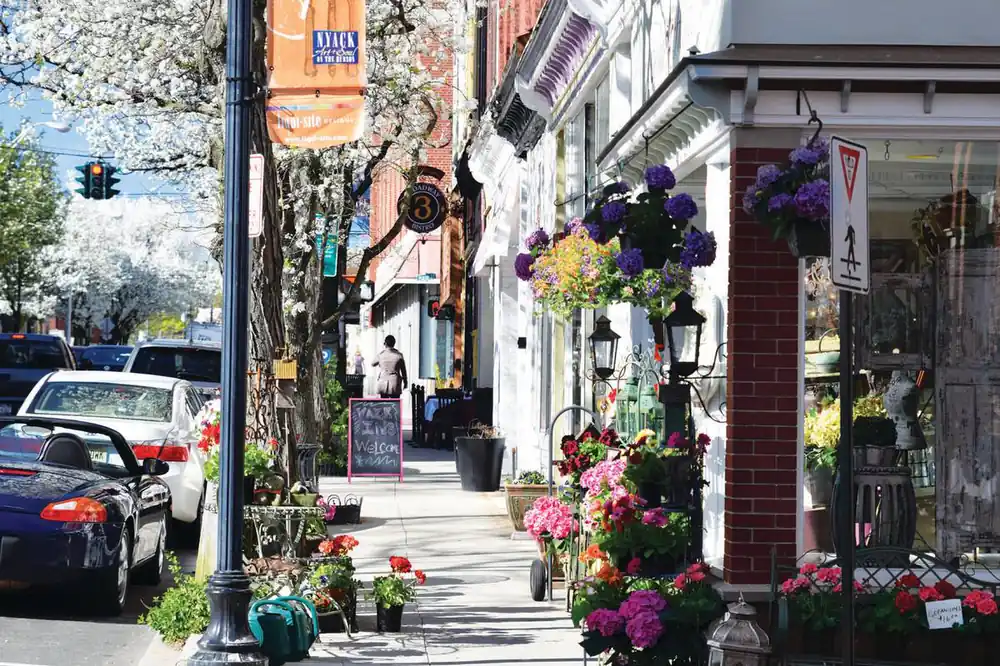
Around the village sit the other Nyacks. The five together are Nyack, Central Nyack, South Nyack, Upper Nyack and West Nyack. The village borders South Nyack to the north, Central Nyack to the east, Upper Nyack to the south and Valley Cottage to the southeast, as the village's own descriptions list them. Each has its own water personality. The lower streets near the shore watch the river. Homes along the brook line watch the rain gauge. Hillside streets watch the runoff from above. A crew that works the whole cluster learns these patterns street by street, which is why local knowledge is not a slogan here but a practical tool.
One member of the family changed status recently, and getting it right matters. South Nyack is no longer a village. Its residents voted on December 17, 2020 to dissolve, by 508 votes to 292, and the village ended on March 31, 2022. South Nyack, which the 2020 Census counted at 2,699 people, is now a hamlet of Orangetown. The practical consequence is paperwork: a flooded home inside the Village of Nyack answers to the village Building Department, while a flooded home in South Nyack follows town processes. Water damage cleanup Nyack NY covers both, but the permit conversation at the end of the job follows the map, not the mailing address.
The village is also closer to the city than its quiet streets suggest. Nyack lies about 15 miles north of the Manhattan boundary, in ZIP code 10960 and area code 845, and the Governor Mario M. Cuomo Bridge, the crossing generations called the Tappan Zee Bridge, lands just south of the village. That geography explains the housing mix a cleanup crew meets here: nineteenth century houses on the hill, compact streets of older homes near the brook, apartments and shops along Broadway and Main Street, and basements everywhere, because a hillside village builds down as readily as it builds up.
The five Nyacks share more than a name. They share a ZIP code family, a school geography, a fire coverage map that crosses their borders, and the same river weather. A storm that floods a basement in Upper Nyack is usually raining on Central Nyack at the same moment, and the brook that concerns the village has cousins in every hollow of the cluster. Crews working here plan by the cluster, not the boundary line, while remembering that the boundary line still governs permits, inspections and which office stamps the repair. Local knowledge, in this trade, is knowing both maps at once: the water's map, which ignores borders, and the paperwork's map, which is made of them.
Density deserves one more sentence, because it shapes the work. At 9,435.1 people per square mile of land, Nyack is a village built close: shared walls, narrow lots, houses whose gutters empty near a neighbour's foundation, and streets where a crew's vehicle and a drying trailer must fit politely into village life. Water damage cleanup Nyack NY in a dense village is partly a logistics art: equipment carried through tight halls, hoses run without blocking a shared drive, drying noise considered at the property line. The technical work is the same as anywhere in Rockland County; the courtesy has to be local.
The village's official information lives at nyack.gov, and water damage cleanup Nyack NY checks it before every permit conversation.
The river
Living Beside the Hudson: What the River Means for Wet Homes
The Hudson is the reason Nyack exists, and it is also the largest single body of water that can enter a Nyack home. The village occupies the west bank, and its lowest ground is the ground nearest the shore. In a major coastal storm, river water driven by wind and tide can push into shore streets and low yards, and storm drains that normally empty into the river can back up when the river itself is high. Basements near the waterfront therefore live with a rule that hillside homes do not: when a serious coastal storm is forecast, the basement is prepared before the rain arrives, not after.
Preparation is unglamorous and effective. Stored items come up off the floor and onto shelving. The sump pump is tested by pouring water into its pit and watching it cycle. Floor drains are checked and cleared. Documents, photographs and anything irreplaceable move upstairs for the duration. None of this stops a major flood, but all of it converts a disaster into a cleanup, and cleanup is a problem with a known solution. River water, when it does enter, is treated as the dirtiest category of water, because on its way through streets, yards and drains it picks up fuel, soil, sewage and debris.
That classification changes the work in specific ways. Porous materials that river water soaked, such as carpet padding, saturated wallboard and upholstered furniture, are normally removed rather than cleaned. Hard surfaces are extracted, washed and disinfected. The building is dried to the same meter proven standard as any other job, and the documentation notes the source plainly, because flood water and plumbing water travel through entirely different insurance doors. A standard homeowners policy usually excludes flood, which is why the flood insurance section later on this page exists. Water damage cleanup Nyack NY after a river event is as much a documentation job as a drying job, and the crews who do it well treat the camera as seriously as the pump.
River awareness has a calendar. The Hudson at Nyack is tidal, and the village's lowest streets feel the combination of a high tide, a full river from upstate rain and a storm pushing water toward the shore. No single one of those guarantees a flood; stacked together, they are the nights when waterfront basements earn their preparation. Residents near the shore learn to read a forecast the way farmers read a sky: not for the rain alone, but for the company the rain will keep when it arrives. A cleanup plan that starts before those nights, with the pump tested and the floor cleared, is worth more than any equipment that arrives after them.
When river water does enter a home, one habit protects the claim above all others: note the time the water arrived and the height it reached, and photograph the line it leaves on the wall before anything is cleaned. Flood claims live on exactly that evidence, because flood water and plumbing water are different insurance worlds. Water damage cleanup Nyack NY records the source and the tide line in the job file as a matter of routine, and homeowners who add their own dated photographs to that file give their claim the strongest opening it can have.
Riverfront homes should treat a coastal storm warning as a starting gun for preparation, not for water damage cleanup Nyack NY afterwards.
After any river entry, water damage cleanup Nyack NY treats every porous soaked item as guilty until a reading proves it innocent.
The brook
Nyack Brook, the Stream That Runs Under the Village
Every old village has a piece of hidden infrastructure that explains its floods, and in Nyack it is the brook. Nyack Brook runs a buried course through the village: for part of its length it travels out of sight, below streets and lots, and it emerges between Depew Avenue and Hudson Avenue, where it runs below grade behind fencing. West of South Broadway, near Hudson Avenue, the brook flows under a commercial building. A watercourse does not stop being a watercourse because a village grew over it. In a hard rain, the brook carries a heavy flow through the middle of Nyack, and the ground above and around its course is among the first to show water in a storm.
Homeowners near the brook line learn its habits by experience: the basement that takes water only in the worst storms, the yard that ponds in the same corner every spring, the drain that gurgles when the rain peaks. None of that is superstition. Buried water seeks its old path, and the brook's path is written into the village's low ground. If your home sits near the course and takes storm water, say so on the first call. It changes the diagnosis from plumbing to watershed, and it changes the prevention advice at the end of the job, away from valves and toward drainage, grading and sump capacity.
South Nyack has its own, separate stream, and the two should not be confused. South Nyack Brook is a freshwater tributary of the Hudson River about 0.85 miles long, running through the hamlet south of the village line. It is a visible, open watercourse for much of its run, where Nyack Brook is largely hidden. Between the river, the two brooks and the hillside runoff, Nyack's map is a small lesson in how water organises a place: every cleanup plan in this village starts by asking which of those waters, or which pipe, paid the visit.
Living near a buried stream teaches a particular humility about maps. The brook's course was drawn by water long before it was drawn by surveyors, and heavy rain still consults the older document. Homes along the line between Depew Avenue and Hudson Avenue, and near the stretch that passes under a commercial building west of South Broadway, sit above a working watercourse whether or not it appears on their property paperwork. Water damage cleanup Nyack NY treats that fact as diagnosis, not trivia: a basement on the brook line that floods in storms is not unlucky, it is located, and its prevention plan is written for its location.
If your basement floods only in the worst storms, tell the crew about the brook; water damage cleanup Nyack NY diagnoses by watershed.
A buried stream still floods like a stream, and water damage cleanup Nyack NY plans the brook streets accordingly every spring.
Basements
Nyack Basements, Dug Into a Hillside Above the River
Ask where water does its worst work in Nyack and the honest answer is one floor down. Basements in this village sit below hillside lots, beside a buried brook, near a river shore, or under houses built when a basement was a cellar for coal and preserves rather than a finished room. They collect every category of water: groundwater pressing through floor joints, runoff finding the window well, the sump pit overflowing when its pump fails, the sewer reversing through the floor drain, and the water heater letting go at 2 in the morning. A finished basement multiplies the stakes, because wallboard, flooring and furniture give water more to ruin and more places to hide.
The cleanup sequence in a basement is strict. Power safety comes first, because basements hold panels, furnaces, water heaters and freezers in the same wet space. Then the water comes out, by pump where it is deep and by vacuum extraction where it is shallow. Then the room is read like a document: tide lines on the walls, silt patterns on the floor, the height mark inside the sump pit, the state of the lowest stored boxes. Those signs tell the crew how long the water sat and how high it climbed, which decides what can be cleaned and what must come out.
Finished basements need one more decision, made early: what happens at the bottom of the walls. Water wicks upward inside wallboard and insulation well above the visible water line, and a wall that looks merely damp at the base can be wet a foot higher inside the cavity. Crews open the base of walls where readings demand it, remove soaked insulation, and dry the cavity directly. It feels destructive on day one and it is the cheapest decision of the whole job, because the alternative is closing a wet wall and meeting mold there in a month. Water damage cleanup Nyack NY treats the moisture meter, not the eye, as the referee of that argument.
Prevention in a Nyack basement is a short, practical list: a sump pump that is tested twice a year, a battery backup for the outages that arrive with the worst storms, a water alarm that speaks up before water spreads, stored goods raised off the floor, and drains that are kept clear. None of it is expensive next to one flooded finished basement, and all of it is easier to install in a dry week than during a storm.
Basement storage is where good intentions go to get wet. The floor of a Nyack basement is the first surface every category of water touches, and whatever sits on it sits in the flood: cardboard boxes, which wick water upward into everything they hold; suitcases; paint cans; the spare rug rolled in the corner. The fix costs almost nothing and is done in an afternoon: plastic bins instead of cardboard, shelving that starts six inches off the floor, and a rule that paper, photographs and textiles never live at floor level. Crews can dry a basement in days; they cannot un soak a box of letters, which is why the storage lecture appears on this page before the flood rather than after it.
A finished basement deserves a second, harder paragraph. Finishing a below grade room is a wager that the water will stay out, and in a hillside village beside a river, the wager should be hedged with design: flooring chosen for wet service, wall bases that can be opened and dried, a sump system with backup, and access panels that let a crew reach the cavity without demolition. Homeowners planning a basement renovation in Nyack should have that conversation before the wallboard goes up, not after the first flood. Water damage cleanup Nyack NY has dried enough finished basements to know that the ones built with water in mind dry in days, and the others dry in weeks.
The basement is where water damage cleanup Nyack NY earns its reputation, because it is where Nyack water does its deepest work.
Raise the storage, test the pump, and water damage cleanup Nyack NY becomes a rarer visitor to your lowest room.
Triage
When It Cannot Wait, and When Morning Is Soon Enough
Not every wet floor is an emergency, and pretending otherwise helps nobody. The test is a short one. Water that is still flowing is an emergency. Water that is deep, rising, or anywhere near electrical equipment is an emergency. Water that smells of sewage, or that arrived from a river, a brook or a storm drain, is an emergency, because it is dirty water and its clock runs faster. Water threatening a furnace, a water heater, an elderly resident's only bathroom, or a business that opens in the morning is an emergency in the practical sense, whatever its depth.
At the other end of the scale: a slow drip under a sink that you have contained in a bucket, a damp patch on a ceiling that is not growing, a washing machine that leaked a few gallons onto a tiled floor and has been switched off. Those are urgent, not emergent. They deserve a call today and a visit quickly, because slow water does quiet damage inside walls, but they do not need a crew at midnight, and an honest service will tell you so. The worst category error is the reverse one: treating a real emergency as a morning problem. Six hours of standing water can be the difference between drying a floor and replacing it.
- Call now: water still flowing, water rising, sewage or river water, water near electrics, a sagging ceiling, anyone vulnerable in the home.
- Call today: a contained leak, a growing ceiling stain, a wet carpet from a known appliance failure, a sump pump that has stopped cycling.
- Book a check: a musty smell with no visible water, an old stain you never investigated, a basement that feels damp every spring.
However you grade it, photograph before you tidy. The instinct to mop first and document later is universal and expensive, because the photograph of water in place is the single most persuasive document in the claim that follows. Water damage cleanup Nyack NY can rebuild the drying story from meter logs, but it cannot rebuild the picture of the flood that nobody took. Two minutes with a phone, then the mop, then the call: that order costs nothing and protects everything.
There is a middle category worth naming: the slow emergency. A supply line weeping inside a wall, a water heater seeping into a subfloor, a toilet wax ring passing a little water with every flush for a month. Nothing floods, nothing drips audibly, and the damage compounds in the dark until a smell, a stain or a soft spot in the floor announces a problem that has been running for weeks. Slow emergencies are why this page urges a meter check for any stain that grows, any floor that softens and any musty room with no explanation. Caught at week two, a slow emergency is a modest drying job; caught at month three, it can be a mold project with licences attached.
When in doubt, grade it up: water damage cleanup Nyack NY would rather arrive for a small job than be called late to a large one.
Assessment
Meters, Maps and Daily Readings: How a Nyack Job Is Measured
A professional cleanup runs on measurements, and the first measurement happens before extraction ends: the moisture map. The crew walks every affected room with meters, testing floors, walls, baseboards and the materials behind them, and records where the water travelled and how wet each point is. The map matters because water is a traveller. It runs under flooring, wicks up wallboard, crosses rooms through the gap beneath a wall, and pools in the low corner of a basement far from the pipe that failed. The room that looks worst is frequently not the room that is wettest where it counts, inside the structure.
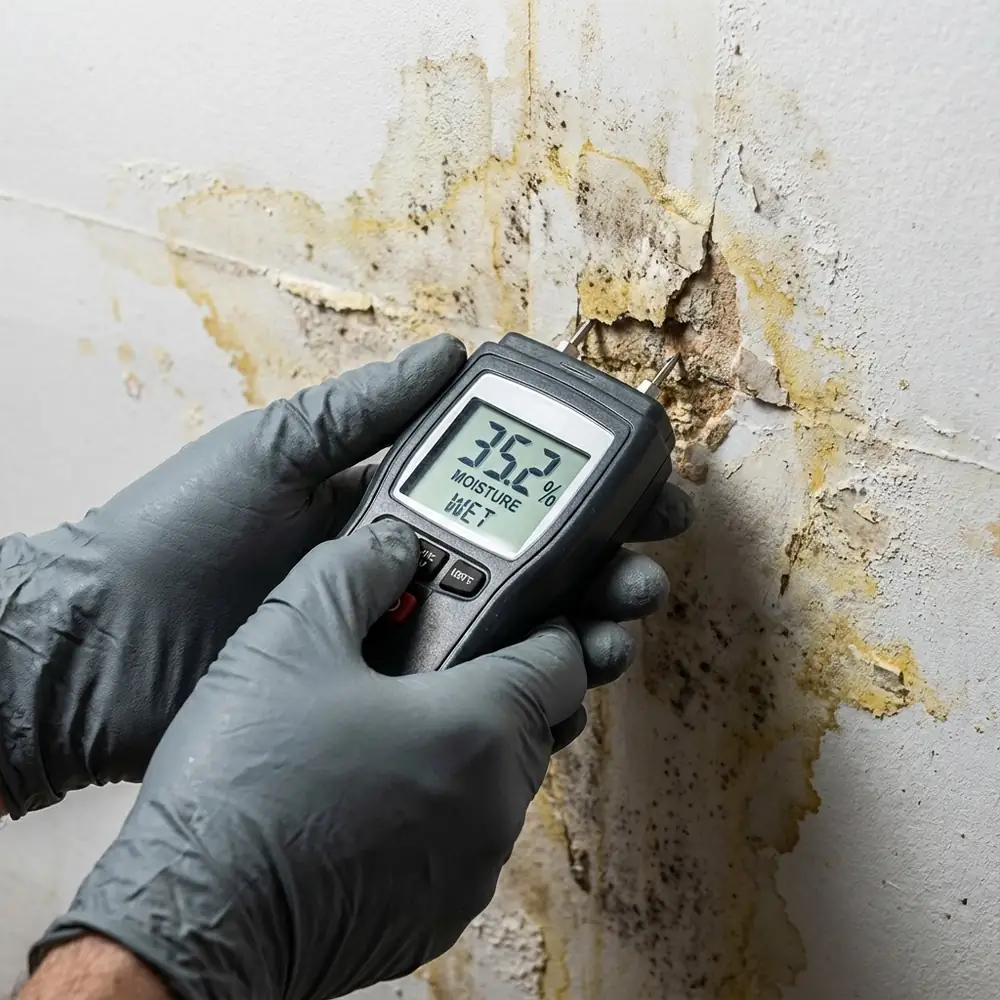
Two kinds of meters do most of the work. Pin meters push two small probes into a material and read its moisture directly, which makes them the referee for wood and wallboard. Pinless meters scan a wider area without leaving marks, which makes them the scout that finds the wet region the pins then confirm. Around them orbit the supporting instruments: a hygrometer reading the air, a camera recording the scene, and sometimes thermal imaging to show the cold signature of wet material behind a finished surface. None of this is theatre. Each reading lands in a log with a date and a location, and that log is the spine of the job.
The homeowner's part in assessment is information. When did you first see water? Has this room ever been wet before? Where is the shutoff, the panel, the sump pit, the cleanout? Is there a finished ceiling below this floor, a tenant downstairs, a piano, a server, a nursery? Every answer redirects the map a little. Water damage cleanup Nyack NY rewards the houses that keep their own records, too: the notebook that says the basement took water in the Ida storm and dried in six days is, for the next crew, the first page of the assessment.
Homeowners sometimes ask why the crew measures rooms that look dry. The answer is that water travels where eyes cannot follow: under a floor that was laid over the flood's path, along the bottom of a wall into the next room, down through a ceiling into a light fixture two rooms away from the leak. The map is drawn wide on purpose, and the dry readings at its edges are as valuable as the wet ones at its centre, because the edge is what proves the water stopped there. Water damage cleanup Nyack NY would rather hand you a map with forty readings, ten of them dry, than a guess with none, and your insurer feels exactly the same way.
No map, no drying plan: assessment is the foundation that water damage cleanup Nyack NY builds every later step upon.
Extraction
Pumps, Wands and Wet Vacuums: Getting Standing Water Out
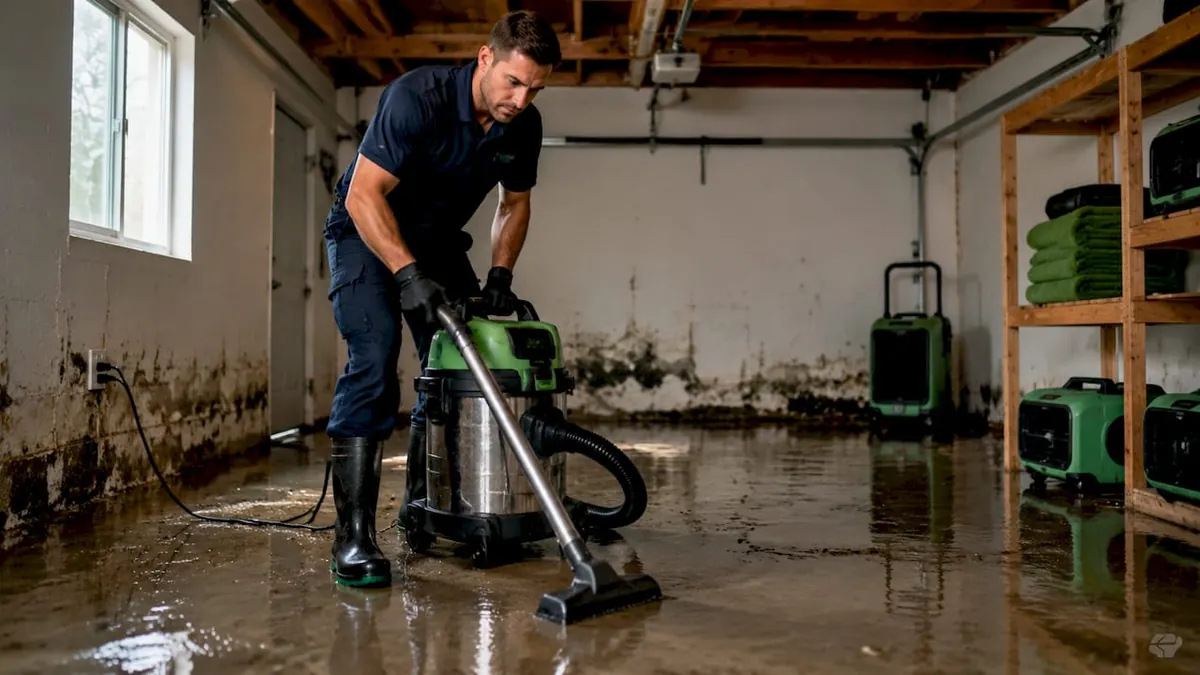
Extraction is the most physical hour of the job and the one that buys all the others. The arithmetic is simple: water removed as liquid is water the dehumidifiers never have to pull out of the air a molecule at a time, so an hour of pumping can save a day of drying. Deep water is pumped, with submersible pumps dropped into the lowest point of a flooded basement. Shallow water is extracted with vacuum equipment: truck mounted or portable extractors, weighted wands that press water out of carpet, and squeegee heads for hard floors. In Nyack's older houses, portable equipment earns its keep, because narrow stairs and tight basement doors decide what machinery can reach the water at all.
Extraction is also a reading exercise. As the water level falls, the room tells its story: the silt line where river or brook water rested, the debris trail that shows the flow path, the swollen baseboard and the lifted floor edge. Crews work from the source outward and from the top of the water down, checking under appliances and inside the lowest cabinets as levels drop. Furniture is lifted onto blocks where it can be saved, both to protect it and to let the floor beneath it be extracted and later dried. Nothing about this stage is delicate, but all of it is deliberate.
When the visible water is gone, the job is perhaps a third done. What remains is the water you cannot see: in the pad under the carpet, in the wall cavity, in the concrete that drank for hours, in the bottom plate of every framed wall the flood touched. That is why extraction hands over to drying rather than to goodbye, and why the meter comes out again the moment the last vacuum shuts off. Water damage cleanup Nyack NY measures extraction by a simple standard: not when the floor looks dry, but when the extraction pass stops recovering water and the map says the rest is a drying problem.
Extraction has an etiquette in a dense village. Hoses run from the vehicle to the basement without crossing a neighbour's garden, wastewater is discharged where it belongs and never onto a street or a storm drain that leads untreated to the river, and the wettest work is scheduled with the household's day in mind where safety allows. None of that slows the job; it is simply what working in Nyack, at Nyack's density, requires of a crew that expects to be invited back to the street. The water comes out the same way it would anywhere in Rockland County. The care around it is local.
Every gallon extracted is a gallon the dehumidifiers skip, which is why water damage cleanup Nyack NY pumps before it dries.
Drying
Dry Means Measured Dry: The Standard Every Room Must Reach
Drying is where cleanup becomes a science with a finish line. The finish line is called the dry standard, and it is not a number printed on a chart in an office. It is the moisture level of a known dry area of the same material in the same building: the upstairs wall of the same construction, the far end of the same floor. Wet materials are dry when their readings reach that standard and hold there. This definition protects everyone. The homeowner is not sold extra days, the crew is not tempted to leave early, and the insurer receives a log in which the end of the job is a measurement, not an opinion.
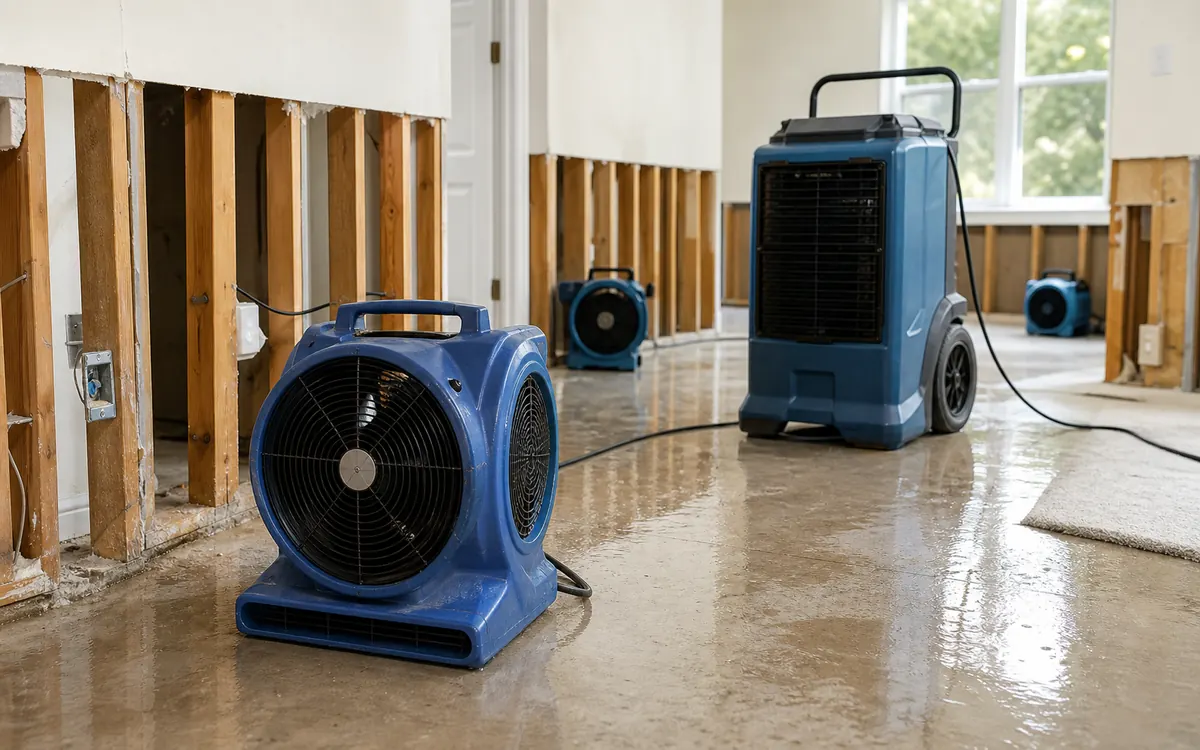
The equipment has two halves. Air movers push a fast sheet of air across wet surfaces to lift moisture out of them. Dehumidifiers pull that moisture out of the air and drain it away, so the air can take more. Run one without the other and the room becomes a sauna that dries nothing. Crews place equipment from the moisture map, count it from the volume of the space and the class of the loss, and then return daily to read, adjust and remove pieces as areas reach standard. The Environmental Protection Agency's guidance that drying usually takes several days to weeks is not a warning; it is a description of physics in buildings made of plaster, timber and concrete.
Homeowners can help drying succeed in small, real ways. Keep the equipment running; switching it off at night for quiet resets the day's progress and stretches the job. Keep doors and windows as the crew asks, because the drying chamber is a system and an open window in humid weather feeds it the wrong air. Keep children and pets from unplugging or toppling machines. And keep the daily visit easy: someone home, a clear path, questions written down. Water damage cleanup Nyack NY ends drying the way it started it, with a reading at every mapped point and a signature under the final numbers.
Drying also has a sound discipline: the equipment is loudest where the water is deepest, and a household that understands the map understands the noise. Readings taken at the same hour each day turn the drone into a story with a plot: this wall fell four points, that floor is at standard, one corner is being stubborn and here is what changes tomorrow because of it. Ask for the numbers daily and write them down. Water damage cleanup Nyack NY treats the homeowner as a member of the drying crew for exactly this reason: a household that can see progress in print tolerates the machines that make it.
Drying ends at a number, not a date, and water damage cleanup Nyack NY writes that number into your file.
Leave the machines running overnight; water damage cleanup Nyack NY loses a day of progress every time the equipment sleeps.
Dirty water
When the Water Is Dirty: Sewage Backups and River Water
Some water arrives carrying more than water. A sewer backup brings wastewater up through floor drains and the lowest fixtures in the house. River water arrives with soil, fuel and whatever the streets held. Storm drain water sits between the two. All of it is handled as contaminated, and the handling is not a matter of stronger smelling cleaner. It is a different job: protective equipment for the crew, containment of the affected area, extraction of the liquid, removal of porous materials the water soaked, then cleaning and disinfecting of the hard surfaces that remain, then drying under the same meter discipline as any other job.
The removals surprise people, so they deserve plain words. Carpet and padding that took sewage water come out. Wallboard that wicked it upward comes out to above the contamination line. Upholstered furniture and mattresses that absorbed it are not cleaned back into service. This is not wastefulness; porous materials cannot be reliably disinfected through their depth, and a room that smells clean while harbouring contamination in its padding is not a clean room. Hard surfaces are another story: concrete, tile, metal and sealed wood can be cleaned, disinfected and verified, which is why a sewage flooded unfinished basement often returns to service faster than a lightly flooded furnished one.
Two rules protect the household while this work runs. First, nobody unprotected walks the affected area, and children and pets stay out entirely until the room is cleaned and dried. Second, the cause gets fixed, not just the mess. A backup from a blocked building line needs the line cleared and its condition checked, or the next heavy rain or heavy laundry day will repeat the event. Water damage cleanup Nyack NY treats the sewer event as a plumbing diagnosis wearing a cleanup uniform: clean the room, prove it dry, and leave the line in a state that will not do it again.
After a sewage or river event, the house needs one thing that clean water jobs do not: a verified clean, not merely a dry one. Crews clean and disinfect hard surfaces after extraction and removal, and the sequence matters, because disinfecting a surface that still holds contaminated moisture wastes the effort. Drying and hygiene run together, with the final state judged on both. If anyone in the household is pregnant, elderly, very young or immune compromised, say so early: the advice about staying elsewhere until the affected rooms are cleaned and dried will be firmer, and it should be.
Dirty water changes the rules, and water damage cleanup Nyack NY changes with it: more protection, more removal, stricter proof.
Never let children or pets into sewage or river water; water damage cleanup Nyack NY treats those rooms as closed until cleaned.
Leaks from above
Water From Above: Ceiling Stains, Roof Leaks and Upstairs Pipes
Half the water in Nyack homes falls down from somewhere rather than rising up from the ground. The upstairs bathroom is the classic source: a wax ring failing under a toilet, a cracked shower pan, a supply line weeping inside the wall for a month. The roof is the second source, through failed flashing around chimneys and valleys, lifted shingles after a windstorm, and ice dams in a hard winter that push meltwater under the roof edge and into the top floor walls. The third is the heating system, in a village full of older houses with radiators and the pipes that feed them.
The ceiling below is the messenger, and it should be read carefully. A stain that grows is an active leak. A stain with a sharp brown edge is a leak that has wet and dried more than once. A ceiling that bulges is holding pooled water and is a small collapse waiting for a poke; it should be drained deliberately, from below, into a bucket, by someone who knows the weight involved, rather than left to choose its own moment. Paint blistering, plaster softening and a musty smell in a room with no visible water all say the same thing: the cavity above or behind is wet, and the meter, not the eye, gets the final word.
Cleanup from above follows the water down. The source is fixed or isolated first, because drying a ceiling under a live leak is theatre. Then the wet plaster or wallboard is read with meters, opened where it is saturated, and dried in the cavity, with the room below protected and its contents covered or moved. In Nyack's older houses, thick plaster and lath dry slowly and honestly, and the timeline says so. Water damage cleanup Nyack NY would rather promise five days and deliver four than promise two and leave a wall wet behind fresh paint.
Ceiling water has one more source in older Nyack houses that deserves naming: the bathroom above the kitchen, where a generation of plumbing meets a generation of tile. Grout fails, a shower valve weeps inside the wall, a tub overflows twice a year for a decade. The ceiling below records all of it in slow motion, stain by stain. The repair order matters: fix the source in the bathroom first, then dry and open the ceiling as readings demand, then refinish. Refinishing first is the classic waste of money in this trade, because a fresh ceiling under a live leak is just a newer surface for the water to ruin.
A growing ceiling stain is a leak with a diary; water damage cleanup Nyack NY reads it before opening anything.
Winter
Frozen Pipes on Cold Hudson Nights
Rockland County winters write their own chapter of water damage. When the temperature dives and the wind comes down the Hudson, the water inside an exposed pipe can freeze solid. Ice takes more room than water, and the pressure it builds inside a closed pipe can split copper, crack a fitting or force a joint apart. The cruel detail is timing: the pipe often fails quietly while frozen and announces itself at the thaw, when water returns to full pressure and finds the split. Homeowners come home to a spraying pipe, a flooded basement or a ceiling giving way under a room they did not know was wet.
The vulnerable pipes are predictable. Lines in outside walls, especially on the north side of the house. Pipes in unheated basements, crawl spaces and garages. The run to an outside tap that was never drained. In older Nyack houses, add the plumbing that a long ago renovation routed through an uninsulated bay or an overhanging floor. Prevention follows the same map: insulate those runs, seal the drafts that wash them with cold air, keep heat in the rooms they cross, disconnect and drain outside hoses, and know exactly where the main shutoff is before the cold night when you need it in the dark.
After a burst, the sequence is the one this page teaches everywhere: safety, shutoff, photographs, call. Then cleanup pays special attention to the wall and floor cavities the spray reached, because a pressurised leak drives water deep into construction and sideways along joists, wetting rooms that never saw a drop fall. Water damage cleanup Nyack NY closes a frozen pipe job with a prevention list written from the failure itself: the pipe that burst has marked the house's cold spot, and insulating that run is the cheapest promise a homeowner can keep.
A frozen pipe that has not burst is still a call worth making. A line that froze once is a line in a cold spot, and thawing it carelessly, with a torch or a space heater aimed and forgotten, trades a plumbing problem for a fire risk. Gentle warming, a watch kept on the line as it thaws, and a check of every joint it feeds are the safe order. Then insulate the run before the next cold night, because Rockland County winters repeat themselves with great reliability, and the pipe has already told you exactly where it intends to fail.
Insulate the run that burst and water damage cleanup Nyack NY may never visit that wall again.
Know the shutoff before the cold night; water damage cleanup Nyack NY begins at that valve in every winter job.
Sump pumps
Sump Pumps, the Small Machines That Guard Nyack Basements
In a village of hillside basements and a high river water table, the sump pump is the hardest working appliance nobody thinks about. Groundwater collects in a pit at the basement's lowest point, and when the level lifts the pump's float, the pump pushes the water out through a discharge line before it can spread across the floor. When the system works, a wet season passes without a single puddle. When it fails, it fails silently and usually during the worst storm of the year, because that is when it is asked to work hardest and when the power is likeliest to go out.
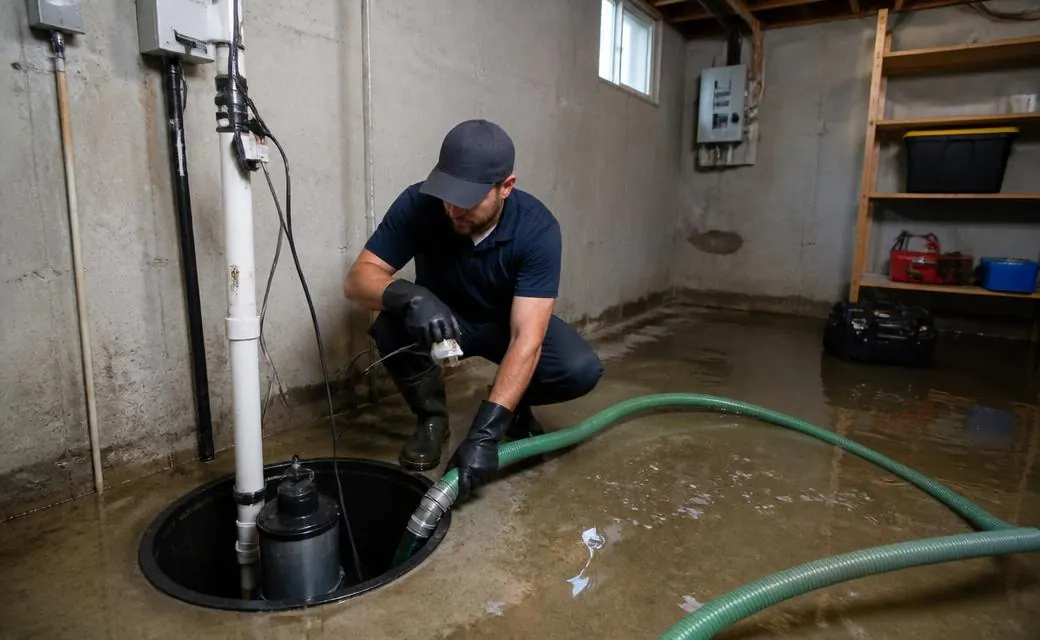
The failure modes are few and testable. A float stuck against the pit wall. A breaker tripped or a plug knocked loose. A motor worn out after years of service. A discharge line frozen, blocked or pumping water out beside the foundation, where it runs straight back in. A check valve failed, letting the pit refill with its own output. Testing takes two minutes: pour a bucket of water into the pit and watch the pump start, empty the pit and stop. Do it in spring and autumn, and after any outage. A pump that hesitates, grinds or leaves the pit half full has given you fair warning, in a dry basement, at a convenient hour.
The upgrades Nyack homeowners choose after a first flood are equally plain: a battery backup pump that works through outages, a water alarm that sounds or messages when the pit rises past its mark, and a pit cover that keeps debris and curious pets out of the mechanism. Water damage cleanup Nyack NY checks the sump as a matter of routine on every basement job, because drying a basement beautifully while leaving a dead pump in its pit is an invitation to do the whole job again in the next storm.
Power deserves its own sentence in the sump story, because the pump's hardest hour and the grid's weakest hour are the same hour. Storms that fill pits also drop branches on lines, and a pump without power is a decoration. Battery backup systems exist precisely for that overlap, sized to carry the pump through the outage window when the pit is rising fastest. If your basement has flooded once with the power out, the backup is not an upgrade; it is the repair. Water damage cleanup Nyack NY asks about the outage history of every flooded basement it dries, because the answer designs the prevention.
Test the pump with a bucket twice a year; water damage cleanup Nyack NY can tell which basements skipped the test.
A battery backup is the difference between a storm story and a claim for water damage cleanup Nyack NY.
Contents
Saving What Got Wet: Furniture, Papers, Rugs and Keepsakes
Ask a homeowner what the flood took and they rarely start with the floor. They start with the photographs, the rug from a parent's house, the books, the chair. Contents work is the part of cleanup that deals with those things, and its first rule is speed: wet belongings deteriorate by the day, and the items saved are usually the items reached first. The second rule is triage. Every wet item is sorted into what can be cleaned and dried, what needs specialist treatment, and what cannot be saved, with the sorting photographed and listed as it happens, because the list is both a work plan and an insurance document.
The categories behave differently. Solid wood furniture dries well and cleans well. Upholstered pieces are judged by the water they sat in and for how long; clean water caught early often saves them, dirty water usually does not. Rugs can be extracted, cleaned and dried, while the padding beneath them is replaced as a matter of course. Papers and photographs are the sprint event: they must be separated before they dry into a solid block, kept from sticking, and dried or frozen quickly to halt mold and ink bleed. Freezing, strange as it sounds, is the standard pause button for wet documents and books, holding them stable until they can be dried properly.
Sentiment and value occasionally collide with hygiene, and the honest answer is that the water decides. Anything porous that sewage or river water soaked is a health judgement before it is a keepsake judgement, and crews will say so plainly and document what was removed and why. What can be saved is handled like it matters, because it does. Water damage cleanup Nyack NY counts a job well done partly in square feet dried and partly in the boxes that go back upstairs: the albums, the letters and the ordinary treasures that make a house the same house after the water leaves.
Contents work has a paperwork twin that homeowners forget until the adjuster asks: the list. Every item removed, cleaned or kept should be written down with a photograph, its room, and its condition, on the day the decision is made. Memory edits itself within a week; the list does not. For items of real value, note the make, the serial number and the approximate age. The list feels like bureaucracy during a miserable week and reads like diligence during a claim review, and diligence is the currency claims are paid in. Keep your copy with the rest of the file this page keeps urging you to build.
Papers and photographs are the sprint event of water damage cleanup Nyack NY, because they spoil fastest and matter most.
Mold prevention
Beating the 24 to 48 Hour Clock: Mold Prevention After Water
Mold is the reason water damage has a clock on it. Mold spores are everywhere in ordinary air and on ordinary surfaces, and they ask only for moisture and time. The Environmental Protection Agency's advice is the sentence the whole trade is built on: dry water damaged areas and items within 24 to 48 hours to prevent mold growth, and if wet areas are dried inside that window, mold will in most cases not grow. That is the good news, and it is genuinely good: a fast, thorough drying is not damage control, it is prevention, and it works.
Prevention in practice is a list of unglamorous disciplines. Extract liquid water fast, because drying cannot outrun a puddle. Remove materials that cannot dry in place, like soaked carpet padding and saturated insulation, so the structure behind them can dry. Run dehumidification until meter readings, not the calendar, say the building is at its dry standard. Check the hidden addresses where moisture lingers: behind baseboards, under flooring, inside the wall cavity near the leak, at the bottom of the basement stairs. Keep indoor humidity down while drying runs. And inspect, at the end, the places the water visited that eyes skip: the closet floor, the cabinet toe kick, the back of the downstairs ceiling.
If growth is found anyway, the scale decides the response. A small patch of surface growth on a non porous surface is a cleaning matter. Growth across a wide area is a legal matter in New York: once a mold project passes 10 square feet, Article 32 licensing applies, an independent licensed assessor defines the work, and a separate licensed remediator performs it. Water damage cleanup Nyack NY stays on the right side of that line by treating prevention as the main event, so that the remediation conversation, with its licences and its paperwork, is one most Nyack homeowners never have to have.
Prevention also has a temperature and airflow side that homeowners control. Warm, still, humid air is mold's preferred climate, and a closed up wet house in a Rockland County summer provides it generously. Ventilation where the crew advises it, dehumidification that runs until readings say stop, and heating kept steady in cooler months all push the indoor climate the other way. The point is not comfort; it is denying growth its conditions during the exact days when spores are deciding whether your walls are a home. Small disciplines, applied in the first week, are the whole strategy.
Dry inside 48 hours and water damage cleanup Nyack NY usually stays a drying job instead of becoming a mold project.
Prevention is the cheapest service on this page, and water damage cleanup Nyack NY sells it by the hour saved.
Mold law
New York Mold Law in Rockland County: Article 32, Plainly Explained
New York regulates mold work more strictly than most states, and the rules apply in Nyack exactly as they do in the largest city in the state. The governing law is Article 32 of the New York Labor Law, run by the State Department of Labor's mold program. Its core ideas are three. First, licensing: nobody may advertise or perform mold assessment or mold remediation without the appropriate Department of Labor licence, earned through approved training. Second, independence: the company that assesses a project may not be the company that remediates it, so the person who defines the work has no financial interest in making it bigger. Third, scope: an independent assessment comes first and defines what the remediation must do.
The threshold question is size. A mold project, in the law's terms, is an area of mold contamination larger than 10 square feet. Below that, growth is handled as part of ordinary cleaning and prevention after water damage. Above it, the licensed two party structure applies. For Rockland County, the Department of Labor district office that covers the county is the Albany District. None of this is paperwork for its own sake. The law exists because mold work sits at the meeting point of health claims, property money and fear, and New York decided that the person measuring the problem should never be the person paid to fix it.
For the homeowner, the practical guidance is short. After any water event, drying fast and verified is your protection, because it keeps you under the threshold entirely. If visible growth is discovered across a wide area, do not hire the first company that offers to both test and treat; that single offer breaks the law's central rule. Get the independent assessment, read its scope, and let remediation follow it. Water damage cleanup Nyack NY works inside this framework on every job, and the framework is one more reason the page you are reading treats the 24 to 48 hour drying window as the most important sentence in the field.
One practical consequence of Article 32 surprises homeowners: scheduling. Because assessment and remediation are separate engagements with separate licensed parties, a mold project over the threshold has a sequence that cannot be compressed into a single visit. The assessor inspects and writes the plan; the remediator prices and performs the plan; clearance follows the work. Build that sequence into your expectations after any large growth discovery, and be suspicious of anyone who offers to collapse it. The law's delay is deliberate, and in a village of older houses where post flood growth is a real risk, the independence it buys is worth the days it takes.
Over 10 square feet of growth, the law wants two licensed parties; water damage cleanup Nyack NY will never offer to be both.
Article 32 is why water damage cleanup Nyack NY treats fast drying as a legal protection, not just a technical one.
Insurance
The Insurance Clock in New York: Fifteen Business Days and What Follows
New York does not leave claim deadlines to courtesy. Regulation 64, at 11 NYCRR 216.6, writes them into law, and every Nyack homeowner with a claim should know the three numbers. Fifteen: after you submit proof of loss, your insurer must accept or reject your claim within 15 business days. Thirty: if arson is suspected, that decision window becomes 30 business days. Five: once you and the insurer agree on the amount, the insurer must pay within 5 business days. Between those numbers sits a fourth duty: if the insurer needs more time to decide, it must tell you in writing and update you every 90 days while the claim stays open.
Deadlines cut both ways, and the homeowner's side of the bargain is evidence. An adjuster deciding inside 15 business days can only work with what the file contains. The strong file is the one this page keeps returning to: photographs of the water in place and of the source, a dated note of when the damage was found, the crew's moisture map, the daily drying log with its final readings, the contents list with photographs, and every invoice and receipt. Send it complete, send it early, keep copies of everything with dates, and the clock becomes your ally instead of your anxiety.
Two habits protect the claim's edges. Report the loss promptly, even before the full extent is known; a late reported water claim invites questions that an early one never meets. And keep the damaged materials question honest: insurers may want to see what was removed, so photograph removals and keep the crew's documentation of what came out and why. Water damage cleanup Nyack NY is documented as if an adjuster will read every page, because in New York, inside a 15 business day window, one usually does.
A short note on what insurers call sudden and accidental, because the phrase decides many Nyack claims. A burst pipe is the textbook case: sudden, accidental, covered as an event, with the drying and the resulting damage handled under the policy. A leak that ran for months is the opposite case, and insurers argue, often successfully, that long term seepage is maintenance rather than an event. The practical lesson is not legal but behavioural: investigate stains and smells when they appear, because a homeowner who can show they acted on the first sign of water is in a different conversation from one who painted over it twice.
Fifteen business days is the insurer's clock, and a complete file is how water damage cleanup Nyack NY helps them meet it.
Send the file complete and early; water damage cleanup Nyack NY documents as if an adjuster reads every page, because one does.
Flood cover
Disaster Claims, Flood Policies and the December 2026 Deadline
Some Nyack claims run under special rules, and the first is Insurance Law section 2618. It is a disaster only provision: it applies when an emergency has been declared, the emergency arises from a natural disaster or an act of terrorism, and the claims result from that event. When it applies, the insurer must accept or reject within 15 business days after proof of loss, may take a one time extension of 15 days for a non commercial claim or 30 days for a commercial claim, and must pay within 4 business days once a settlement is reached. A burst pipe in January does not trigger it. A declared storm disaster can, and knowing the difference tells you which deadlines govern your file.
The second special track is flood insurance. River and storm flooding are usually excluded from standard homeowners policies, and the National Flood Insurance Program exists to fill that gap. Its calendar has three dates every Nyack policyholder should know. A new policy carries a 30 day waiting period before it takes effect, so cover cannot be arranged as a storm approaches. After a flood, proof of loss must be filed within 60 days. And if FEMA denies a claim, the appeal must reach FEMA within 60 days of the denial letter. Miss any of the three and the strongest documentation in Rockland County cannot rescue the claim.
A fourth date belongs to the program itself. NFIP authorisation is currently set to expire at midnight on December 11, 2026. Policies already in force run to their own terms; the deadline concerns the program's authority going forward, and it is worth knowing before renewal decisions are made. Nyack's own storm history explains why this section exists. When Tropical Storm Ida crossed the region on September 1 to 3, 2021, the federal disaster declaration that followed, 4615-DR-NY, declared on September 5, 2021, included Rockland County. Water damage cleanup Nyack NY after a declared disaster is therefore two jobs at once: dry the building, and run the claim on disaster rules and disaster deadlines from the first day.
Disaster declarations also unlock a human layer worth knowing: after a declared event, Rockland County residents may find federal and state assistance programmes, volunteer help and case management running alongside the insurance track. Those programmes have their own applications and deadlines, separate from any policy, and they reward the same habit this page teaches everywhere else: documentation kept from day one. Photographs, a dated discovery note and a drying file serve a FEMA application exactly as they serve an adjuster. The household that keeps one good file is ready for every desk the disaster sends it to.
Buy flood cover in a dry month, because the 30 day wait makes water damage cleanup Nyack NY the wrong time to shop for it.
Permits
Permits in the Village: Why the First Call Goes to 9 North Broadway
Cleanup and repair live under different rules, and confusing them costs time. Cleanup, meaning pumping, extraction, cleaning and drying, is emergency work: it proceeds immediately, because standing water does not wait for office hours. Repair is construction: replacing wallboard, moving plumbing, altering electrical work, rebuilding what was removed. Inside the Village of Nyack, repair starts with the Village of Nyack Building Department, at Village Hall, 9 North Broadway. The Chief Building Inspector is Manuel Carmona, the department answers at (845) 358-4249 and at buildingdepartment@nyack.gov, and the village website is nyack.gov.
The detail that trips people up is jurisdiction. A home inside the village boundary goes to the village department first, not to the Town of Orangetown, because the village runs its own building department. A home in South Nyack, which has been a hamlet of Orangetown since March 31, 2022, or in another unincorporated part of town, follows the town route instead. Mailing addresses will not settle the question, since plenty of homes with a Nyack address sit outside the village line. Your tax bill and the village map will. Five minutes spent confirming which office governs your lot saves the particular frustration of a permit application filed with the wrong desk.
Bring evidence to the conversation. The moisture map, the drying log, photographs of what was removed and the crew's notes on what the water touched turn a permit discussion from storytelling into review. Ask plainly which parts of the repair need permits, which need inspections, and whether any flood related requirements apply to your property before walls are closed. Water damage cleanup Nyack NY ends its part of the work with a building that is clean, dry and documented; the permit file is how the repair that follows inherits all three qualities.
Renters and landlords should note where permits sit in their shared story: repair permits belong to the building and therefore to the owner's side of the arrangement, while the tenant's role is prompt written notice and reasonable access for the work. A landlord who pulls the right village permit and a tenant who keeps the notice letter have, between them, the paper skeleton of a well handled flood. When the repair is inspected and closed, both parties should keep a copy. Water damage in a rented Nyack home is disruptive enough without its paperwork becoming a second dispute layered over the first.
Cleanup now, permits before rebuilding: water damage cleanup Nyack NY keeps those two doors in that order.
Inside the village, the first repair call goes to 9 North Broadway, a detail water damage cleanup Nyack NY never gets wrong.
Storm history
What Ida Left Behind in Rockland County, and What Changed After
On September 1, 2021, the remnants of Hurricane Ida reached New York and kept raining into September 3. The storm's signature was intensity: rain arriving faster than drains, brooks and soil could accept it, in county after county at the same hour. Rockland County was among the counties named in the federal disaster declaration that followed, numbered 4615-DR-NY and declared on September 5, 2021. That declaration is the documented spine of the local story: the county's damage was formally recognised at the federal level, and federal assistance followed for the declared area.
This page deliberately publishes no death toll and no damage total for Rockland County or Nyack from Ida, because no official figure for the county or village was verified in research, and a page that asks to be trusted about meter readings should be careful about storm numbers too. What can be said plainly is what Ida demonstrated. Intense short burst rain is this region's flood maker. Buried and open watercourses alike, from Nyack Brook to the county's larger streams, become the map that matters. And the homes that fared best were not always the driest homes; they were the homes whose owners could document, dry and claim in an organised way.
The institutional answer arrived in planning form. The 2024 Rockland County Hazard Mitigation Plan is fully approved by FEMA, and the Village of Nyack participated in it. Hazard mitigation plans are where a county writes down, storm by storm and hazard by hazard, what it intends to do before the next event rather than after it. For a homeowner the plan's existence carries a simpler message: the village and county treat flooding as a recurring condition to be managed, not a surprise to be endured. Water damage cleanup Nyack NY is written in that same spirit: prepare the basement before the storm, document during it, dry fast after it.
Ida also left a lesson in the county's drains. Much of the flooding in intense rain is not river water arriving but rain water failing to leave: culverts at capacity, storm drains overwhelmed, brooks running at their banks through villages like this one. That is why the county's hazard mitigation planning, and the village's participation in it, matters to a page about cleaning houses. Every improvement to the shared drainage is a basement somewhere that stays dry. Until those improvements arrive everywhere, the household version of mitigation remains the one this page teaches: know your water, prepare the low rooms, document, and dry fast.
Ida declared Rockland County a disaster area; water damage cleanup Nyack NY still plans by the lessons that storm wrote.
Renters and landlords
Renting in Nyack: Homes, Duties and Wet Floors
A rented home that floods tests two relationships at once: the tenant's right to a livable home and the landlord's duty to provide one. New York law gives tenants the warranty of habitability, which means the home must be fit for living, with its systems working and no conditions dangerous to health or safety. Standing water, soaked walls, a failed water heater and plumbing that cannot be used all press directly on that warranty. The tenant's duties in the first day are plain: notify the landlord or manager at once, in writing, keep a copy, photograph the damage and your belongings, and take the same safety steps any occupant takes around deep or dirty water.
The landlord's duties run the other way and they are time sensitive. Arrange extraction and drying promptly, repair the source, and communicate in writing what will happen and when. A landlord who treats a flooded unit as a complaint rather than a building emergency usually buys a larger problem: damage that spreads while messages are exchanged, and a paper trail that reads badly everywhere it is later read. If the unit cannot be lived in during drying, the conversation about arrangements should happen openly and early. Tenants whose landlords do not act have legal remedies in New York, and a housing attorney or Legal Aid can explain them; village tenants can also ask the Village of Nyack Building Department about inspection routes for serious conditions.
Belongings draw the boundary line. The building and its systems belong to the landlord's responsibility and the landlord's insurance. The tenant's furniture, clothing and electronics belong to the tenant, and are covered, if at all, by a renters policy, which is why this page recommends one to every Nyack renter in a ground floor or basement adjacent unit. Water damage cleanup Nyack NY serves both parties best when the drying starts before the fault argument does: buildings do not care whose pipe it was, and neither does mold.
Students, newcomers and anyone renting a basement adjacent apartment in the village should hear one specific piece of advice: ask, before signing, whether the unit or the basement below it has ever taken water, and look at the baseboards, the sump pit and the lowest walls with that question in mind. A honest landlord answers plainly, and the answer shapes sensible decisions about storage, renters insurance and where the photographs live. Nyack's charm includes below grade living space in old houses; renting it with open eyes is simply part of living in a river village.
Written notice, prompt drying, kept copies: water damage cleanup Nyack NY serves tenants and landlords best when both happen fast.
Renters insurance is the tenant's half of the flood plan, and water damage cleanup Nyack NY recommends it on every rented job.
Case studies
Two Rockland County Videos, Labelled for Exactly What They Show
This page links to two videos, and it labels them with unusual care, because honesty about footage is part of the service. No video of an actual cleanup job in Nyack was found during research for this page. What exists is professional news footage of Rockland County's July 2023 floods, and it is valuable for exactly what it is: a record of what storm water does in this county, filmed by the newsrooms that cover it. Both videos are linked as text only. Nothing is embedded here, and neither video shows our crews, our equipment or a Nyack job.
The first video is from Eyewitness News ABC7NY, published July 11, 2023, running 2 minutes and 6 seconds, titled Clean up continues in Rockland County after extensive storm damage. It shows cleanup underway across Rockland County after the July 2023 storm damage: the scale of debris, water and work that a county wide flood leaves behind. Watch it for the aftermath, the part of a flood that begins when the water leaves. The caveat, stated plainly: it is news footage of Rockland County, it is not specific to Nyack, and it is not a walkthrough of a single cleanup job.
The second video is from CBS New York, published July 10, 2023, running 3 minutes and 21 seconds, titled Rescue boats needed to save people in Rockland County floods. It shows flood rescues in Stony Point, where 40 people were rescued at the Route 6 Circle. It is rescue footage, not cleanup footage: boats and first responders, not pumps and meters. Its value on this page is the water itself, a record of how fast Rockland County flooding turns streets into a rescue problem. Water damage cleanup Nyack NY begins where that footage ends, and the distance between the two is exactly why the first hour guidance on this page puts safety before salvage.
- Watch: Clean up continues in Rockland County after extensive storm damage, Eyewitness News ABC7NY, July 11 2023, 2:06 (linked below).
- Watch: Rescue boats needed to save people in Rockland County floods, CBS New York, July 10 2023, 3:21 (linked below).
Both links open on YouTube in a new tab. If you watch one thing before storm season, watch the first: the county scale cleanup after the water leaves is the honest preview of why this page exists, and why the homes that documented and dried early in July 2023 were the homes that argued least with their insurers afterwards.
- Clean up continues in Rockland County after extensive storm damage (ABC7NY, YouTube)
- Rescue boats needed to save people in Rockland County floods (CBS New York, YouTube)
A final word about why this page links news footage at all, rather than nothing. Photographs and video of the July 2023 Rockland County floods teach scale better than any paragraph: how much water a county road can hold, how much debris a street can carry, how many basements a single night can fill. Homeowners who have seen that footage read a storm forecast differently afterwards. The labels stay strict because the footage deserves accuracy: Rockland County, July 2023, news coverage, not Nyack, not our work. Watched with those labels in mind, the two videos are the most honest case studies available for this page.
Both videos are Rockland County news footage, labelled as such, because water damage cleanup Nyack NY does not borrow other places' pictures.
Watch the aftermath footage before storm season; it explains water damage cleanup Nyack NY better than any advertisement could.
Choosing help
Choosing Cleanup Help in Rockland County Without Guesswork
A flooded homeowner hires under pressure, and pressure is a poor negotiator. The defence is a short list of questions that separate a cleanup service from a listing. Ask what the first visit includes: extraction, a moisture map, a drying plan with daily readings, or just equipment dropped at the door. Ask how dry is proven: by meter readings against a dry standard, logged daily, or by touch and optimism. Ask who documents for the insurer, and whether the moisture map and drying log become yours. Ask whether the company answers around the clock with its own crews. The answers reveal the whole business model in two minutes.
Local knowledge is the next test, and Nyack makes it easy to grade. A service that works this village knows that South Nyack has been a hamlet since 2022, that flood repair inside the village starts at the Building Department at 9 North Broadway, that Nyack Brook runs buried under the middle of the village, and that Article 32 separates mold assessment from remediation once growth passes 10 square feet. None of that is trivia; each fact changes a real decision on a real job. A company that cannot place Nyack on its own map will dry your basement by generic rules, and generic rules are how wet walls get closed in.
Finally, judge the promises. Fast arrival can be promised honestly. A finished drying date cannot, because drying ends at a measurement, not a date. A fixed outcome for your claim cannot, because the claim is the insurer's decision under Regulation 64's clock. What can be promised is process: answer around the clock, extract first, map the moisture, dry to the standard, document everything, and explain each step in plain words. Water damage cleanup Nyack NY asks to be judged on exactly that list, and this whole page is the evidence offered for the judging.
Price questions belong in the choosing conversation too, handled the way this site handles them: by phone, for your specific rooms and water, rather than as numbers printed on a page. Any company can publish a figure; the figure that matters is the one built from your moisture map, your materials and your water category, explained line by line before work expands beyond the emergency stage. Ask for that explanation, in writing, and keep it in the claim file. A service comfortable explaining its numbers is usually a service comfortable being measured by them, in both senses of the word.
Judge a company by its measurements and its paperwork; water damage cleanup Nyack NY asks to be judged on exactly those.
If a quote cannot explain its drying standard, it is not a quote for water damage cleanup Nyack NY, whatever its letterhead says.
Hidden damage
Signs Your Walls Are Still Wet Long After the Floor Looks Dry
The most expensive sentence in water damage is it looks dry. Floors dry from the top down and walls dry from the outside in, which means the visible surfaces are the first to recover and the hidden structure is the last. Water that entered a wall cavity sits in insulation, in the bottom plate and in the back face of the wallboard, in the dark, at room temperature, which is a fair description of what mold asks for. The homeowner's instruments are humble but real: a nose that notices a musty smell days after the room seemed fine, a hand that finds a baseboard swollen or a paint film blistered, an eye that catches a floor beginning to cup or a door that suddenly sticks in its frame.
Each sign has a mechanism. Musty smell is microbial growth feeding on damp material somewhere out of sight. Blistered paint is vapour pressure pushing from a wet cavity through the finish. A cupped hardwood floor is boards swelling unevenly because their undersides are wetter than their tops. A sticking door is a frame that has taken moisture and moved. None of these signs proves a wet wall on its own, and all of them together are a meter visit waiting to happen. The professional answer is measurement at the suspect points, compared with the same materials in a dry room, because the comparison is what turns a suspicion into a finding.
Time is the variable that decides the bill. A hidden wet wall found in week one is a drying job: open the base, dry the cavity, close it up. The same wall found in month three can be a mold project, with Article 32 licensing, an independent assessment and a remediation plan. Water damage cleanup Nyack NY therefore ends every job with readings at the hidden points, not just the obvious ones, and this page advises every Nyack homeowner the same: after any water event, schedule the follow up reading even when the house looks, feels and smells like itself again.
Keep a small ritual after any water event, however minor it seemed: a monthly walk, for the first season, through the rooms below and beside the affected area, nose first and eyes second. Smell the closet. Look at the baseboard line. Press the floor near the wall. The ritual takes five minutes and catches the slow sequel that a single follow up reading can miss, because materials keep changing for weeks after a flood. If the ritual finds nothing for a season, retire it with thanks. If it finds a smell or a stain, you have caught the sequel in its first chapter.
A musty smell is a meter visit waiting to happen, and water damage cleanup Nyack NY would rather read a dry wall than open a moldy one.
Prevention
Keeping the Next Flood Small: A Nyack Homeowner Checklist
Prevention is the cheapest section of this page to act on and the one most often read after it is needed. Work through it in a dry week. Know your main water shutoff and label it. Test the sump pump with a bucket of water and listen to it cycle. Walk the outside of the house in rain, once, with your own eyes: gutters overflowing, downspouts dumping beside the foundation, soil sloping toward the house, window wells holding water. Most basement water has an outdoor biography, and a rainy day walk reads it better than any dry day inspection.
- Label the main shutoff and every fixture valve; tell the household where they are.
- Test the sump pump twice a year; add a battery backup and a water alarm if the basement has ever flooded.
- Raise stored items off the basement floor on shelving, documents and photographs highest of all.
- Keep gutters and downspouts clear, and carry roof water away from the foundation.
- Replace washing machine hoses on schedule, and shut their valves when you travel.
- Photograph every room once a year, opened drawers and closets included, as a contents record.
- Check whether your address needs flood cover, remembering the 30 day NFIP waiting period.
- Keep the Village Building Department and your insurer's claim number in the same note as the shutoff.
None of this makes a Nyack home waterproof, and honesty requires saying so: a buried brook, a hillside and a river are not cancelled by a checklist. What the list changes is the size of the event. A flood met by a tested pump, raised storage, known shutoffs and a documented home is a cleanup. The same flood met by none of them is a loss. Water damage cleanup Nyack NY would rather meet you at the first version, and so, on the evidence of every job diary in this trade, would you.
Prevention ends with people rather than products. Make sure every adult in the house knows three things without looking them up: where the main shutoff is, what the sump pump sounds like when it is failing, and which number to call when water wins. Write the three on a card and put the card where the shutoff is. Storms, bursts and backups share one feature: they choose the hour when the knowledgeable person is away. A household where the knowledge is shared is a household whose first hour goes right even then, and the first hour, as this page has said from its opening section, is where the whole job is won or lost.
An afternoon of prevention is worth a week of drying, and water damage cleanup Nyack NY keeps the checklist short on purpose.
Label the shutoff today; the next first hour of water damage cleanup Nyack NY will thank you in the dark.
Businesses
Water at Work in Nyack: Shops, Restaurants, Offices and Studios
Nyack's working streets, Broadway and Main Street and the blocks between them, hold the village's shops, restaurants, offices and studios in the same older buildings that hold its homes, and water treats a business address exactly as it treats a house, with one difference: the clock is louder. A flooded home is a family emergency. A flooded restaurant is that plus a health inspection question, a flooded stockroom is inventory turning to waste by the day, and a flooded office is a staff working from kitchen tables while the drying runs. Business cleanup is therefore planned around two recoveries at once: the building's and the trading week's.
The sequence respects both. Safety and source first, as always, with added care for commercial electrical systems, refrigeration and cooking equipment. Extraction and drying are scheduled to free the most valuable space earliest: the sales floor before the storage cage, the kitchen pass before the dry store. Contents work becomes stock work, with the same photograph and list discipline, because a commercial claim lives or dies on its inventory record. Where part of the premises can trade safely while another part dries, the plan says so in writing, with the wet areas contained and signed, because an insurer and an inspector will both ask.
Commercial claims carry their own calendar. Regulation 64's clocks apply, and after a declared disaster, Insurance Law 2618 gives commercial claims a 30 day one time extension window on the insurer's side and the same 4 business day payment duty once settled. Business owners should also keep the records a residence never needs: the closure dates, the spoiled stock list, the staff hours lost. Water damage cleanup Nyack NY documents a business job like a second set of books, because for the length of the claim, that is what the drying log becomes.
Nyack's businesses should also rehearse the unglamorous question of the morning after: who opens, who calls, who photographs, who decides what stock is lost. A one page flood note behind the counter, with the shutoff, the panel, the insurer and the cleanup number, converts a chaotic dawn into a sequence. Restaurants add the health dimension: water in a food premises is a conversation with the county health authorities as well as a crew, and reopening follows their word. The businesses that trade again fastest after a flood are rarely the luckiest; they are the ones whose note was written before the water arrived.
For a business, drying is also trading; water damage cleanup Nyack NY plans the building's recovery and the week's together.
A one page flood note behind the counter is the cheapest insurance a Nyack shop can hold alongside water damage cleanup Nyack NY.
Daily life
Sleeping Beside the Dehumidifiers: Daily Life During Drying
Drying is done to a house, but it is lived through by a household, and honesty about the experience helps families plan. The equipment is loud: air movers hum at conversation competing volume, around the clock, for days. The air feels warm and dry, because dehumidifiers return heat to the room as they work. Furniture migrates to odd places, blocked up on foam squares, crowded into the dry rooms. Doors between the drying zone and the rest of the house stay as the crew asks. Children find the machines fascinating for a day and annoying for four. Pets vote with their feet and relocate to the quietest room, and they are usually right.
Most households stay in the home through a drying job, and the cases where leaving is wiser are specific: sewage contamination in living space, a household member with serious respiratory illness while cavities are open, no working bathroom, or a drying zone that is simply the whole house. Where a family does leave, the claim file should note it from the first night, with receipts kept, because displacement is part of the loss record. Where a family stays, small mercies matter: earplugs for the bedroom door that must stay open, a rota for the daily crew visit, and a written note of the readings each day, so progress is visible even when patience is not.
The daily visit is the household's anchor. Readings are taken at the same points, equipment is adjusted or removed piece by piece, and the shrinking forest of machines is the truest progress bar the job offers. Ask for the numbers each day and write them on the fridge. Water damage cleanup Nyack NY ends not with a flourish but with a quiet house: the last machine out, the final readings at standard, and a family that can hear itself think again, in rooms that are measurably dry.
Children deserve a direct word, because a drying house is a strange house: loud, warm, rearranged, with strangers visiting daily and favourite rooms out of bounds. Explain the machines as helpers with a finishing day, give the readings a place on the fridge where small people can watch the numbers fall, and keep one room, if the map allows it, as normal as possible for as long as possible. Households remember a flood for years; the memory can be of chaos or of a family that had a plan and watched it work. The difference is mostly communication, and it costs nothing.
The machines are loud and the readings are the progress bar; water damage cleanup Nyack NY asks households to watch the numbers fall.
Most families stay home through drying, and water damage cleanup Nyack NY plans the week around the people, not just the walls.
Documentation
Receipts, Photos and Meter Logs: Building the File Your Insurer Reads
Every water job produces two results: a dry building and a file. The file is not bureaucracy; it is the form in which the job survives. Months later, when the claim is reviewed, when the house is sold, when a new stain appears and someone asks whether it is old or new, the file answers. Build it from the first hour. Your own opening pages are the dated note of discovery, the photographs of water in place and of the source, and the list of who you called and when. Everything after that is the crew's contribution and yours together, and it should live in one folder, paper or digital, from day one.
- Discovery note: date, time, what you saw, what you did first.
- Photographs and video: water in place, source, every affected room, removals, daily progress, finished rooms.
- Moisture map: where the water went, with the first readings at each point.
- Drying log: daily readings, equipment placed and removed, the final readings at dry standard.
- Contents list: damaged items with photographs, marked saved, cleaned or removed, with reasons.
- Money paper: invoices, receipts for purchases and lodging, the insurer's letters and your claim number.
- Official paper: Village Building Department permits and inspection notes for the repair stage.
The file has a legal rhythm in New York. Regulation 64 gives your insurer 15 business days after proof of loss to accept or reject, and a complete file is what makes that deadline realistic rather than theoretical. Keep copies of everything you send, with the dates you sent it, because a claim timeline is sometimes the claim. Water damage cleanup Nyack NY hands over its documentation as a matter of course, and this page's advice to homeowners is to be the second archivist of their own flood: the crew's file and yours should match, page for page, if either is ever questioned.
Digital habits make the file nearly free to keep well. Photograph paper documents into the same folder as the flood photographs. Name files by date rather than by camera number. Back the folder up once, anywhere, the week the job ends. And when the claim closes, do not delete the file in a fit of tidiness: it is the house's medical record for water, and the next crew, buyer or adjuster will ask questions it alone can answer. A Nyack house may flood twice in a decade; the second flood should always find the first one's file waiting.
One folder, everything in it, copies of everything sent: that is the file water damage cleanup Nyack NY builds with you.
Keep the file after the claim closes; it is the house's water history, and water damage cleanup Nyack NY may need it next time.
Timeline
From First Call to Final Reading: A Typical Week in a Drying Nyack Home
No two jobs share a calendar, but a typical week has a shape, and knowing the shape makes the days easier. Day one is noise and water: the call, the arrival, safety checks, the source stopped, extraction, the first moisture map, equipment placed and humming before the day ends. Day two is the first full reading set, the day the map is confirmed or corrected, the day hidden water behind a wall or under a floor is usually found and the plan adjusted in the open. The household learns the sound of its own house drying, and the first contents decisions are made.
Days three and four are the steady middle: readings falling on schedule at most points, stubborn points identified, a piece of equipment retired from the driest room, perhaps a wall base opened where the cavity is losing its race with the clock. Day five is often the first day the end is visible in numbers: most points at or near standard, the remaining equipment concentrated where the water sat longest, in Nyack most often the basement's low corner or the wall along the brook side of the house. Days six and seven belong to verification: final readings at every mapped point, held at standard, equipment out, the closing walk with the homeowner, and the file completed.
A shallow clean water job can compress that week into three days. A flooded finished basement, a sewage event or a house that sat wet for a weekend can stretch it to two weeks, and the Environmental Protection Agency's own guidance, that drying usually takes several days to weeks, covers the whole honest range. What should never change is the ending: not a date circled in advance, but a set of numbers at standard. Water damage cleanup Nyack NY keeps the week typical by keeping the measurements daily, because a job read every day rarely surprises anyone on the last one.
The week's rhythm also explains the crew's questions, which can feel repetitive: the same points read, the same rooms walked, the same notes about doors and windows and machines left running. Repetition is the method. Drying is a curve, and a curve is only visible to someone who measures it at intervals with the same instrument in the same places. When the numbers stall, the crew changes the physics: more air movement here, a cavity opened there, a dehumidifier swapped for a larger one. The homeowner watching this is watching the difference between drying as a hope and drying as a managed process, and the difference shows up later in the claim file as a clean, unbroken log.
A typical week has a shape, and water damage cleanup Nyack NY keeps it by measuring daily rather than hoping nightly.
The job ends with numbers at standard, a standard water damage cleanup Nyack NY will show you point by point.
The village
A Village That Runs on Volunteers: Nyack in Facts and Figures
Nyack protects itself the old way. The Nyack Fire Department is a 100 percent volunteer department, and its coverage reaches beyond the village line: it serves Upper Grand View, Nyack, South Nyack, Grand View-on-Hudson, Central Nyack and Valley Cottage. When a flooded home turns dangerous, when water meets a panel or a ceiling sags or anyone is at risk, those are the neighbours who arrive. For the far more common case, water that is merely destructive, the call belongs to a cleanup crew, and keeping the distinction clear is itself a small civic duty: volunteers kept for emergencies, professionals for pumps and meters.
The village's own coordinates are worth a resident's memory. Village Hall stands at 9 North Broadway, Nyack, NY 10960, and the village website is nyack.gov. The Building Department, led by Chief Building Inspector Manuel Carmona, is the first stop for flood repair inside the village. The village is governed from that building on the hill above the river it watches. Around it, the county layer matters too: Rockland County's hazard planning, including the FEMA approved 2024 Hazard Mitigation Plan in which Nyack participated, is the framework that turns one village's wet week into a county's preparation.
Small numbers tell the village's story best. A population of 7,265 at the 2020 Census, growing to an estimated 7,511 by July 2024. Land of 0.77 square miles holding a density of 9,435.1 people per square mile. A total area of 1.61 square miles, of which 0.83 is the river itself. A ZIP code, 10960, shared with neighbours; an area code, 845; a bridge at its southern edge that renamed itself within living memory. Water damage cleanup Nyack NY is written for that specific density of people, houses and water, and its advice would need rewriting for anywhere else, which is rather the point of a local page.
The village's volunteer tradition runs deeper than the fire department. Nyack's civic life, from its library to its street fairs, is carried substantially by residents who give their hours, and a flood week shows the same pattern at street level: neighbours with pumps, extension cords and spare dehumidifiers appear before any company vehicle does. Accept the help for what it is good for, moving belongings, mopping the shallow end, watching the house, and let the metered drying and the dirty water work stay with the professionals. A village that helps itself and knows where help's limits lie recovers faster than one that does only one of those things.
A fully volunteer fire department and a village hall on the hill: water damage cleanup Nyack NY works inside a community that shows up.
Village facts checked against village sources are the ground water damage cleanup Nyack NY stands on, in facts as in floors.
Services
Fifteen Kinds of Cleanup Help, and What Each One Actually Does
The service list below is the whole trade in fifteen lines, and each line is a real piece of work with its own equipment and its own moment in the sequence. Read it as a menu of what a complete cleanup includes, and as a checklist for any company you consider hiring: a service that cannot explain one of these lines in plain words is telling you something about the lines it can explain.
Emergency water damage cleanup
The whole response, started at any hour: safety, source control, extraction, cleaning and drying, coordinated as one job.
Standing water removal
Pumping and draining of pooled water from basements, ground floors and low rooms, the first physical step of every job.
Water extraction and wet vacuums
Vacuum removal of water from carpets, floors and surfaces, including weighted extraction that presses water out of carpet and pad.
Basement water cleanup
The full basement sequence: power safety, pumping, silt and debris removal, wall base checks and drying of the lowest room in the house.
Flood water cleanup
Cleanup after river, brook or storm flooding, handled as contaminated water, with removal of soaked porous materials and disinfection of hard surfaces.
Sewage backup cleanup
Protective extraction and cleaning after a sewer reversal, with strict rules about what is cleaned and what is removed.
Ceiling leak cleanup
Finding and stopping leaks from above, draining pooled ceilings safely, and drying plaster and cavities from below.
Burst pipe water cleanup
Cleanup after a split or frozen pipe: shutoff, extraction of sprayed and pooled water, and drying of the walls and floors the spray reached.
Storm water cleanup
Cleanup after wind driven rain and overwhelmed drains, from roof leaks to ground floor flooding, in the days after a major storm.
Structural drying and dehumidification
The metered drying of the building itself, with air movers and dehumidifiers run until readings reach the dry standard.
Moisture mapping with daily readings
The measurement service underneath everything: mapping where water went and logging daily readings until the building is proven dry.
Contents drying and cleaning
Triage, cleaning and drying of furniture, rugs, papers and belongings, with a photographed list for the claim file.
Mold prevention after water damage
The fast, verified drying and targeted removal that keeps a water job from becoming a mold job, inside the 24 to 48 hour window.
Insurance claim documentation
The photographic record, moisture map, drying log and contents list assembled so an insurer can decide inside its legal deadlines.
24/7 emergency response
Around the clock answering and dispatch, every day of the year, because water does not keep office hours and neither does its clock.
Every Nyack job uses some of these fifteen and a bad storm uses most of them. They are also listed in this page's structured data as a catalogue of fifteen services, matching the list above word for word, so that what a person reads here and what a search engine reads in the data are the same promise. Water damage cleanup Nyack NY is the name over the door; these fifteen lines are what walks through it.
Read the fifteen lines once more with a Nyack ear and a pattern emerges: a third of them are about water leaving, a third about the building drying, and a third about proof. Proof is not an afterthought bolted onto the trade; in a state with Regulation 64 deadlines, Article 32 licensing and flood policies with 60 day clocks, proof is a service in its own right, as real as the pump. When you compare companies, compare all three thirds. A crew that pumps brilliantly and documents carelessly has done two thirds of your job, and the missing third is the one your insurer reads.
Fifteen services, one sequence: water damage cleanup Nyack NY is the name over the door, and the list is what walks through it.
Compare any company against the fifteen lines; water damage cleanup Nyack NY publishes them so the comparison is easy.
The wet map
North Broadway to the Riverfront: A Wet Map of the Village
Read Nyack as water reads it and the village becomes a simple diagram. At the top is the hill, shedding rain. In the middle are the streets and the buried course of Nyack Brook, carrying the hill's water down. At the bottom is the riverfront, where the Hudson waits and where storm drains go to empty, except when the river is high and they cannot. Every address in the village sits somewhere on that slope, and its position predicts its flood biography more reliably than its age, its style or its price. Water damage cleanup Nyack NY is, in this sense, applied geography: the same job, tilted by altitude.
Hilltop and upper street homes meet water politely: roof leaks, plumbing failures, runoff that visits the yard and occasionally the basement's uphill wall. Mid village homes add the brook and the storm drains to their list, plus the runoff of every street above them. Riverfront and lowest street homes carry the full list, river included, and their basements are the village's front line in every major storm. None of this is destiny; a well drained hilltop basement can flood from a water heater while a riverfront home with a serious sump system stays dry for a decade. But the map sets the odds, and honest prevention starts from the odds.
The map also explains the village's building stock. Houses were fitted to the slope over two centuries: cellars dug into the hill, ground floors raised a few steps above the street, porches and stoops that double as flood furniture, lifting daily life a little above the water's usual ambitions. Older Nyack homes often handle a wet week with a grace their modern finishes complicate, because the old cellar expected water occasionally and the new finished basement expects it never. Water damage cleanup Nyack NY respects both designs, drying the old cellar as a cellar and the new basement as the room it was built to be.
Use the map when you buy, rent or renovate in the village. Ask where the lot sits on the slope, where the brook runs relative to the foundation, what the sump history is, and whether the lowest floor has ever taken water. Sellers, landlords and neighbours in a village this size usually know, and the answers are worth more than most of the paper in the transaction. A home whose water biography is known is a home whose next wet week is already half planned.
Altitude is destiny's first draft in this village, and water damage cleanup Nyack NY reads every address against the slope.
Ask where your lot sits on the wet map before you buy, rent or renovate; water damage cleanup Nyack NY asks it on every job.
The seasons
The Wet Seasons of Rockland County: A Year in Water
Rockland County water arrives on a calendar, and Nyack households that learn the calendar stop being surprised by it. Spring brings the thaw: snowmelt against frozen ground, rivers running high, sump pits working their hardest month, and the first heavy rains falling on soil that cannot yet drink. Spring is sump season and basement season, the months when groundwater writes most of the cleanup diary. It is also the season to test pumps, clear drains and walk the lot in rain, because spring shows every drainage flaw the property owns.
Summer brings the downpour: short, violent rain that overwhelms drains and brooks in an hour, the Ida pattern in miniature. Summer floods are fast, dirty and local, a street ponding here, a brook rising there, a sewer reversing in the lowest house on the block. Autumn brings the coastal storm season, when the river itself joins the argument and waterfront preparation stops being theoretical. Water damage cleanup Nyack NY reads a summer call differently from a spring one: speed and contamination in summer, volume and groundwater in spring, and the documentation changes with the source every time.
Winter brings the pipe. Hard cold finds the exposed line, the unheated crawl space, the outside wall on the north side, and the damage announces itself at the thaw, indoors, under pressure. Winter also brings ice dams on the roofs of older houses, meltwater backing under shingles and into top floor walls, a slow leak wearing a seasonal disguise. The winter defences are the dull ones: insulation, steady heat, known shutoffs, hoses drained and disconnected. None of them photographs well and all of them work, which is a fair summary of prevention in every season.
The year's lesson is that no season is the dry one; each merely changes the water's route in. A Nyack household that keeps one page of notes, pump tests in spring, drain checks in summer, river readiness in autumn, pipe insulation in winter, has converted the calendar from a threat into a schedule. Water damage cleanup Nyack NY exists for the weeks when the schedule fails anyway, and it is honest about the odds: in a village between a hill and a river, the schedule will fail sometimes, and the measure of a household is how ready the failure finds it.
Each season changes the water's route in, and water damage cleanup Nyack NY changes its first questions with the calendar.
Call now
Water in the House Right Now? Start With the Call
One call starts the whole sequence
Say which rooms have water, how deep it is, and where it came from, and the work described on this page begins: extraction, mapping, drying, documentation. The number is answered around the clock, every day, for Nyack and the Rockland County communities around it.
If you are reading this page dry, keep it the way you keep the shutoff location: found before it is needed. Share it with the household, note the Building Department number beside it, and run the prevention checklist in a quiet week. Nyack will give its homes water again, by pipe, by brook or by river; the only question this page can settle in advance is whether the next wet floor in your house is met by a plan or by improvisation.
Questions and answers
Thirty Questions About Wet Homes in Nyack, Answered in Full
These thirty questions are the ones Nyack and Rockland County homeowners ask after water gets in, gathered from the calls this work generates: what the words mean, where the village is, what the river and the brook do, what Ida changed, what the permit office needs, what the mold law says, and what the insurance clocks demand. Each answer stands on its own, and the same thirty questions and answers are carried in this page's structured data, word for word.
What does water damage cleanup in Nyack NY mean?
It means the hands on work that follows water getting into a home or business in the village: stopping the source where that is possible, pumping or vacuuming out standing water, pulling moisture out of floors, walls and belongings, and drying every wet material until meter readings show it is dry. Water damage cleanup Nyack NY is the middle of the job, after the emergency call and before any rebuilding. It covers extraction, cleaning of affected surfaces, drying with air movers and dehumidifiers, and the daily readings that prove the work is finished. In Nyack it also means working around the village itself: older houses, steep streets, basements cut into the hillside above the Hudson River, and the permit and insurance paper that a Rockland County claim needs. In short, it is everything between the emergency and the rebuild.
where is nyack ny
Nyack is a village in Rockland County, New York, on the west bank of the Hudson River, just north of the Governor Mario M. Cuomo Bridge, the crossing long known as the Tappan Zee Bridge. Most of the village sits inside the Town of Orangetown, with a small western section in Clarkstown. The village ZIP code is 10960 and the area code is 845. Nyack lies about 15 miles north of the Manhattan boundary. The 2020 Census counted 7,265 people in the village, and the estimate for July 1, 2024 was 7,511. Village Hall stands at 9 North Broadway. Nyack is the best known of the five Nyacks: Nyack itself, plus Central Nyack, South Nyack, Upper Nyack and West Nyack.
How fast should cleanup start after water gets into a Nyack home?
Cleanup should start the same day, and sooner is better. The United States Environmental Protection Agency advises drying water damaged areas and items within 24 to 48 hours to prevent mold growth, and that clock starts when the water arrives, not when help is booked. Standing water also keeps soaking deeper into wood, plaster and flooring with every hour it sits. A fast start for water damage cleanup Nyack NY means the source is stopped, the bulk water is out within hours, and drying equipment is running the same day. If water has already been sitting for a day or more, say so on the first call, because the plan changes: materials are checked more closely, hidden moisture is hunted behind walls, and mold prevention moves to the front of the job. That is the standard this page is built around.
What should I do in the first hour after finding water in my Nyack home?
Work in this order. First, keep people and pets out of deep water or any water that may be dirty, and keep clear of electrical outlets, appliances and panels that are wet. Second, stop the water if you can reach the source safely: close the fixture valve or the main shutoff for a burst pipe, and never wade through water to reach a valve. Third, call for water damage cleanup Nyack NY and say which rooms have water, how deep it is, and where you think it came from. Fourth, photograph everything before anything is moved, then move dry belongings out of wet rooms if you can do it safely. Fifth, write down the time you found the water. Those first notes and photographs become the backbone of your insurance file later.
Can the Hudson River flood homes in Nyack?
Yes. Nyack stands on the west bank of the Hudson River, and the lowest ground in the village is the ground nearest the water. Heavy rain, storm driven river water and overwhelmed drains can push water into streets, yards and basements near the riverfront. The village covers 1.61 square miles in total, and 0.83 of that is water, which tells you how much of Nyack life happens at the river edge. Homes near the shore should treat any major coastal storm warning as a basement warning too: raise stored items off the floor, check the sump pump, and know where your shutoffs are. When river water does come in, it is treated as dirty water, because it carries whatever it picked up on its way through streets and yards. Homes that prepare for river water before storm season consistently fare better than homes that improvise during it.
What is Nyack Brook and why does it matter when it rains hard?
Nyack Brook is a small stream with a buried course through the village. For part of its run it travels out of sight, and it emerges between Depew Avenue and Hudson Avenue, below street grade and behind fencing. West of South Broadway, near Hudson Avenue, the brook flows under a commercial building. A buried stream still behaves like a stream: in hard rain it carries a heavy load of water through the middle of the village, and homes near its course can see water rise in basements and low yards even when their own pipes are sound. South Nyack Brook is a different watercourse, a separate freshwater tributary of the Hudson about 0.85 miles long. If your home sits near the brook line and takes water in storms, tell the cleanup crew, because the drying plan and the prevention advice both change.
Did Tropical Storm Ida affect Nyack and Rockland County?
Yes. The remnants of Hurricane Ida crossed the region on September 1 to 3, 2021, and the federal disaster declaration that followed, numbered 4615-DR-NY and declared on September 5, 2021, included Rockland County among the declared counties. That declaration is the documented fact this page relies on: Rockland County was formally declared, which opened federal help for the county after the storm. This page does not publish any death or damage total for Nyack or Rockland County from Ida, because no official figure for the village or county was verified during research. What Ida proved locally is simpler and still useful: intense rain in a short window can overwhelm drains, brooks and basements across the county at once, and homes that had a drying and documentation plan came through the paperwork far better than homes that did not. The declaration number and dates are worth keeping in your own storm file if your home was affected.
Is South Nyack still a village?
No. South Nyack voted to dissolve, and the village ended on March 31, 2022. Residents voted on December 17, 2020, and the count was 508 in favour of dissolution to 292 against. South Nyack is now a hamlet inside the Town of Orangetown. The 2020 Census counted 2,699 people there. This matters for water damage cleanup Nyack NY in a practical way: a home in South Nyack follows Orangetown town processes rather than the Village of Nyack Building Department, while a home inside the village boundary follows village processes. It also matters for reading older listings and articles, which may still describe South Nyack as a village. When you call for help, give your exact street address, because which side of the old village line you sit on decides which office handles your repair permits.
Do I need a permit to repair flood damage inside the Village of Nyack?
For repair work inside the village, start with the Village of Nyack Building Department before work begins, because permits and inspections are handled there for village addresses. Straight cleanup, meaning pumping, extraction, cleaning and drying, is emergency work and should never wait on paperwork while water is standing in your home. Repairs are different: replacing wallboard, altering plumbing or electrical work, and structural fixes can require village approval. The safe order is cleanup first, then a call to the Building Department before anything is rebuilt or closed in. Keep the crew's moisture map and drying log, because showing what was wet, what was removed and what was dried makes permit conversations far easier. If your address is outside the village, in a hamlet such as South Nyack, the town office is the starting point instead. When in doubt, make the call to the Building Department before the repair, not after it.
Who do I call at the Village of Nyack Building Department about flood repair?
Call the Village of Nyack Building Department at Village Hall, 9 North Broadway, Nyack, NY 10960. The Chief Building Inspector is Manuel Carmona. The department phone number is (845) 358-4249 and the email address is buildingdepartment@nyack.gov. The village website is nyack.gov. Ask which parts of your repair need a permit, what inspections are required, and whether any flood related rules apply to your lot before rebuilding starts. Bring or send your photographs, the cleanup crew's moisture map and the drying log. For a home inside the village, this office comes first, ahead of the Town of Orangetown, because the village runs its own building department. Getting this call made early in a water damage cleanup Nyack NY job keeps the repair stage from stalling later.
How long does drying take after water is removed from a Nyack home?
Plan on days, not hours, and sometimes weeks. The Environmental Protection Agency notes that drying water damaged areas usually takes several days to weeks, depending on how much water got in, which materials were soaked and how quickly extraction started. A shallow clean water leak caught the same day may dry in three to five days of equipment running around the clock. A flooded basement, soaked plaster or water that sat for days takes longer, because dense materials release moisture slowly and wall cavities dry at their own pace. Drying is finished when meter readings reach the dry standard for each material, not when surfaces feel dry to the touch. Crews check readings daily and adjust equipment as rooms dry, and those daily numbers are written into the log your insurer receives. The drying log, not the calendar, is the document that settles arguments about whether a job took too long.
What does the EPA say about drying a home within 24 to 48 hours?
The Environmental Protection Agency advises homeowners to dry water damaged areas and items within 24 to 48 hours to prevent mold growth. The same federal guidance explains that if wet areas are dried inside that window, mold will in most cases not grow. The point of the window is not panic; it is sequence. Extraction and drying that begin on day one usually keep a water problem from becoming a mold problem. That is why water damage cleanup Nyack NY treats the first two days as the most valuable days of the whole job. If you are reading this more than 48 hours after water arrived, the window closing does not mean mold is certain. It means the crew should look harder, check behind walls and under floors, and build mold prevention into the drying plan from the first visit.
When does New York law require a licensed mold assessor and remediator?
New York Labor Law Article 32 governs mold assessment and remediation across the state, including Rockland County. A mold project is work on an area of mold contamination larger than 10 square feet. For a project of that size, the assessment and the remediation must be done by licensed people, and the assessor and the remediator must be separate: the same company cannot assess a project and then remediate its own assessment. Licences are issued through the New York State Department of Labor mold program, and the Department of Labor Albany District covers Rockland County. Small areas of surface mold from a leak, at or under the threshold, are handled as part of cleanup and prevention. The practical rule after any water job is this: if mold is found across a wide area, stop, get an independent licensed assessment, and only then plan removal. The 10 square foot threshold is the number to remember.
What is Article 32 and how does it apply in Rockland County?
Article 32 is the mold licensing article of the New York Labor Law. It requires training and licensing before anyone advertises or performs mold assessment or remediation work, and it requires an independent assessment to define the scope of a remediation project before that work begins. It applies in Rockland County exactly as it applies in the rest of the state, and the Department of Labor district that covers Rockland County is the Albany District. For a Nyack homeowner, Article 32 matters after water damage cleanup Nyack NY when growth is found over more than 10 square feet. Below that scale, cleanup focuses on drying and prevention. Above it, you need two separate licensed parties: an assessor who writes the plan and a remediator who carries it out and documents that the plan was followed.
How long does my insurer have to accept or reject my claim in New York?
New York Regulation 64, found at 11 NYCRR 216.6, sets the clock. After you submit your proof of loss, your insurer must accept or reject the claim within 15 business days. If arson is suspected, that window becomes 30 business days. If the insurer needs more time, it must tell you so in writing and then update you every 90 days. Once you and the insurer agree on the amount, payment must be made within 5 business days. These deadlines are one reason documentation matters so much in water damage cleanup Nyack NY: a complete file with photographs, a moisture map, a drying log and receipts lets an adjuster decide inside the clock. Keep copies of everything you send, with dates, so the timeline of your claim is never in dispute. If an insurer misses the written update duty, that failure belongs in your complaint file with dates attached.
What does Insurance Law 2618 add after a declared disaster?
Insurance Law section 2618 is a disaster only rule. It applies when an emergency has been declared, the emergency arises from a natural disaster or an act of terrorism, and the claims result from that event. When it applies, the insurer must accept or reject a claim within 15 business days after proof of loss. The insurer may take a one time extension of 15 days for a non commercial claim, or 30 days for a commercial claim. Once a settlement is reached, payment must be made within 4 business days. Section 2618 does not apply to ordinary leaks and burst pipes in Nyack, because no disaster has been declared for them. Regulation 64 is the rule that covers everyday claims. Knowing which rule governs your claim tells you which deadlines to hold your insurer to.
How does a National Flood Insurance Program policy work after a flood?
A National Flood Insurance Program policy, sold through the NFIP, covers flood damage that a standard homeowners policy usually excludes. Three deadlines matter most. First, there is a 30 day waiting period before a new NFIP policy takes effect, so flood cover cannot be bought as a storm approaches. Second, after a flood, your proof of loss must be filed within 60 days. Third, if a claim is denied, an appeal to FEMA must be made within 60 days of the denial letter. Keep those dates in writing from day one of water damage cleanup Nyack NY after any flood. One more date belongs on the calendar: NFIP authorisation is currently set to expire at midnight on December 11, 2026. Policies already in force run to their own terms, but the program deadline is worth knowing before renewal season. Buying flood cover in a dry month, well ahead of any storm, is the only way the waiting period never hurts you.
Why does my basement in Nyack keep taking water?
Repeat basement water usually has a repeat cause, and in Nyack the common causes stack up: heavy rain that overwhelms drains, a high water table near the river, runoff running downhill toward the house, a sump pump that failed or lost power, a sewer line that backed up, or the buried course of Nyack Brook passing near the property. The fix starts with diagnosis, not equipment. Note when the water arrives: during storms only, after snowmelt, when a neighbour runs water, or with no weather at all. Photograph where it enters first: a floor drain, a wall joint, a window well or under a door. That pattern tells a crew whether you are fighting groundwater, surface runoff, plumbing or sewer water, and each one has a different prevention plan once the room is dry again.
What does a sump pump do and how do I know if mine failed?
A sump pump sits in a pit at the lowest point of the basement and pushes collected groundwater out of the house before it can spread across the floor. It fails quietly: a stuck float, a tripped breaker, a worn motor, a blocked discharge line or a power outage during the very storm that filled the pit. Signs of failure include a silent pit while water rises, a pump that hums without moving water, or water marks above the pit rim showing it overflowed. After any basement flood, the pump and pit are checked as part of cleanup, and testing is simple: pour water into the pit and watch the pump cycle. A battery backup pump and a water alarm are the two upgrades Nyack basement owners ask about most after their first flood. A pump test takes two minutes and belongs on the spring and autumn household lists.
What happens when a sewer line backs up into a Nyack home?
A sewer backup pushes wastewater back through floor drains, toilets or tubs, usually at the lowest fixtures in the house. That water is treated as the dirtiest category of water damage, because it can carry bacteria and other contaminants. Keep people and pets out of it, do not run water or flush anywhere in the house, and do not try to mop it up with household towels you plan to keep. Cleanup means protective equipment, extraction, removal of porous materials the water soaked into, cleaning and disinfecting of hard surfaces, and careful drying. Soft furnishings and carpet padding that took sewage water are normally removed rather than cleaned. If the backup came from a blocked building line, the line itself needs clearing and checking, or the backup will return with the next heavy use or storm.
How do frozen pipes cause water damage in Rockland County winters?
When water inside a pipe freezes, it expands, and the pressure can split the pipe or force a joint apart. The damage often appears at thaw, when the split section starts spraying or dripping into a wall, ceiling or basement. Pipes in outside walls, unheated basements, crawl spaces and garages are the usual victims during hard Hudson Valley cold snaps. Prevention is plain work: insulate exposed pipes, seal drafts near plumbing, keep some heat in rooms with pipes on outside walls, and know your main shutoff before you need it. If a pipe does burst, shut the water off first, then call for cleanup. A pipe that froze once has told you exactly where your house is vulnerable, so the prevention list after drying should start at that same spot. The prevention that follows a burst pipe should always start at the exact spot that failed.
Can wet furniture, rugs and papers be saved after a flood?
Often yes, if work starts fast and the water was clean. Solid wood furniture can usually be dried and cleaned. Upholstered pieces depend on how long they sat in water and what the water carried. Rugs may be cleaned and dried; padding underneath usually cannot and is replaced. Papers, photographs and books are the most time sensitive items in any flooded room: they should be separated, kept from sticking together and dried or frozen quickly to stop mold and ink damage. Anything soaked by sewage or river water is judged much more strictly, and porous items are often removed for health reasons. The rule for water damage cleanup Nyack NY is to decide item by item, photograph everything before it is moved, and keep a written list, because your insurer will ask what was saved, what was cleaned and what was lost.
How is mold growth prevented after water damage in a Nyack home?
Mold prevention after water damage is mostly drying, done fast and verified with meters. The Environmental Protection Agency advises drying wet areas within 24 to 48 hours to prevent mold growth, and cleanup follows that clock: extract standing water quickly, run dehumidifiers and air movers until readings reach the dry standard, and check the hidden places, behind baseboards, under flooring and inside wall cavities near the leak. Materials that cannot be dried in place, such as soaked padding or saturated wallboard, are removed so the structure behind them can dry. Humidity inside the home is kept down while drying runs. If visible growth is found over more than 10 square feet, New York Article 32 licensing applies and an independent assessment comes first. Prevention is cheaper and simpler than remediation, which is why the first two days matter most. Fast drying inside the EPA window is the single most effective mold decision a homeowner controls.
What should renters in Nyack expect from a landlord after water damage?
Renters in New York are protected by the warranty of habitability, which means a rented home must be kept fit to live in, with working plumbing, heat and water, and free of conditions dangerous to health and safety. After a leak or flood, tell your landlord or property manager at once, in writing, and keep a copy. Photograph the damage and your belongings. The landlord is responsible for repairing the building and its systems; your own belongings are normally covered, if at all, by your own renters policy. Drying the structure should not wait for arguments about fault. If a home becomes unfit to live in and the landlord does not act, New York tenants have legal remedies, and a housing attorney or Legal Aid can explain them. Village tenants can also ask the Village of Nyack Building Department about inspection routes for serious conditions.
What should landlords in Nyack do after water enters a rented home?
Move fast and write everything down. New York's warranty of habitability obliges landlords to keep rented homes livable and safe, and standing water, soaked walls and failed plumbing all cut against that duty. Arrange extraction and drying promptly, repair the source, and keep the tenant informed in writing about what will happen and when. Document the condition of the unit before and after work, keep invoices and drying logs, and notify your own insurer early. If the unit cannot be lived in during drying, discuss arrangements with the tenant openly rather than letting silence become a dispute. For work inside the village, check permit needs with the Village of Nyack Building Department before repairs are closed in. Landlords who treat water damage cleanup Nyack NY as urgent building protection, rather than a tenant complaint, almost always spend less and argue less. Prompt written notice from the tenant and prompt action from the landlord is the combination that keeps a flood from becoming a legal case.
Which rooms and materials dry slowest after water damage?
The slowest rooms are the ones with the most layers: finished basements with wallboard over studs, bathrooms with tile over board, kitchens with cabinets fixed to wet walls, and any room where water ran under flooring. The slowest materials are dense or sealed ones: hardwood that cupped and trapped moisture beneath it, plaster, concrete that drank water for days, insulation inside wall cavities, and the bottom plates of framed walls. These are exactly the places a moisture meter earns its keep, because a floor can feel dry while the wall behind the baseboard is still wet. Drying plans in Nyack homes account for the village's older housing stock: thick plaster, old growth timber and stone or block foundations all hold water longer than modern lightweight materials, and honest timelines say so from the start.
How do crews know when a Nyack home is truly dry?
They measure. A dry home is not a home that feels dry; it is a home where moisture readings in wood, wallboard and concrete have reached the dry standard for those materials, meaning the level of a known dry area of the same material in the same building. Crews map moisture at the start, place meters on the same points each day, and log the numbers as they fall. Air movers and dehumidifiers are adjusted or removed as readings drop. The job ends when readings hold at the standard, not when a set number of days has passed. That final log matters beyond the work itself: it is the document that shows your insurer, your buyer one day, or your own future self that the house was dried properly after water damage cleanup Nyack NY. This is why final readings are taken at hidden points and not just in the middle of the floor.
What should I photograph before cleanup begins in my Nyack home?
Photograph the water where it stands, the source if you can see it, and every room it touched, from the doorway first and then close up. Capture water lines on walls, warped floors, stained ceilings, damaged belongings and the readings on any appliance that failed. Take a short video walking the space if you can do it safely, narrating the date and what you are seeing. Photograph serial numbers on damaged appliances and electronics. Then keep shooting during the job: equipment in place, materials removed, and the dry rooms at the end. Store the photographs somewhere other than the phone that took them. Insurers decide claims on evidence, and Regulation 64 gives them 15 business days after proof of loss to accept or reject, so a complete photographic file sent early is the strongest start a claim can have.
Does the Nyack Fire Department respond to flooded homes?
The Nyack Fire Department is a 100 percent volunteer department, and it serves Upper Grand View, Nyack, South Nyack, Grand View-on-Hudson, Central Nyack and Valley Cottage. Firefighters respond to emergencies: fires, rescues, dangerous conditions and life safety calls. A flooded basement on its own, with no danger, is a cleanup job rather than a fire call, but water touching electrical panels, a smell of gas, a collapsed structure or anyone trapped or at risk turns it into an emergency, and 911 is the right call. For the cleanup itself, a restoration crew is the call to make. Knowing the difference protects everyone: volunteers are kept free for true emergencies, and your home gets the pumps, extraction and drying equipment that a cleanup actually needs, around the clock. The volunteer department's coverage includes the whole Nyack cluster, which is why its name appears on this page with respect.
What records should I keep after water damage cleanup in Nyack?
Keep one file that proves four things: what happened, when it happened, what it did, and what was done about it. For what happened, keep your dated notes, photographs of the water in place and a picture of the source. For what it did, keep the crew's moisture map, the room by room readings and your list of damaged belongings with photographs. For what was done, keep invoices, the daily drying log and the final readings showing the dry standard was met. Add your insurance claim number, every letter from the insurer, any Village of Nyack Building Department permits or inspection notes, and receipts for everything you bought or replaced. Keep the file after the claim closes. It is your home's water history, and the next adjuster, buyer or crew will thank you for it.
All pages on this site
All Fifty-Six Pages, in One Place
This page is the forty-second page of this site. The forty-one pages below, together with this one, are the whole of it: the home page, the borough and city pages, the region pages, and the topic pages on process, claims, hidden water, fire, flood, mold and extraction. Each was researched and built on its own, with its own keyword, its own headings and its own Schema.
Water Damage Restoration New York
The home page of this site: the full guide for the main New York search, with the boroughs, the services and the claim help gathered in one place.
Water Damage Restoration Brooklyn
Borough coverage for Brooklyn homes, brownstones and basements, from Park Slope to Williamsburg.
Water Damage Restoration Queens
Borough coverage for Queens, from Astoria and Long Island City to Flushing and Jamaica.
Water Damage Restoration Bronx
Borough coverage for the Bronx, including Riverdale and the Grand Concourse apartment stock.
Water Damage Restoration Staten Island
Borough coverage for Staten Island homes, where detached houses and storm water shape the work.
Water Damage Restoration Long Island
Coverage for Long Island homes and the commuter belt east of the city line.
Water Damage Restoration Manhattan
Borough coverage for Manhattan towers, co-ops and pre war apartments, Harlem to the Upper West and Upper East Sides.
Water Damage Insurance Claim New York
The claim page: how New York water claims are documented, filed and defended, event by event.
Water Damage Behind Walls NYC
The hidden water page: finding moisture inside walls and floors before it turns into mold and rot.
Fire Damage Restoration NYC
Fire recovery in the city: smoke, soot, water from the hoses, and the order the work must follow.
Flood Cleanup NYC
City flooding explained: storm water, sewer backups and the cleanup sequence for flooded homes.
Water Damage Remediation NYC
The remediation page: removing damaged material safely and returning rooms to a clean, dry state.
Fire Damage Cleanup NYC
Fire cleanup in the city: debris, soot and odour removal after the fire is out.
Water Damage Restoration Rochester
City coverage for Rochester homes, lake effect snow, thaw and the Genesee River.
Water Damage Restoration Albany
City coverage for Albany, the capital district's older housing stock and Hudson River weather.
Water Damage Restoration Buffalo
City coverage for Buffalo, lake effect winters, frozen pipes and spring thaw.
Water Damage Restoration Syracuse
City coverage for Syracuse homes, snow load, thaw and basement water in central New York.
Water Damage Restoration Yonkers
City coverage for Yonkers, hillside homes and Hudson waterfront neighbourhoods.
Water Damage Restoration New Rochelle
City coverage for New Rochelle homes along the Long Island Sound shore.
Water Damage Restoration Mount Vernon
City coverage for Mount Vernon, dense housing and the Bronx River corridor.
Water Damage Restoration Schenectady
City coverage for Schenectady, Mohawk River weather and older mill era housing.
Water Damage Restoration Utica
City coverage for Utica homes in the Mohawk Valley, snow, thaw and heavy rain.
Water Damage Restoration White Plains
City coverage for White Plains, the Westchester county seat and its mixed housing stock.
Water Damage Restoration Troy
City coverage for Troy, Hudson River hillsides and nineteenth century housing.
Water Damage Restoration Niagara Falls
City coverage for Niagara Falls homes, river weather and hard winters.
Water Damage Restoration Binghamton
City coverage for Binghamton, where two rivers meet and flood history runs deep.
Water Damage Restoration Westchester County
County coverage for Westchester: suburbs, Sound shore towns and commuter villages.
Water Damage Restoration Hudson Valley
Region coverage for the Hudson Valley, river towns from Westchester to Albany.
Water Damage Restoration Capital Region
Region coverage for the Capital Region around Albany, Troy and Schenectady.
Water Damage Restoration Western New York
Region coverage for Western New York, lake effect country from Buffalo to Rochester.
Water Damage Restoration Finger Lakes
Region coverage for the Finger Lakes, lakeside homes and wine country towns.
Water Damage Restoration Central New York
Region coverage for Central New York around Syracuse and Utica.
Water Damage Restoration Southern Tier
Region coverage for the Southern Tier along the Pennsylvania line.
Water Damage Restoration NYC
The city hub page joining the five boroughs and Manhattan coverage in one place.
How Long Does Mold Take to Grow After Water Damage
The mold timeline page: the 24 to 48 hour window, what grows where, and how drying prevents it.
Mold Removal NYC
The city mold page: finding growth, licensed assessment and safe removal, explained plainly.
Water Damage Restoration Process
The step by step page: inspection, extraction, drying, cleaning and repair in order.
What Is Water Damage Restoration
The definition page: what the work is, what it is not, and when each stage applies.
Mold Remediation New York
The state mold page: Article 32 licensing, assessment and remediation across New York.
Water Removal NYC
The extraction page: pumps, vacuums and standing water removal across the city.
Water Damage NYC
The citywide explainer: what water damage means in New York, borough by borough.
Water Damage Cleanup Nyack NY
Water damage cleanup in Nyack explained plainly, with fast help for every home.
How to Choose a Water Damage Restoration Company in New York
How to choose a water damage restoration company in New York, with every check that protects your home.
Commercial Water Damage Restoration NYC | 24/7 Emergency Help
Commercial water damage in NYC explained plainly, with fast help for every business.
Commercial Water Damage Restoration NYC | 24/7 Emergency Help
Basement Water Damage Restoration NYC
Basement water damage in NYC explained plainly, with fast help for every basement.
Water Damage Repair New York
Water damage repair in New York explained plainly, with fast help for every home.
Water Damage Restoration Poughkeepsie New York
Water damage restoration in Poughkeepsie explained plainly, with fast help for every home.
Emergency Water Damage NYC
Emergency water damage in NYC explained plainly, with fast help when every minute counts.
Water Damage Cleanup in NYC
Water damage cleanup in NYC explained plainly, from torn-out materials to dry rooms again.
Flood Damage Restoration NYC
Flood damage restoration NYC explained plainly, from flood events and NFIP claims to dry rooms and a flood-resistant rebuild.
How Long Does Water Damage Restoration Take
How long water damage restoration takes explained plainly, from the first drying day to the final repair.
Flood Damage Cleanup Washington Heights
Flood damage cleanup in Washington Heights explained plainly, with fast help for every home.
Does Insurance Cover Water Damage Restoration
Whether insurance covers water damage restoration, explained plainly, by cause and New York rule.
Water Damage Mold Remediation
Mold that grew after a leak or flood, remediated the New York way, by licensed assessor and remediator.
Water Damage Restoration Companies New York
Compare the companies serving New York: national franchises, regional firms and local independents, and how to verify licences and certification before you hire.
Water Damage From Upstairs Neighbor
Water damage from an upstairs neighbor in New York City: who pays, what to do in the first hour, and how to document, report and claim.